“I experience myself in the city, and the city exists through my embodied experience. The city and my body supplement and define each other. I dwell in the city and the city dwells in me,” writes Juhani Pallasma.
Architecture and urbanism have long been described only by their actual physical constructs. However, it is the emotional constructs and mental imagery imparted by the space that make any given space a place, granting value and meaning to the physical constructs in the mind and heart of any human being. Edmund Bacon, in his book Design of Cities, states, “Architecture and urbanism convene between the physical (built structure) and the perceived (experience).” This intangible quality of any space felt and experienced by a subject is highly subjective and can be understood by attributing emotions to it or placing it on a scale of what is felt, why, and how. Human behaviour and communication are highly modulated by emotions and what one is feeling. Emotions, i.e., the invisibles or intangibles of the space, those which render a meaning and subjective experience of any space to the subject, are very significant to be noted and designed to foster engaging and positive interactions.
Emotional Intelligence can be defined as the ability to have and express emotions, along with the ability to ensure the regulation of one’s emotions and use them for everyday purposes, and also skillfully handle those of others, writes Rosalind Picard.

The question, therefore, for architects and urban designers is, how can we design the invisible/intangible and enhance spaces? How can emotional intelligence be incorporated into the design process to ensure the creation of suitable and emotionally rich architectural and urban spaces/experiences? How can the subjectivity and preferences of the subjects be measured and used in the design process? Over the years, architects and urban designers have employed many methods to understand the experience of end users. However, the intuition of the designer has always prevailed during the design process. Usually, an experienced and seasoned designer, through his sensitive design and years of experience, has generated a few thumb rules of design and has designed without consulting subjects about their experience in the designed spaces. This calls for a language of architecture and urbanism that is data-driven and iterative, to ensure that the designer can revise their designs by gauging the experiences of the subjects and edit the designs until suitable designs are yielded.
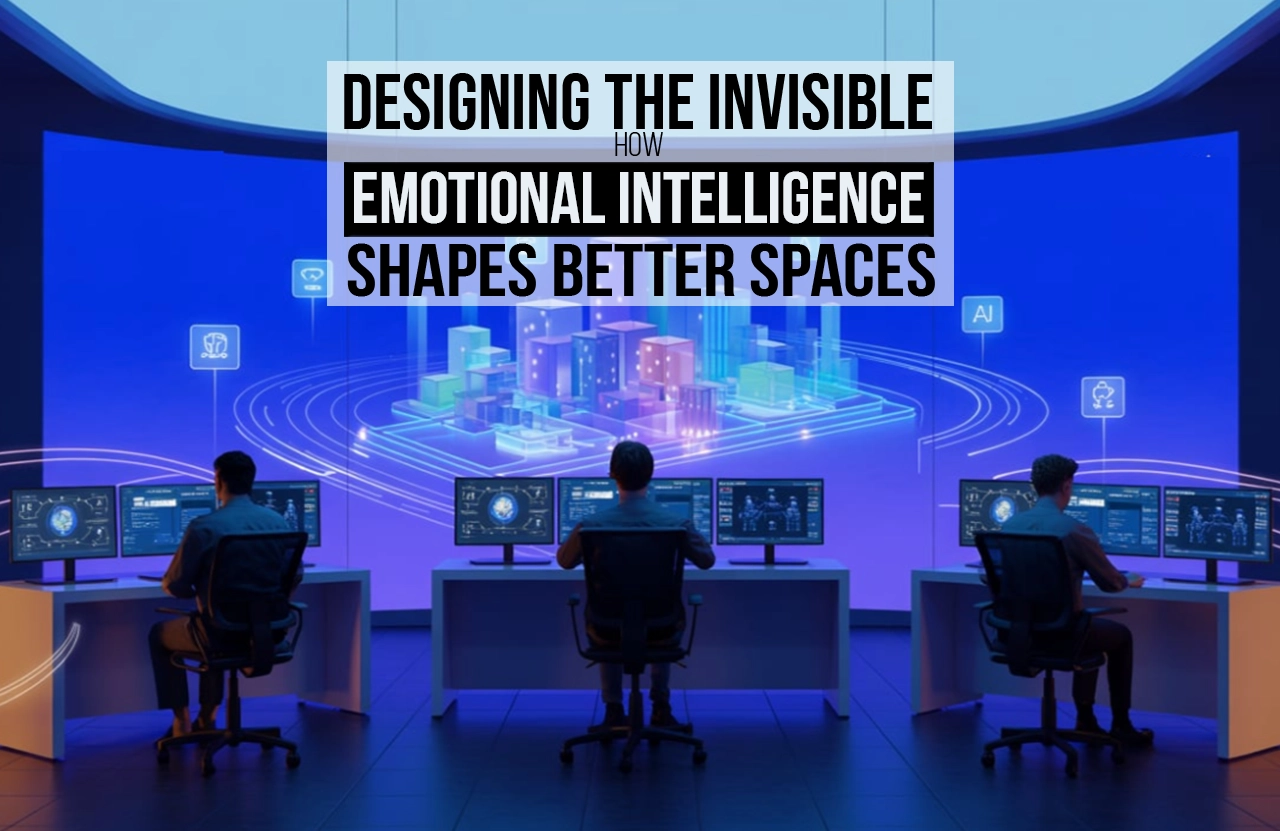
In the triad of subject, others, and space, the subject-to-subject interaction may be studied by human behaviouralists, and the person-specific studies lie in the domain of cognitive psychologists or neuroscientists. The spatial domain and its effect on subjects are the domain of the designers and is crucial for both subject-to-subject interactions and person-specific encounters, as designed spaces have the power to affect the emotions of people, and subsequently the human behavioural patterns of subjects. First-person narratives, mental maps, focused group discussions, and photographic surveys are all the different tools and methods used by designers to understand the rich subjective experience of subjects in specific spaces. The advent of computers and technology has brought about a revolution in human-computer interaction, and machines that can learn human emotions and simultaneously simulate the affective nature of spaces. Artificial emotional intelligence is thus highly profitable to ‘learn’ the emotions of users in a simulated space and ‘predict’ suitable or preferred spaces based on the same. So, data-driven machine learning coupled with predictive design modelling has proved helpful in the iterative design process. Incorporating gamification and emotional design into XR, VR/AR can significantly benefit the design process. The ‘act of design’ is no longer just the vision of an architect and its fulfilment, but rather a looped-iterative process that can be modelled and remodelled in machines before it is finally created in physical form.
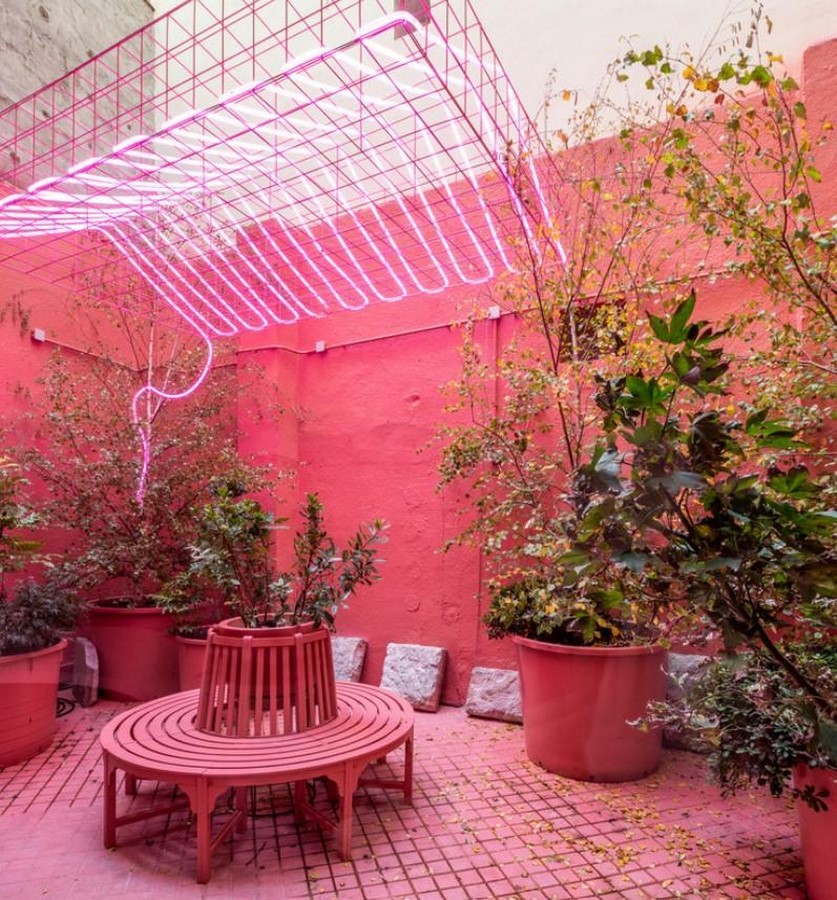
Some spaces make us feel happy, some sad, some safe, and unsafe, these are just a few of the emotions that one feels when in any given space. Take for example, perceived safety as a feeling/emotion that one feels in a space. How can one design safety? It is highly unlikely that one space that feels safe or makes us feel happy will make the other person just the same. Herein comes subjectivity. The built environment and its spatial configurations where enclosure ratios are optimum, there’s natural surveillance, proper lighting, continuous building facades and edges and adequate landscape would feel pleasant and safe. Thus, rather than relying on design intuition when one conducts a study about these building parameters by modelling them in a software and testing on various subjects would yield safe environments. It is the same with architectural spaces, the amount of lighting that creates a sombre mood, the colours that make one feel happy, or gloomy ought to be studied, measured for subjective preferences and then designed to be delivered for the subjects.
It is the age of machines. We are not ruling out architect’s intuitions and design skills, but taking the help of artificial emotional intelligence as a data-informed design process aids one in delivering design that is best suited for the end-users. Let’s not underestimate the power of built environments on subjects. These are spaces that we move about every day, feel and live in. It is thus only right to dwell on them more before concrete and glass is planted on ground. Let’s even make the design process more inclusive. Happy Designing!