Architecture as Cinematic Language
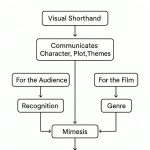
Movies employ architecture as a visual shorthand to communicate to viewers all they must know about the characters in a brief span of time. One second is enough to represent a room, a location, or scenery; who the characters are good or bad; whether they will make it in the world, or decline; whether they will get married by the end of the movie or be heartbroken, tormented, or worst of all, indifferent; whether they will be active players in the world, or just passive witnesses. We all perceive the same thing and yet each of us perceives it differently. We, as spectators, conceive of the ‘space behind the screen’ as though it exists. Images edited together that typically display only pieces in themselves become something we feel, see and comprehend. Attentive scrutiny of the nature of the relationship of architecture and its representation in film provides a deeper insight into how architecture in film shines light both on architecture itself and on the culture which creates it.
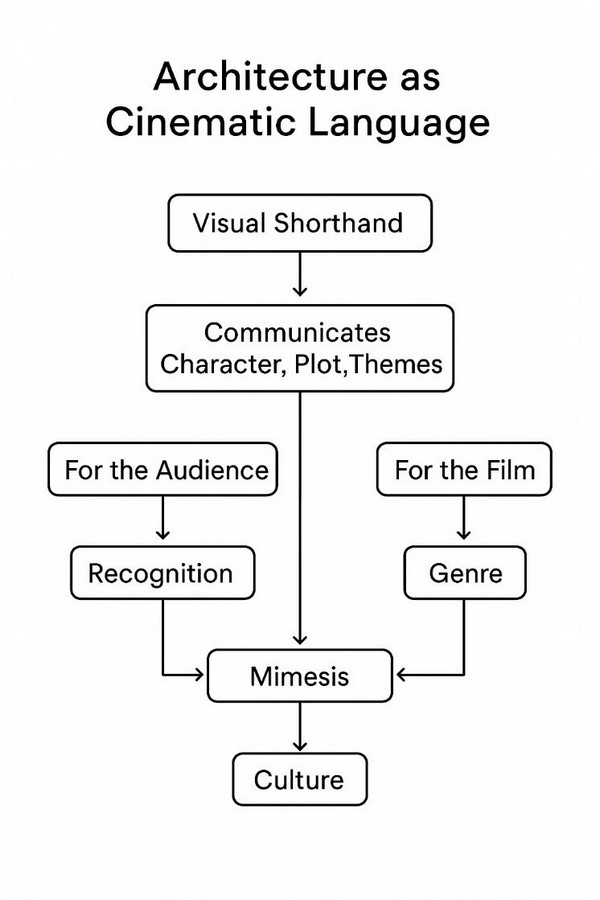
The exchange between the two, architecture and film, rests on mimesis. Mimesis anchors this dialogue and provides an understanding of the phenomenon of ‘recognition’ through which we easily recognize a specific place like a home, a library, a private or public space, etc. There is a buildup of culture, knowledge and artefacts we bring in ourselves and take to watching the film. We see architecture, identify it, it appears ‘like’ things we are used to. We ‘see’ it ‘as if’ it is there and the story carries us along. At a very fundamental level, sets give a film its unique look, its geography, the physical, historical, social, and cultural contexts and attendant material particulars, and the physical structure in which a film’s storytelling is to continue. In addition to these attributes, sets contribute to the identification of characters, developing and making real their psychology; and, usually in collaboration with other factors that contribute to mood or atmosphere, such as music and lighting, contributing to the creation of a sense of place by mood or atmosphere, and hence inspiring emotions and longings which either complement or contradict the story. In these later senses, sets are also important in establishing a film’s genre, and they are constitutive of popular forms as diverse as historical drama, science fiction, horror, melodrama, and the musical.
Historical Context of Architecture in Film
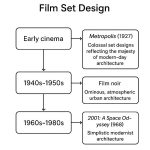
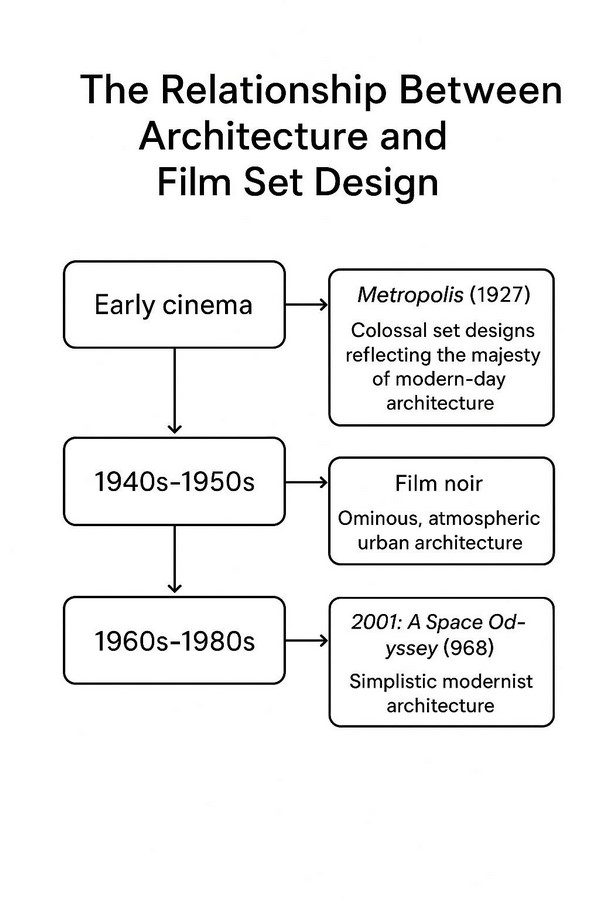
The relationship between architecture and film set design is rich in history, with changing aesthetic values, cultural forces, and technological innovations reflected therein. The early period of cinema witnessed the development of movies that drew upon architectural forms from reality. During the silent era, set design was largely driven by current architectural styles like Art Deco and Beaux-Arts, which created a glamorous setting for story-telling. Classic movies such as “Metropolis” (1927) featured colossal set designs reflecting the majesty of modern-day architecture, symbolizing society’s fears regarding urbanization and industrialization.
As cinema progressed from the decades, its architectural depictions progressed as well. The 1940s and 1930s were a turning point with the emergence of Film Noir, where ominous, atmospheric settings heightened the tension of the story inherent within the genre. The architecture at this time tended to mirror the themes of the city landscapes on which the narratives transpired, paying particular attention to urban buildings that helped instill atmosphere within the film. In subsequent decades, from the 1960s up to the 1980s, film set design began to place a new focus on modernism. Architectural designs at this time were typified by simplistic lines and minimalist styles and were depicted in films such as “2001: A Space Odyssey” (1968). Not only did this film portray revolutionary visual effects, but also incorporated the concept of futurism, encouraging people to imagine a world dominated by technology
Cultural Representation in Architecture and Film
This discussion takes on numerous forms in various cinematic styles. For example, Italian Neorealism exposed the rifts between class and morality through its bleak, deteriorating streetscapes, using the postwar metropolis as a platform for social realism. The use of residential interiors by Japanese filmmakers such as Ozu reflected culturally ingrained ideas of restraint and impermanence. Modern films demonstrate how architecture continues to express new hierarchies and desires in a globalized world, from the hypermodern glass skyscrapers of Her to the vertical inequalities of Parasite. Thus, architecture in movies serves as a prism through which we can decipher cultural identity, or how civilizations perceive intimacy, order, development, or alienation. The symbolic translation of how people inhabit their realities is more important than representational correctness. Architecture may perform on the screen, simultaneously embodying cultural memory, nostalgia, and critique.
The Artistic Synergy of Architecture and Film
The intertwining of architecture and film reveals how storytelling is the common feature embodying both. Architecture aims to narrate stories through the idea of permanence, structures that endure time and portray human intent while films portray motion, animation and visual effects representing time. When these two mediums converge, they produce a heightened awareness of how we occupy and imagine space.
Citations:
Tobe, R., 2016. Film, Architecture and Spatial Imagination. Abingdon: Routledge. Google books
Yau, K., 2024. Spatial Storytelling: A Study on the Significance of Set Design in Shaping Film Atmosphere. BA (Hons) Dissertation. [online] Available at: https://interioreducators.co.uk/uploads/submitted-files/202.Writing24_03 [Accessed 19 October 2025].
TheDesignGesture, 2025. ‘Architecture and Cinema: The Fascinating Connection of 2 Visual Mediums’. [online] Available at: https://thedesigngesture.com/architecture-and-cinema/ [Accessed 19 October 2025].
ArchOvaVisuals, 2025. ‘The Intersection of Architecture and Film Set Design’. [online] Available at: https://archovavisuals.com/intersection-architecture-and-film-set-design/ [Accessed 19 October 2025].