Human technology is a relatively recent phenomenon, whereas processes like evolution and natural selection have shaped life on Earth for millennia, ensuring that only the strongest species with effective survival mechanisms persist. These species evolve adaptive mechanisms that help them survive the harsh situations that nature puts them through. Janine Benyus’ statement “Life creates conditions conducive to life” underscores the relevance of drawing inspiration from nature for solutions to contemporary problems. Bio-inspired design is an evolving discipline that addresses human challenges by emulating pre-existing solutions in nature.
It is a multidisciplinary approach where biology, physics and engineering converge to decode natural processes and devise innovative solutions. Often used interchangeably, Biomimicry and bioinspired are closely related terms, but they vary in their levels of abstraction while replicating a natural process. Biomimicry tries to create something by reproducing a pre-existing biological technology when looking for a direct solution. On the other hand, bio-inspired design approaches the underlying process to understand and discover the workings of a certain biological system, capturing its essence and abstracting its functionality to engineer a system that performs the necessary functions.
To simply conclude, all biomimetic designs are bioinspired, but not all bioinspired designs are biomimetic.
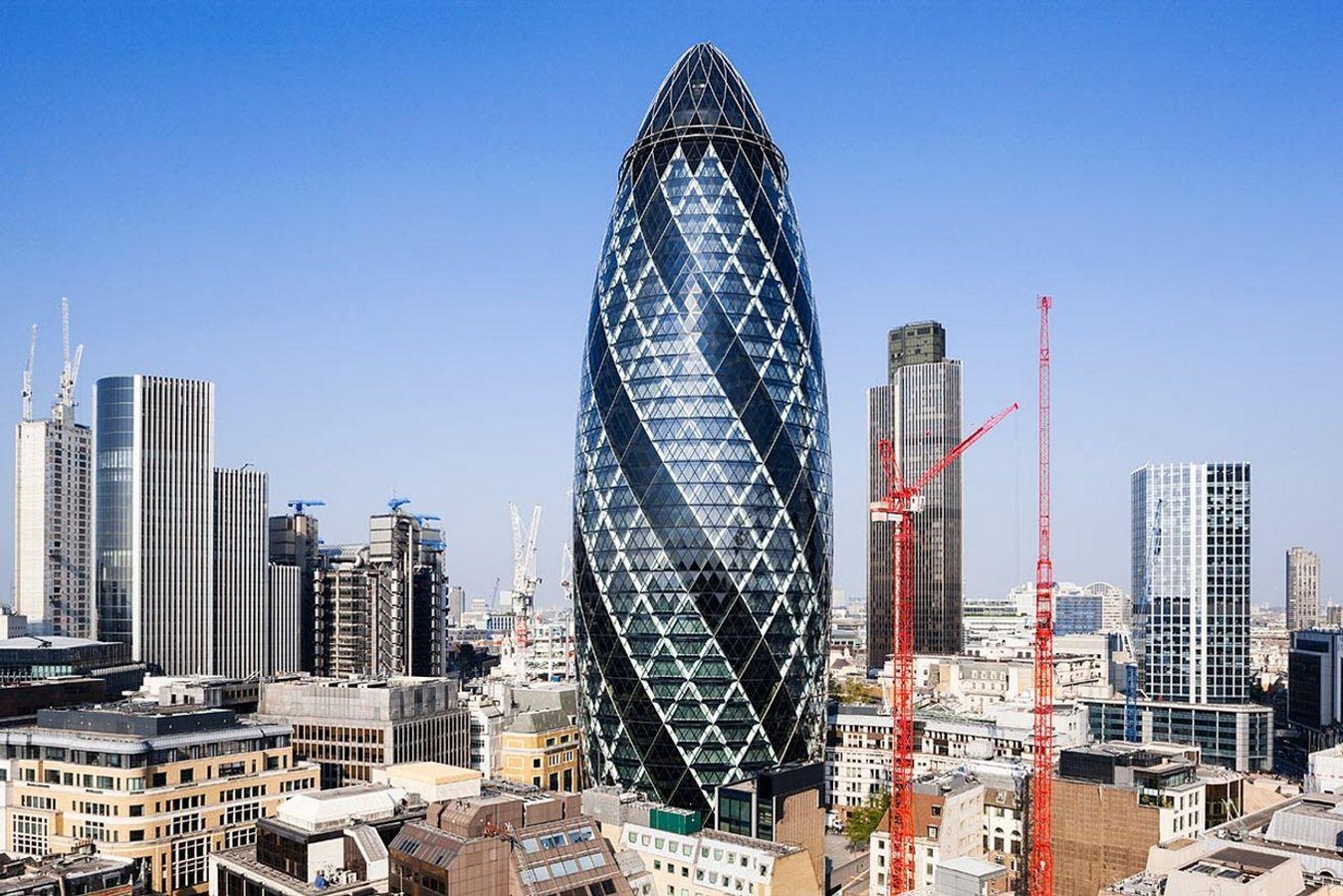
Approaches within Bio-Inspired Design
Under this umbrella of bio-inspired design lie approaches like bio-utilisation, bio-morphism and biophilia.
Biophilic design
It is a concept adapted to psychologically make the user feel closer to the environment through the use of plants, open spaces, ventilation, etc.
Bio-utilisation
It involves leveraging natural processes or forms and replicating them through engineered systems. For instance, using mycelial fungi to create a compostable, eco-friendly replacement for plastic foam packaging.
Biomorphism
It is the imitation of organic patterns and geometries from nature, which increases the visual interest due to complex forms and is known to reduce psychological stress through biophilic design.
Elephant Ear Inspired Vascular Concrete
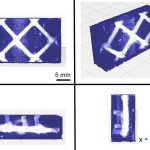
They are concrete panels embedded with vascular channels developed by researchers at Drexel University. The underlying system is inspired by the vascular network of elephant ears, known for their heat-regulating ability. The researchers also exemplify the human circulation system, which, in case of high heat, starts to produce sweat to regulate body temperature.
Paraffin, with its phase-changing abilities, is used as the core material in these panels. When temperatures are high, this paraffin becomes liquid, absorbing the heat. As the temperature starts to decrease, it becomes solid, dissipating stored thermal energy during phase change. This way, the excess heat energy is used up by the paraffin, present in vascular channels in the concrete, to change its phase with the temperature. Empirical tests demonstrate a reduction of 1 to 1.25 degrees Celsius per hour in thermal flux. This is an example of a thermally adaptive façade, presenting viable strategies for reducing intensive dependence on artificial air-cooling systems.

Self-Cleaning Facades Inspired by Lotus Leaves
The constant maintenance of facades due to water, microorganisms, and other harsh conditions becomes a challenge over the years.
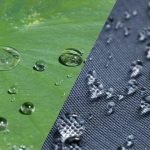
The lotus effect is the adopted strategy, which refers to the self-cleaning technology of the Lotus (Nelumbo nucifera) leaves. These leaves are highly hydrophobic due to the presence of nano-textures, which prompt the water to form droplets and carry along all the dirt accumulated on the leaf. In architecture, paint was created to cover facades with micro textures that prevent deterioration from rain, reduce maintenance, and resist bio deterioration. This technique is good for urban environments where pollution levels and façade deterioration are more prevalent. These coatings reduce moisture absorption, also lending to the internal longevity of the building, inhibit microbial growth and reduce the maintenance aspect a lot. The innovation can be explained as “The microtextured and super-hydrophobic surface maintains a tiny contact area for dirt and water. The dirt particles, which are loosely adhered to the surface, are carried away by the rain.”

Carbon-sequestering Cement Inspired by Shell Formation
Cement is the second most used material globally, after water. Its manufacturing accounts for approximately 8% of global CO2 emissions. Simultaneously, with rising sea levels and increasing coastal urbanisation, concrete barriers are becoming increasingly ineffective.
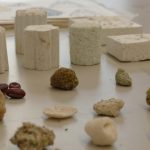
Drawing inspiration from molluscs and oysters and the process of the synthesis of their shells, bio-cement has been introduced. These species use a “glue” to attach themselves to rocks and one another. This biomineral is the key to innovation.
Now, nitrogen-fixing plant enzymes are extracted and added to a bath with waste like shells, and this chemical reaction acts as the formation reaction for calcium carbonate, which in turn acts as a binding agent. After three days, the residue left in the bath is a bio concrete made up of crystalline calcite, which makes it a perfectly suitable material for reef restoration and the construction of sustainable coastal infrastructure.

Bio-inspired design is not merely a new stylistic approach towards design; rather, it’s a paradigm shift in how architecture responds to problems with greater effectiveness. Nature’s evolving strategies have given a strong foundation to work upon and develop solutions that are sustainable and viable in the long run. Harmonising with nature, reducing dependence on resources and fostering resilience is the equivalent of designing an ideal future. One where architecture and nature co-exist, and not compete.
Citations:
- Bernett, Allison. “Biomimicry, Bioutilization, Biomorphism.” Terrapin Bright Green, 17 Jan. 2015, www.terrapinbrightgreen.com/blog/2015/01/biomimicry-bioutilization-biomorphism/.
- “Carbon-Sequestering Cement Inspired by Shell Formation — Innovation — AskNature.” Asknature.org, 2020, asknature.org/innovation/carbon-sequestering-cement-inspired-by-shell-formation/.
- Dmitri Petrovykh. “Biointerface: Biomimetic and Bioinspired Systems.” Biointerface.org, 2022, biointerface.org/bi/biomimetic/. Accessed 30 July 2025.
- Emmanuel Fayemi, Pierre , et al. “Bio-Inspired Design Characterisation and Its Links with Problem Solving Tools.” Design 2014, https://www.researchgate.net/, May 2014.
- “Paint Inspired by Lotus Leaves Creates Self-Cleaning and Antifouling Surfaces — Innovation — AskNature.” Asknature.org, asknature.org/innovation/paint-inspired-by-lotus-leaves-creates-self-cleaning-and-antifouling-surfaces/.
- Technology Networks. ““Elephant Ear” Building Materials Could Make Houses More Energy Efficient.” Applied Sciences from Technology Networks, Technology Networks, 16 July 2025, www.technologynetworks.com/applied-sciences/news/elephant-ear-building-materials-could-make-houses-more-energy-efficient-402372. Accessed 4 Aug. 2025.
- Wikipedia Contributors. “Biophilic Design.” Wikipedia, Wikimedia Foundation, 18 Apr. 2019, en.wikipedia.org/wiki/Biophilic_design.