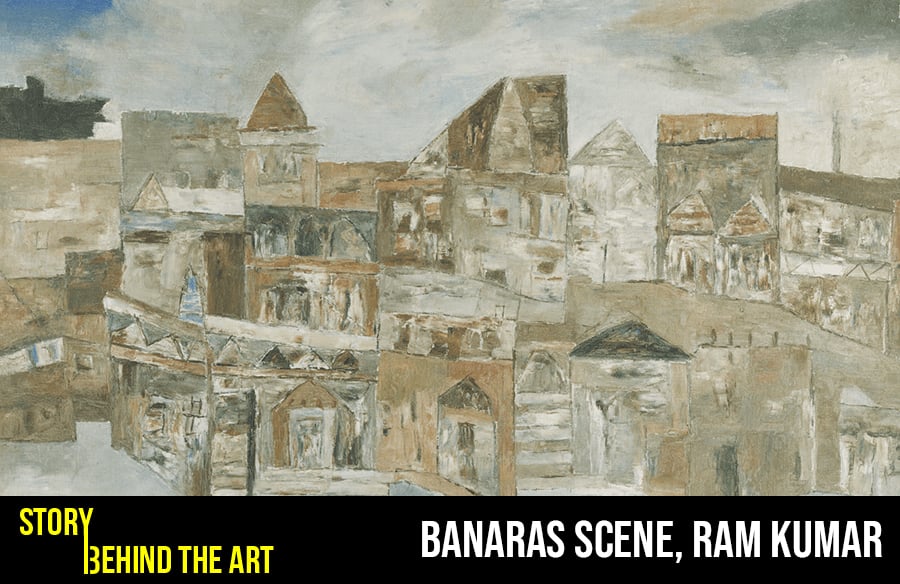
If a conceptual technique can be the masquerade of an artist’s language, then abstraction was the chosen language for Ram Kumar. The reticent artist wielded both pen and brush but ultimately embraced the latter. The Banares paintings are the result of the visit by Ram Kumar and M.F. Hussain to Banares in 1961. The city’s nocturnal characteristics created a lasting impression on him. The human absence in the streets of Banares became a recurring theme in his Banares paintings. These paintings represent the philosophy of death and the passage of time with doorways, arches, steps, etc.. as his main subjects along with the city’s spirituality and Kumar’s interpretation of birth, life, and death.
Ram Kumar: The Artist

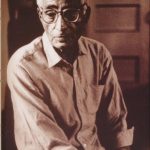
Born in 1924 in Shimla, Ram Kumar’s meditative surroundings strongly influenced his sensibilities as an artist. Ram Kumar is one of the leading modernists of India. In the 1930s, whilst at school Ram Kumar intended to be a writer rather than an artist. It was only in 1945, that he started taking instruction in art. Being a banker early in his career, Kumar went to Paris to study painting under Andre Lhote and Fernard Leger from 1949 to 1952, before which he worked briefly as a journalist. He is an important part of the first-generation post-colonial Indian artists, a member of the Progressive Artist’s Group, alongside F.N. Souza, S.H. Raza, and M.F. Husain. Ram Kumar’s works mainly consist of abstract landscapes with jiggered topography, with a sense of ambient despair. Responding to different interpretations of landscape, Kumar uses a variety of textures to map out its architectonics through strokes. His early works were figurative, focusing on human faces. It was in Paris the communist ideology began to influence his thoughts and works.
He is the recipient of many awards including the Padma Shri in 1972 and the Prem Chand
Puraskar for a collection of short stories. His prominent exhibitions include ‘Split Visions Abstractions in Modern Indian Painting’, Aicon Gallery, New York, 2016, and retrospectives including ‘Masterpieces of Indian Modern Art’, DAG Modern, 2016; ‘After Midnight: Indian Modernism to Contemporary India, 1947-1997’, Queens Museum, Queens, 2015; amongst others. The artist, whose incredible talent captivated audiences, passed away in 2018 at the age of 93.
The Banares Ghat Series
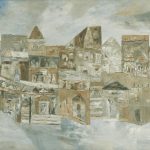
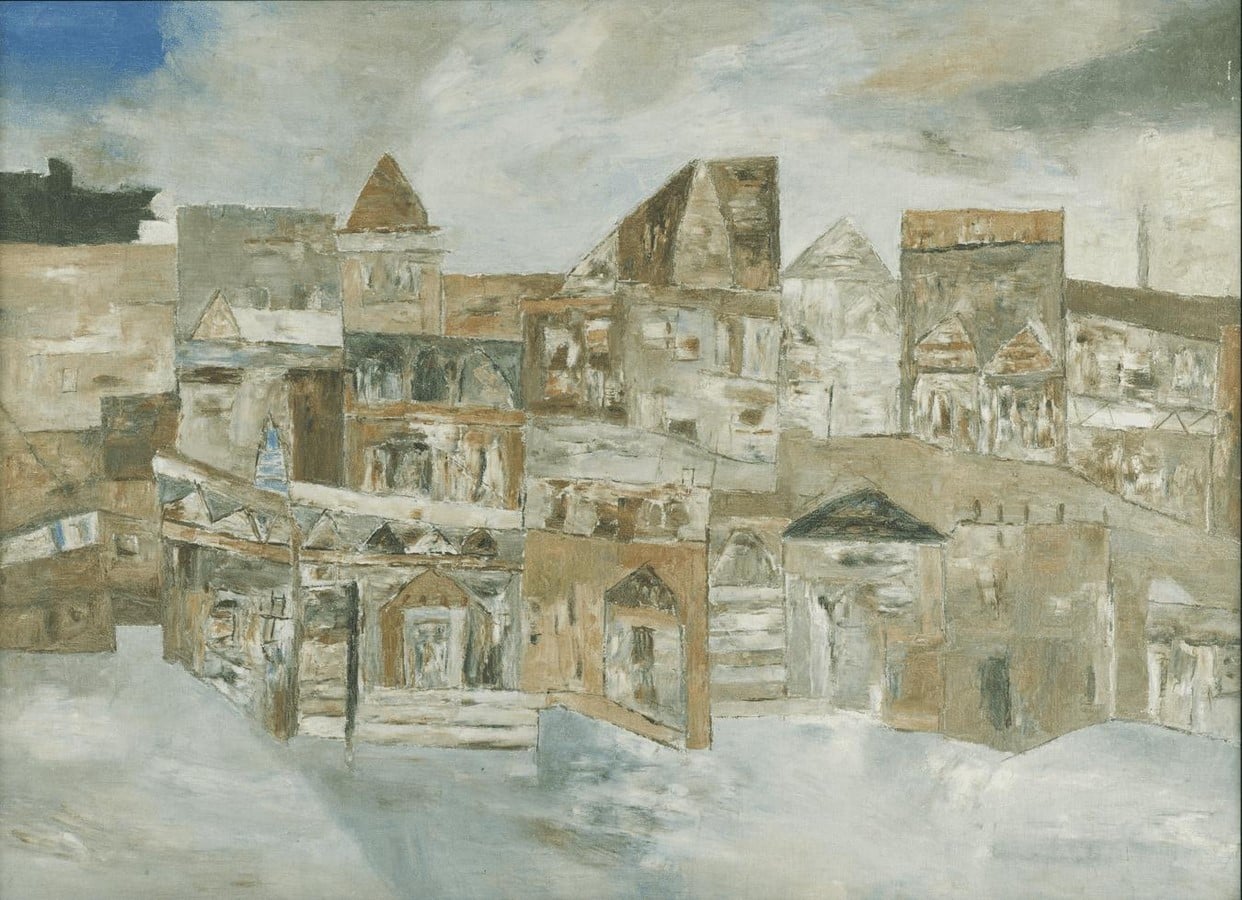
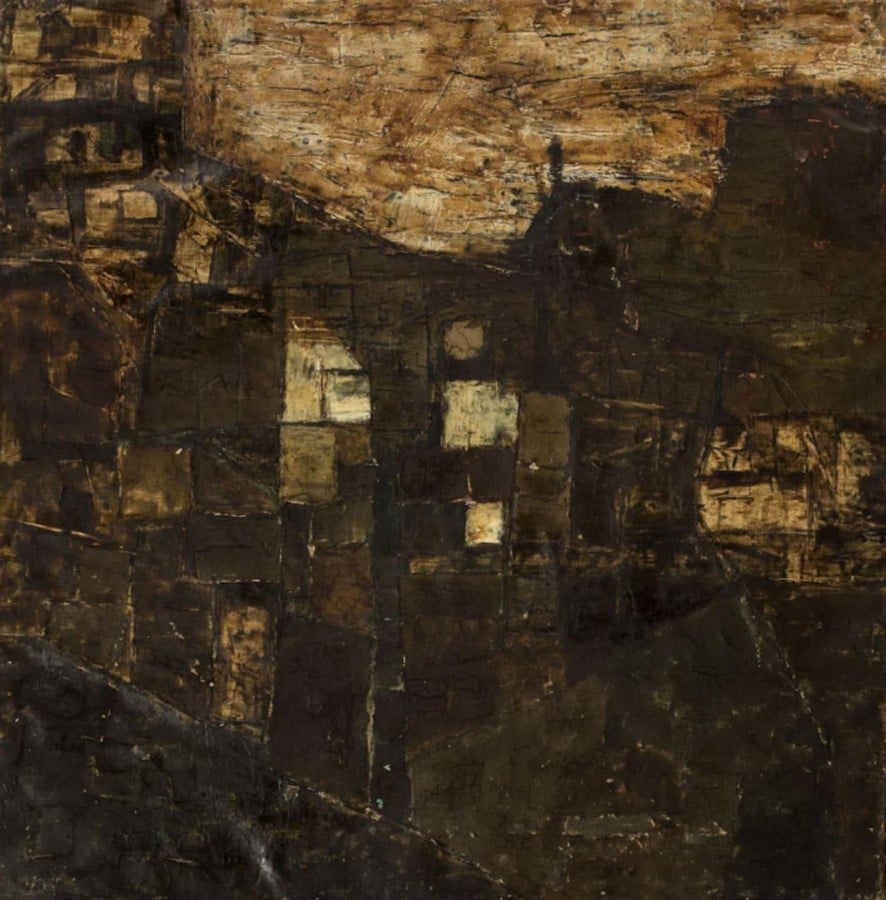
In the Banaras Ghat paintings, Kumar applied cubism to architectural figures, with the windows representing vacant eyes, silently observing the scene devoid of life, as if the city had been stripped of its bustling population of pilgrims, sadhus, sanyasis, and mendicants. Banaras was something very new for him. He attempted to show the agony through abstraction representing a city through the buildings and not through human faces. By this deliberate banishment of human figures, he created a strong metaphor with powerful architecture and landscapes, accentuating the void of humanity. He sensed the alienation and loneliness in Varanasi. Although the city was bustling with people the loneliness of humanity cannot be ignored. he city was symbolic of contrasts – samsara and nirvana, desire and asceticism, profane and spiritual. Ram Kumar captures the decline of the city, and the dilapidation of its ancient structures was evident, and the artist felt a deep sense of loss.
Varansi_©vadehraart.com
The Benares Ghat paintings are executed in a muted palette with browns, beige, and olive tones. It has geometric forms and structures layered one on another, that depict houses and neighborhoods. The silvery grey represents the smoke from the burning bodies. Sharp outlining was set beyond the blocks of colors. In early works, dark colour represented the river with architecture on the banks. Ram Kumar used rough brush strokes and textured surfaces, that contribute to the mystical atmosphere of the city. It conveys the stillness and architecture of the city, evoking both time and timelessness. He highlighted the beauty of Banaras with his vision and traditional things converted into modern style. Varanasi was a subject he came back to in the 1990s and 2007. In recent works, the dark river is replaced by blue sky and blue river. In the work of this period, the city appears as scared but the shadow of the crematorium looms.
Ram Kumar’s metaphorical language emerged from his experiences in Varanasi. The cubist and abstract styles represent the inner mind of the artist and present some successful experiments of his artistic life.
Online sources:
- Prinseps (2023). Ram Kumar: The Visual Metaphorist. [online] Prinseps. Available at: https://prinseps.com/research/ram-kumar-the-visual-metaphorist/?srsltid=AfmBOopa2m4_TNXvOxDI_veAOVa9QETVi5KpOuvtBz_unRtk3R9pJi6t [Accessed 8 Mar. 2025].
- Aurora & Athena Auction House. (2025). Ram Kumar Benares, 1961 | Iconic Indian Abstract Art. [online] Available at: https://auroraathena.com/catalogs/december-fine-art-auction/ram-kumar-benares-1961/.
- Vadehra Art Gallery. (2018). Ram Kumar. [online] Available at: https://www.vadehraart.com/artists/47-ram-kumar/.
- Culturalheritageofvaranasi.com. (2021). Ram Kumar’s Visions of Banaras – Cultural Heritage of Varanasi. [online] Available at: https://culturalheritageofvaranasi.com/essays/ram-kumars-visions-of-banaras/
Images/visual mediums:
- Prinseps (2023). Ram Kumar: The Visual Metaphorist. [online] Prinseps. Available at: https://prinseps.com/research/ram-kumar-the-visual-metaphorist/?srsltid=AfmBOopa2m4_TNXvOxDI_veAOVa9QETVi5KpOuvtBz_unRtk3R9pJi6t [Accessed 8 Mar. 2025].
- Vadehra Art Gallery. (2018). Ram Kumar. [online] Available at: https://www.vadehraart.com/artists/47-ram-kumar/.