Singapore is often called the ‘Garden City’. It is known for its work towards creating an eco-friendly nation, redefining urban planning with its ‘City in Nature’ plan. This initiative was introduced in 1967 by Lee Kuan Yew, the Prime Minister at the time, focusing on making life pleasant for the country’s residents. The movement emphasises how cities can still integrate greenery-infused spaces with growing urban infrastructures without destroying nature and leaving it out of the equation. It also prioritises sustainability and mobility for the betterment of the country and its people by making these spaces accessible and beneficial towards the health of the general public. Through innovative design strategies proposed since the initiative was put in place, Singapore has since established itself as a model for an urban framework that harmonises nature and architecture.
Historical Context: From Garden City to City in Nature
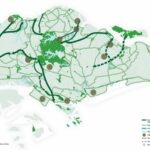
Singapore’s urban greening journey began from the moment of its establishment in the 1960s, and formed as a response to the country’s rapid industrialisation. The initiative focused on bringing nature back to the country whilst enhancing the quality of life provided by the city by creating a ‘green, liveable, and sustainable home’ for those living in the country, achieved through five specific strategies: expanding the network of parks, intensifying nature in said gardens and parks, restoring nature in urban landscapes, improving the connectivity between Singapore’s green spaces, and working on enhanced veterinary care and animal management.
The ‘City in Nature’ approach places a strong emphasis on biophilic design, which involves integrating nature into daily life. Singapore is a prime example of striking a balance between development and nature, with its tree-lined streets, urban wetlands, and green corridors. The seamless incorporation of greenery into urban infrastructure has also increased the city’s resilience to climate change. For example, lining buildings with vegetation that absorbs carbon emissions from both cars and buildings resulted in improved air quality and a reduction in heat emitted by these urban factors. The movement is believed to be powered by the support and involvement of the local population, as well as the government and participating organisations, making it a collective effort to make the country as efficient as it could be.
Mobility and Connectivity: Enhancing Urban Flow
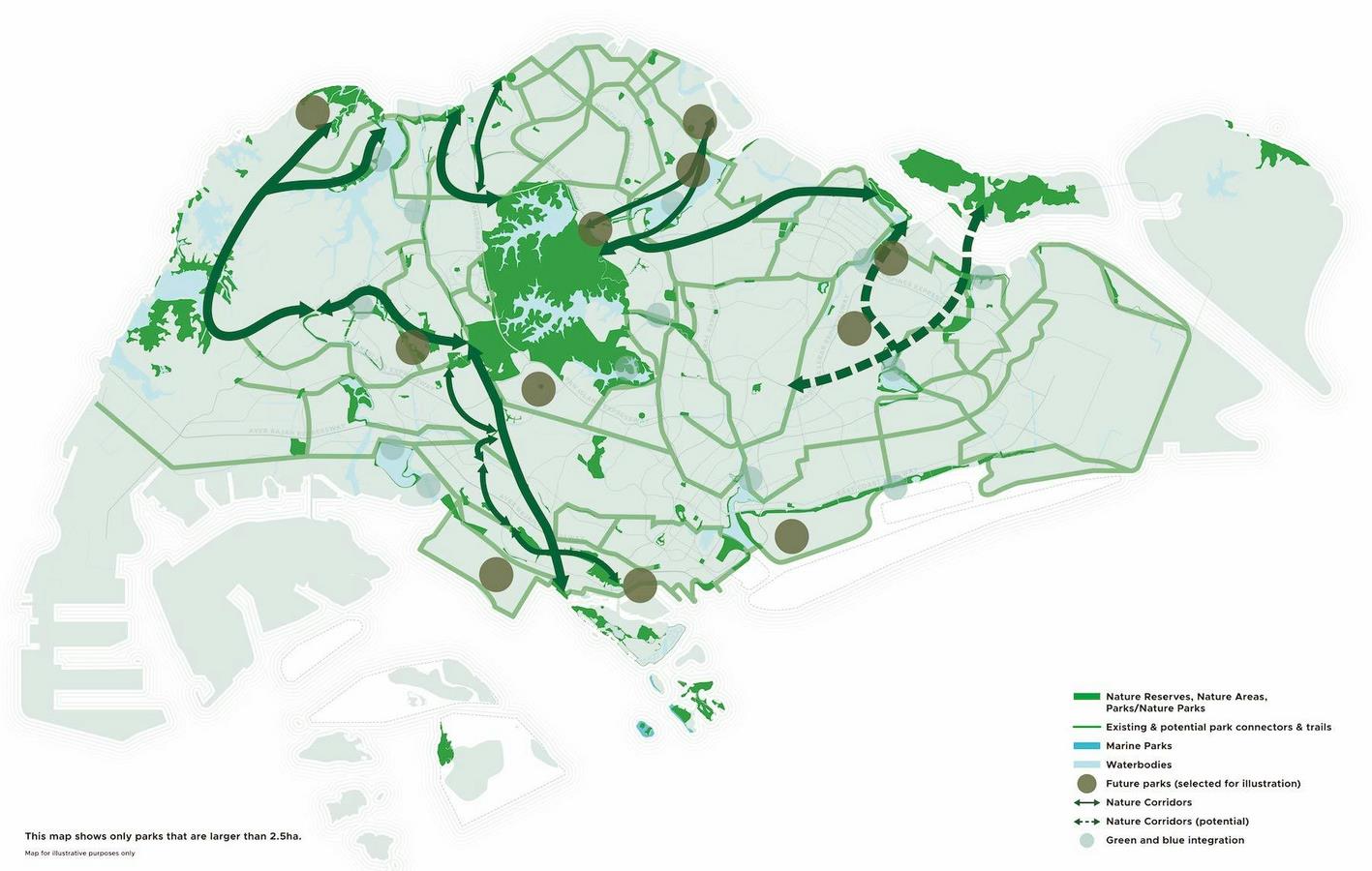
Singapore’s approach to transportation is also deeply embedded in its green infrastructure. The city’s vast public transport infrastructure, which includes buses, mass rapid transit, and cycling networks, prioritises accessibility and sustainability while reducing carbon emissions. By reducing reliance on cars, Singapore was able to reduce congestion and pollution, resulting in a cleaner, healthier urban environment for its residents.
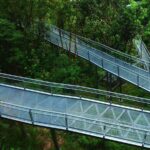
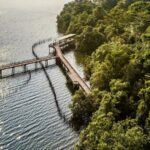
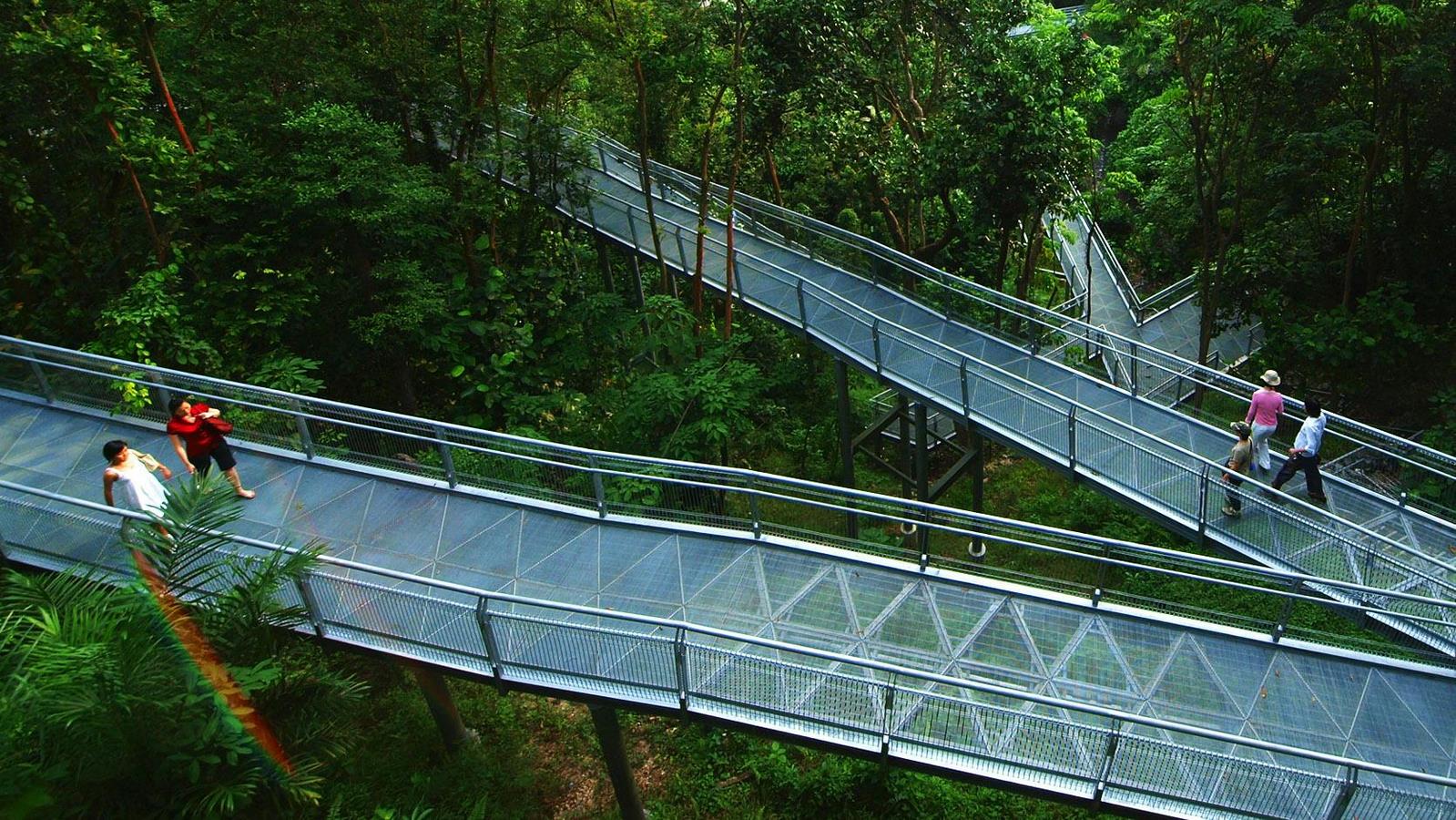
A notable feature is the Park Connector Network (PCN), a 300-kilometre system of cycling and walking paths that connect parks and nature reserves together. These green corridors not only promote active mobility and a healthy lifestyle but also offer engaging experiences within greenery to enhance the commuters’ journey. For example, the Southern Ridges trail connects Mount Faber Park to Kent Ridge Park through elevated walkways, providing panoramic views of the city’s landscapes. Additionally, Singapore’s public transit is integrated with its green infrastructure through its public transport stations, which are also lined with vertical gardens and rooftop greenery. This blending of mobility and landscape leads to the creation of a cohesive urban experience where nature becomes part of your daily commute, rather than plain structures.
Building an Urban Ecosystem
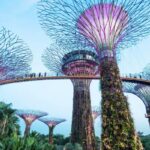
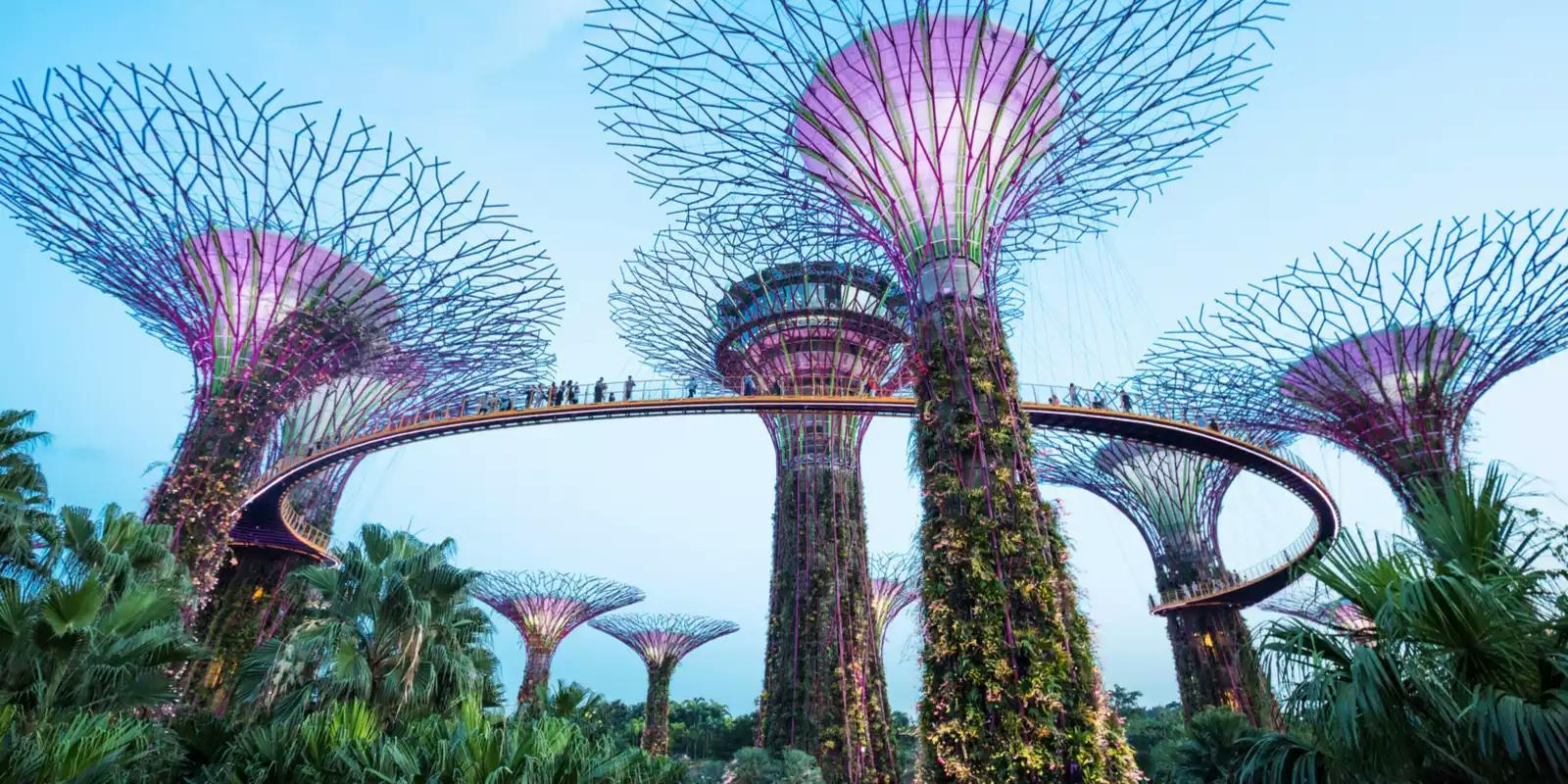
Singapore’s landscape design centres around creating a resilient urban ecosystem that addresses environmental issues while enhancing quality of life, without neglecting one factor over the other. The city’s network of green roofs, vertical gardens, and urban wetlands showcases a commitment to innovative landscape solutions. A key example is the ‘Gardens by the Bay’, a 101-hectare park featuring futuristic “Supertrees” and biodomes that merge sustainability with visual appeal. These structures collect rainwater, generate solar energy, and support biodiversity, playing a large role in the integration of landscape and infrastructure. They also feature the ‘OCBC Skyway’, a walkway suspended between two of the Supertrees. Standing 22 metres above ground, it is a 128-metre-long walkway that allows visitors to experience the marvel of Singapore from an aerial perspective.
Similarly, the Bishan-Ang Mo Kio Park’s naturalized Kallang River functions as a floodplain and has been worked on to maximise its potential. Alongside being a clean home for local wildlife species, there have also been bioengineering techniques put in place to create microhabitats to benefit biodiversity. The region also acts as a recreational zone for inhabitants, with the maintained sidewalks making it especially popular with cyclists and exercisers. Planting native plants transforms these landscapes into the city’s lungs, promoting biodiversity, cooling urban spaces, minimising climate impacts, filtering air, and reducing the urban heat island effect.
Integrating Nature with Urban Systems
Integrating nature into Singapore’s infrastructure is a cornerstone of its “City in Nature” vision. Urban systems like drainage, energy, and housing are designed to coexist harmoniously with the environment, fostering a sustainable future. For example, the ABC Waters Program (Active, Beautiful, Clean) transforms drainage systems into community spaces. Canals and reservoirs are redesigned with vegetative buffers and wetlands, enhancing water quality while creating habitats for wildlife. Housing developments, such as Punggol Eco-Town, incorporate green roofs, solar panels, and rainwater harvesting systems, setting benchmarks for eco-friendly living.
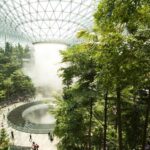
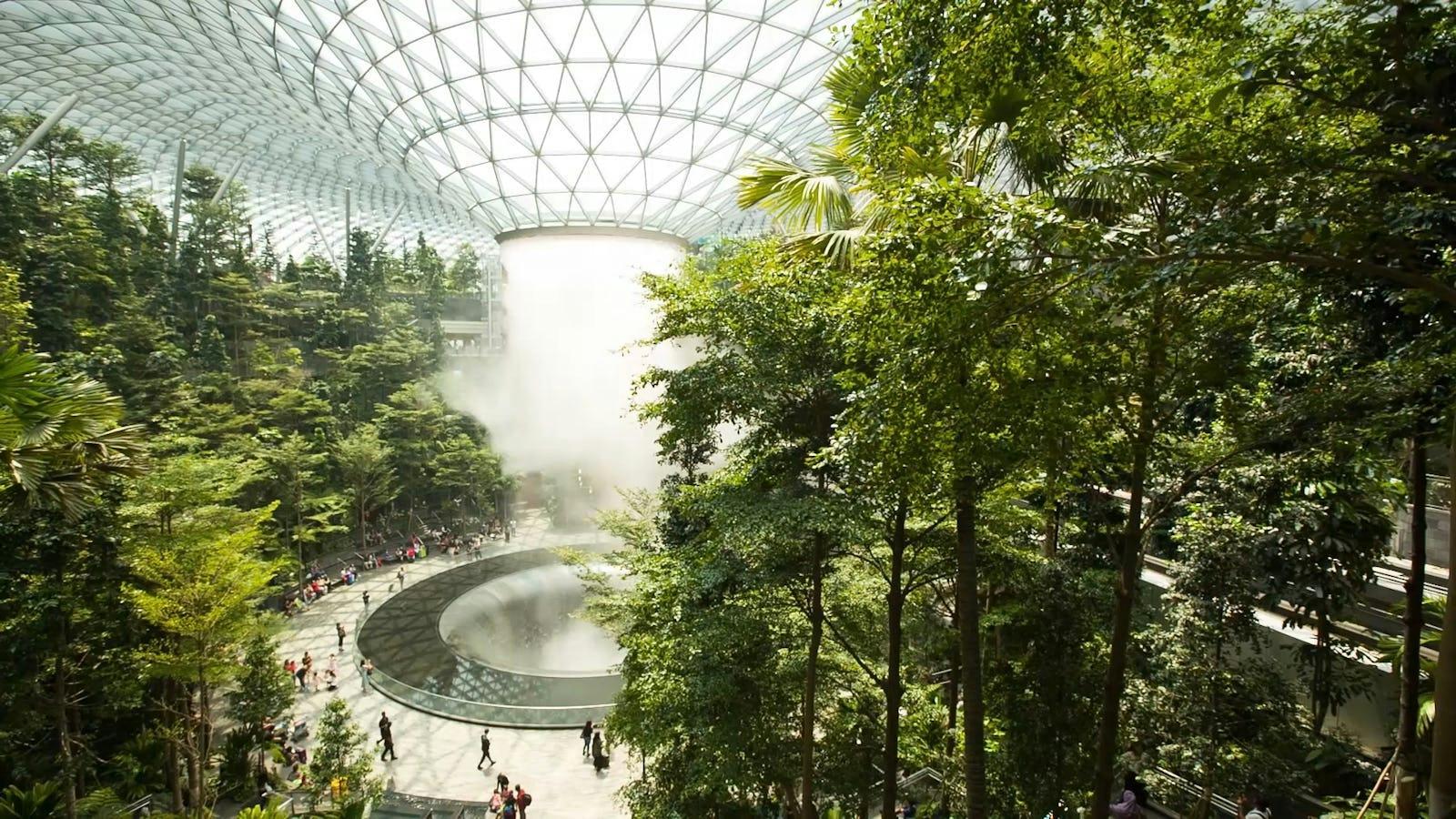
Singapore’s Changi Airport is an example of how infrastructure can blend seamlessly with nature and is considered a landmark for tourists. The Jewel Changi complex aims to connect the airport’s terminals whilst combining the marketplace with nature. It features a vast indoor vertical garden that spreads over several storeys, as well as the world’s tallest indoor waterfall. The rain vortex is fuelled by collected rainwater which provides the airport with natural airflow and cooling, providing a unique experience for those passing through the airport, whilst promoting the country’s greenery-based image. Projects such as these demonstrate that infrastructure and nature are not mutually exclusive, but can exist together to create vibrant urban spaces.
Addressing Climate Change: Nature-Based Solutions
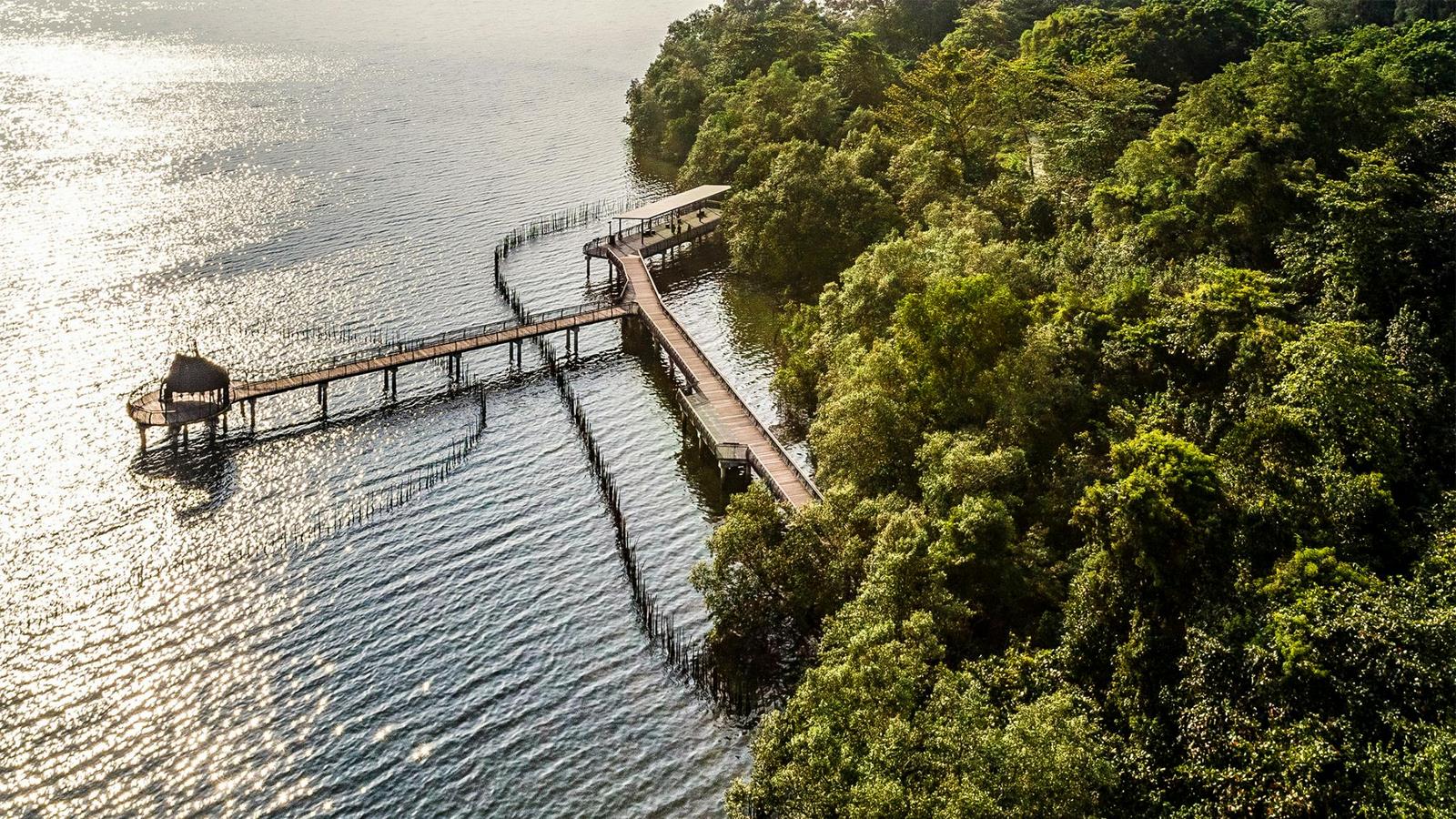
Singapore’s urban greening efforts also serve as a proactive response to climate change. Rising sea levels, intense rainfall, and extreme heat present significant issues, but nature-based solutions help the city adapt to these risks. Mangrove restoration and coastal reforestation projects protect Singapore’s shores from erosion and storm surges. Inland, urban wetlands like Sungei Buloh Wetland Reserve act as carbon sinks and flood buffers. These initiatives highlight how integrating greenery into urban planning can enhance resilience to climate impacts.
Furthermore, the city’s efforts to reduce carbon emissions are supported by its green infrastructure. Integrating solar panels, energy-efficient buildings, and widespread vegetation contributes to Singapore’s goal of halving its peak emissions by 2050. This approach demonstrates that urban morphology can play a pivotal role in mitigating climate change.
Reconnecting People with Nature
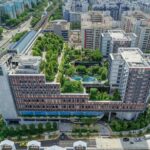
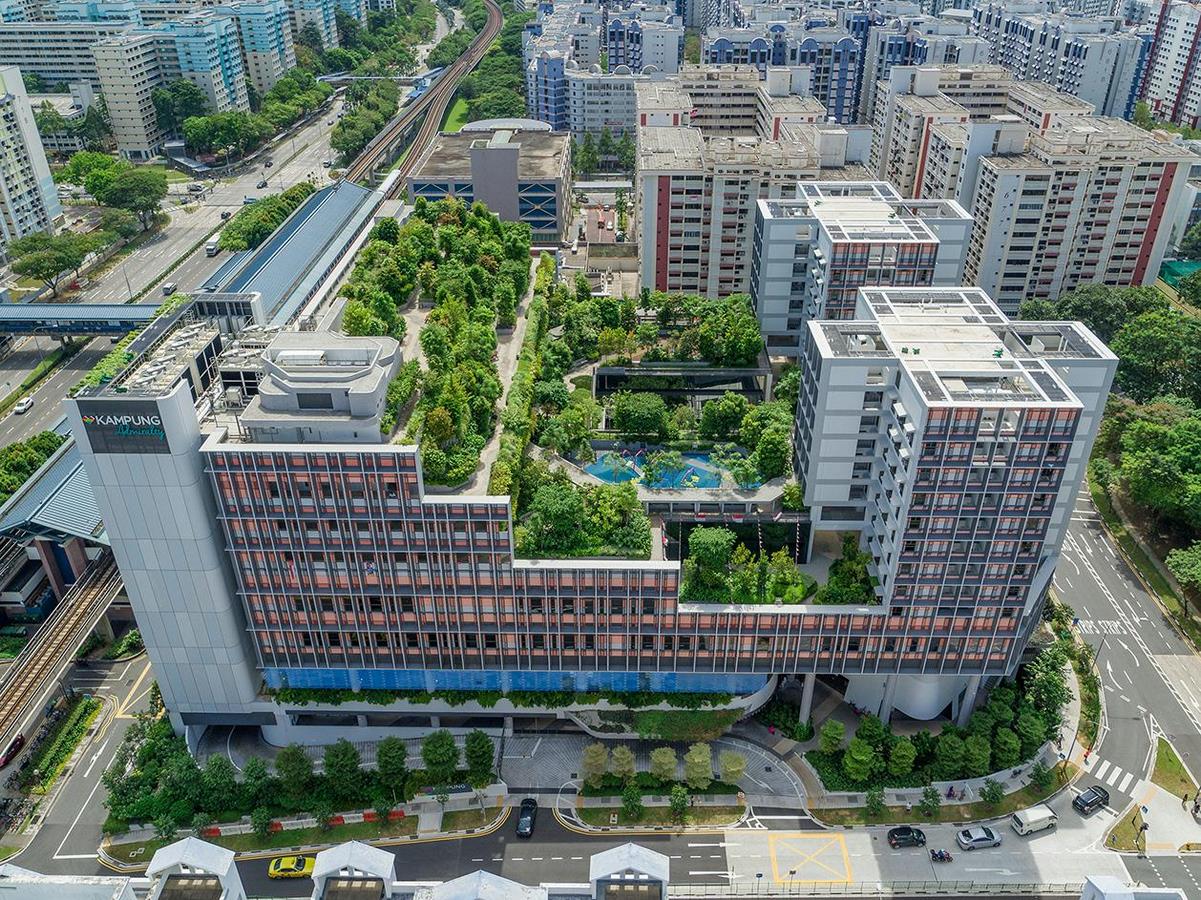
The “City in Nature” plan is not just about environmental benefits; it also aims to improve the well-being of its residents by reconnecting people with nature. Green spaces offer residents opportunities to take part in recreation, relaxation, and a strengthened community. Projects like Kampung Admiralty, a mixed-use development for senior members of society, incorporate rooftop gardens and green pathways, enhancing the residents’ quality of life.
Public education campaigns further deepen the connection between citizens and nature, such as the ‘Community in Bloom’ initiative which encourages residents to participate in urban greening efforts, creating a collective responsibility for the environment. By involving the local community in these efforts, Singapore ensures that its green infrastructure is valued and maintained by making people feel like they are a part of a bigger movement.
Challenges and Future Directions
While Singapore’s urban greening efforts are exemplary, there are still issues that can be addressed. Limited land availability brings attention to the need for careful planning to balance development and greenery. Additionally, maintaining extensive green infrastructure requires significant investment and expertise. To address these challenges, Singapore continues to gradually build upon its existing innovations, namely by exploring vertical forests and underground spaces as potential solutions to land constraints. Using smart technology, such as sensors for monitoring plant health, ensures that urban greenery remains sustainable and efficient.
Nevertheless, the “City in Nature” plan serves as a blueprint for other cities worldwide. By demonstrating how mobility, landscape, and infrastructure can work together, Singapore inspires urban areas across the globe to reimagine their relationship with nature and strive for a more sustainable future. As the world faces growing environmental challenges, Singapore’s innovative approach offers valuable lessons; by placing greenery and wellbeing at the forefront of urban planning, the city not only enhances its standard of living but also sets a new standard for sustainable urban development for the rest of the world and this fusion of nature and infrastructure proves that a greener future is achievable and essential.
Reference List:
Transforming Singapore into a city in nature. Available at: https://www.clc.gov.sg/docs/default-source/urban-solutions/urbsol19pdf/09_essay_transforming-singapore-into-a-city-in-nature.pdf (Accessed: 04 January 2025).
National Parks Board. Available at: https://www.nparks.gov.sg/ (Accessed: 04 January 2025).
Gardens by the Bay. Available at: https://www.gardensbythebay.com.sg/ (Accessed: 04 January 2025).
Jewel Changi Airport. Available at: https://www.safdiearchitects.com/projects/jewel-changi-airport (Accessed: 04 January 2025).
City in nature (no date) Singapore Green Plan 2030. Available at: https://www.greenplan.gov.sg/key-focus-areas/city-in-nature/ (Accessed: 04 January 2025).
Green and blue plan (no date) Urban Redevelopment Authority. Available at: https://www.ura.gov.sg/Corporate/Planning/Long-Term-Plan-Review/Space-for-Our-Dreams-Exhibition/Steward/Green-and-Blue (Accessed: 04 January 2025).
Kampung admiralty (2024) WOHA. Available at: https://woha.net/project/kampung-admiralty/ (Accessed: 04 January 2025).
Southern ridges di singapura (no date) Singapore Garden & Singapore Park – Visit Singapore Situs Web Resmi. Available at: https://www.visitsingapore.com/id_id/see-do-singapore/nature-wildlife/parks-gardens/the-southern-ridges/ (Accessed: 04 January 2025).
Utomo, D. (2020) Observe the wildlife of sungei buloh wetland reserve via a live webcam, Time Out Singapore. Available at: https://www.timeout.com/singapore/news/observe-the-wildlife-of-sungei-buloh-wetland-reserve-via-a-live-webcam-032420 (Accessed: 04 January 2025).
Welcome to Singapore changi airport (no date) Changi Airport. Available at: https://www.changiairport.com/ (Accessed: 04 January 2025).