By 2100, the UN projects the global population will exceed 11 billion, requiring the construction of 2.4 trillion square feet of space—roughly the size of New York City every month for the next 40 years. This staggering need for housing raises a crucial question: how can cities accommodate such growth while maintaining quality of life?
As urban centres grow, they attract people seeking work, opportunity, and a better life. However, this influx creates a paradox—the very characteristics that make cities vibrant and desirable also contribute to a severe shortage of housing, schools, parks, and essential public spaces. With population numbers soaring, city authorities face a difficult decision: should they build upward to create denser urban areas, or expand outward into sprawling suburban developments? While cities around the world have taken different approaches, the question remains—what is the best path forward for a rapidly evolving world?
Vertical Solutions for Urban Growth
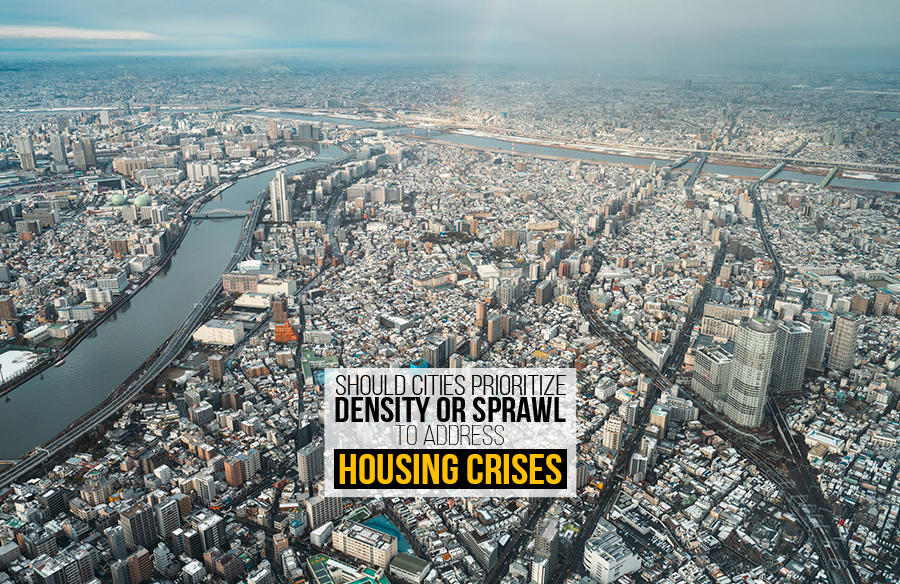
Building ultra-tall living environments might seem like the most obvious solution to the shortage of housing in densely populated cities. The technological advancements of the last century have made it possible for towering structures to rise, offering a way to accommodate growing urban populations in limited space. Cities like Manhattan and Tokyo exemplify how high-rise development can address housing crises while enhancing urban life.

In the vibrant streets of Manhattan, towering skyscrapers blend workspaces, entertainment, and green spaces like Central Park, creating a unique urban ecosystem. Tokyo, on the other hand, has embraced high-rise living with disaster-resistant, space-efficient designs that cater to a compact yet vibrant lifestyle, supported by one of the world’s most advanced public transport systems. These cities have demonstrated how well-planned vertical growth can transform urban landscapes, providing not only housing but also the infrastructure and services needed to create thriving, sustainable cities.

High Rises, Hidden Costs
While high-density developments may seem like a practical solution to urban challenges, their long-term repercussions tell a different story. As cities’ prime centres attract attention and prioritise development, the cost of living in these areas skyrockets, rendering them unaffordable for the working class. This forces lower-income groups to relocate to peripheral areas in search of affordable housing, leading to increased spatial and social exclusion.
Moreover, the concentration of urban services and infrastructure around these hubs further deepens this divide, leaving marginalized communities with limited access to essential resources. High-rise towers themselves pose additional challenges—they demand significant resources for construction, incur high costs, and rely on energy-intensive systems of air conditioning. Combined with heavy traffic and rising noise levels in city cores, such developments strain both the urban environment and its inhabitants.

Growth Beyond City Limits
To address the inequities of urban development, one alternative strategy is to expand the boundaries of urban cores, easing the pressure on existing areas by growing outward. This approach involves converting more land into urban spaces, allowing cities to spread across larger areas. However, when this expansion is uncontrolled and unplanned, it results in urban sprawl, where urban activity moves into quieter, less developed areas. This unplanned growth has become a common response to the limitations of dense city living.

The shift towards sprawl is driven by people’s changing housing preferences as they seek more spacious and greener environments. Moving away from the noise and social issues of city centres, they flock to the outskirts in search of tranquillity. This trend of expanding urban areas has been observed globally, with a study of 30 cities revealing that their footprints grew up to 16 times larger between 1800 and 2014. While this may offer temporary relief, it often brings new challenges, including increased dependence on cars, loss of agricultural land, and greater strain on infrastructure.

Unmanaged Urban Expansion
When urban development programs neglect the availability of essential services or economic opportunities, new housing on a city’s outskirts may do little to alleviate poverty or improve residents’ quality of life. As municipal service networks struggle to keep up with growing urban populations, migration, and land expansion, cities often fail to plan for growth effectively. Instead of proactive land development, many urban areas rely on informal arrangements, resulting in under-serviced settlements that house an estimated 25 to 70 percent of the urban populations in developing regions such as Asia, Latin America, sub-Saharan Africa, and the Arab states.

These under-serviced areas often remain neglected until their population density reaches a point that justifies the cost of infrastructure. However, empirical evidence suggests that as cities expand spatially and population densities decline, municipal costs for providing public services rise significantly. This also increases social costs, including heightened congestion, pollution, and longer commutes, which further diminish the overall well-being of residents.

Reflection on Urban Sustainability
In conclusion, the future of sustainable urban development lies in the delicate balance between high-density solutions and the expansive growth of city boundaries. As urban populations surge, the need for thoughtful planning, strategic infrastructure investment, and inclusive policies becomes more pressing than ever.
The cities of tomorrow must not only grow, but thrive, without compromising the well-being of those who call them home. To truly nurture vibrant, resilient communities, cities must prioritize the human experience by envisioning pedestrian-centric streets, child- and women-friendly neighbourhoods, lush green spaces, and recreational hubs. By fostering greener modes of transport and placing nature at the heart of urban life, designers can create environments where cities do not just exist, but flourish, for all who inhabit them.

References:
TED (2022). Vishaan Chakrabarti: A vision of sustainable housing for all of humanity | TED Countdown. YouTube. Available at: https://www.youtube.com/watch?v=B8kyrIQCFXQ.
Mahendra, A. and Seto, K.C. (2019). Upward and Outward Growth: Managing Urban Expansion for More Equitable Cities in the Global South. www.wri.org. [online] Available at: https://www.wri.org/research/upward-and-outward-growth-managing-urban-expansion-more-equitable-cities-global-south.
Jothilakshmy, P. (2023). REALIZING THE POTENTIAL OF SATELLITE CITIES THROUGH INTEGRATED PLANNING. [online] 8, p.82. Available at: https://www.ijnrd.org/papers/IJNRD2311010.pdf [Accessed 22 Nov. 2024].
Angel, S. (2023). Urban expansion: theory, evidence and practice. Buildings and Cities, 4(1), pp.124–138. doi:https://doi.org/10.5334/bc.348.
Sosyal, U. and Dergisi, A. (2016). Available at: https://www.sosyalarastirmalar.com/articles/the-concept-of-urban-sprawl-and-its-causes.pdf [Accessed 25 Nov. 2024].