In the Cambridge Dictionary, disability is defined as “an illness, injury, or condition that makes it difficult for someone to do some things that other people do, and that is usually permanent or lasts for a long time.” As it stands, this should require that all spaces be accessible for those with disabilities. While there are bylaws, codes, and standards that aim to ensure seamless accessibility, many designers fall prey to prioritising it in their work, often leaving it to the final stages of the design process. In this, accessibility becomes an afterthought, and herein lies the issue. A more responsible approach recognises that access is not separate from architecture but inherently linked to it. In this sense, designing for disability is not an additional burden on design thinking; it is a way of making architecture more humane, responsive, and complete.
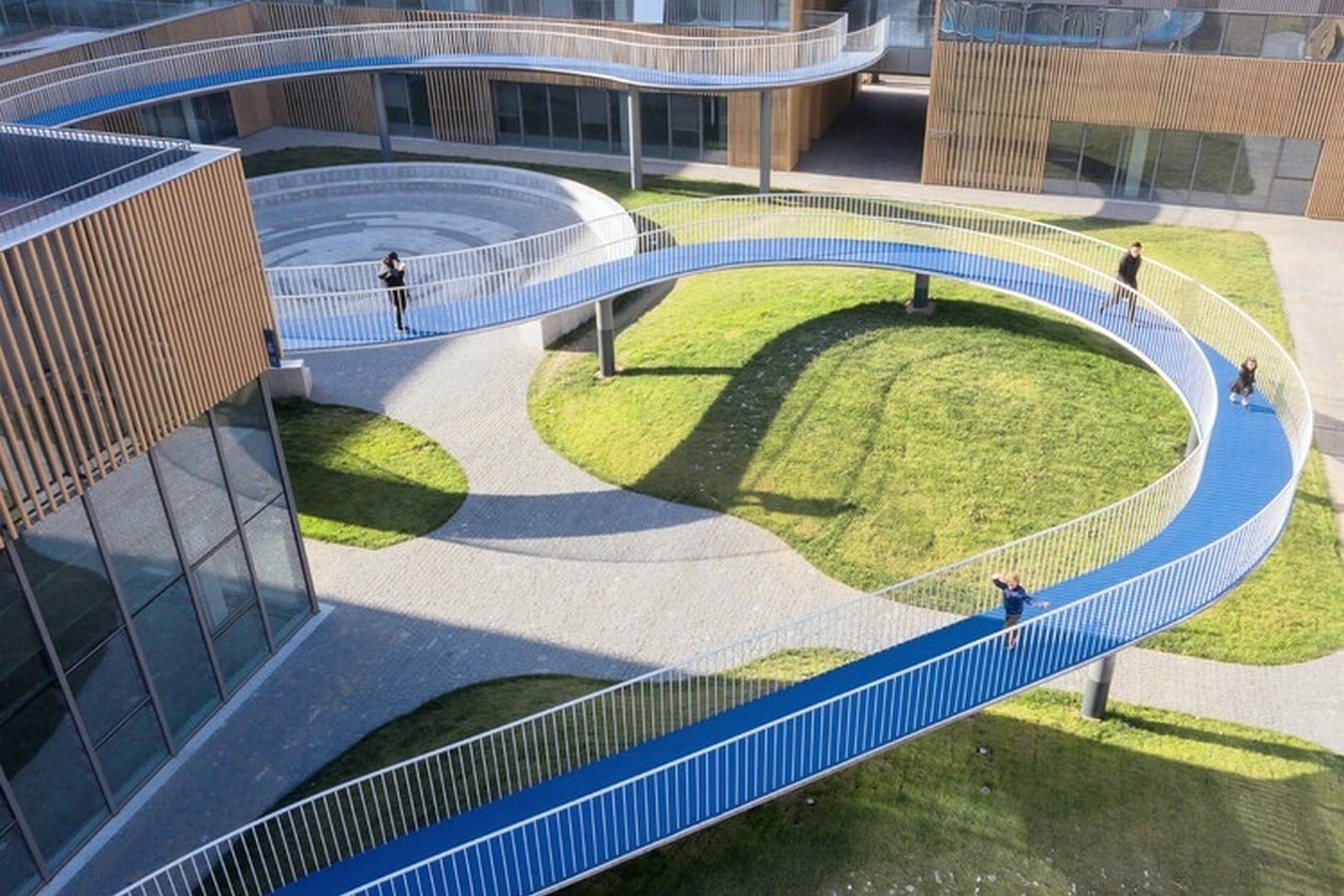
Disability Beyond Compliance
A common weakness in architectural practice is the tendency to treat accessibility as a compliance issue rather than a design principle. Ramps, lifts, accessible toilets, and designated parking are necessary components of an inclusive environment, but they do not by themselves guarantee meaningful access. Too often, such interventions are inserted into a completed design as isolated fixes, resulting in spaces that technically meet standards but still feel awkward, segregated, or difficult to use. This approach reduces disability to a checklist and accessibility to a minimum legal requirement.
In reality, true accessibility begins much earlier, at the conceptual stage of design, where the building’s fundamental logic is established. Decisions about entry, circulation, spatial hierarchy, and movement patterns already determine whether a space will be easy to understand and navigate. If disability is considered only after these decisions are made, accessibility becomes reactive rather than integral. A philosophy of design for disability, therefore, challenges architects to think beyond compliance and toward environments that are genuinely inclusive in their spatial thinking.
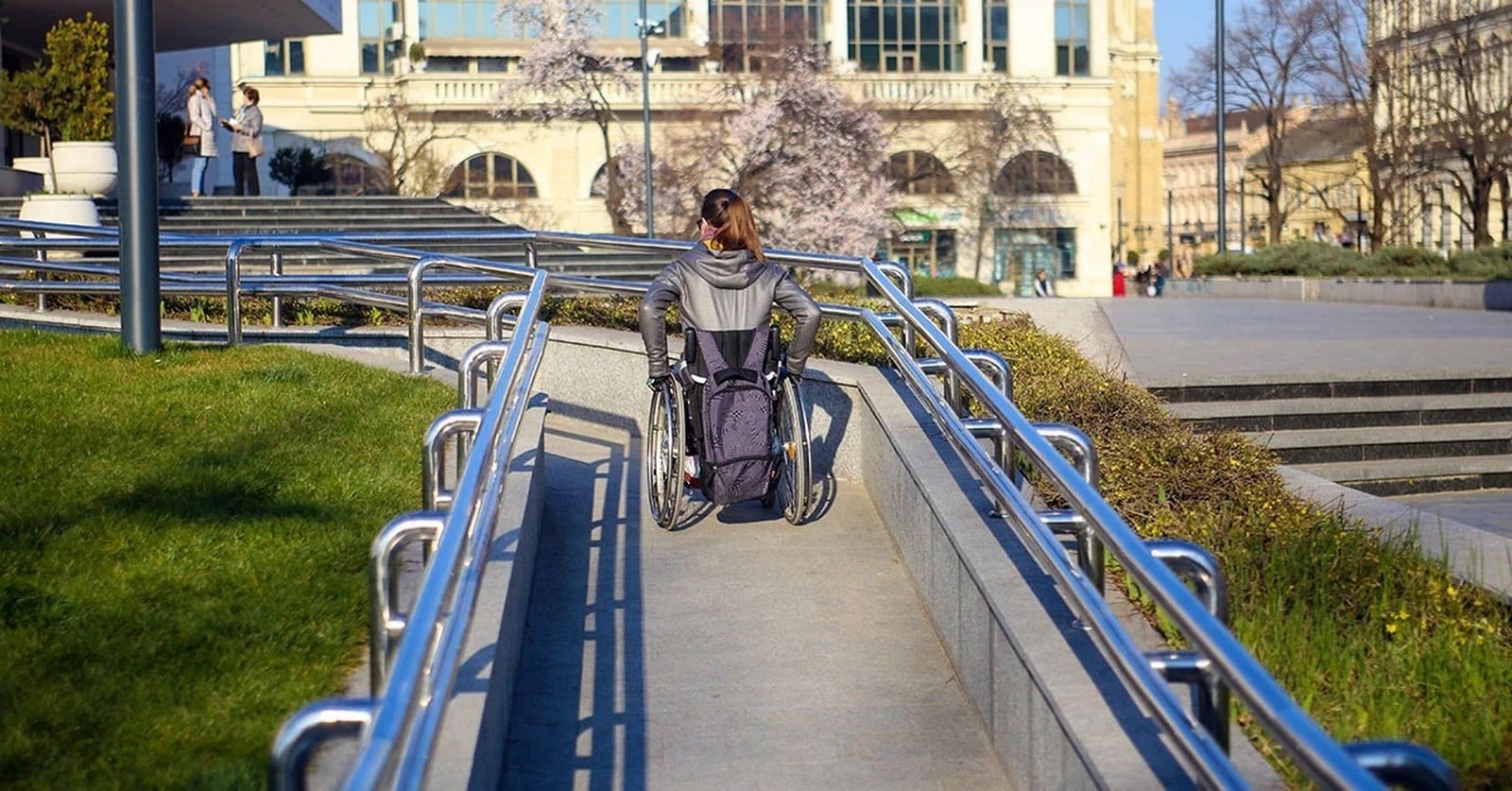
Architecture as an Inclusive Framework
Architecture operates through a series of spatial and environmental conditions that either support or hinder access. Planning, circulation, thresholds, lighting, acoustics, and spatial clarity are not secondary concerns; they are central to how a building is experienced. A wide corridor, a clear entrance sequence, or a well-placed resting point can make a space far more usable than one that relies solely on mechanical solutions.
Similarly, legible wayfinding, even lighting, and controlled acoustics can significantly improve comfort and orientation for people with different sensory, physical, and cognitive needs. Disability-informed design, therefore, broadens the meaning of accessibility beyond mobility alone. It asks how people understand space, how they transition between areas, and how they experience a building’s atmosphere.
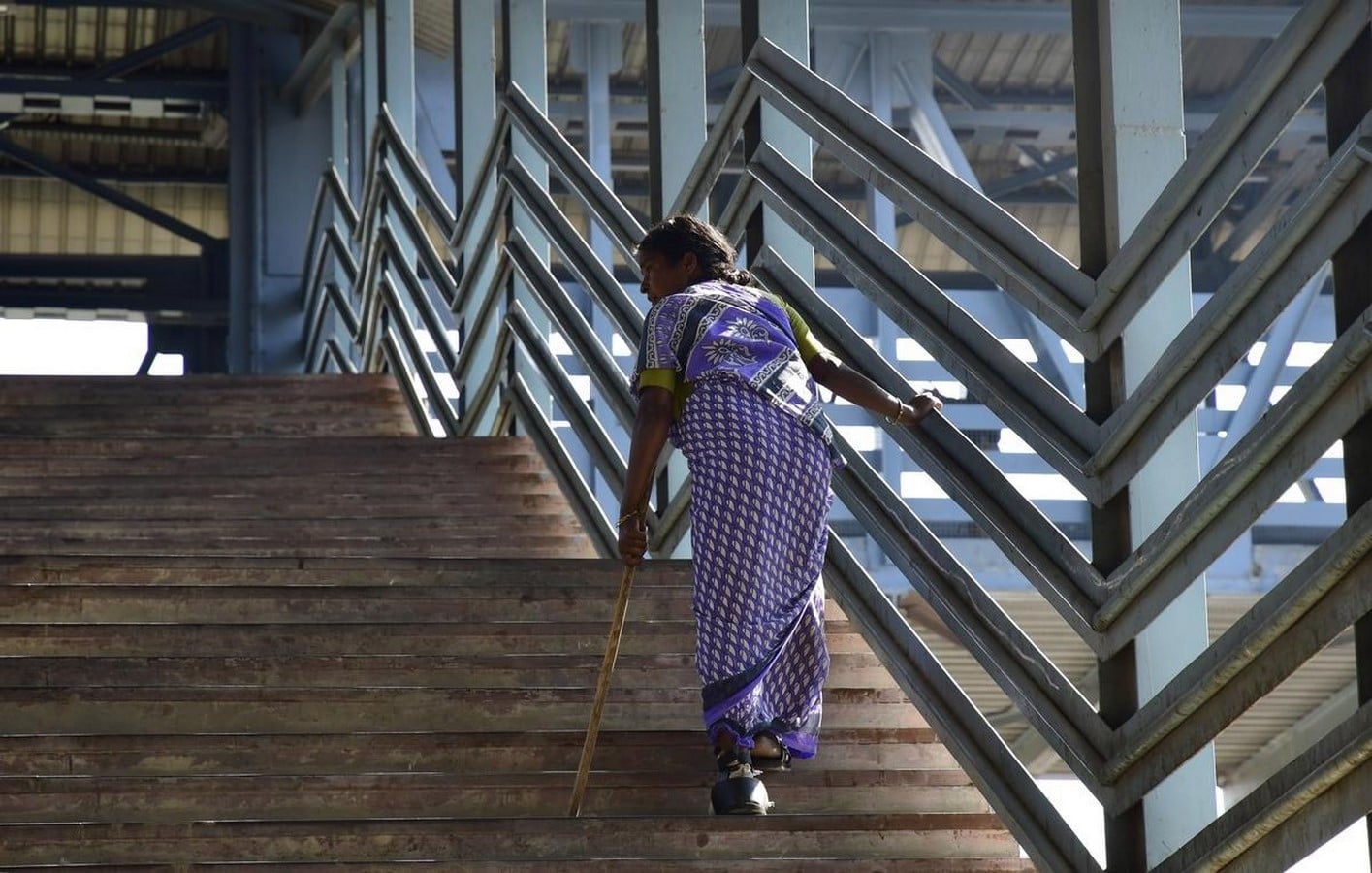
These questions are relevant not only to disabled users but to a much wider public, including older adults, children, injured persons, caregivers, and anyone navigating an unfamiliar environment. When architecture is designed with such diversity in mind, it becomes more flexible, more intuitive, and more generous in its use. Inclusive architecture is not limited to accommodation; it improves the quality of the space itself.
Design Philosophy, Not Retrofit
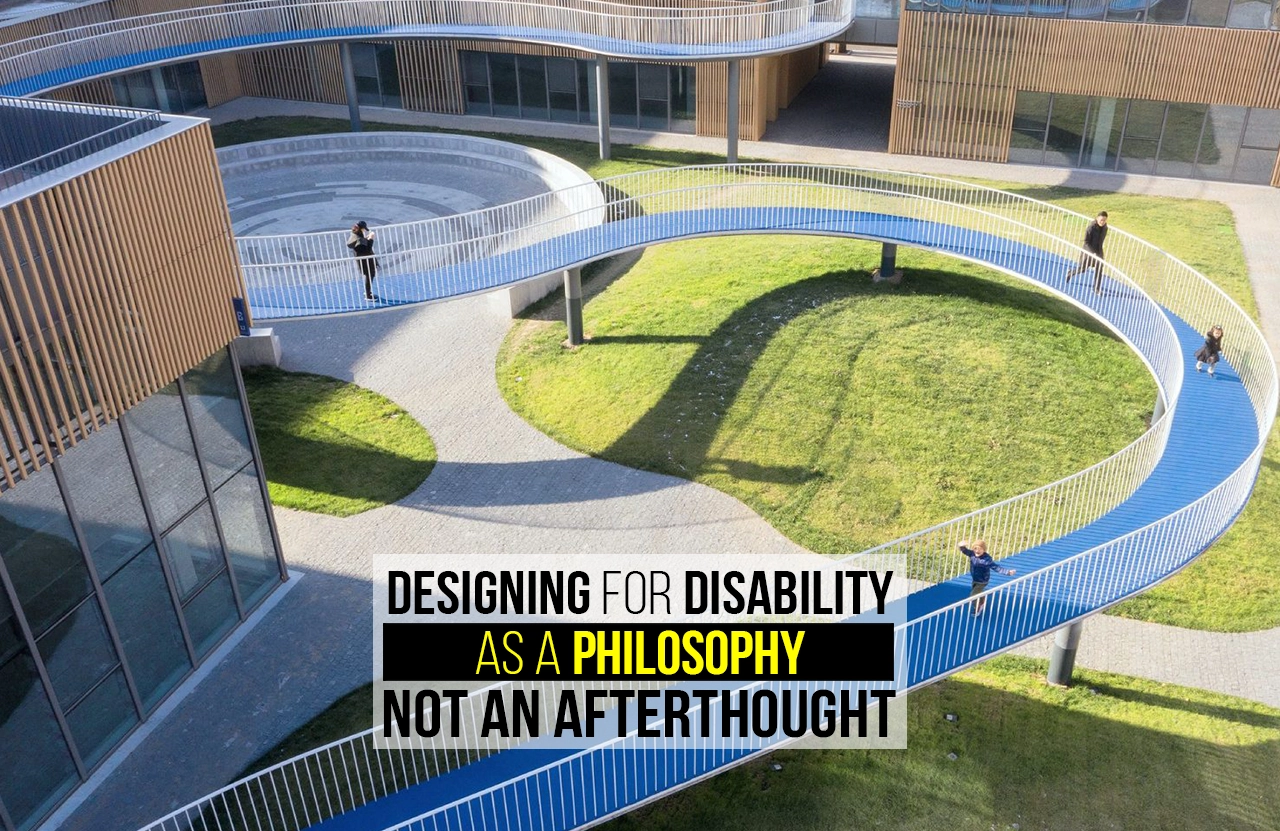
Thinking about disability as a design philosophy changes the role it plays in the architectural process. Rather than treating disability as a problem to be corrected after construction, it becomes a lens through which form, layout, and material decisions are made from the beginning. This is an important shift because retrofit solutions often appear disconnected from a building’s overall composition. A ramp added at the side of a structure, for example, may technically provide access, but it can also signal separation or afterthought if it is visually and functionally detached from the main entry.
By contrast, when inclusivity is embedded in the original design intent, access becomes seamless and coherent. This approach also supports broader architectural values such as dignity, autonomy, and belonging. A well-designed accessible space does not simply allow entry; it allows participation without embarrassment, dependence, or unnecessary effort. In that sense, inclusive architecture is not merely about meeting code requirements, but about expressing respect through spatial design. It acknowledges that people do not experience buildings in identical ways, and that good architecture must anticipate this diversity rather than attempt to fix it later.
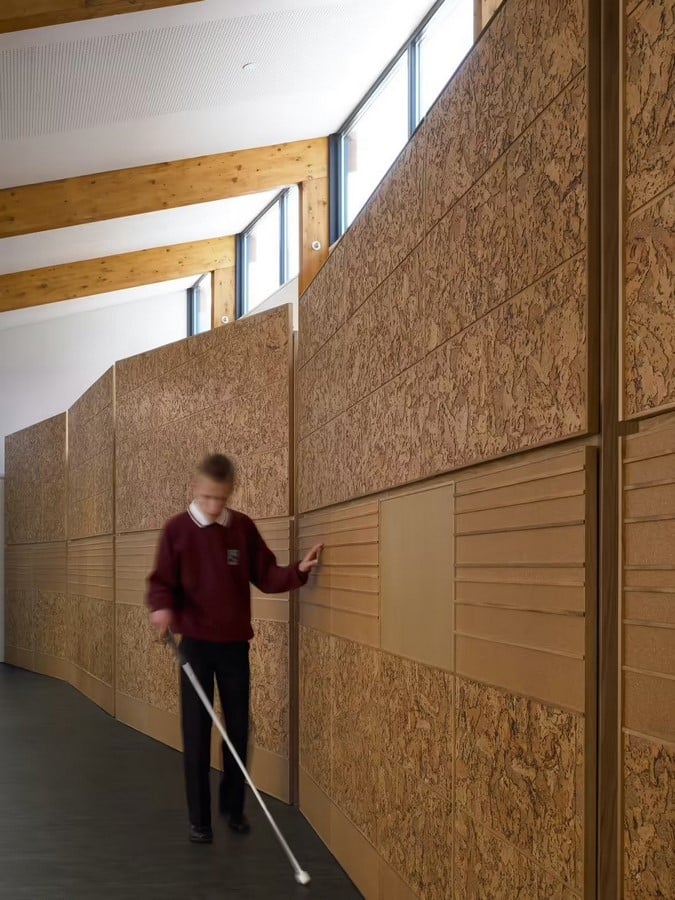
Designing for disability as a core architectural philosophy ultimately strengthens architecture itself. It shifts the discipline away from narrow assumptions of a standard user and toward a more realistic understanding of human diversity. When accessibility is considered from the start, buildings become clearer, more adaptable, and more meaningful in everyday use. The result is not only a better design for disabled users, but a better architecture for everyone. By treating disability as a foundational design concern, architects can create spaces that are not just compliant but genuinely inclusive, responsive, and humane. Architecture at its best does not correct for difference after the fact; it begins by recognising difference as part of the design condition itself.
References:
- Harvard Graduate School of Design (2021) Designing for Disability Justice: On the need to take a variety of human bodies into account. Available at: https://www.gsd.harvard.edu/2021/02/designing-for-disability-justice-on-the-need-to-take-a-variety-of-human-bodies-into-account/gsd.harvard
- Rehan, E. (2025) Why Does Architecture Need to Engage with Critical Disability Studies? Available at: https://sheffield.ac.uk/ihuman/our-work/marginalised-humans/disability-dialogues/why-does-architecture-need-disabilitysheffield.ac
- University of Mersin / METU repository (n.d.) An Inquiry into the Necessity of Participation of People… Available at: https://open.metu.edu.tr/bitstream/handle/11511/99526/10495806.pdfopen.metu.edu
- University of Wollongong (n.d.) Universal Design Guide. Available at: https://documents.uow.edu.au/content/groups/public/@web/@environment/documents/doc/uow275583.pdfdocuments.uow.edu
- U.S. National Endowment for the Arts (n.d.) Disability Design: Summary Report from a Field Scan. Available at: https://www.arts.gov/impact/accessibility/disability-design-reportlondon.gov
- Royal Institute of British Architects (n.d.) What are the key principles for architects when designing for unseen disability? Available at: https://www.riba.org/work/insights-and-resources/professional-features/key-principles-for-architects-when-designing-for-unseen-disabilities/
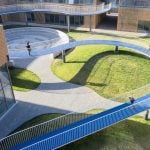
Public Ramps_© Zhi Xia.jpg 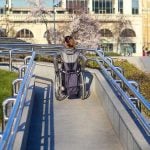
Ramp Accessibility in Public Spaces_© https://www.madeformovement.com/en-gb/blog/universal-design-the-key-for-inclusion-and-accessibility.jpg 
Railings and Accessibility_© The Hindu.jpg 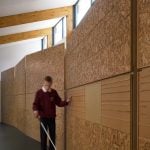
Accessibility Through Tactile Surfaces_© Ian Fulgar.jpg