Picture a Saturday evening in East London, sometime in the 1960s. The factories along the river have gone quiet. But beside them, under a great skeleton of steel, the lights are on. Someone is rehearsing a play. A few metres away, a teenager is peering into a microscope, and an older woman is learning to weld. A crane glides overhead, lowering a room into place where, an hour ago, there was only air.
Nobody here is a spectator. Nobody has bought a ticket to be told what to think. This is the Fun Palace, and it has a curious problem: it does not exist.
Cedric Price’s Fun Palace is among the most talked-about buildings of the twentieth century, and it lives entirely on paper, in sketches, models, letters and stubborn memory. That is exactly why it is worth our attention. When a building is never built, it is spared from becoming ordinary. It stays an idea, and ideas can travel.
Architecture on Paper: Cedric Price’s Fun Palace
A Building You Could Not Walk Into
Picture a Saturday evening in East London, sometime in the 1960s. The factories along the river have gone quiet. But beside them, under a great skeleton of steel, the lights are on. Someone is rehearsing a play. A few metres away, a teenager is peering into a microscope, and an older woman is learning to weld. A crane glides overhead, lowering a room into place where, an hour ago, there was only air.
Nobody here is a spectator. Nobody has bought a ticket to be told what to think. This is the Fun Palace, and it has a curious problem: it does not exist.
Cedric Price’s Fun Palace is among the most talked-about buildings of the twentieth century, and it lives entirely on paper, in sketches, models, letters and stubborn memory. That is exactly why it is worth our attention. When a building is never built, it is spared from becoming ordinary. It stays an idea, and ideas can travel.
Two Restless Minds
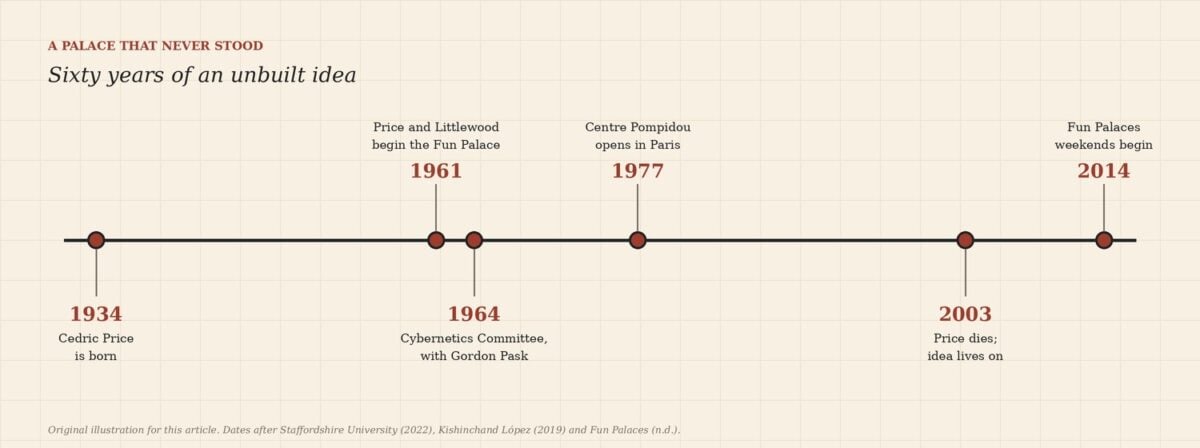
Every great idea needs a good argument behind it, and this one had two people who loved to argue. Cedric Price (1934–2003) was a British architect with a wicked sense of humour, a teacher at the Architectural Association, and a man who liked to ask whether a client needed a building at all. Joan Littlewood was the formidable director of Theatre Workshop in Stratford East, a woman who believed that culture belonged on the street corner as much as in the stalls.
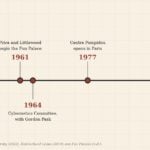
They began working together on the project from about 1961, and the collaboration ran for several years (Staffordshire University, 2022). Littlewood wanted a “university of the streets”, somewhere ordinary people could try things out without being graded. Price, instead of drawing a handsome box to put them in, asked a far more interesting question: what if the building itself could keep changing?
Not a monument, but a machine for living, learning and play. — the spirit of the Fun Palace
A Kit of Parts, Not a Building
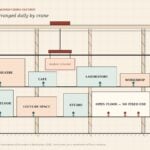
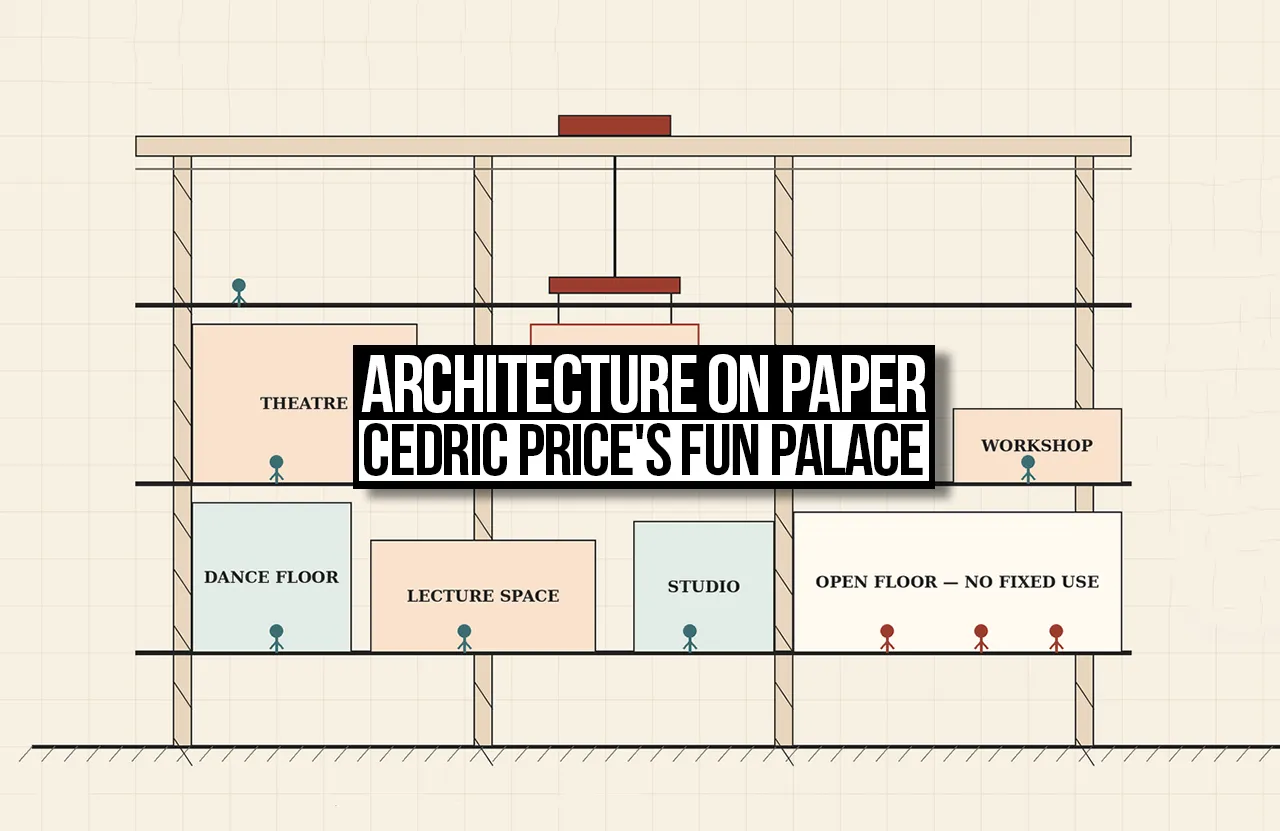
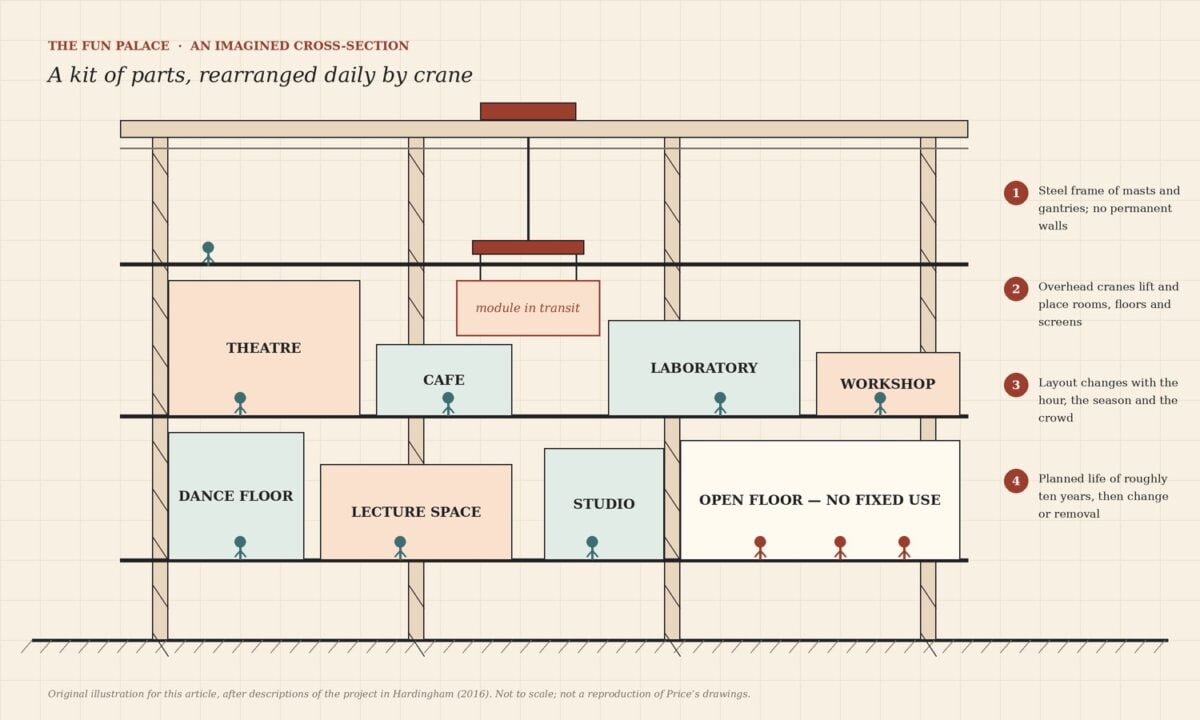
The result was radical. The Fun Palace was a vast, open steel frame of masts and gantries. Inside it, walkways, stairs, screens and whole rooms could be lifted, slid and rearranged by overhead cranes. A laboratory could become a dance floor by teatime. A lecture hall could turn into a café by nightfall. Nothing was fixed, and that was the point.
Behind the playfulness sat a handful of serious convictions:
- Change over permanence. The palace was meant to last perhaps a decade, then be altered or removed once society had moved on. A building with an expiry date was almost heresy.
- Doing over watching. Visitors were co-creators, invited to tinker, cook, paint, argue and perform.
- A building that listens. The cybernetician Gordon Pask advised on how feedback and early computing might let the structure respond to the people using it.
- Learning as leisure. Education would happen through making and mixing, not through desks in rows.
The chosen setting, by the River Lea in East London, was an industrial landscape in need of a second chance. Price and Littlewood saw it not as wasteland but as a canvas (Designboom, n.d.).
The Quiet Death of a Loud Idea
So why was it never built? The honest answer is that it was too far ahead of its time, and too difficult to describe. The project won admirers among artists and thinkers, but it collided with planning rules, funding worries and one deceptively simple question: what is it? A theatre? A school? A leisure centre? Officialdom loves a category, and the Fun Palace wriggled out of every one.
By the late 1960s the momentum had drained away. Littlewood was disheartened. Price, however, never let go of the central idea, and carried it, restless and unbowed, into everything that followed.
Paper That Outlived Concrete
Here is the sweet irony. Because the Fun Palace was never constructed, it never aged. It kept circulating through studios and lecture halls like a good rumour, and it has often been cited as an influence on the Centre Pompidou in Paris (Staffordshire University, 2022), the colourful, exposed and wonderfully open building by Renzo Piano and Richard Rogers that opened in 1977 (Kishinchand López, 2019). Its spirit also runs through the playful drawings of Archigram, and through today’s museums, libraries and community hubs, which try to be open, social and adaptable rather than hushed and imposing.
Price kept testing the same instincts elsewhere, in the Potteries Thinkbelt, a mobile university imagined across Staffordshire, and in the Generator, a responsive, computer-aided scheme for a retreat in Florida. His archive now rests at the Canadian Centre for Architecture in Montreal, where researchers still pore over his sketches and sharp-tongued letters (Designboom, n.d.).
Palaces in Living Rooms
There is a lovely postscript. In 2014, the writer and theatre-maker Stella Duffy and Sarah-Jane Rawlings launched Fun Palaces, an annual weekend of free, community-led events inspired by Littlewood and Price (Fun Palaces, n.d.). Libraries, parks, village halls and front rooms become pop-up palaces, hosting science demonstrations, knitting circles, storytelling and dancing.
It may be the most fitting legacy imaginable. The Fun Palace never needed cranes and steel to exist. It needed people, generosity and the quiet belief that everyone has something worth sharing.
What It Asks of Us Now
We live among smart cities, hybrid workplaces and public spaces that must change faster than ever. Seen from here, Cedric Price’s Fun Palace feels less like a relic and more like a question we have only just begun to answer. What if buildings listened? What if they were designed to change, or even to disappear? What if the purpose of architecture were not to impress us, but to free us?
Price once asked, memorably, whether technology was the answer, and what the question had been. The Fun Palace asked it beautifully. We are still working out how to reply, and perhaps that is exactly what a good building should do: leave the door open.
Key Takeaways
- Cedric Price’s Fun Palace was an unbuilt 1960s project, imagined with theatre director Joan Littlewood.
- It proposed a flexible, ever-changing structure built for participation, learning and play.
- Though never realised, it shaped high-tech architecture, community culture and ideas of adaptable design.
- Its spirit lives on today through the Fun Palaces community movement.
References:
Designboom (n.d.) The Fun Palace: Cedric Price’s 1960s visionary project that (kind of) never came to be. Available at: https://www.designboom.com/architecture/fun-palace-cedric-price-visionary-project-laboratory-never-came-to-be/ (Accessed: 18 October 2026).
Fun Palaces (n.d.) Fun Palaces. Available at: https://funpalaces.co.uk (Accessed: 18 October 2026).
Hardingham, S. (2016) Cedric Price Works 1952–2003: A Forward-Minded Retrospective. London: Architectural Association; Montreal: Canadian Centre for Architecture.
Kishinchand López, K. (2019) ‘Cedric Price, Joan Littlewood: el ejemplo Fun Palace en los archivos del Canadian Centre for Architecture (CCA)’, REIA: Revista Europea de Investigación en Arquitectura, 14, pp. 127–138. Available at: http://reia.es/REIA14_08_Web.pdf (Accessed: 18 October 2026).
Mathews, S. (2007) From Agit-Prop to Free Space: The Architecture of Cedric Price. London: Black Dog Publishing.
Staffordshire University (2022) The Fun Palace the focus of 2nd Cedric Price Day. Available at: https://www.staffs.ac.uk/news/2022/the-fun-palace-the-focus-of-2nd-cedric-price-day (Accessed: 18 October 2026).
Images: Figures 1 and 2 are original illustrations created for this article, not photographs or reproductions of archival drawings.