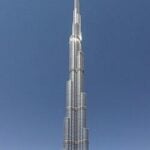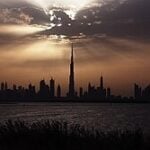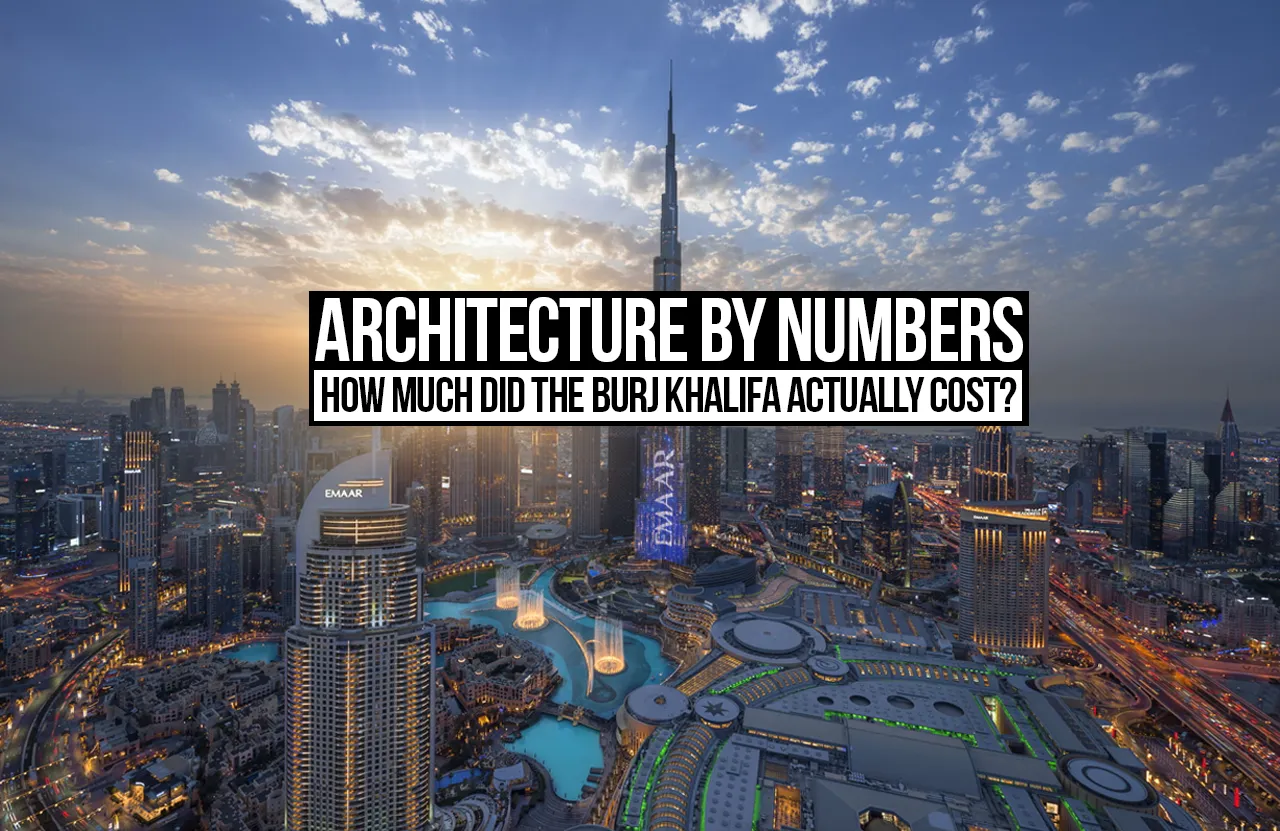
The Burj Khalifa in Dubai is not only the world’s tallest building; it is an architectural statement of ambition, structural engineering, economic power, and the evolving identity of contemporary cities. At 828 meters, the skyscraper stands because of a unique partnership between architecture, structural engineering, construction technology, and international finance. One key question about the building is: what was the cost of constructing the Burj Khalifa? The frequently cited cost of the building, around $1.5 billion, is a useful starting point for investigation; however, the building’s economic story goes beyond that number. This paper examines Burj Khalifa from financial, architectural, and social and environmental perspectives. It shows that the value of an iconic structure should not be based only on construction cost, height, and the financial gain it yields. Instead, we need to consider the human lives invested in it, its connection to the city, its environmental impact, and its long-term value to people.
1. Introduction: When Architecture Becomes a Number
Buildings have always served people, shaped the city, and symbolised a particular generation’s aspirations. Burj Khalifa can be unequivocally classified as the last. Soaring above Dubai’s skyline, it serves not only as a workplace but also as a residence, a tourist attraction, an engineering breakthrough, and a statement of contemporary architecture’s ambition.
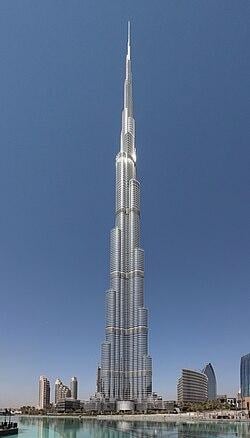
The building was completed and opened for use in January 2010, and it stands 828 metres tall, breaking all existing records in super-tall building design. Skidmore, Owings & Merrill (SOM) designed it, with architects Adrian Smith and William F. Baker making the largest contribution to the project. However, behind its illuminated silhouette lies a question that deserves more than a quick numerical answer: how much did the Burj Khalifa cost?
The most cited figure is around US$1.5 billion for the tower itself (BESIX Watpac, n.d.; ICE, n.d.). On the surface, this appears to solve the question of the building’s price tag. A design process, a budget, and many people worked on the building’s construction, and the result became a global landmark.
Architecture is never that simple. The building’s price depends on what it includes. Is the cost calculated only for the tower or for the surrounding buildings as well? Does the cost include land, construction, funding, all other professional fees, and future maintenance expenses? What are the environmental costs of construction? Is the commercial success of a luxury skyscraper independent of the social situation in which it was constructed?
These are especially relevant considering that the Burj Khalifa arose at a time when Dubai was experiencing rapid urban growth, which was later followed by economic instability in the late 2000s. The construction of the Burj Khalifa became closely associated with the emirate’s efforts to enhance its global image and attract foreign investment.
This paper examines the Burj Khalifa through the tension between architectural ambition and economic reality, rather than simply calling it a very expensive structure. The purpose is not to underestimate the building’s accomplishments. Instead, it aims to evaluate those accomplishments more thoroughly by understanding what the headline cost figure means and what it obscures.
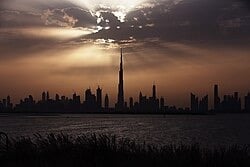
2. The Headline Figure: US$1.5 Billion
It is easiest to start with the reported construction costs.
According to the Institution of Civil Engineers, construction costs for the Burj Khalifa amount to about US$1.5 billion, and the contractor involved in the construction process reports the same amount for the project (BESIX Watpac, n.d.; ICE, n.d.).
These are strong starting points for discussing the building’s economics. Still, it must be noted that these are construction costs only, not all investments related to urban development around it.
This distinction matters.
Skyscrapers do not stand alone; they need foundations, structural elements, lift systems, engineering systems, fire protection systems, electrical systems, plumbing systems, sanitation systems, and various special facilities. In a skyscraper, these facilities must operate under different conditions than in ordinary buildings.
Second, the skyscraper is one element of Downtown Dubai, a much larger complex that includes not only residences but also business spaces, retail spaces, hospitality facilities, and open spaces. The financial obligations connected with this complex cannot be summed up with the skyscraper’s costs alone.
It is for this reason that claims about the Burj Khalifa being constructed for US$1.5 billion must always be qualified with one simple point – that this is the reported cost of construction of the building and not the cost of development of the whole of Downtown Dubai.
In the same vein, when comparing it with other high-profile buildings, take care, since the reported cost may reflect a different mix of costs. This is because there is no set accounting boundary, which makes comparisons misleading.
The number is critical, but its significance lies in how it is defined.
One of the first lessons that architecture teaches is about the importance of numbers in construction economics. While numbers seem objective, every number is shaped by decisions and assumptions.
3. Why Building 828 Meters Costs So Much
Expenditure on the Burj Khalifa becomes comprehensible when you analyse the demands of architecture and engineering.
It is not simply an upward extension of the building process for an ordinary office building. It becomes increasingly complex as the building rises, particularly in the relationship between height, structural behaviour, wind resistance, and building services.
3.1 Foundations and structural systems
The supertall building must safely transfer massive loads to the ground. Burj Khalifa’s foundation system includes an extensive reinforced-concrete mat foundation with bored reinforced-concrete piles. The structural design responds to the building’s massive weight, ground conditions, and the need to manage settlement.
For its above-ground portion, the building uses a reinforced-concrete buttressed core structural system. It uses the building’s three-winged shape to help withstand lateral loads.
As the building rises, its geometry also changes. This design helps ensure structural stability and prevents the formation of coherent wind vortices that would otherwise cause significant vibration problems (Baker et al., 2008).
These costs are not shown in photographs of the completed building but are included in the concrete volume, reinforcement, temporary works, testing, specialised design, and sequencing of construction works.
3.2 Concrete, steel and construction logistics
The tower required a large volume of concrete and steel reinforcement. The Organisation of the Petroleum Exporting Countries (OPEC, 2010) states that the project used 330,000 cubic meters of concrete and 39,000 tons of steel reinforcement.
These figures show the materials needed for the construction work. Moreover, they highlight the challenges of transporting, storing, testing, and installing building materials at this extraordinary height.
Concrete should be transported and placed within the required time. Reinforcement should be fabricated and installed correctly. Equipment should function properly, and different teams should organise the construction sequence properly.
As the building gets taller, the complexity of transporting people, equipment, and materials increases. MEED (2010) notes that during the tower’s construction, concrete was pumped to a height of 600 meters.
All these procedures are included in the total cost. Some part of this cost is connected with the materials themselves, while other parts are connected with equipment, labour, energy and specialists who work with materials.
3.3 Wind, movement and human comfort
Wind at high elevations becomes an integral part of the design process. The skyscraper must withstand structural loads while keeping movement levels within acceptable limits for its occupants.
The tower’s form, orientation, and structural configuration were designed to achieve this goal. Wind tunnel tests and engineering analysis allowed the designers to understand how the building would perform under various wind conditions.
This process constitutes a significant, yet often unappreciated part of the cost of architecture. The price tag of a skyscraper includes more than materials purchased and assembled on-site; it also incorporates the expertise of prediction, risk management, and problem-solving.
3.4 Vertical transportation and building services
It must move people efficiently, provide suitable environmental control, and offer a wide range of functions.
Elevators, electric power distribution, ventilation, cooling, plumbing, communication systems, firefighting, and emergency measures must be integrated into limited space. This affects not only efficiency but also safety, usable floor area, and operating costs.
Since the costs of vertical transportation are particularly high in super tall buildings, because elevators take up valuable floor space which could otherwise be used for residential, office and hotel purposes, this is also an important aspect when designing such buildings.
From an economic perspective, the history of the Burj Khalifa is essentially one of interdependence.
4. The Difference Between the Tower and Downtown Dubai
One critical difference in the Burj Khalifa’s cost is the distinction between a building and an urban development.
This building is located in the centre of Downtown Dubai, a key mixed-use development built around the synergy of several components, including residences, commercial establishments, hotels, and retail facilities. This development has its own infrastructure, public facilities, transportation needs, buildings, and ongoing management.
Each is distinct and may have its own budgeting needs.
Consequently, the $1.5 billion cost of building the tower cannot be taken as the cost of developing the whole neighbourhood.
The difference is far from being an accounting formality. This difference highlights how modern urban development is carried out. The iconic building can serve as the most noticeable element of a larger investment scheme, drawing attention to neighbouring property and business activity.
In this respect, the Burj Khalifa is a landmark both as an architectural object and a tool of urban economics.
International recognition creates identity for Downtown Dubai. The district, in turn, provides the context that makes the tower more than an insignificant silhouette.
The relationship also poses a planning problem: if the landmark is the image of the whole district, what measures should be used for evaluating the value of the urban environment? Should it be limited only by such criteria as property prices, number of visitors and investments or should it be enriched by such criteria as walkability, accessibility, diversity and sustainability?
A development district can be commercially profitable without fulfilling all its social and environmental goals. Similarly, a costly public area will not necessarily become important just because of its visual appeal.
Urban planners must figure out how architectural icons shape their environment. It is not just about the building itself but the connections it creates with streets, public areas, transportation systems, and the urban environment in general.
5. The Economics of an Iconic Building
Burj Khalifa is the product of Emaar Properties, one of Dubai’s leading real estate developers. Throughout the entire design process, the building’s architecture was inextricably linked to its business and symbolism.
The tower includes residential, office, hospitality, and observation facilities. This mix of functions creates multiple potential income streams, though each will depend on factors such as market conditions, occupancy levels, operating costs, and demand.
At the time of its inauguration, contemporary media reported that most of the building’s residential and commercial units were already sold out. According to The National, Emaar chairman Mohamed Alabbar said in January 2010 that “the developer had sold 90% of units, and earned a return above 10 per cent from the reported $1.5bn construction cost” (Arnold, 2010).
However, caution should be exercised while interpreting this statement. This is because the statement above reflects the developer’s stance, not an independent audit of the building’s full profitability over its entire lifetime. Revenue, profit, cash flow, and ROI are different indicators that depend on the cost structure and accounting period used.
Regardless, the statement above highlights a major characteristic of iconic architecture: value that goes beyond the earnings from the building’s actual use.
An internationally recognised landmark can enhance a developer’s image, attract international interest, boost tourism, and improve the appeal of surrounding properties. In other words, a landmark can provide a commercial advantage due to its architecture.
However, this kind of value does not come automatically. Property markets vary, and financing options change. A landmark can be culturally significant but still face economic challenges.
Therefore, the difference between financial value and architectural value matters. A building can generate revenue and enhance a city’s global image, but it does not guarantee environmental performance or social usefulness.
Also, a building which serves public functions can provide benefits that cannot be measured financially alone.
Architecture is related to both economic and cultural spheres. In the case of the Burj Khalifa, this interrelation is especially noticeable because the building’s record-breaking status is closely tied to real estate development.
6. The Financial Crisis and the Timing of Completion
The Burj Khalifa emerged during a period of economic uncertainty.
Dubai’s rapid rise in the 2000s brought massive real estate and infrastructure investment. The 2008-2009 financial crisis revealed vulnerabilities in the real estate market and in funding, affecting not only developers but also contractors, investors, and construction workers.
The tower opened in January 2010, when the financial crisis’s implications were still highly relevant to Dubai’s real estate sector. At the time, the press reported on Dubai’s financial problems, changing market prices, and the importance of completing and delivering large projects (Al Jazeera, 2010; Arnold, 2010).
The opening thus was an architectural event, which was also determined by economic factors.
In this context, one should question the conventional view that a completed landmark represents a straightforward transition from the architect’s ideas to financial prosperity. Large-scale projects face various risks throughout their life cycles. Their construction costs, completion times, demand, and financing terms can change.
The financial repercussions of these risks extend beyond the developer: contractors must maintain cash flow, suppliers must be paid, employees must do their jobs, and buyers may not know what to expect in future prices or delivery.
The fact that the building is completed does not mean that the economic climate during construction does not affect it.
Nevertheless, it would be unfair to consider the Burj Khalifa only in the context of the global financial crisis. This building became a landmark for architecture and tourism, and its significance cannot be evaluated based on only one economic period.
Iconic buildings can both represent their times and influence years to come.
For planners and architects, this means considering economic sustainability from the start of construction. Ambition is necessary, but realistic budgets, procurement, financing, and adaptability matter just as much.
7. The Human Cost: Looking Beyond Concrete and Glass
A consideration of the costs associated with the Burj Khalifa should not be confined to the economic, material and engineering aspects alone.
The building was constructed by thousands of people – engineers, architects, construction managers, technicians, artisans and labourers alike. Media reports have mentioned a workforce of around 12,000 people working at the construction site of the Burj Khalifa (Al Jazeera, 2010; BESIX Watpac, n.d.).
This number is significant not only because of the project’s scale but also because of its human dimension.
Each part required collaboration, and those people’s contributions would not appear in any architectural history books. Behind each façade stand people who moved materials, operated machines, arranged reinforcement, set up services, maintained equipment, and met difficult construction schedules.
For many people in the Gulf construction industry, the job involved migration, living away from family, and looking after relatives back home.
Buckley’s (2012) research on construction migrants from Kerala who lost their jobs in Dubai due to the 2009 economic recession demonstrates the economic insecurity that may be associated with construction migration.
This particular research should not be taken as proof that all the employees working at the Burj Khalifa were subjected to the same circumstances. This is important for understanding the broader context in which large-scale construction projects in Dubai have been executed.
This matters because responsible criticism should be supported by facts rather than speculation. However, the problem remains and cannot be left unnoticed. When a building’s identity becomes international through its association with height, technology, and luxury, the creators of the structure often disappear.
The financial aspects of labour are reflected in budgets through wages, contracts, recruitment, and employment costs. However, labour cannot be represented by a single factor.
Workers’ wellbeing depends on prompt payment, a safe work environment, medical care, accommodation, fair recruitment, a grievance procedure, and protection from arbitrariness. This is a matter of dignity and responsibility, not a luxury that could be considered after good architecture.
Hence, any empathy-based approach to the Burj Khalifa should avoid two extremes. It should neither idealise construction as an unproblematic success of human genius nor treat the whole project as one story of exploitation.
Rather, it should acknowledge the extraordinary skills that go into building the skyscraper and question how its costs, dangers, and benefits are distributed.
From an ethical point of view, this means architects should consider that their choice of materials, contractors, construction schedule, and procurement policy may affect working conditions. Their responsibilities do not end once the drawings are prepared and the building is finished.
The story of a building is that of its making.
8. What Does the Building Cost After Completion?
The inauguration of the Burj Khalifa in 2010 was just the start of its operation, not the end of its costs.
Buildings of such proportions are meant to be constantly maintained, inspected, cleaned, serviced and renewed. Mechanical and electrical installations must operate; elevators must be maintained; façades must be inspected; fire safety installations must be tested; and common areas must be managed.
However, for a building this tall, these activities have specific logistical and technical requirements. Façade maintenance requires specialised access equipment.
Operating costs will also depend on energy use, water consumption, occupancy patterns, maintenance schedules, and the performance of installed systems.
It is crucial to differentiate between the fact of such costs and their exact amount. Without an official operating budget, no annual maintenance costs can be provided for the Burj Khalifa. Even the US$1.5 billion in construction costs do not answer the question.
Lifecycle costing considers construction costs, operating expenses, regular renovations, replacement of major equipment, and, eventually, the cost of adaptation or demolition.
Lifecycle costing matters in architecture because design decisions affect costs for years. What seems cheaper at the beginning may prove more expensive to maintain or operate. On the other hand, an expensive system may last longer or consume less energy.
The best option depends on how the building will be used, its expected lifespan, local weather conditions, maintenance capabilities, and financial projections.
In the case of Burj Khalifa, lifecycle management is especially important since this building is not only a functioning property but also a landmark. It requires proper operation, management, finances, and renovation of the building’s systems without jeopardising the building’s safety and utility.
This brings us to another question: should we evaluate the cost of architecture right after the building is finished, or when it serves its occupants?
The second method gives a better idea of both aspects. Construction costs tell us about the cost of building the structure. Life-cycle cost helps us understand the cost of maintaining the structure.
9. Environmental Costs: The Price of Building Higher
Other environmental considerations related to the Burj Khalifa fall outside its construction budget.
Energy is used to produce both concrete and steel. Transporting materials, operating construction machinery, and running the building itself add to environmental costs.
However, an accurate evaluation of a building’s environmental impacts cannot be achieved solely by knowing the quantity of materials used. Such an evaluation is possible by collecting data on production and transport distance, construction processes, energy and water use, maintenance, replacement cycles, and the scope of the life cycle analysis.
Nonetheless, the amount of concrete and reinforcement used in the construction project indicates the importance of considering embodied carbon in assessing a supertall building (OPEC, 2010).
Embodied carbon refers to the emissions involved in the extraction, manufacturing, transportation, installation, maintenance, and ultimate disposal of building materials and elements.
Operational energy is another issue that requires attention. Building cooling systems need to be well-designed and efficient, along with efficient façades and proper control systems. The real-life performance of a building’s systems determines its environmental performance.
Water is another element which needs to be addressed in such conditions. Desert conditions require water supply, treatment, cooling, and even landscape irrigation to be considered in relation to local resources and infrastructure.
These elements do not necessarily make the supertall building environmentally irresponsible. Density can be quite environmentally friendly under certain conditions, as tall buildings provide compactness and shared infrastructure. Tall buildings allow for multiple functions on a relatively small plot of land.
However, the positive aspects of density depend on the whole urban system. A compact building located in a district which is not connected via public transportation, walking and other means will result in different mobility effects.
What is being asked here is not whether height is intrinsically sustainable or unsustainable, but rather if there has been a fair assessment of the environmental impacts of that specific development in the urban environment.
The Burj Khalifa serves as an example where we can assess the distinction between what engineering technology allows and the environmental responsibilities of responsible architectural design.
With climate change demanding that our buildings be constructed in lower-carbon ways, it becomes increasingly important that future landmark building projects be judged not just by their record-breaking aspects.
10. Architectural Value Beyond the Price Tag
The Burj Khalifa’s importance cannot be measured by cost alone.
The building’s distinctive form, plan, structure, and relationship with Dubai’s skyline make it one of the most recognisable buildings of the modern period. The architectural character of the building comes, at least in part, from the manner in which these elements complement each other.
The Burj Khalifa also reveals the relationship between architecture and cultural representation. The building sends messages about modernity, technical prowess, economic stability, and visibility on the international stage.
For Dubai, the Burj Khalifa is an important part of the city’s global image. The building’s observation decks attract tourists, while the building itself adds to the neighbourhood’s character. However, symbolic significance must not be conflated with universal social significance.
It can receive widespread international acclaim without being economically out of reach for most of its inhabitants. Its public reputation can be known far and wide even when its private interior spaces are denied access. Moreover, its success as a tourist attraction says nothing about how well the neighbourhood functions for its inhabitants. Separating these two issues is critical to modern architectural criticism.
Architecture has different kinds of values, each of which intersects with the others, but is not synonymous with them. Economic value concerns investment, financial gains, and the market economy. Functional value concerns how the structure fulfils its purpose. Cultural value relates to identity, memories, and symbolism.
Just because a building is financially successful does not mean it is socially just. Just because a building is aesthetically pleasing does not mean that it is environmentally efficient. Just because a building is technologically advanced does not mean that it leads to a high-quality urban life.
What makes the Burj Khalifa an interesting building is that it has enough accomplishments to show this difference between ideas. We can commend this building for its engineering without assuming that everything that results from its construction has to be good.
A developed critique of architecture should be able to have both these ideas at the same time.
11. Lessons for Architects, Urban Designers and Students
Many lessons can be learned from the Burj Khalifa for architectural study and practice.
11.1 Define the Project before Costing
The first lesson is about the importance of clearly defined financial limits. Building costs must be separated from land, infrastructure, and other development and operations costs related to the building.
When comparing buildings, architects and researchers must determine whether the figures in their comparison represent the same cost items. They must also determine the currency, date and source of the estimate. Otherwise, a sense of accuracy may be misleading.
11.2 Treat design and engineering as integrated processes
Form and function are intimately linked in the tower. The shape, foundation, materials, and construction process all interact.
This has bearing on design education. Architecture students must realise that spatial intent affects the structure, services, construction, and costs. Engineering is not a secondary step after architectural design but is intrinsic to creating architecture.
11.3 Evaluate buildings across their life cycles
However, initial construction cost is only one factor in the economic equation. Energy consumption, maintenance, renovation, and system renewal will affect the structure’s performance over time.
In this regard, architects should consider life cycle cost analysis at the start of the design process.
11.4 Place people at the centre of construction
The labour force is a vital element in all architectural projects. Construction programs, procurement choices and dealings with contractors affect the circumstances in which buildings are constructed.
It would be prudent to consider labour well-being, work safety, recruitment, and risk allocation, among other factors as important as structural calculations and financial projections.
11.5 Understand the building as part of a city
The landmark cannot be seen as something that stands separate from the urban context. The interaction between the structure and the streets, transportation system, public realm, use of space, and surrounding community determines its significance.
Thus, urban designers must assess how large projects affect the city’s quality of life, mobility, and environment. A building’s height or visibility cannot replace a contextual approach.
11.6 Distinguish visibility from public benefit
International recognition may yield economic and cultural rewards, but the development’s value must be questioned, not assumed.
Issues of accessibility, cost, environmental impact, and public space remain valid even if the project is economically successful.
These lessons do not suggest avoiding great architecture. Instead, they suggest a need for greater ambition.
12. How Much Did the Burj Khalifa Actually Cost?
Returning to the original question, the best answer is approximately US$1.5 billion to build the Burj Khalifa, as estimated by the Institution of Civil Engineers and BESIX Watpac (BESIX Watpac, n.d.; ICE, n.d.).
However, this figure needs to be understood in context.
It does not represent the total economic investment in Downtown Dubai. It also does not indicate the tower’s profitability, total operating costs, environmental impact, or social effects.
Each of these requires a different kind of data.
To estimate the full economic investment, they would need development budgets and financial data. To estimate profitability, they would need revenue and cost data. To estimate environmental impact, they would need life-cycle data. To estimate human impact, they would need information about employment and working conditions.
Each perspective highlights a certain aspect of the building’s history.
That is why the issue of cost must not be treated as a fixed number. This number serves as a basis for research, not a replacement for it.
In addition, one should keep in mind that monetary figures across years can be compared only after accounting for inflation rates, currency changes, and project scope. The budget for the building’s construction stated in 2010 will not have the same value as a similar nominal amount in 2026.
However, even the inflation-adjusted figure will only partly answer the question. This figure helps compare expenditures over time, but it does not explain the building’s overall social, cultural, and environmental significance.
Therefore, the most reasonable conclusion combines the numerical and interpretive ones: the Burj Khalifa cost approximately US$1.5 billion to build, but its significance depends on how it is measured and by whom.
What Should Architecture Be Worth?
Indeed, the Burj Khalifa is one of the most impressive examples of modern architecture and engineering. The building’s height of 828 meters, its structural system, and its international status reflect what can be achieved when architects, engineers, builders, and construction crews work together.
The approximate construction cost of US$1.5 billion offers an intriguing starting point for analysing the economics of supertall architecture. However, the figure alone does not capture the project’s essence.
In fact, it is important to consider many other aspects of the project, such as real estate economics, financial instability, labour, resources used, and the liabilities of maintaining the building in good condition.
This does not detract from the architectural feat. Instead, it allows a more comprehensive assessment.
For architecture to have meaning, its aspirations must be matched with an understanding of the consequences. Building height can set new records, technologies can solve hard engineering challenges, and investments can build international landmarks. However, architecture’s true worth also depends on the quality of the environments it builds and how those environments are created and sustained.
One of the main lessons learned from the Burj Khalifa might be the fact that every remarkable architectural accomplishment is based on resource management, people, priorities and the future of cities.
What needs to be considered, then, is not only the price of the Burj Khalifa, but rather what was accomplished through it, what was the responsibility behind it, and how these outcomes should be evaluated.
This is an important point for the architects of future generations. A building must certainly be judged in terms of its drawings, its engineering systems, its materiality, its spatial character and its economics. It should also be judged by its environmental impact, the dignity of the people involved in its making, its connection to the city, and its potential to serve humanity over time.
Architecture acquires greater value when technical genius is complemented with human genius.
Burj Khalifa helps us understand that figures can measure the dimensions of success. They cannot, however, measure its full worth.
References:
Al Jazeera. (2010, January 4). Dubai launches the world’s tallest building. https://www.aljazeera.com/news/2010/1/4/dubai-launches-worlds-tallest-building
Arnold, W. (2010, January 3). Burj already in the black. The National. https://www.thenationalnews.com/business/property/burj-already-in-the-black-1.499856
Baker, W. F., Korista, D. S., & Novak, L. C. (2008). Engineering the world’s tallest – Burj Dubai. CTBUH Journal, 2008(II), 26–31. Council on Tall Buildings and Urban Habitat.
BESIX Watpac. (N.d.). Burj Khalifa: Building the world’s tallest skyscraper. https://besixwatpac.com/projects/hotels-living/burj-khalifa
Buckley, M. (2012). From Kerala to Dubai and back again: Construction migrants and the global economic crisis. Geoforum, 43(2), 250–259. https://doi.org/10.1016/j.geoforum.2011.09.001
Institution of Civil Engineers. n.d. “The iconic skyscraper that breaks several world records: Burj Khalifa.” https://ice.org.uk/what-is-civil-engineering/infrastructure-projects/burj-khalifa
MEED. 2010. “How Burj Dubai contractors rose to the building challenge.” https://www.meed.com/how-burj-dubai-contractors-met-the-building-challenge/
Organisation of the Petroleum Exporting Countries. 2010. “The second decade—Learning from the first.” OPEC Bulletin, 41(1). https://www.opec.org/opec_web/static_files_project/media/downloads/50th_anniversary/OB01_022010.pdf
Wikipedia contributors. (2026, October 8). Burj Khalifa. Burj Khalifa – Wikipedia. https://en.wikipedia.org/wiki/Burj_Khalifa#/media/File:Burj_Khalifa.jpg