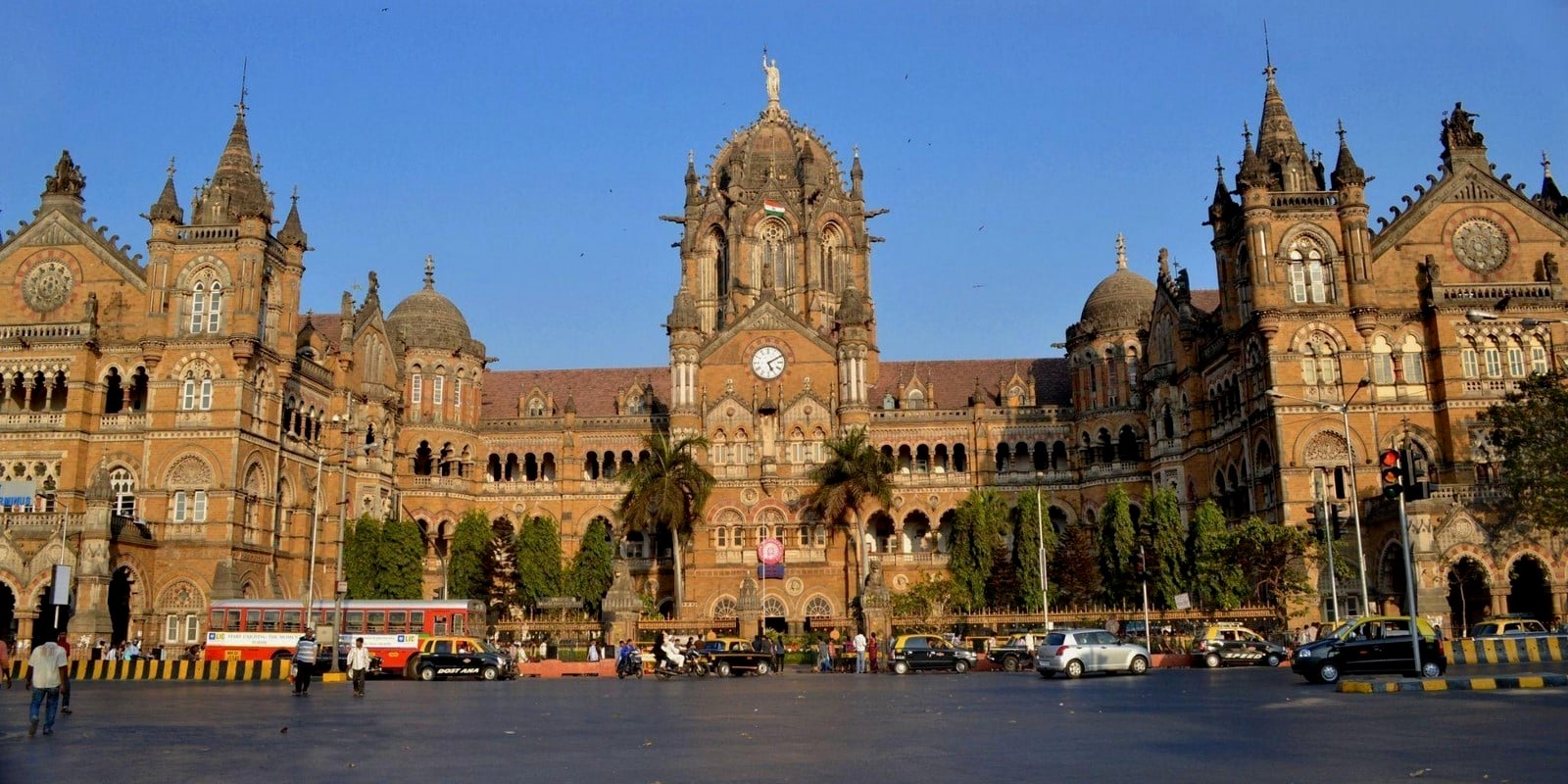
Millions of commuters pass through Chhatrapati Shivaji Terminal without looking up. But when they do, they find a different world: pointed arches, Indian animal sculptures, chaitya arches, ribbed vaults. For a moment you wonder, what is a European medieval building doing in Mumbai, in one of the world’s busiest railway stations? The answer lies in the structural logic of Gothic Cathedrals.
The Rise of Gothic Architecture
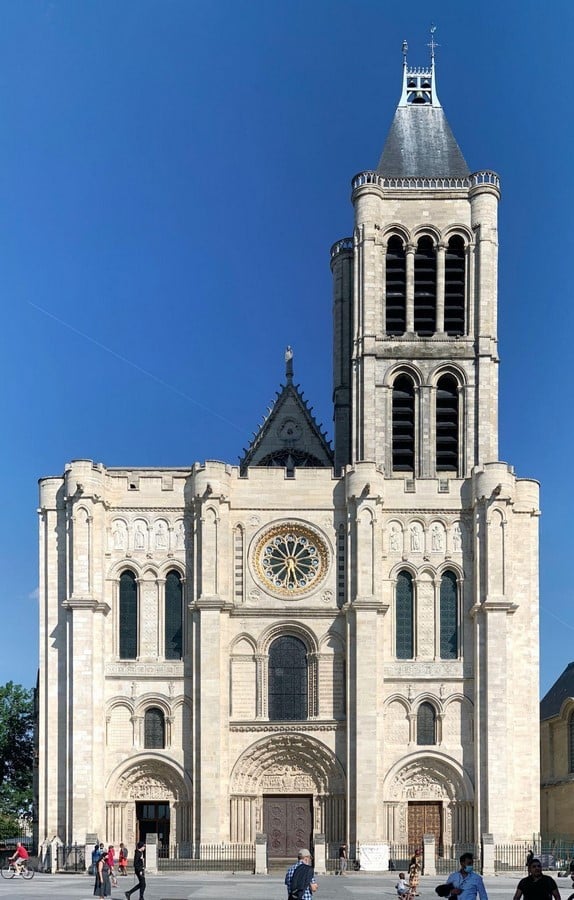
The predecessor of Gothic architecture is Romanesque architecture, which thrived during the 10th and 12th centuries. Thick walls, semi-circular arches, simple ornamentation and dark interiors can identify this style. Gothic architecture did the opposite. Gothic Cathedral architecture can be identified by thin walls, the exaggerated arch becoming pointed, biblical ornamentation and the use of windows.
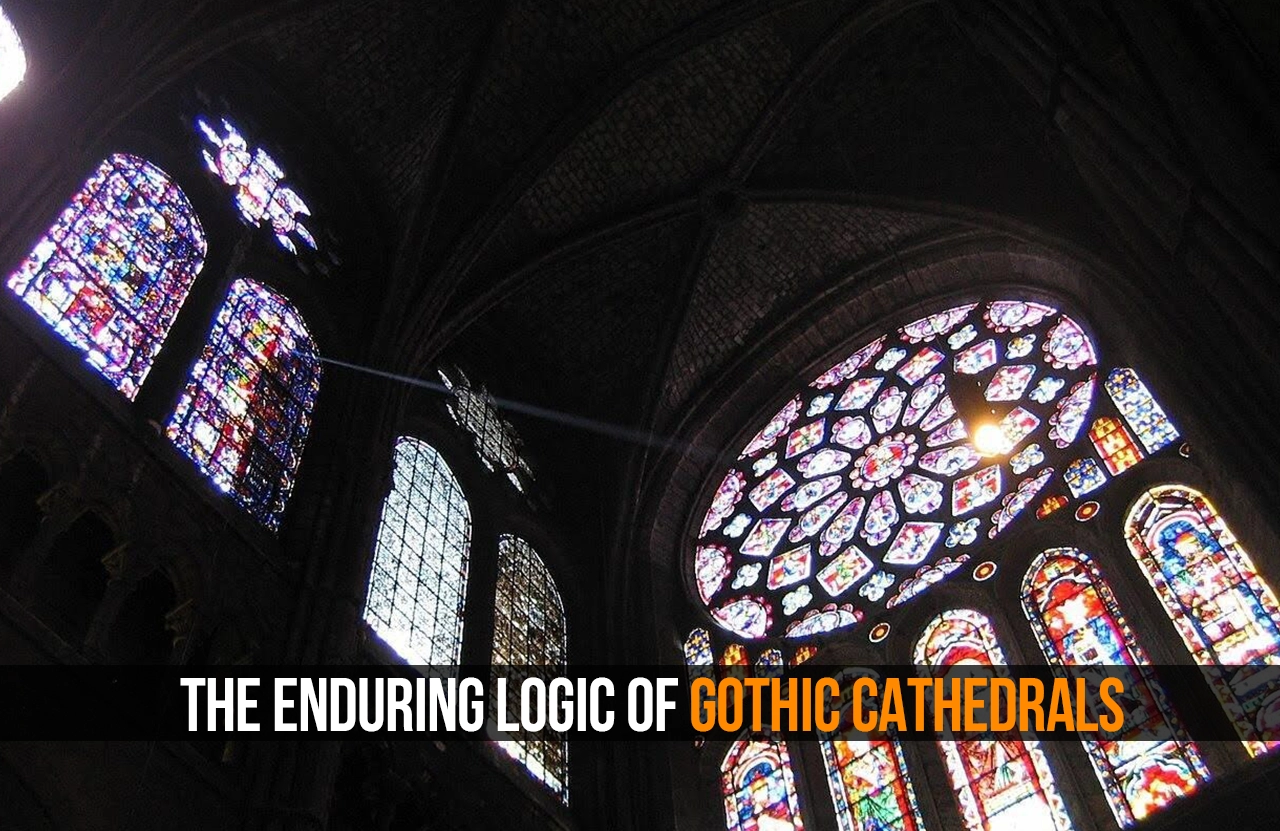
Basilica of Saint Denis is considered to be the first church that incorporated Gothic features. But it was never set out this way. Cathedrals were constructed in the pursuit of light, which was considered heavenly. Abbot Suger of St. Denis believed that light allowed humans to connect with the divine. The first words uttered by God in the Bible are, “Let there be light.” Suger came up with innovations that allowed Cathedrals’ interiors to be filled with light. These innovations led to the development of the Gothic style. The structural choices made would define architecture for centuries.
Structural Choices and Function
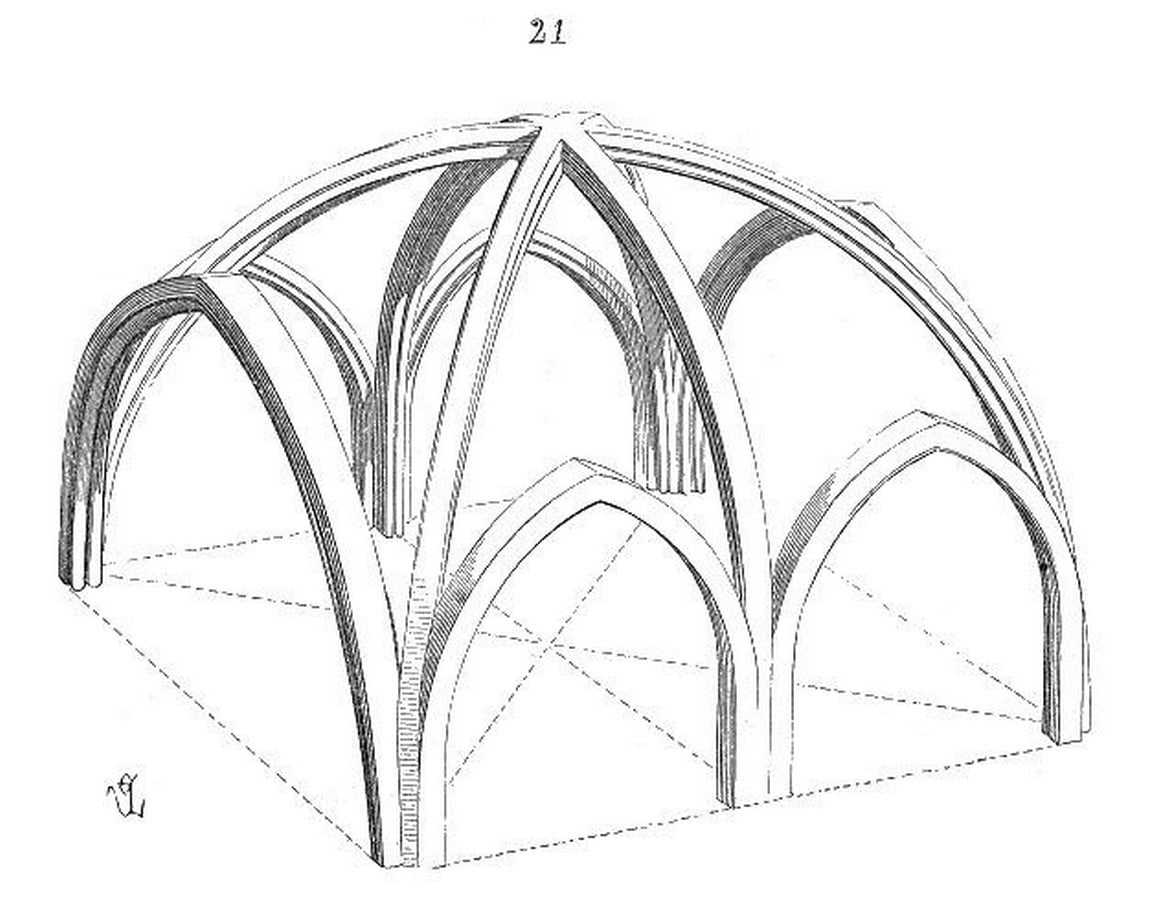
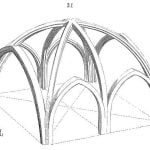
Rib Vault as a feature was developed to design taller ceilings. Rib vaults help support the roof by directing its weight outward and downward through a network of thin stone ribs. The ribs pushed outward against the walls, threatening to collapse them. This problem was solved by the pointed arch.
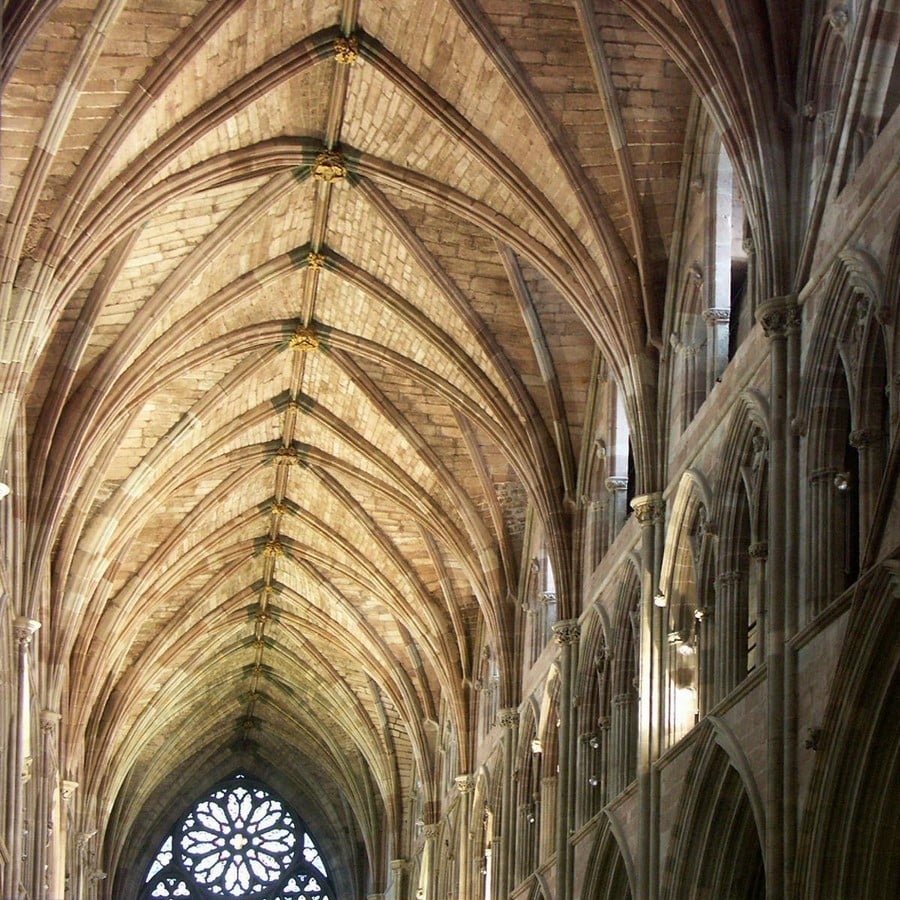
The most recognisable feature of Gothic Cathedrals is the Pointed Arch. It offered a major structural advantage over the traditional round arch. It directed the weight of the structure more vertically toward the ground, reducing the outward pressure placed on the walls.
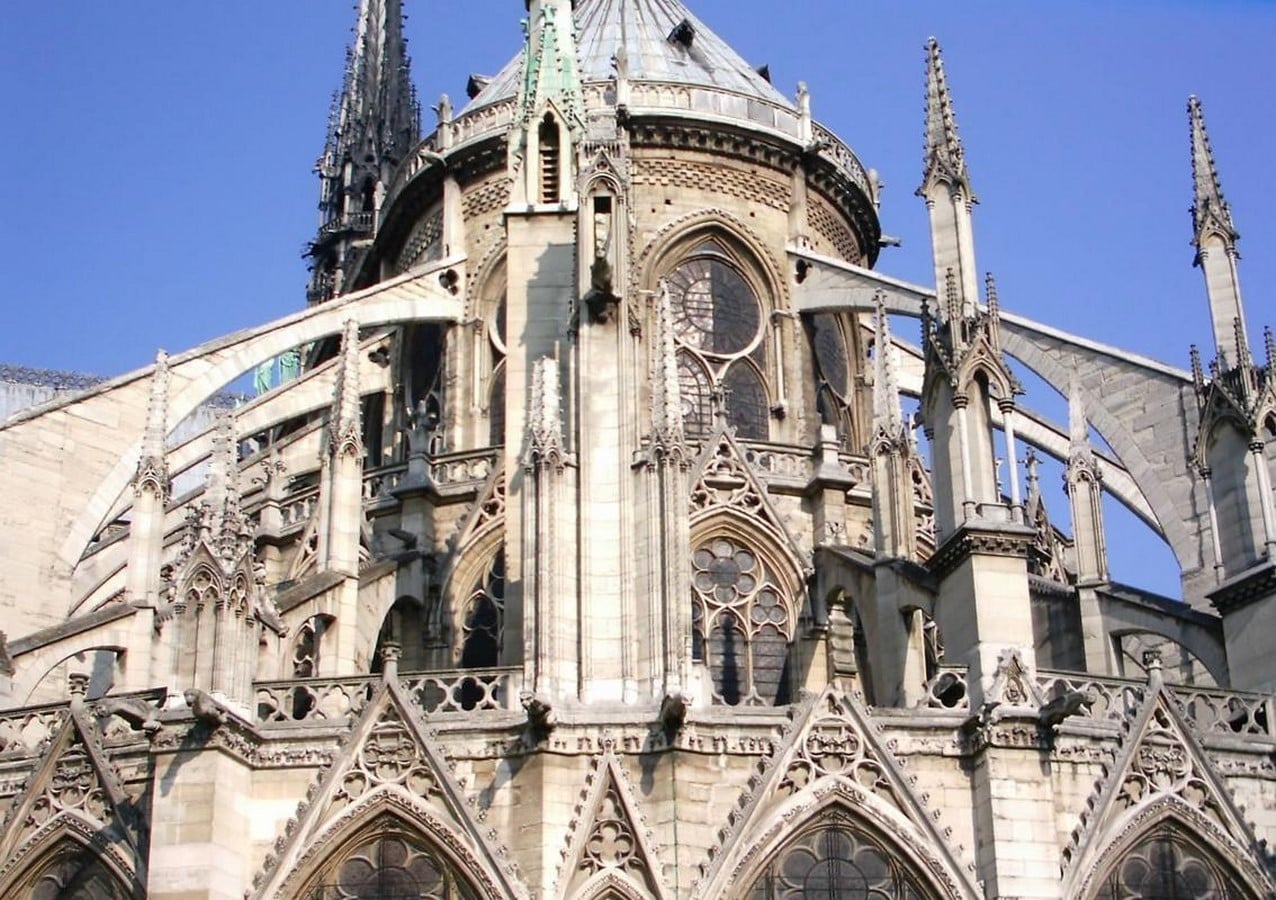
The outward thrust was eliminated with the use of Flying Buttresses. It is an arch that extends from a separate pier outside the building, passes over the roof of the side aisle, and supports the upper wall of the nave where the outward pressure from the vault is strongest.
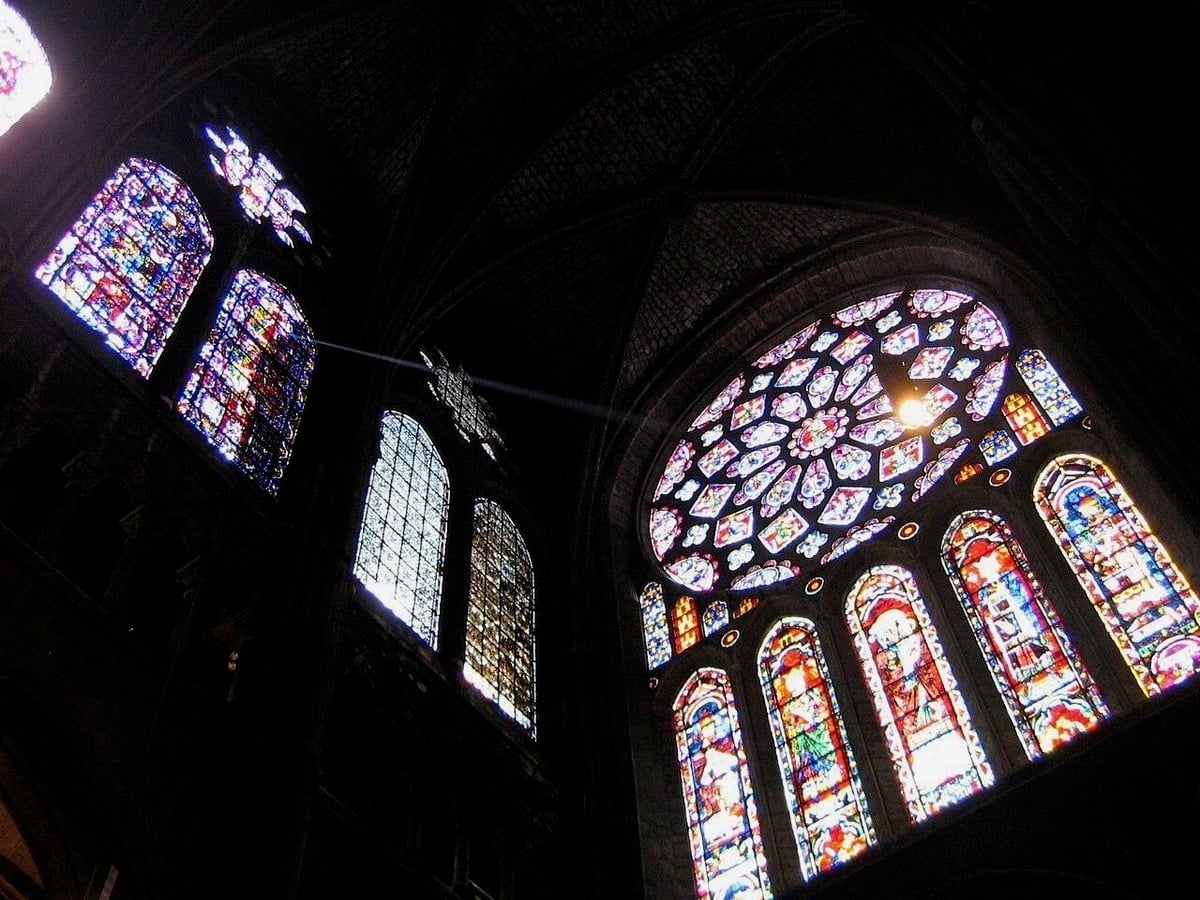
These structural choices allowed for the use of thinner walls and large stained glasses which fulfilled the purpose of letting in divine light.
The structural logic of Gothic Cathedrals proved so adaptable that it did not die with the medieval era.
Colonial Gothic Revival
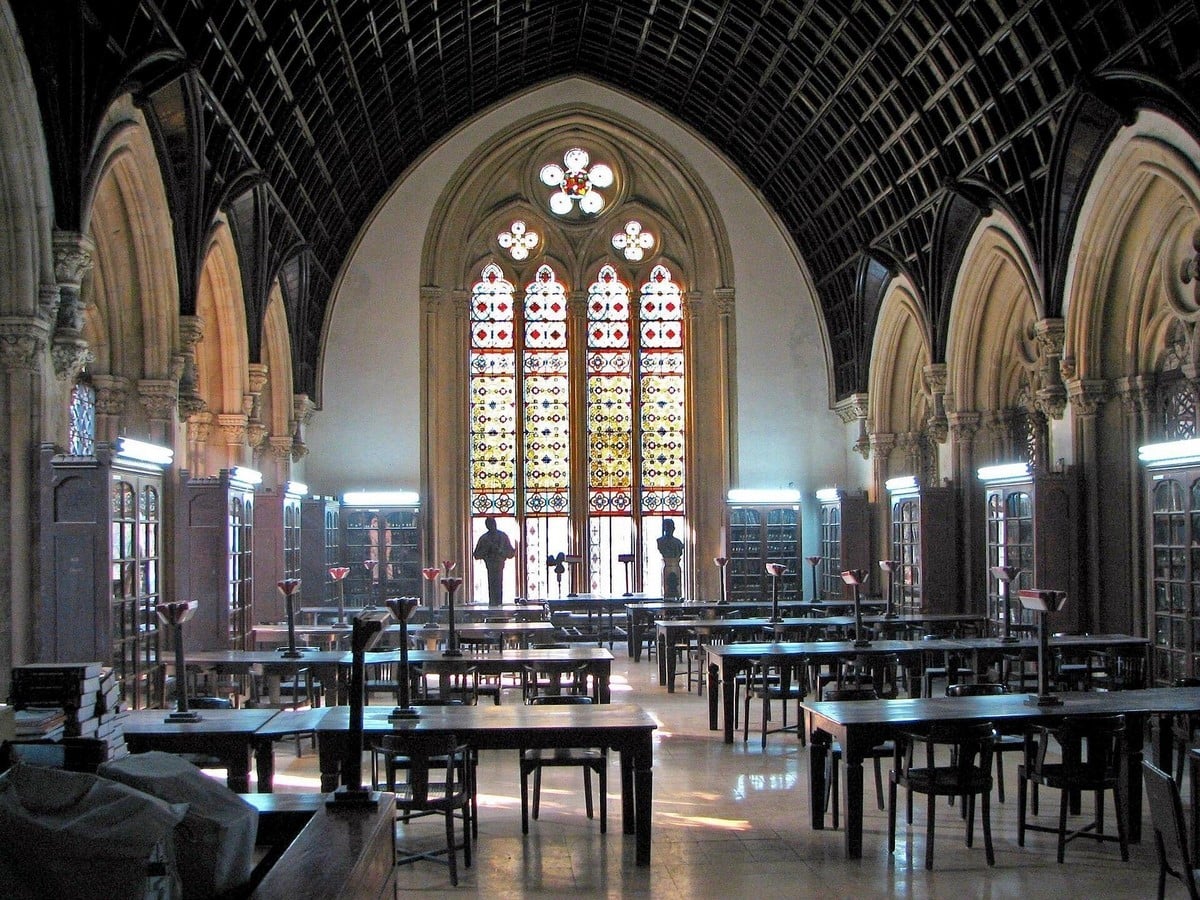
In the essay ‘Tracing the Gothic Revival in Bombay through the Architecture of the University Buildings.’ The author, Mustansir Dalvi, hypothesises that the Industrial Revolution in Europe led to the development of industrial towns which were functional but not as aesthetically pleasing. This led to romanticisation of Gothic architecture, especially in literature and art. As Dalvi puts it: “For the British, the medieval past had great resonance. It reflected the glories of being English (as opposed to Classical/European). The Medieval became the role model for the time, one that displayed all the virtues of the fast-disappearing crafts, as well as an intuitive aesthetic of design.”
Mr. Gilbert Scott of London (who never visited India), submitted his design for the University
Library of University of Mumbai and the Rajabai Tower. His work shows clear influence of Gothic Cathedrals. The pointed arches and the stained glasses.
What Can Architects Learn From Gothic Cathedrals?
From the cathedrals of medieval Europe to the railway stations of colonial Bombay, the logic of Gothic Cathedral architecture proved remarkably resilient. It was more than a style. It puts the human experience at the very centre. In its pursuit of divine connection, Gothic style solved structural problems. This led to an architectural style being part of a culture and culture spread far and wide.
Chhatrapati Shivaji Terminal is proof of this. Indian craftsmen who built it absorbed the Gothic structural logic only through designs by someone not even on the same land. They added their Indianness, the chaitya arches, indian animals instead of gargoyles and, of course, local stone. The pointed arch remained, but it is now shared with the subcontinent’s traditions. Gothic Cathedrals were built so that people would look up and feel something. Eight centuries later, in one of the busiest railway stations, that intention survived.
References:
F.W. Stevens with Sitaram Khanderao and Madherao Janardhan, Chhatrapati Shivaji Terminus, Mumbai – Smarthistory. (n.d.). [online] smarthistory.org. Available at: https://smarthistory.org/shivaji-terminus-mumbai/ [Accessed 26 July 2026]
Wikipedia Contributors (2019). Gothic Revival architecture. [online] Wikipedia. Wikimedia Foundation. Available at: https://en.wikipedia.org/wiki/Gothic_Revival_architecture [Accessed 26 July 2026]
Dalvi, M. (2022). Tracing the Gothic Revival in Bombay through the Architecture of the University Buildings. Tekton: A Journal of Architecture, Urban Design and Planning, [online] 9(2), pp.8–25. Available at: https://tekton.mes.ac.in/wp-content/uploads/2023/07/9.2-R-Mustansir-Dalvi.pdf [Accessed 26 July 2026]