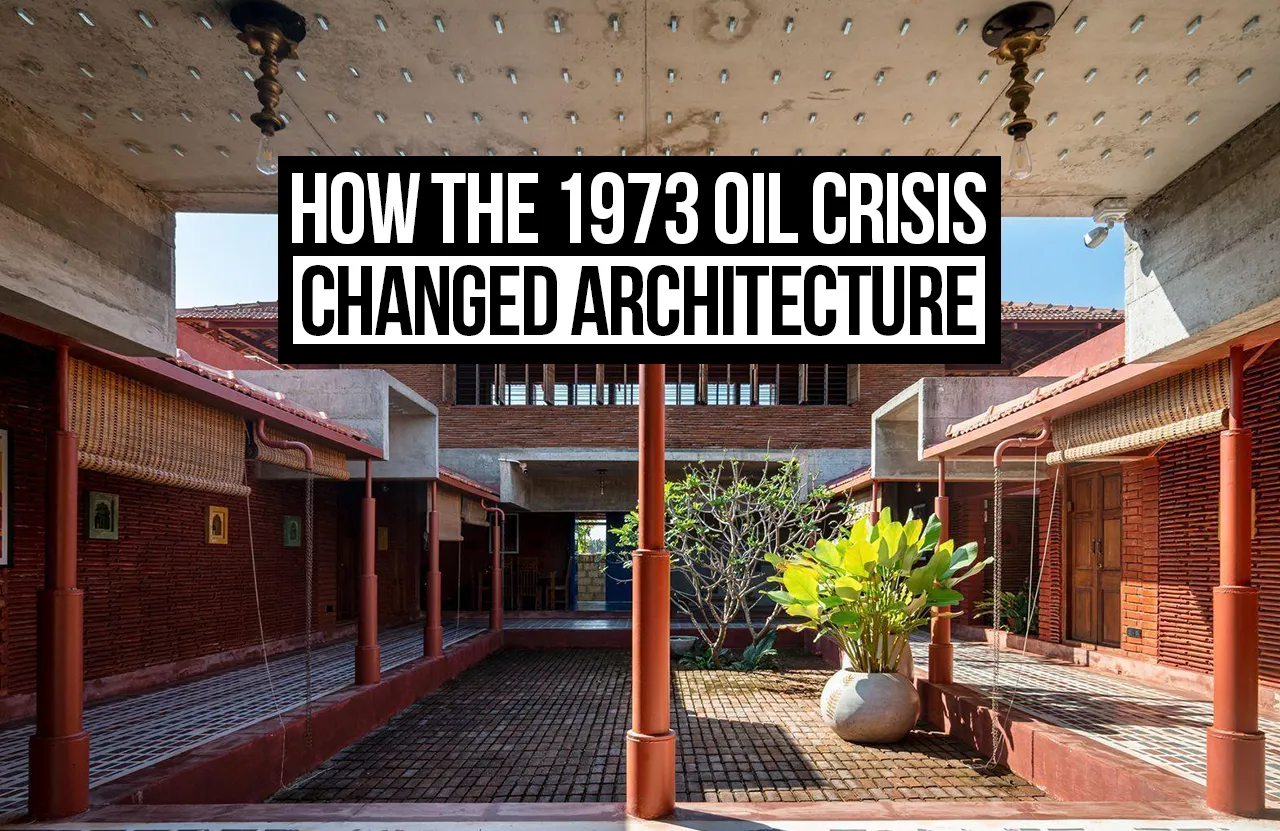
In October 1973, the world’s energy map was redrawn virtually overnight. The oil embargo created fuel shortages and skyrocketing prices, revealing how much modern buildings depended on cheap, plentiful energy. Suddenly it was no longer a matter of making buildings bigger or taller or more technologically advanced. It was how to get them to work with less.
For decades, air conditioning, artificial lighting, and mechanical ventilation have insulated buildings from their surroundings. Glass towers could rise in hot climates, deep floor plates could function without natural daylight, and sealed interiors could stay comfortably cool all year. Buildings were designed for an era when energy was abundant.(“The War on Carbon | Magazine | MoMA,” n.d.)
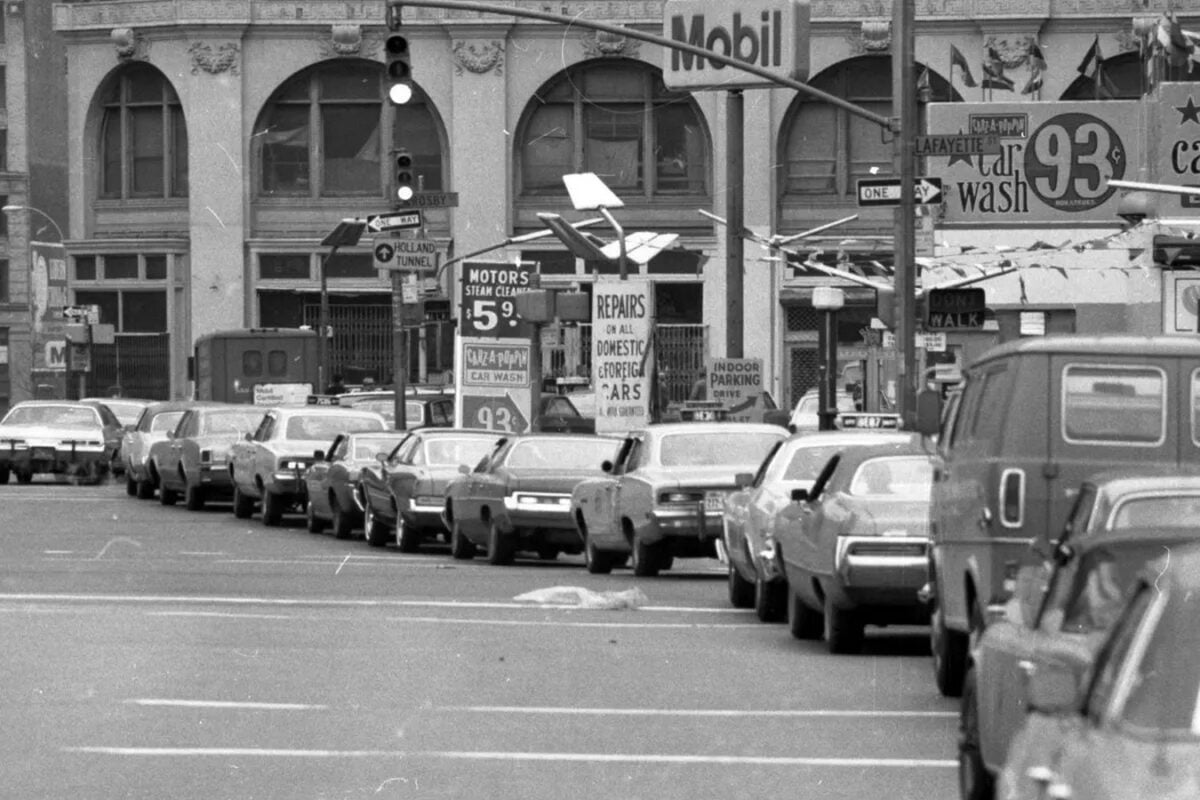
The 1973 oil crisis did more than disrupt the global economy. It forced architects to reconsider one of the fundamental assumptions of modern architecture: that technology could always compensate for the limitations of a building’s environment.(“Sorry, Out of Gas: Architecture’s Response to the 1973 Oil Crisis – We Make Money Not Art,” n.d.)
The Return of Climate – Responsive Architecture
One of the most important outcomes of the crisis was a resurgence of interest in passive design. For centuries, climate-responsive architecture had been practised, but its prominence waned as mechanical systems became more widely available. The energy crisis brought these principles back into architectural discourse, this time backed by scientific research, building physics and studies of environmental performance.
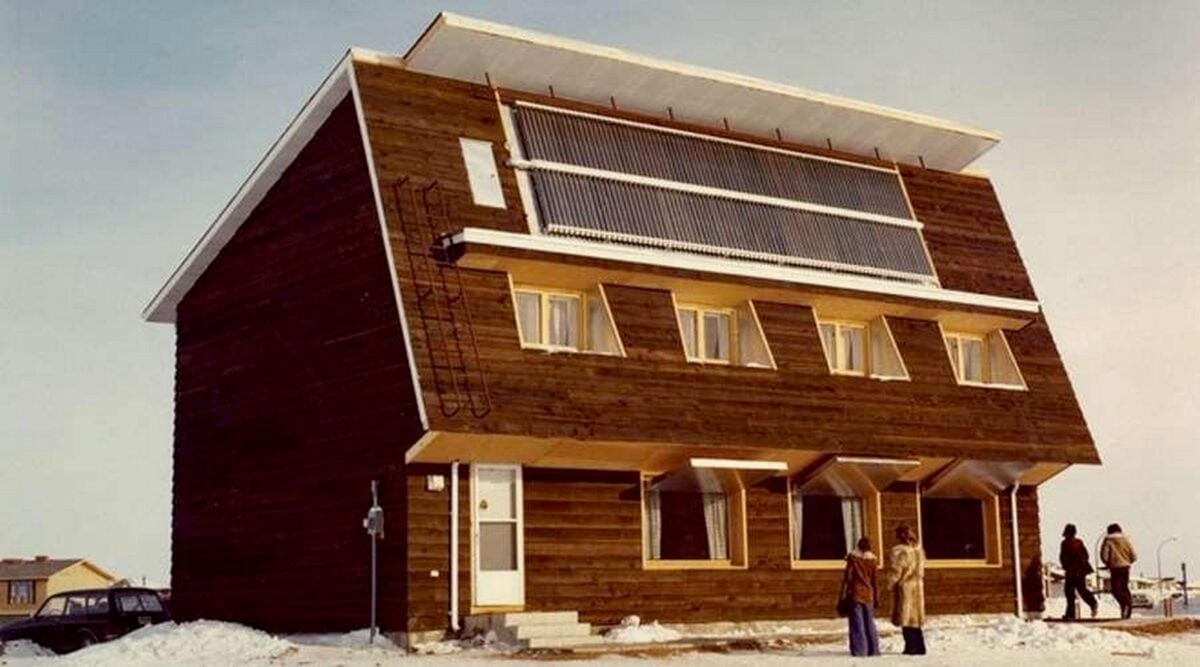
Architects began to question the assumption that buildings must always defend themselves against their surroundings. Orientation, shading, insulation, thermal mass and natural ventilation became important design issues. Buildings could regulate their internal temperatures by the shape and properties of their materials, rather than relying solely on air conditioning.
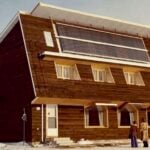
In the US, architects began experimenting with earth-integrated buildings, adobe, and heavily insulated structures, especially in places like New Mexico. Experiments showed that energy-conscious architecture didn’t have to be complicated technology. At times, the best solution was to understand the climate and design for it.(“Four decades of green design | The American Institute of Architects,” n.d.)
The energy crisis also had an impact on how architects assessed buildings. The design decisions that had previously been driven by form, space and construction cost increasingly had to take into account the building’s energy consumption over the long term. Performance became a measurable aspect of building design. Architects and engineers started looking at heat transfer, daylighting, insulation values, ventilation requirements and the performance of the heating and cooling systems.
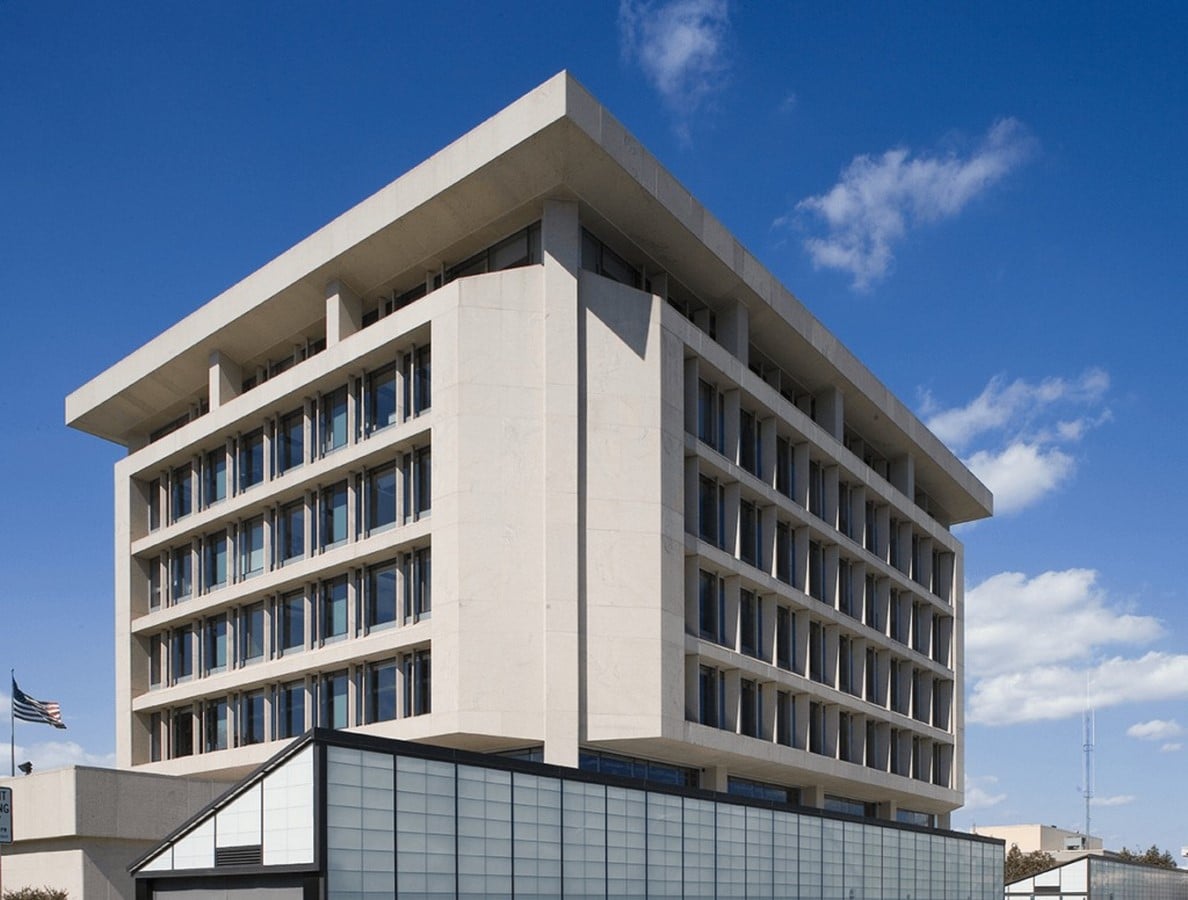
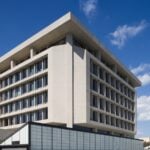
A good example of this is the Norris Cotton Federal Building in Manchester, NH (designed by Isaak & Isaak and constructed between 1972 and 1976). It was a multi-storey office building which incorporated energy monitoring and integrated the mechanical and environmental systems. The design took into account the building envelope, solar heat gain, natural and artificial lighting and the performance of the heating and cooling systems.
The project is a good example of how architecture and engineering were starting to work in tandem, with energy use becoming an integral part of the design rather than something to be dealt with after the building was complete.
Questioning Glass Facades
Nowhere perhaps was the change more widely witnessed than in the design of commercial buildings. The glass curtain wall, once hailed as a technological advance, began to attract criticism for its energy use.
Large areas of single glazing allowed heat to enter buildings in the summer and escape in the winter. Keeping indoor temperatures comfortable with mechanical systems was becoming more and more expensive.
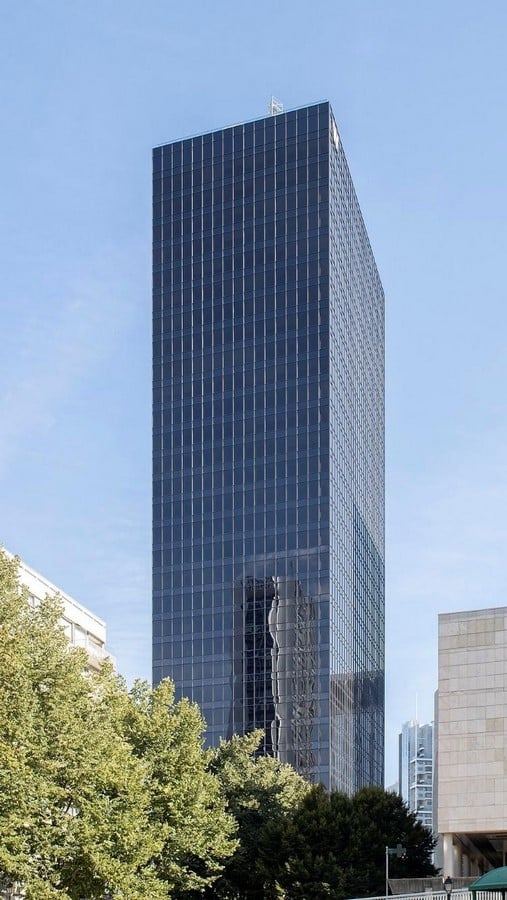
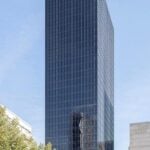
The change also had an impact on high-rise buildings. The energy crises of 1973 and 1979 contributed to the shift away from the single-glazed curtain walls that had dominated earlier generations of office towers. In several developed countries, building regulations increasingly began to deal with insulation, glazing and energy performance.
The search for alternatives: Solar energy and self-sufficiency
The crisis also opened up a search for alternative sources of energy, in addition to lowering energy consumption.
Solar collectors, photovoltaic experiments and solar heating systems were being integrated into architectural research and experimental housing projects. Universities, government bodies and research organisations invested in research into how buildings could generate and manage some of their own energy needs.(Khorakiwala, 2020)
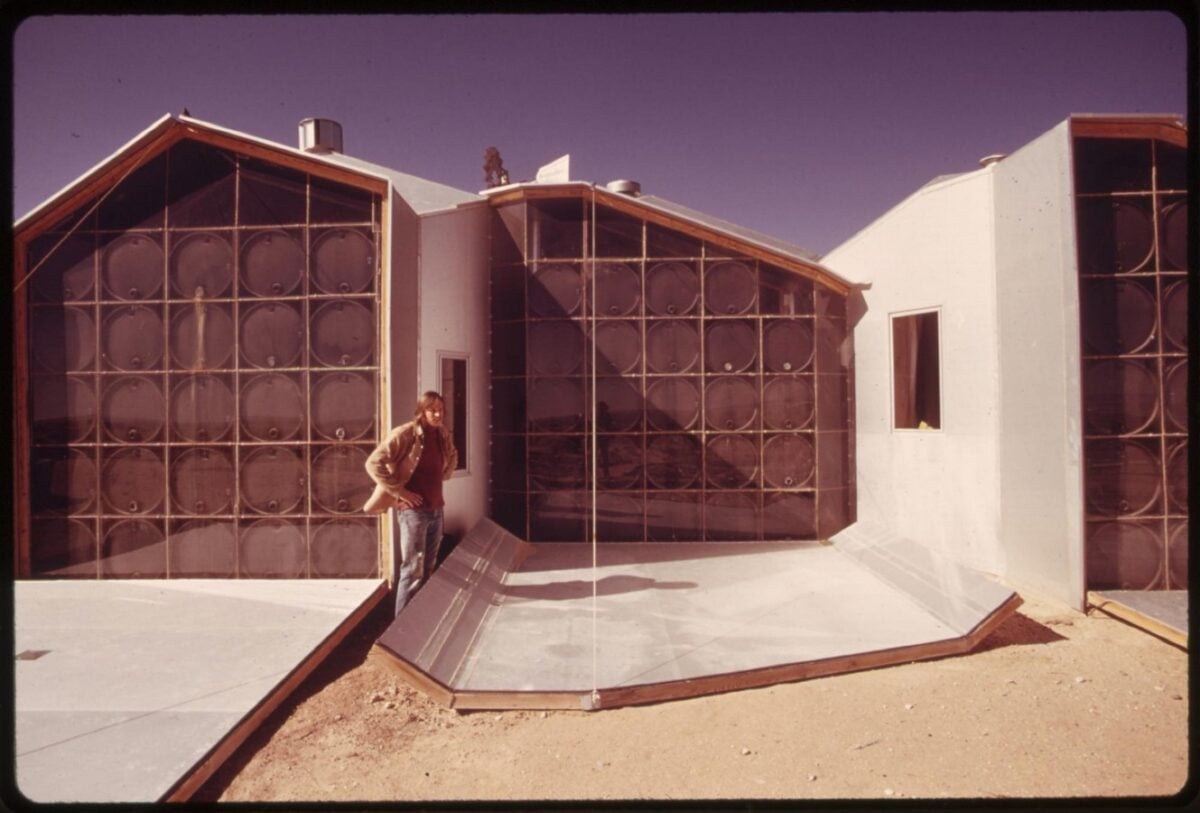
This interest also sparked a wider debate about self-sufficient buildings. Architects started to look at ways buildings could take part in energy production, rather than being passive consumers linked to centralised infrastructure.
But the movement was not without its shortcomings. Solar technologies were expensive, and their performance and applications were still evolving. However, the 1970’s gave an important foundation for the integration of renewable energy into architecture.
What did the crisis mean for architecture in India?
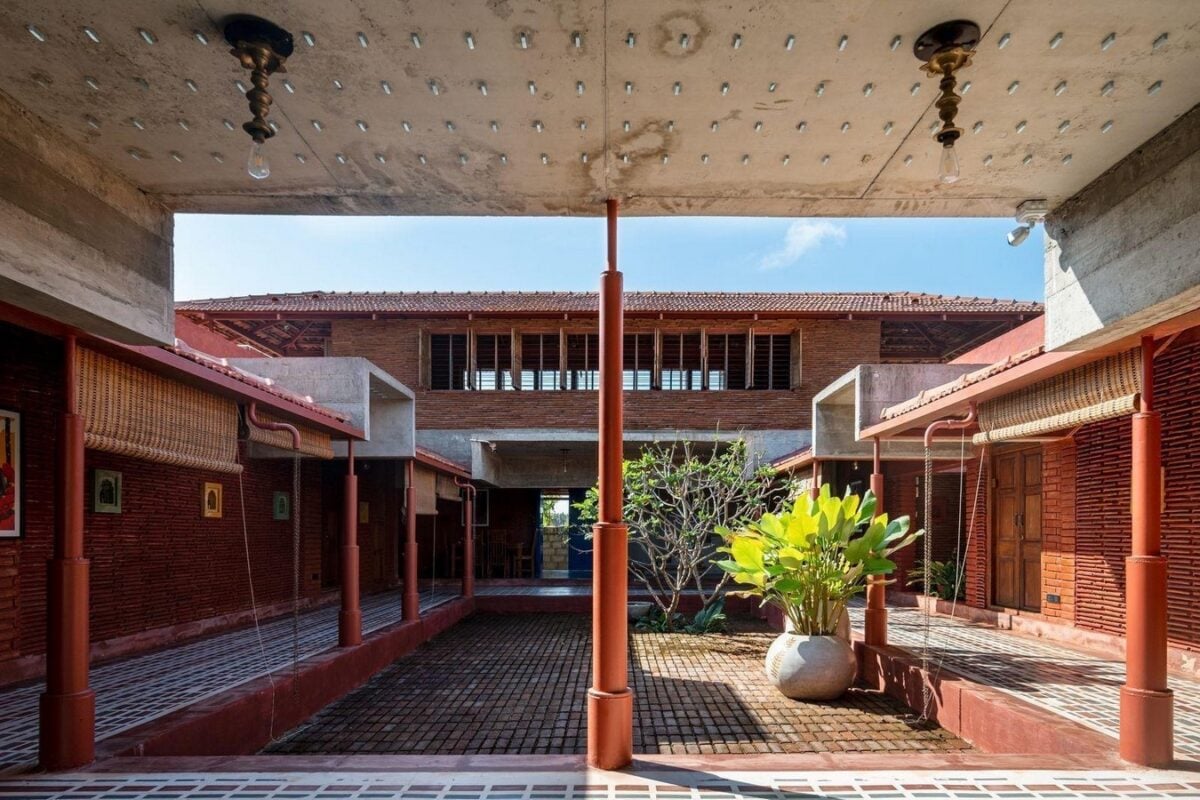
The oil crisis had an immediate impact on the oil-dependent economies of the West, but its implications were also significant for countries like India, where access to energy and availability of resources were already important concerns. Interestingly, this period also saw the focus returning to the principles built into traditional Indian architecture. Buildings have long been responsive to local climatic conditions, using courtyards, verandahs, jaali screens, thick masonry walls and shaded transitional spaces.
They were not conceived as energy-saving technologies in the first place but rather demonstrated how architectural form could control environmental conditions without sole dependence on mechanical systems.
The renewed interest in climate-responsive design also raised questions about the suitability of imported ideas of comfort and building technology for different climates and communities. The tensions are illustrated by research on solar housing in rural Punjab in the late 1970s, especially the difficulty of adapting technological solutions to local lifestyles and environmental conditions.
A lesson that remains relevant
More than half a century later, the 1973 oil crisis still provides a significant lesson for architecture and energy. Today’s buildings face a different but equally pressing challenge: climate change, rising energy demand and environmental consequences of construction.
Air conditioning is becoming more commonplace, glass facades are the standard in commercial architecture, and buildings still depend heavily on mechanical systems to maintain indoor comfort. The technologies have changed, but some of the questions asked in 1973 have not been answered.
The oil crisis produced perhaps the most interesting change not in the birth of a new architectural style but in the way architects began to think. It put the spotlight back on something architecture had always known: buildings aren’t isolated objects. Their climate, environment and resources matter vitally to them.
And sometimes it takes a world crisis to remind us of that.
Bibliography:
Four decades of green design | The American Institute of Architects [WWW Document], n.d. URL https://www.aia.org/aia-architect/article/four-decades-green-design
Khorakiwala, A., 2020. Solar Systems for the Rural Body. Journal of Architectural Education 74, 185–197. https://doi.org/10.1080/10464883.2020.1790921
Sorry, Out of Gas: Architecture’s Response to the 1973 Oil Crisis – We Make Money Not Art [WWW Document], n.d. URL https://we-make-money-not-art.com/sorry_out_of_gas_architectures
The War on Carbon | Magazine | MoMA [WWW Document], n.d. URL https://mobile-api.moma.org/magazine/articles/928