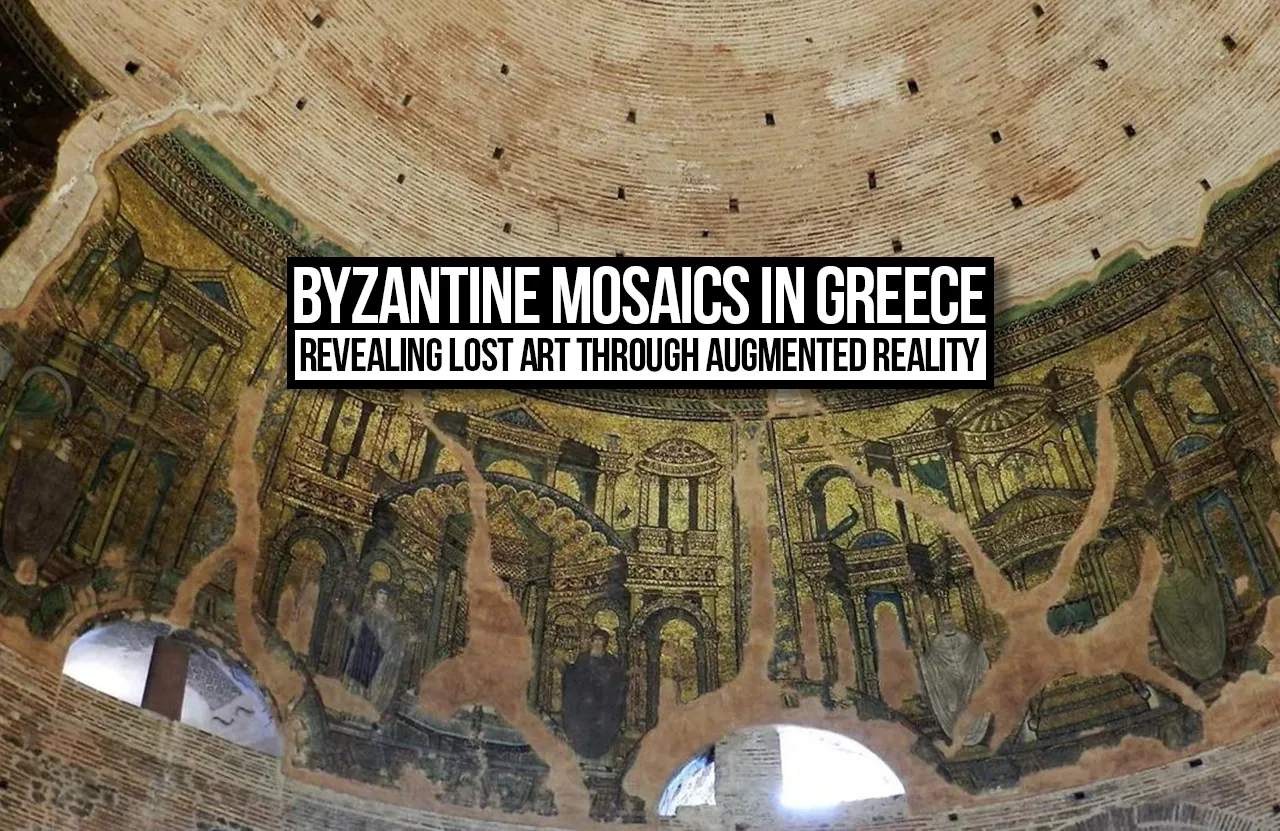
Imagine being a visitor to an excavated ancient Byzantine church in Greece. The broken pieces of ancient stones lie scattered on the floor, and mosaics that have long been lost are barely visible. But as soon as you start looking at the temple with a smartphone or tablet, everything changes before your eyes: some details are added, and the image changes completely. It becomes more voluminous and takes different shapes and colours. This is called augmented reality, a technology that lets a smartphone recognise objects around you and provide additional information about them. It can reconstruct valuable lost cultural relics and historical sites in great detail, allowing users to immerse themselves in media content and interact with it. And since Greece is home to many Byzantine buildings, the technology has great potential to reveal the importance of Byzantine mosaics in Greece.
The Significance of Byzantine Mosaics
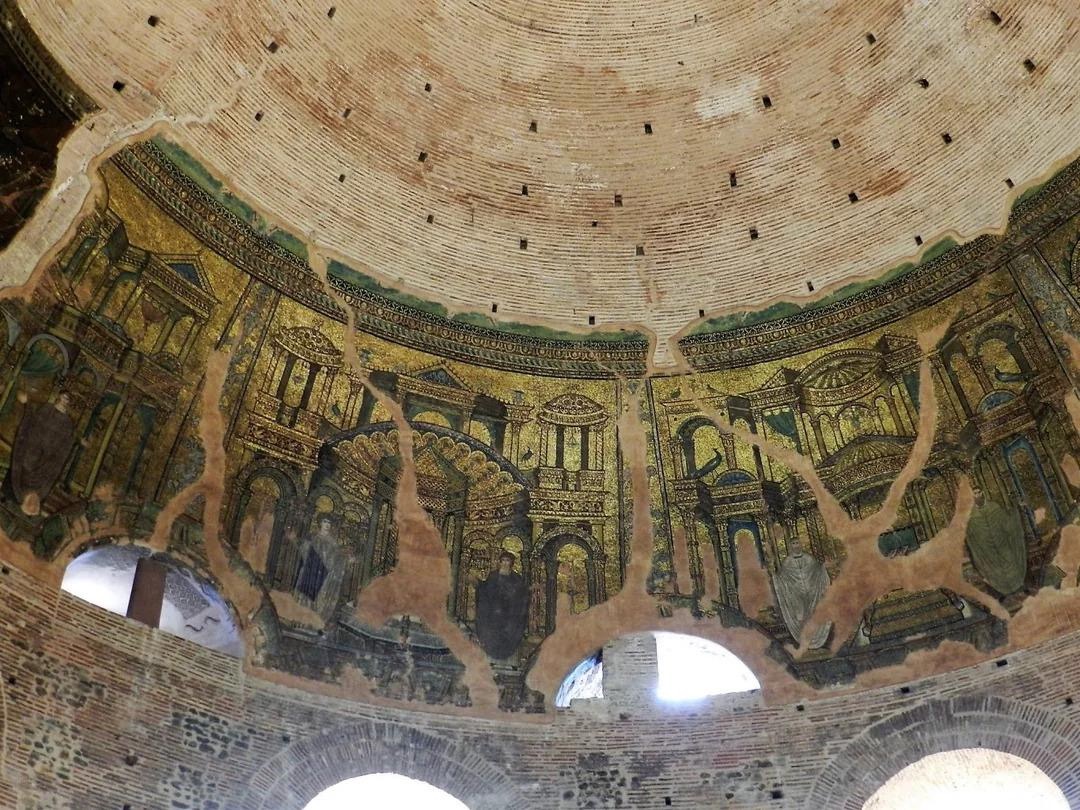
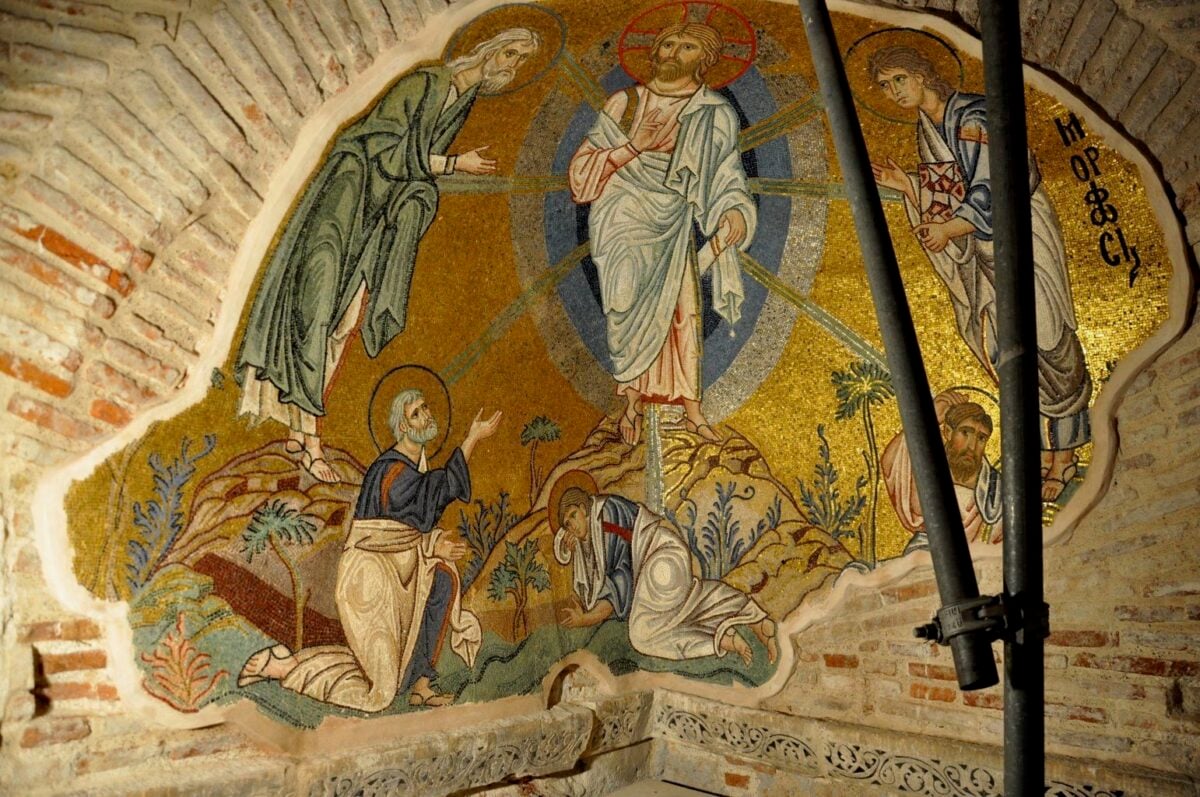
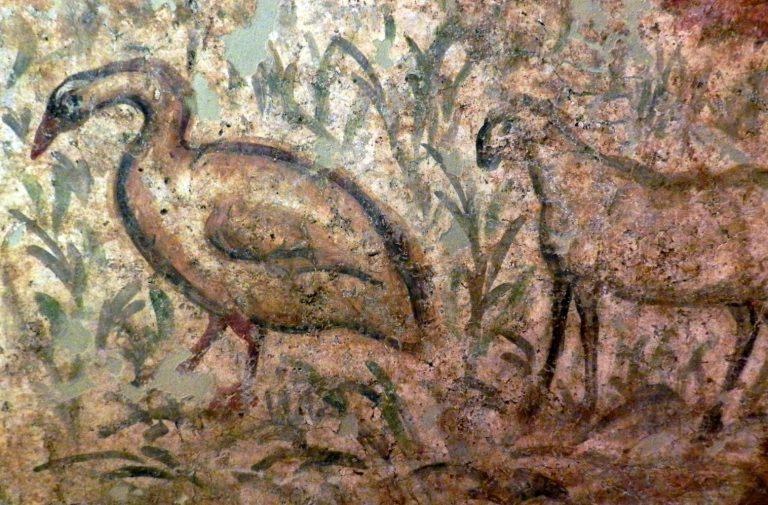
Byzantine mosaics were made within the culture and religion of the Byzantine Empire. These mosaics usually adorned churches, domes, apse, and walls. The images made of small stones, glass, and other materials sparkle like jewels, depict religious scenes, and incorporate meaningful symbols into the image of the building, which is inspiring and intimidating. Byzantine mosaics in Greece were significant because the location, scale, colour scheme, and details determined the narrative that the church wanted to portray by means of these mosaics. Light was used in mosaics to shape the forms of people, animals, and buildings, thus creating a single space of the narrative in a church, combining its architecture, art, and light. Unfortunately, many such mosaics were lost due to the passage of time and the weathering of their natural environment. Some of them can be seen only in fragments or even described in the chronicles of later epochs. The only way to restore this cultural heritage is to recreate these masterpieces in the modern world. However, it is not always easy to do since artists have to understand what exactly they have to capture if the only remains of the original are copies, drawings, and descriptions.
Augmented Reality: A Window into the Past
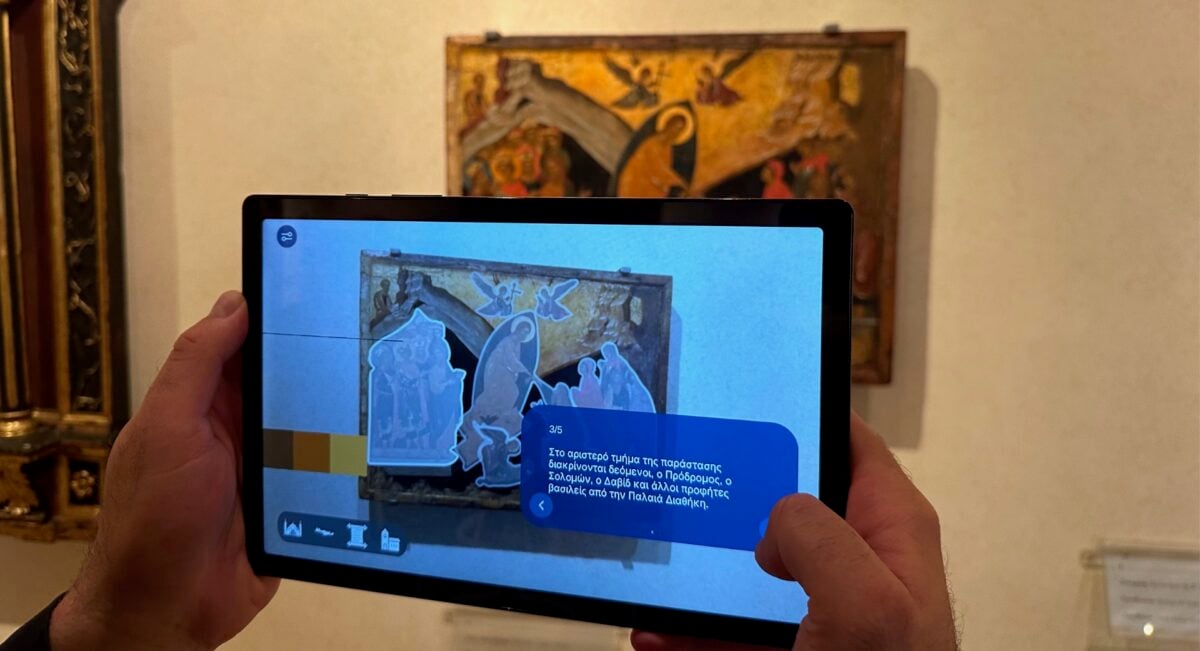
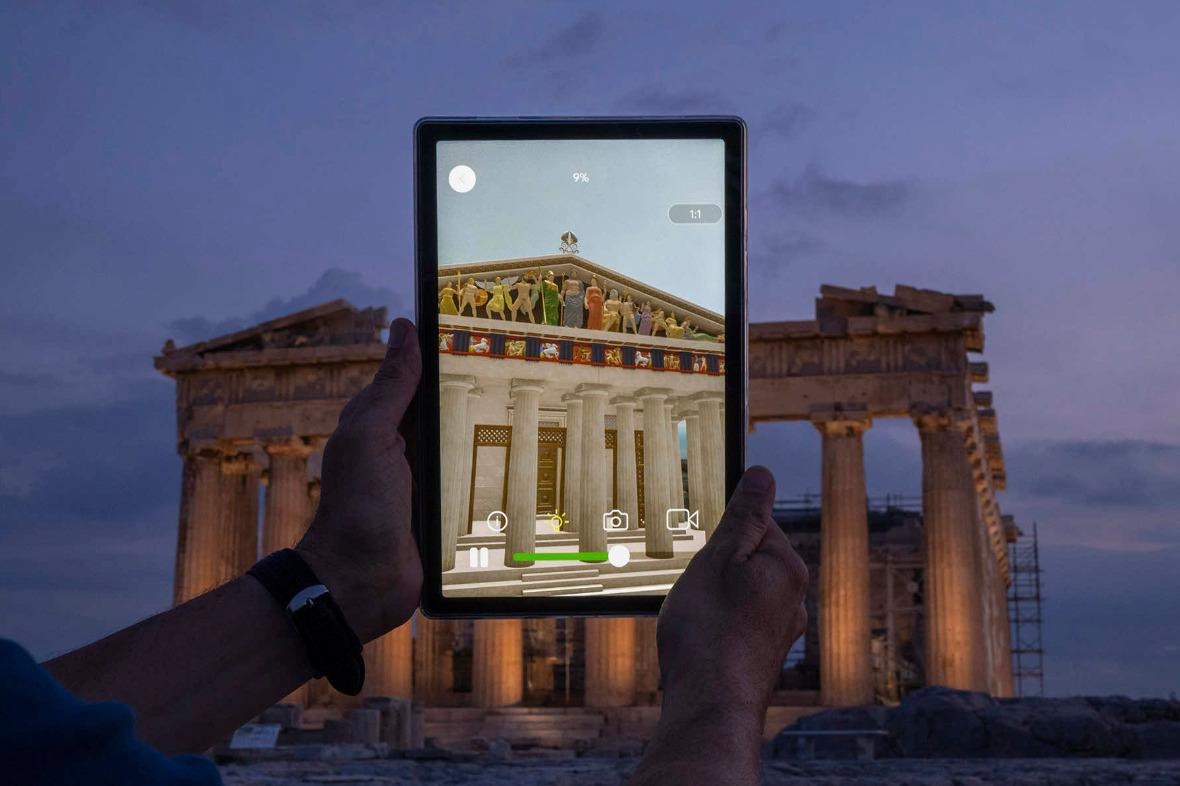
Augmented reality can offer an alternative to conventional methods of presenting the archaeological and architectural heritage. Instead of removing a historic site and replacing it with a purely digital environment, augmented reality allows for seeing the real-world location with its digitally replaced elements viewed through a display screen. With the help of visual information from cameras, location data and three-dimensional models, an AR application can superimpose a digital image of a reconstructed image on top of a camera image of the reconstructed part. The visitors can explore the site, looking around and from different angles, engaging historical information with the actual building. For Byzantine mosaics in Greece, this could be an option to show what other parts of mosaics could have looked like, how a fragmented composition could have been put together or how the art and the architecture were integrated. A damaged apse could be seen in the context of a thoroughly reconstructed mosaic image.
Besides textual descriptions or small additional displays a visitor can experience the size, arrangement and spatial relationships of the exhibited works in their architectural context. The application of such augmented reality experiences is already considered for the presentation of Greece’s cultural heritage in its research project SMART EYE of the Greek Ministry of Culture. In a similar EU-funded project, APSIM, the digital reconstruction of several monuments at specific archaeological sites in Greece are presented in an application called CirculAR. Although these projects do not constitute a complete AR system for all lost Byzantine mosaics in Greece, they nevertheless provide a useful precedent for the application of similar procedures to the Byzantine mosaics.
Reconstructing What Has Disappeared
Digital restoration works start long before the image appears on a computer screen. Beforehand, scientists need to study the image fragments carefully in order to be able to recreate the original picture. Research into Byzantine mosaics in Greece include mosaic fragments, photos of the mosaic, historical drawings, relevant archaeological findings, and comparison with contemporary artworks. Using photogrammetry, 3D modelling and digital imaging, researchers can achieve precise reconstruction of a building or a painting. A notable example of a lost mosaic floor, subsequently partially recovered, is the Church of Theotokos in Pelion, Greece. Mosaicist Helen Miles visited this excavated church in 2017 and was able to recreate the layout of the lost floor based on the preserved fragment. In her article, she discussed other mosaics whose remains were used to digitally reconstruct their former appearance.
When used in conjunction with augmented reality, reconstructions of Byzantine mosaics in Greece could be placed into the architectural context in which they were originally displayed. The visitor would see how individual surviving fragments fitted into the overall composition, or could compare the present-day structure with a suggested alternative. However, reconstruction is not a substitute for evidence-based research. It must be clearly distinguished from conjecture, and surviving fabric must always be shown to be different from reconstructed features that are based on a mix of archaeological and interpretative evidence.
Beyond Visualisation: Architecture, Education and Preservation
The potential of using such augmented overlays to create eye-catching displays for the tourist is only part of the story. From an architectural point of view, digital reconstructions of Byzantine mosaics in Greece can help to illustrate how the carved decoration related to the overall design of the building, and how individual mosaics in the dome, apse and vaults were placed in relation to geometry, natural lighting, viewing angles and lines of sight. The intention would be to stimulate visitors to experience a Byzantine church as an integrated architectural composition, rather than just a display of precious stones, mosaic and painting.
Studying Byzantine mosaics in Greece can help students and various professionals of architecture, archaeology and conservation understand different chronological phases of a monument, and become more aware of the challenges of conservation. Additionally, accessibility is another factor that needs to be taken into account. Digital exhibits will offer translations, audio descriptions, and provide any other relevant information to people with diverse learning needs. For those unable to visit Greece, virtual reality offers an opportunity to be exposed to elements of this country’s cultural heritage.
Challenges and Ethical Considerations
Although it has the potential to do so, augmented reality has some limitations. The process of reconstructing digital images of Byzantine mosaics in Greece takes time, demands skills and relies on solid evidence as well as cooperation between conservators, historians, archaeologists, architects, restorers and designers. Moreover, the applications must be regularly updated and adapted to different devices, which requires additional effort. There is also a possibility of overshadowing the existing monument with its fascinating, yet artificial, replica. By doing that, the visitors will no longer seek the real part of history; they will instead be mesmerised by the special effects and digital imagery. As such, the applications must be transparent about their content and provide the visitors with the necessary context regarding the reconstructed objects.
Linking Past and Present
The use of augmented overlays is a fascinating idea that allows one to interpret the history of the Byzantine mosaics in Greece. It can help to visualise possible context images of ancient art objects, which no longer exist, to evaluate the architectural setting of the finds, and to increase the sense of the surrounding culture and history. However, the worth of such projects is not in the attempt to create a complete reproduction but in presenting the available pieces in a better context. Greece should explore this exciting field and think about how to use the latest opportunities in digital studies to present mosaic art to the public. The past cannot be brought back to life with a digital overlay; however, it can be shown in a way that will help people become more aware of its meaning.
References:
- Connor, C.L. (2016). Saints and Spectacle: Byzantine Mosaics in their Cultural Setting. Oxford: Oxford University Press. Available at: https://doi.org/10.1093/acprof:oso/9780190457624.001.0001 [Accessed 14 October 2026].
- Munroe, N.H. (2012). Dress Styles in the Mosaics of San Vitale. The Metropolitan Museum of Art. [online]. Available at: https://www.metmuseum.org/exhibitions/listings/2012/byzantium-and-islam/blog/topical-essays/posts/san-vitale [Accessed 16 October 2026].
- Byzantine World (2026). The Most Beautiful Byzantine Mosaics You Can Still See Today. [online]. Available at: https://byzantine-world.com/byzantine-art/byzantine-mosaics/most-beautiful-byzantine-mosaics/ [Accessed 16 October 2026].
- Boboc, R.G., Băutu, E., Gîrbacia, F., Popovici, N. and Popovici, D.-M. (2022). ‘Augmented Reality in Cultural Heritage: An Overview of the Last Decade of Applications’. Applied Sciences, 12(19), 9859. Available at: https://doi.org/10.3390/app12199859 [Accessed 15 October 2026].
- Augmented reality systems in the cultural heritage domains: A systematic review. (2024). Digital Applications in Archaeology and Cultural Heritage, 32, e00317. Available at: https://doi.org/10.1016/j.daach.2024.e00317 [Accessed 15 October 2026].
- Byzantine World (n.d.). The Most Beautiful Byzantine Mosaics You Can Still See Today: A Visual Journey from Ravenna to Constantinople. [online]. Available at: https://byzantine-world.com/byzantine-art/byzantine-mosaics/most-beautiful-byzantine-mosaics/ [Accessed 16 October 2026].
- APSIM Project (n.d.). The Project. [online]. Available at: https://www.apsim-project.eu/en/the-project/ [Accessed 16 October 2026].
Images and Sources:
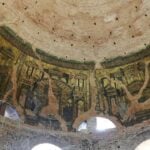
1_The Byzantine mosaics of Rotunda, Thessaloniki, Greece_©Helen Miles Mosaics
2_11th-century Byzantine mosaic in the Daphni Monastery, Greece_©Helen Miles Mosaics
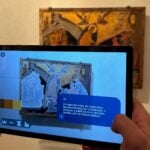
3_Augmented reality (AR) or interactive cultural application to explore Byzantine mosaics_©Hellenic Institute of Byzantine
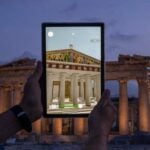
4_Augmented reality mobile application at the Acropolis hill in Athens, Greece where it digitally overlays a vibrant, full-color virtual reconstruction of the ancient Parthenon temple_©Petros Giannakouris
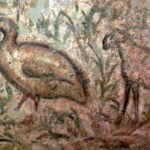
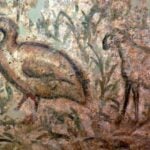
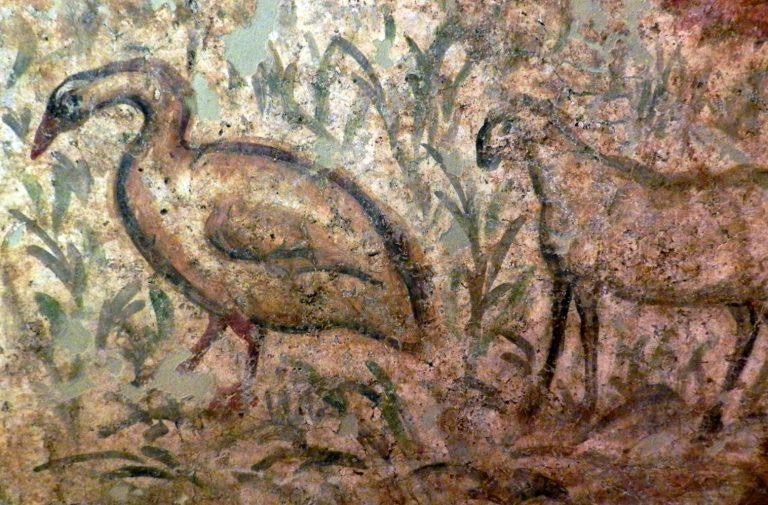
5_Goose and lamb, Early Christian tomb in the Byzantine Museum of Thessaloniki_©Helen Miles Mosaics
6_Pigeon, Early Christian tomb painting in the Byzantine Museum of Thessaloniki_©Helen Miles Mosaics