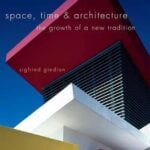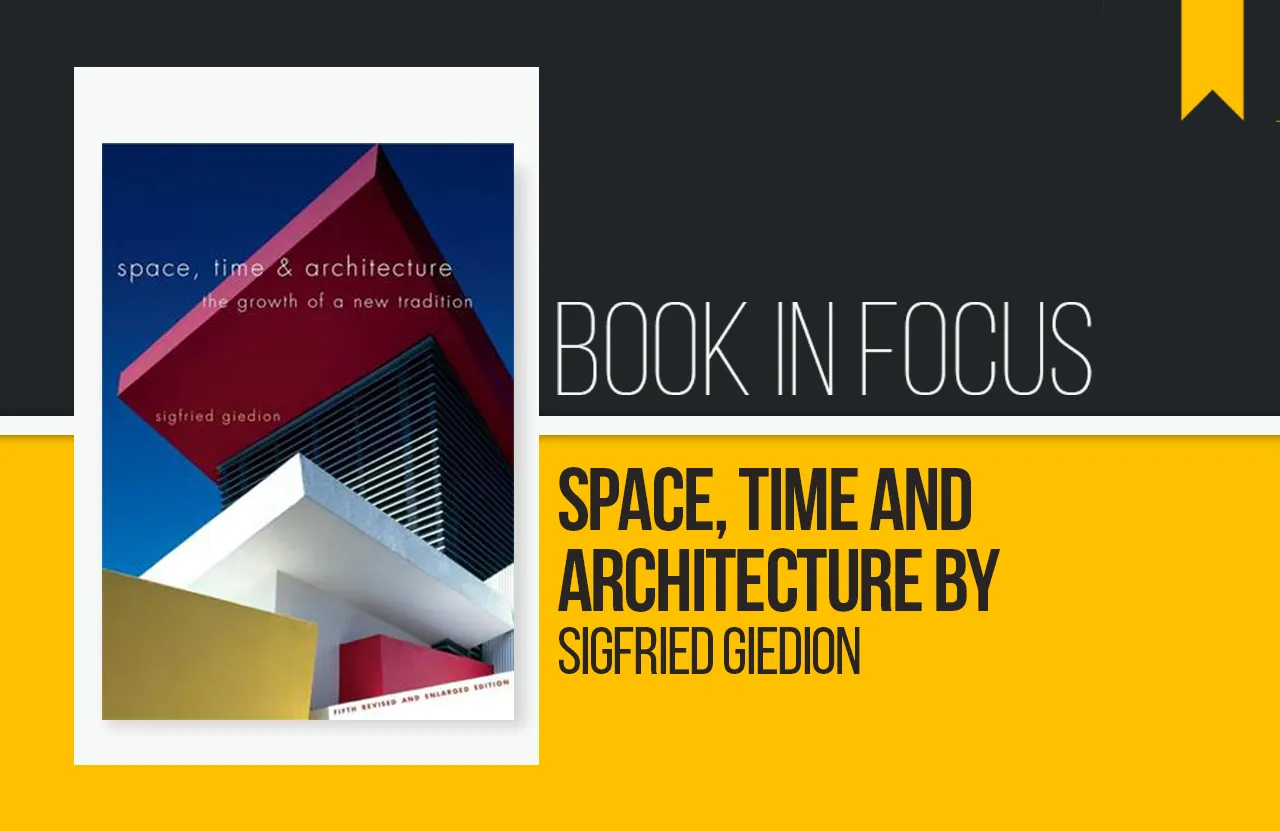
While some architecture books inform us about buildings, others transform how we understand them. One such book is Space, Time and Architecture: The Growth of a New Tradition by Sigfried Giedion. Published first by Harvard University Press in 1941, Space, Time and Architecture is not just a book on the history of modern architecture. Instead, Giedion examines why and how architecture transformed, and what that transformation tells us about society, technology, art, and spatial perception.
The book grew out of the twelve Charles Eliot Norton Lectures Giedion delivered at Harvard University during 1938–39. Over time, the lectures were expanded into several editions, becoming a major interpretation of modern architecture. Rather than seeing architecture as a series of individual stylistic movements, Giedion treats the discipline as part of a much wider cultural context. Architecture is discussed alongside structural engineering, painting, sculpture, industrialization, urban planning, and scientific thought, allowing the emergence of modern architecture to be understood as part of a larger transformation in society.
The key concept in Giedion’s work is space as an experience linked to movement and perception. Unlike an object, a building is never perceived in a single moment. We approach it, move through it, experience its changing relationships and gradually construct an understanding of its spaces. Through these changing experiences, Giedion traces the evolution of architectural theory, especially the emergence of a new relationship between space and time.
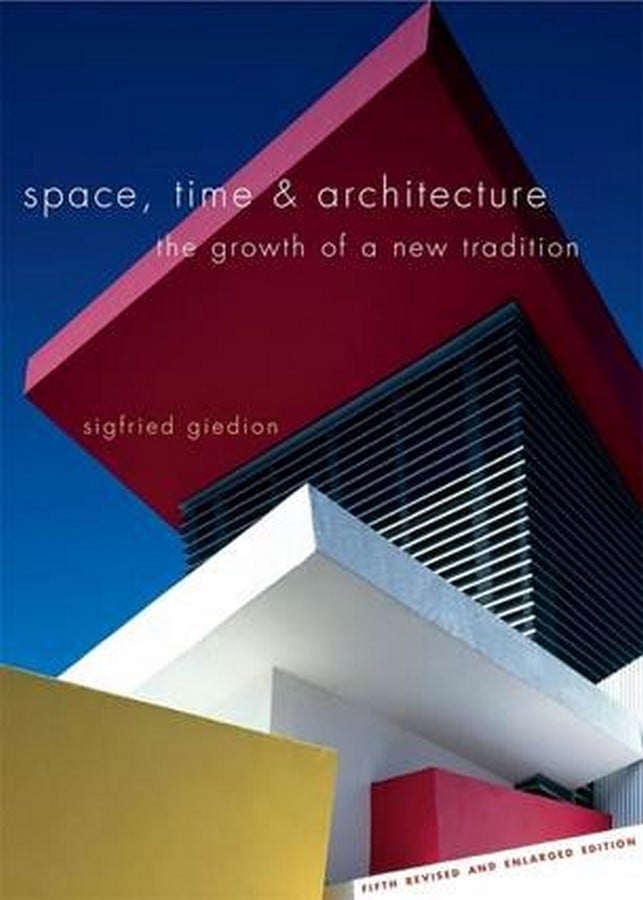
The fifth, expanded and enlarged edition covers almost 960 pages and follows an interdisciplinary approach. Giedion invites the reader not only to consider specific examples of buildings, but to look beyond individual buildings and identify connections between materials and industry, architecture and technology, city planning and social organization, and art movements and perceptions of space.
More than eight decades after its first publication, Space, Time and Architecture remains valuable for learning how to read architecture within its wider historical and cultural context. Its arguments may invite debate, but its method continues to raise a fundamental question: how does a changing understanding of the world change the way we build and experience space?
About Sigfried Giedion
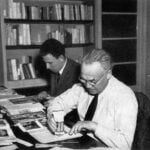
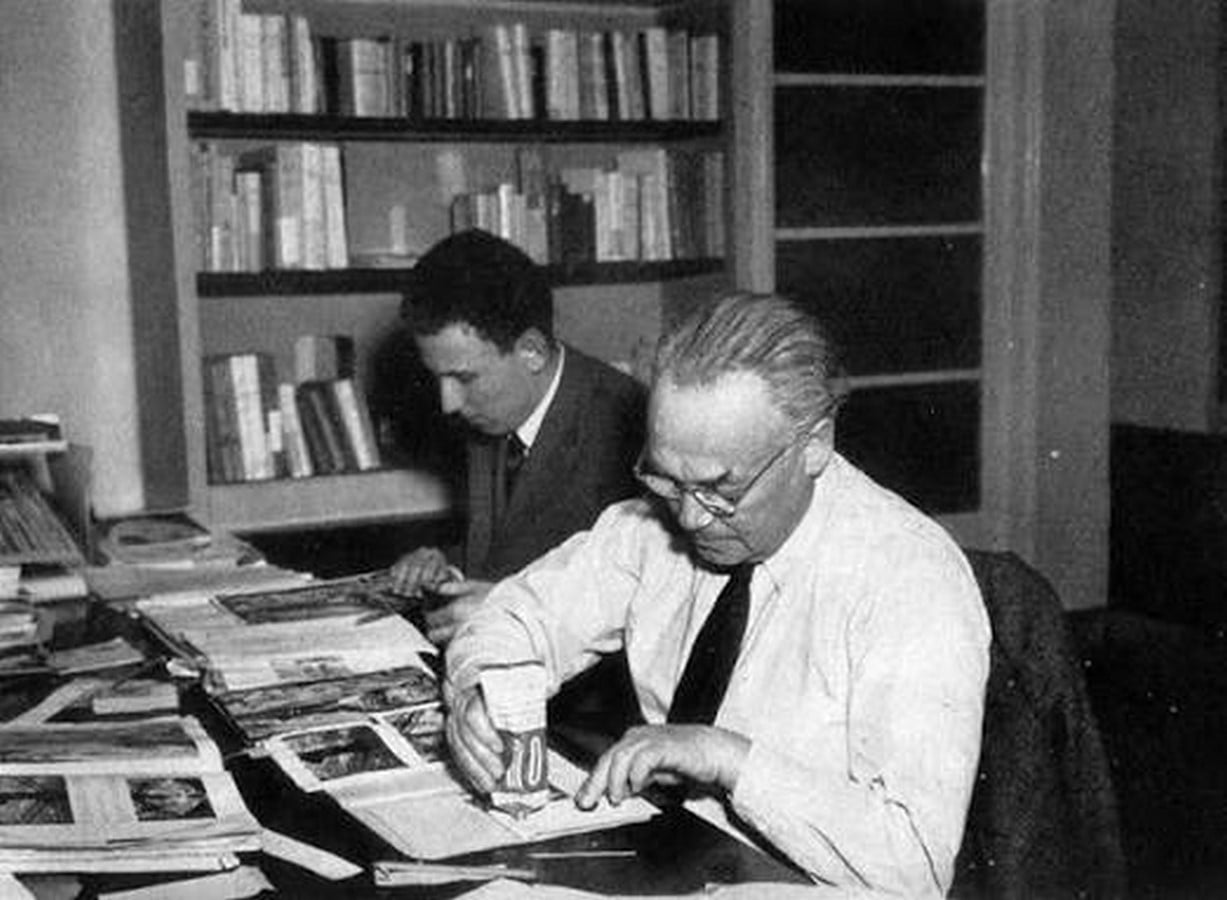
Sigfried Giedion was a Swiss historian and critic of architecture who studied both mechanical engineering and art history. He studied under the influential art historian Heinrich Wölfflin and later became closely associated with the Modern Movement. In 1928, he helped establish the Congrès Internationaux d’Architecture Moderne, famously known as CIAM, and became its first secretary-general. He was not just a commentator on modernism, but also an active participant in the contemporary architecture discourse.
This background therefore shaped several issues addressed in the book “Space, Time and Architecture.” The engineering background made him keen on materials, construction techniques, and structure, while the art history background helped him compare architecture with painting and sculpture. Moreover, Giedion’s association with the works of Le Corbusier and Walter Gropius influenced his architectural ideas.
Giedion’s narrative presents not only a historical analysis of the modern movement but also an attempt to explain the significance of the shift in architectural discourse that modernism embodied. His involvement with the movement gives the book its insight, but also contributes to the selective perspective that contemporary readers need to approach critically.
More Than a History of Architecture
It is common practice for architects to study the history of architecture in a chronological manner where one era follows another in succession; from Renaissance to Baroque to Neoclassical and then to Modernism, with buildings classified according to styles and eras. But Giedion studies architectural movements differently: he traces the connections between them, placing developments in architecture alongside changes in science, industry, art, and construction. and not as independent ones.
The book moves from the Renaissance and Baroque concept of space, through industrialization and nineteenth-century construction techniques, to the rise of modern architecture and, eventually, city planning. Giedion sees these phenomena as part of a broader transformation rather than as distinct events in architectural history. The Renaissance concept of perspective, Baroque experiments with spatial relations, and innovations in building techniques all help in transforming conceptions of space.
This is captured in the book’s subtitle, The Growth of a New Tradition. Giedion does not portray modern architecture as a clean break from the past. Modern architecture is rather seen to emerge from the interplay of traditional spatial concepts, technological progressions, artistic awareness, and a novel socio-cultural environment. He emphasizes that architecture is not a product of the discipline itself but of the broader cultural and technological changes that happen around it.
From the Renaissance to Modernism
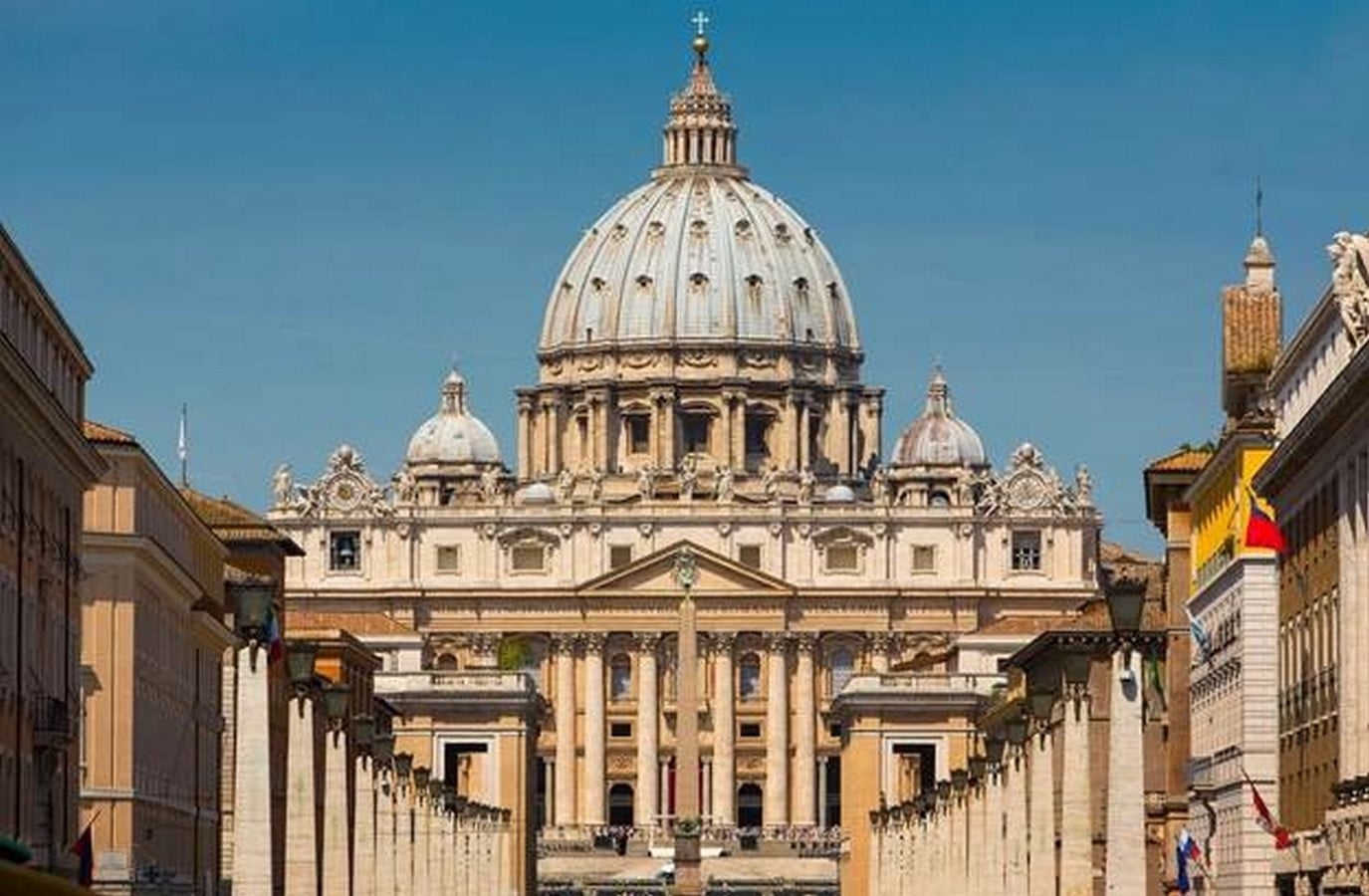
Giedion’s historical excursion begins long before the emergence of modern architecture. Through an exploration of the Renaissance and Baroque periods, Giedion shows how concepts of architectural space evolved before the technological advancements of the nineteenth and twentieth centuries.
The Renaissance is particularly important to this discussion because the development of perspective changed how space could be represented and understood. The relationship between the observer and the architectural environment became increasingly connected to questions of viewpoint and perception. Following these ideas, Giedion moves into the complexity of space in the Baroque age, creating a long historical chain of changes in how space is understood.
This historical background gives greater context to the emergence of modern architecture. Rather than treating modernism as an isolated development of the twentieth century, Giedion presents it as the result of several transformations unfolding over a much longer period. Changes in spatial perception form one part of this trajectory, while later developments in construction, technology and industrial production introduce another.
This historical background gives more significance and context to the development of modern architecture. Modernism is not portrayed as a phenomenon in itself but as a culmination of changes that occurred over a longer period. Changes in spatial perception are one of these changes, while later changes in construction, technology, and industrial production introduce another.
The book’s historical scope can therefore feel extensive, particularly for readers approaching it primarily as a study of modern architecture. But this historical range is integral to Giedion’s thesis. By tracing the evolution of ideas across eras, Giedion challenges us to move beyond the confines of individual architectural periods and consider how earlier developments shape later ones.
Industrialisation as a Fundamental Event
Industrialisation becomes an important milestone in architectural history, as Giedion depicts it not as a series of innovations but as a process that changed construction conditions and opened a new world of possibilities for architecture.
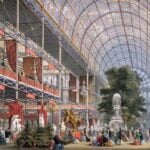
He emphasizes how iron, steel, glass, reinforced concrete, elevators, and other new construction materials allowed a rethinking of the relations between construction, enclosure, and spatial possibilities. It was now possible to create larger spans, use lighter construction, and achieve greater transparency and new types of enclosure on a scale that would have been difficult to attain through traditional construction techniques. Structures such as the Crystal Palace, exhibition buildings, bridges, and other constructions thus acquire particular importance in Giedion’s story, as they embody new spatial possibilities created through new technology.
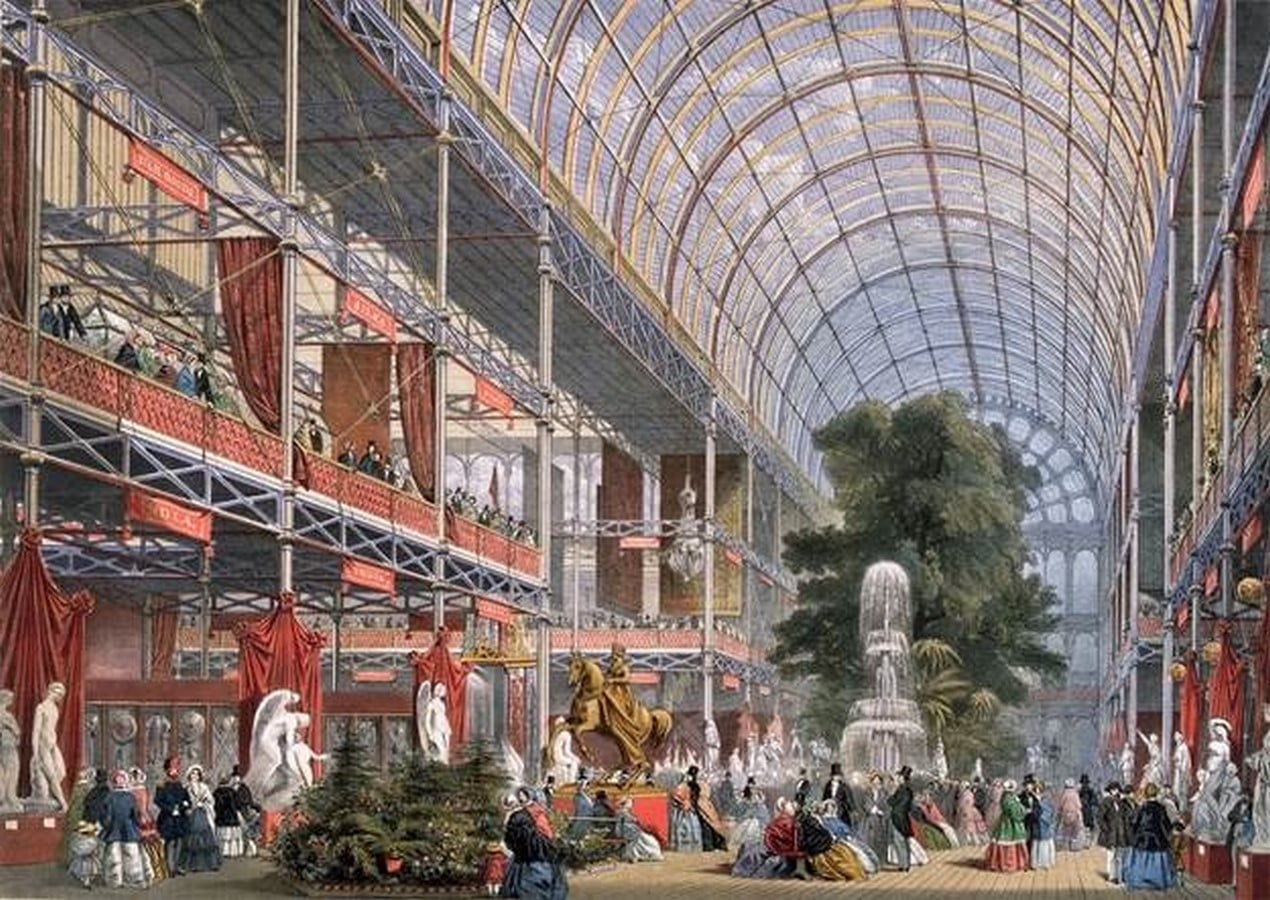
This also raises questions about the separation between architecture and engineering. According to Giedion, major transformations were happening in construction, but the changes extended beyond architects’ creations. Changes similar to those in industry and engineering were also taking place in construction, structure, and space, suggesting that the history of architecture should not be limited to traditional architecture.
Industrialization not only revolutionized how buildings were constructed. New methods of production, transport, and construction affected the kinds of buildings constructed and the evolving shape of cities. As production and urban life changed, architecture had to respond to a built world shaped by new technologies, functions, and movement patterns.
This broader vision is one of the book’s key contributions. Giedion urges readers to look beyond famous landmarks and examine the industrial structures, infrastructure, and systems that accompanied them. He argues that new technological inventions and social changes provide as much insight into how the world around them was being transformed as famous landmarks do.
Understanding Space Through Movement
The idea of “space-time” is very crucial to Giedion’s understanding of modern architecture. It is not just the building being experienced as one moves through it. According to Giedion, “space-time” is an interpretation of space that changes over time because of scientific, artistic, and architectural advances in the modern period. Movement and simultaneity are key features of this idea.
Architectural illustration traditionally involves a static viewpoint. Architectural illustrations like plans, elevations, and perspective drawings provide a static view from a specific angle and help us understand the form through static drawings. Modern architecture, by contrast, does not adopt this approach. According to Giedion, space is not a static viewpoint; it is the relations among a building’s components.
Movement through the approach and entrance to the building involves changes in perspective and space. Visual relationships can be made between interior and exterior spaces as well as planes and volumes. Therefore, movement becomes an integral component of spatial perception in architecture.
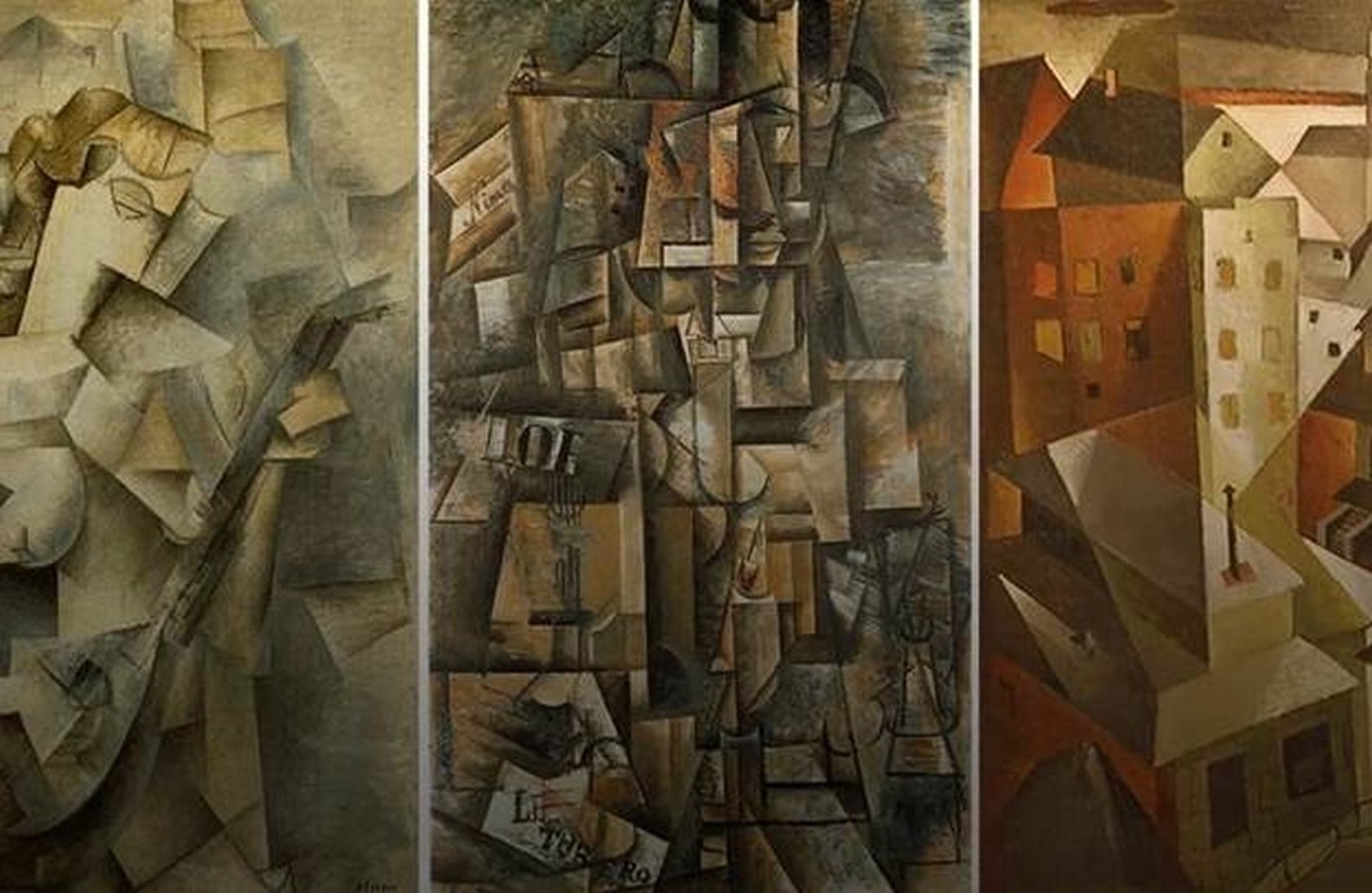
The second concept discussed is simultaneity. Simultaneity presupposes perceiving multiple spatial relations at once. As Giedion suggests, this theory refers to the development of modern art, mainly Cubism. Cubism introduced a new technique for representing objects by presenting multiple perspectives. Rather than depicting space from a single perspective, Cubists suggested that multiple views could exist at the same time.
Giedion does not consider Cubism a direct influence on modern architecture. Instead, he describes developments in art and architecture as part of a broader transformation in how space was perceived and represented. Modern research has questioned whether the connection between concepts of time in painting and architecture is as direct as Giedion believed. Nevertheless, his argumentation is still relevant since he redirects the focus of interest from architectural form considered an object to space seen as a combination of multiple ever-changing relations.
In other words, contemporary architecture, according to Giedion, has its own visual language, but it is also associated with a completely new way of perceiving space, including movement, multi-perspective views, and simultaneous spaces.
From Architecture to the Modern City
One aspect of Giedion’s Space, Time and Architecture that warrants closer consideration is the author’s treatment of urbanism. City planning is not simply a background subject in the book. Its significance becomes evident in the sections on nineteenth-century city planning, city planning as a human problem, and space-time in city planning. Here, the author continues his analysis of architectural transformations by moving beyond buildings to the environment in which they are situated.
Industrialization was felt not only in building techniques but also in the scale and structure of cities. Population growth, advances in transportation, changing mobility patterns, and the need for housing all helped shape a new urban landscape. The challenges of the modern city therefore extended beyond designing individual buildings.
Giedion explores streets and squares, the urban fabric and urban planning alongside the evolution of architecture, treating them as part of the same transformation. The city appears as a system of space defined by relationships among buildings, infrastructure, and movement. Roads and transport, pedestrian paths, open spaces, and built structures are not isolated components but interrelated aspects of urban space, its organization, and its experience.
This follows from one of the book’s main ideas. If architecture adjusts to changes in technology, society, and lifestyles, then the city should change with it. This creates a need for a new conception of the connections between the various components of the built environment in response to changing urban realities.
The discussion of urban planning further develops Giedion’s conception of space-time. Movement is not confined to an individual’s experience of a building. In the city, the experience of space also includes movement through streets and transportation infrastructure. Architecture and urbanism are therefore related through movement through space and the perception of the environment.
The book’s urban element remains relevant for contemporary readers because Giedion’s approach suggests that architectural modernity cannot be reduced to separate buildings. It implies transforming the whole system of space and infrastructure within which buildings exist.
Architecture, Art and Cultural Unity
Another unique feature of Giedion’s method is how he places architecture in dialogue with other forms of cultural activity. He juxtaposes painting, sculpture, engineering projects, and architecture to examine how different disciplines responded to similar questions of form and representation.
Visual content plays an integral role in the process. Photography, drawings, plans, and art pieces are used not only to support the text but also to make comparisons that are hard to establish through description alone. The reader is encouraged to look for connections and relationships between different objects to find correspondences across disciplines and eras.
This interdisciplinary approach is one of the book’s most enduring qualities. The book helps readers see architecture in the broader context of culture and understand the development of ideas from a multidisciplinary perspective. It also offers a new approach to studying precedent. Rather than studying only past examples of buildings, readers can analyze paintings, structures, technologies, and other elements of visual culture to understand architectural ideas.
In this sense, the value of Giedion’s work lies not just in his ability to connect architecture with other disciplines, but in the way these connections shape our vision. Space, Time and Architecture asks its readers to place architecture within a larger cultural field rather than treating it as a discipline that develops on its own.
Reading Architects Through Their Buildings
As Space, Time and Architecture moves towards modernism, Giedion turns to architects such as Le Corbusier, Walter Gropius, Mies van der Rohe, Frank Lloyd Wright and Alvar Aalto. However, the book is not structured as a series of biographies. Giedion is less interested in presenting architects as isolated figures than in examining how their work reflects broader changes in architecture.
These buildings become the means through which Giedion can study these developments. Through Le Corbusier‘s buildings, for instance, Giedion can examine issues of movement and the organization of space. Similarly, Frank Lloyd Wright’s buildings become the means through which Giedion can analyze the connection between interiors and exteriors. The Bauhaus movement represents the broader trend of combining art, design, and industrial production.
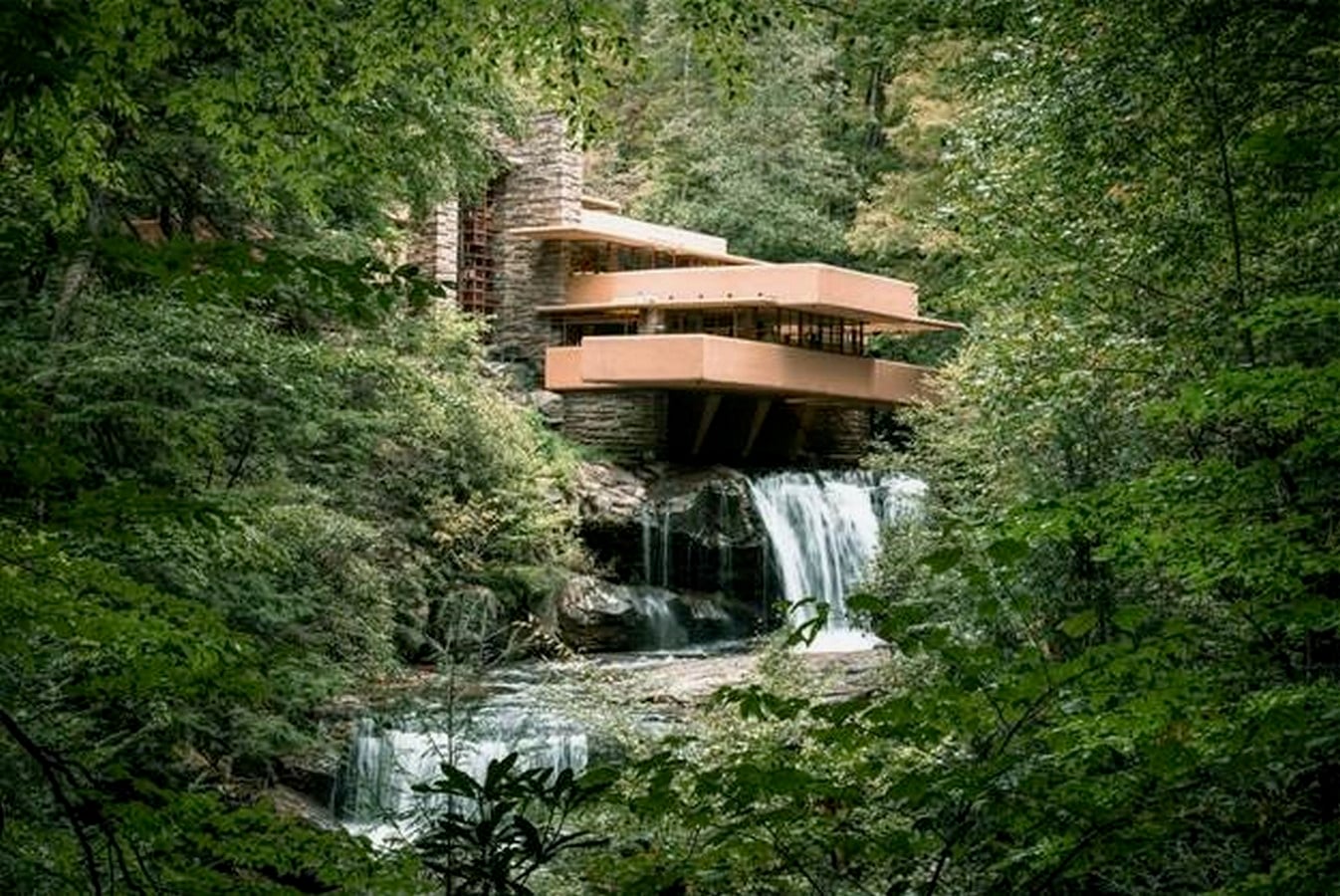
Through this, the buildings themselves become key to Giedion’s reading process. Rather than considering buildings as mere examples of a certain style, he reads into what the buildings represent in terms of a change in structural and construction practices and how spaces were being organized. The architect’s work becomes evidence of a broader architectural transition.
The methodology provides an effective way to analyze buildings beyond their books. It helps us understand buildings and structures based on the circumstances under which they came into being and ask questions like: What type of spatial experience does it provide? How did its structure determine its form? What technological advancements enabled its making? And what social or personal circumstances have they been created to respond to?
Giedion’s architects are therefore important not only for what they designed, but for what their buildings reveal about the changing ideas and conditions of their time.
Why Read It Today?
More than eight decades after its first publication, Space, Time and Architecture remains relevant not because it accepts every historical assertion as valid, but because it shows how Giedion views architectural history. It offers a different perspective on what can be discovered when buildings are examined in relation to engineering, art, technology, and urbanism, rather than studied in isolation.
This method remains relevant to contemporary architecture, especially today, when design increasingly intersects with environmental science, digital technologies, material studies, engineering, and urban planning. The boundaries between these fields continue to evolve, making Giedion’s interdisciplinary method useful even as the specific technologies change.
The book also encourages a closer reading of architectural experience. Beyond photographs and drawings, buildings are encountered through movement, sequence, and changing relationships between spaces. Rather than examining buildings as products of particular styles or appearances, Giedion encourages consideration of the ideas, technology, and context that led to each one. In the end, his approach makes Space, Time and Architecture important not only as a history of modern architecture but also as a means of architectural analysis.
Space, Time and Architecture is not a neutral history of architecture, nor an easy introduction to modern architecture. Giedion turns architectural history into a story of changing perceptions, including Renaissance perspective, spatial experiments in Baroque architecture, industrial building techniques, modern painting and sculpture, architecture, and city planning. It becomes a part of a single attempt to understand how a new architectural tradition emerged.
The book’s most significant contribution is not so much a specific definition of modernism as a mode of perception. The reader is invited not just to consider the look of a building, but also its construction techniques, the movement’s spatial experiences, its relations with the urban environment, and the society that constructed it.
Readers may not agree with every connection Giedion proposes, and contemporary architectural history has expanded far beyond his narrative. Yet engaging with Space, Time and Architecture can still change the questions we ask when looking at buildings and cities.
It does not simply ask what modern architecture looked like. More importantly, it asks why architecture began to be understood differently in the first place.
References:
- Book – Space, Time and Architecture: The Growth of a New Tradition, Fifth Revised and Enlarged Edition by Sigfried Giedion