Have you ever wondered why you instinctively move towards a light source?
Early morning, as soon as you wake up, the play of light and shadow begins. Firstly, the sunlight enters the space, slips through windows, highlights textures, dances around materials, adding warmth to the spaces. Secondly, shadow follows, adding depth and comfort. People think that a building is beautiful without realizing its true beauty comes from the silent play of light and shadow where the architect controls something they can’t physically touch.
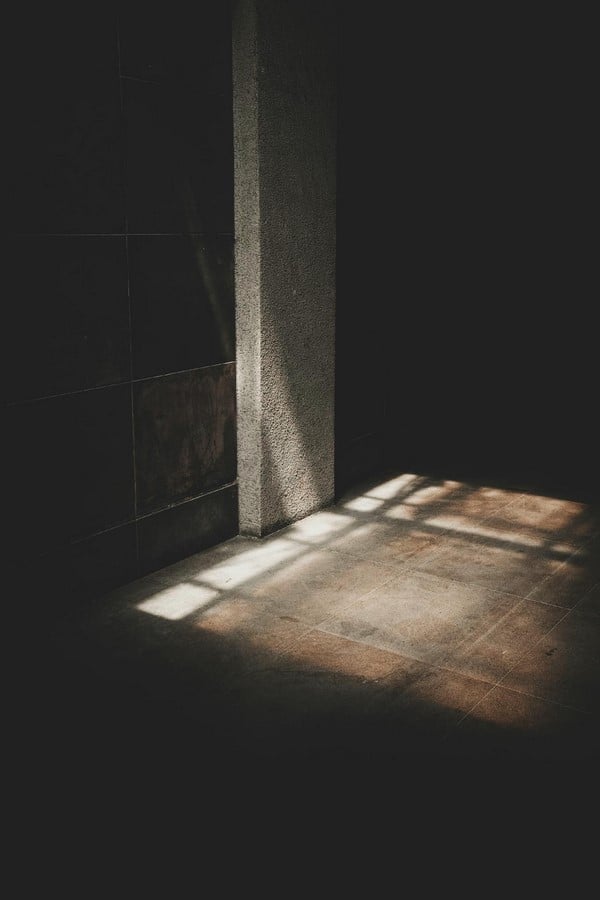
The Play of Light and Shadow
Long before a building is constructed, an architect studies the sun’s path, direction of wind and changing seasons. He/she centers the building’s architectural design for maximum daylight penetration.
-A window isn’t merely a frame on the wall, it welcomes daylight.
-A museum uses a spotlight on artifacts and paintings for the users to capture and gravitate towards them. – This light acts as a way-finding.
-Even in a dark corridor, if a light is placed at the end, the user will instinctively move towards the light source.
-At dawn, people prefer yellow lights over white lights to calm and soothe their minds, unlike the bright-white lights that give a depressing hospital ambience.
These examples prove that lighting decides the visual language the space has to convey.
Temple Architecture
In ancient religious architecture, designers were very good at using light and shadow to produce a religious atmosphere, mystery and strengthen the influence of rulers. Light and shadow were associated with God. Religious monuments were designed for the dramatic play of light and shadow, creating heaven as like mental peace for the deities, enhancing their spiritual experience. Light is bound to divinity. Light is directional, it guides movement and perception, shaping the space.
The deliberate play of shadow and light represents the spiritual journey of a human being from the material world to the spiritual world. Every ancient monument’s architectural design follows this principle.
Progression from dark to light
Light is invisible until it touches a surface.
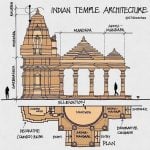
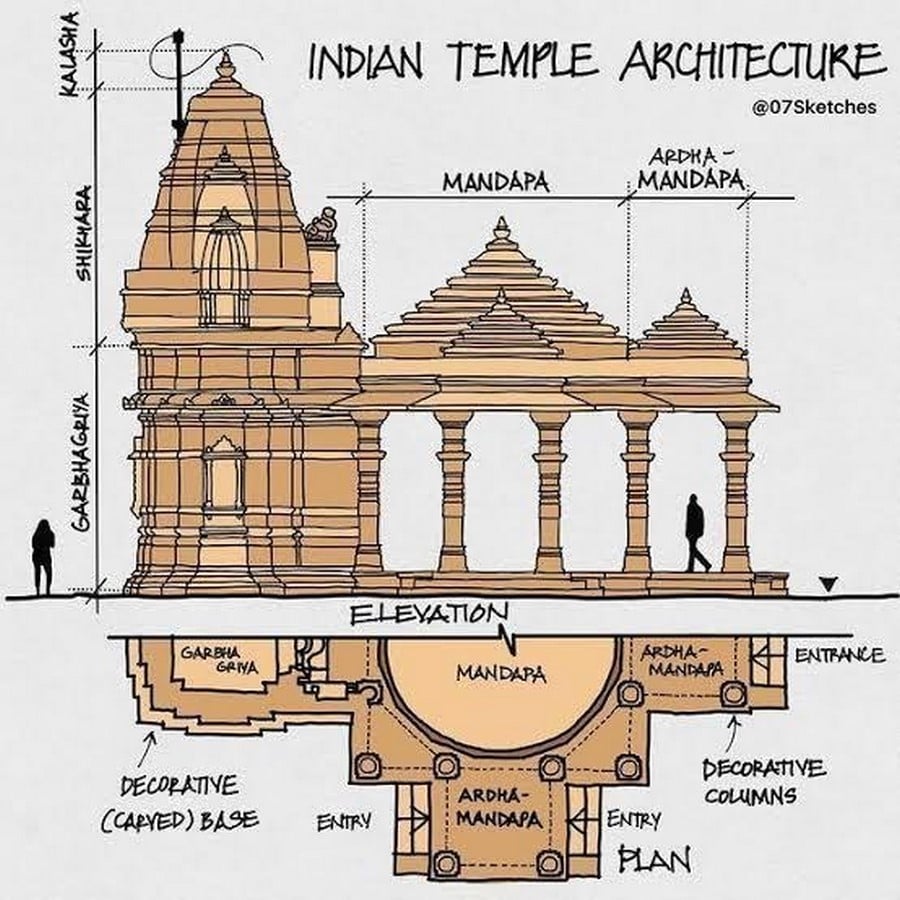
When you look into the example of an Indian temple—
Mandala: As soon as you enter the temple, you witness the bright, exterior, sunlit spaces for public gathering and social interaction, which represent the loud, active environment of the physical world.
Antarala: Transitional space that connects the Mandala and the garbageman. This has minimal sunlit space that creates a gradual sensory withdrawal and mental calmness. This vestibule represents the inner transition you have to go through to attain the divine by abandoning the material world.
Garbageman: Closed interior, completely surrounded by darkness, symbolizes the formless aspect of the divine, seen only by the light glow of an oil lamp (hiya). This focused illumination of the deity’s face or form immersed in darkness signifies the revelation of God’s grace to the human soul.
Bright light — filtered light — dim space — sacred darkness
This movement from the bright and loud outer halls into the small, dim and quiet inner sanctum mirrors the transition from outer illusion to inner awakening, focusing the mind entirely on the presence of God. Darkness is intentional. Light is concentrated.
Ancient Hindu temples calculated solar equinox, optical effects and dramatic appearances. They weaved astronomy, astrology and outer space events into the architectural design with precise calculations.
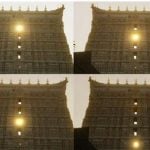
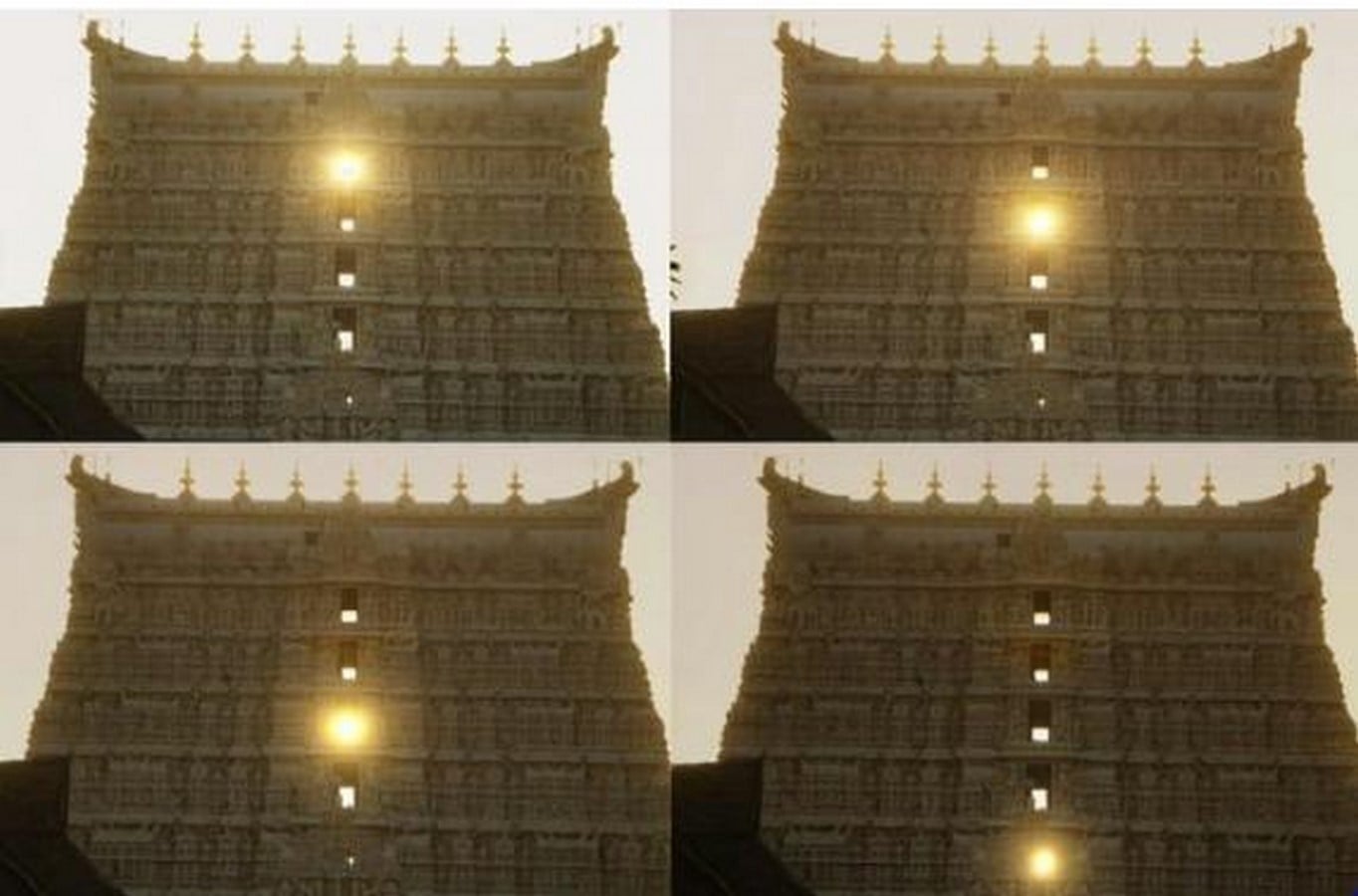
Sree Padmanabhaswamy Temple in Thiruvananthapuram, Kerala
This iconic Temple features a seven-story gopuram containing precise window pairs aligned with the equatorial path of the sun, allowing setting sunlight to pass through each window sequentially during the March and September equinoxes. This visually pleasing design creates a God like experience to the deities.
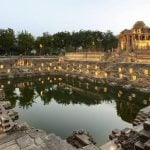
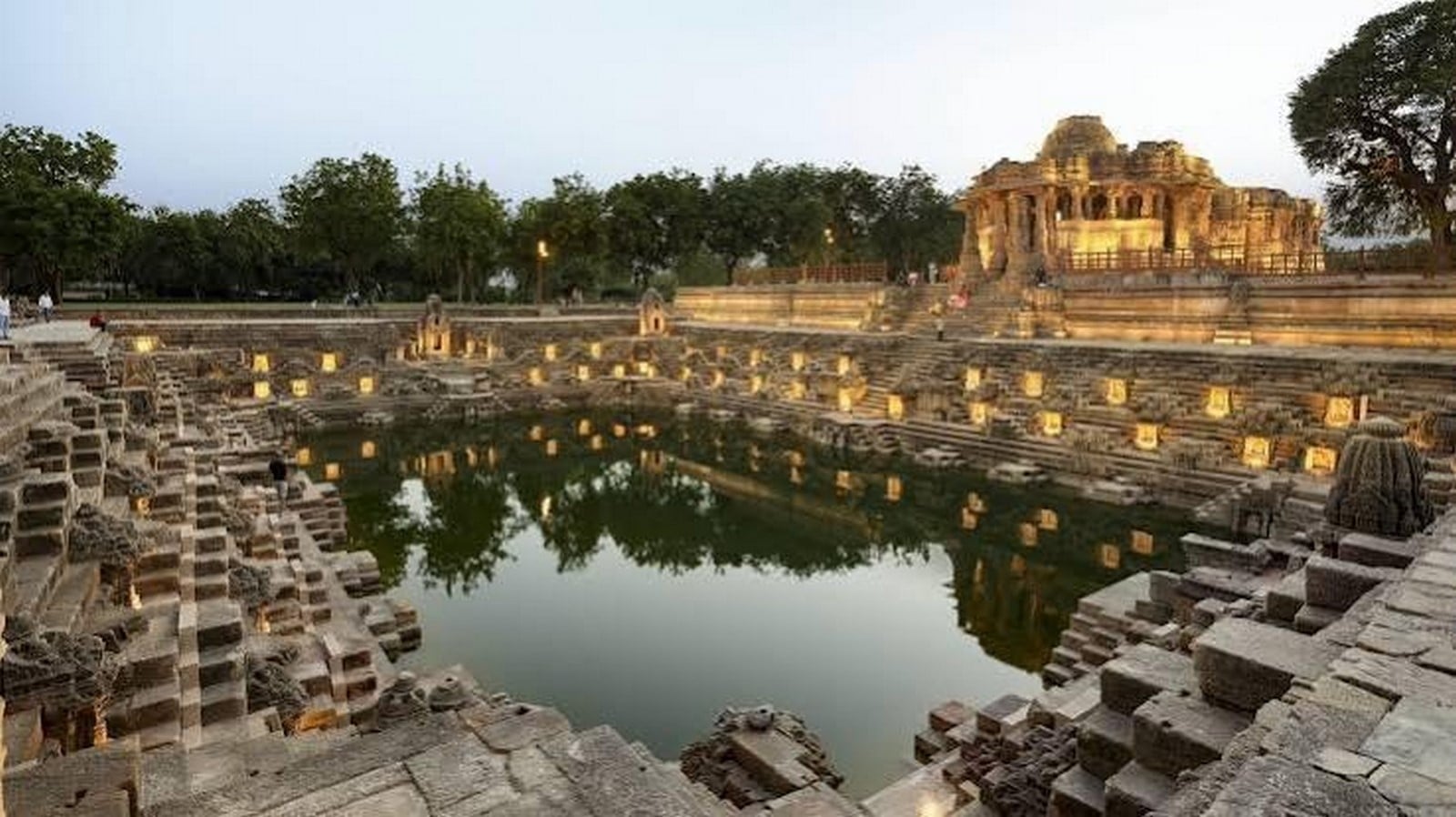
Modhera Sun Temple in Gujarat
The temple is dedicated to Surya, the Sun God. This temple was designed for the maximum use of light and shadow in architecture. Sunrises strike the main idol on holy days. The enormous stepped Surya Kund in front of the temple consists of terraces, steps and geometric featured shadows. These shadows continuously change throughout the day, creating a dramatic effect.
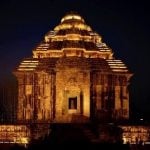
Konark Sun Temple in Odisha
As the temple was dedicated to Surya, the Sun God, its architectural design was designed to make the sunlight part of the architectural experience. The shadows in the temple change across the wheel as the sun moves across the sky as the building visually records the passage of time.
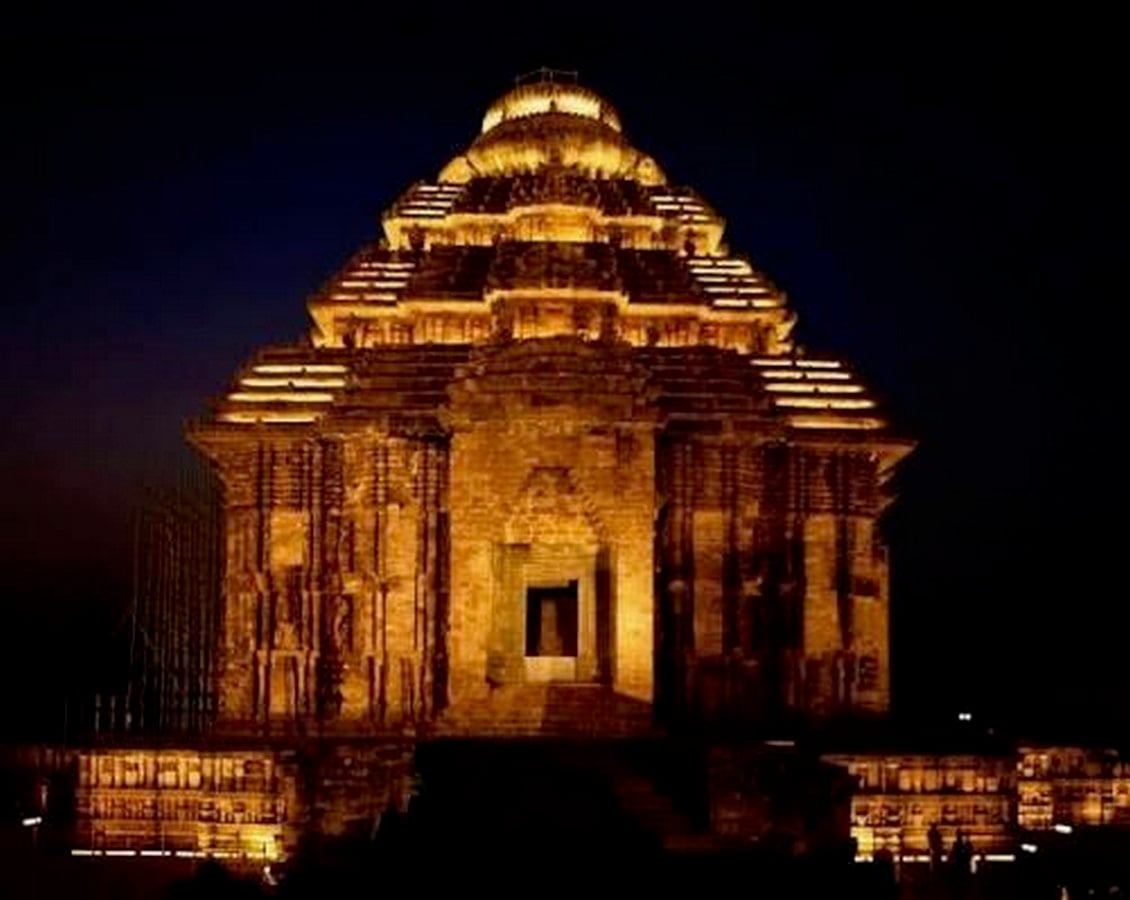
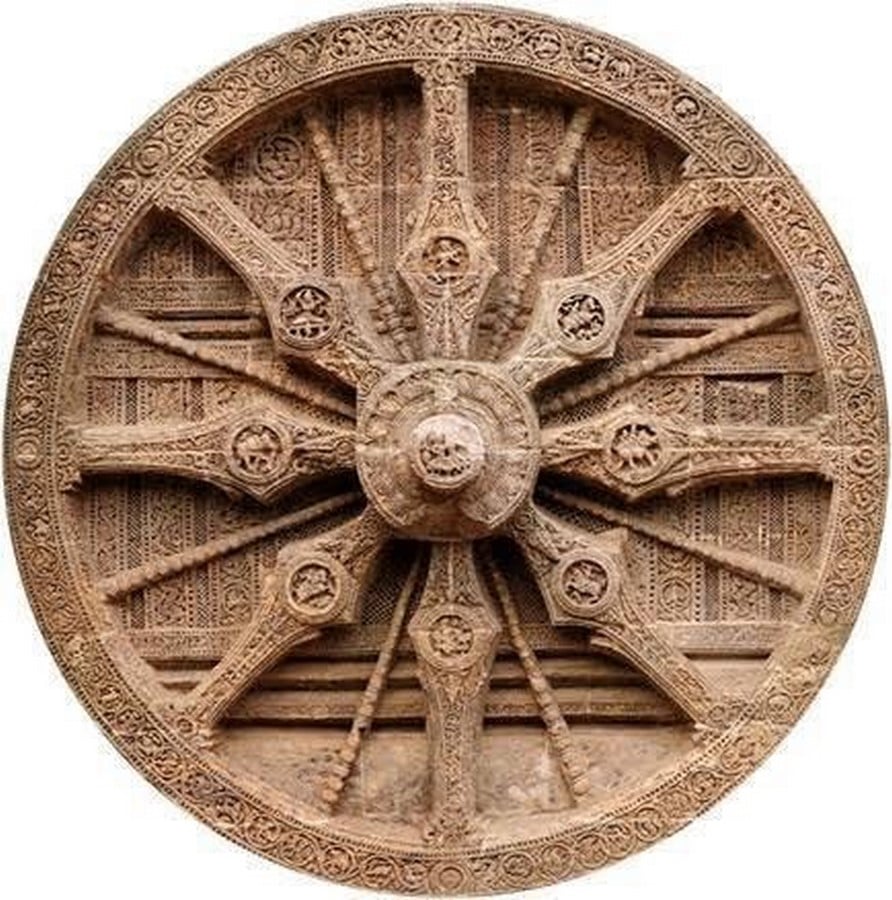
The above-mentioned examples prove that light and shadow were veiled by designers to represent emotions through architecture. The structure transforms throughout the entire day as the sun moves across the sky. This creates a live architectural experience for the devotees, making the place a heaven-like ambience.
When an architect uses the light and shadow of the sun and moon skillfully to build experiences — the concept of ‘Human and Nature Integrated Design’ takes place. These elements make you look into the details more vividly, leading to drawing more inspiration from nature for architectural design. Light and shadow make spaces feel responsive, alive and personal. It transforms buildings from inert objects into living experiences. Walls don’t define light, light defines the wall. Without it, there is no architecture, just geometry waiting to be seen.
References:
Ideas, L. (2026) Hindu temple lighting: Symbolism & Sacred Space, Light Ideas. Available at: https://lightideas.com/hindu-temple-lighting-symbolism-sacred-space/?srsltid=AfmBOorQRxsvDT-pcEwJbUyvPerPRyi4A3tLsllW1CeFXc3cGdU7Y6q8 (Accessed: 12 September 2026).
Jacob, J. (2026) The konark sun temple architect, build the system that operates itself, Jidhu Jacob’s Journal. Available at: https://jidhu-jacobs-journal.beehiiv.com/p/the-konark-sun-temple-architect-build-the-system-that-operates-itself (Accessed: 12 September 2026).
Azad, S. (2022) Hindu architecture ( Padmanabhaswamy Temple), Slideshare. Available at: https://www.slideshare.net/slideshow/hindu-architecture-padmanabhaswamy-temple/116155759 (Accessed: 12 September 2026).
Shahaan, M. (no date) In the shadow of Ananta: The architectural secrets of Sree Padmanabhaswamy temple – RTF | rethinking the future, Rethinking the Future. Available at: https://www.re-thinkingthefuture.com/travel-and-architecture/a13352-in-the-shadow-of-ananta-the-architectural-secrets-of-sree-padmanabhaswamy-temple/ (Accessed: 12 September 2026).
Shukla, V. (2026) Celestial symmetry : Link between astronomy and Temple Architecture, Indica Today. Available at: https://www.indica.today/quick-reads/celestial-symmetry-link-between-astronomy-and-temple-architecture/ (Accessed: 12 September 2026).
India, L. (2026) Admin, Lighting India Bimonthly Magazine on Lighting Industry LEDs Indoor Outdoor Lighting Household Commercial Industrial Lights Future of Indian Lighting Industry News Magazine. Available at: https://www.lightingindia.in/lighting-as-the-silent-architect/ (Accessed: 12 September 2026).