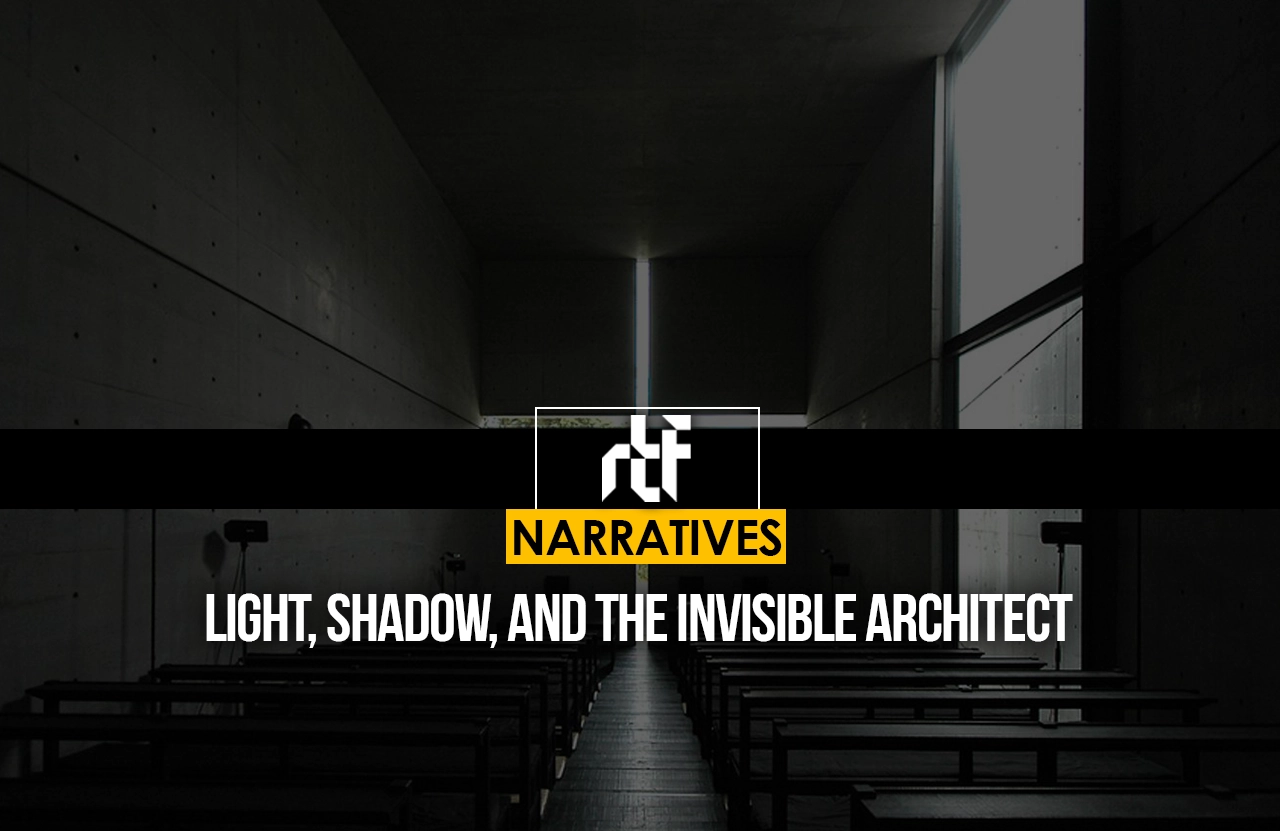
There is always an argumentative relationship between brightness and darkness that reflects the paradoxical nature of both. As daylight ebbs and flows through a structure, it creates its opposite: a shadow, which creates a point of conjecture between the two. Light and shade continue to move and evolve, never settling, as seen in nature. This continual mirroring between the two creates dimensionality, without which any structure remains incomplete.
Two of the strongest narrative devices in architecture are illumination and shade, both of which create experiences which transcend the materiality of any building. They are not simply decorative elements, but channels of communication established by the architect. This relationship between the two – illumination and shadow- is what calls out emotional meanings hidden within spaces that go beyond the initial visual experience. Developing an attunement to these elements enables individuals to recognise the intangible qualities that shape spatial experiences. (Arch, 2009)
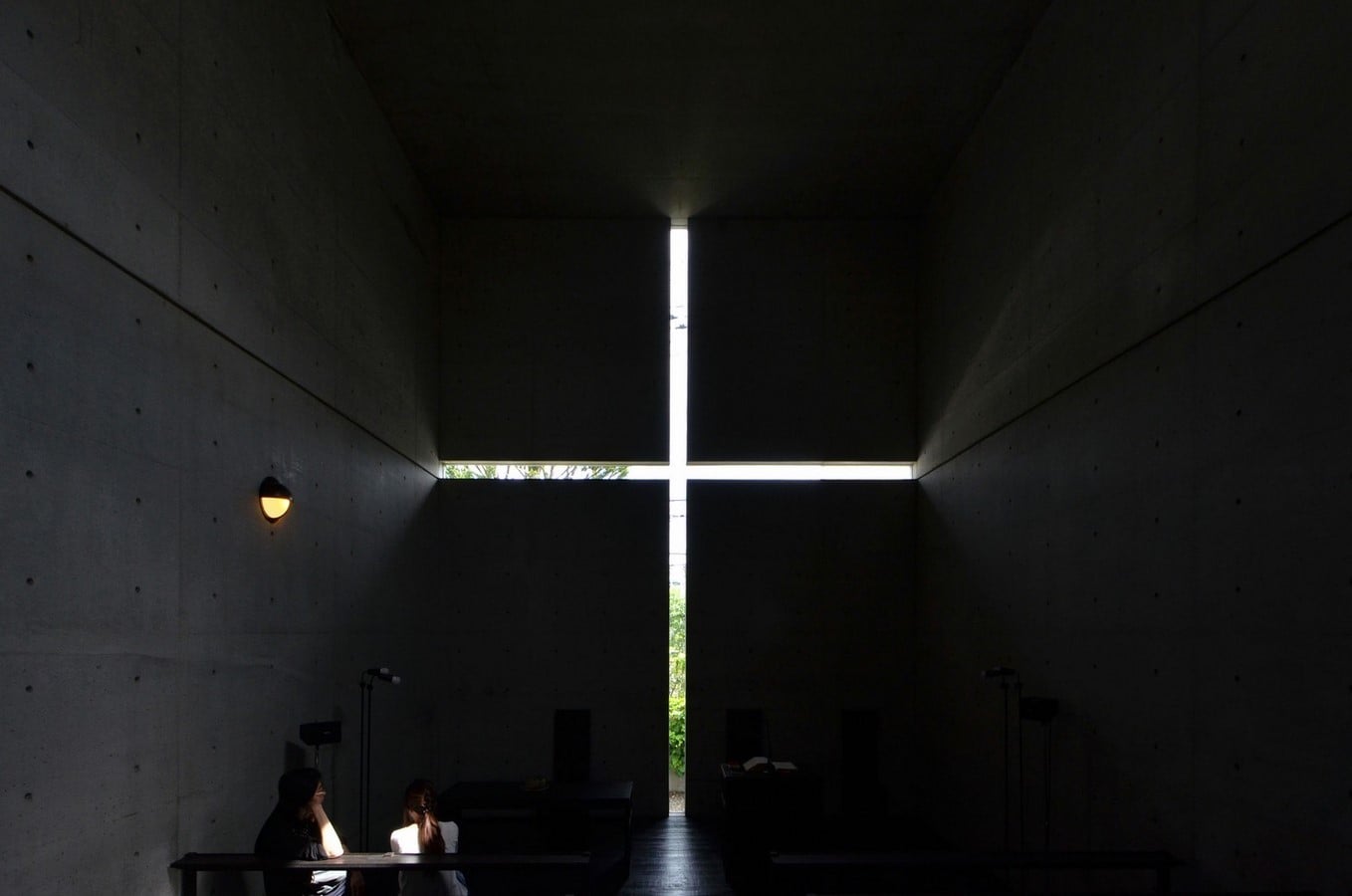
Shaping Space through Light
Light is more than just lighting up a space. It is an architectural tool, carefully designed by an invisible architect, to ensure that the feel of space and spatial relationships are amplified. Natural light interplays with built form to lift mood and support circadian rhythm. Architects have always used light as a key element of design, from the clerestory windows of ancient temples to the large glass facades of modernist buildings. Our knowledge of the effects of light has developed over the years, with factors such as daylight, visual comfort and energy efficiency in contemporary architecture gaining key prominence.
The Invisible Architect
Without static forms or written narratives, the architect can serve as an invisible narrator. They work with light and shade, and with the regular sequences generated by this interplay, to influence how spaces are interpreted. Those interactions are carefully thought out and orchestrated but often go unnoticed. These oblivious yet imperative design languages guide visitors’ perception and create a more hospitable atmosphere without much intrusion. Because humans instinctively gravitate towards light, lighting provides delicate indications for movement, orientation, and even moments of rest without the need for other guidance, such as barriers or signs.
In this process, the architect takes on the role of an invisible narrator. The architect does not use explicit forms or written narratives but works with light and shade, and the cadence of spatial sequences to gently influence how spaces are shaded and interpreted. Those interactions are deliberately orchestrated yet often unobserved, guiding the visitor’s perception, directing attention, creating atmosphere, and revealing moments of significance without explicit instruction.
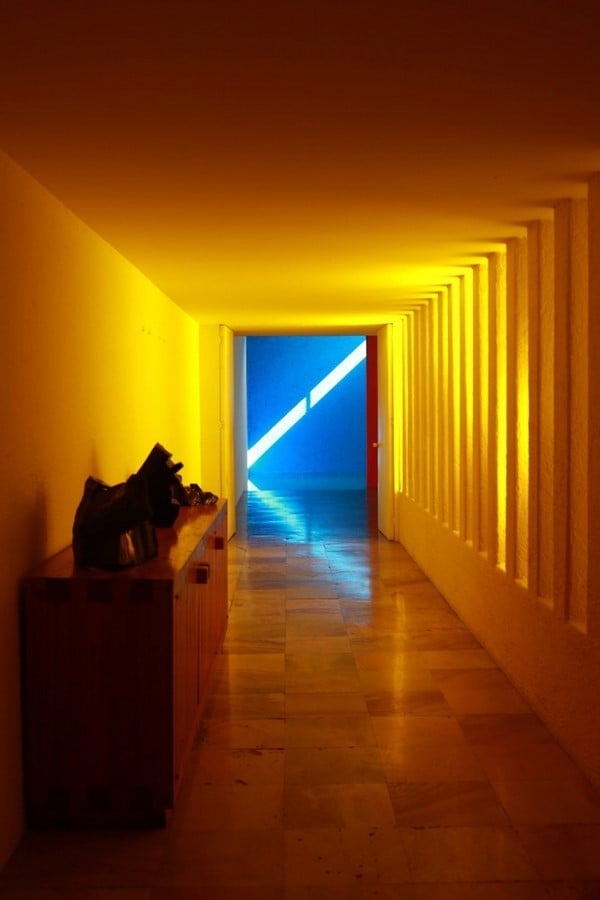
This invisible authorship becomes especially apparent in museums, memorials, and places of contemplation where the passage of natural and artificial light is an essential part of the architectural narrative. Openings, material textures, volumes, and spatial transitions combine to create shifting patterns of illumination that mark time, arouse feeling, and reinforce meaning. Visitors moving through these spaces encounter illumination and shade not as passive elements but as active agents engaged in storytelling, turning architecture into a dynamic experience that unfolds slowly through observation and interpretation. The architect’s presence, in this way, is not expressed through a visible intervention but through the intangible orchestration of light, shadow, and atmosphere, allowing the narrative to come to life organically through the user’s experience. (“Beyond Form: How Light and Shade Define Architectural Atmosphere | ArchDaily,” n.d.)
It takes a unique ability to see an entity past its physical form. It is not an intuition but a skill developed through observation and reflection. This is where the role of an architect comes in. To go beyond the very rigid boundaries that limit the physical structure today. Architecture is not meant to provide fixed perceptions; it aims to offer a unique experience to every new visitor. So the real quality of a space is found not only in the visible elements but also in the invisible elements, created by the invisible architect.
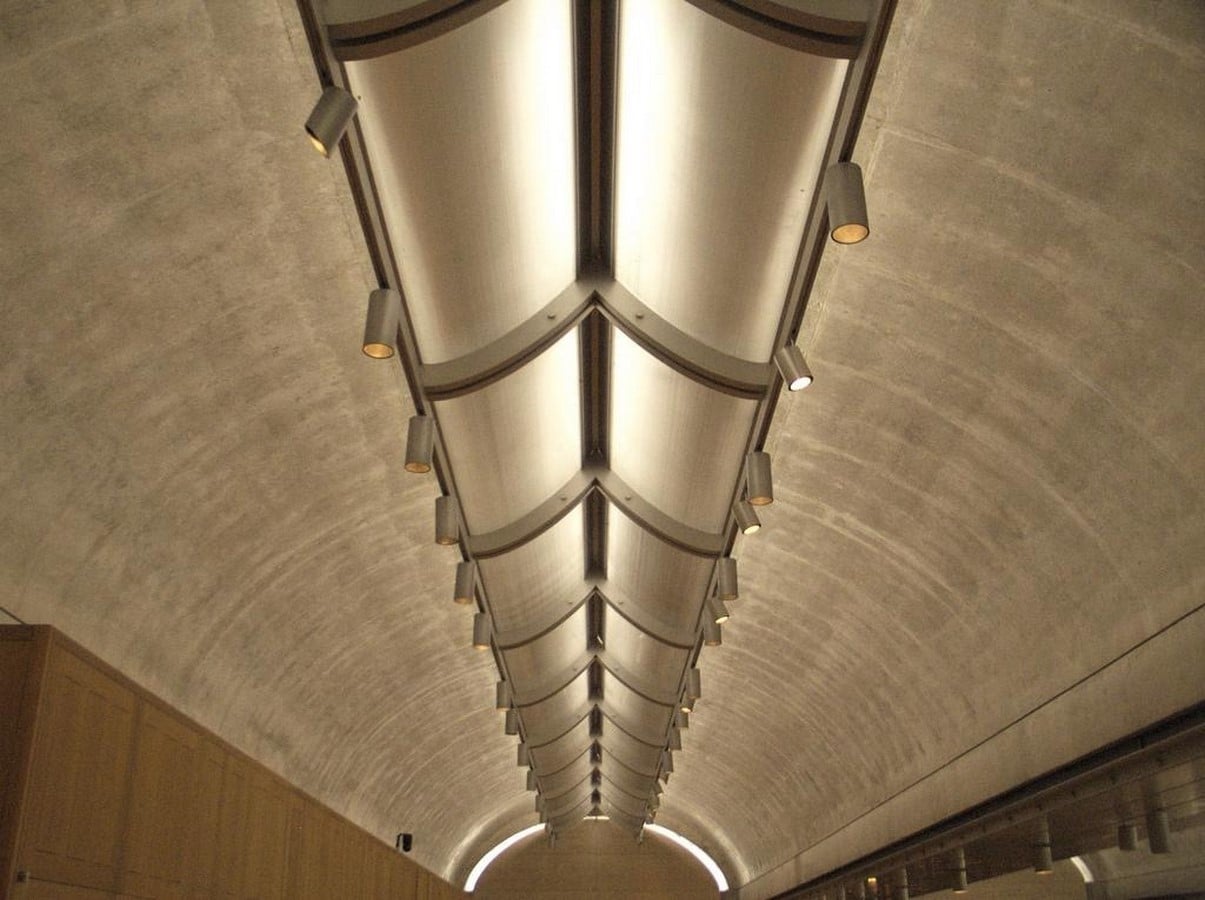
Unfortunately, architecture has been reduced to merely a visual and functional entity. Interest in maintaining correct sensory engagement through architecture has declined. Simply because we have lost touch with nature. This proves that we have lost a part of ourselves. Architecture must evolve beyond that static nature, and we must reconnect with the changes in climate, season, and change.
The successful use of lightness and shadow, integrated into the design, frames our experience of the architecture of space. It blurs the lines between the built environment and nature itself, a critical relationship for human relationships to any structure. Through the interaction of light and shadow, architecture establishes a strong connection between people, place, and the natural world, making ordinary spaces meaningful narrative experiences.
References:
Arch, K.S., 2009. Patterns of Connection in Architecture: The Paradox of Light and Shadow.
Beyond Form: How Light and Shadow Define Architectural Atmosphere | ArchDaily [WWW Document], n.d.