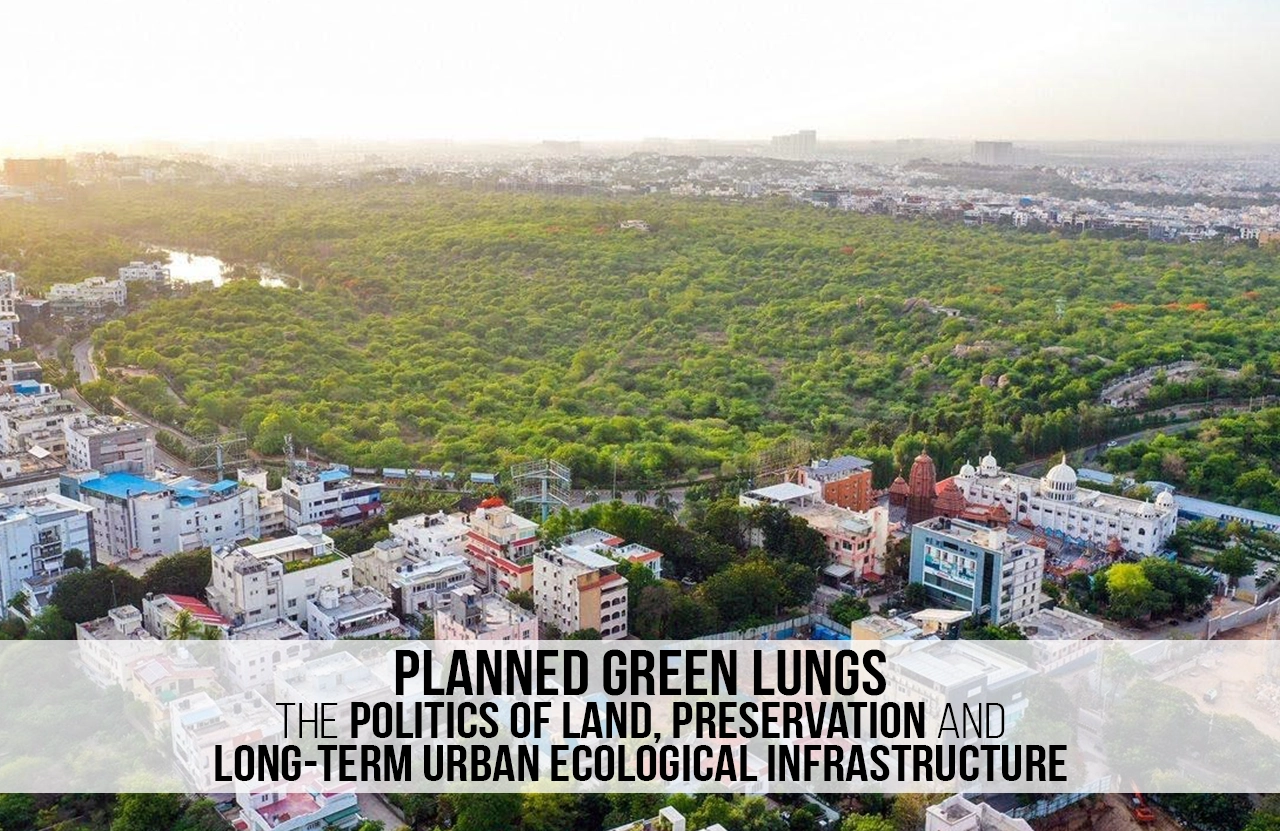
Urban green infrastructure is often framed as a design and planning issue: cities need more parks, trees, wetlands, green corridors, and open spaces to address environmental issues related to global warming, biodiversity loss, and degraded environmental quality. However, the fact that some urban green landscapes have persisted for so long is often less about contemporary design and planning and more about historic decisions about land, ownership, and urban development. This paper argues that urban ecological infrastructure is always a product of the political process of space-making. It happens when an institution decides to keep land available for ecological purposes rather than for other urban uses. The argument is illustrated through an analysis of four very different landscapes: Central Park in New York, KBR National Park in Hyderabad, Cubbon Park in Bengaluru, and Maidan in Kolkata. Each began with different private acquisitions, conversions of royal estate lands, administrative planning, and military planning, yet all have become important ecologies within dense urban landscapes. The history of these places also shows us the uneven burden of preservation in terms of displacement, limited development rights, exclusion from institutions, and the tensions between ecology and development infrastructure. Through a comparative political ecology perspective, the article argues that the key issue shaping future green infrastructure planning will be whether a city is ready to leave certain ecologies “unbuilt.”
-
Introduction: The Green Space the City Did Not Consume
“The greenest part of the city is usually the part which planners decided long ago not to develop.”
This quote is intentionally confrontational as it challenges a fundamental notion about urban sustainability. Most people assume that a greener city can only be created by adding more plants, gardens and greening programs. Today, many urban initiatives focus on parks, green corridors, urban forestry, green roofs, landscape gardening, wetlands, green belts, and natural solutions. However, some of the city’s most significant natural landscapes are not recent outcomes of environmental planning but were inherited from earlier periods, where they came into being through decisions about ownership, security, administration, hygiene, recreation, prestige, or protection.
This point matters because land in a city is never environmentally neutral and has economic, development, political, and social values. By keeping large areas of land intact in an expanding city, one makes a conscious decision not to build anything on them.
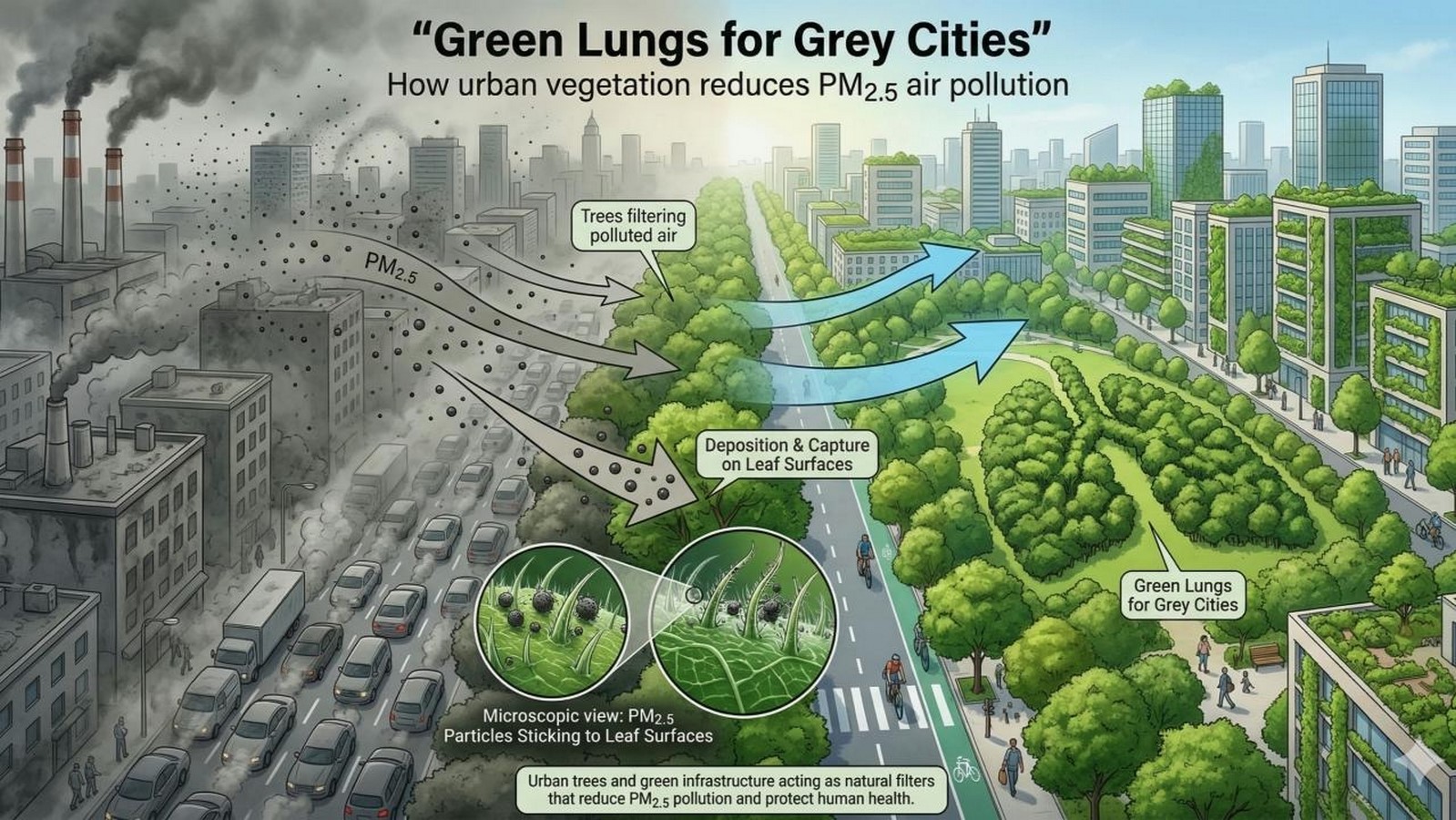
In modern terms, green infrastructure is not limited to the traditional interpretation of parks as purely recreational sites. According to Benedict and McMahon (2006), green infrastructure is a network of natural and semi-natural areas that enable ecological processes while offering socio-environmental advantages. Similarly, current research also stresses connectivity, multifunctionality, interaction with grey infrastructure, and inclusivity as key features of urban green infrastructure (Davies & Lafortezza, 2017; Pauleit et al., 2017). Ecological connectivity is especially critical because isolated green patches can be recreational but fail to function ecologically without a network of habitat, water, soil, and vegetation.
This ecological approach must be supplemented with a political one. After all, green infrastructure is not only an issue of who controls land but also of who sets ecological values, whose interests are accepted, and which are restrained. Research within urban political ecology has shown that parks and green spaces are always produced in relation to power rather than beyond it. Producing green space can lead to displacement, exclusion, and unequal allocation of environmental benefits (Porter & Hurst, 2020). Studies of parks in India show that “greening” is also a political and ideological process that promotes specific values and interests (Datta & Sarkar, 2017).
This paper poses a seemingly straightforward question:
If a green space survives because of a political act, is it ecological infrastructure or just protected land?
It makes all the difference. For protected land to become ecological infrastructure, we must identify its ecological functions and incorporate them into the larger urban system. This is illustrated through four landscapes: Central Park in New York, Kasu Brahmananda Reddy (KBR) National Park in Hyderabad, Cubbon Park in Bengaluru, and the Maidan in Kolkata.
None of these four landscapes can be assumed to be equivalent parks. They have distinct histories, distinct institutional structures, and distinct meanings. This difference defines their importance. Central Park was deliberately formed as a major public park through state intervention and land acquisition. KBR emerged from a former royal estate that has since been converted into a protected forest in an increasingly metropolitan area. Cubbon Park was formed within the administrative context of colonial Mysore and survived Bengaluru’s intensification. The Maidan formed largely in relation to the military needs of Fort William and has since evolved into a major civic and recreational landscape.
Different political objectives created different landscapes. However, in both cases, one can observe the same tendency – the value of the city’s ecology may emerge as a by-product of politics carried out for non-ecological reasons.
The green lung, thus, cannot be defined simply as the green area in the city. The green lung is a territory where existence is constantly reaffirmed despite the pressure of urban development.
-
From Parks to Ecological Infrastructure
This matters because it suggests that ecology creates a space comparable to a technological system. In this way, roads move people; pipes move water; electricity moves energy; greenery moves environmental processes. However, misinterpretation is also possible.
The lungs work not because there are some trees in the city. It works because an ecological system is functioning. Hence, green infrastructure cannot be only vegetative. Its effectiveness relies on many conditions: spatial connectivity, ecological depth, secure land tenure, institutional management, and protection from fragmentation. Recent research on green infrastructure pays much attention to ecological networks (Davies & Lafortezza, 2017; Monteiro et al., 2024).
This difference highlights a limitation of planning practice. Urban plans typically measure green spaces through quantitative criteria such as hectares per capita or green space coverage. Such measures are helpful but insufficient. Two cities can have similar amounts of green space, yet their ecological potential can differ drastically.
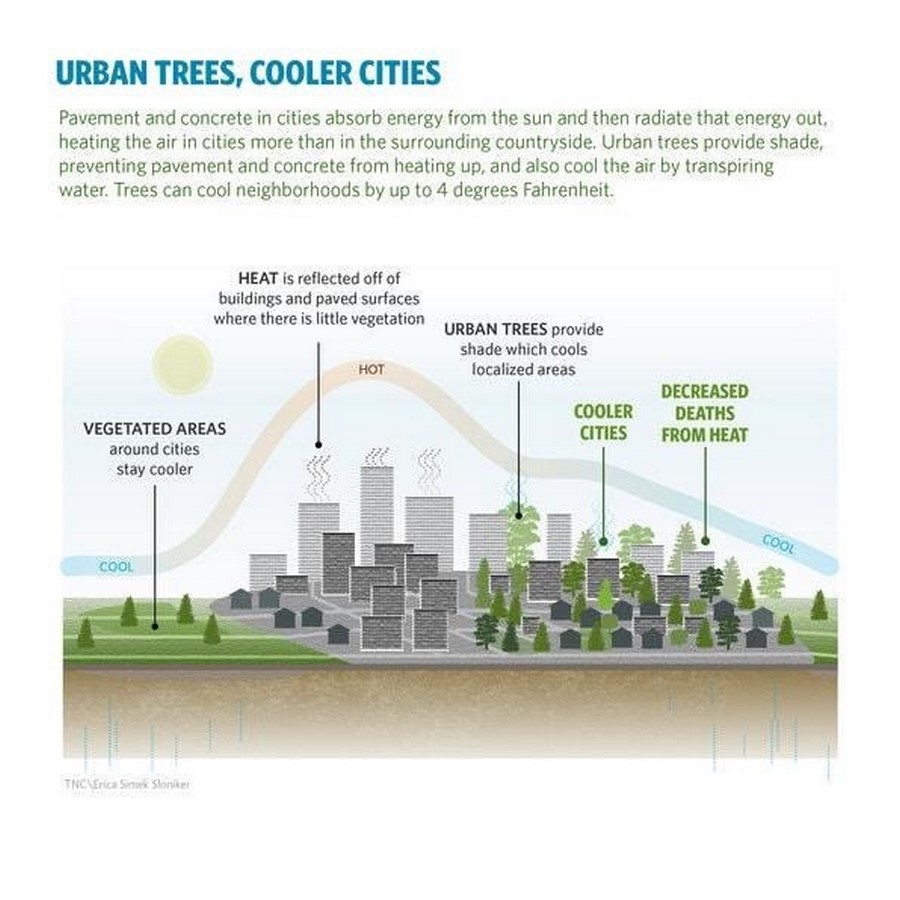
A city can have many small decorative parks, planted medians, and streets, yet have no connected ecological landscape to regulate water flow, reduce urban heat, or foster biodiversity.
The problem is thus not only about the quantity of greens, but about their structure.
Moreover, the structure of greens ultimately depends on land politics.
For a big ecological landscape to exist, there should be enough land left unoccupied by other forms of development. This is the contradiction that emerges. As urban land becomes more valuable, it becomes increasingly expensive to leave that land undeveloped. An area like a forest, a park, or an open landscape at the periphery of a town is relatively easier to preserve when land prices are low. Preserving the same landscape becomes more challenging as the city develops around it.
Therefore, the ecological success of the landscape leads to the following paradox:
The more important the green lung becomes to the city, the more valuable its land becomes to the market.
-
Central Park: Manufacturing a Green Lung
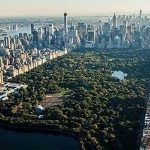
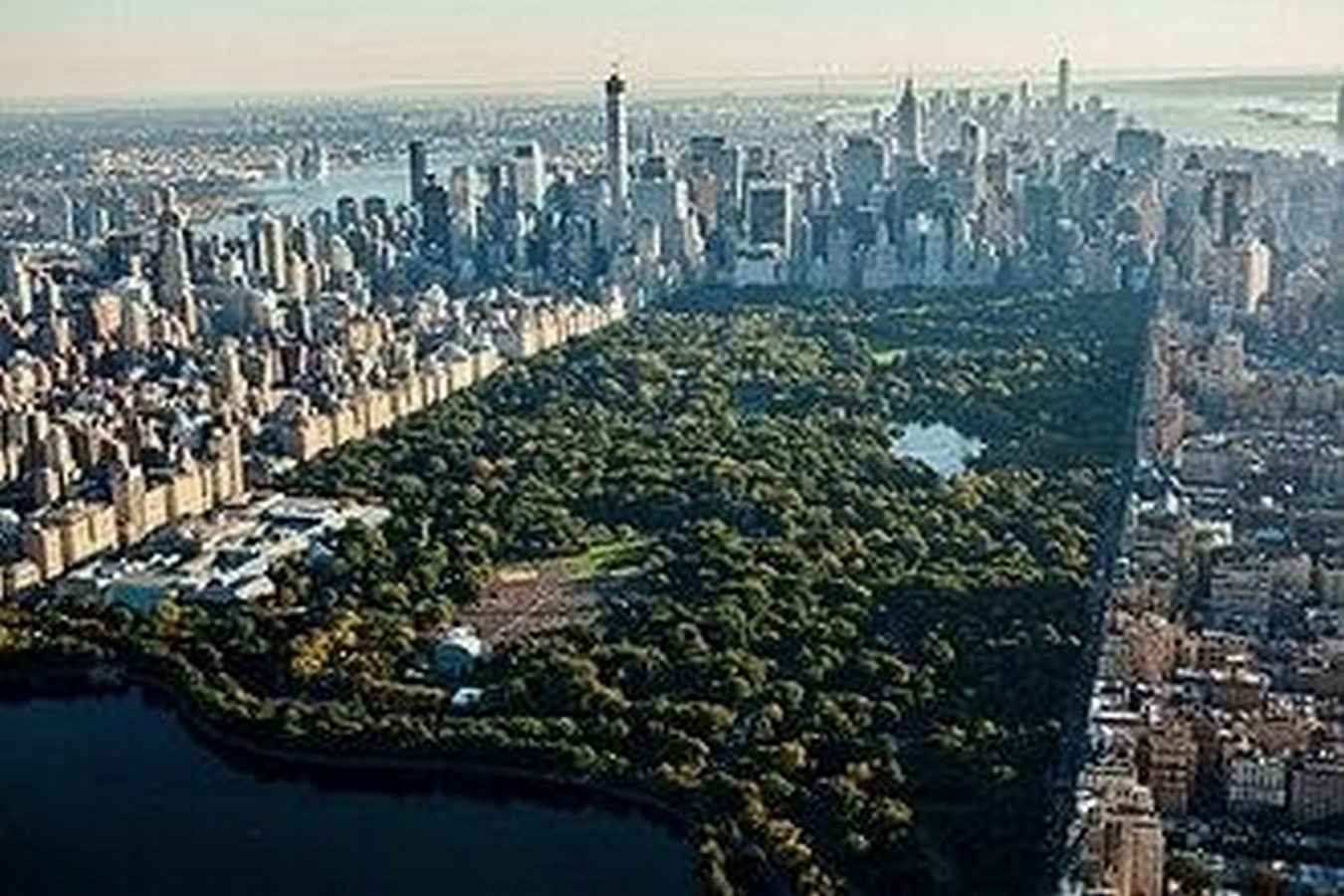
Perhaps the clearest example of ecological infrastructure created using political power is Central Park. During the nineteenth century, New York City was becoming more urbanised. There was less open space. Meanwhile, concerns about public health, recreation, and the environment in a rapidly growing city became increasingly significant. The New York State legislature authorised the creation of Central Park in 1853. The city later purchased the necessary land. The park covered 843 acres in total and was designed by Frederick Law Olmsted and Calvert Vaux.
Nevertheless, the park’s story is not simply one of landscape design. The state used land acquisition to create this park. The land that was purchased to build the park was not a landscape ready to become a park. Farms, housing, factories, and a community called Seneca Village stood in the place of future Central Park. It was a community mainly made up of African Americans that had existed since the 1820s. It included several churches, a school, and property owners. When the city purchased the land, it displaced the community.
The city opened the landscape to accommodate the growing metropolis, but creating such a public landscape required exercising state power over existing communities. The ecological and recreational value given to the park afterwards cannot be separated from the political mechanism of land acquisition.
This is the first lesson of the green lung: Social inequality can accompany ecological infrastructure from the moment of its creation. Central Park shows that preserving land for the common environmental good does not make the process democratic. However, the park’s rich history makes the argument more important.
At the time of the park’s construction, the chosen location was on the periphery of the city’s densely built areas. Today, it sits at the centre of the world’s densest urban environment. Land which could have been used for building has become an ecological vacuum amidst the urban environment.
The city was built around the park, rather than through the park. This historical choice has created great value in the long run, since now the park acts as the lungs of a very dense urban environment – offering vegetation, habitat, recreation space, stormwater, thermal, cultural and access benefits. Therefore, it is no longer simply a recreational resource, but metropolitan infrastructure. However, that poses another problem, as the green lungs put pressure on the lungs. The land around the park was so valuable because the park was protected from development. It could not respond to this increase in value by increasing density. It needs to remain a relatively continuous landscape to fulfil its purpose.
Thus, Central Park demonstrates a fundamental truth: the ecological value of protected land is intimately tied to its political exclusion from normal development. The city preserves it by repeatedly saying no to other uses for the space.
-
KBR National Park: The Green Lung Hyderabad Inherited
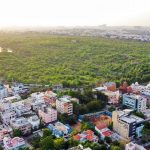
Kasu Brahmananda Reddy National Park shows a drastically different historical development path. The Kasu Brahmananda Reddy National Park is located in the Jubilee Hills area of Hyderabad and covers about 142.5 hectares. According to the Telangana Forest Department, the park was declared a national park in 1998 and features Deccan Plateau vegetation and wildlife, including hundreds of tree varieties and rich avian and reptilian biodiversity.
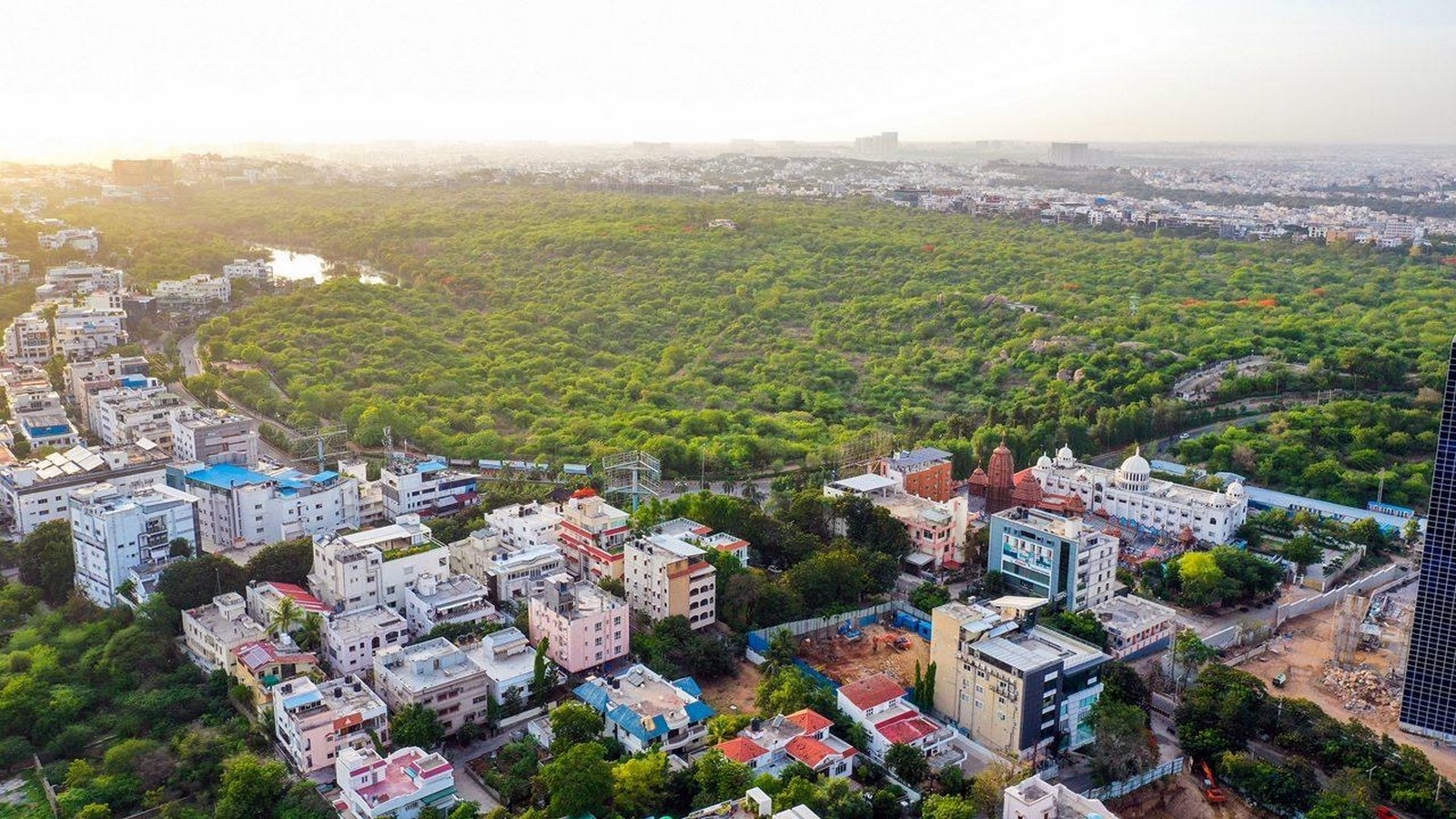
While Central Park was planned to serve as the city’s ecological infrastructure, KBR National Park has a completely different origin. The land was historically linked to the Chiran Palace. According to the Government of India, the national park occupies land formerly belonging to the palace and was designated a protected landscape in 1998.
Thus, the historical development can be viewed as: Royal landscape → state management → protected forest → urban ecological infrastructure.
This sequence matters because KBR’s ecological infrastructure largely inherits its role from earlier forms. The royal landscape was not originally planned as the city’s climate-adaptation strategy. It survived within the city because of a particular property system and politics, but over time, it took on a new meaning.
From the former estate of an elite owner, a landscape became an important ecological reserve within an expanding urban metropolis. The second lesson is that urban ecological infrastructure can be inherited by accident. The planners of the original landscape could not possibly have foreseen the ecological challenges of present-day Hyderabad. However, the landscape endures, and the contemporary city benefits. For this reason, KBR contrasts with Central Park. Central Park was intentionally acquired for public use.
KBR became an ecological landscape out of a historically private/royal landscape. In the first case, one can talk about planned preservation; in the second, accidental heritage.
However, both still require political protection. This becomes especially true of KBR in the present-day context of controversy over it. In 2026, petitions filed with the Telangana High Court challenged works related to KBR National Park, including the felling of trees as part of multi-layer flyovers. In response, the High Court sought replies from the state and the central governments. The Supreme Court then issued interim directions in May 2026.
The conflict shows a basic contradiction in the metropolis’s development. The same metropolis that needs KBR as its ecological refuge also needs mobility infrastructure. This is why the conflict is less about environment versus development. However, rather: What type of development can go alongside the ecological territory which is valued precisely for its spatial continuity?
The transport demand may justify a road. The flyover – by mobility modelling. Tree removal – by numerical compensation. However, none of these calculations necessarily accounts for the value of the ecological landscape’s continuity. That is why the notion of “green lung” should overcome tree counting. If ecological infrastructure is equated with tree counts, a mature forest could theoretically be replaced by a certain number of new trees planted elsewhere. However, ecological systems do not operate by accountancy principles.
The mature urban forest possesses soil, microclimate, habitat relations, canopy structure, groundwater interaction and ecological time. The planting compensation cannot replicate it. KBR therefore illustrates the distinction between green cover and ecological infrastructure. The first can be quantified. The second must be preserved as a system.
-
Cubbon Park: Institutional Memory as Green Infrastructure
Cubbon Park provides a third model.
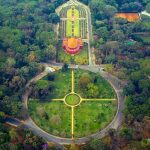
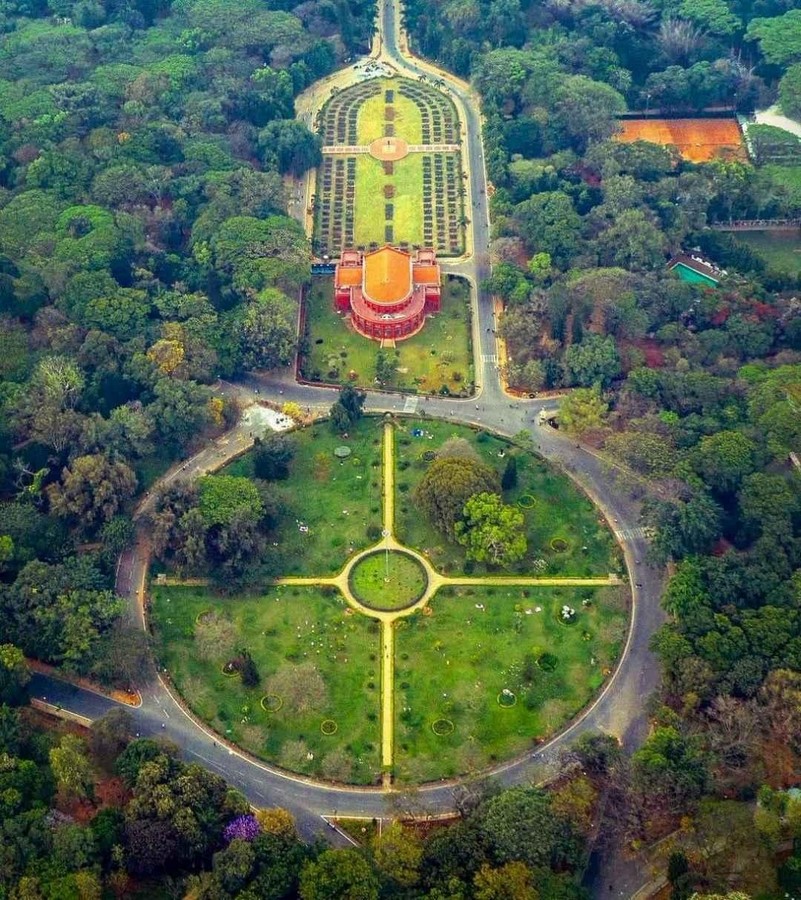
Situated in Bengaluru’s Central Administrative Area, Cubbon Park was founded in 1870 by John Meade, then Commissioner of Mysore. Major General Richard Sankey, then Chief Engineer of the State, designed its layout. Originally known as Meade’s Park, it was later named after Mark Cubbon.
The park’s importance today lies not in its trees or landscape design, but in its longevity as an institution. Strategically located in Bengaluru’s Central Administrative Area, the park is surrounded by government institutions, including the legislature and the High Court. The Karnataka state government’s description explicitly states that the park belongs to the Central Administrative Area and remains under the Department of Horticulture.
Thus, Cubbon Park stands out as a political institution which differs from Central Park. It was not created primarily through the displacement narrative associated with Central Park, nor did it begin as a protected natural forest like KBR. Planning processes brought this about. The crucial question to ask is therefore:
What has led to the continuation of this landscape being regarded as more than just developable urban land?
This is partly due to institutional knowledge. Once a landscape gains recognition within institutions, its cultural identity and public perceptions make any attempt to change its land use very hard. Parks gain legitimacy. This highlights an important, often-forgotten aspect of ecological infrastructure: institutional continuity. Maintaining a park takes more than trees. It takes institutions. A landscape continues when planning bodies, laws, civic aspirations and governance systems continually reaffirm the decision to keep the land open.
Cubbon Park, accordingly, reveals that ecological infrastructure can emerge from the repetition of a land-use institution. However, idealising this history would be misleading. Colonial landscapes were themselves the results of certain political and spatial orders. The production of parks and administrative landscapes took place amidst larger networks of colonial governance, segregation and representation. The present-day value of public lands cannot erase this history.
This brings us to another important principle: A landscape can survive the political order that created it yet carry within itself the vestiges of this order in its spatial form. Cubbon Park, accordingly, is more than just a legacy of colonial Bengaluru. It is a continuous negotiation between the historical form of institutions and the present democratic urban life. Its future will depend on whether the city sees this land as ecological and civic infrastructure or as underdeveloped space.
-
Maidan, Kolkata: From Military Landscape to Civic Ecology
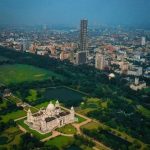
There is probably no better example of how differently things could be than the Maidan in Kolkata. This space is directly related to the construction and protection of Fort William. Clearing the space around the military installation created a vast expanse of open landscape. Thus, the Maidan was never intended as an urban park for recreation and environmental improvement. Instead, it was created for military purposes. Historically, the Maidan is described as a large expanse of open plain land linked to Fort William and located between the military installation and the urban area.
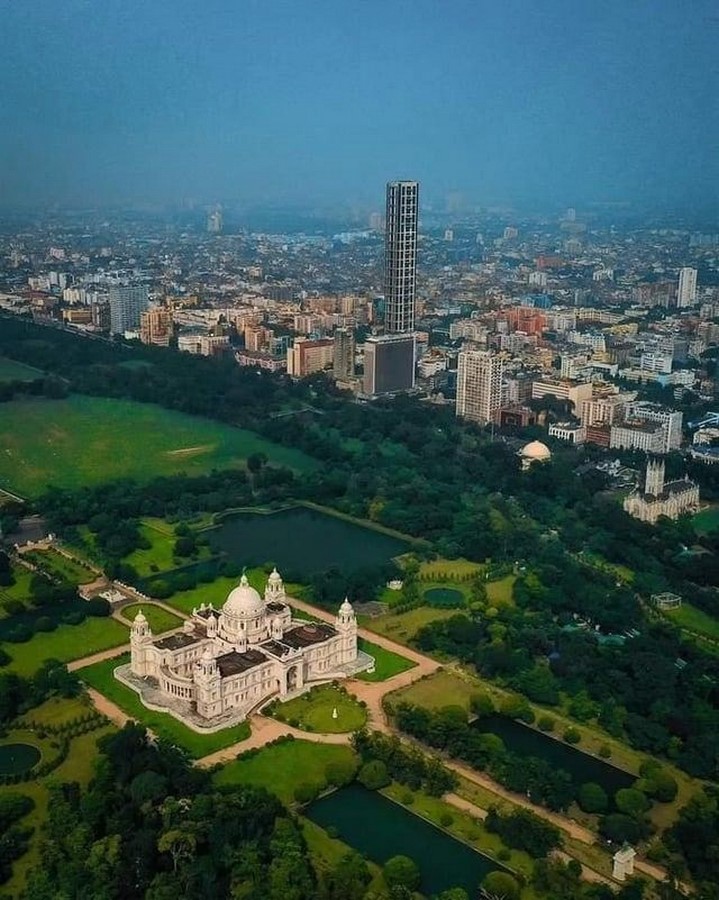
As such, the logic behind this space differed from the logic behind Central Park. The Maidan existed because the military needed open space. However, the lack of buildings was actually a form of defence. Over time, however, the lack of buildings came to mean something else. Now the Maidan serves as an important recreational space with places for sports activities, walks, and civic gatherings.
Here, military infrastructure has been transformed into civic infrastructure. This transformation matters to the argument, since it shows that ecological infrastructure is not always the result of ecological intentions. A piece of land can be preserved for one purpose but come to serve a completely different one in the process.
This would make the Maidan’s history a chain of the following:
Military need → preservation of the land as an open area → civic use → environmental significance.
This significance is not the original motivation for preserving the land. It results from the land being protected and open. This case presents an interesting complication to the usual categorisation of “planned green spaces” and “unplanned green spaces”.
This place has been planned, but not in the sense of building on it. This differentiation is important. The planning process usually covers buildings, roads, and infrastructure. Some of its most important decisions are where it decides not to build buildings, roads, or infrastructure. The Maidan shows the power of this kind of planning, since it is the environmental use that comes from spatial non-use of the land.
-
Comparative: Who Created, Who Benefited, Who Paid?
The four cases can now be read comparatively.
| Case | Original political logic | Transformation | Contemporary role |
|---|---|---|---|
| Central Park, New York | Deliberate public park acquisition and metropolitan reform | Private/community land → public park | Metropolitan ecological, recreational and cultural infrastructure |
| KBR National Park, Hyderabad | Royal/estate landscape and later state protection | Private/royal landscape → protected forest | Urban forest, biodiversity refuge and ecological buffer |
| Cubbon Park, Bengaluru | Administrative and colonial public landscape | Institutional landscape → enduring public park | Central ecological, recreational and civic infrastructure |
| Maidan, Kolkata | Military defence and open field of Fort William | Military landscape → civic open space | Major recreational, cultural and ecological landscape |
The common thread is clear – none of these pathways alone results in ecological infrastructure.
There are at least four:
- Active procurement – Central Park
- Heritage and preservation – KBR
- Institutional continuity – Cubbon Park
- Refunctionalisation – Maidan
However, all these ultimately rely on one thing: political capacity to keep the land out of the ordinary development process. Instead of looking at the park itself, a city planner needs to investigate the politics behind it.
Who built it? Was the land state-owned? The monarch’s property? Military administration? Municipality or private property? Why did it survive? Was the reason leisure, defence, prestige, public health, administration or conservation? What was the cost? Was any community moved out? Were any private development opportunities limited? Was the land accessible to certain social strata? Who uses it now? Does it benefit the whole city or mostly the adjacent landowners? What threatens it? Roads? Development? Encroachment? Commercialisation? Fragmentation?
The questions turn park studies from mere landscapes into political ecology. Central Park’s history offers a case where displacement is visible. KBR shows the transformation of elite land into public ecological value. Cubbon Park illustrates institutional continuity. Maidan shows how military space becomes ecological and civic space. Together, they show that green infrastructure is historically situated before it becomes technical.
-
Green Infrastructure or Green Privilege?
The political argument must not rest simply on conservation. Conserved green spaces can deliver considerable public value, but also unequal value. A park can boost the appeal and economic value of surrounding neighbourhoods. Green infrastructure can thus become intertwined with economic gains from rising real estate values and environmental gentrification. The academic literature has already noted that green spaces can become subject to the financialisation of nature, where financial gains take precedence over ecological and social advantages (Adamu et al., 2026).
This is the second paradox. Publicly set-aside green land generates economic value for surrounding communities. Central Park illustrates this phenomenon well. It is a public space available to everyone, but it is essential to one of the world’s most economically valuable real estate sectors. This is not about whether parks have negative impacts. This is about managing green infrastructure as a resource through public governance.
The same questions arise for urban greening in India. Who gains from environmental quality generated during preservation of such landscapes? Who has access to them? Who surrounds them? Who is forced out because of infrastructural developments required for their protection and access? Who pays for conservation-related restrictions?
Thus, urban greening needs three types of justice:
- distributive justice – who receives the environmental benefits?
- procedural justice – who participates in decision-making?
- recognitional justice – whose history and livelihoods are recognised?
Planning for urban greening without considering these issues may easily become an exercise in beautification. Political Ecology highlights that natural environments in urban contexts are socially constructed. The categorisations of certain environments as being ‘natural’, ‘valuable’, ‘ degraded ‘, or ‘ available for development’ are influenced by social institutions and power dynamics (Datta & Sarkar, 2017; Porter & Hurst, 2020).
Therefore, the future green city cannot be defined by the amount of vegetation it possesses alone; planners should also assess the distribution of ecological value.
-
Can Green Lungs Really Be Planned?
Now the answer to the question becomes more precise: yes—but only on the condition that planning is seen as the long-term governance of land and not as short-term vegetation design. At least seven requirements define a green lung.
9.1 Spatial continuity
Ecological systems need sufficient scale and connectivity. Ecological connectivity is an essential component of green infrastructure (Monteiro et al., 2024).
9.2 Depth of ecology
An advanced forest, wetland or landscape system is not comparable to ornamental gardening. Depth of ecology involves soil, vegetation profile, hydrology, habitation and ecological succession.
9.3 Tenure security of land
The best ecological landscape may vanish should the status allow conversion.
9.4 Continuity of institutions
Green infrastructure should survive regime change over time.
9.5 Connections with the larger urban environment
A park is not to be considered as a mere island. The green network operates through connections among patches, corridors, aquatic features and surrounding landscape (Benedict & McMahon, 2006).
9.6 Social acceptability
A landscape becomes more resilient when people recognise its importance and are involved in its management. Studies in governance theory stress the need to move beyond purely top-down approaches and toward participation and intersectoral cooperation (Yirga et al., 2021).
9.7 Protection against fragmentation
Fragmentation may occur gradually; a single road, a single parking lot, a single commercial building and a single utility network after another. This is why the threat is not a single and dramatic decision, but a thousand permissions.
The green lungs may be legally protected from development while roads, edges, incursions, infrastructure, and inappropriate land uses gradually strip them of their ecological functions. That is why the real planning problem is not planting trees, but keeping ecological systems alive.
-
Planning for the Next 100 Years
If indeed the four case studies constitute a history lesson, then future planning must be equally long-term.
Cities must stop treating green landscapes as residual space and start thinking of them as strategic ecological territory.
Several adjustments are needed for this to happen.
First, master plans must define ecological territory before developing land parcels. Conventional planning starts with development needs and defines residual green spaces later. The green infrastructure plan does the opposite. Ecological structure must be defined first: forests, wetlands, river valleys, floodplains, aquifer recharge areas, habitats, and existing large green landscapes. Development must fit into this structure. This is like green infrastructure planning, where planners define ecologically important areas and linkages before development (Davies & Lafortezza, 2017).
Second, ecological connectivity should become a planning standard. The question should not be: How many hectares of green space exist? It should be: How are those hectares connected? A city needs ecological networks, not disconnected decorative patches.
Thirdly, large green landscapes require better legal safeguards. Boundaries of such landscapes cannot always remain negotiable when infrastructure requirements come up. If development is inevitable, planners must first explore alternatives to fragmentation.
Fourth, planners must consider ecological values when assessing infrastructure projects. Infrastructure projects like roads, flyovers, and metro lines must not be evaluated on mobility and economic value alone. They must also calculate ecological opportunity costs. The KBR example shows why this approach matters. The pertinent issue is not only the number of trees to be removed but also the ecological functions the intervention will disturb.
Fifth, cities must establish systems for long-term ecological governance. Green infrastructure cannot depend on one city department’s priorities. Cities’ urban forestry, planning, transport, water, biodiversity, heritage, and public works departments must share common ecological frameworks.
Finally, local communities need to be part of the ecological governance process. Green infrastructure cannot be imposed on local communities as part of beautification. Local communities’ understanding, usage, and knowledge about the landscape are important in this case.
In addition, cities should adopt a non-development policy. Some areas must be recognised as such where the most valuable aspect of their urbanisation is that they remain substantially undeveloped. This is a change in thinking. The conventional planning question is: what can we build here? Ecological planning must sometimes be: what can we not build here?
-
The Politics of Not Building
It becomes apparent that these four landscapes have a rich irony embedded within their history. Central Park exists because, when the city of New York realised the need for open spaces, the metropolis had already developed. KBR survived because certain historical property arrangements allowed a large landscape to become ecologically significant. Cubbon Park survived thanks to an institutional decision that helped create a green landscape and incorporate it into Bengaluru’s institutional framework. Lastly, Maidan stayed open because of the limitations of military planning and became one of Kolkata’s most important civic landscapes.
Although none of these stories fit the current language of climate resilience, all four show one essential point for modern planning: Ecological infrastructure often emerges from earlier planning decisions.
This is what the next generation of urban planners must do: identify the landscape they will need and protect it before it becomes too late. A park is more than just a place to provide for people. A forest is not empty land. Wetlands are not undeveloped land. The expanse of open land is not a lack of infrastructure. It is infrastructure. The infrastructure is just ecology rather than mechanics. It is unlike a road, whose value increases with age and ecological maturity.
-
Conclusion: The Politics of Not Building
Green Infrastructure in the urban setting is often discussed in terms of planting, design, and technical innovations. Cities should grow more trees, establish greenways, implement nature-based solutions and develop parks. All these steps are crucial, but they solve only half the problem. The fundamental point here is the land.
A working green lung presupposes that the city leaves some land unused for any purpose other than ecological, while developing that land would yield significant economic benefit. Hence, it presupposes political choices that run counter to the current logic of the land market.
Central Park shows how the green landscape was politically produced while also indicating the displacement process that accompanied it. KBR National Park illustrates how ecological infrastructure can evolve from the legacy of royal landscapes and then become crucial to the dense metropolis. Cubbon Park illustrates the need for institutional continuity to maintain green infrastructure in an intensifying administrative centre.
Their histories diverge. Their political genealogies diverge. Their social outcomes diverge. However, their contemporary message is uncannily the same. They exist because someone somewhere decided this land would not be taken over for some other urban function. This is what the politics of the green lung amounts to. The question is how to make this act conscious, democratic and ecological.
The future master plan should not only specify where new parks can be formed but also where certain territories will stay unbuilt. The future master plan should prioritise ecological networks over development networks, defend connectivity rather than only hectare counts, assess infrastructure in terms of ecological opportunity costs, guarantee land tenure, and establish institutions that can protect ecological systems across political cycles.
Most importantly, planners should understand that ecological infrastructure is not merely green surfaces.
The landscape media can be green. The pocket park can be green. The planted boulevard can be green. Nevertheless, a green lung is a spatial system that needs land, time, continuity, and protection. Hence, the future of the urban green infrastructure could have less to do with the number of trees in a city and more to do with what the city is willing to keep unbuilt. This does not mean going back on planning. It is perhaps planned in its most consequential form.
References:
Adamu, S., Yong, H., Bello, A., Yusuf, D. A., Balaya, N. S., & Alhaji, M. (2026). The role of the nexus between green infrastructure and urban planning in socio-ecological sustainability and resilience. Cities, 171, 106810.
Benedict, M. A., & McMahon, E. T. (2006). Green infrastructure: Linking landscapes and communities. Island Press.
Davies, C., & Lafortezza, R. (2017). Urban green infrastructure in Europe: Is greenspace planning and policy compliant? Land Use Policy, 69, 93–101.
Datta, A., & Sarkar, S. (2017). Of parks and politics: The production of socio-nature in a Gujarati town. Local Environment, 22(1), 48–64.
Levy, D. S. (2022). Creating breathing space. In Manhattan Phoenix: The Great Fire of 1835 and the emergence of modern New York (pp. 266–279). Oxford University Press.
Monteiro, M., et al. (2024). Integrating landscape ecology in urban green infrastructure planning: A multi-scale approach for sustainable development. Urban Forestry & Urban Greening, 94, 128248.
Pauleit, S., Hansen, R., Rall, E. L., Zölch, T., Carvalho, L., Szaraz, L., Tosics, I., & Andersson, E. (2017). Urban green infrastructure planning: A framework for policy and practice. Journal of Urban Forestry & Urban Greening.
Porter, L., & Hurst, J. (2020). The politics of greening unceded lands in the settler city. Australian Geographer, 51(2), 193–210.
Ramyar, R., Ackerman, A., & Johnston, D. M. (2021). Adapting cities for climate change through urban green infrastructure planning. Cities, 117, 103316.
Yirga, B., et al. (2021). Governance of green infrastructure planning in Addis Ababa, Ethiopia. Land Use Policy, 111, 105777.
Central Park Conservancy. (n.d.). Park history.
Central Park Conservancy. (n.d.). Seneca Village history.
Government of India, Ministry of Tourism. (2021). National Park: Kasu Brahmananda Reddy National Park.
Government of Karnataka, Bengaluru Urban District. (2026). Cubbon Park.
Telangana Forest Department. (n.d.). Kasu Brahmananda Reddy National Park.
(11) Green Lungs for Grey Cities: A Natural solution to reduce particulate matter 2.5 pollution | LinkedIn. (2026, March 23). https://www.linkedin.com/pulse/green-lungs-grey-cities-natural-solution-reduce-25-gangireddygari-ihrac/
Feedmile. (n.d.). Delhi Is Set to Boost Its Green Infrastructure… | Facebook. https://www.facebook.com/feedmileapp/posts/delhi-is-set-to-boost-its-green-infrastructure-as-chief-minister-rekha-gupta-ann/1003183622454543/
McDonald, Robert. 2021; Planting Healthy Air: A natural solution to address pollution and heat in cities – C40 Cities. (2021, October 15). C40 Cities. https://www.c40.org/news/planting-healthy-air-a-natural-solution-to-address-pollution-and-heat-in-cities/
Quintano Anthony 2014 from Hillsborough, NJ, United States – Global Citizen Festival Central Park, New York City from NYonAir Global Citizen Festival Central Park New York City from NyonAir https://en.wikipedia.org/wiki/Central_Park#/media/File:Global_Citizen_Festival_Central_Park_New_York_City_from_NYonAir_(15351915006).jpg
KBR National Park Secunderabad- Nature’s Oasis in the City | Incredible India. (n.d.). Incredible India. https://www.incredibleindia.gov.in/en/telangana/hyderabad/kbr-national-park
ExploreBees. (n.d.). Cubbon Park Bengaluru Tickets, timings, offers Sep 2026 | ExploreBees. ExploreBees. https://www.explorebees.com/Bengaluru/attraction/Cubbon-Park/9115
Schrodingerdoc. (n.d.). Maidan, Kolkata – The lungs of our city : r/kolkata. https://www.reddit.com/r/kolkata/comments/18z07is/maidan_kolkata_the_lungs_of_our_city/