Amidst the many truths that the COVID-19 pandemic taught our ever-running modern society, one timeless principle stood out: necessity is the mother of invention.
As routines of constant mobility and established ways of working came to an abrupt halt, designers found themselves questioning not merely where they practised, but how and why they collaborated in a nexus we identify as the design world.
In this moment of collective reflection, ideas of agency, equity, shared ownership, and knowledge exchange gained a renewed relevance, laying the foundation for the continued rise of globally connected Design Collectives and a more inclusive understanding of creative practice that has extended well beyond the end of the COVID-19 pandemic.
The Anatomy of a Design Collective
Collaboration has long been at the heart of architecture and design, where diverse ideas, multiple specialisations, and professionals of varying expertise come together to address increasingly complex challenges, all in the quest of synthesising a dynamic entity.
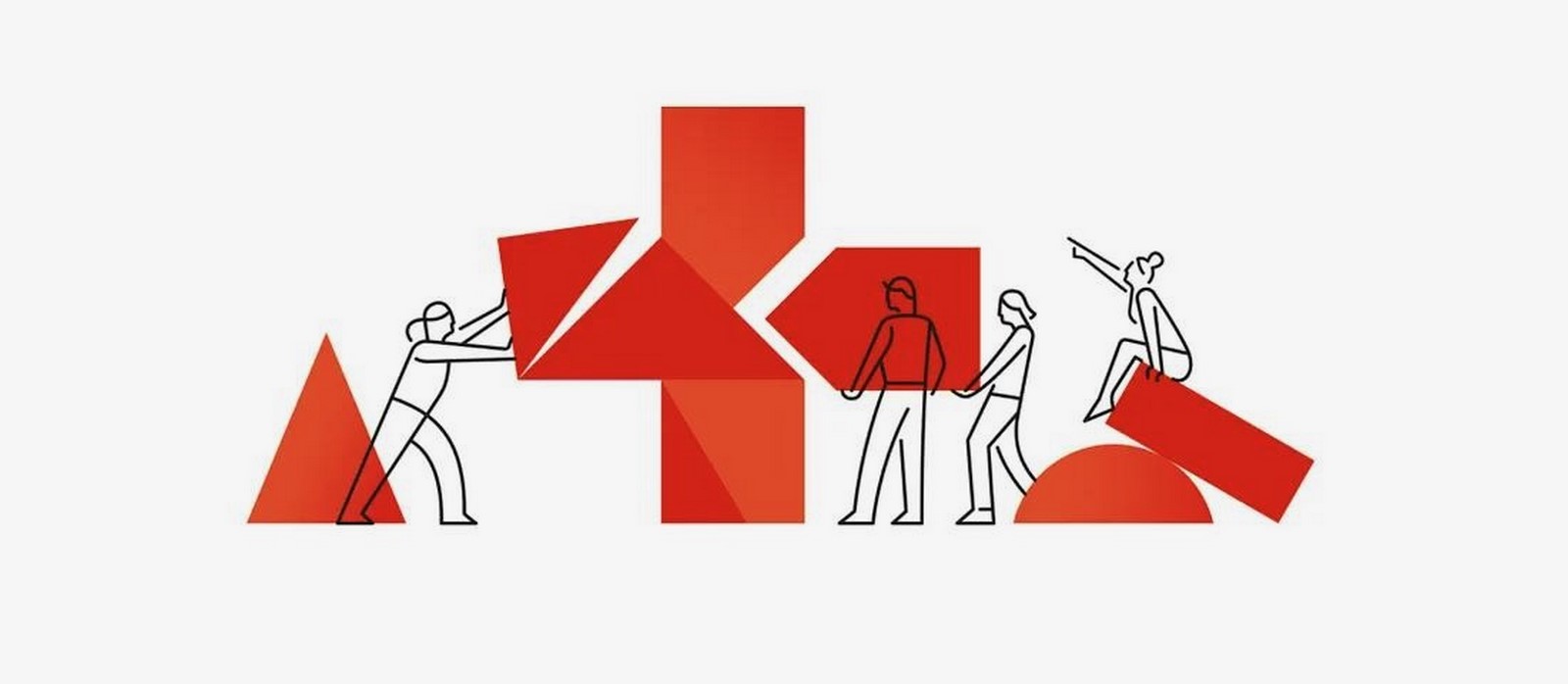
Rather than representing a distinct type of organisation, Design Collectives embody a collaborative mode of practice built upon shared values, purpose, and creative ambition.
By bringing together architects, designers, artists, engineers, researchers, makers, and communities, they encourage interdisciplinary dialogue, mutual learning, and collective authorship while allowing each member to retain their individual expertise and perspective.
As Lau (2017) observes, collectives foster cultural experimentation and mutual learning, often producing some of the most innovative creative outcomes through group effort.
Whether formal or informal, temporary or long-standing, many collectives evolve organically around a common cause, demonstrating that collaboration has never been new – only how it is organised and connected continues to evolve.
Redefining Creative Practice
Long before the COVID-19 pandemic, several interconnected forces had already begun reshaping how Design Collectives operated, gradually extending their reach beyond geographical boundaries.
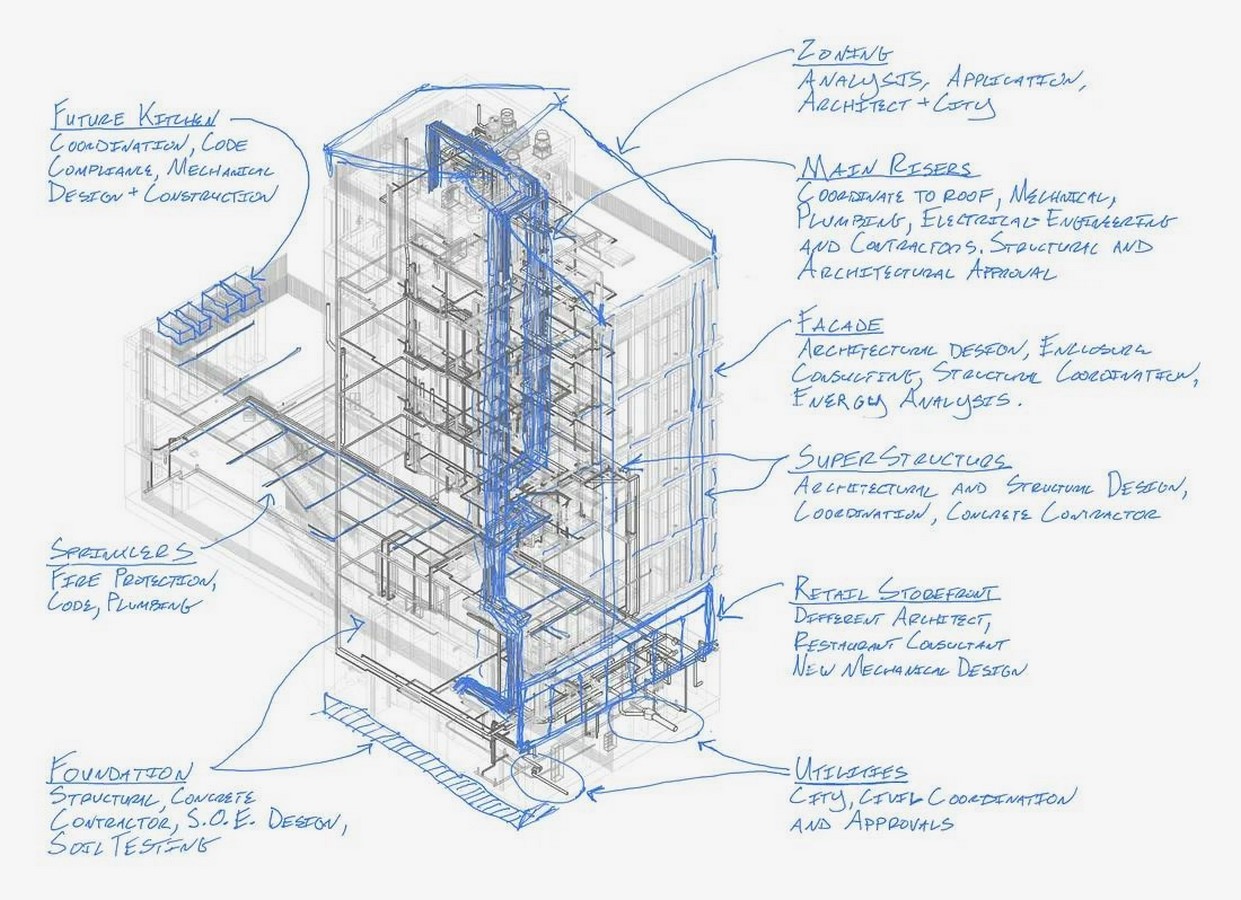
Advances in cloud computing, Building Information Modelling (BIM), digital fabrication, Artificial Intelligence (AI), and collaborative platforms made it increasingly possible for designers to work across continents in real time, simplifying partnerships operating across time zones.
Simultaneously, the global movement of ideas, education, and creative talent encouraged cross-cultural exchange, giving rise to new creative hubs that celebrated local identities while participating in a shared global discourse.
Rather than promoting homogenisation, this shift fostered “creative hybridisation” between traditional knowledge and contemporary technologies, while recognising a genuine plurality of design approaches. (Vanier, 2025).
As projects grew increasingly interdisciplinary and complex, requiring expertise in sustainability, technology, heritage, and social engagement, collaborative intelligence became indispensable.
Shared ownership, mutual learning, and community-driven practice gradually transformed Design Collectives from local initiatives into globally connected networks.
These developments, thus, laid the foundation for global collaboration, with the COVID-19 pandemic further accelerating their widespread adoption.
Evolving Design Cultures
The COVID-19 pandemic did not redefine collaboration as much as it redefined the values that people sought through it.
In prompting designers to slow down and critically re-examine established modes of practice, it renewed appreciation for more flexible, equitable, and purpose-driven ways of working that privileged shared learning over institutional hierarchy.
Global Design Collectives naturally resonated with this shift, not because they represented a new organisational model, but because they already embodied many of these principles.
Context Collective, an interdisciplinary international design collective, for instance, demonstrates how professionals from diverse disciplines, cultures, and regions can remain united by a shared intellectual curiosity and collective purpose while retaining their individual voices and areas of expertise.
As Herrera, Dreifuss-Serrano and Juarez (2021) observe, the pandemic encouraged distributed forms of collaboration rather than diminishing collaboration itself.
In doing so, it strengthened confidence in collaborative models that valued adaptability, mutual trust, and collective intelligence – qualities that continue to shape design practice well beyond the pandemic.
Reclaiming Creative Agency
Beyond the immediate disruptions of the pandemic, the continued rise of Global Design Collectives reflects a broader cultural shift in how design knowledge is created, shared, and valued.
As societies reopened, they did not simply return to previous modes of practice; they returned with a greater appreciation for cultural plurality, local knowledge, and collaborative inquiry.
Rather than reinforcing a singular understanding of ‘good design’, new creative hubs across cities such as São Paulo, Lagos, Seoul, Mumbai, Jakarta, and Mexico City increasingly asserted their own identities, materials, craft traditions, and ways of thinking, signalling what Vanier (2025) describes as the emergence of a genuine planetary creative plurality.
Within this evolving landscape, Global Design Collectives provide a framework through which regional knowledge can engage in meaningful dialogue rather than competition.
They encourage creative hybridisation between traditional wisdom and contemporary technologies while recognising that no single design philosophy is inherently superior to another (Vanier, 2025).
In doing so, they demonstrate that the future of design lies not in replacing local identities with global ones, but in creating collaborative ecosystems where diverse perspectives strengthen one another, allowing individuality and collective purpose to coexist as complementary forces.
Across Design Worlds
The growing prominence of Global Design Collectives reflects a broader transformation in design culture rather than a temporary consequence of the COVID-19 pandemic.
As contemporary challenges such as climate resilience, social equity, technological innovation, and cultural preservation become increasingly interconnected, no single discipline, organisation, or geography can claim to hold every answer.
Instead, the future of design lies in cultivating collaborative ecosystems where local knowledge and global expertise complement one another, and where individuality strengthens rather than competes with collective purpose.
Perhaps the most significant question is no longer whether designers should collaborate across borders, but how such collaborations can remain equitable, context-sensitive, and respectful of the diverse knowledge systems they seek to unite.
In answering that question, Design Collectives may not merely represent the future of design practices, but ultimately redefine what meaningful design collaboration itself looks like.
References:
Herrera, P.C., Dreifuss-Serrano, C. and Juarez, B. (2021). Design during COVID-19: agents and allies in the role of designer, digital fabrication and distributed production. In: Strategic Design Research Journal. [online] Brazil: SDRJ, pp.236–251. Available at: https://revistas.unisinos.br/index.php/sdrj/article/view/sdrj.2021.141.20/60748461 [Accessed 27 July 2026].
Georgiou, A. and Murillo, D. (2023). From strangers to social collectives? Sensemaking and organising in response to a pandemic. European Management Journal, [online] 41(4), pp.621–633. doi:10.1016/j.emj.2023.05.005.
Murray, A., Fox, J., Sleight, J. and Oldfield, P. (2023). The Online Studio: Cultures, Perceptions and Questions for the Future. The international journal of art & design education/International journal of art & design education, 42(1), pp.108–124. doi:10.1111/jade.12451.
Foss, N.J. (2020). The Impact of the Covid‐19 Pandemic on Firms’ Organizational Designs. Journal of Management Studies, [online] 58(1). doi:10.1111/joms.12643.
Kroll, B. (2024). The New Approach: Six Pandemic-Driven Shifts in Design. RDG. Available at: https://rdgusa.com/news/the-new-approach-six-pandemic-driven-shifts-in-design [Accessed 27 July 2026].
Lau, W. (2020). How Architecture Firms Are Responding to COVID-19. [online] Architect Magazine. Available at: https://www.architectmagazine.com/practice/how-architecture-firms-are-responding-to-covid-19_o/ [Accessed 27 July 2026].
Ankur Associates (2020). How Architecture Firms Are Responding to COVID-19 and What is the future scope? Ankur Associates. Available at: https://ankurassociates.in/2020/05/11/how-architecture-firms-are-responding-to-covid-19-ankur-associates/ [Accessed 27 July 2026].
IIDA HQ (2020). Collective D(esign): Healthcare Designers at the Forefront. IIDA. Available at: https://iida.org/articles/collective-design-healthcare-designers-at-the-forefront [Accessed 27 July 2026].
https://www.facebook.com/DesignInstituteofSD (2020). How COVID-19 is Affecting the Interior Design Industry – Design. [online] Disd.edu. Available at: https://www.disd.edu/blog/how-covid-19-is-affecting-the-interior-design-industry/ [Accessed 27 July 2026].
Zaid Excel Design (2024). How did architects and designers respond to covid-19. Zaid Excel Design. Available at: https://www.zaidexceldesign.com/blog/how-did-architects-and-designers-respond-to-covid-19 [Accessed 27 July 2026].
von Goeler, E. (2020). Post-Pandemic Workplace Design Will Not Be the Same for All. Sasaki Associates, Inc. Available at: https://www.sasaki.com/voices/post-pandemic-workplace-design-will-not-be-the-same-for-all/ [Accessed 27 July 2026].
Ferrao Walker, G. (2020). A Post-Pandemic World, According to Designers – Paper Planes. [online] Paper Planes. Available at: https://www.joinpaperplanes.com/post-pandemic-world-designers/ [Accessed 27 July 2026].
IIDA HQ (2020). A View Towards the Workplace of 2024. IIDA. Available at: https://iida.org/articles/a-view-towards-the-workplace-of-2024-iida-members-forecast-an-office-designed-for-enhanced-wellness [Accessed 27 July 2026].
Seward, M. (2016). Global Design Collective РΠMagazine. [online] ΠMagazine. Available at: https://oe-magazine.de/global-design-collective/ [Accessed 29 July 2026].
Vanier, C. (2025). Global Design (2010-2025): When Creativity Becomes Simultaneously Globalized and Localized – Hart Design. [online] hartdesignselection.com. Available at: https://hartdesignselection.com/en/global-design-2010-2025-when-creativity-becomes-simultaneously-globalized-and-localized/ [Accessed 29 July. 2026].
Centazzo , R. and Pope, J. (2024). Collective Design Practices. First ed. [online] Londong and New York: Routledge, Taylor and Francis Group, pp.1–79. Available at: https://www.researchgate.net/publication/371187603_Collective_Design_Practices [Accessed 29 July 2026].
Design Collective. (2026). Process & Culture. [online] Available at: https://www.designcollective.com/process-culture/ [Accessed 29 July 2026].
Context-Collective (2017). CONTEXT-COLLECTIVE | Design Collective. [online] Context-collective.com. Available at: https://context-collective.com/#contact-l-context-collective [Accessed 29 July 2026].
SOL Design Collective (2020). SOL Design Collective – Artists, makers and creative community introduction. [online] YouTube. Available at: https://www.youtube.com/watch?v=ZP7dYAuxqRI [Accessed 29 July 2026].
BOLIA (2019). A Design Collective – Bolia.com. [online] YouTube. Available at: https://www.youtube.com/watch?v=SNAA-Ex_grg [Accessed 29 July. 2026].
Matter (2022). PRAXIS | 09 URBAN DESIGN COLLECTIVE. [online] thinkMATTER. Available at: https://thinkmatter.in/2022/03/03/praxis-09-urban-design-collective/#comments [Accessed 29 July 2026].
Lau, Y. (2017). 10 Essential Artist Collectives in Asia You Should Know (Part 1). the Artling. Available at: https://theartling.com/en/sell/learn/10-artist-collectives-asia-you-should-know-1/?srsltid=AfmBOoouqxbQMSPOosIllHq9UeEFi_3vqB_Zw5Qz-BzMN-r7Y0niE-co [Accessed 29 July 2026].
Megosu.com. (2026). Megosu – Product Design Platform. [online] Available at: https://www.megosu.com/about [Accessed 29 July. 2026].
Gray Area. (2017). Mission – Gray Area. [online] Available at: https://grayarea.org/about/mission/ [Accessed 29 July 2026].
Brennan, J. (2022). Architectural Practice as Collaborative Practice. [online] Digital Practice for Architects: A Manual. Available at: https://medium.com/digital-practice-for-architects-a-manual/architectural-practice-as-collaborative-practice-b335eeff7808 [Accessed 5 Aug. 2026].
Collura, C. (2020). Celebrating Service Design Day with the Emergency Design Collective. [online] Medium. Available at: https://medium.com/sdn-new-york-chapter/celebrating-service-design-day-with-the-emergency-design-collective-e0fe7b2d3ce [Accessed 5 Aug. 2026].
Andrew Holder. (2026). Andrew Holder. [online] Available at: http://andrewholder.net/ [Accessed 5 Aug. 2026].