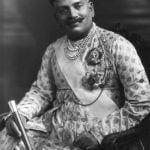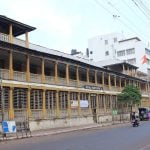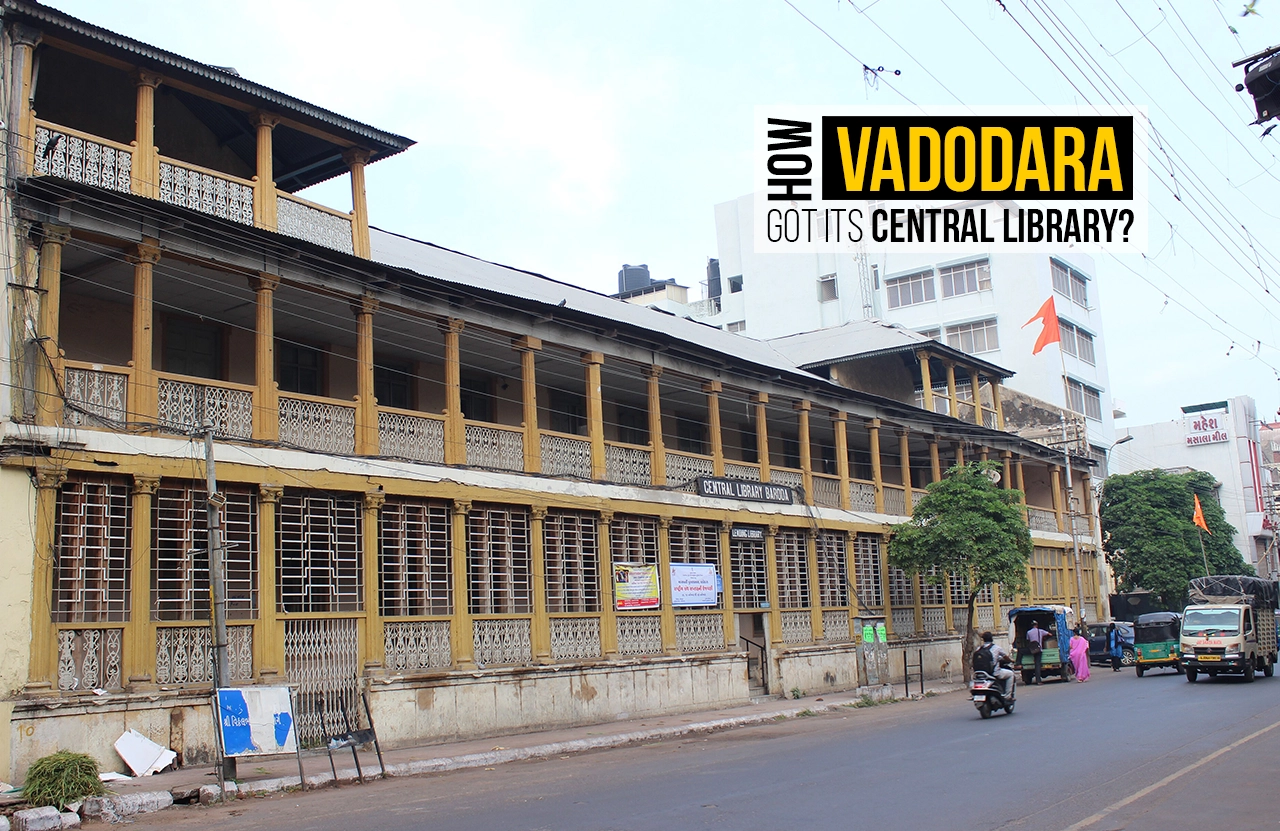
The Sanskari Nagri, Vadodara, is considered the cultural hub of Gujarat for several reasons. Maharaja Sayaji Rao Gaekwad III, the then ruler of Baroda state, was the first to bring the concept of a public library to India. He established the Central Library of Vadodara in 1910. The Maharaja thought of public libraries as “the people’s university”. The Central Library today has somewhere faded into the urban noise. But it was once the pioneer of the public library movement in India, and that story is worth telling.
How It All Came To Be?
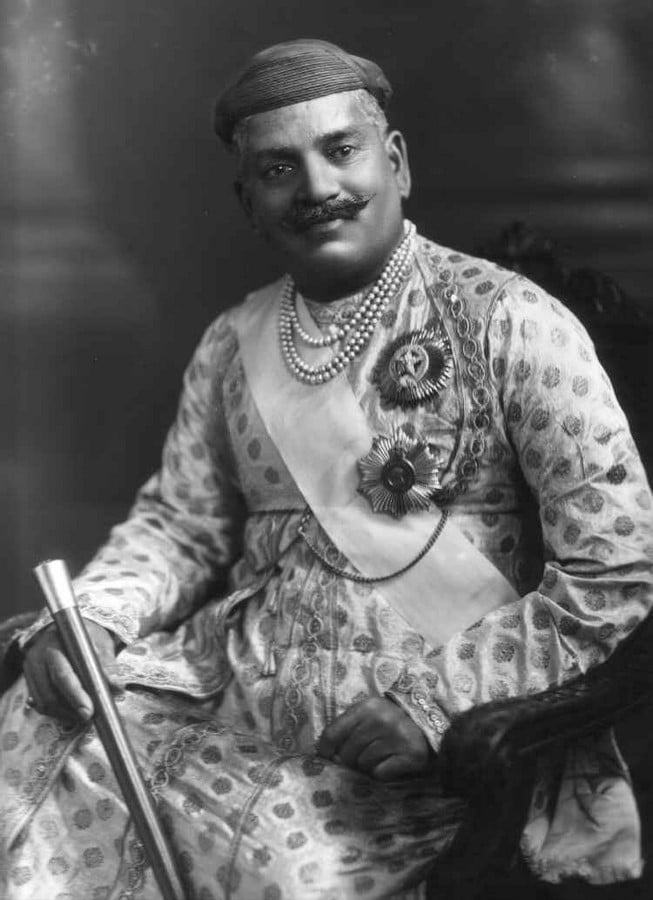
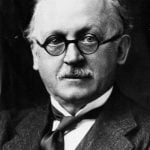
The then ruler of the princely state of Baroda believed in equal education for all. In 1906, Baroda became the first state to introduce compulsory primary education for all. The Maharaja would take regular trips to America. In his trip in the 1910s, the Maharaja spent time understanding educational institutions and was deeply impressed by the Congressional Library housed in Washington DC. He asked William Alanson Borden to establish library services in Baroda. Borden introduced cataloguing and classification systems for libraries.
The Maharaja was a collector of books and donated 20,000 books of his collection to the Central Library of Vadodara. He was deeply appreciative of architecture as apparent through the Lakshmi Villas Palace, the Maharaja Sayajirao University and the Khanderao Market. For the Central Library, the Maharaja commissioned Edwin Lutyens as the architect. by the ruler in the Baroda state followed the Indo-Saracenic Style. The Maharaja had commissioned architects including, Robert Fellowes Chisholm and Charles Mant. But the Central Library of Vadodara didn’t always have the same fate.
The Architect Behind The Central Library Of Vadodara
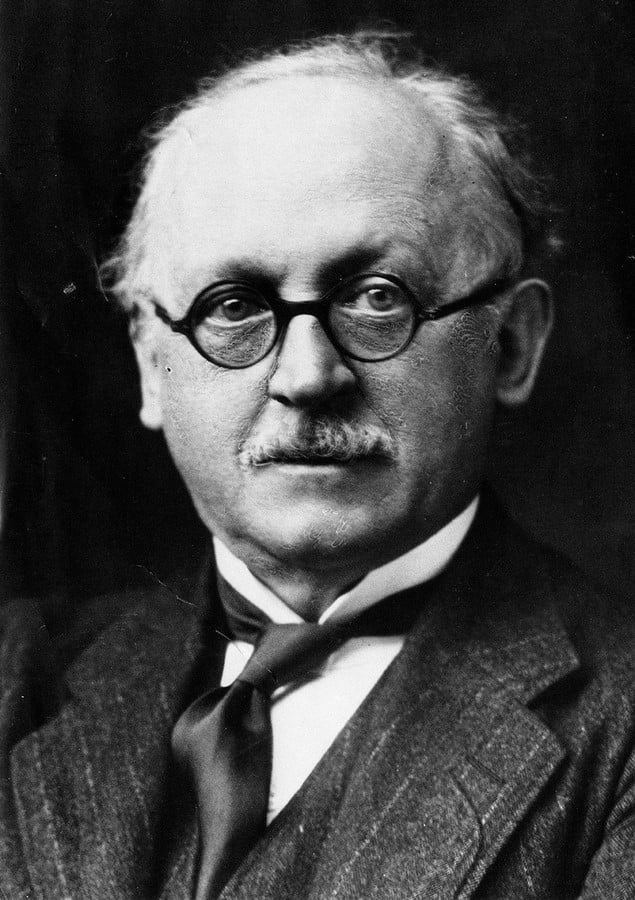
Lutyens is known for his work across India. At one point, Delhi was called Lutyens’ Delhi for his contribution to the city’s architecture. Rashtrapati Bhavan and Lutyens’ Bungalow Zone. He also designed houses for Kings in Delhi, including Bikaner House and Baroda House for Maharaja Sayajirao, located on Kasturba Gandhi Marg.
Despite his contribution, Edwin Lutyens thought of Indians as less civilized and looked down upon Indo-Saracenic architecture. His idea for New Delhi was first neo-classical. This was until Robert Fellowes Chisholm, the father of Indo-Saracenic, criticized Lutyens in the press and wrote letters to urge Edwin to adopt Indian elements.
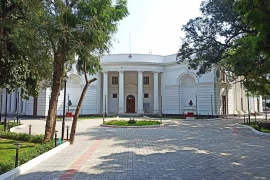
The Vadodara Central Library is a combination of Indo-Saracenic architecture, while keeping intact its neo-classical influences, this makes its architectural style one of a kind.
Architectural Style And Material Used
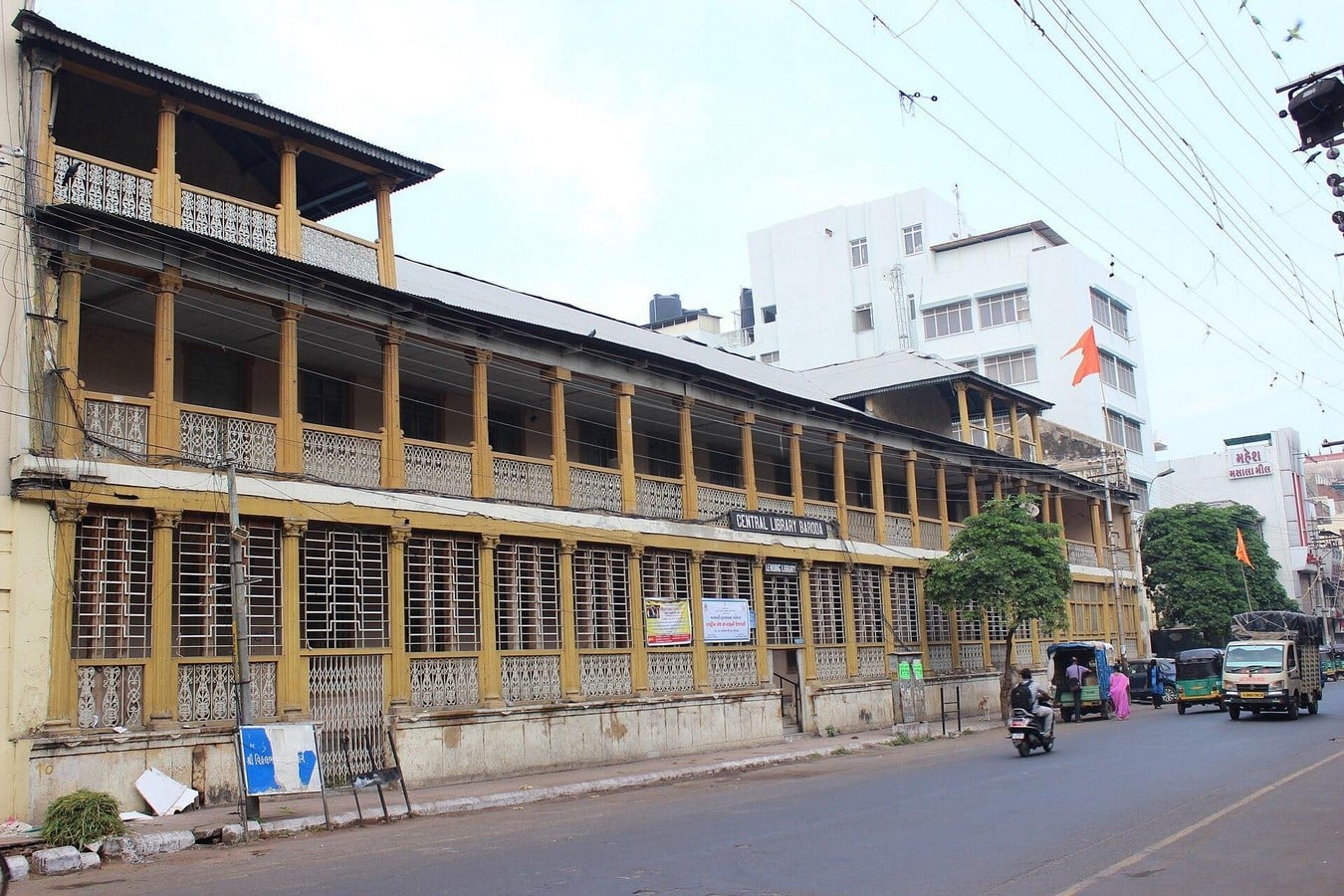
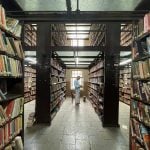
The library can be characterised by high ceilings and large windows that are reminiscent of the Renaissance Movement. The building is oriented in a north-south direction to get maximum light.
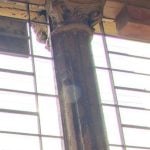
The Indo-Saracenic style adds practicality and conservation for the books. The Central Library employs cast-iron jaalis and deep-set verandahs. Overhanging eaves and wooden columns are also prominent features of the building. This style is in tune with the Indian climate, extreme heat and monsoon.
The ground floor has Kota tiles, while the upper 3 floors have been tiled with 2-inch Belgium glass. Belgium tiles allow for natural light to filter through, while the Kota tiles keep the building cool.
It is said that during the 2001 earthquake in Gujarat, not a single book moved from its stack in the Central Library.
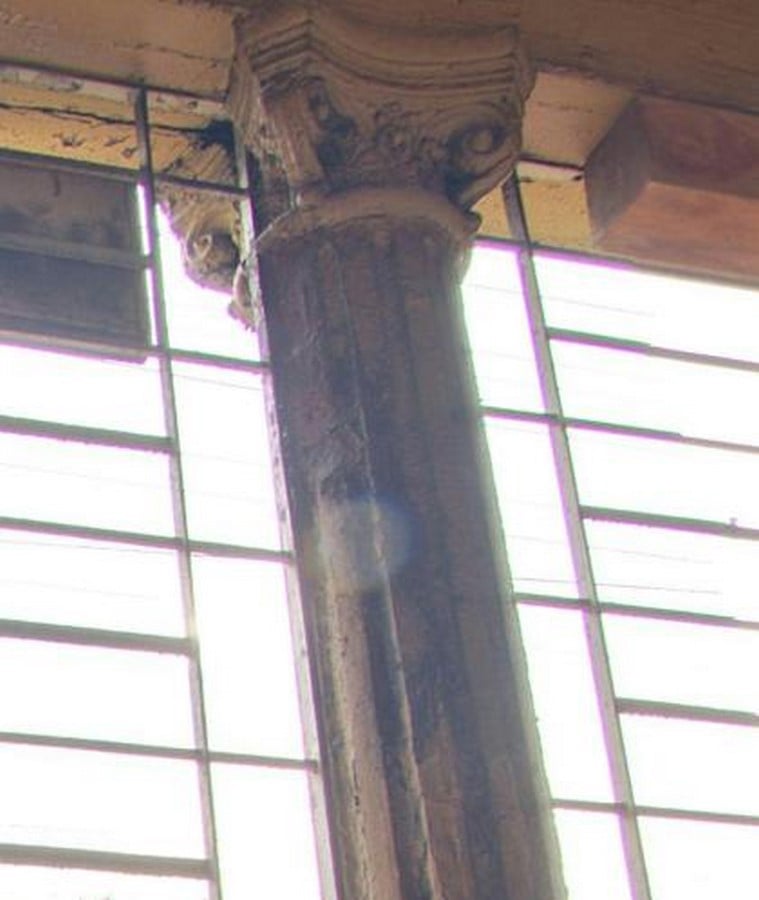
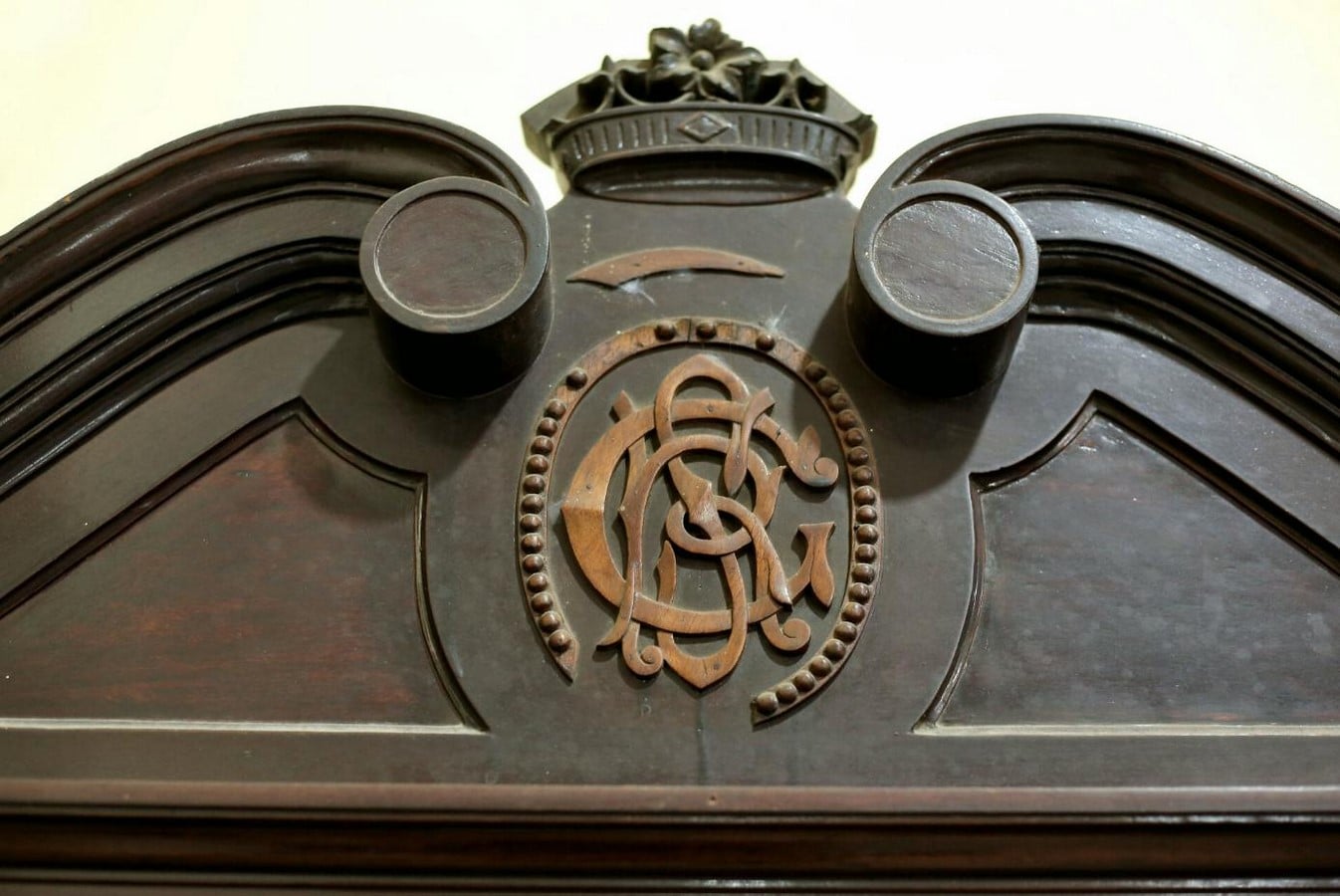
The tops of the columns are adorned with the motif of a banana flower and are seen on the ground floor level columns. The shelves bear a prominent carved monogram crest in shelves. The building stands as a testament to British architects’ unique blend of neoclassical with Indian elements.
Positioning of The Central Library in Vadodara
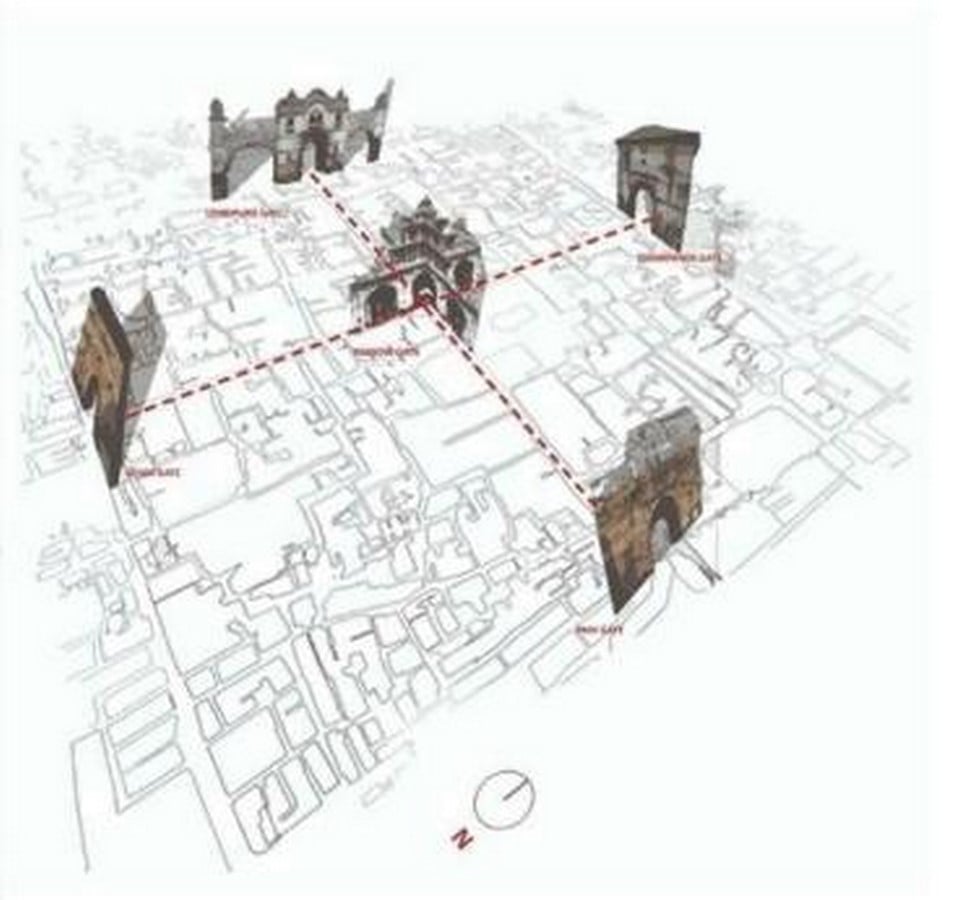
6_
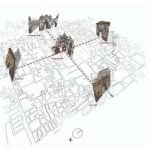
Four gates exist facing the cardinal directions: Lehripura gate to the West, Champaner gate to the South, Pani gate to the East, and Gendi gate to the South, connected by two 12-meter-wide roads: Mahatma Gandhi Road (East-West) and Mandvi Fatehpura Road (North-South). (Amin, 2025) Maharaja Sayajirao Gaekwad III positioned the Baroda Central Library centrally on Mandvi Fatehpura Road, at the very heart of the city.
Unlike the Parliament in New Delhi, the Central Library of Vadodara has no ceremonial foreground, no transitional zone. It sits right in the middle of a bustling city, which can be interpreted as accessible and humble.
The Vision of Maharaja Sayaji Rao Gaekwad III
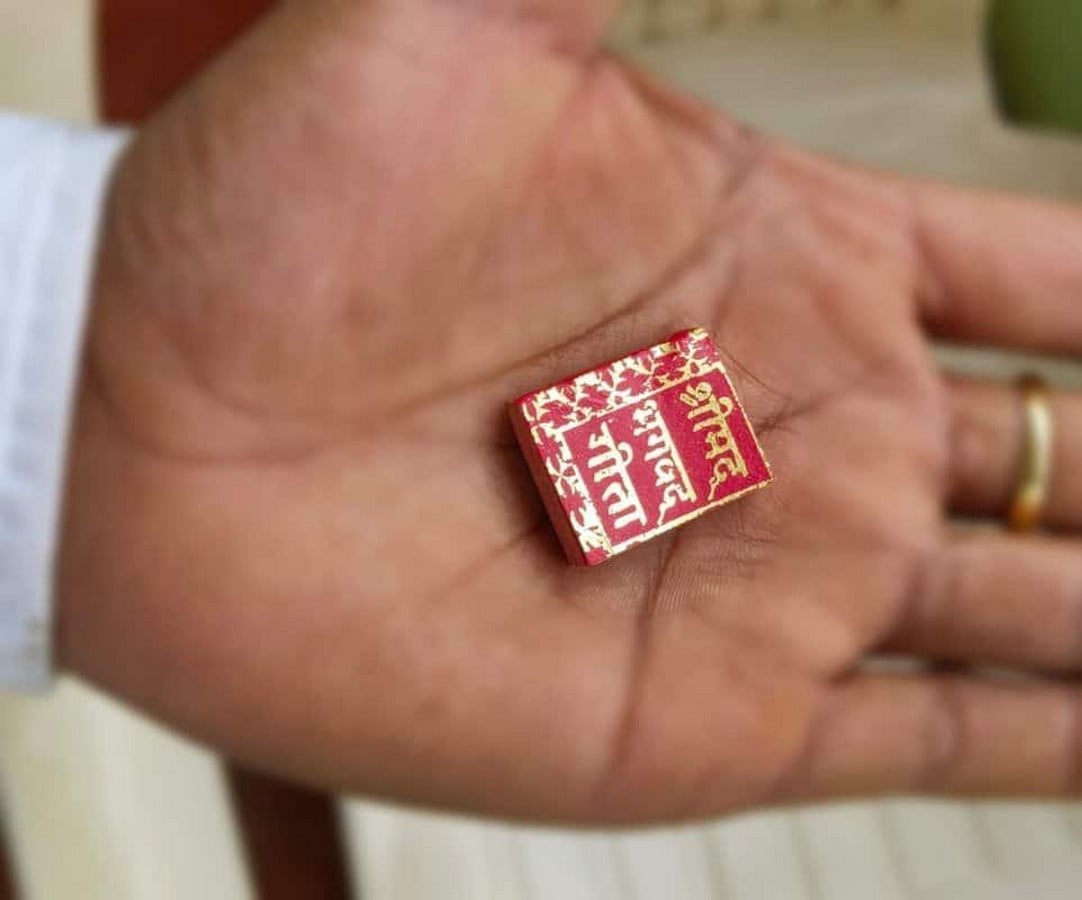
One can find a copy of the Indian Constitution with original signatures of the MPs, Census Reports and Annual Reports from Baroda State at the library. There are also miniatures of the Gita and Dictionaries brought from Europe and America.
The first floor in the library has a partition that was designed for women and children. There was also a dedicated entrance with a separate staircase leading to the women’s section.
After the library was built, there were efforts made to introduce reading. Motibhai Amin who was trained by William Borden, started a ‘mobile library’ in 1911. Motibhai Amin worked alongside Britishers to establish free public libraries across villages.
Current State Of The Central Library
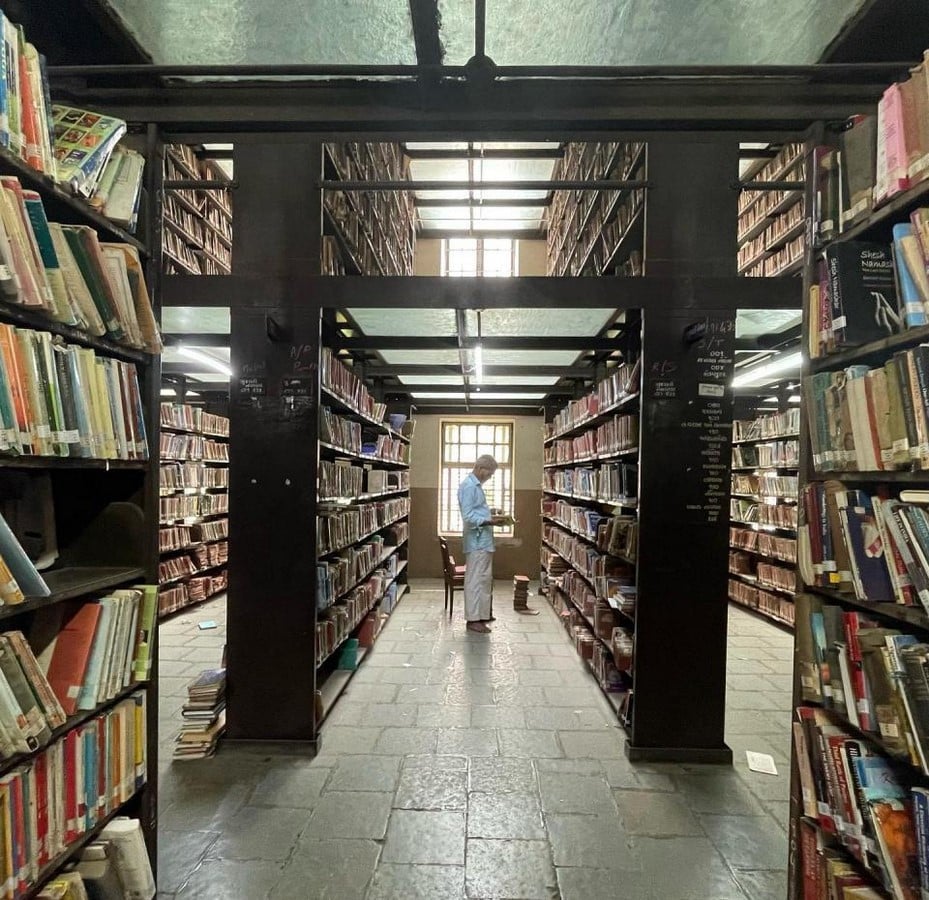
Over a century later, Maharaja Sayajirao Gaekwad III’s vision holds. The total membership count today is above 45,000. It is now a place for students preparing for competitive exams to lift themselves from their circumstances. The Central Library of Vadodara never stopped being the “people’s university.”
References:
Shah, G. (2023). Sniffing through the legendary Central Library of Baroda -. [online] OUR VADODARA. Available at: https://www.ourvadodara.com/sniffing-through-the-legendary-central-library-of-baroda/ [Accessed 28 Jun. 2026]
Desai, A. (2018). Revisiting our Heritage – A Treasure Trove of Knowledge | Heritage Trust Baroda. [online] Heritagetrustbaroda.org. Available at: https://www.heritagetrustbaroda.org/revisiting-our-heritage-a-treasure-trove-of-knowledge/ [Accessed 28 Jun. 2026]
Kumar, A. (2023). Who was William Borden, the American who helped take libraries to every corner of Baroda? [online] Scroll.in. Available at: https://scroll.in/magazine/1055568/who-was-william-borden-the-american-who-helped-take-libraries-to-every-corner-of-baroda [Accessed 28 Jun. 2026]
Amin, S. (2025). Decoding Buildings in Vernacular Settlements: Architectural and Cultural Characteristics of Baroda Central Library, India. ISVS e-journal, 12(3), p.177. doi:https://doi.org/10.61275/isvsej-2025-12-03-09 [Accessed 28 Jun. 2026]