Social housing is about more than the shelter itself. It’s about the little things. A place to drink coffee and watch nature. A place to sit down and read a book. A place to pace back and forth with a friend on the phone. To cry at night when it feels like too much, and to celebrate when the wins begin again. Everyone deserves a home, not just a shelter. People are humans, and as a species, not only do they need, but they deserve more than the bare minimum in this world. People who use social housing deserve a dignified everyday life.
Access to Art
It’s odd that going into the arts is frowned upon financially, yet everyone consumes or creates some form of it. Whether it’s binging a television show after a long, hard day, or humming a tune while doing the dishes, art belongs in everyday life. In fact, art is synonymous with life. Social housing should not deprive its users but rather embrace this human need and embed it into its designs. Small details (like being able to decorate a space with art or create it themselves) can make social housing feel more like home.
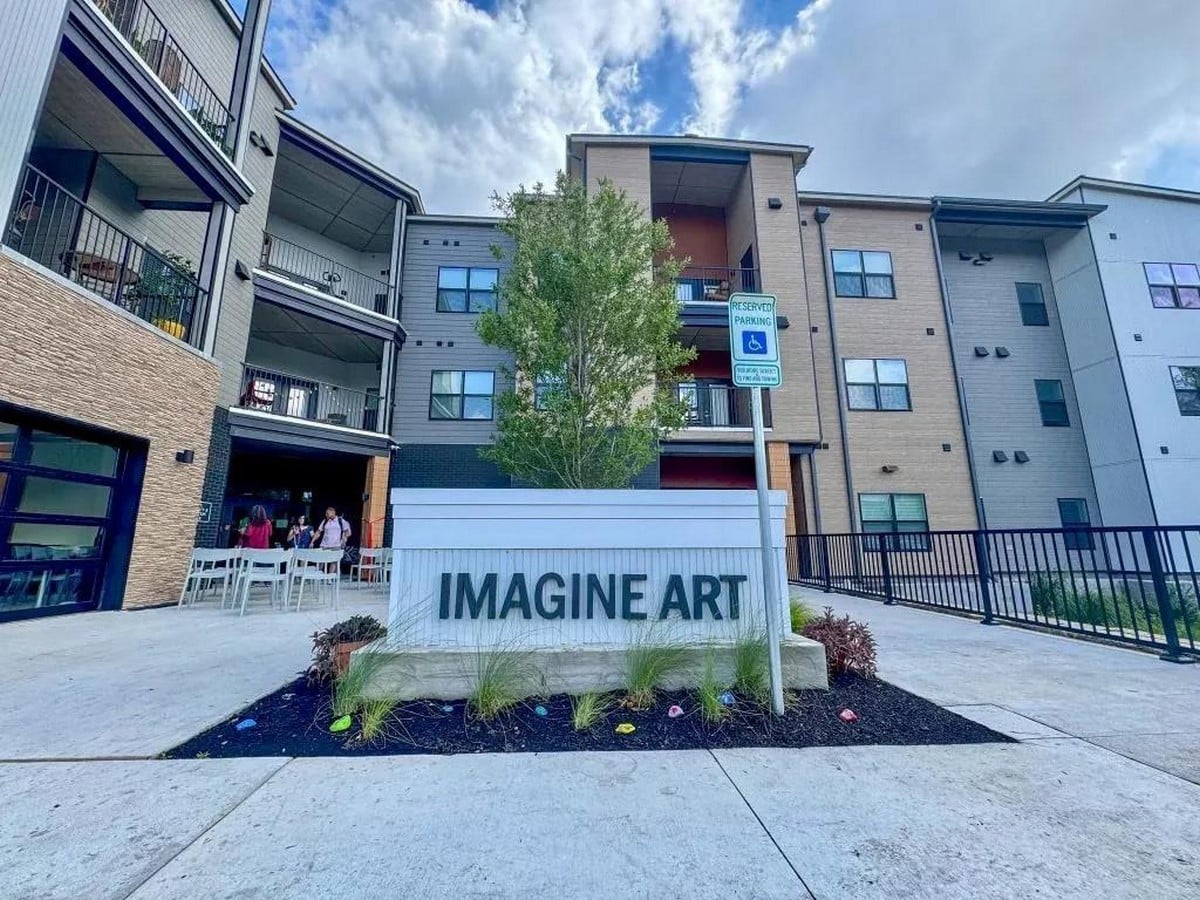
An example of this is in Austin, Texas. Imagine Art’s Live+Make Campus is an affordable housing project specifically for artists and people with disabilities. Sixty-six units make up this apartment building, with fifteen being ADA-compliant and fifteen more for Continuum of Care. Large amounts of community spaces are utilised for art. Some of those include a painting and ceramic studio, a classroom, and a public gallery to showcase the work. Art is a great way for people to express themselves and build community relations.
Access to Nature
Another factor that can create a dignified everyday life for people is easy access to nature. Seeing and existing in green spaces can greatly benefit people’s mental health. This is especially true in cities where there are more buildings and people than nature. Similar to art, in wealthier areas of cities, there tends to be more green space. But everyone deserves to experience feeling the relief of nature between the towering skyscrapers. Connecting with the earth should not be a luxury only reserved for the rich.
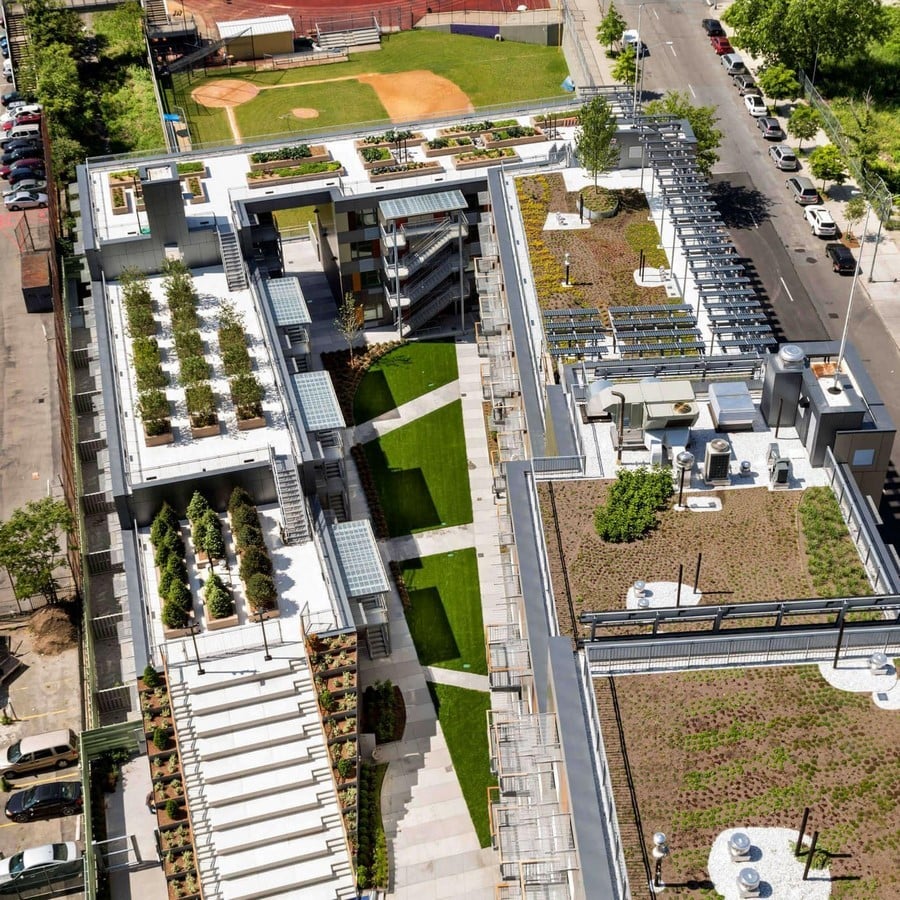
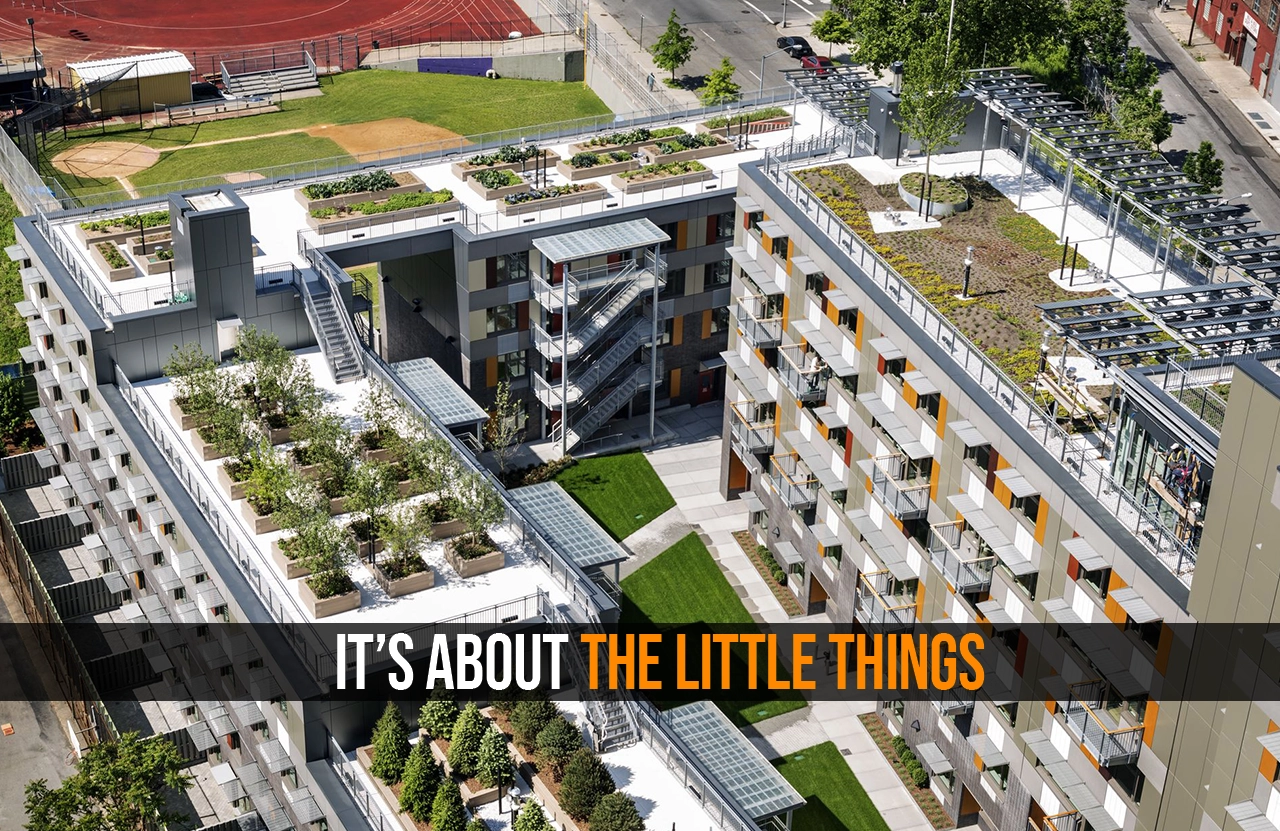
In NYC in 2006, Grimshaw won an affordable housing competition for Via Verde. The project was to combine healthy living and sustainability in a way that could be easily repeated across the city in the future. The project is mixed-use as well as mixed-income, including low and moderate-income housing. Gardens fill this project, starting in the courtyard and spiralling up onto the stepped roofs all the way to the twenty-story tower. Residents cannot only view but also experience these gardens in the middle of the Bronx.
Access to Community
People need people in everyday life. As much as society today likes to pretend they don’t, humans are social creatures. No one is supposed to go out there in this world alone. Others need them to celebrate the good times just as much as to console each other through the bad ones. Social housing is perhaps a great place to build that community. In today’s heavily capitalist societies across many countries, a large number of people are so focused on themselves that they forget the benefits of living within communities.
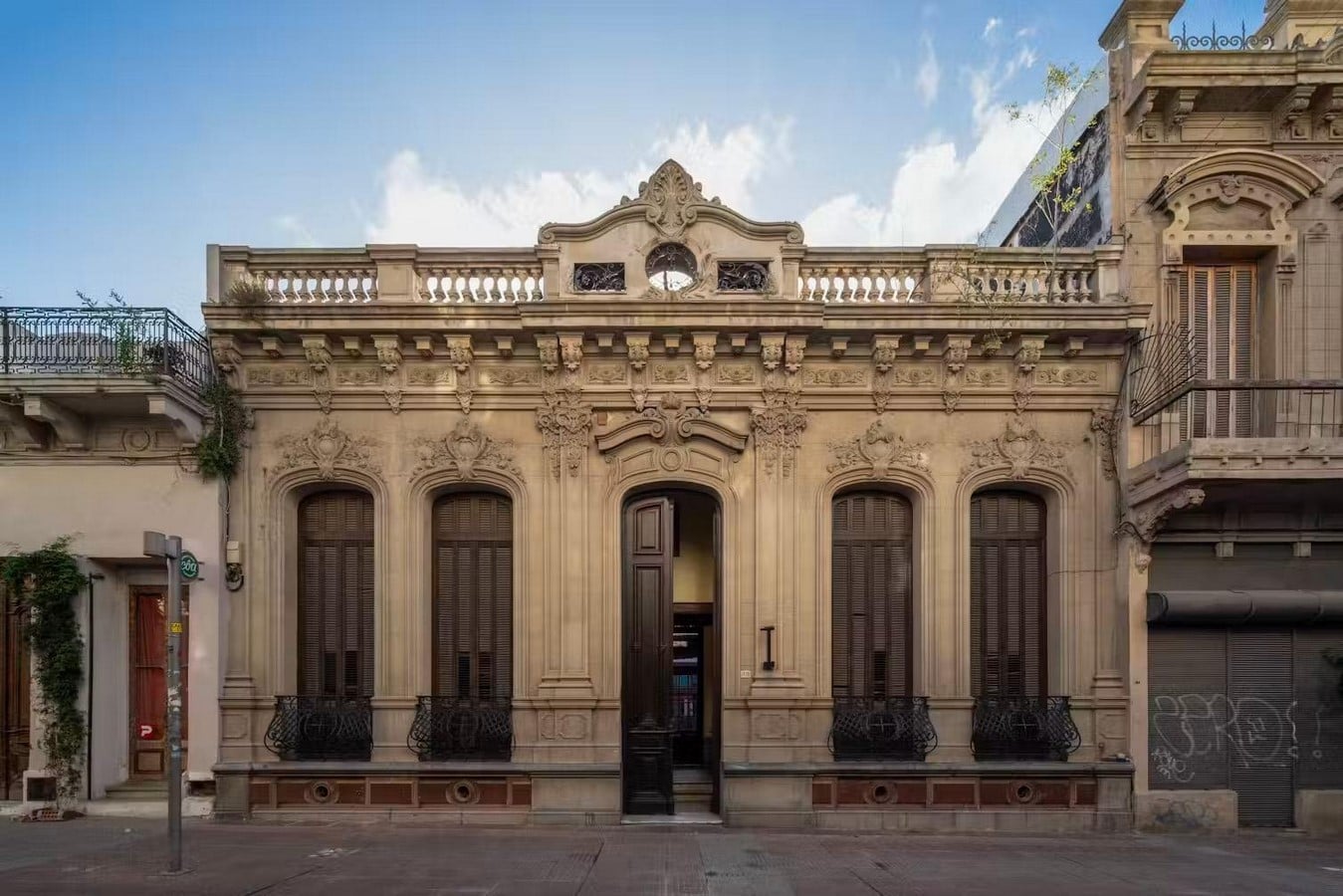
In Uruguay, a national housing law was passed in 1968 that acknowledges different types of housing cooperatives, including savings and mutual aid. In the savings cooperative, those who are able can invest and help fund construction. On the other hand, with mutual aid, those who cannot afford to invest can contribute to construction in different ways, such as manual labour or even administrative duties. Being so heavily involved in this type of work can make a huge impact on a user’s everyday life.
One specific cooperative to highlight is Montevideo’s Ciudad Vieja, where the organisation Mujeres Jefas de Familia (MUJEFA) created housing specifically for women. With the architect Charna Furman, MUJEFA worked together to help women who often experience inequality find affordable housing. The central location within Montevideo allowed the women to be close to the amenities and community opportunities they needed. The little things (like being close to their children’s schools) can help create a dignified everyday life. These women were able to create new housing for themselves and their families while building a community and actively being involved in the planning and construction processes.
All the Little Things Together
When it comes to designing a dignified everyday life for people in need, equity is more important than equality. People in social housing need access to all the little things. The art, nature, and community may not be at the forefront of the architectural designer’s mind with social housing, but they should be. Not only separately, these seemingly “little things” can and should be studied and explored together in designs. In today’s world, many people are not far from needing help, and caring about the little things means caring for each other. For a dignified everyday life, people need more than just a roof over their heads.
Reference List:
Barenstein, J. and Sanjinés, D. (2025). What the World Can Learn from Uruguay as the Global Housing Crisis Deepens. The Conversation. [online] doi:https://doi.org/10.64628/aai.g7sjq97t3.
Grimshaw Architects (n.d.). Via Verde – The Green Way / GRIMSHAW. [online] Grimshaw. Available at: https://grimshaw.global/projects/residential/via-verde-the-green-way/ [Accessed 14 Jun. 2026].
The City of Austin (2025). Live Make Apartments Brings Affordable and Accessible Housing to East Austin. [online] Austintexas.gov. Available at: https://www.austintexas.gov/housing/news/live-make-apartments-brings-affordable-and-accessible-housing-east-austin [Accessed 14 Jun. 2026].