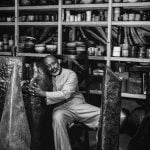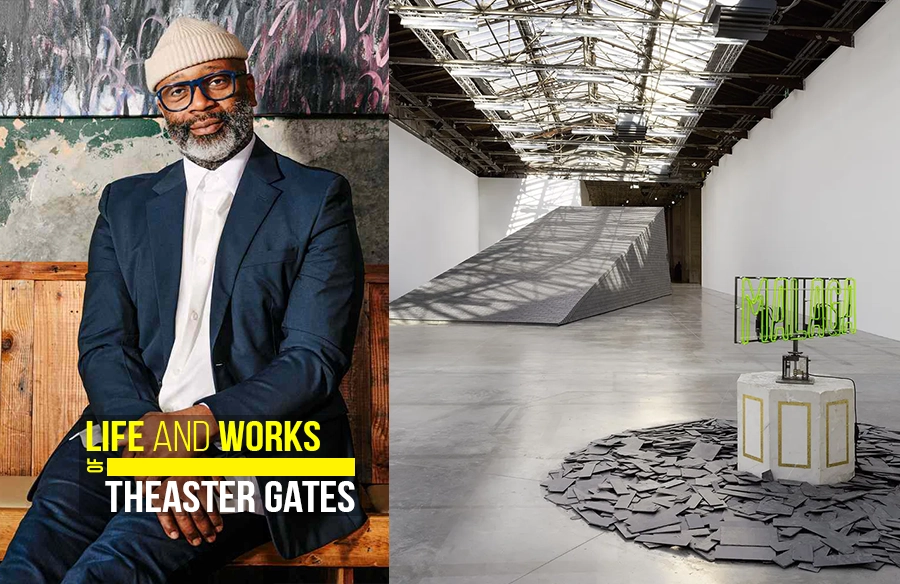
Theaster Gates grew up on the South Side of Chicago, helping his father with the family roofing business, hauling buckets of tar and learning early that almost anything broken can be made useful again. That early lesson stuck. Theaster Gates is now one of the most talked about artists working today, though he resists being called only an artist. He moves between sculpture, ceramics, performance and property development, often within a single project, and his work keeps returning to one question: what happens when you treat a forgotten building the way a potter treats a lump of clay.
Early Life and Education of Theaster Gates
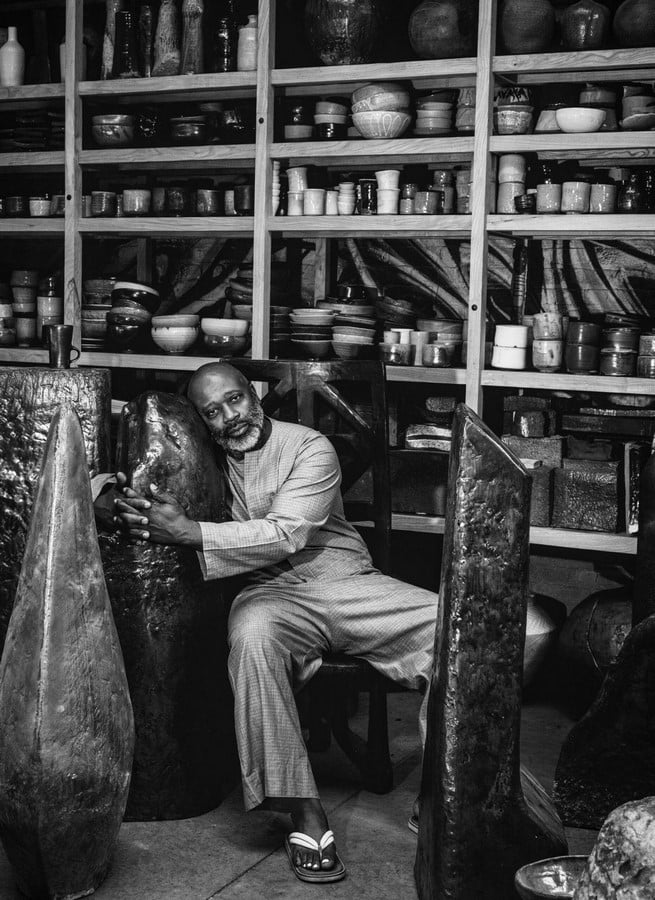
Born in Chicago in 1973, Theaster Gates studied urban planning and ceramics as an undergraduate at Iowa State University. He later travelled to Tokoname, Japan, to train as a potter, an experience he has described as formative. He went on to study religion and fine arts at the University of Cape Town before returning to Iowa State for a master’s degree combining urban planning, ceramics, and religious studies. That mix of disciplines was not incidental. Theaster Gates has always worked at the seam between making objects and making places, and his education reflects that from the start.
In 2000, Gates took a job as an arts planner with the Chicago Transit Authority, and by 2006, he was working as an arts programmer at the University of Chicago. These roles gave him a practical understanding of how institutions, budgets and neighbourhoods actually function, knowledge that would later shape his approach to art as much as any gallery training did.
Breakthrough as an Artist
Gates’s first solo exhibition, Plate Convergence, opened at the Hyde Park Art Center in 2007 and involved a fictional ceramicist performed by an actor, a playful blurring of art and identity that hinted at the layered storytelling he would become known for. Two years later, his installation and performance piece Temple Exercises at Chicago’s Museum of Contemporary Art caught wider attention and led to an invitation to the 2010 Whitney Biennial in New York. There, Theaster Gates presented shoeshine stands, fire hoses salvaged from civil rights era confrontations, and live performances by his vocal ensemble, the Black Monks. The fire hoses in particular became a recurring material in his sculpture, objects once used as weapons against protesters reworked into something closer to relics.
The Rebuild Foundation and Dorchester Projects
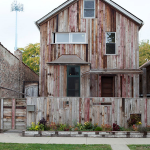
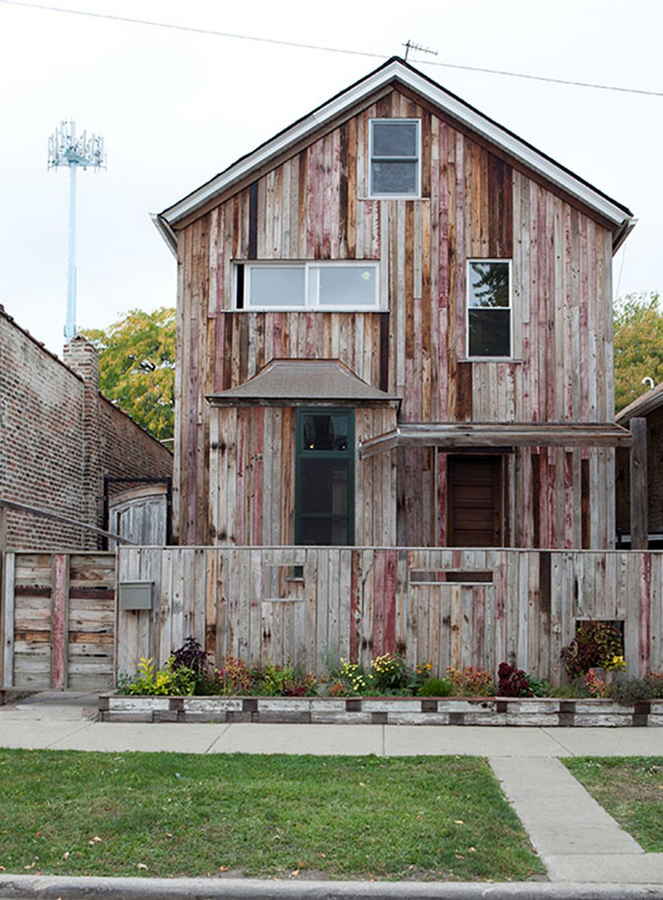
In 2009, Gates bought a vacant building on Dorchester Avenue on Chicago’s South Side and converted it into a library and community space. That single purchase grew into what is now known as the Dorchester Projects, a cluster of renovated buildings including the Archive House, Listening House and Black Cinema House, each serving a different cultural purpose for the surrounding neighbourhood. A year later, in 2010, he formalised this work by founding the Rebuild Foundation, a nonprofit organisation built around neighbourhood regeneration, archives and free arts programming on Chicago’s South Side.
Theaster Gates has often described his approach using the language of his original training in ceramics. Just as a potter reshapes clay without discarding it, he reshapes buildings, using salvaged materials from one structure to repair another. At Documenta 13 in Kassel, Germany, in 2012, this idea took on an international dimension with a project called 12 Ballads for Huguenot House, in which parts of a derelict nineteenth century building in Kassel were shipped to Chicago and used to renovate a building there, while pieces of the Chicago structure travelled back to Kassel. The two buildings were, in effect, rebuilt out of each other.
Stony Island Arts Bank
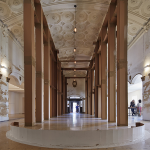
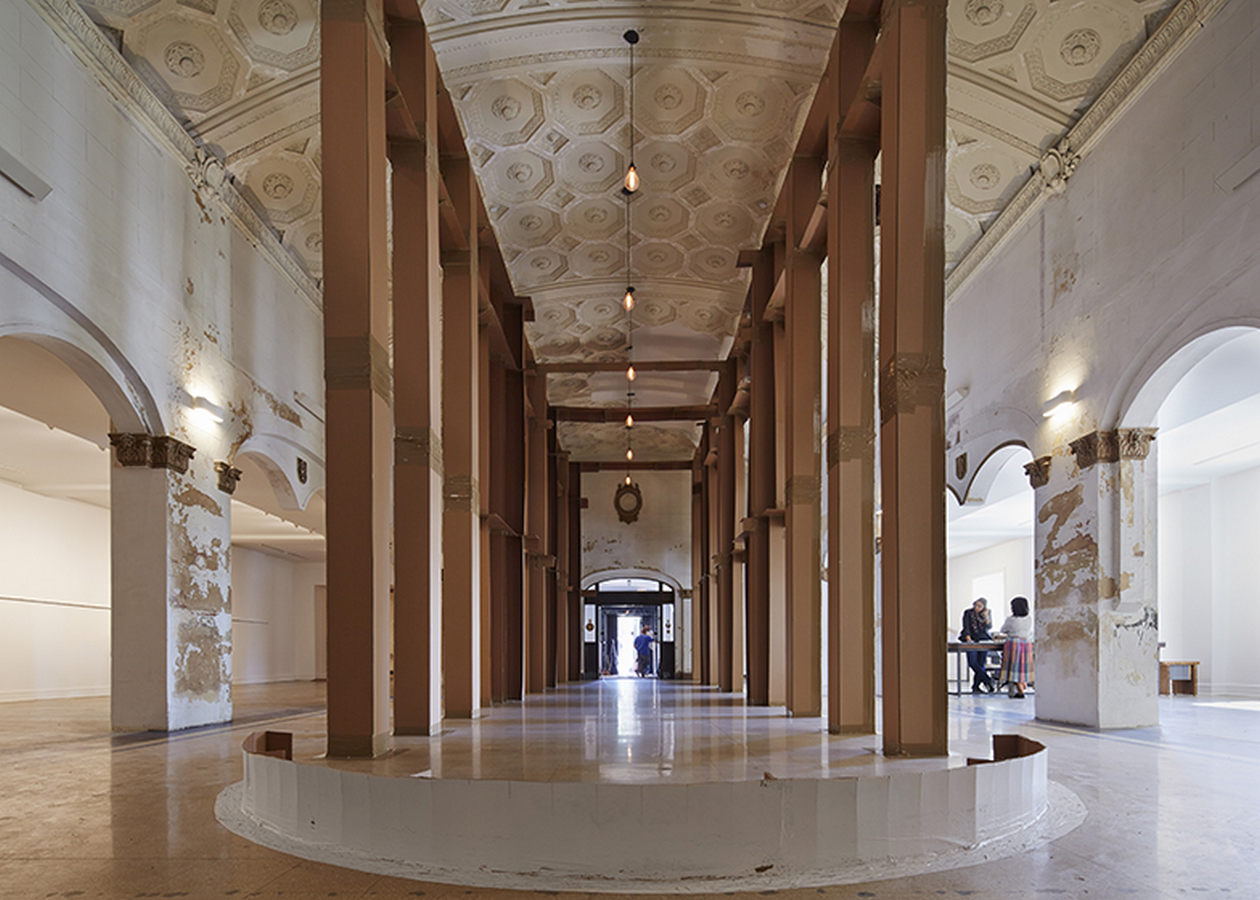
Perhaps the project most associated with Theaster Gates today is the Stony Island Arts Bank, a former bank building at 68th Street and Stony Island Avenue that had sat empty since the 1980s. Designed by William Gibbons Uffendell and built in 1923, the building was acquired by Gates from the city of Chicago for one dollar in 2013, on the condition that he raise the funds needed to stabilise it. To finance the restoration, he sold pieces of the bank’s original marble and fittings as art objects through a project shown at Art Basel, effectively turning salvage into seed money.
The Stony Island Arts Bank reopened in 2015 as a hybrid gallery, archive and community space spanning around 17,000 square feet. It now houses the Rebuild Foundation’s own collections alongside the archive of the Johnson Publishing Company, the Chicago based publisher behind Ebony and Jet magazines, and the vinyl record collection of the late DJ Frankie Knuckles. For Gates, the symbolism mattered as much as the square footage, a building that once counted a neighbourhood’s wealth in dollars and mortgages now holds its cultural memory instead.
Ideology and Project Philosophy
At the centre of Theaster Gates’s thinking is a phrase he returns to often: beauty is a basic service. For Gates, access to well designed, well maintained spaces should not be a privilege reserved for wealthier parts of a city. His projects on Chicago’s South Side, an area that experienced decades of disinvestment, are built on the idea that art and architecture can be tools for economic and cultural repair, not just decoration layered on top of it.
He also speaks often of animism, a belief in what he calls the spiritual life within things. A salvaged fire hose, a piece of marble from a demolished bank, or the floorboards of an abandoned house are not simply raw material to Gates. They carry history, and his work tries to let that history continue rather than erasing it. This is part of why his sculptures so often incorporate recognisable fragments of buildings rather than abstract forms alone.
The Dorchester Art and Housing Collaborative, completed in partnership with the Chicago Housing Authority, Brinshore Development and the architecture firm Landon Bone Baker, reflects this philosophy in a more concrete way. The project converted a row of vacant housing units into 32 apartments for residents receiving affordable and low income housing support, alongside space for theatre and dance. Gates has called it the clearest example of his attempt to address artist housing and community needs through actual construction rather than only through exhibitions.
Academic Role and Wider Influence
Alongside his studio and foundation work, Theaster Gates has held a faculty position at the University of Chicago since 2014, where he is also senior advisor for cultural innovation. He has organised exhibitions such as A Johnson Publishing Story and In the Absence of Light, both staged at the Stony Island Arts Bank, and his work has been shown by major galleries including White Cube, Gagosian and Regen Projects. He has also collaborated with figures from outside the art world, including cellist Yo-Yo Ma, bringing classical performances to South Side venues that rarely host them.
Theaster Gates treats the studio and the neighbourhood as the same material, something to be shaped, repaired and given a second life. Whether he is glazing a ceramic vessel or negotiating the purchase of a derelict bank, the instinct is the same one he learned as a child on a roof with his father: look at what already exists, and figure out how to make it useful again.