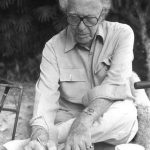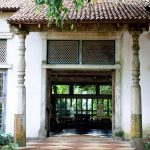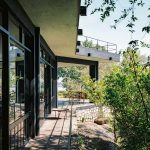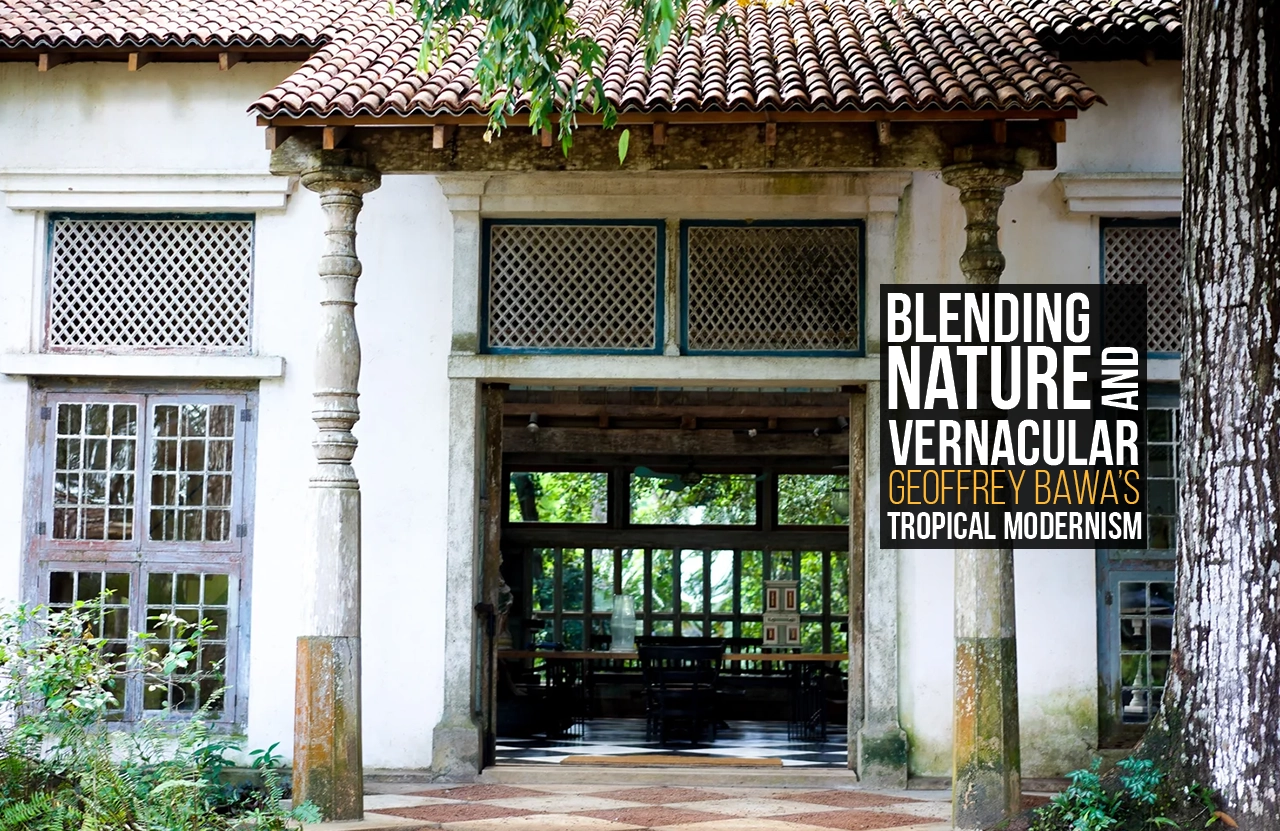
Creativity is a skill with no geographical limitations, thus artists, writers, and architects are born in every corner of the world. From the developed countries of the West to the sprawling islands of the East, architects of unique talent and skill have made their mark. One such name is Geoffrey Bawa, an architect who comes to mind whenever Sri Lanka is mentioned. Known as the father of modern Sri Lankan architecture and Tropical Modernism, Bawa has a diverse portfolio of works that blend nature and the vernacular. The architectural style of Tropical Modernism was born from his design philosophy, where nature and vernacular elements seamlessly integrate to form spaces that are functional, biophilic, and sustainable.
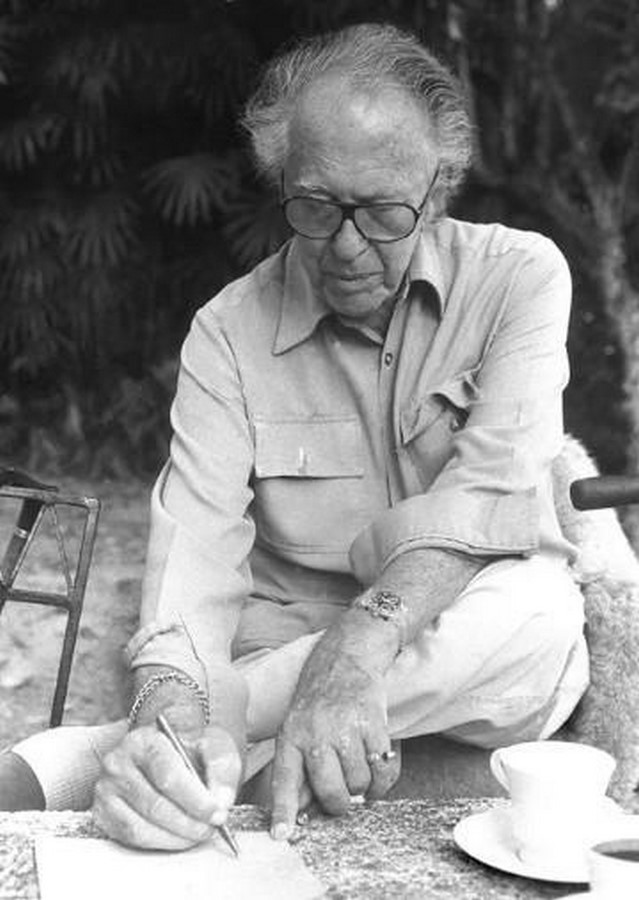
Geoffrey Bawa was born in 1919 with half-Asian and half-European ancestry. Initially pursuing a career in law, Bawa found his true calling in architecture at the age of 38. His Sri Lankan roots and formal education from London’s Architectural Association School of Architecture blended to form an architect who valued nature and traditional practices but believed in innovation through design. His countless projects in Sri Lanka and abroad reflect his passion for architecture, harmonising nature, functionality, and innovation. Best known for House number 11 (Residential architecture), the Sri Lankan Parliament Building (Public/Governmental architecture), and Heritance Kandalama (Hospitality architecture), he never confined himself to a specific typology.
Tropical Modernism
Geoffrey Bawa’s unique design philosophy later became known as Tropical Modernism – an architectural style focusing on indoor-outdoor living and the use of clean, simple lines (Ramachandran and C.V., 2024). It is also defined as a blend of Modernist principles with regional vernacular elements. The region Bawa designed for lies in the tropical zones; thus, the vernacular elements give his architectural style a distinct tropical language. Pitched roofs, living courtyards, overhanging eaves, and clay tiles became the preferred aesthetic for Bawa as these elements were already being used in vernacular tropical architecture. Inspired by Modernist principles, his designs were minimal with a focus on functionality, circulation, and ventilation. Other architects who have adapted Tropical Modernism in their works include Charles Correa, Paulo Mendes da Rocha, Vladimir Ossipoff, Jane Drew, and Maxwell Fry.
Bawa’s Influences from Sri Lanka’s Vernacular Architecture
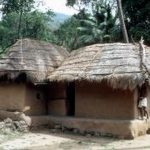
Sri Lanka has an interesting history as the island of Ceylon. It has passed through multiple rules, experienced colonialism, and absorbed influences from the Arabs, Chinese, and Indians. During the colonial times, Dutch, Portuguese, and British influences impacted Ceylon’s architecture and culture. As a result, modern-day Sri Lanka is a beautiful amalgam of all that left its mark on the island and still maintains a unique image of its own. Vernacular architecture in Sri Lanka, or Ceylon at that time, consisted of compound dwellings. These dwellings were groups of earthen or brick huts with thatched roofs, where the locals resided together. Each compound dwelling became a community of its own, sharing space, skills, festivals, and resources (Cornell University, 2019).
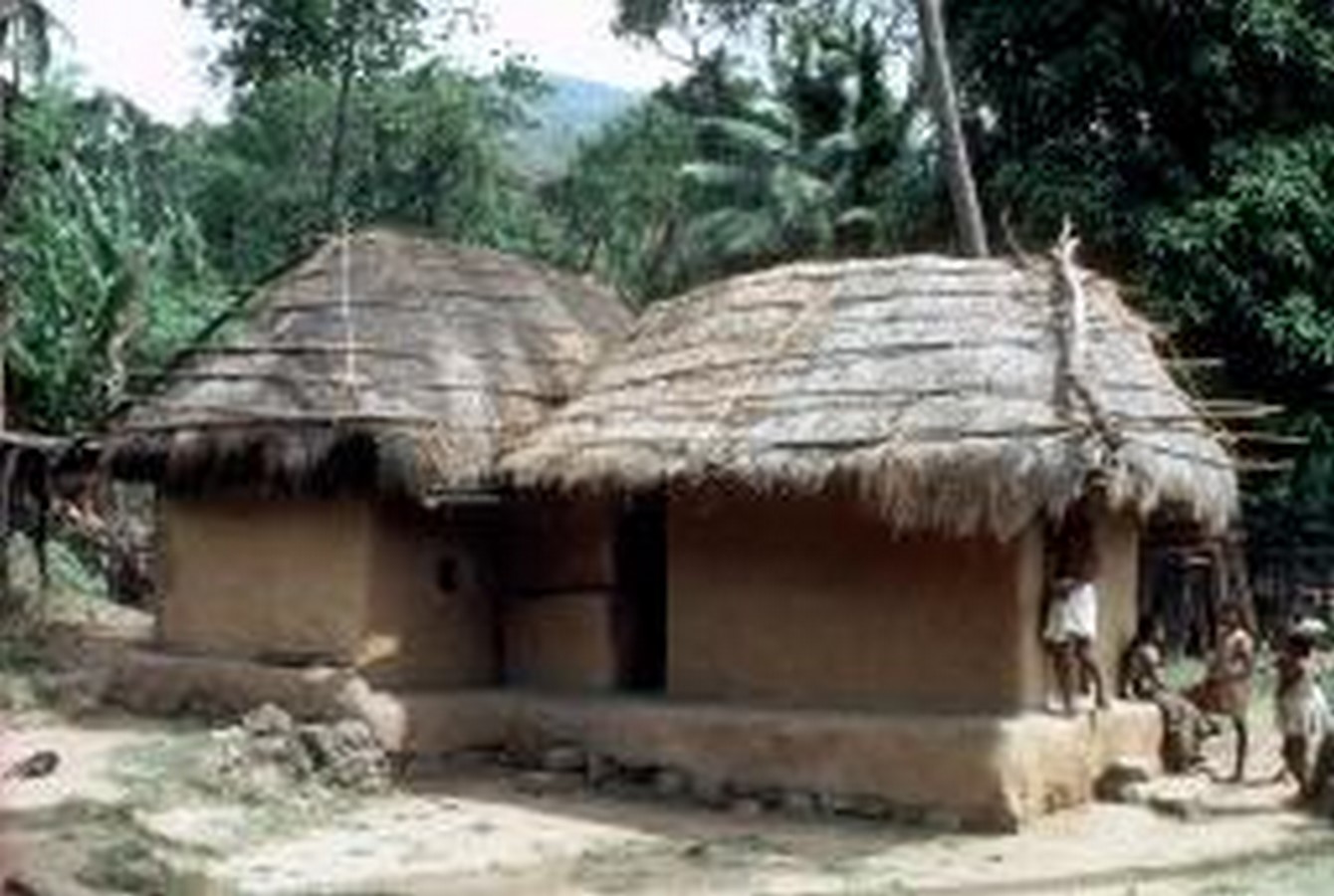
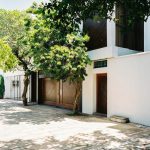
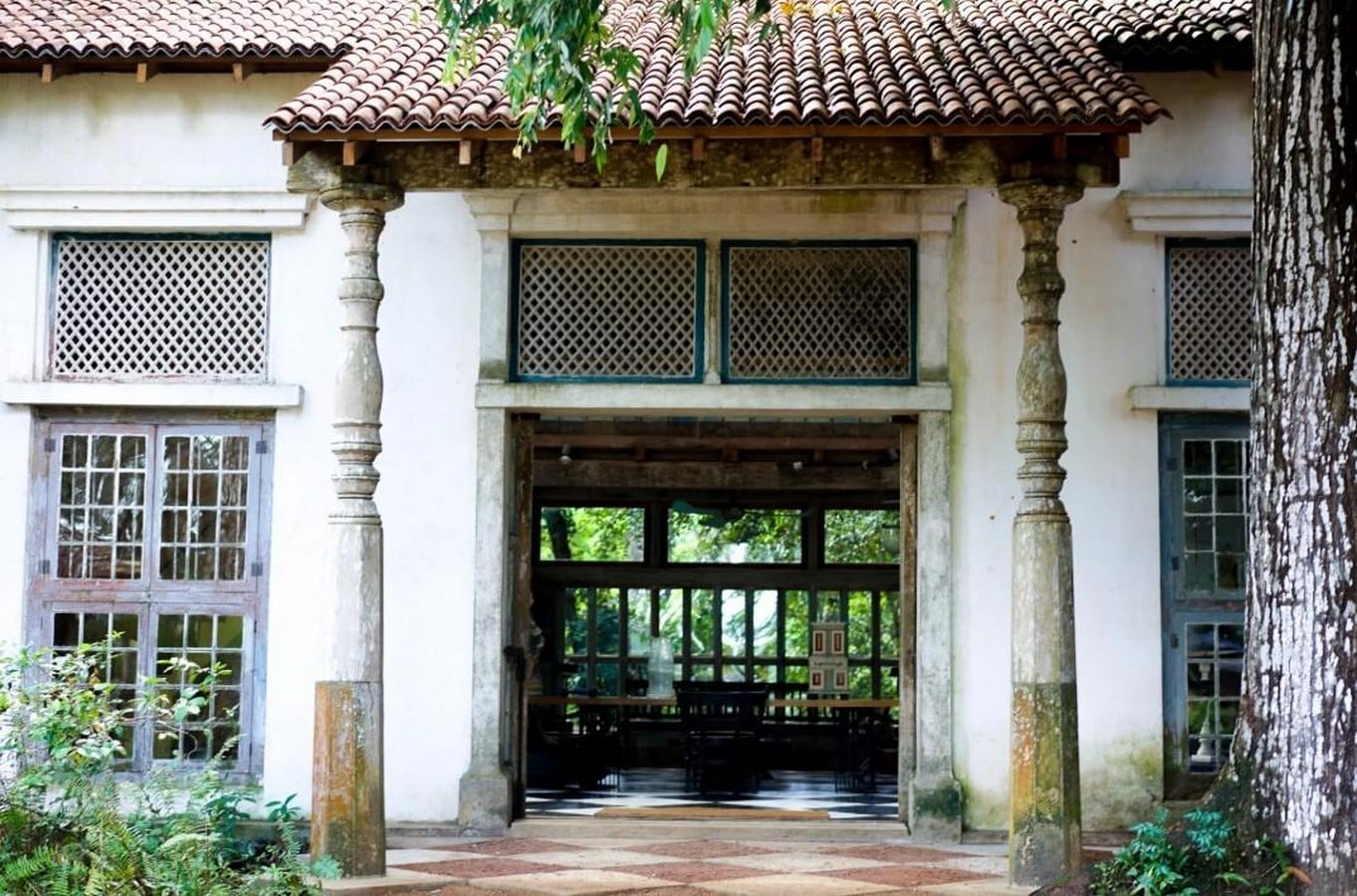
Bawa’s tropical modernism takes these vernacular elements and lifestyle practices into account. He designed for his people, knowing the importance of nature and openness. Despite influences from Modern Architecture, he was against designing sealed boxes with a uniform identity. Every building he worked on depicts permeability through material and openings. Nature, for Bawa, is more than a pleasant view. It becomes an active contributor to the design, flowing in and out through the vernacular elements of loggias, verandas, and living courtyards. Observing the thatched roofs which sustain in the tropical conditions, he used steep pitches with deep, sweeping eaves and clay tiles as roofing. These roofs easily tolerate the abundance of rain and keep the building cool in the summer. Bawa blurs boundaries between nature and is built through open-framed windows with no glass, latticed screens, ruined walls, and open-sided pavilions (Hettiarachchi, 2023).
Distinct Features of Tropical Modernism
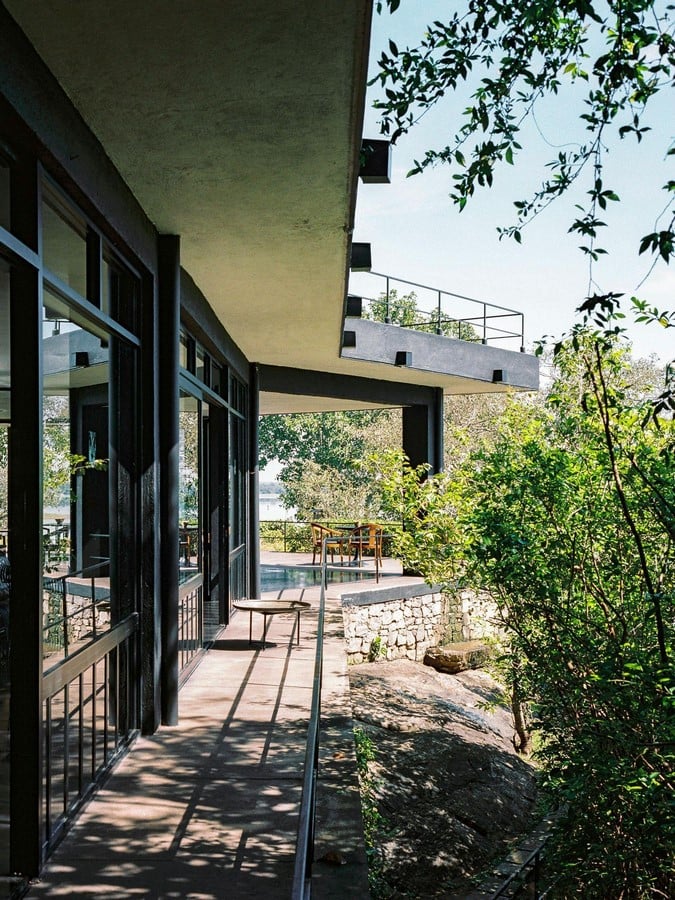
You can identify Tropical Modernism in architecture by these distinct features. Simple, clean lines are used, resulting in minimalist architecture. Interior spaces are kept light and plain, using light colour tones and textures – the walls are composed of locally available bricks or tiles. Nature features in the space as more than just a beautiful view. Whole landscapes are integrated into the design through openings, courtyards, and transition or in-between spaces, creating a connection between nature and the built space. The functionality of the proposed structure or form is essential; as a result, there are no unnecessary juxtapositions of space, material, or other design elements, keeping clear circulation and ventilation. Sustainable and local materials are used primarily in the project. Last but not least, tropical design elements such as pitched roofs, indoor and outdoor courtyards, stilts, colonnades, Brise-Soleil, and reflecting pools are used abundantly in the design.
Contributions of Geoffrey Bawa
As mentioned earlier, Geoffrey Bawa’s contributions are not limited to a single building typology. He is credited with designing more than fifty houses, multiple government buildings, and about thirty hotels and institute buildings (Robson, 2004). His remarkable projects include:
- Lunuganga Estate in Bentota
- House number 11 in Colombo
- University of Ruhuna in Matara
- The Sri Lankan Parliament Building in Kotte
- Seema Malaka Temple in Colombo
- Heritance Kandalama in Dambulla
- Heritage Madurai in Madurai, India
- The Pavilions Bali in Sanur, Bali
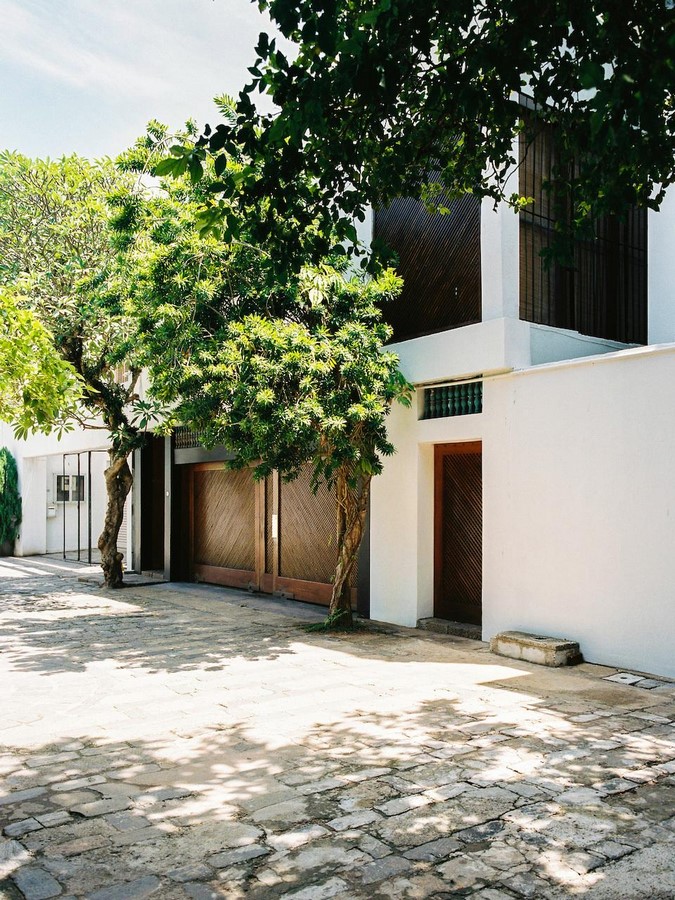
Geoffrey Bawa was one of the rare architects who remained devoted to local sensibilities and innovation in the vernacular till the end of his life. His projects showcase a strong sense of identity through his aim of celebrating nature and creating spaces that welcome it instead of cutting the users off from it. His innovations in the vernacular completely redefined Sri Lanka’s architectural language, and now most of Sri Lankan architecture follows the precedent of Bawa’s tropical modernist style. Using local materials, integrating traditional practices, and maintaining regional identity made Geoffrey Bawa a sustainable and eco-friendly architect at a time when the whole debate for sustainability as a design requirement didn’t even exist. This attention to detail and locally rooted design philosophy is what makes all his projects timeless, earning him the titles of tropical modernist, regionalist, and romantic vernacularist.
References:
Chawla, N. (2023). The Enduring Appeal of Architect Geoffrey Bawa. [online] JSTOR Daily. Available at: https://daily.jstor.org/the-enduring-appeal-of-architect-geoffrey-bawa/.
Cornell University (2019). Collection: Depicting the Sri Lankan Vernacular – Cornell University Library Digital Collections Search Results. [online] Cornell.edu. Available at: https://digital.library.cornell.edu/?f%5Bcollection_tesim%5D%5B%5D=Depicting+the+Sri+Lankan+Vernacular&search_field=all_fields&view=gallery [Accessed 26 Feb. 2026].
De Pascalis, L. (2023). Geoffrey Bawa – Building and dwelling. [online] BOCCONI STUDENTS ARTS SOCIETY. Available at: https://bsartsociety.wordpress.com/2023/02/17/geoffrey-bawa-building-and-dwelling/.
Hettiarachchi, R. (2023). Tropical modern design strategies used by Geoffrey Bawa. [online] ResearchGate. Available at: https://www.researchgate.net/publication/369173790_Tropical_modern_design_strategies_used_by_Geoffrey_Bawa.
Ishanthi (2019). The Lunuganga Garden by Geoffrey Bawa. [online] Sri Lanka by Ish. Available at: https://www.srilankabyish.com/blog/2019/2/10/the-lunuganga-garden-by-geoffrey-bawa.
ITSLIQUID Group (2024). TROPICAL MODERNISM: ARCHITECTURE AND INDEPENDENCE | ITSLIQUID. [online] ITSLIQUID. Available at: https://www.itsliquid.com/tropical-modernism.html [Accessed 26 Feb. 2026].
Kunkel, P. (2019). Spotlight: Geoffrey Bawa. [online] ArchDaily. Available at: https://www.archdaily.com/770481/spotlight-geoffrey-bawa.
Ramachandran, Y. and C.V., S. (2024). Analysis of Architectural Works of Geoffrey Bawa, Laurie Baker, and Hassan Fathy with Tropical Modern Relevance. International Journal of Civil Engineering, 11(9), pp.1–11. doi:https://doi.org/10.14445/23488352/ijce-v11i9p101.
Robson, D. (2004). Geoffrey Bawa: the complete works. London: Thames & Hudson, Cop.
Rui-cardoso.com. (2026). Rui Cardoso. [online] Available at: https://rui-cardoso.com/ [Accessed 24 Feb. 2026].
S, A. (2023). Tropical Modern Architecture: 8 iconic buildings that showcase tropical modernism. [online] Parametric Architecture. Available at: https://parametric-architecture.com/tropical-modern-architecture-8-iconic-buildings-that-showcase-tropical-modernism/.