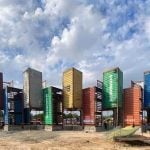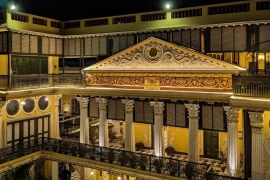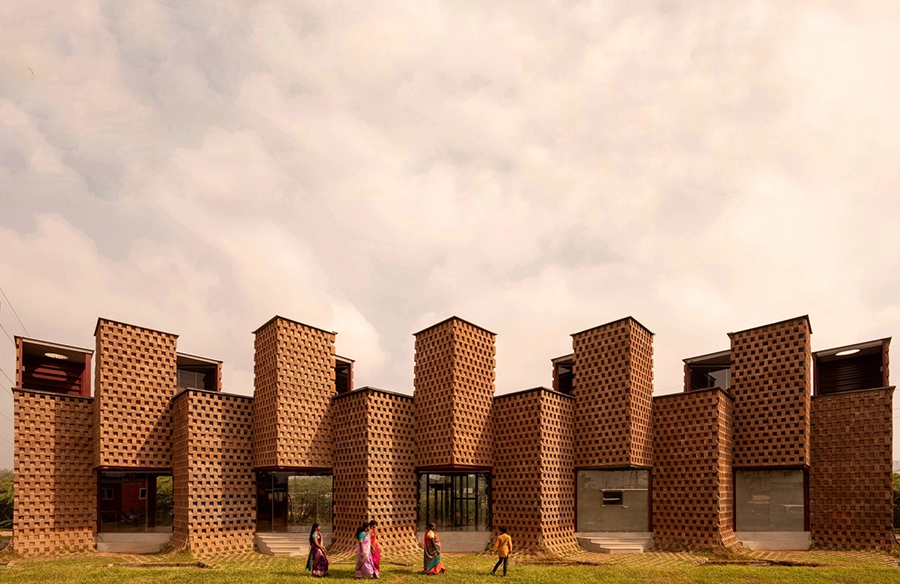
In the bustling port city of Thoothukudi, also known as Tuticorin—a city shaped by centuries of maritime trade—something exciting is happening. The Petti Restaurant, created by Wallmakers, isn’t just another building in this city; it’s actually a part of the city’s story. The restaurant takes old shipping containers, which are usually seen as nothing more than trash, and turns them into a huge dining space that can fit 200 people. This is a completely new way of thinking about what we usually throw away, and it’s changing the way we look at architecture. By using these old containers, the restaurant is showing us that even the most unlikely things can be turned into something beautiful and useful. This is a powerful example of how we can rethink how we build and create, and make the most of what we already have.
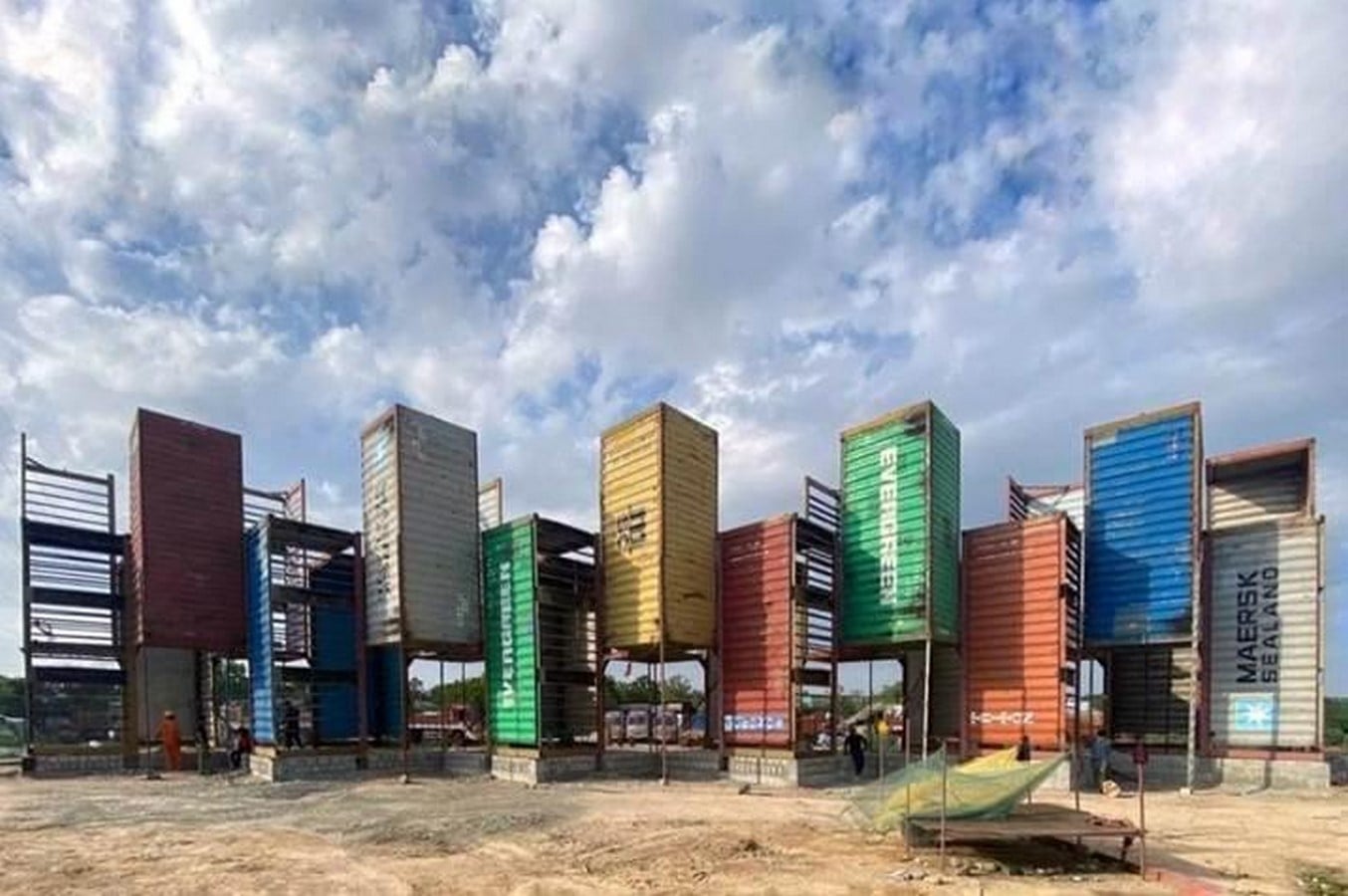
The Petti Restaurant is interesting right from the beginning, and it’s not just because of the materials used in its construction. There’s something about the way it presents itself that grabs your attention. The building doesn’t hide its origins; it celebrates them. Steel containers rise, wrapped in layers of earth, a structure that feels at once industrial and grounded. The project is not only about reuse but also about rethinking the way architecture can arise from the overlooked, the discarded, and the excessive.
Context and Design Philosophy
The Petti Restaurant is very contextual. The long maritime history of Tuticorin has left the city with an abundance of decommissioned shipping containers—structurally sound but economically redundant. Where this excess is seen as a problem, Wallmakers see an opportunity: converting industrial waste into architectural potential.
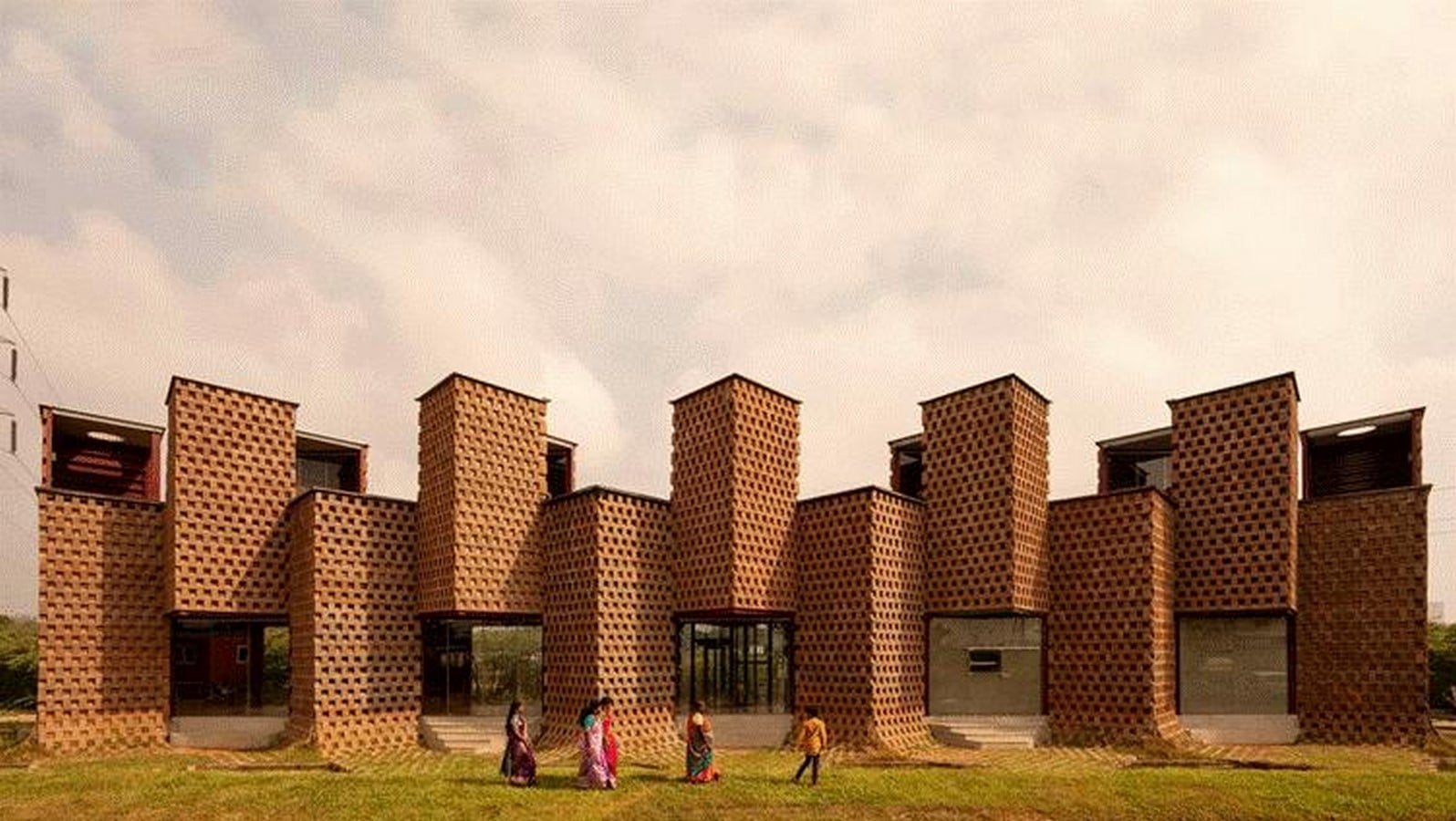
At its core, the Petti Restaurant reflects a philosophy of adaptation rather than imposition. The architects do not begin with a fixed form; instead, they respond to available materials, climate, and site constraints. Steel and mud are materials that rarely coexist, yet here they are brought together in a symbiotic relationship. Steel provides structural efficiency, while earth offers thermal stability, creating a building that is both resilient and responsive.
This makes the Petti Restaurant not only a design exercise but also a critical statement on sustainability. The project shows how architecture can be shaped by thoughtful material choices and passive strategies, not advanced technologies.
Planning a Narrow Site: Spatial Strategy
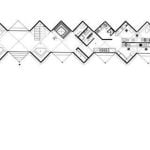
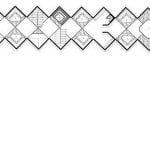
The site for the Petti Restaurant is narrow and linear, a condition that could easily limit spatial possibilities. However, the architects transform this constraint into a defining feature of the design. The layout unfolds as a sequence of intimate dining zones, each offering a sense of enclosure while maintaining continuity along the length of the building.
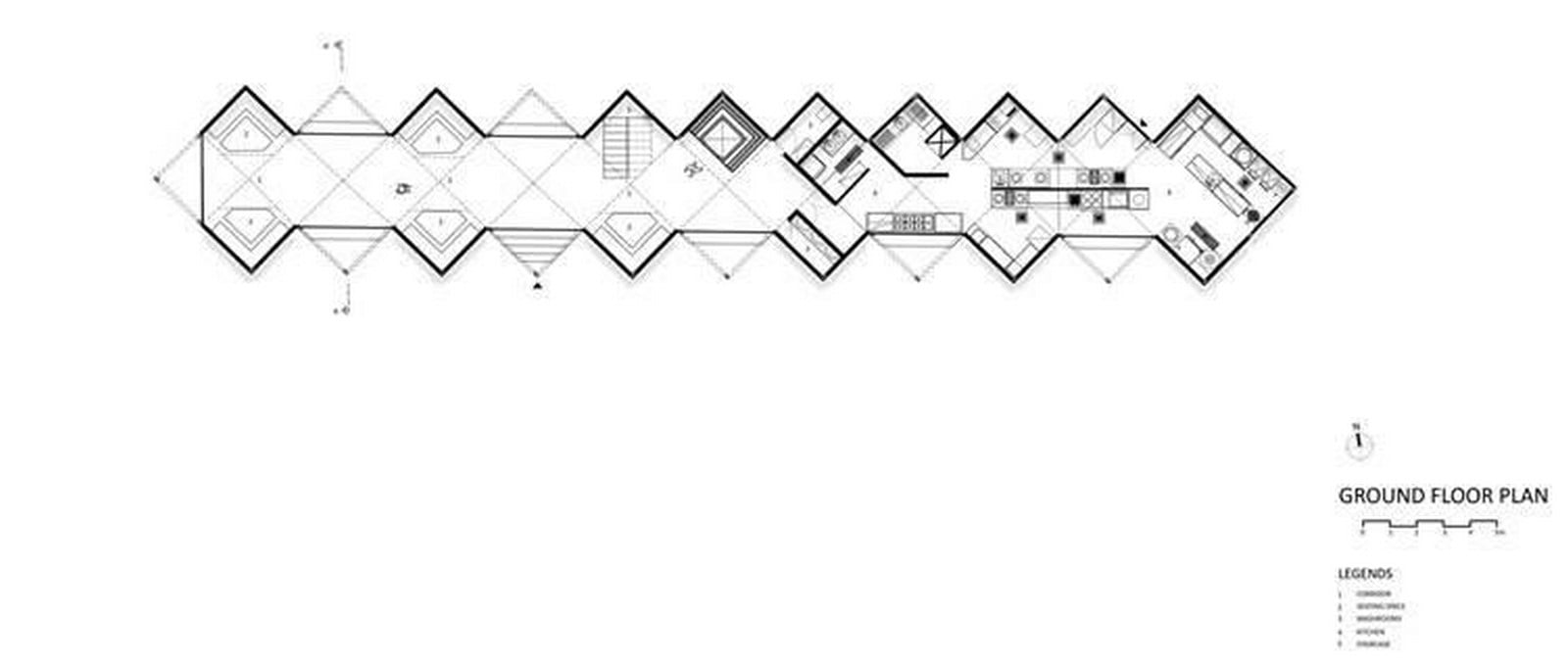
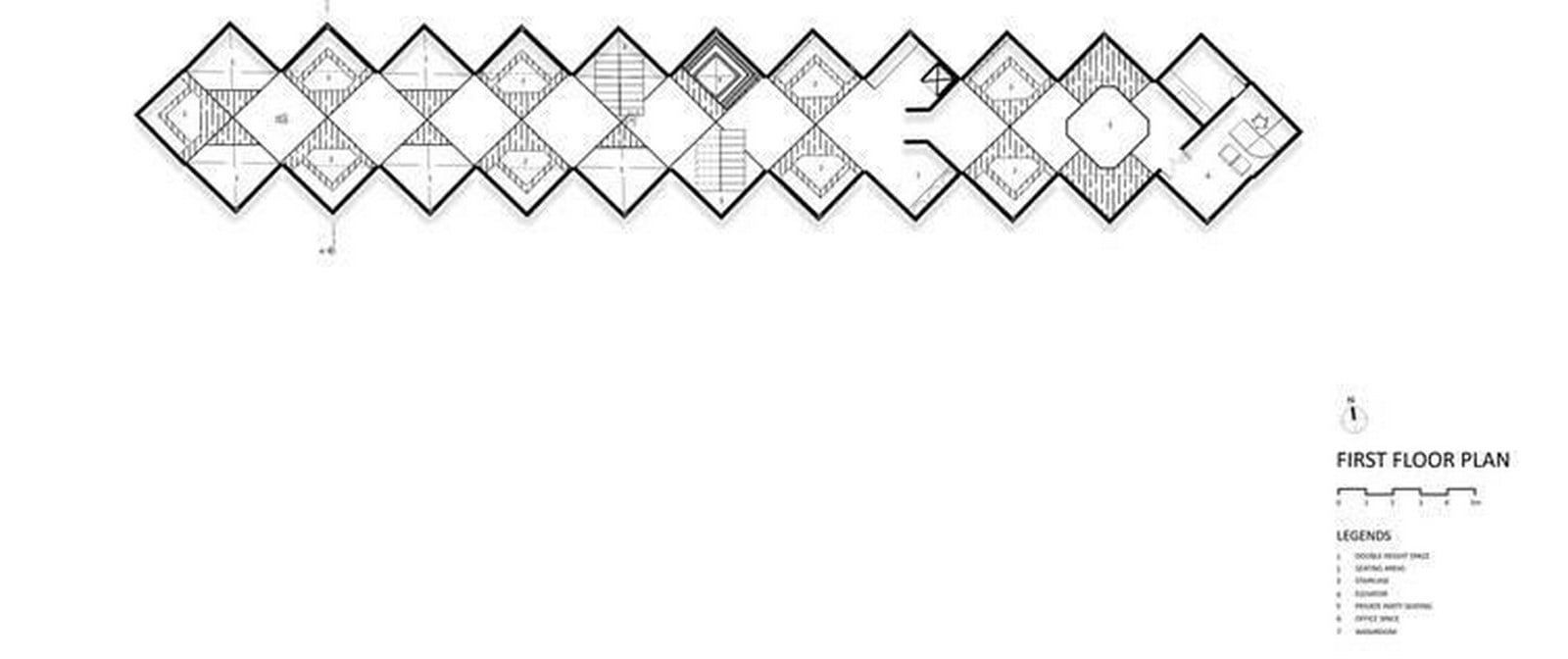
A key innovation lies in the vertical orientation of the containers. Typically placed horizontally, containers offer limited ceiling heights. By setting them upright, the Petti Restaurant achieves generous volumes, enhancing comfort and spatial quality. This decision also introduces a rhythmic verticality that defines both the exterior and interior character of the building.
The staggered arrangement of containers further enriches the spatial experience. It creates pockets of shade, improves airflow, and breaks the monotony of the linear plan. Within the Petti Restaurant, movement becomes experiential; guests transition through varying scales, light conditions, and degrees of privacy.
Material Expression: Steel and Poured Earth
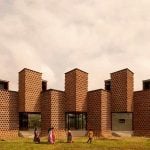
Perhaps the most defining feature of the Petti restaurant is its material composition. The juxtaposition of steel containers and poured earth creates a dialogue between two contrasting worlds: industrial precision and natural tactility. This combination is not merely aesthetic; it is deeply functional.
The outer layer of poured earth acts as a thermal buffer, reducing heat gain in a region characterised by high temperatures. The façade is sculpted into a recessed pattern, allowing air to circulate while shading the steel beneath. This passive strategy significantly reduces reliance on mechanical cooling systems, demonstrating how the Petti Restaurant integrates sustainability at a fundamental level.
Inside, the rawness of steel is softened by timber elements and oxide flooring. The materials are left largely exposed, allowing users to experience their textures and imperfections. This honesty in material expression gives the Petti Restaurant its unique identity, one that is both rugged and refined.
Climate Responsiveness and Passive Cooling
In a hot and humid climate, the success of the Petti Restaurant depends largely on its ability to manage heat and airflow. The building employs a range of passive design strategies that work together to create a comfortable indoor environment.
The staggered containers allow for cross-ventilation, enabling air to flow naturally through the structure. South-facing surfaces are treated as solid masses, minimising direct solar exposure, while elevated volumes facilitate the movement of warm air. The earthen façade, with its recessed pattern, further enhances shading and cooling.
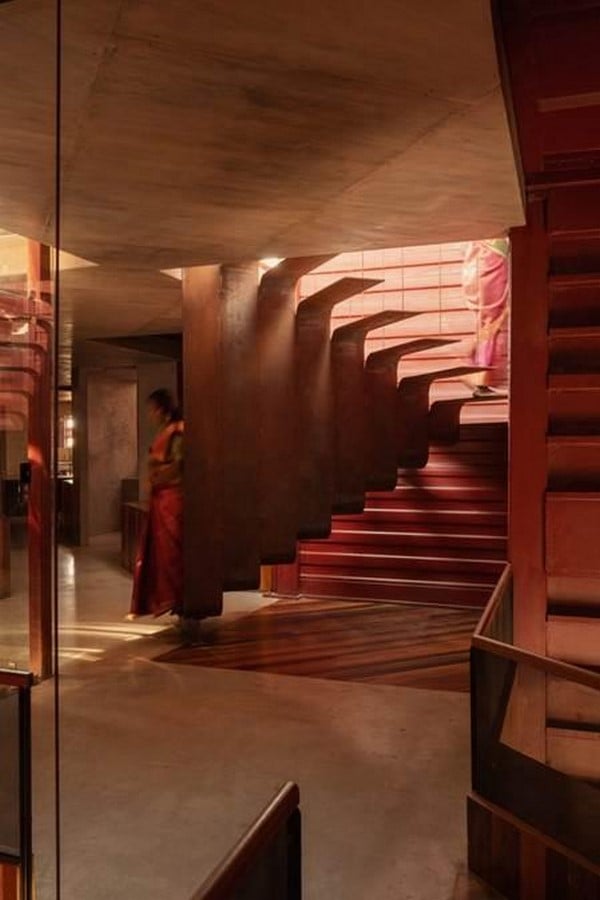
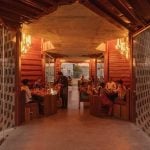
Light plays an equally important role. Skylights bring in natural daylight, reducing the need for artificial lighting during the day. In the evening, custom-designed chandeliers crafted from reused materials create a warm and inviting ambience. Through these strategies, the Petti Restaurant becomes a responsive system, adapting to its environment rather than resisting it.
Interior Experience: A Sequence of Intimate Spaces
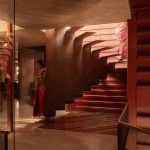
Despite its industrial origins, the interior of the Petti Restaurant feels intimate and human-scaled. Each seating area is designed as a niche, offering privacy while maintaining visual connections across the space. This balance between enclosure and openness creates a dynamic dining experience.
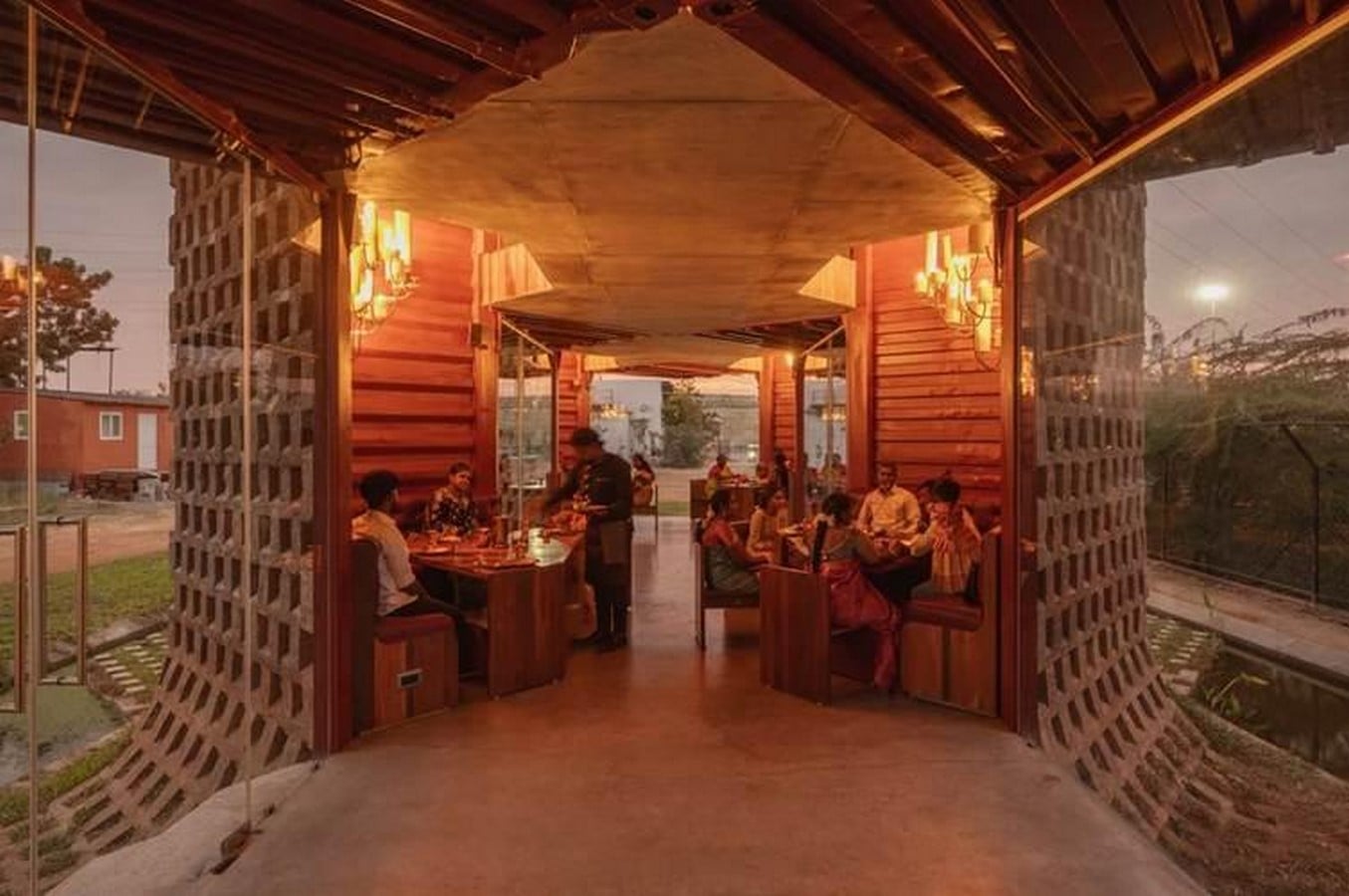
The use of skylights ensures that each zone receives natural light, which shifts throughout the day, adding a temporal dimension to the space. As evening falls, the lighting transforms the atmosphere, highlighting textures and creating a sense of warmth.
The interiors reveal the structure of the building: steel frames, timber surfaces, and earthen walls coexist without concealment. This legibility allows users to understand how the building is made, reinforcing the conceptual clarity of the Petti Restaurant.
Construction and Modularity
The construction of the Petti Restaurant reflects the efficiency of modular design. Twelve containers were cut, transported, and assembled on-site within a week, forming the primary structural framework. These were then welded together and connected with reinforced concrete slabs to create a cohesive system.
This rapid construction process highlights the potential of modular architecture in reducing time, cost, and waste. The Petti Restaurant demonstrates that prefabrication, when combined with thoughtful design, can produce buildings that are both efficient and expressive.
A Quiet but Radical Proposition
The Petti Restaurant does not attempt to be iconic in the conventional sense, yet it leaves a lasting impression that is difficult to ignore. It challenges the idea that sustainability must be technologically complex or visually extravagant. Instead, it suggests that true innovation lies in rethinking what we already have.
Experiencing the Petti Restaurant is not just about occupying a space; it is about understanding a process. The containers, the earth, the light, and the air all work together to tell a story of transformation. It is a building that invites reflection, asking why discarded materials cannot become the foundation of meaningful architecture.
In a world where construction continues to generate excess, the Petti Restaurant offers a different narrative, one that is grounded, pragmatic, and quietly radical. It does not claim to solve all problems, but it does something perhaps more important: it shifts the conversation. And in doing so, it reminds us that architecture, at its core, is not about creating more but about creating responsibly.
References:
Wallmakers (2022). Petti Restaurant. [online]. Available at: https://www.wallmakers.org/petti-restaurant [Accessed: 6 May 2026].
Wallmakers (2022). About Us – Philosophy and Practice. [online]. Available at: https://www.wallmakers.org/about [Accessed: 9 May 2026].
Wallmakers Intern (2022). Site observations and construction documentation, Petti Restaurant, Thoothukudi. Wallmakers, Thiruvananthapuram.