Every day, people move through buildings, sit in public spaces, and navigate cities shaped by deliberate design decisions. Yet very few pause to question why a space feels the way it does. Few ask who made those choices or what those choices reflect about society. This gap between the consumers (the general public) and the existing art and architecture is what design journalists have always tried to bridge. With advancing technology, art and architecture have become even more precise and complex. This makes the design journalist’s role even more critical for today’s society. Design journalism sits at the intersection of culture, civic life, and professional accountability. In these rapidly evolving times, the industry needs it more than ever.

The Origin and Role of Design Journalists
The roots of design journalism can be traced back to the 18th and 19th centuries. It was a time when growing urbanisation first created the need for informed public discourse on the built environment. Early print publications became the primary tool for keeping the public aware of current affairs, development plans, and policies. Publications such as The Builder, established in Britain in 1843, and the American Architectural Record, which began publishing in 1891, gave architects, critics, and engineers a shared platform for debate. These early publications paved the path for critics and journalists working full-time to keep the public informed about the changes taking place in their built environment (Rethinking The Future, 2023).
With the foundation being set, the 20th century produced one of the most formidable figures in design criticism. Ada Louise Huxtable became the world’s first full-time architecture critic at the New York Times. Her work demonstrated that writing could hold real civic power. Following the demolition of New York’s Penn Station in the 1960s, Huxtable became a vocal advocate for the American preservation movement. Her efforts proved that journalism had the power to galvanise people for the right causes. This included heritage preservation and the creation of policies to safeguard architecture (Fisher, 2011).

Other design journalists who contributed to raising awareness and using their work for the improvement of infrastructure and architecture include Esther McCoy, Lewis Mumford, Michael Kimmelman, Alexandra Lange, Jane Jacobs, Paul Goldberger, and Inga Saffron. In his lecture at the Cleveland Museum of Art in 2010, Paul Goldberger argued that architecture matters precisely because it is inescapable. Unlike other forms of art and literature that you can choose to indulge in (literature, movies, sculptures, etc.), architecture makes up our built environment, and people cannot choose whether or not to experience it (Goldberger, 2024). This inescapability is the very reason design journalism is important. Its main purpose is to give people the language and critical tools to understand what exists around them and why.
Bridging the Gap Between Experts and the Public
A primary role of design journalists is to bridge the gap between the experts and the public. Architecture is a discipline that is very dense in terms of technical vocabulary, which is generally inaccessible to the public. Thus, design journalists become the translators for the public and intermediaries in conveying their views to the experts. A mutual collaboration between the public and the planners can only be possible if both are informed about what they need and how they would accomplish it. This falls as the job of design journalists as they identify these gaps and bridge them through their informative writing.

Alexandra Lange was awarded the Pulitzer Prize for Criticism in 2025. She has described this work as producing a new wave of “citizen critics” – readers equipped with the desire and vocabulary to engage with the city around them. Her book Writing About Architecture frames criticism as a democratic exercise. The more people understand design, the more meaningfully they can participate in decisions that affect their lives. This is particularly relevant in urban planning and civic architecture. Public engagement in these areas often fails simply because communities lack a shared language for discussing space (Pps.org, 2026).
Differentiating Visual Culture and Critical Culture
In this age of social media, platforms like Instagram and Pinterest have made it extremely easy for anyone with a phone to have unlimited access to design imagery. Now, people consume these images, engaging daily with architectural photography, interior aesthetics, and urban photography. However, this development has created a visual design culture where the focus is more on visual aesthetics rather than functionality or suitability of the proposed design. This is prominently different from a critical design culture, which focuses on all the elements that make a design best for its proposed site or purpose.
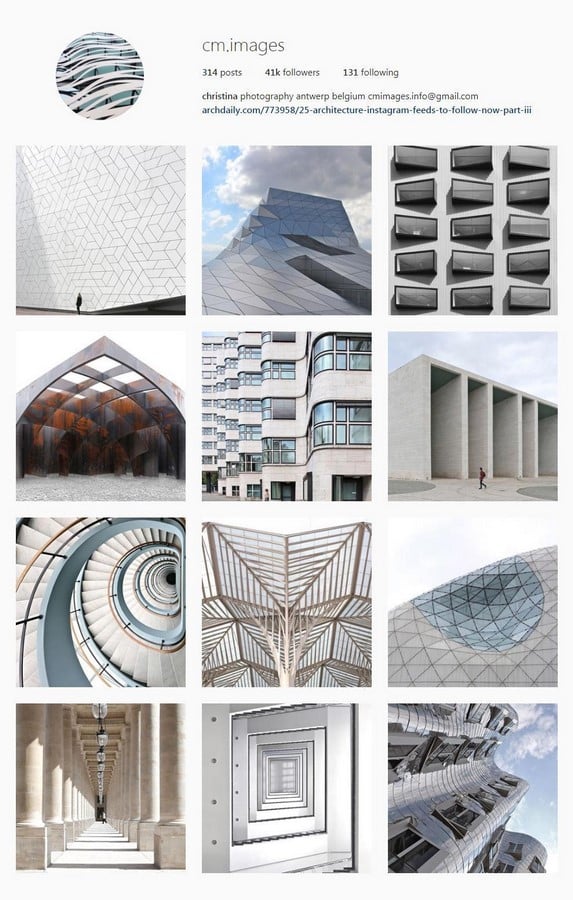
Lately, the relationship between critics and architects has also shifted due to the rise in visual culture. Many critics are reduced to just observers in this age of social media, promoting only the most visually appealing projects instead of understanding the essence behind them. The algorithmic logic of social platforms also rewards the visually arresting over the intellectually sound projects. A striking photograph of a building generates far more engagement than a detailed essay interrogating its structural logic, material choices, or its relationship to the site (Ferrando, 2014). Design journalism is the first draft of design history – the journalism, criticism, and discussion happening today will become the archive that future designers and historians can rely upon. A culture that consumes design imagery without critical analysis produces no such archive. It leaves behind only aesthetics, stripped of meaning (Fuller, 2022).
Industry Accountability
Another significant role of design journalists is to hold the industry accountable for design decisions and planning policies. Architecture and urban development involve significant public investment, complex political relationships, and consequences that last for generations. Without critical journalism, these processes are largely invisible to the public. Thus, design journalists exist not only to make the public aware of these decisions but also to evaluate the consequences and keep the experts informed. An example of this responsibility to hold the industry accountable can be seen through Ada Louise Huxtable’s critical piece on the demolition of Penn Station.
Huxtable shed light on the demolition of Penn Station, describing it as a vision of Rome dying as it yielded to Modernity. Her article held the industry accountable for not protecting landmarks from demolition in favour of modern construction. She argued that a city ultimately gets what it admires, will pay for, and deserves. Huxtable also stated that civilisations are judged not by the monuments they build but by those they destroy. She approached the case as a journalist and wrote to make the public aware of not just the architectural loss of Penn Station, but also labelled it as a moral failure for an entire city (Huxtable, 1966). Her sustained campaign contributed directly to the creation of New York City’s Landmarks Preservation Commission in 1965 so that no other heritage building would suffer a similar fate.

The New Wave of Design Journalists
With print media being replaced by social media, a new wave of design journalists has risen to play its role in the art and architecture community. Digital platforms have democratised access to publishing, allowing independent voices to reach global audiences without the backing of large media institutions. Publications such as Dezeen, Places Journal, and Metropolis have offered design journalists online platforms to continue playing their vital role as informers, translators, and intermediaries between the public and the experts. These platforms have maintained a commitment to serious design criticism in the digital era, while independent newsletters and podcasts have opened the field to new voices from previously underrepresented backgrounds.
In conclusion, the built environment surrounds everyone, yet very few understand it. Design journalism is the discipline that changes this – translating the language of architecture and design into the language of civic life, holding the industry accountable, and ensuring that the decisions shaping our cities and communities are accessible to informed public scrutiny. In an era of social media spectacle, declining critical media, and accelerating urban complexity, the design journalist is a necessity for both the public and the industry.
References:
Aitamurto, T., Borges-Rey, E. and Diakopoulos, N. (2023). The Future of Design + Journalism: A Manifesto for Bridging Digital Journalism and Design. Digital journalism, 11(3), pp.399–410. doi:https://doi.org/10.1080/21670811.2023.2185649.
Editors of Metropolis (2022). What Is the State of Design Criticism? [online] Metropolis. Available at: https://metropolismag.com/viewpoints/what-is-the-state-of-design-criticism/.
Ferrando, D.T. (2014). Architecture Criticism in the Age of Social Networks: Preliminary Thoughts on how Web and Social Media can Change Critical Practice for the Better. [online] In Critic|all I International Conference on Architectural Design & Criticism. Madrid 12-14 June 2014. Digital Proceedings. Available at: https://www.academia.edu/8967790/Architecture_Criticism_in_the_Age_of_Social_Networks_Preliminary_Thoughts_on_how_Web_and_Social_Media_can_Change_Critical_Practice_for_the_Better [Accessed 10 May 2026].
Fisher, T. (2011). The Death and Life of Great Architecture Criticism. Places Journal, (2011). doi:https://doi.org/10.22269/111201.
Fuller, J. (2022). Design Journalism is the First Draft of Design History | Blog—Jarrett Fuller. [online] Jarrettfuller.blog. Available at: https://www.jarrettfuller.blog/2022/03/design-journalism/ [Accessed 10 May 2026].
Goldberger, P. (2024). Why Architecture Matters. [online] Paulgoldberger.com. Available at: https://paulgoldberger.com/lectures/why-architecture-matters/.
Huxtable, A.L. (1966). A Vision of Rome Dies; Shorn of Its Proud Eagles, Last Facade Of Penn Station Yielding to Modernity A Vision of Rome Dies. [online] Nytimes.com. Available at: https://www.nytimes.com/1966/07/14/archives/a-vision-of-rome-dies-shorn-of-its-proud-eagles-last-facade-of-penn.html [Accessed 10 May 2026].
Pps.org. (2026). Talking About ‘Writing About Architecture’: A Conversation With Alexandra Lange. [online] Available at: https://www.pps.org/article/talking-about-writing-about-architecture-a-conversation-with-alexandra-lange [Accessed 10 May 2026].
Rethinking The Future (2023). The history of architecture journalism and its evolution in the digital age. [online] RTF | Rethinking The Future. Available at: https://www.re-thinkingthefuture.com/architectural-community/the-history-of-architecture-journalism-and-its-evolution-in-the-digital-age/ [Accessed 10 May 2026].
The Editors (2018). How has the internet changed architecture criticism? [online] The Architect’s Newspaper. Available at: https://www.archpaper.com/2018/05/internet-changed-architecture-criticism/ [Accessed 10 May 2026].