In this age of digital technology and social media, attention spans have become limited and even fragmented. Accustomed to scrolling through screens of colourful content, the younger generations are gradually losing the ability to focus and stay present in the physical environment. While social media plays a significant role in making the world smaller and more accessible, it also limits the value of experiencing architecture in the present moment. Thus, designing for the short attention spans of modern society requires a different approach than conventional design practices. Even in the world outside of social media, a persistent competition exists to hold the viewers’ attention and keep them engaged.

Attention-based design is the practice of designing consciously, harnessing the viewers’ attention through multiple design features and principles. This design practice aims to create visual experiences that are attractive and easily interpretable, encouraging the audience to pay attention to the design through colour, sound, texture, and light. By engaging the users through their five senses, these consciously designed places leave a lasting impact and provide a memorable experience. Some ways to achieve attention-based design are through cohesion in design, guiding movement through axes and focal points, and designing according to the Attention Restoration Theory.
Cohesion in Design
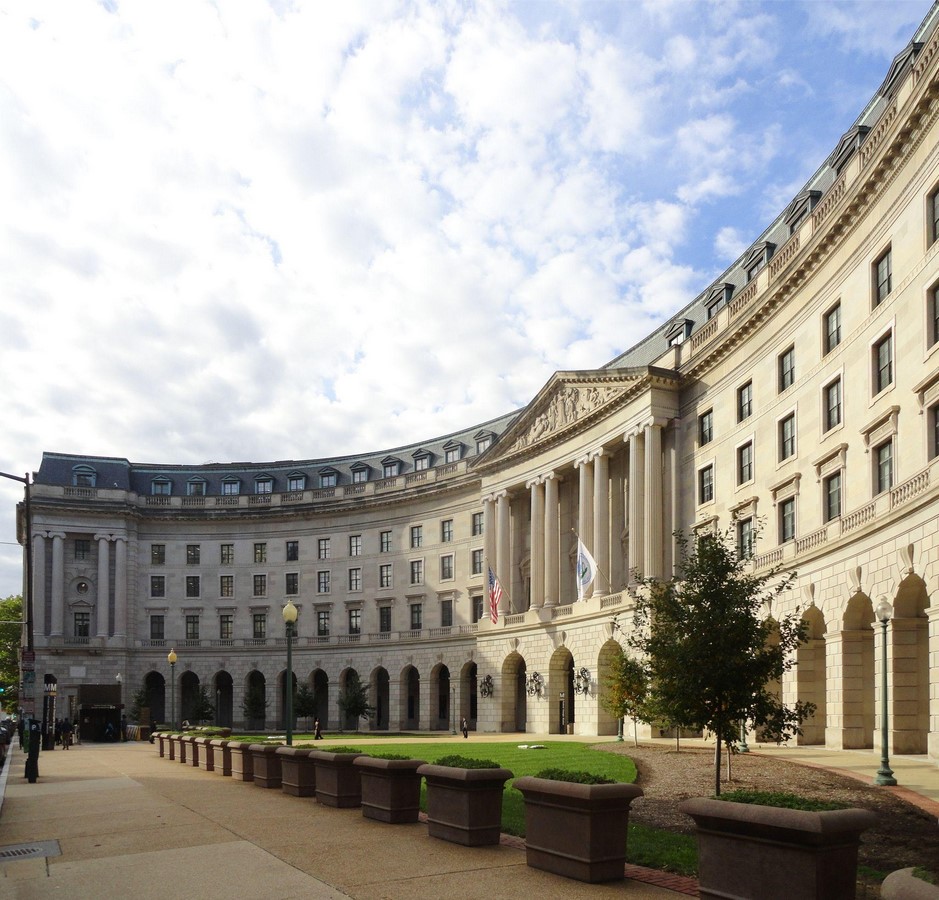
Cohesion refers to the overall organisation of your design elements that projects a complete, proportionate visual output. This cohesion can be achieved through the design principles of repetition and symmetry. When a specific element, such as an arch, is repeated throughout the design, it becomes easier to register in the minds of the viewers. Hence, they can easily understand the space as a repetition of that specific design element. This generates a feature-based attention. For example, the main entrance facade of the William Jefferson Clinton Federal building features a repetition of arches at the ground level and openings in the upper levels. Design elements such as columns are also repeated in a rhythmic pattern. According to a study tracking eye movement in public architecture, this facade created intense “hotspots” of attention due to its traditional elements and details (Ro and Huffman, 2024).
Another way of achieving cohesion in design is through symmetry. A symmetrical design is easy to perceive, as it appears balanced and does not create visual clutter. Each element is organised and mirrored, enabling the viewer to easily understand the building as a whole. The Philbrook Museum of Art demonstrates this symmetry in its design clearly. A primary axis divides the open garden, and following the same axis, each element of the building and the open space is symmetrical. This symmetry also provokes attention in the users, who observe the major symmetrical spaces and perceive the areas that are not as symmetrical but complement these spaces.

Guiding Movement without Overload
One of the major roles of an architect is to guide the users’ movement through a designed space. In attention-based design, clear sight lines are used so that there is less visual clutter. Axes and focal points also contribute to establishing guided movement through the space. The clearer the path is, the less distracted the user gets while moving through the space. Architect Louis Kahn uses axes and focal points in most of his designs to guide visual and physical movement. A clear example of this is the Salk Institute of Biological Studies. As shown in the image below, Kahn directs the eye movement through the primary axis to the ocean, which serves as a focal point. The added symmetry of the design and minimalist approach automatically guides the user’s attention through the axis. Similarly, the main axis in Philbrook Museum defines its symmetry and guides the eye movement through the gardens to the focal point of a tempietto located in the gardens. Thus, the axes become a significant approach for attention-based design.


Design based on Attention Restoration Theory
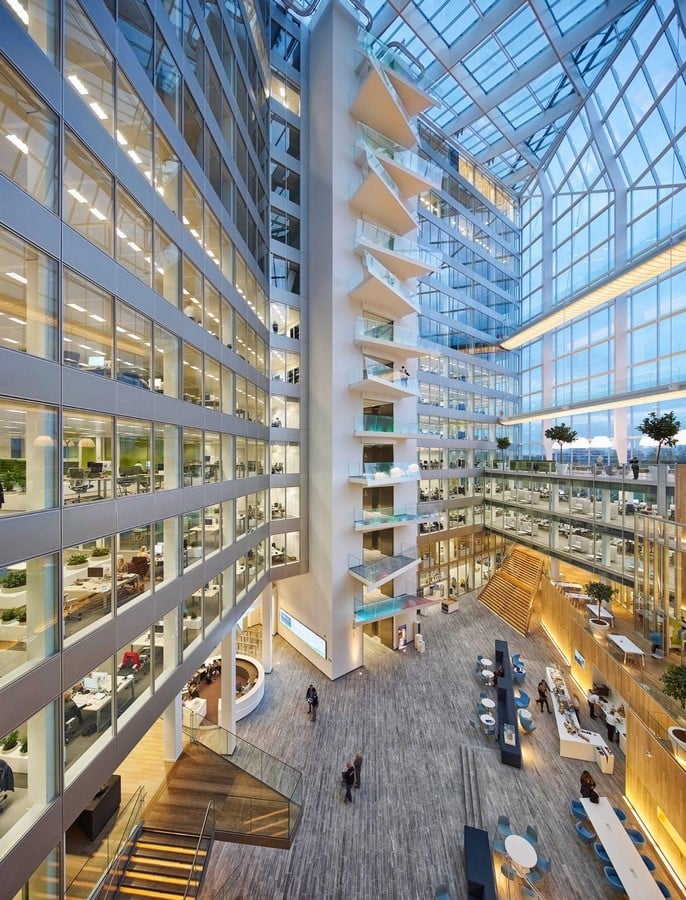
According to the Attention Restoration Theory, an attention-based design should have four core qualities: away zones, extent, compatibility, and soft fascination. If your proposed design features these qualities, attention will be restored in the users despite their short attention spans (Liu et al., 2024). Away zones refer to the areas that take the user away from the visual clutter and distractions. This means creating spaces within the design, such as courtyards, reflective pools, screened work pods, etc., that isolate users from the routine noise. These away zones can immediately create a sense of peace and allow the users of your design to connect with their environment rather than being distracted. Ensuring extent in design refers to creating coherent and continuous visual fields, reducing visual clutter and giving the sense of expansion.
Similarly, compatibility can be achieved in design by matching spatial functions with sensory cues, for example, creating a specific sensory environment for a cafeteria, which differs from that of a working space. This can be easily achieved in interiors through variations in lighting, materiality, and textures. Fascination can be invoked in design through subtle, changing stimuli, such as moving water, dynamic facade screens, layered vegetation, and interactive art. The atrium space in The Edge, Amsterdam, is a perfect example of design based on Attention Restorative Theory, as it serves as the central point around which working spaces are cohesively wrapped. This atrium also provides an away zone and multiple elements of fascination that capture the users’ attention.
Attention-based design has become a necessary guiding practice in the future of architecture. As technology continues to improve and a majority of people get accustomed to viewing the world through a screen, architects must take this necessary step to design for short attention spans. Holding the viewer’s attention through design elements, reduced clutter, open spaces, and guided movements will contribute positively to the overall experience of the designed spaces. In short, designing for attention means establishing clear sight lines, limiting colour and signage to essential cues, and integrating adaptive lighting and facade systems. These principles become twice as effective when tested through the latest systems of EEG, eye tracking, and post-occupancy surveys.
References:
Liu, Y., Zhang, J., Liu, C. and Yang, Y. (2024). A Review of Attention Restoration Theory: Implications for Designing Restorative Environments. Sustainability, [online] 16(9), pp.3639–3639. doi:https://doi.org/10.3390/su16093639.
Luo, J., Liu, L., Abo, D. and Wang, X. (2026). Eye Movements in Architecture and Environmental Design: A Review of Methods, Applications, and Future Directions. Buildings, 16(6), p.1231. doi:https://doi.org/10.3390/buildings16061231.
Ro, B.R. and Huffman, H. (2024). Architectural design, visual attention, and human cognition: exploring responses to federal building styles. Planning Practice & Research, pp.1–40. doi:https://doi.org/10.1080/02697459.2024.2342755.
Thampanichwat, C., Meksrisawat, P., Jinjantarawong, N., Sinnugool, S., Phaibulputhipong, P., Chunhajinda, P. and Bhutdhakomut, B. (2024a). A Systematic Review of Architecture Stimulating Attention through the Six Senses of Humans. Sustainability, [online] 16(15), pp.6371–6371. doi:https://doi.org/10.3390/su16156371.
Thampanichwat, C., Wongvorachan, T., Bunyarittikit, S., Chunhajinda, P., Phaibulputhipong, P. and Wongmahasiri, R. (2024b). The Architectural Design Strategies That Promote Attention to Foster Mindfulness: A Systematic Review, Content Analysis and Meta-Analysis. Buildings, 14(8), pp.2508–2508. doi:https://doi.org/10.3390/buildings14082508.