In the 20th century, the concepts of Net Zero and sustainability played a significant role in various sectors of society. Right from the innovation of materials to the technology that would help us achieve our goal with reduced carbon emissions. Keeping this in mind, let’s focus on a topic that is gaining attention worldwide and is a cause of concern: the illegal trafficking of cultural artifacts, which is identified as the third-largest international criminal trade. Cultural artifacts are crucial non-renewable energy resources. And believe me or not once a site is looted or important artifacts is lost from private collection an important part of history is erased and becomes unavailable for future generation Within the framework of sustainable cultural tourism rather than catching the thieves it is important to create sustainable ecosystem and with use of technology as an important tool which would make it difficult to steal or sell stolen goods.

The sustainability crisis: heritage as a capital
For any cultural tourism site to be truly sustainable, it is crucial to protect its socio-cultural assets—especially artifacts. In countries like India, where heritage significantly contributes to economic development, trafficking can cause a range of damages. It results in economic losses and deprives local communities of culturally or historically significant objects that attract visitors and support livelihoods. Moreover, trafficking can fund organized crime and create regional imbalances, making tourism less safe. By recognizing heritage protection as integral to SDG 11.4 (Safeguarding Heritage) and SDG 16.4 (Recovery of Stolen Assets), the international community affirms that cultural preservation is vital for global peace and economic resilience.

Global Mandate: Aligning the policies with preservation
The United Nations has tackled the illegal trafficking of cultural artifacts by developing frameworks for heritage protection as part of its global security and sustainable development goals. UNESCO’s 1970 convention classifies the looting and trafficking of cultural property as crimes, recognizing that such acts deprive people and communities of their history and culture. This loss often leads to organized crime and can finance terrorism. Therefore, it is important to understand that the responsibility to deal with illicit trafficking and safeguard cultural heritage is a shared effort.
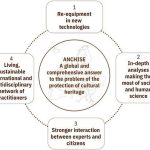
Over time, digital platforms developed with support from technology companies play an important role in mitigating risk and limiting the use of online channels for illegal trafficking. Digital tools have already reduced crime rates, with ongoing collaboration among organizations and various stakeholders such as researchers, authorities, tech companies and professionals like experts from museums and cultural heritage protectors. One such notable initiative is ANCHISE, a European project leveraging cutting-edge technology to address the challenges of illegal trafficking. In this context, the fight against trafficking is a strategic investment in the socio-economic resilience of nations rich in heritage. Apart from ANCHISE, other funded initiatives such as AURORA, ENIGMA, RITHMS, and ARTDETECT actively work on developing new tools which would help to identify goods and detect trafficking.
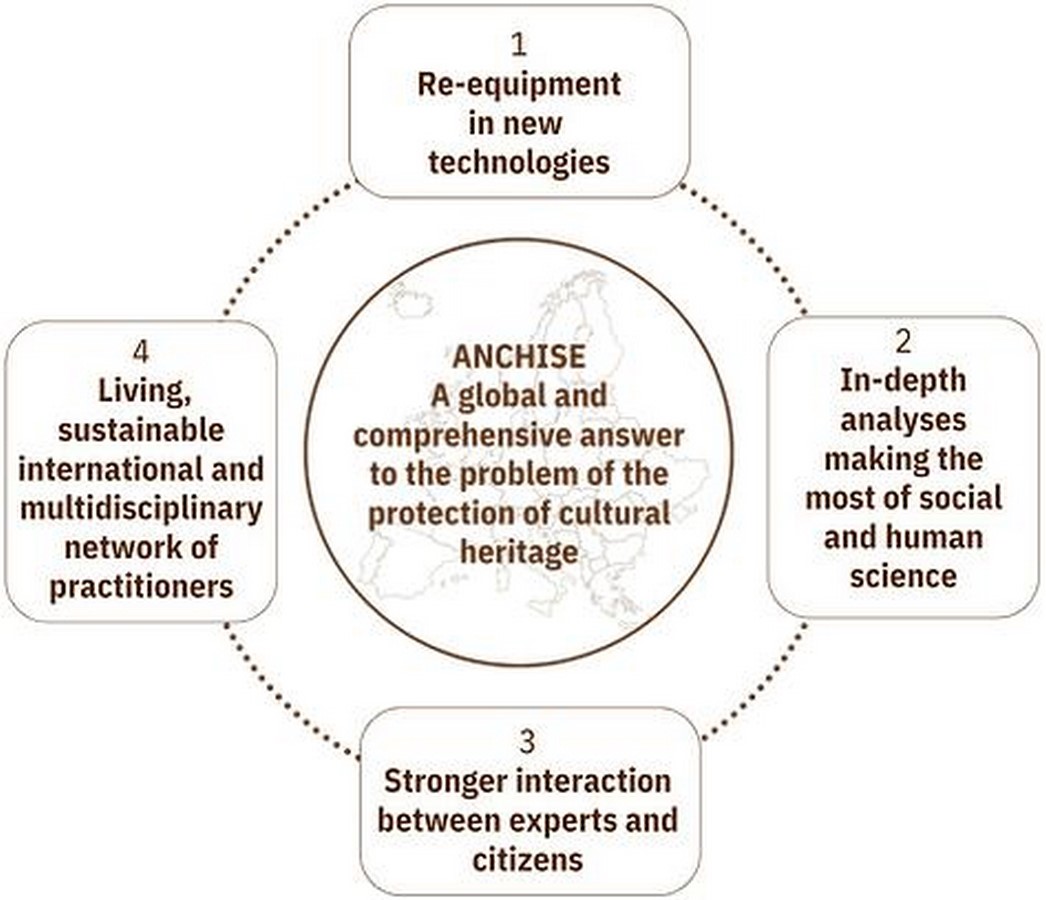
Illegal trafficking occurs on a large scale for several reasons, including a lack of knowledge and awareness among local communities about the value of cultural artifacts. As a result, these artifacts are often purchased for very low prices and then resold at much higher rates in global markets. Additionally, many artifacts stolen decades ago were not properly documented and are now irretrievable. Consequently, there is a growing effort to include and train cross-border authorities.
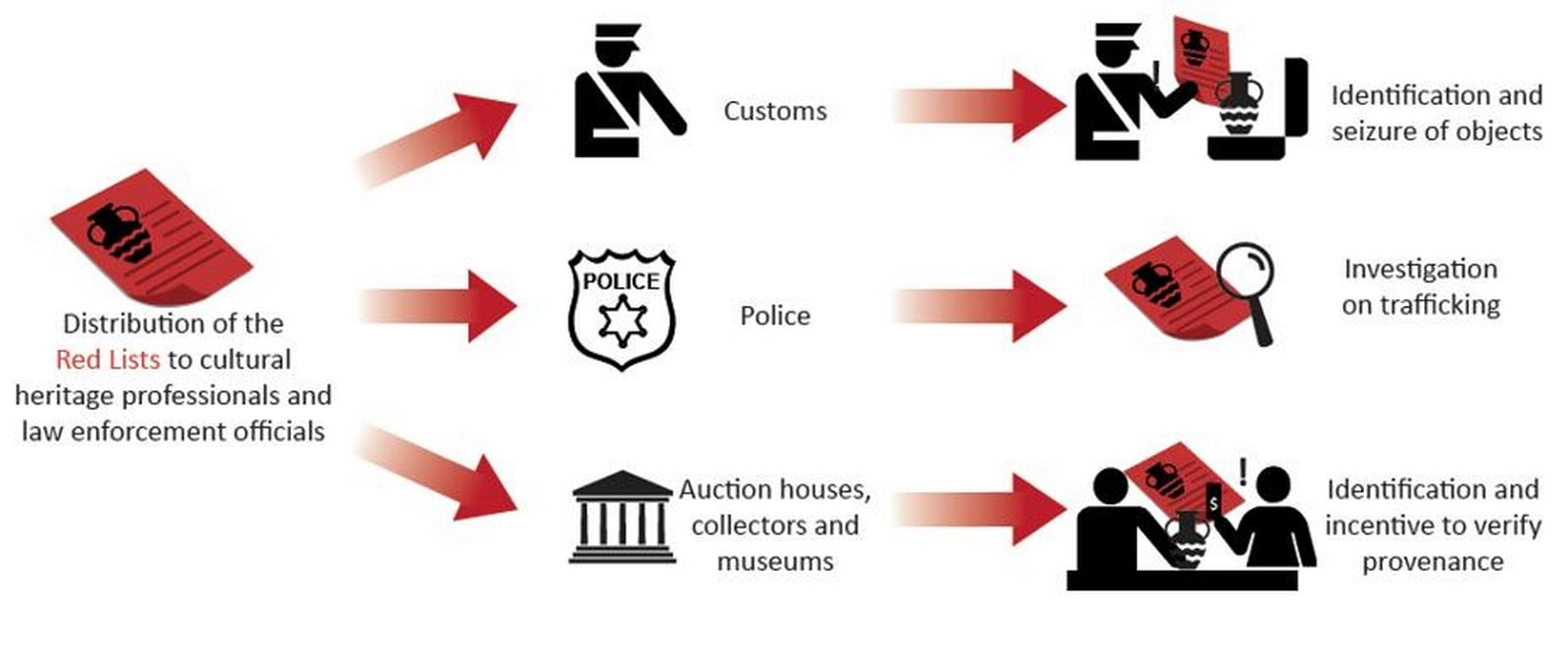
Technology used for Detecting, identification and characterization of cultural goods
Satellite Archaeology and AI: In remote areas, where physical patrols are not always a feasible option, especially in conflict zones or during crises, AI satellites help authorities to monitor landscapes for any looting pits, which are the excavations left behind by illegal excavators and act as an important proof. Projects like GlobalXplorer use this technology to alert authorities as soon as a site is hampered. This not only helps to track trafficker but helps prevent mishandling of artifacts during illegal excavation.
Blockchain and Digital Passports: Tampering with ownership of artifacts is a crucial reason behind illegal trafficking of cultural artifacts. Therefore, it is crucial to record an artifact’s journey on a blockchain. It is important technologies develop to record ownership which cannot be changed later. This creates a “Digital Passport” that makes it very difficult for stolen items to enter legitimate auction houses. It also helps officials and authorities to keep track of ownership of cultural artifacts both online and offline.
Forensic Fingerprinting: High-resolution 3D scanning captures microscopic surface imperfections, creating a unique “fingerprint” for each and every artifact. Even if a statue is broken or cleaned these scans are stored in databases like INTERPOL’s Stolen Works of Art Database which act as proof of origin.
Web Crawlers and Data Analytics Platforms: These tools support monitoring online marketplaces, which are growing hubs for trafficking activities. These platforms use an online database to track any suspension activity on online marketplace and relevant information is transferred to authorities.
Robots and Drones: Drones and robots are being developed to increase surveillance of archaeological sites endangered by looting and to identify artifacts and traffic networks.
International Cooperation and Awareness Campaigns: Initiatives like PITCHER and ANCHISE focus on fostering international cooperation and engaging civil society through awareness-raising initiatives.
These technologies are part of a broader effort to protect cultural and historical heritage from illegal trafficking, which is a crucial issue threatening cultural heritage worldwide.
The Indian Context: A Success Story in Progress
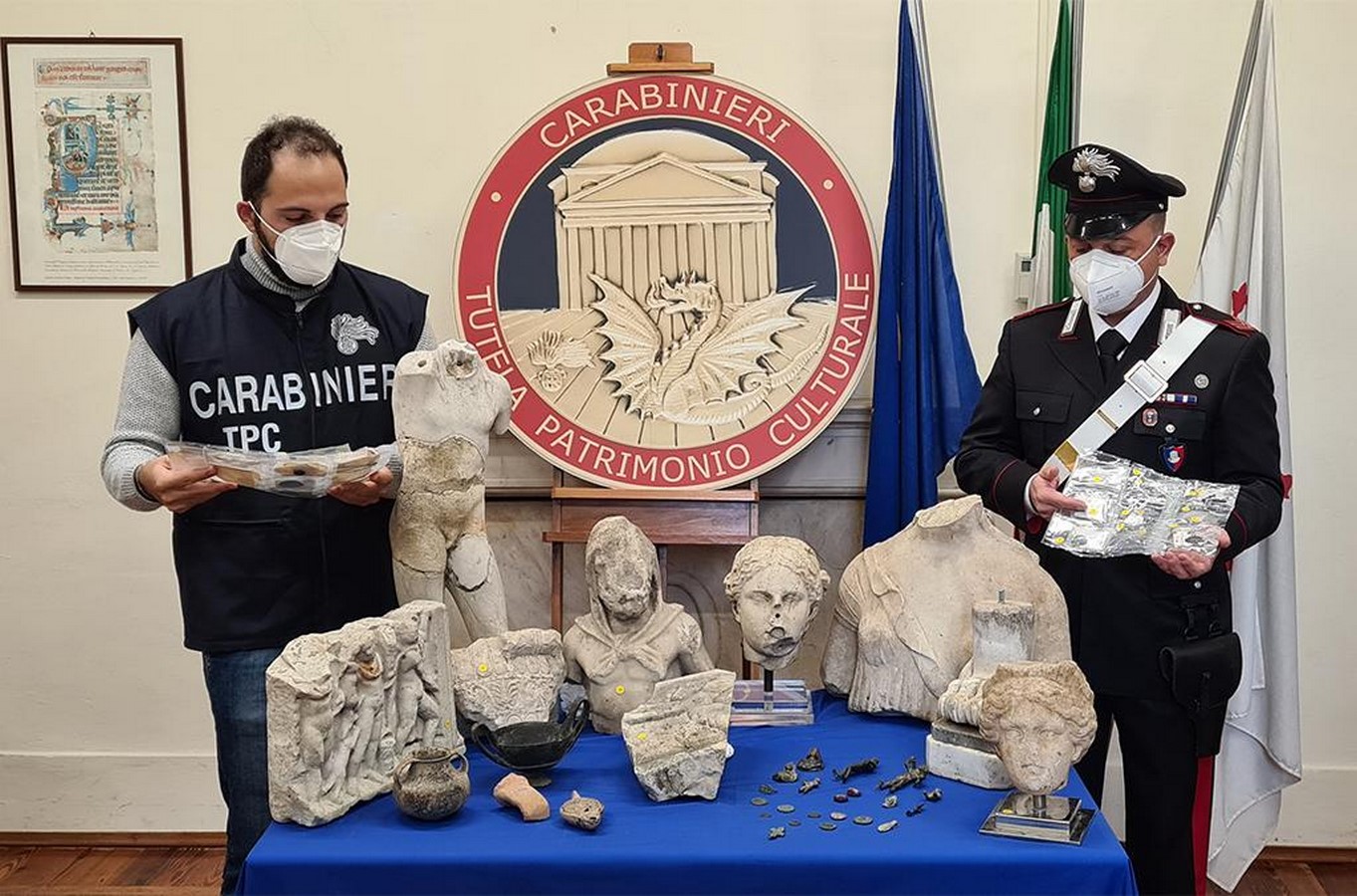
India is currently at the forefront of using technology to reclaim its stolen goods. The National Mission on Monuments and Antiquities (NMMA) has played a crucial role in digitizing over 1.2 million artifacts using the JATAN software, which is also used across various national museums in India, creating a centralized digital shield helping to document all objects and artifacts. This digital inventory played an important role during the recent recovery of 642 antiquities since 2014. Furthermore, the India-US Cultural Property Agreement (2024) has established a technological and legal fast-track for the repatriation of smuggled goods, proving that bilateral tech-sharing is the future of heritage defense.
Awareness
Technology provides the tools, but public awareness offers the shield. Sustainable cultural tourism thrives when tourists and visitors practice due diligence by checking databases or available technology before purchasing antiques. Instead, they should support local artisans rather than the black market. In case of any suspicious item, one should inform the law enforcement authority. Various organizations are working to make these technologies more consumer-friendly for communities. Local communities should act as the first line of defense, followed by official authorities such as border forces; therefore, educating them plays an important role. By transforming every tourist into a digital sentinel and every local community into a stakeholder, we ensure that our shared history remains where it belongs—in the hands of the people, protected for the future.
Reference List:
Harvard International Law Journal. (2025). Illicit Trafficking of Cultural Goods: An Indian Perspective on the Loss of a Heritage. [online] Available at: https://journals.law.harvard.edu/ilj/2025/04/illicit-trafficking-of-cultural-goods-an-indian-perspective-on-the-loss-of-a-heritage/.
Migration and Home Affairs. (2024). Innovation – a key factor in protecting our cultural heritage from crime and destruction. [online] Available at: https://home-affairs.ec.europa.eu/news/innovation-key-factor-protecting-our-cultural-heritage-crime-and-destruction-2024-12-13_en [Accessed 8 Mar. 2026].
michaelculture (2024). FACTSHEET: Innovative strategies to tackle the trafficking of cultural goods. [online] ANCHISE. Available at: https://www.anchise.eu/post/factsheet-innovative-strategies-to-tackle-the-trafficking-of-cultural-goods [Accessed 8 Mar. 2026].
UN News. (2025). Stolen Past: Inside the fight against illicit antiquities trafficking. [online] Available at: https://news.un.org/en/story/2025/11/1166368.
Unesco.org. (2021). Fight Illicit Trafficking (1970 Convention). [online] Available at: https://www.unesco.org/en/fight-illicit-trafficking?hub=416.
Ijlra.com. (2020). INTERNATIONAL JOURNAL FOR LEGAL RESEARCH AND ANALYSIS. [online] Available at: https://www.ijlra.com/details/protection-of-cultural-heritage-sites-and-artifacts-under-the-indian-antiquities-act-by-dr-madhura-kalamkar [Accessed 8 Mar. 2026].
Image List:
goods (2024). CERIS – Innovation against trafficking of cultural goods. [online] ENIGMA EU. Available at: https://eu-enigma.eu/2024/12/05/ceris-innovation-against-trafficking-of-cultural-goods/ [Accessed 8 Mar. 2026].
Unesco.org. (2026). Available at: https://www.unesco.org/sites/default/files/styles/banner_desktop/public/2025-11/%C2%A9%20Gorodenkoff%20-%20Shutterstock.com_.jpg.webp?itok=mdqzmvPz [Accessed 8 Mar. 2026].
International Council of Museums. (n.d.). 1970-2020: ICOM’s key role in 50 years of fighting illicit trafficking of cultural goods. [online] Available at: https://icom.museum/en/news/1970-2020-icom-fighting-illicit-trafficking/.
The Archaeologist. (2023). A Corinthian Helmet from the Battle of Marathon Found with the Warrior’s Skull Inside? [online] Available at: https://www.thearchaeologist.org/blog/a-corinthian-helmet-from-the-battle-of-marathon-found-with-the-warriors-skull-inside.
www.interpol.int. (n.d.). 52 arrests in operation across 28 countries targeting trafficking in cultural goods. [online] Available at: https://www.interpol.int/en/News-and-Events/News/2022/52-arrests-in-operation-across-28-countries-targeting-trafficking-in-cultural-goods.