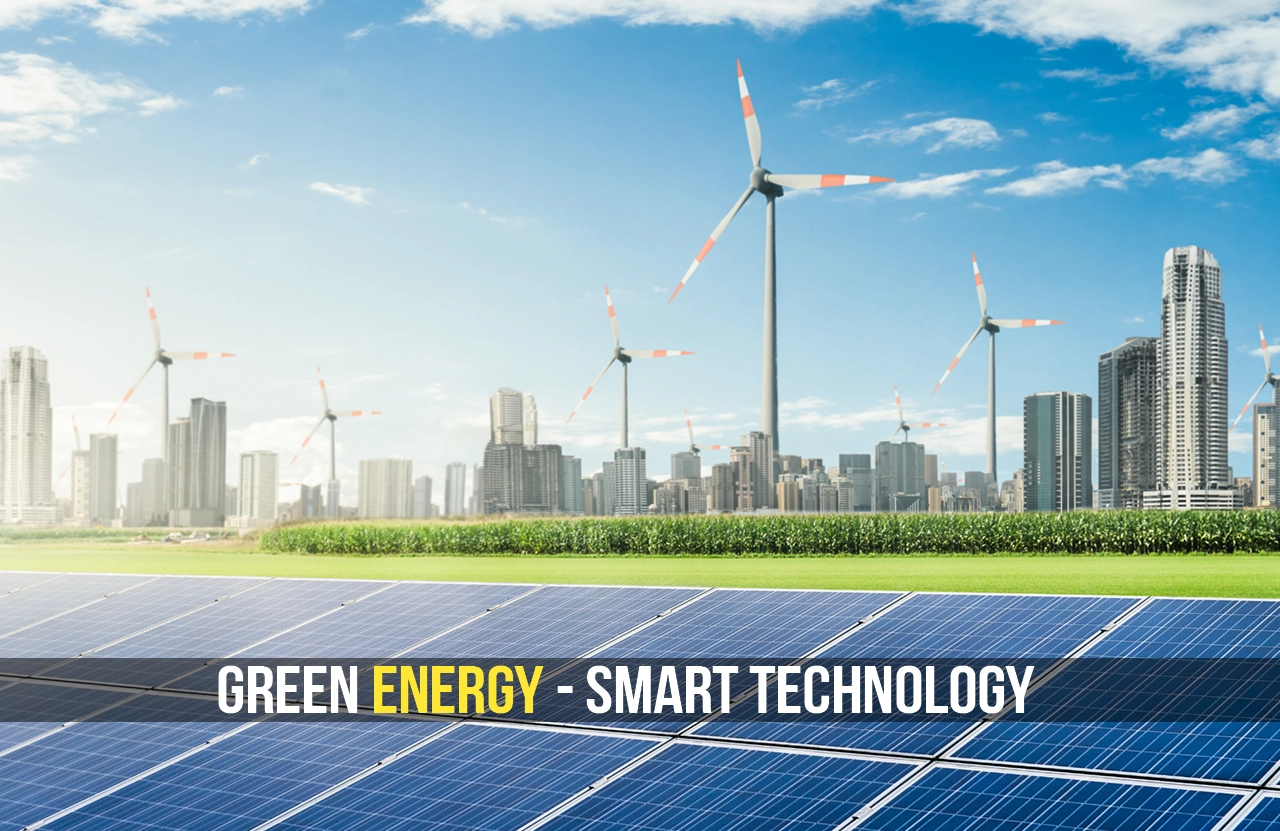
Sustainable development will require the effective integration of green energy systems. Relying only on natural resources for energy generation is not where it stops. Along with that, technological advancements are also necessary to optimize the production, storage, flow, and distribution of energy. Across various parts of the world, innovative ideas and solutions are being implemented to achieve this goal, which are discussed in this article.
Hydrogen
Hydrogen becomes a very significant consideration when it comes to alternative sources of conventional energy in order to switch to clean energy while also fulfilling global energy demands. The process of its production classifies it into three different forms, namely **grey hydrogen, blue hydrogen, and green hydrogen**. Grey hydrogen refers to the use of fossil fuels to derive hydrogen, blue hydrogen refers to similar processes along with carbon capture, and green hydrogen refers to a more efficient and cleaner method through electrolysis. Thus, green hydrogen turns out to be an optimal green energy carrier which can further be used in a more flexible manner.
The city of Lancaster has implemented a very systematic and innovative approach wherein surplus electricity from solar panels is used for the generation of hydrogen, which is further utilised for running intercity public transport buses. At the Siemens Energy site in Berlin, they are focusing on building a modular system in order to provide and distribute industrial consumers with an appropriate scale of hydrogen supply. The production of hydrogen holds vital importance even if the infrastructure is just being built now.
Smart Grids
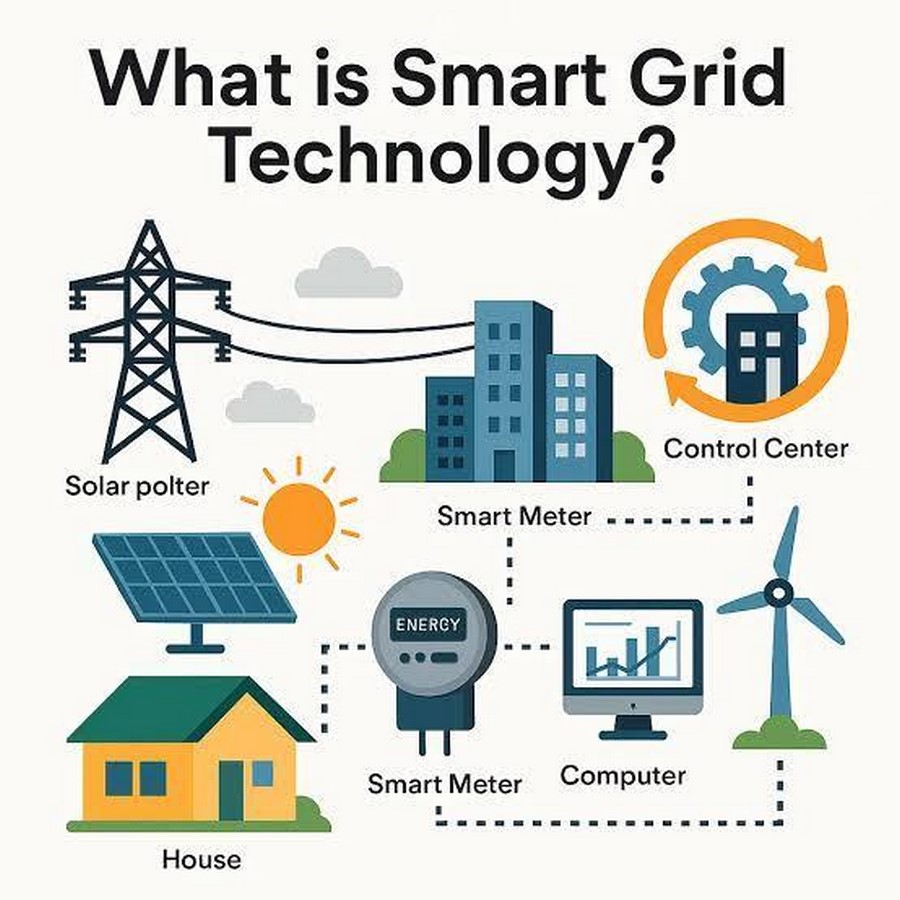
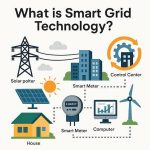
The distribution systems or grids also play a critical role in green energy optimisation. They need to be reliable and stable for a constant and efficient supply to meet requirements. Green power sources might not be evenly distributed across regions. Hence, advanced grid structures—international grids, national grids, or regional grids—become very essential.
A worldwide model can be seen between the United Kingdom and Norway through the North Sea Link system. It acts as a highway between the two countries to transmit their green energy to one another. The UK leads in the production of green energy through offshore wind from the North Sea, while Norway possesses strong hydroelectric production capability. Through this grid, both countries balance their energy supply and thus ensure a reliable and trustworthy green energy infrastructure.
Basically, there is a setup of converter stations that convert direct current to alternating current and vice versa, enabling green energy transmission through subsea links.
At the EnergyLab Nordhavn project in Copenhagen, a brilliant solution has emerged for the best possible utilisation of available energy resources. The buildings here are very well insulated and retain heat, which helps them during the peak hours of the day. Commercial buildings can compress their waste heat and transmit it to the district heating system, which can further distribute it to neighbourhoods in the surroundings. Compressors actually run on electricity to compress the heat. Thus, with a small amount of electricity, a significant amount of energy can be produced. This green energy can be utilised for various purposes, and in this manner, wastage of energy is reduced, and optimal efficiency is achieved.
Recycling
Batteries are obviously very crucial for the storage of energy. However, an important consideration is that they can lead to the depletion of resources, as these batteries are made from special and rare earth minerals. Hence, this calls for technological innovations and research to bring e-waste back into the production cycle through recycling methods for sustainable development. At Nanyang Technological University in Singapore, ongoing research pertains to this direction.
When used batteries are examined closely, a small black substance can be observed, which is the place where actual elements such as silicon, lithium, nickel, etc., are present and need to be extracted. The extracted black powders can be treated with orange peels or bacterial cultures, which help separate these elements. In this way, more than 99% of the elements can be retrieved. Such novel innovations and solutions are very necessary to drive the path of sustainability. Along with switching to alternative energy sources, focus also needs to be laid on the authenticity of sustainable growth and the verification that these methods are truly cleaner and greener. Limits must also be defined regarding how far these technologies can be extended without harming the natural environment.
Creative Designs for Green Energy
In Japan, a very unique idea has been emerging for generating green energy. Streets or road pavements are made with special black tiles attached to springs beneath them. When these tiles are stressed, or the springs are compressed, the mechanism built inside generates electricity. Thus, when people walk on the roads and step on these pavement blocks, the springs underneath are compressed, activating the mechanism and generating electricity.
Innovations such as green hydrogen, smart grids, energy recycling, and creative energy-generating infrastructure demonstrate how urban areas can meet growing energy demands while protecting the environment. Such solutions will play a crucial role in shaping cleaner, efficient, and r
Resilient cities of the future.
References: