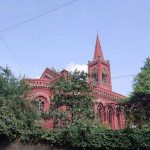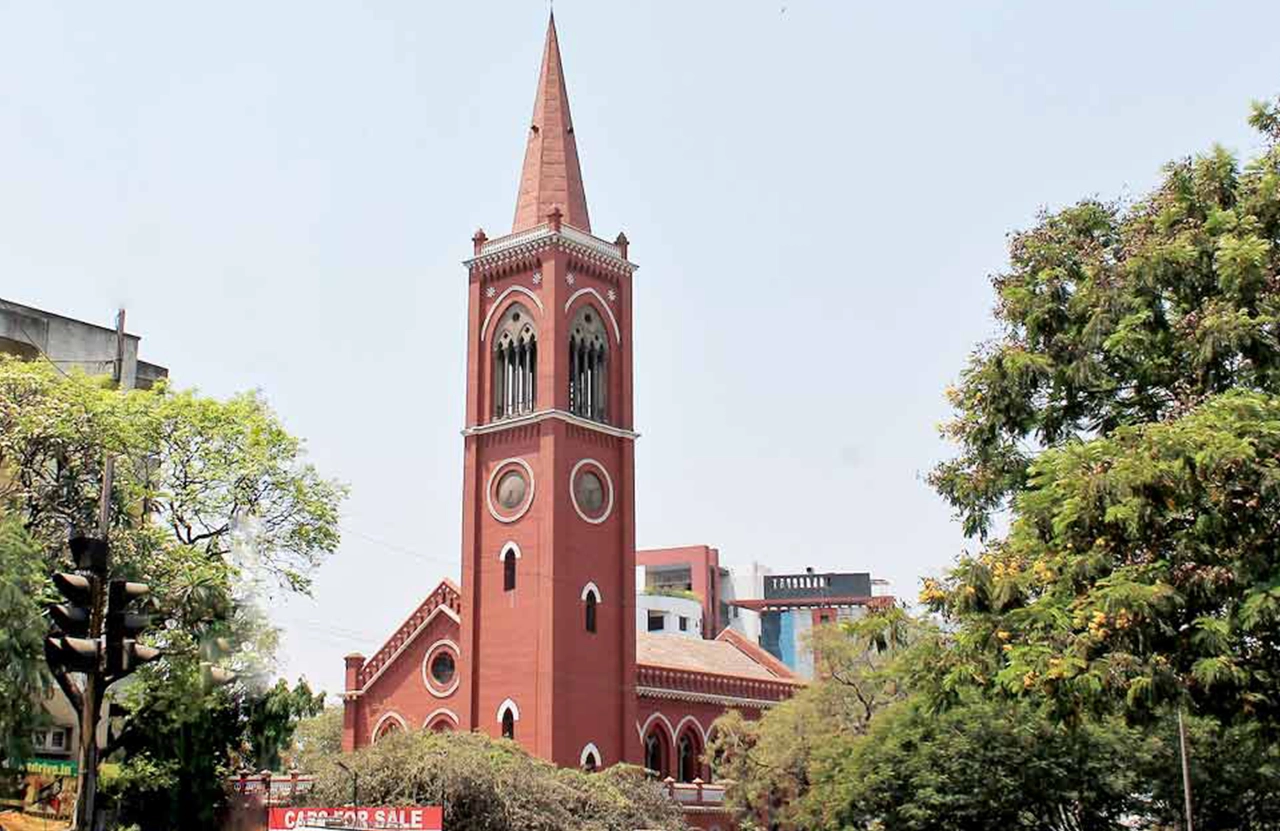
A Gothic masterpiece that stood the test of time in the cultural bastion city of Pune is more than just a spiritual place of worship; this Victorian jewel is a hallmark of colonial heritage. The building was constructed between 1863 and 1867 on Moledina Road, located in the Pune Cantonment (also known as Camp). A military district formed in 1918 to house troops of the British Indian Army is an important architectural landmark and a vital religious identity for the Baghdadi Jewish community in India, as well as one of Asia’s largest synagogues outside Israel. This synagogue is a sacred space used by the Jewish community from all over Maharashtra for prayer and worship. It’s also called Lal Deval in the local language. “Laal” is the Marathi word for “Red,” referring to the bright hue of the building’s external brick. The Marathi term for “temple” is “deul”.
Hence, acts as an important testament to the City’s history of religious diversity and British era architectural, political, and social influence. This study illustrates the ongoing significance of royal heritage, from its roots as a historical political statement to its current function as a cornerstone of cultural tourism.
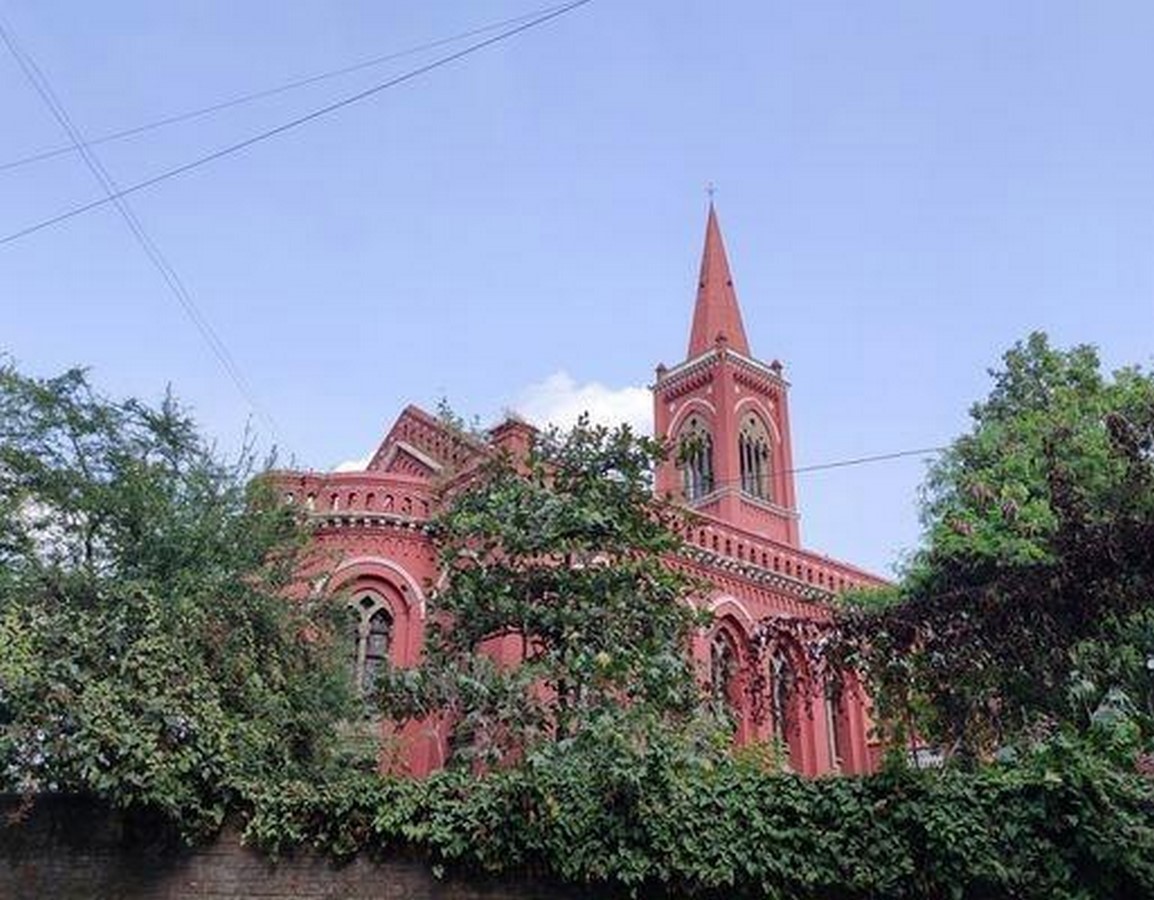
Therefore, the analysis seeks to provide a comprehensive evaluation of the Ohel David Synagogue through the following thematic lenses:
Historical Importance
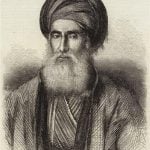
Philanthropic Legacy: David Sassoon, patriarch of the renowned Sassoon dynasty, initiated the construction and endowment of the synagogue, which was later completed by his successor. The Sassoons helped build several additional religious, municipal, and institutional facilities in the city and across India, including Pune’s Sassoon Hospital and Mumbai’s Baghdadi synagogues Knesset Eliyahoo and Magen David Synagogue. David Sassoon was born in Baghdad and moved to India in the early 19th century. The goal of constructing this synagogue was to provide a place of worship for congregants from various areas in and around Pune.
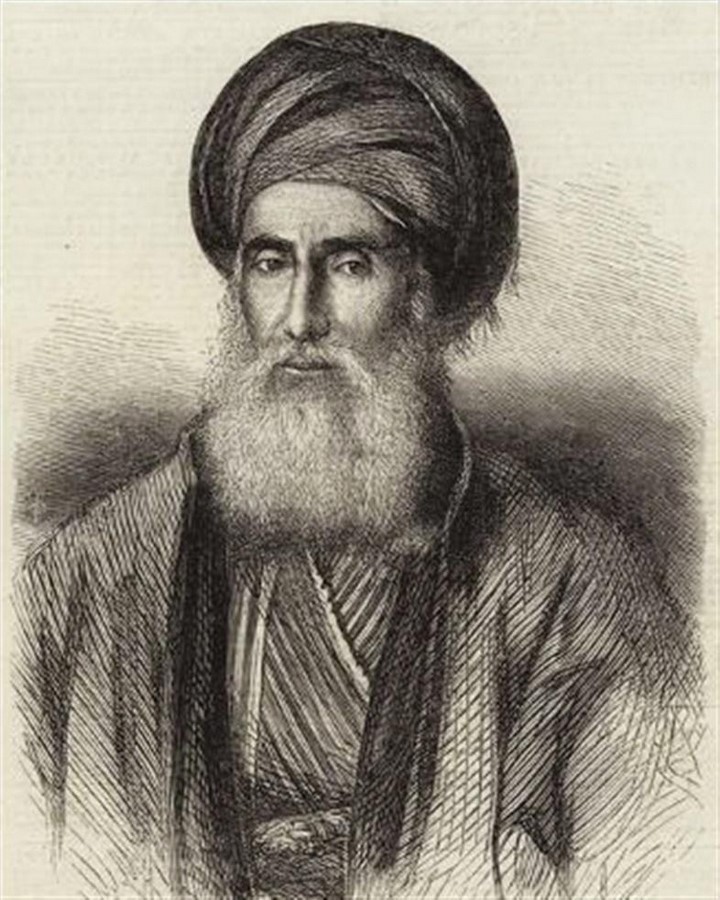
Thriving Jewish Community: The first Baghdadi Jews arrived in India on a seasonal or temporary basis in the late 18th century, initially at Surat, a western port city. Over time, permanent settlements were built in Pune, as well as in Mumbai, Kolkata, and Yangon (Rangoon) in Myanmar. Jews evacuated their homes, predominantly from Iraq, but also from Iran and other Ottoman-controlled countries, in search of religious tolerance, economic opportunity, and a higher standard of living. The population as a whole became relatively well-educated and financially stable in their preferred Indian and Burmese towns. Pune helped to allow Baghdadis linked with this synagogue to become fully practicing Jews and effective members of the larger local community.
Architectural Style and Relevance
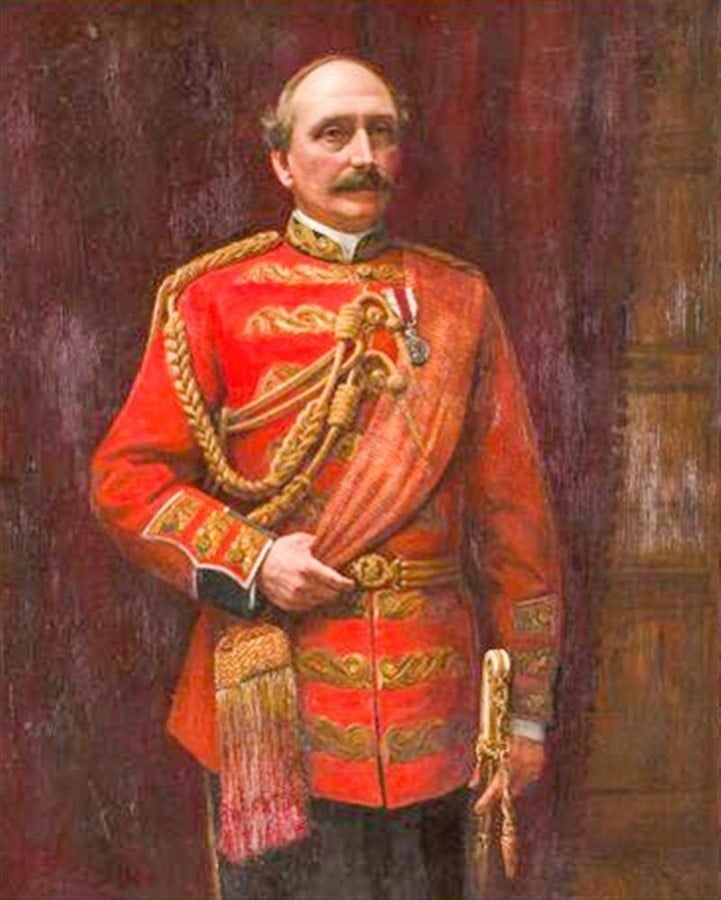
Style: This synagogue is clearly in the English Gothic Revival style. Designed by Henry Stain Clair Wilkins, a notable British colonial architect at the time. Wilkins was a British army officer who served in the East India Company and worked in British India’s public works divisions as an architect and engineer. Working with Wilkins, the Ohel David congregation, like other Baghdadi groups, used an architectural style that originated in England or other parts of Europe and was resurrected in the nineteenth century as a model for their prayer houses. When tourists and natives first visit these synagogues, they may be astonished by what they perceive to be un-Indian and Christian architecture. However, in the context of British colonialism, these massive Baghdadi buildings suited the British preferences and allegiances, which at the time included a large portion of the Baghdadi Jewish population.
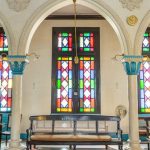
Structural Material: Local basaltic Deccan trap rock is used in this synagogue for the foundation and structural reinforcement; on the other hand, red brick is used for the exterior wall, giving it a distinctive red color. In Maharashtra, this stone has been used in construction for centuries and is popular for its durability. The polished grey marble floors in the synagogue provide a refined and cool contrast to the warm exterior of the structure. The English Gothic Revival style is predominantly known for its tall windows filled with patterned stained glass, which helps bring in vibrant light, and is also incorporated in this synagogue.
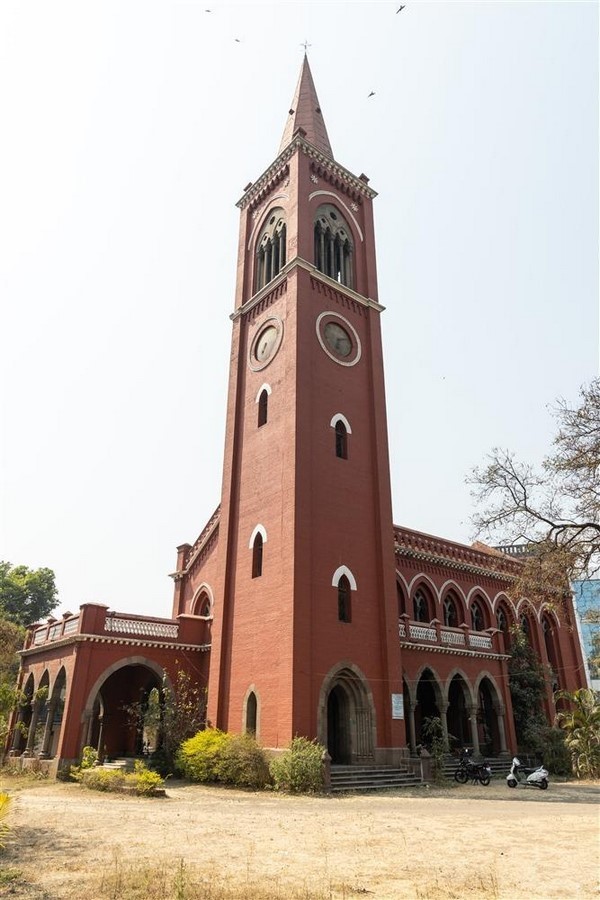
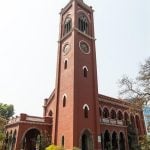
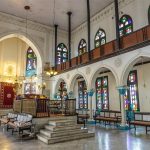
The main attraction is a square tower that is ninety feet tall and has a clock with faces on each side. This clock was created especially for Ohel David in London. Some claim that the former Queen Victoria did, in fact, give it to them. The synagogue is filled with exquisite brass and woodwork. Prominent architectural elements of the sanctuary include the raised tebah with wooden newel posts/handrail and brass balusters, plaster medallions and trim work, and the wooden guardrail at the gallery. The church has a flat wooden ceiling with antique lighting fixtures hanging from it. Similar to Baghdadi and other Indian synagogue design traditions, the sanctuary is filled with long, freestanding hardwood benches and chairs.
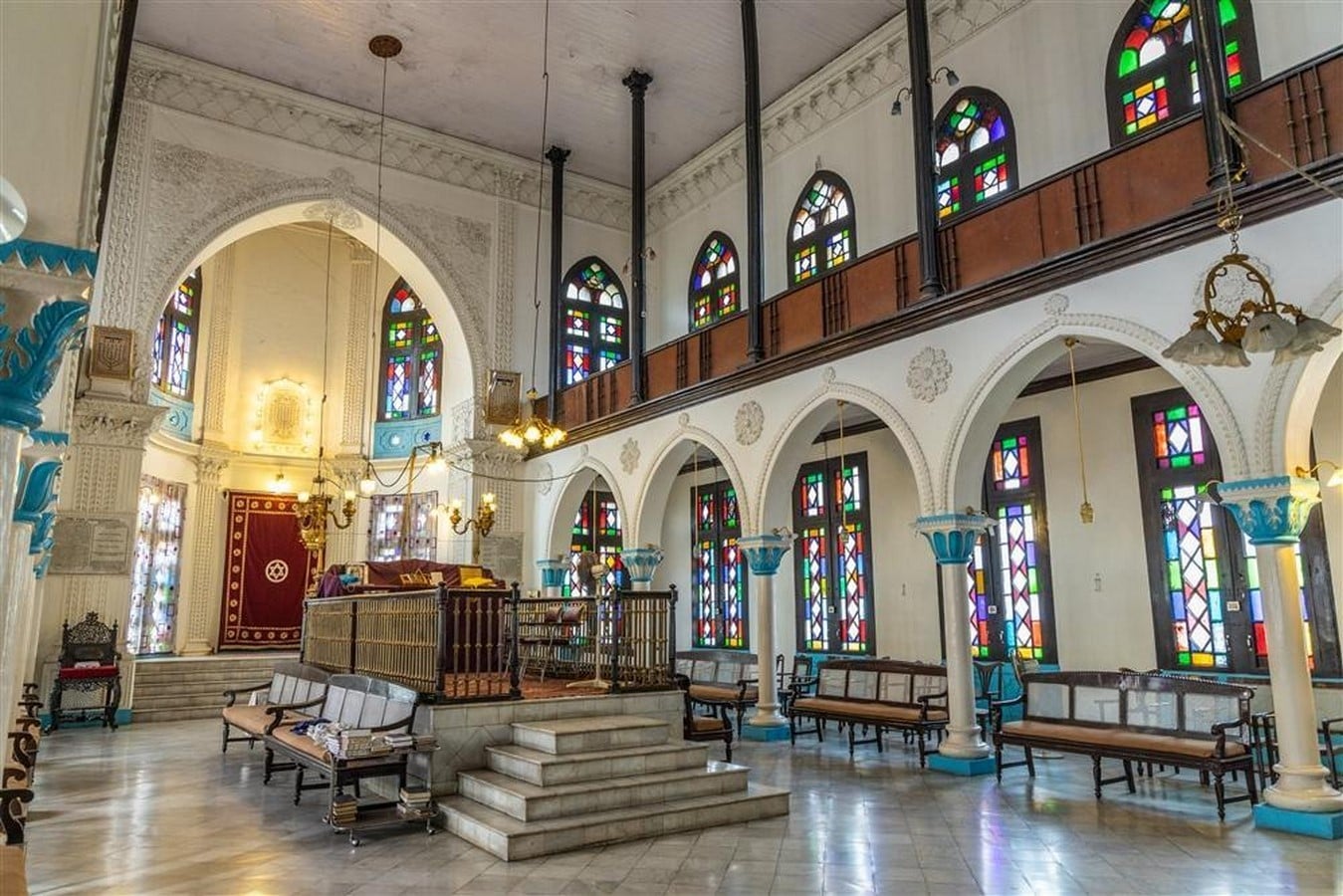
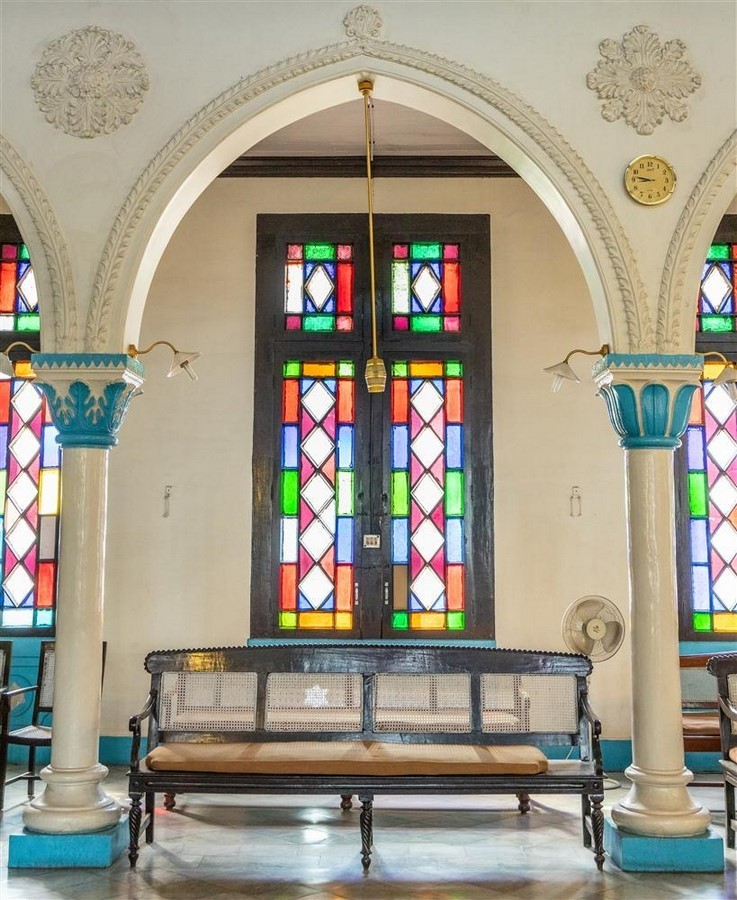
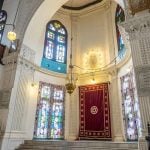
Architectural Features: A colonnade separates the wide central nave from the side aisles, which have a tebah (bimah/raised platform with a table for reading the Torah). A gallery above the side aisles served as a seating area for ladies in accordance with the Orthodox Jewish practice of gender separation. Ohel David follows the architectural style of other Baghdadi synagogues in India and Myanmar, with a particularly remarkable feature: a large heckal (ark) erected a few feet above the sanctuary floor. As is customary in synagogues, the ark is placed on the wall closest to Jerusalem and is housed in a double-height niche that is beautifully decorated with plaster. The heckal on the sanctuary side is framed by a pointed arch flanked by engaged pilasters that are similarly lavishly adorned with plaster relief.
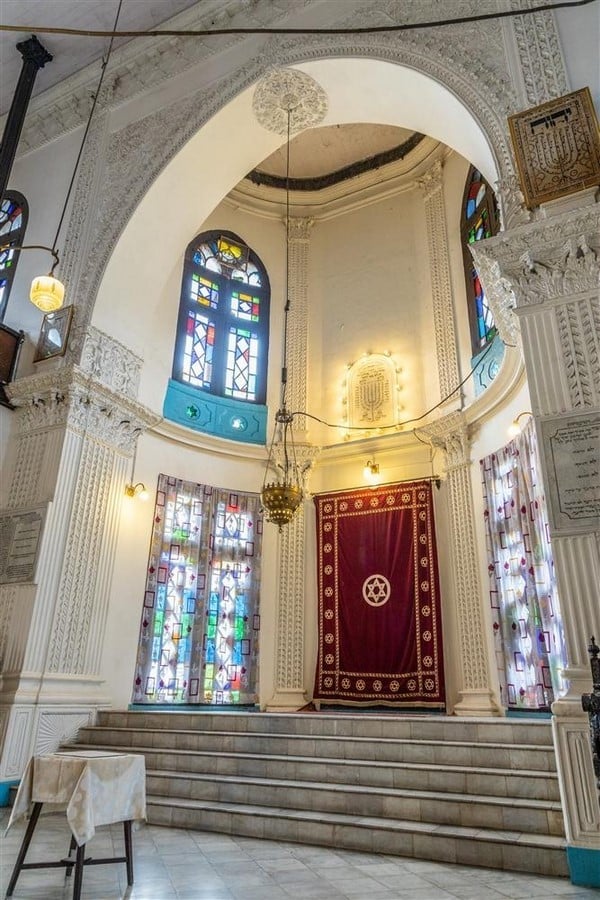
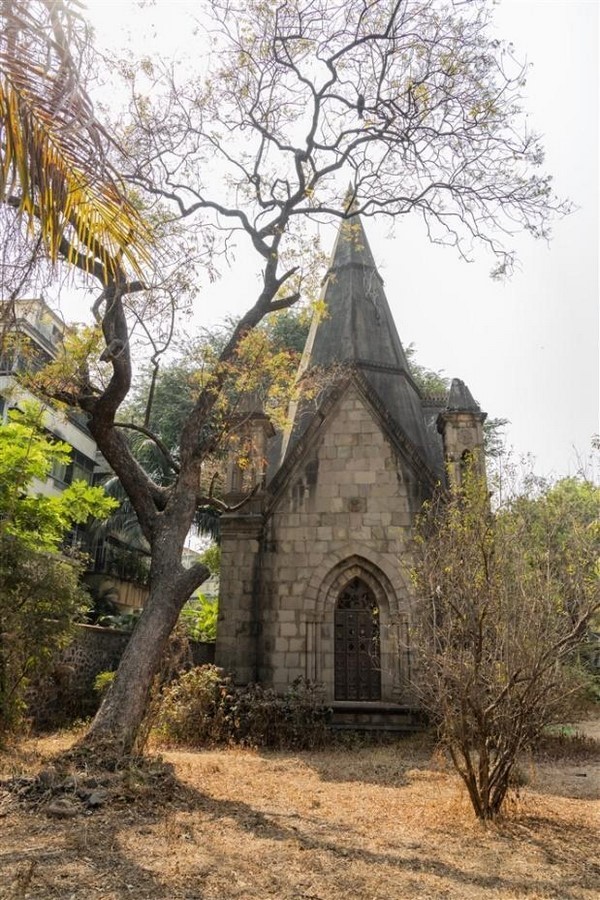
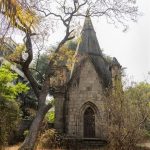
From within the sanctuary, the heckal curtain and doors appear to face a standard, cabinet-like area. However, when they are opened, a walk-in apsidal-shaped space as deep as ten feet (three meters) and much wider is revealed. Previously, one hundred or more Torah scrolls were proudly displayed in elaborate silver cases. The Ohel David Synagogue property also includes a now-closed mikvah (a location for ritual baths), caretaker and communal apartments, and the Gothic-revival mausoleum of David Sassoon (also built by Wilkins), who died in Pune in 1864 before Ohel David was consecrated on September 29, 1867.
Relevance to Era: This Synagogue provides a strong glimpse of the political and social dynamics of 19th-century Colonial Pune. Its relevance to the era is defined by the Sassoon family’s strategic alliance with British Power and the city’s special role in the British Raj. The English Gothic Revival Style, built at a time when the British were attempting to establish firm administrative power in 1857, was an intentional political statement. The Baghdadi Jewish Community signaled their status as loyal British subjects by constructing Cathedrals in an English style, distinguishing themselves from the local population. The imported clock for the tower exemplifies how the Western concept of time and civic order was imposed on the urban landscape. During the monsoon season, wealthy Jewish families from Mumbai used to visit Pune due to the pleasant environment. Therefore, this synagogue was constructed to accommodate a seasonal congregation. Its location in the Pune cantonment region, which was the heart of the British military and administrative zone at that time, was distinct from the old Peshwa era city centre, reflecting the changing political topography of the time.
Impact on Urban Fabric
Visual landmark: For years, this synagogue clock tower dominated Pune’s skyline because traditional houses were only one storey high during the early 19th century. However, due to an increase in the number of high-rise buildings, the synagogue has lost its significance. Located in a busy neighbourhood of Pune, the Synagogue and its surrounding space serve as a visual oasis. In the early nineteenth century, all of the structures built by the Sassoons in Pune elevated the Pune Cantonment region above the rest of the city.
Political Shift: In the modern era, the Ohel David Synagogue has transitioned from a private community hub into a strong potential system of geopolitical friendship and pluralistic state identity. Because of socioeconomic and political changes in the second part of the twentieth century, Ohel David’s congregation is much smaller and less active than it previously was. Due to the recent bombing that took place at the German Bakery in Pune, the security of this area has significantly increased, and one would need prior permission to visit this structure.
State – Led Heritage Tourism: The Maharashtra government’s decision to include the synagogue in the Jewish Heritage Tourism Circuit reflects a political shift towards preservation of minority heritage. By branding it under the name “Tourist Place”, the state elevates the Sassoon family’s royal philanthropic history in creating Pune as a multicultural city. It’s also a state initiative to diversify tourism beyond traditional forts and temples.
Living Monument: Even though having a resident Congregation is estimated to be around 135 – 300 members, this synagogue holds regular services, reinforcing the political visibility of the Jewish minority in Pune’s Public sphere.
The Ohel David synagogue is not just a religious centre or monument, but is an important hidden gem often passed by tourists. This Synagogue is a living legacy of the thriving Baghdadi Jewish community in order to keep their religion and tradition alive. Rabbis from Mumbai are called to conduct prayers. For those interested in culture and history, it provides an enriching experience, giving one an idea of Pune’s rich and diverse cultural Tapestry. Whether you are a history enthusiast, a spiritual seeker, or interested in culture, this synagogue provides glimpses of the past, leaving a long-lasting impression.
REFERENCE LIST:
Kenesetheliyahoo.com. (2016). Synagogues – Sir Jacob Sassoon Synagogues & AlliedTrusts. [online] Available at: https://kenesetheliyahoo.com/synagogues/.
Banerjee, D. (2023). Ohel David Synagogue,Pune, India – Famous Synagogues – Tutorial At Home. [online] Tutorial At Home. Available at: https://www.tutorialathome.in/samous-synagogues/ohel-david-synagoguepune-india [Accessed 1 Feb. 2026].
Atlas Obscura. (2024). Ohel David Synagogue. [online] Available at: https://www.atlasobscura.com/places/ohel-david-synagogue.
Diarna.org. (2014). Ohel David Synagogue, Pune, India. [online] Available at: http://archive.diarna.org/site/detail/public/3036/.
Team, R. (2026). Ohel David Synagogue (2026) | Travel Guide & Everything You Need to Know. [online] Roamingverse.com. Available at: https://roamingverse.com/explore/india/maharashtra/pune/ohel-david-synagogue [Accessed 1 Feb. 2026].
Discover India. (2023). Ohel David Synagogue – Discover India. [online] Available at: https://mytrip.guide/ohel-david-synagogue/ [Accessed 1 Feb. 2026].
sason, kobi (2026). Ohel David Synagogue Celebrates 150 yrs. [online] Indianjews.org. Available at: http://www.indianjews.org/en/news/52-ohel-david-synagogue-celebrates-150-yrs [Accessed 1 Feb. 2026].
kevinstandagehotography (2019). Ohel David Synagogue – Pune. [online] Kevin Standage. Available at: https://kevinstandagephotography.wordpress.com/2019/10/06/ohel-david-synagogue-pune-lal-deval/.
Gourley, B. (2023). DAILY PHOTO: Ohel David Synagogue, Pune. [online] Tiger Riding for Beginners. Available at: https://berniegourley.com/2023/03/29/daily-photo-ohel-david-synagogue-pune/ [Accessed 1 Feb. 2026].
Evendo.com. (2026). Discover the Ohel David Synagogue: A Historical Gem in Pune. [online] Available at: https://evendo.com/locations/india/eastern-india/landmark/ohel-david-synagogue [Accessed 1 Feb. 2026].
Kumar Nikate (2015). Ohel David Synagogue (Lal Deval, लाल देऊळ). [online] Blogspot.com. Available at: https://go-pune.blogspot.com/2015/03/lal-deval.html [Accessed 1 Feb. 2026].
Bharatpedia.org. (2022). Ohel David Synagogue – Bharatpedia. [online] Available at: https://en.bharatpedia.org/wiki/Ohel_David_Synagogue [Accessed 1 Feb. 2026].
Inamdar, N. (2024). Ohel David Synagogue and David Sassoon Tomb join Maharashtra’s JewishHeritage Tourism Circuit | Hindustan Times. [online] Hindustan Times. Available at: https://www.hindustantimes.com/cities/pune-news/ohel-david-synagogue-and-david-sassoon-tomb-join-maharashtra-s-jewish-heritage-tourism-circuit-101733770054357.html [Accessed 1 Feb. 2026].
Ramakrishnan, M. (2024). Maharashtra Tourism Department To Promote Tours Of Jewish Sites In Mumbai; 2 New itineraries To Be Added. [online] Free Press Journal. Available at: https://www.freepressjournal.in/mumbai/maharashtra-tourism-department-to-promote-tours-of-jewish-sites-in-mumbai-2-new-itineraries-to-be-added [Accessed 1 Feb. 2026].
Sr Correspondent (2023). Mumbai kick-starts ‘Jewish Route’ to promote, preserve heritage of the community – Nation Now. [online] Nation Now. Available at: https://nationnow.org/2023/08/25/mumbai-kick-starts-jewish-route-to-promote-preserve-heritage-of-the-community/ [Accessed 1 Feb. 2026].