From the Comfort of Airflow, Mumbai We See Manipal
Leaving behind the humid and frenetic lifestyle of the city of Mumbai and walking into the quiet streets of the city of Manipal, I thought this transition would be more about academics than anything else. In Mumbai, we are trained to see buildings based on how tall they are to help us measure how many people we can fit into each building, and the speed in which we can go to the top with an elevator. Walking through the gates into Hasta Shilpa Heritage Village completely changed that way of seeing.
The first thing that catches the attention of a Mumbaikar upon seeing Hasta Shilpa Heritage Village is that there is complete silence. This is not silence in terms of the space being empty, but rather the heavy and honourable silence of a place that holds centuries of history. To come from a community where “heritage” is often referred to as the crumbling Gothic facade hidden behind tangled webs of wires and neon signs to be overwhelmed by seeing these old buildings completely intact is mind-boggling.
The Visionary Behind the Village
The Hasta Shilpa Heritage Village is not your typical museum; it represents a monumental act of saving our Architectural Heritage. In his role as Architect and Project Director, Vijayanath Shenoy dedicated his life to the project. He saw that the southern architecture of India was being destroyed through being sold off as bulk material. As an Architect, it is critical to understand his philosophy when studying the Hasta Shilpa Heritage Village. He did not want to simply ‘conserve’ buildings; he wanted to ‘transplant’ them. In order to ‘transplant’ a building to its new home at Hasta Shilpa he took the time to carefully disassemble each building at its original site in Karnataka or Kerala by removing it piece by piece and then reconstructing it on the 6-acre site with precision.
The act of ‘transplanting’ buildings creates a unique opportunity to study how buildings can be re-used and/or re-purposed and re-constructed. Additionally, Shenoy has created a place where the spirit, or ‘Atman’ of each building is preserved. As a city such as Mumbai commonly demolishes structures to clear space for parking lots, his acknowledgement and stewardship of the legacy and life of each structure he designed will change our views, but they will also alter how we view the built environment. We have learned that structures offer much more than just raw materials; they offer insight into how people live through the use of a structure. They represent an opportunity to continue that way of life with dignity.
The design and layout of the Hasta Shilpa Heritage Village reflects a process of curating an experience based on the historical and cultural legacy of the area by creating thematic zones where guests may explore the diversity of buildings in terms of size and style from grand palaces to small folk homes and shrines.
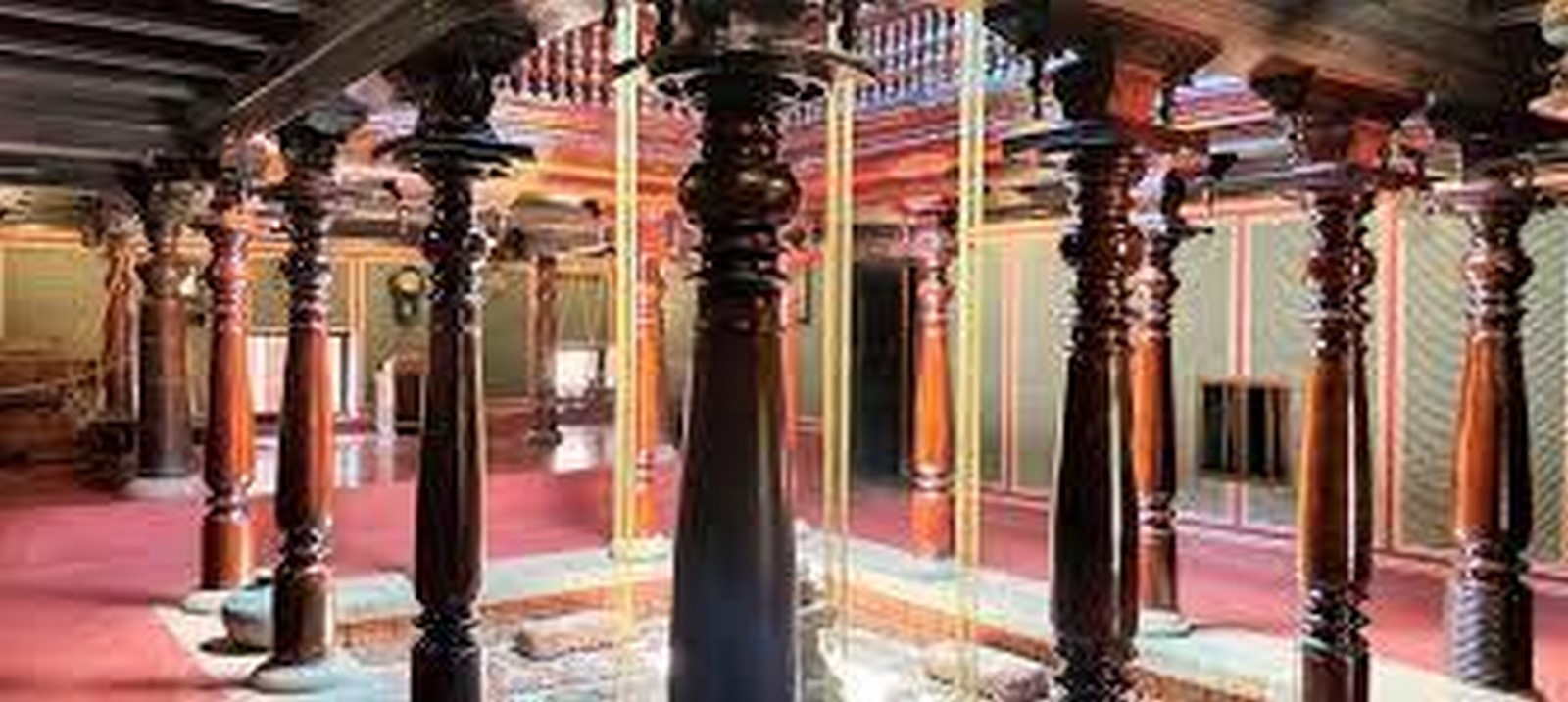
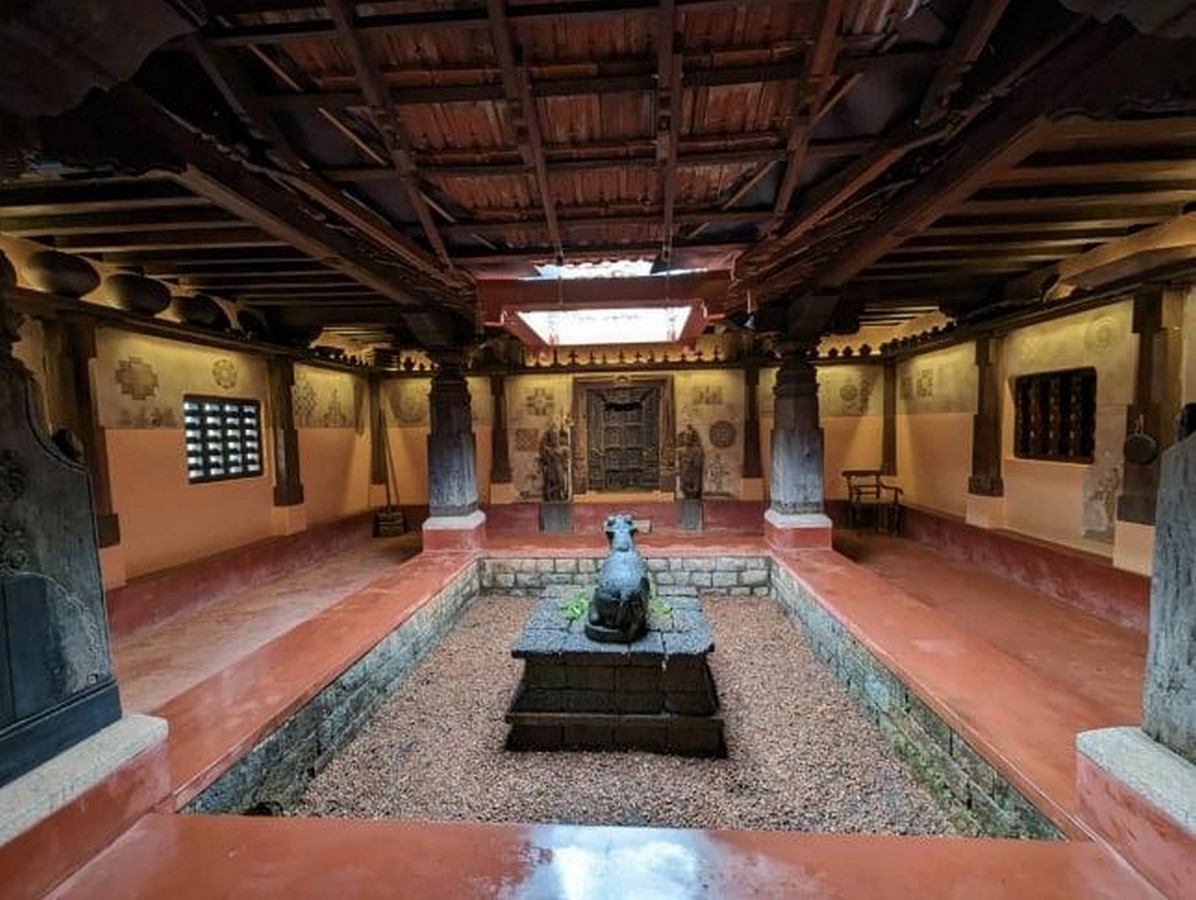
The concept of “human scale,” which characterizes the layout of the Hasta Shilpa Heritage Village, is that instead of being intimidated by the larger-than-life size of many of today’s institutional-type buildings, these buildings are built to feel as if they were designed and built around your human body. For example, the doorway to many of the structures is designed low enough that when a visitor enters, they must bow down to gain entry, indicating a physical representation of humility and respect. The Kunjur Chowkimane, a traditional style Brahmin house, has the central courtyard serving as the center of light and air in the home and gives all rooms access to the outdoors, unlike many modern urban apartments, where access to the outdoors is limited, at best.
Materials and art of timber construction
Natural Resources and Timber-Based Architecture
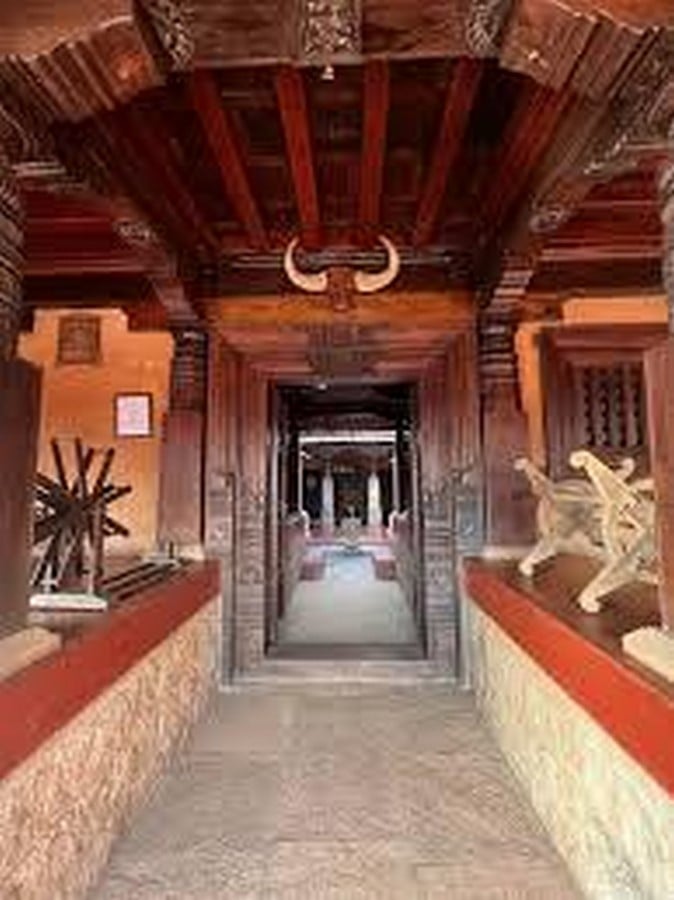
Hasta Shilpa Heritage Village is an extraordinary example of how much can be accomplished using natural materials. The heritage site includes an extensive range of local materials, including laterite stone, teak wood, rosewood, and clay roofing tiles, among others. Kamal Mahal exemplifies the best of what is known as the “age-old” method of timber frame building. The building’s entire structural system was assembled entirely with joinery (or mortise-and-tenon) joints and relies on no metal fasteners (nails) for assembly.
Traditional timber framing allows for much more movement than the rigid foundation of concrete and similarly dimensioned materials. In the tropical and humid coastal environment of Karnataka, wood will often expand and contract because of the seasons. The construction of a structure using traditional methods provided builders with the ability to provide slight movement to their structures throughout the year, which is something that will never be achieved using contemporary concrete.
Passive Design Strategies for Sustainability
Long before the term “sustainability” became popular in corporate America, the culturally rich model for the Hasta Shilpa Heritage Village was developed to take advantage of sunlight as an energy source through passive design. Heavy-weight Laterite walls were used to create the thermal mass effect, allowing the interior rooms of the Hasta Shilpa Heritage Village to remain cool even during sultry summer days when they were subjected to intense sunlight rays. Courtyards, such as the Chowkis found throughout the Hasta Shilpa Heritage Village, were used as natural chimneys. Warm air in these courtyards, once heated by the sunlight, rises and creates a low-pressure point in the courtyard, causing cooler air from the shaded veranda and surrounding vegetation to be drawn into the courtyard.
Passive cooling, as previously described, is why the interior rooms of the Hasta Shilpa Heritage Village remain cooler than the outside temperature since there are no mechanical cooling systems on-site. This passive cooling method teaches modern architects that mechanical HVAC equipment is not always required to ensure comfort. Careful analysis of the orientation of structures, overhangs on roofs, and dimensions of courtyards found within the Hasta Shilpa Heritage Village can provide sustainable solutions to the energy crisis being faced in urban areas today.