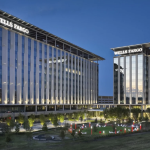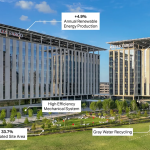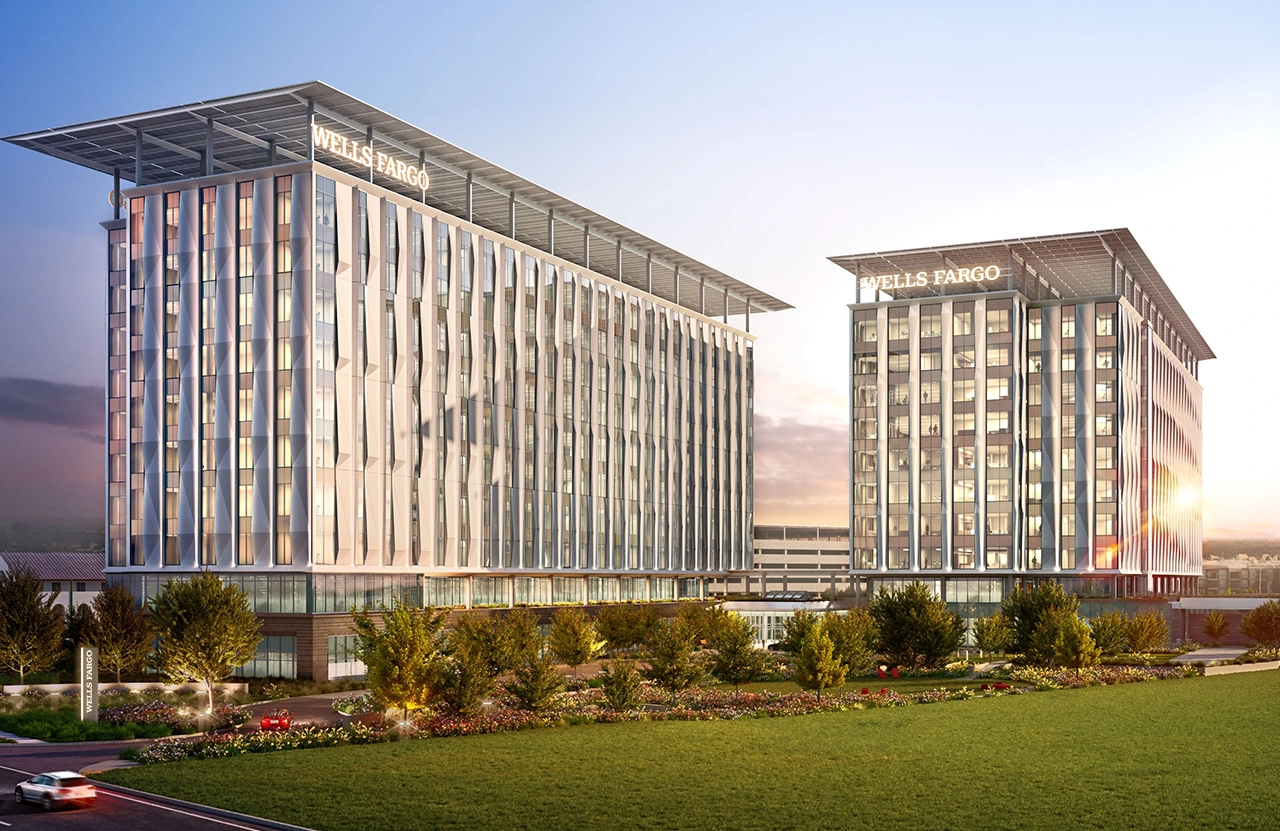
Architecture is at the dawn of a new era. Large-scale corporate developments are embracing regenerative design, using the Net-Positive Office Building as a vehicle to push the boundaries of sustainability. The largest Net-Positive Office Building in the U.S., the Wells Fargo Campus in Las Colinas, Texas, exceeds efficiency benchmarks while celebrating sustainability. Employing innovative strategies such as bio-photocatalytic exterior assemblies, bio-revetments, green roofs, and wind turbine power, the project sets a new benchmark for corporate architecture while pushing the envelope on future workplace design strategies.
Redefining Sustainability Through Net-Positive Design
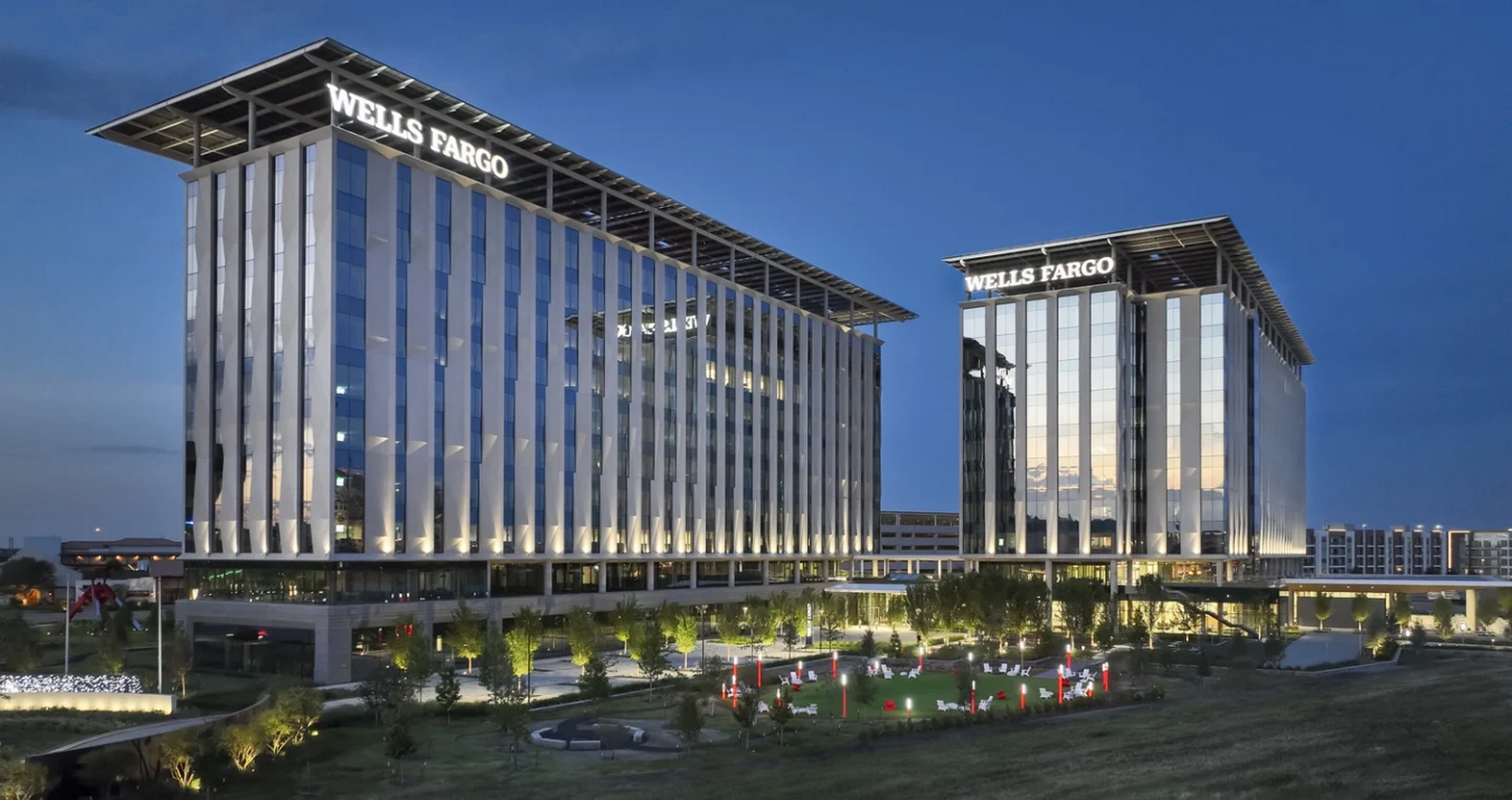
The Net-Positive Office Building on the campus produces more energy than it consumes; rather than simply reducing “bad” it goes positive and supports ecological systems by harnessing large-scale solar on the site.
Sustainability is evolving in new and exciting ways. Instead of simply “being green,” we’re taking on a regenerative approach where a single building can not only offset its consumption but create energy for campus use. The trend is becoming more prevalent, and we’re exploring how our designs can shape future local energy systems (Interior Design, 2024).
Energy Infrastructure and Technological Integration
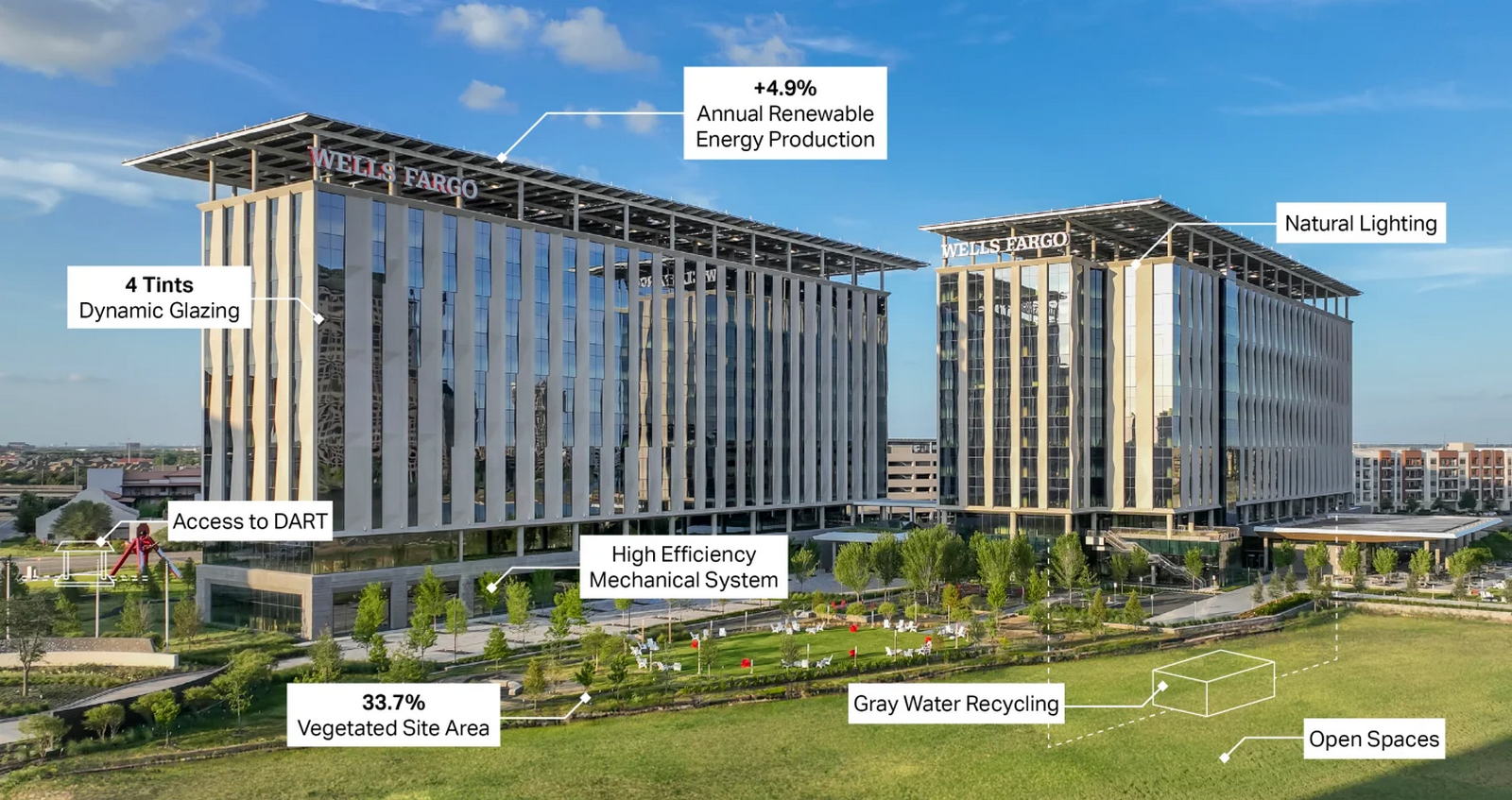
Net-Positive Office Buildings combine energy and information systems to create superior buildings; Solar canopies can cover parking areas, generating renewable energy while providing shaded parking.
Many modern building management systems do more than simply monitor how much energy is consumed within a structure. They can actually make instantaneous adjustments to parameters such as lighting levels, cooling and ventilation systems based on real-time information regarding how occupancy levels are fluctuating. This smart technology is at the heart of the net-positive approach to building design.
Frameworks for scaling Net Positive strategies to a campus context. A case study on the Wells Fargo Campus that uses a holistic combination of design and technology to achieve regenerative outcomes on a large office campus.
Spatial Design Supporting Environmental Goals
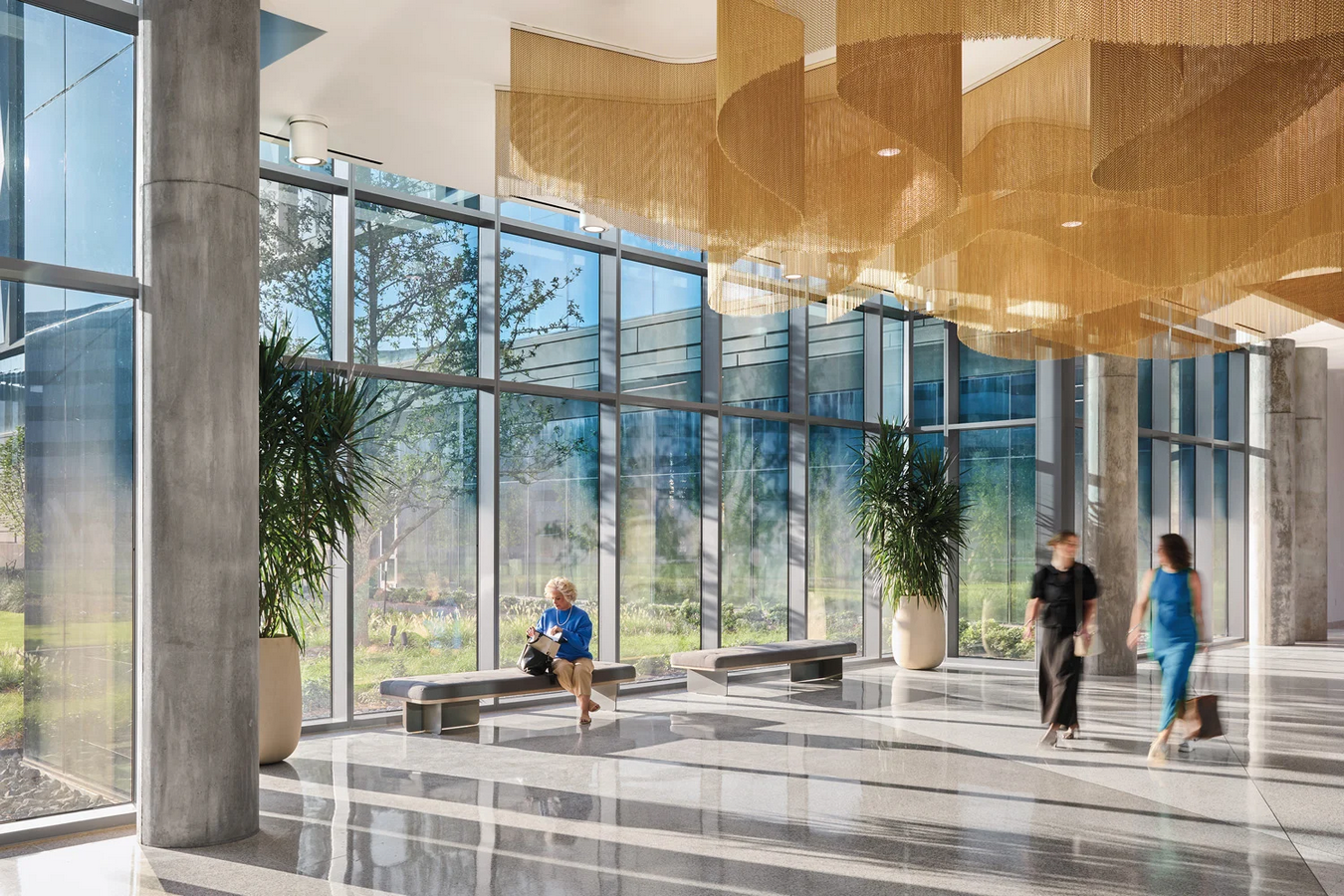
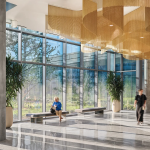
While focus has been given to the energy systems that will power the Net Positive Buildings on campus, great consideration was also given to the physical design of the campus and the individual building configuration – specifically the orientation and size of the building and its interior spaces. The orientation and large quantities of glass on the North and South faces of the Net-Positive Office Building allow for greater daylighting which can reduce the need for evening and nighttime lighting. The open-plan configuration of the space and central atrium allow for natural ventilation throughout the year. These design considerations can have a significant impact on a building’s energy consumption.
Biophilic design elements are woven throughout the campus. Green walls and outdoor workspaces were incorporated into the design to maintain connection to nature and foster a sense of well-being. This approach improves environmental performance while meeting human needs for a sustainable space.
The campus forces one to consider the relationship between architectural form and environmental strategy, and how the two come together to create a coherent and elegant whole. Sustainability is not an afterthought here, the strategy is integrated deeply into the design, and you can feel and experience the regenerative qualities of the building throughout the space.
Material Strategy and Carbon Conscious Construction
All material selections made during the Net-Positive Office Building project strive to achieve both energy efficiency and environmental performance. The high-performance glazing chosen for the building addresses summer heating issues by reducing solar heat gain while maintaining adequate daylight levels. It means that natural light is provided to occupants throughout the day, which in turn decreases the need for artificial lighting at night and introduces a reduced cooling load. For the majority of materials and products selected for the building, longevity and low maintenance were key characteristics in their selection, because environmentally friendly buildings over a lifecycle analysis decrease the consumption of resources over time.
We are embedding low carbon principles into the construction method itself through efficient structural forms, use of prefabrication, reduction of waste and shortening of the construction programme. This enables efficient construction and sustainable development, while further reducing embodied carbon.
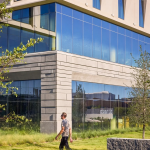
The choice of finishes including glass and metal facades, reflects a choice of materials that provide durability and optimal energy performance while supporting a modern corporate image. The finishes enable the building’s environmental sustainability objectives to be realised through its overall appearance and thereby align environmental priorities to corporate branding.
Landscape as Environmental Infrastructure
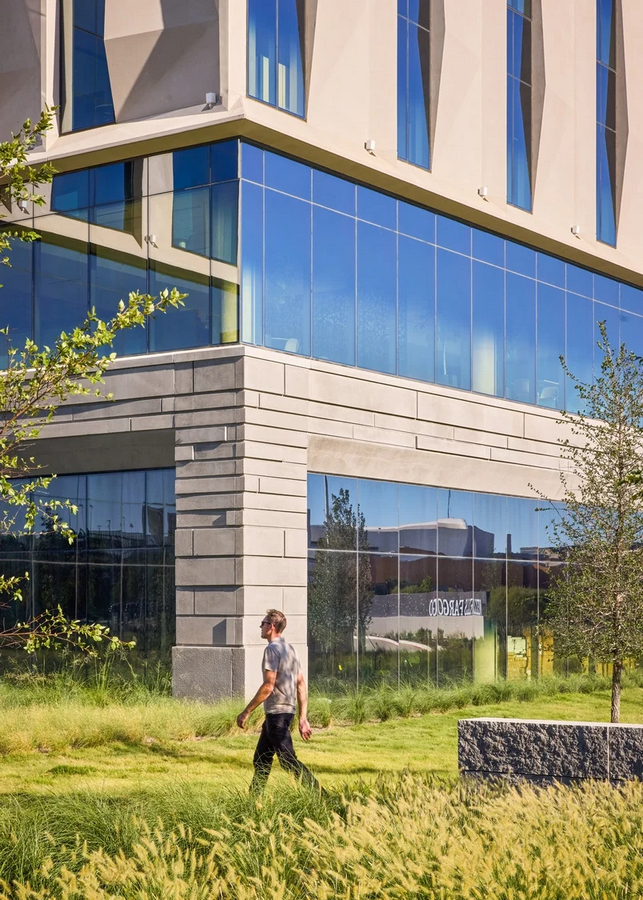
The campus integrates the Net-Positive Office Building strategy with strategies for the rest of the campus: Green infrastructure manages stormwater by directing flow through bioswales and permeable surfaces that allow the water to infiltrate into the ground, increasing groundwater and reducing runoff. In Texas, where water saving is a significant concern, this also counts as a water savings strategy.
Drought-resistant plantings and outdoor shaded areas reduce irrigation and encourage walking, a key strategy to decrease site emissions through landscaping.
Setting a Benchmark for Future Corporate Architecture
The Wells Fargo Campus project is pushing the boundaries of what a “sustainable” building looks like and setting a new pace for future projects. The Campus not only is the largest project for Wells Fargo but also embodies the vision for what a bold, planet-positive, large-scale building can look like. Now, everyone can see that such a project can also be fabulous and big, not a one-off pilot.
The campus has changed significantly with regard to corporate responsibility, with environmental performance becoming an important aspect of a company’s identity and its commitment to sustainability expressed through the investment in regenerative design.
This achievement opens the door for future projects by setting new standards for sustainability. Wells Fargo Campus serves as a model for other developers and architects by proving that this type of performance is attainable and demonstrates what more can be done with future projects. The Wells Fargo Campus is more than just an office building, it is now a working prototype for future corporate facilities.
Wells Fargo Campus is a Net-Positive Office Building that produces more energy than it consumes. Can we imagine a future where all buildings meet or exceed today’s benchmarks? The Wells Fargo Campus is a powerful example of what is possible.
The campus features a forward-looking combination of state-of-the-art technologies, people-oriented architecture, and a sensitive approach to the environment, all in a small footprint. The biggest office buildings can be among the most sustainable, and this series of projects looks to the future by providing a sustainable architecture template for others to follow.
References:
Corgan (2024). Wells Fargo Campus Project. [online] Available at: https://www.corgan.com/projects/wells-fargo [Accessed 20 April 2026].
Dallas Innovates (2023). Wells Fargo Reaches Midpoint Milestone for Its Nearly $500M Las Colinas Campus. [online] Available at: https://dallasinnovates.com/wells-fargo-reaches-midpoint-milestone-for-its-nearly-500m-las-colinas-campus/ [Accessed 20 April 2026].
Interior Design (2024). Wells Fargo’s Texas Headquarters. [online] Available at: https://interiordesign.net/projects/wells-fargos-texas-headquarters-giants-2026/ [Accessed 20 April 2026].
Kohali, V. (2025). From strategy to performance: Net-positive design, Corgan. Available at: https://www.corgan.com/news-insights/2025/from-strategy-to-performance-net-positive-design