Architecture has always been designed under a set of environmental assumptions that remain largely unquestioned. Gravity is stable, air is breathable, and the surrounding ecosystem quietly sustains human life. Even though climates and landscapes vary widely across the planet, the fundamental conditions that support life remain constant. Within this framework, architecture has historically focused on organizing space, constructing structural systems, and shaping material expression rather than confronting the more fundamental question of how human life itself can be sustained.
The expanding reach of space exploration places architecture in environments where these assumptions collapse. On the Moon or Mars there is no breathable atmosphere, radiation levels are far higher, and temperature conditions fluctuate dramatically between extremes. In such environments buildings cannot function simply as shelters or spatial enclosures. They must actively create and maintain the conditions necessary for human survival. Air circulation, water recycling, temperature stabilization, and radiation protection must all be managed within the architectural system itself.
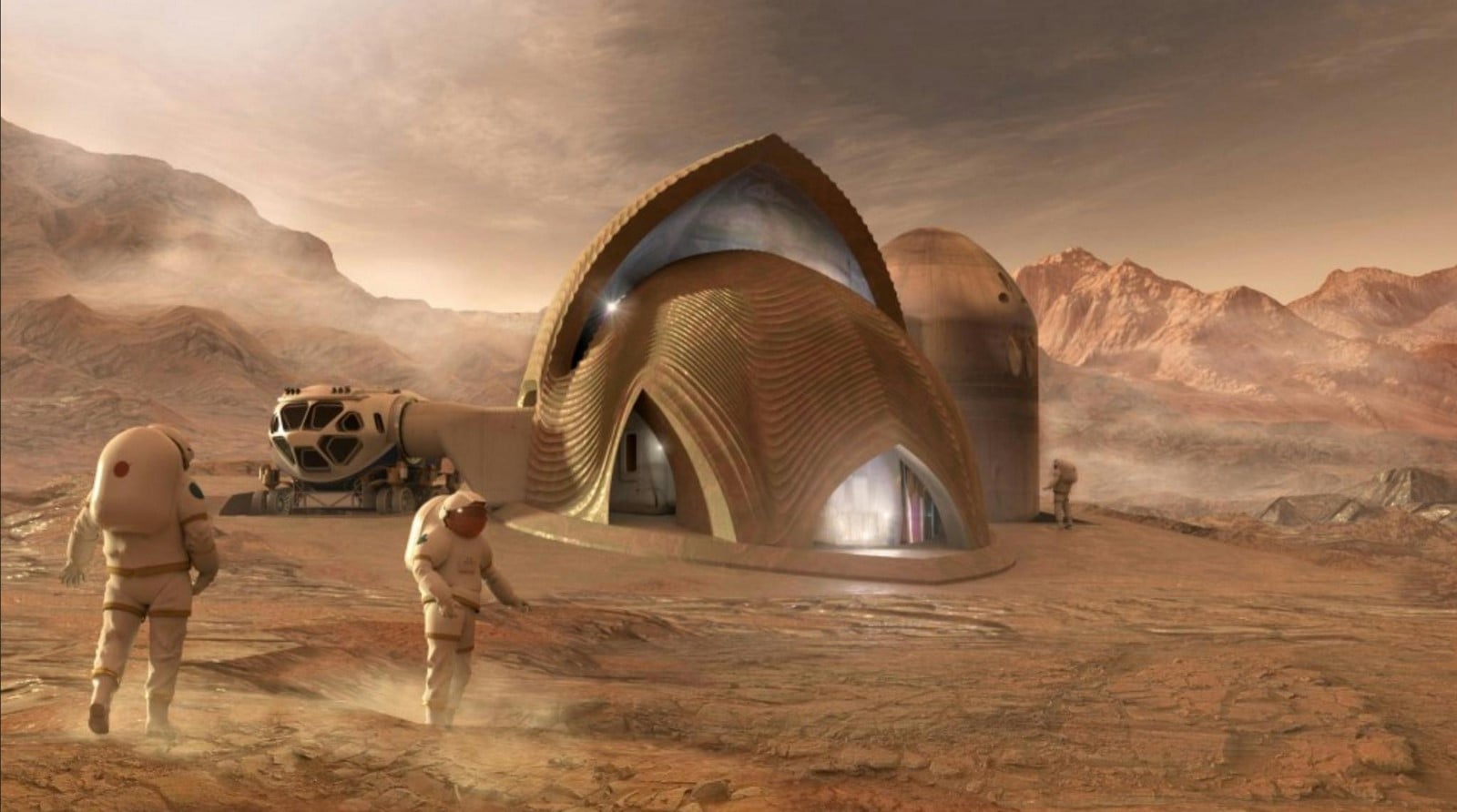
This shift introduces a fundamentally different understanding of architecture. Instead of existing within a supportive environmental system, architecture must construct that system artificially. Walls become protective shells, interior systems regulate atmospheric conditions, and the building itself becomes responsible for sustaining life. In this context architecture is no longer only a spatial discipline. It becomes an integrated life-support environment where structure, infrastructure, and human habitation operate as a single system.
Architecture as Life-Support Systems
In extraterrestrial environments architecture cannot rely on natural environmental cycles. On Earth the atmosphere regulates temperature, water cycles support ecosystems, and biological systems maintain breathable air. Buildings interact with these conditions but rarely replace them. In space habitats, however, these environmental processes must be recreated and carefully maintained through artificial systems.
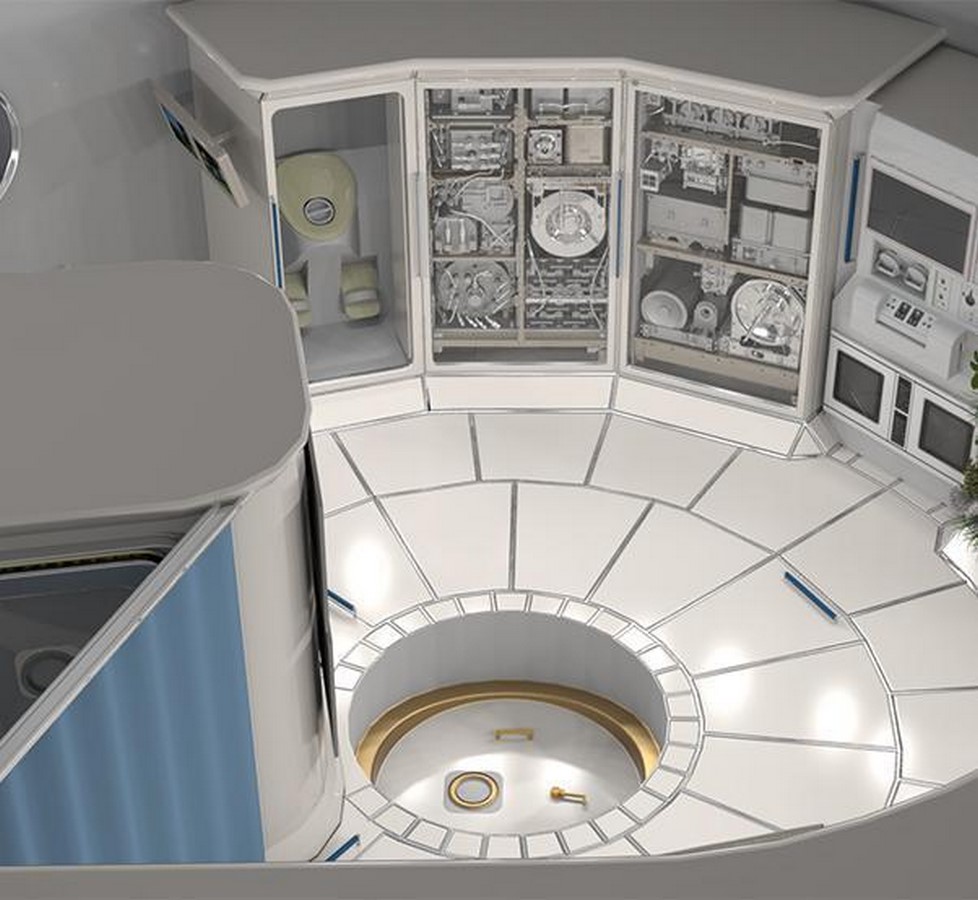
Research conducted by organizations such as NASA has increasingly treated space habitats as fully integrated environmental systems. Oxygen must be generated and circulated within pressurized interiors, carbon dioxide must be filtered from the atmosphere, and water must be continuously recycled to support long-term habitation. Temperature regulation is equally critical because external conditions may swing rapidly between intense heat and extreme cold. Protection from cosmic radiation and solar storms must also be incorporated into the structural design of habitats.
Because of these requirements the boundaries between architecture, engineering, and environmental science begin to dissolve. Structural shells often function simultaneously as radiation shielding and pressure containment systems. Interior spatial layouts must support efficient air circulation and environmental stability. Infrastructure networks responsible for energy, water, and atmospheric control must operate continuously without failure.
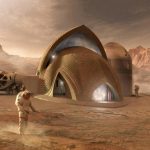
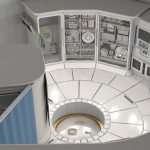
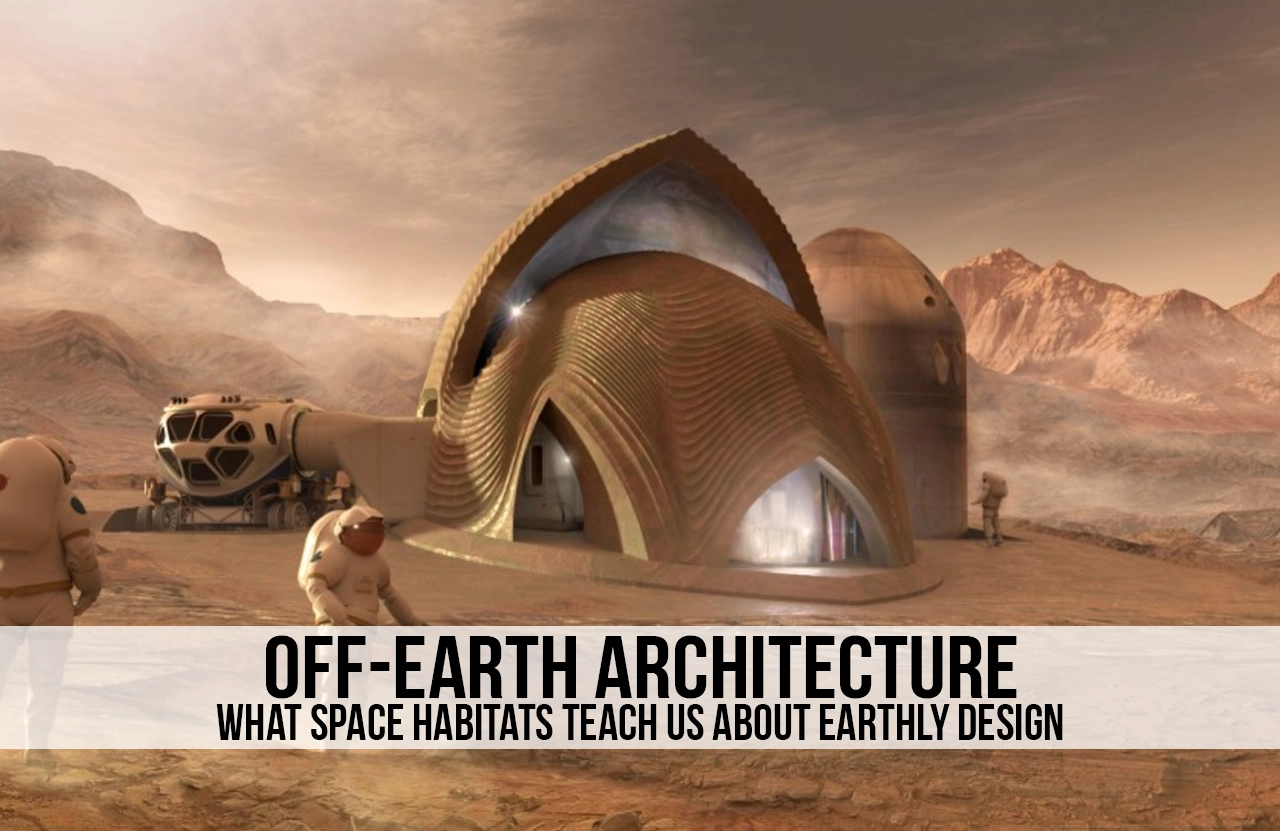
These conditions also influence the spatial organization of space habitats. Proposed designs frequently adopt compact and layered spatial configurations in which living spaces, technical systems, and circulation networks remain tightly integrated. Multi-layered structural shells may protect the interior environment while interior modules organize human activities within controlled atmospheres. In this context the building itself becomes an artificial ecosystem where environmental infrastructure and spatial design are inseparable.
Architecture in space therefore operates less like a static enclosure and more like a carefully balanced machine that sustains life. The building becomes the environment.
Eperiments in Off-Earth Construction
Designing architecture for space also requires architects and engineers to rethink how buildings are constructed. Transporting materials from Earth to the Moon or Mars is extremely expensive and technically complex. Every kilogram launched into space requires enormous amounts of energy and financial resources. For this reason, many research projects focus on the possibility of building habitats using materials already available on extraterrestrial surfaces.
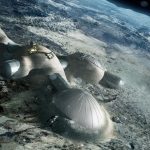
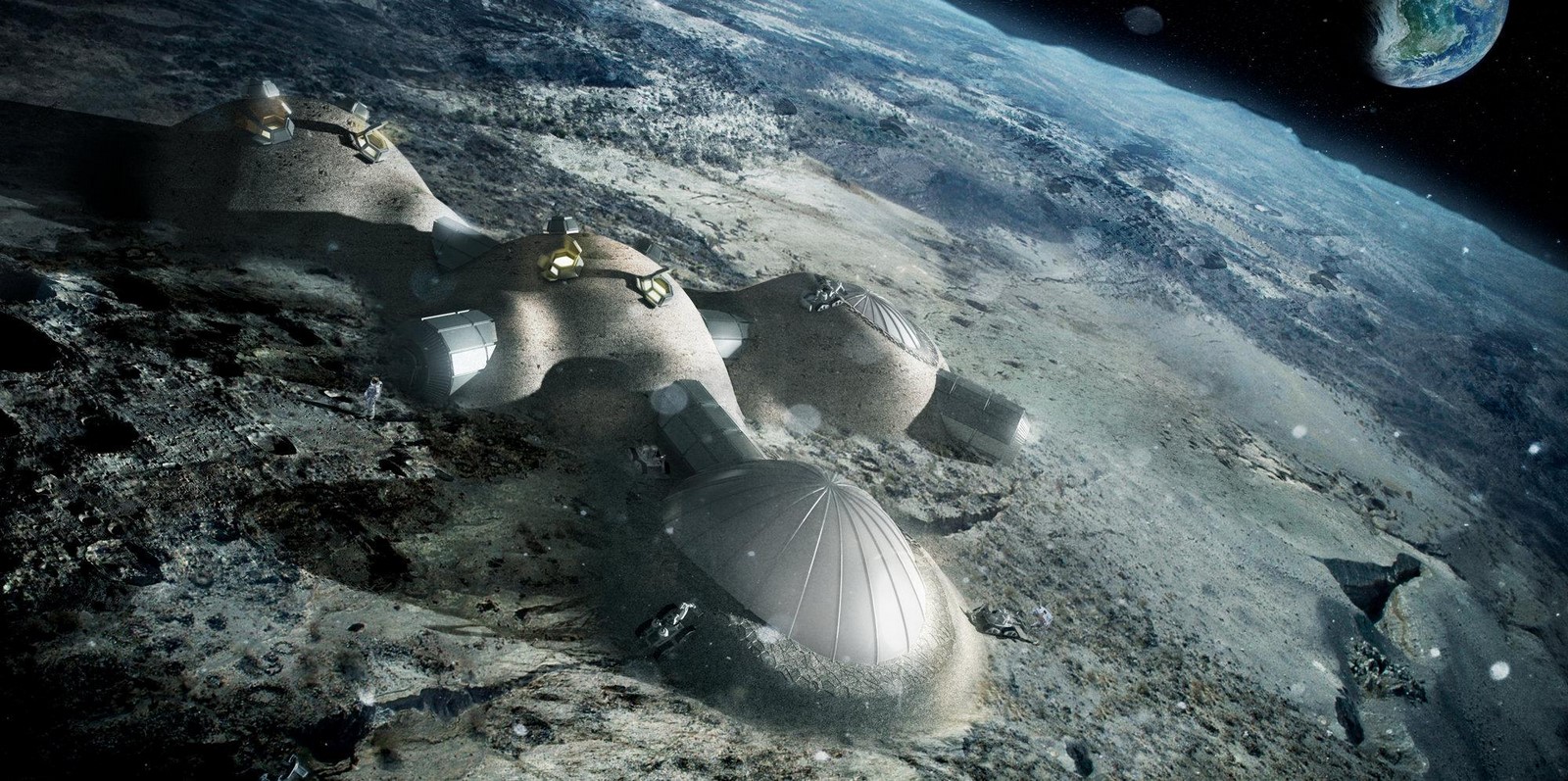
Both the Moon and Mars are covered with a loose granular material known as regolith. Researchers have begun exploring how this material could be transformed into structural components through processes such as compression, sintering, or large-scale additive manufacturing. Robotic construction systems could potentially process this local material to produce protective shells capable of shielding inhabitants from radiation and micrometeorite impacts.
Several architectural proposals developed through international research programs illustrate this idea. For example, studies conducted by Foster + Partners in collaboration with the European Space Agency explore lunar habitat concepts where robotic 3D printers construct protective domes using lunar regolith before astronauts arrive. Such strategies form part of a broader approach known as in situ resource utilization, where local materials become the primary building resource rather than relying on supplies transported from Earth.
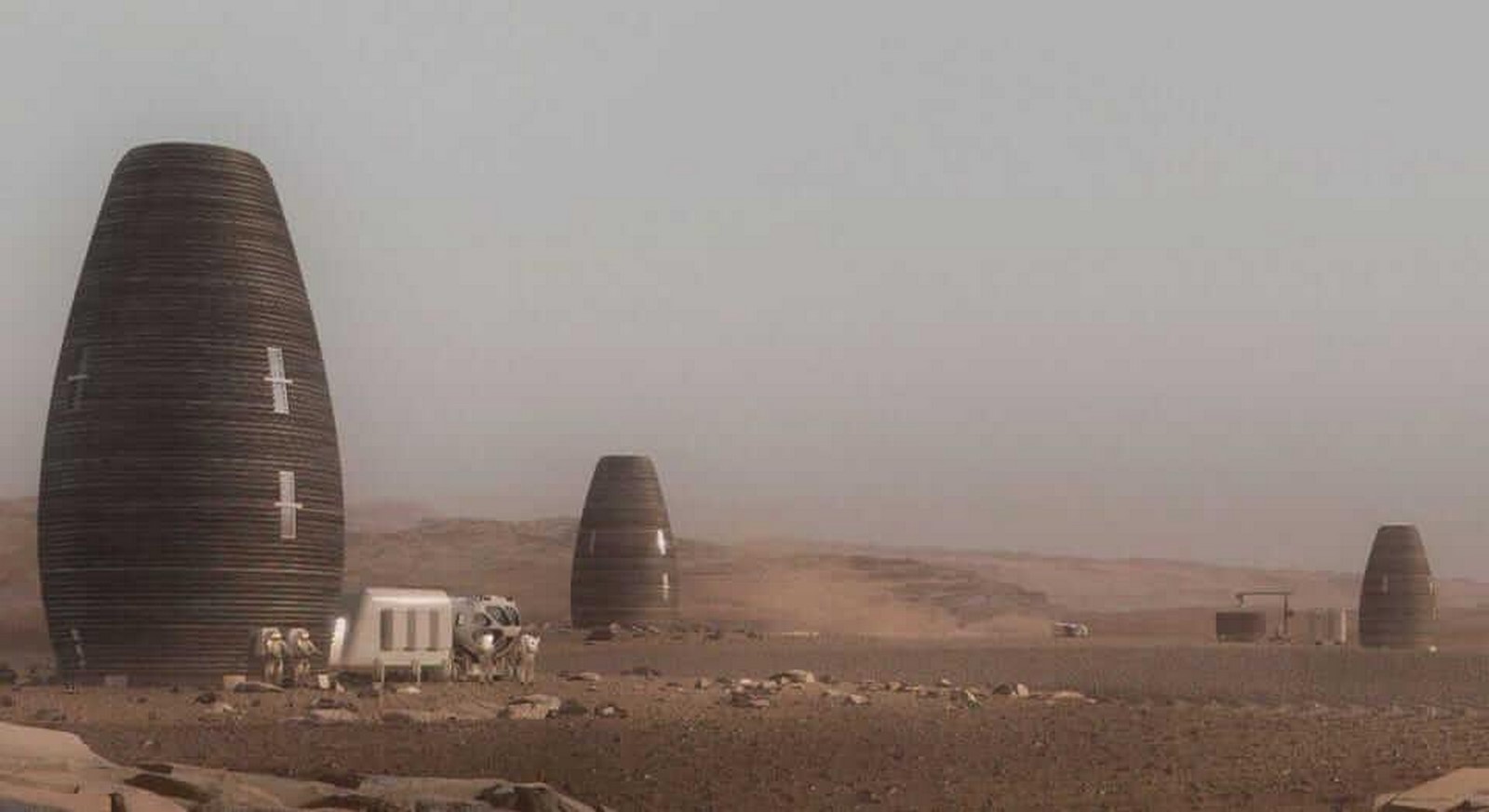
Automation plays an equally important role in these experiments. Because human labor in space is limited and extremely costly, many habitat concepts rely on robotic fabrication systems capable of operating autonomously in hostile environments. Robotic printers, automated construction vehicles, and prefabricated modules may assemble habitats in advance of human settlement. These technologies allow construction to occur in environments that would otherwise be dangerous or impossible for astronauts.
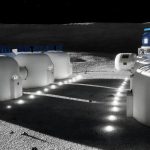
Modular construction systems are another key strategy. Rather than constructing large buildings in a single phase, extraterrestrial settlements may grow gradually through expandable habitat modules that can be connected and rearranged over time. Individual units may house living quarters, laboratories, agricultural zones, or storage spaces. As new modules are added, the settlement evolves into a flexible architectural network capable of supporting more complex human activity.
Inflatable habitat systems have also been explored as potential solutions for space construction. These structures can be launched in compact form and expanded once deployed, creating large interior volumes without transporting heavy structural materials. Once expanded, they may be reinforced with additional protective layers such as regolith shielding to improve structural performance and radiation protection.
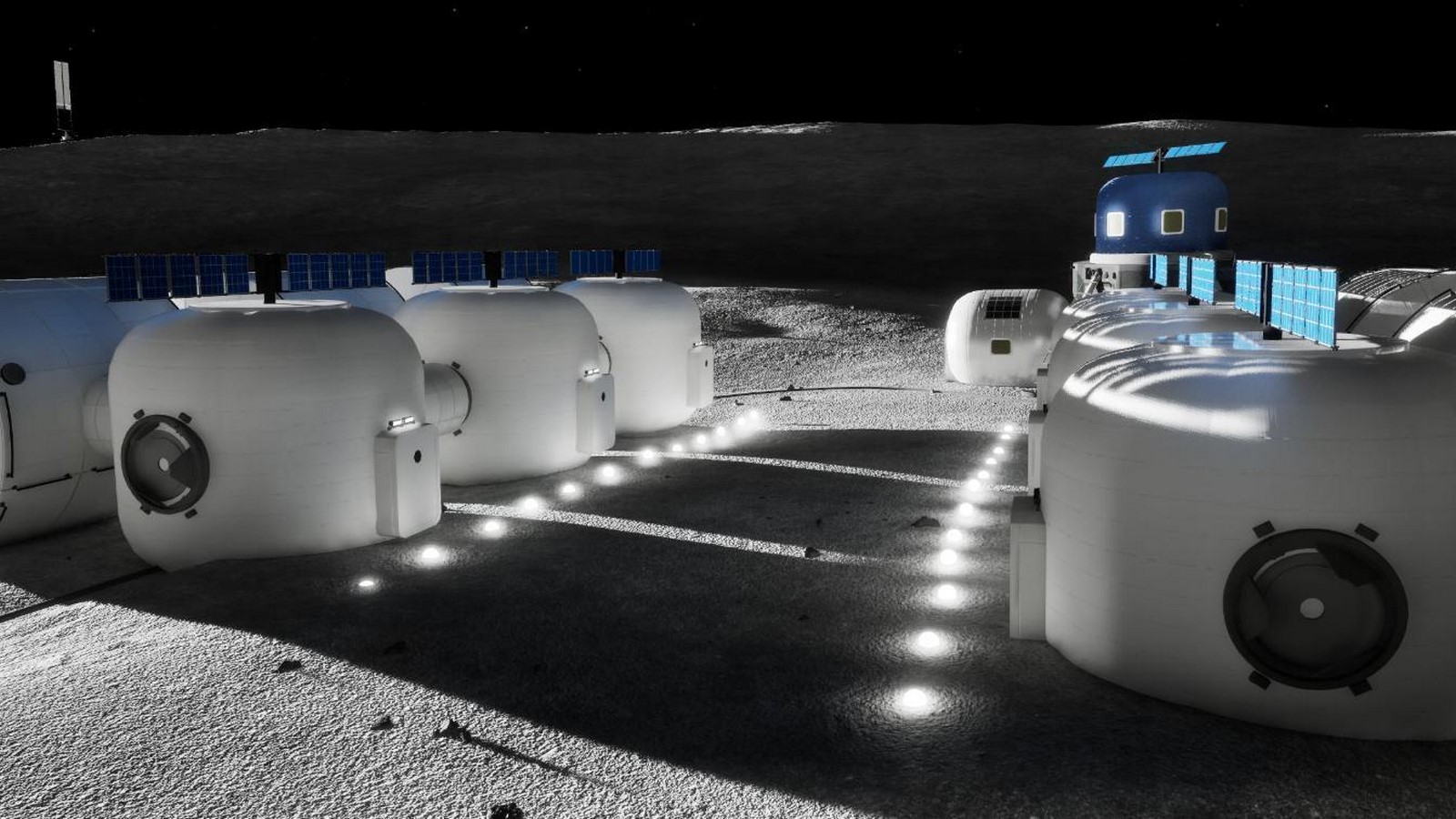
Energy infrastructure is another essential component of Off-Earth architecture. Solar arrays are widely considered the most viable energy source for extraterrestrial habitats. These systems must generate sufficient electricity to support life-support infrastructure, environmental regulation systems, robotic construction technologies, and scientific research equipment. Energy storage systems are equally critical for maintaining stable conditions during periods of reduced sunlight.
Taken together, these experiments represent a new field of architectural research where construction technologies, environmental systems, and human habitation are explored simultaneously. Although many of these ideas remain experimental, they reveal how architecture must adapt when traditional assumptions about climate, materials, and construction methods no longer apply.
Lessons for Earthly Architecture
While Off-Earth Architecture is primarily concerned with environments beyond our planet, the technologies and design strategies emerging from this research are already beginning to influence architecture on Earth. Designing habitats for extreme environments forces architects and engineers to develop solutions that are efficient, adaptable, and capable of functioning with limited resources. These same qualities are becoming increasingly valuable in contemporary architecture as cities confront environmental challenges, rapid urbanization, and resource constraints.
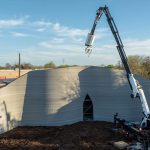
One of the most visible examples of this influence is the development of large-scale additive manufacturing, commonly known as 3D printing. Early research into extraterrestrial construction explored how robotic printers could build shelters using local soil or regolith. Today, similar technologies are being applied on Earth to construct buildings quickly and with minimal waste. Companies such as ICON have already demonstrated 3D printed housing systems capable of producing entire residential units within days. These technologies are increasingly explored for disaster relief housing, emergency shelters, and affordable residential development.
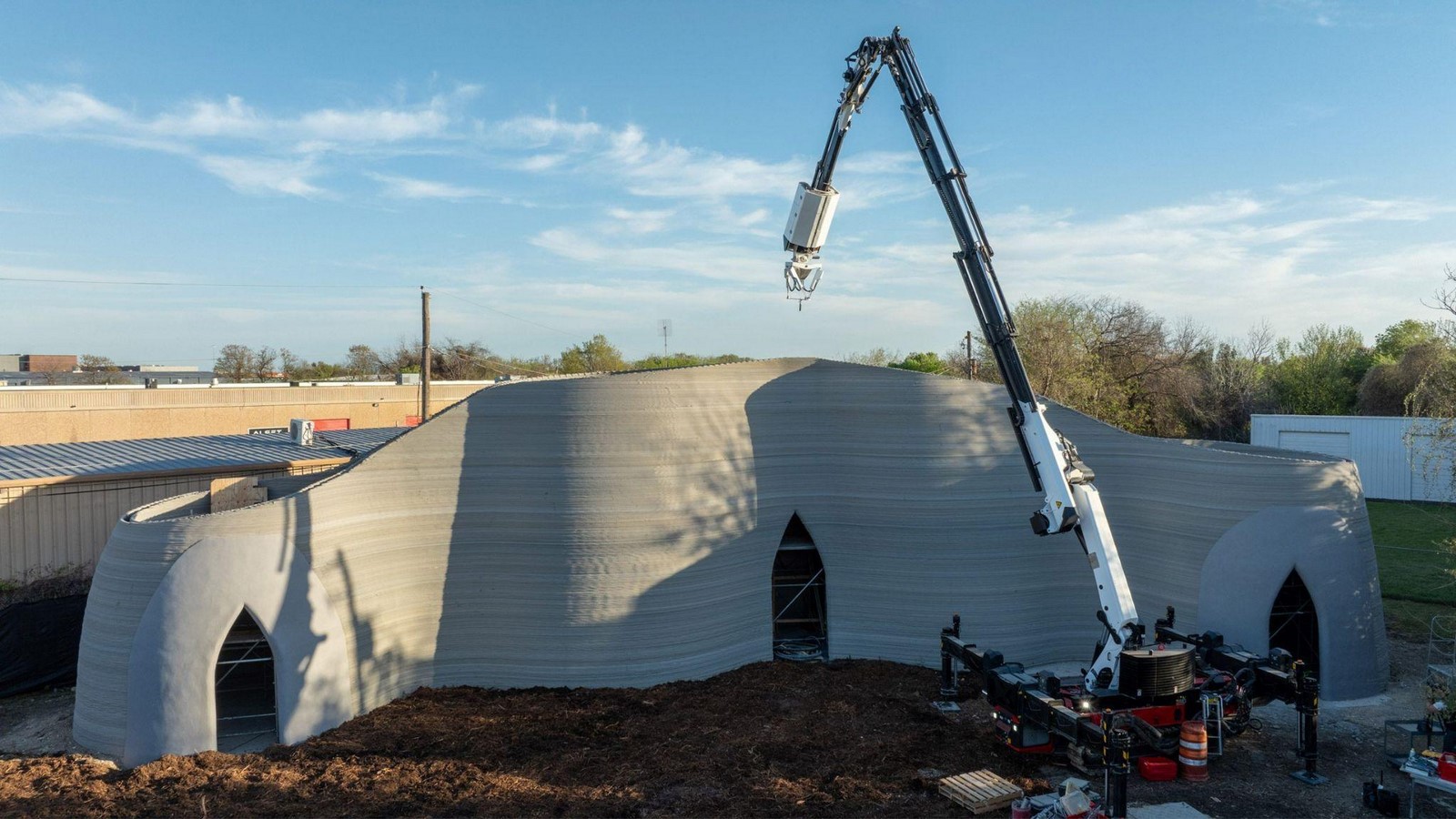
Robotic fabrication is another field where space research is reshaping architectural practice. Construction technologies developed for space habitats rely heavily on automated systems capable of performing complex tasks without direct human intervention. On Earth, robotic fabrication systems are now being integrated into architectural production processes. Robotic arms can fabricate complex building components, assemble prefabricated systems, or produce customized structural elements with high levels of precision. These technologies are gradually transforming how buildings are manufactured and assembled.
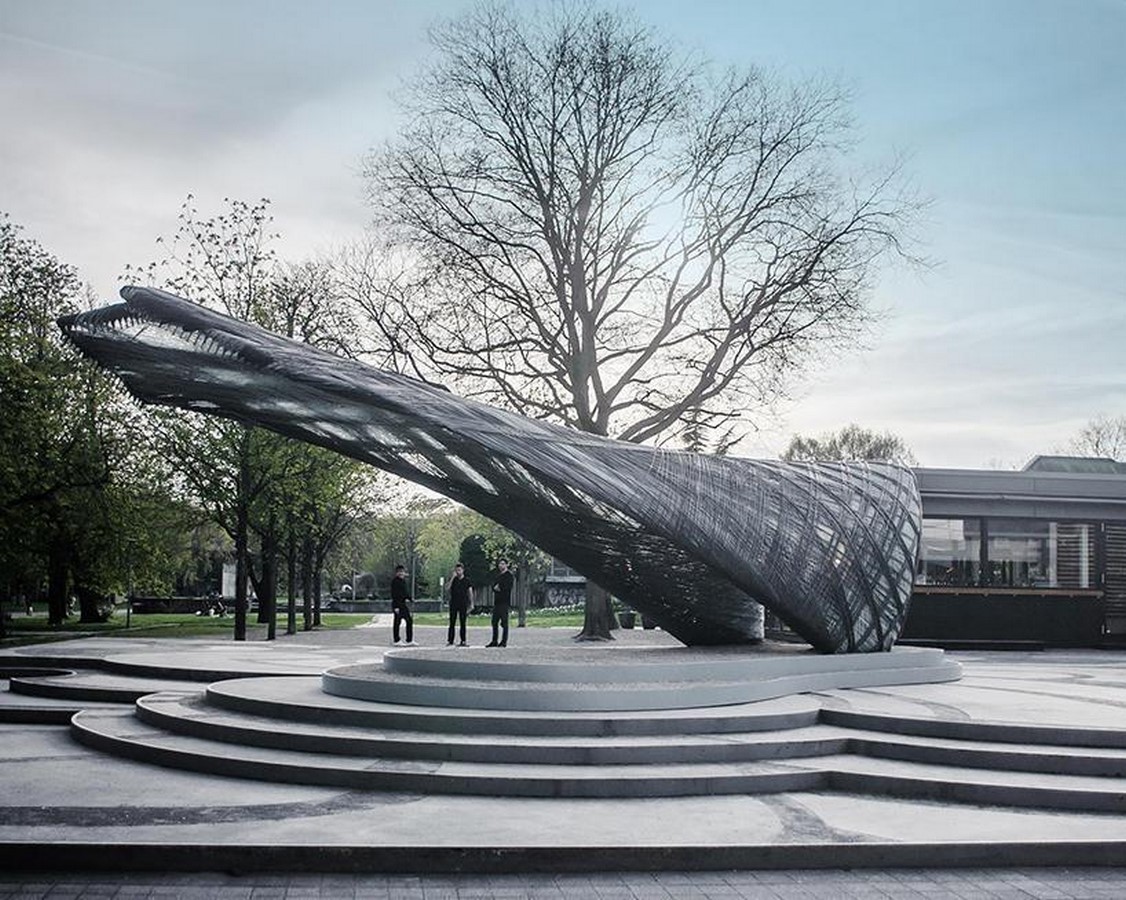
Space architecture has also contributed to the development of modular construction strategies. Habitat modules designed for extraterrestrial environments must be compact, transportable, and capable of expanding into larger settlements over time. Similar approaches are now influencing housing design on Earth. Modular housing systems allow buildings to be assembled rapidly while maintaining flexibility for future expansion or modification. In rapidly growing cities where housing demand is high, such systems offer new possibilities for efficient urban development.
Another important influence lies in the integration of parametric design and advanced computational modeling. Many space habitat proposals rely on computational tools to generate efficient structural forms capable of withstanding extreme environmental conditions. These same parametric design tools are now widely used in contemporary architecture to explore complex structural geometries, optimize material usage, and design responsive building envelopes.
Perhaps the most important lesson emerging from Off-Earth Architecture is the emphasis on resource efficiency. In space habitats every unit of energy, every material component, and every drop of water must be carefully managed. Waste becomes unacceptable because resources are limited. This constraint encourages architects to design buildings that function as integrated environmental systems rather than isolated objects.
Many contemporary sustainable architecture strategies echo these principles. Energy efficient buildings, passive environmental systems, renewable energy infrastructure, and circular material cycles all reflect the same logic that governs space habitats. When architecture operates within strict environmental constraints it begins to rediscover the importance of efficiency, adaptability, and long-term resilience.
In this way the exploration of architecture beyond Earth is already influencing the future of architecture on our own planet. Technologies developed for extraterrestrial habitats are gradually shaping new construction methods, new design tools, and new approaches to sustainability. What began as research for life beyond Earth is increasingly transforming how architecture is conceived and constructed here at home.
Off-Earth Architecture represents one of the most intriguing frontiers of contemporary architectural thinking. By exploring how humans might inhabit environments beyond Earth, architects are forced to reconsider some of the most fundamental assumptions of the discipline. Buildings are no longer simply spaces that shelter human activity. They become systems that support and sustain life.
Yet the significance of this research extends far beyond the possibility of future settlements on the Moon or Mars. The extreme constraints encountered in space reveal architectural strategies that may become increasingly relevant on Earth, particularly in a century shaped by environmental uncertainty and resource limitations.
In this sense, the exploration of architecture beyond our planet ultimately returns to a familiar concern. By understanding how architecture can support life in the most hostile environments imaginable, architects may also discover new ways of designing buildings that respond more responsibly to the fragile conditions of our own world.
References:
ArchDaily (2024) Architecture Beyond Earth: How Space Exploration is Shaping the Future of Architecture. Available at: https://www.archdaily.com/1019663/architecture-beyond-earth-how-space-exploration-is-shaping-the-future-of-architecture (Accessed: 15 April 2026).
NASA (n.d.) Designing Space Exploration with the Human in Mind. Available at: https://www.nasa.gov/centers-and-facilities/johnson/designing-space-exploration-with-the-human-in-mind/ (Accessed: 15 April 2026).
Parametric Architecture (2023) Space Architecture: Designing Habitats for the Moon and Mars. Available at: https://parametric-architecture.com/space-architecture-habitats-moon-mars/ (Accessed: 15 April 2026).
ArchDaily (2019) Architecture Projects for Life in Space. Available at: https://www.archdaily.com/921752/50-years-after-the-moon-landing-15-architecture-projects-for-life-in-space (Accessed: 15 April 2026).
Wikipedia (n.d.) Space Architecture. Available at: https://en.wikipedia.org/wiki/Space_architecture (Accessed: 15 April 2026).
NASA (2014) Habitat Concepts for Deep Space Exploration. Available at: https://ntrs.nasa.gov/api/citations/20140012883/downloads/20140012883.pdf (Accessed: 15 April 2026).