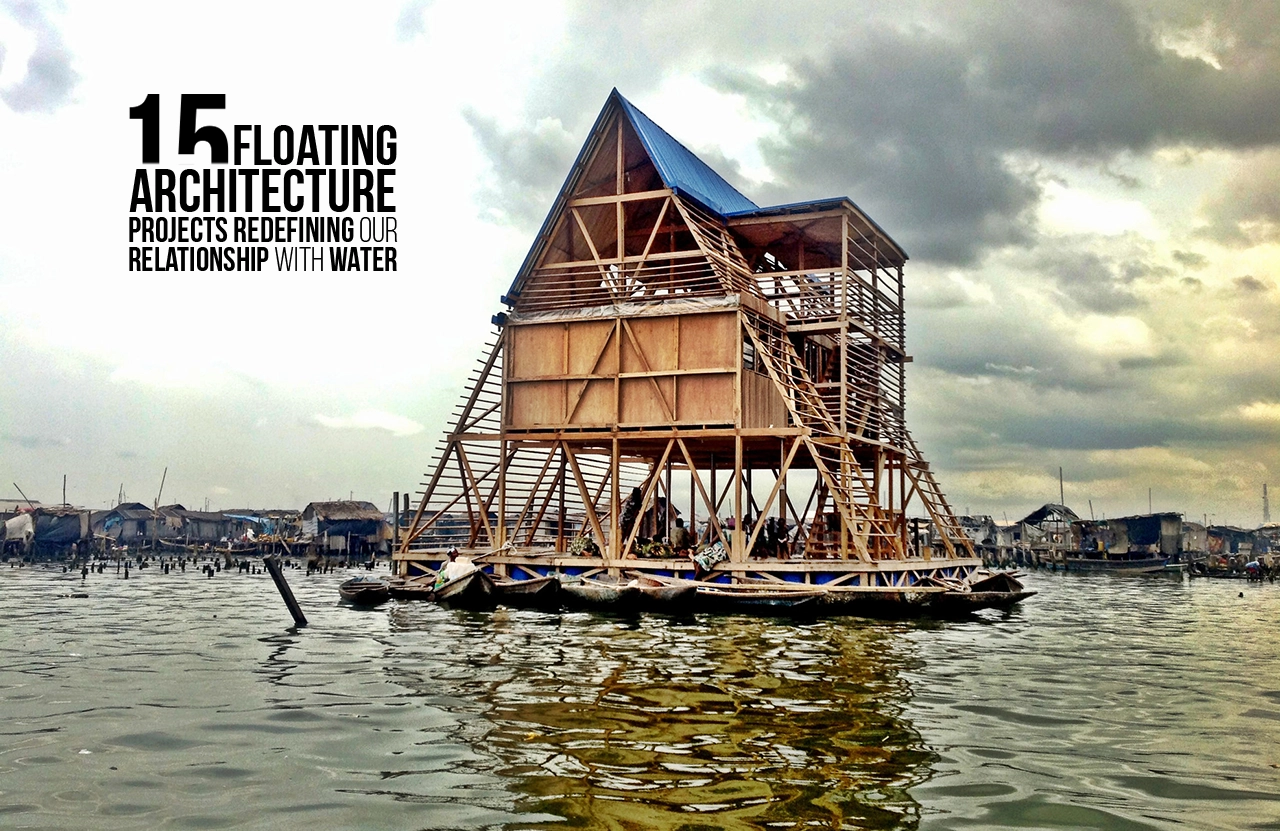
The built environment has faced countless challenges over the years, but the most persistent ones are those born out of global warming. As Earth’s temperature increases, sea levels rise, making urban land increasingly scarce. This creates a problem for future development, as no land would mean no construction. But what if we could explore options other than urban land for construction? To answer this question, many architects look up to Floating Architecture, which has been around for years in the form of houseboats and makeshift river settlements. It has opened a new discipline in architecture and planning as architects across the world focus on a bold question: What if water becomes the new foundation for architecture? This list explores fifteen astounding floating architecture projects, including concepts, prototypes, and built forms, that have redefined our relationship with water.
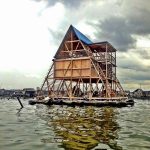
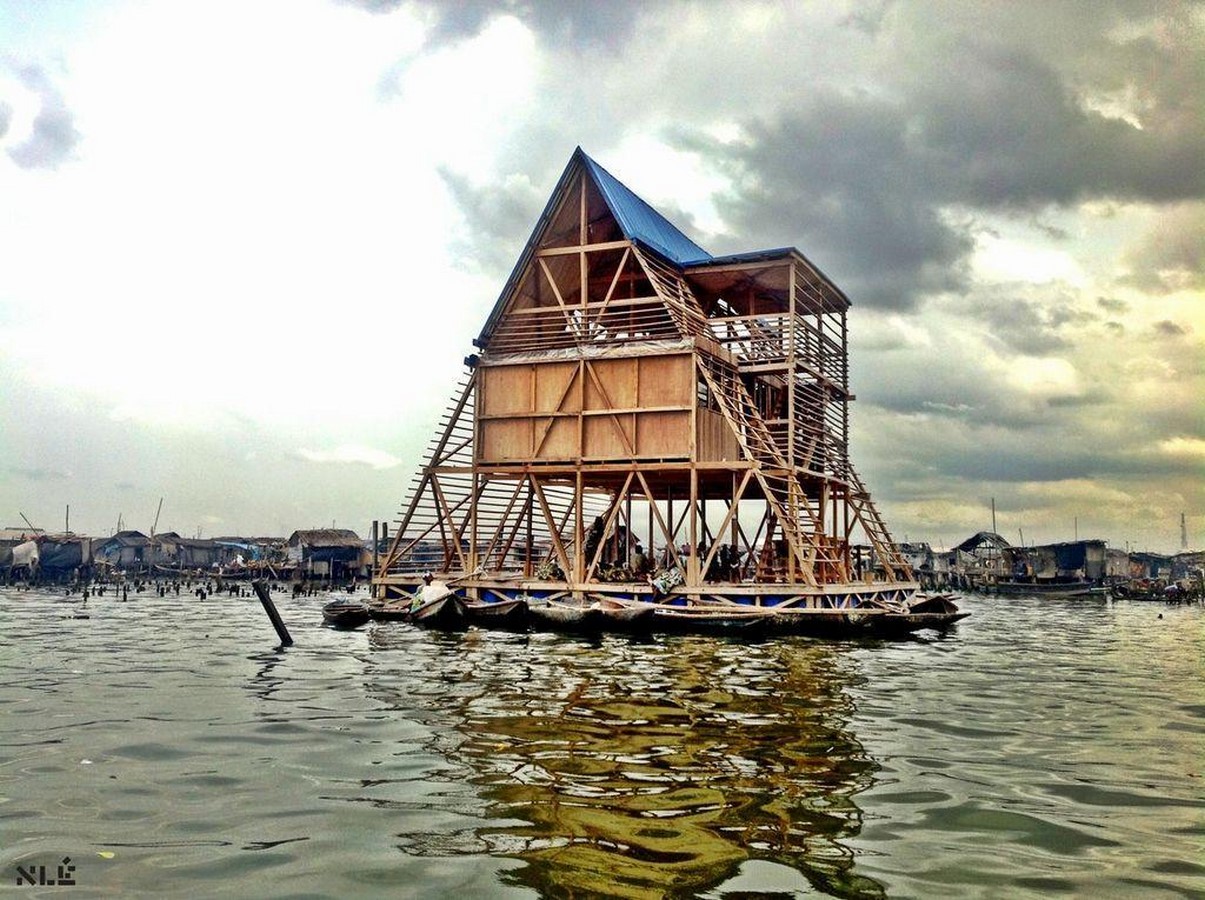
1. Makoko Floating School in Lagos, Nigeria
Perched on the Lagos Lagoon in one of Africa‘s most densely populated waterfront communities, the Makoko Floating School became a global symbol of climate-adaptive design when it was completed in 2013. It was designed by Nigerian-Dutch architect Kunlé Adeyemi of NLÉ to serve as a prototype for floating schools in waterfront communities. It contained an A-frame structure that rose 10 meters high on a buoyant platform made of recycled plastic drums. The school itself offered classrooms, a play area, and a communal space for the residents of the waterfront community that lacked roads and formal infrastructure. The original prototype collapsed in the storm of June 2016, but it set the foundation for MFS II and MFS III, which addressed the shortcomings of the project by using prefabricated, rapid-assembly systems (Frearson, 2014).
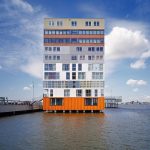
2. Silodam Housing Block in Amsterdam, Netherlands
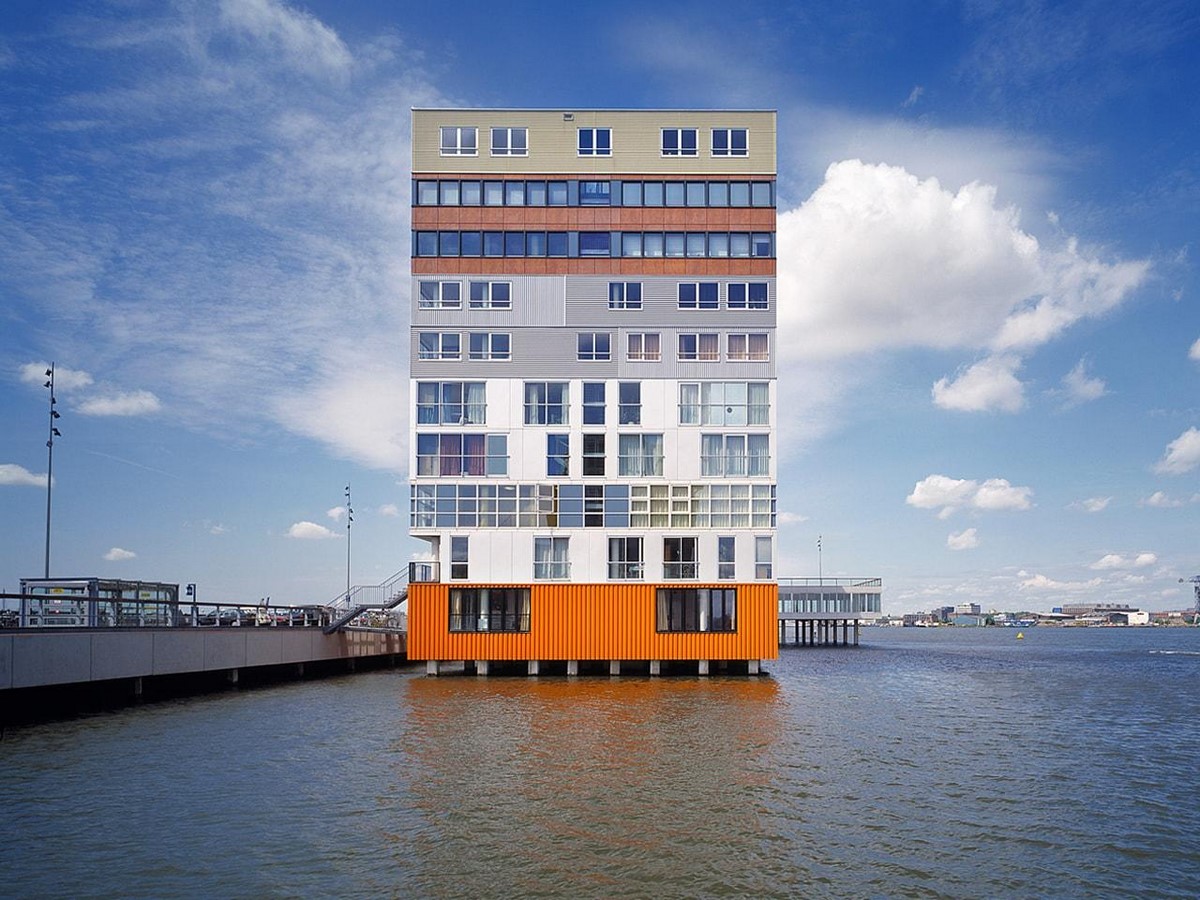
Dutch firm MVRDV has been experimenting with floating architecture long before it became a mainstream discourse as a potential solution for rising sea levels. Exploring Amsterdam’s relationship with its waterways, MVRDV presented the Silodam Housing Block, completed in 2002 on the IJ River in Amsterdam. It is a mixed-use residential complex, stacking 157 homes, offices, and public spaces into a dense, barge-like form anchored at the water’s edge. Even though it is not a completely floating structure, it became a precedent for waterfront urbanism in the Netherlands. In this country, about 26% of land lies above sea level, so Silodam was developed as both an experimental concept and a survival strategy (MVRDV, n.d.).
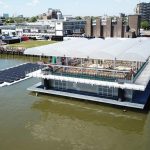
3. Floating Farm in Rotterdam, Netherlands
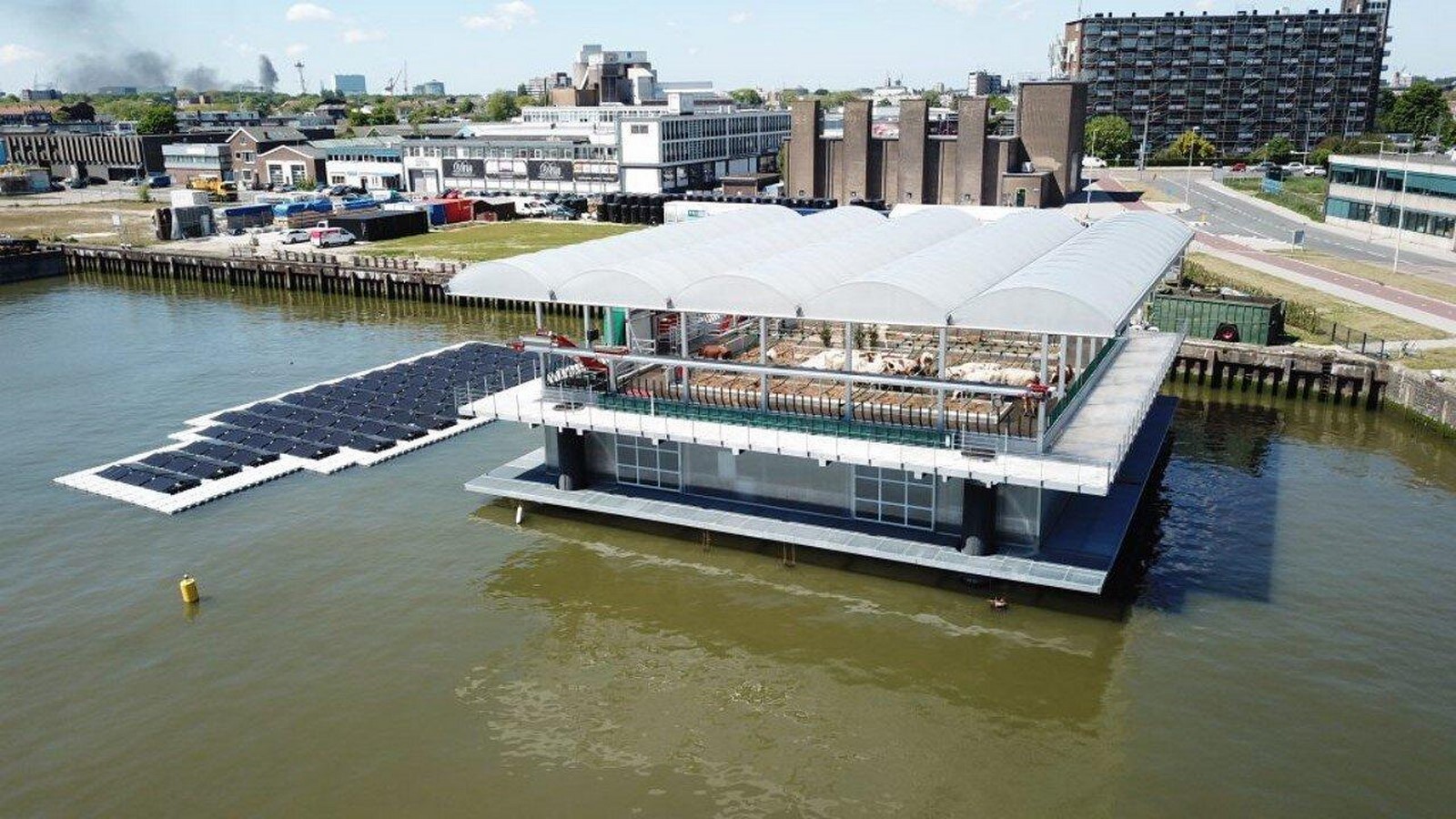
In May 2019, Rotterdam became the first city with a functional offshore dairy farm. Opened in Rotterdam’s Merwehaven harbour, the Floating Farm produces milk, yoghurt, and cheese just kilometres from the city centre. Envisioned by waterborne architecture company Beladon and designed by the firm Goldsmith, the Floating Farm sits on a buoyant concrete pontoon and houses 40 cows alongside a fully operational dairy processing facility. As agricultural land has become sparse due to climate change, this project presented an alternative — a fully engineered farm that produced dairy products close to the city. Built on water, this farm is climate-adaptive and will not be affected by further rainfall and rising sea levels. It is a rare example of floating architecture that is also a part of urban infrastructure, a working farm, and a civic attraction (Editors at Agritecture, n.d.).
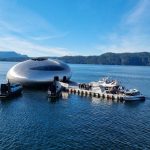
4. Salmon Eye Pavilion in Hardangerfjord, Norway
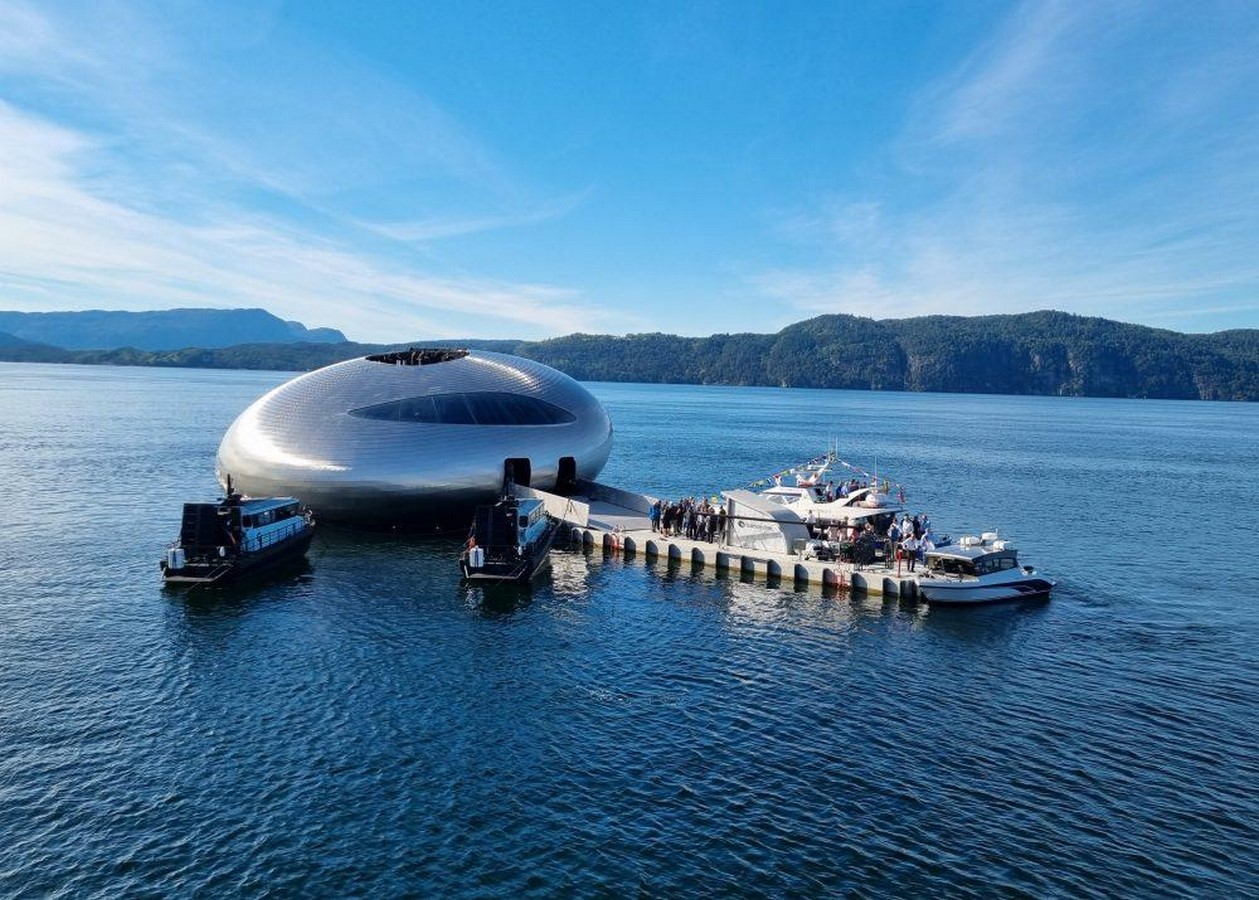
While the first three projects on this list serve as public amenities, the Salmon Eye serves as an exhibition pavilion anchored in Norway’s Hardangerfjord. It was completed in 2022 and designed by Kvorning Design for the aquaculture company Eide Fjordbruk. This egg-shaped pavilion is clad in 9,000 individually cut stainless steel plates that mimic the iridescent scales of a salmon. Thus, the pavilion shifts colours with the changing light and weather. Inside, the pavilion is an immersive museum of sustainable aquaculture. The building’s shape and its ovoid hull were designed by naval architects to minimise its impact on the surrounding marine ecosystem, and the structure is fully self-sufficient in energy (Ikiz, 2022).
5. Floating Bamboo House (FB House) in Vietnam
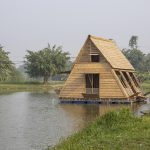
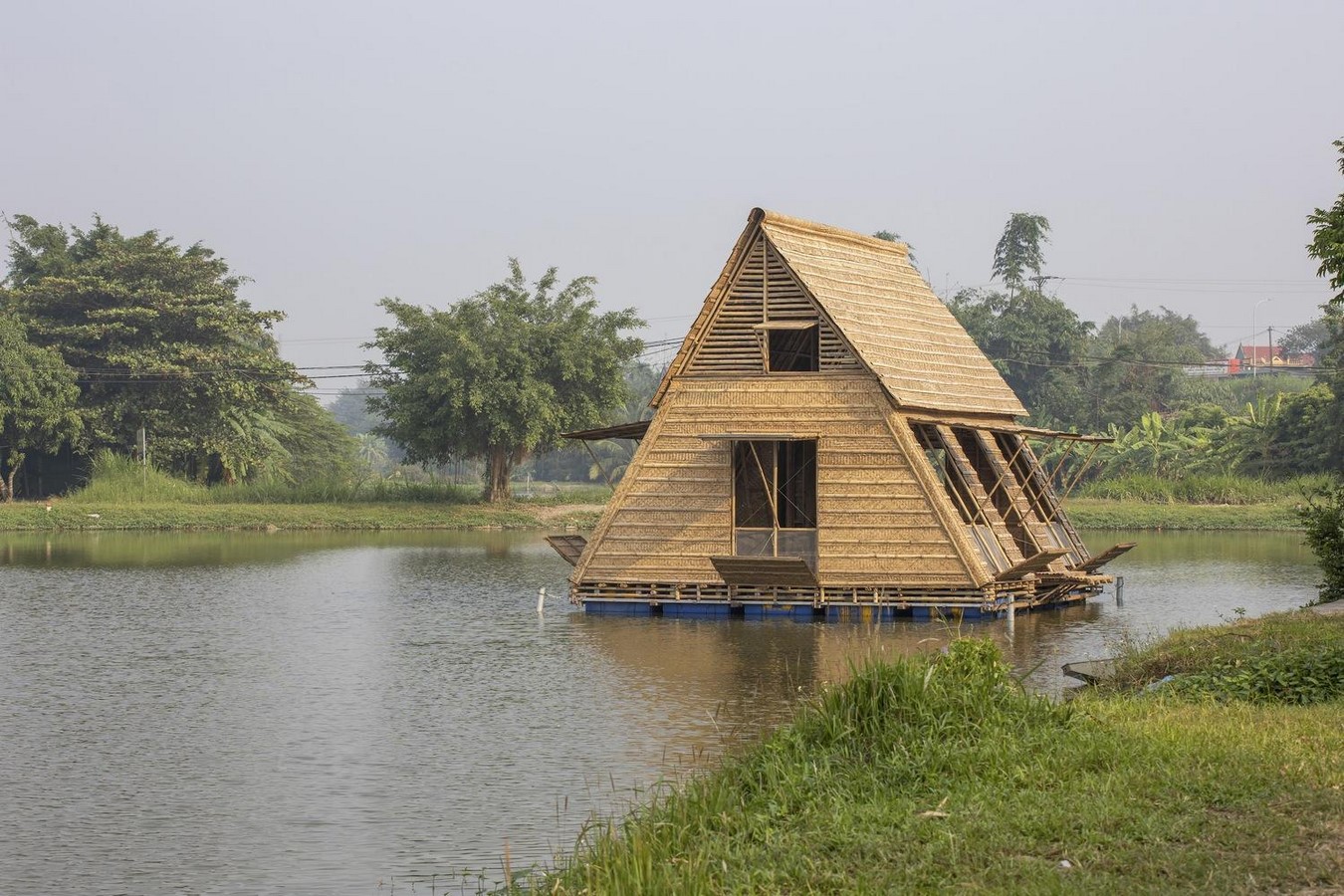
In the Mekong Delta and Red River Delta regions of Vietnam, communities face a dual threat: chronic poverty and rapidly rising flood levels driven by climate change. H&P Architects came up with a solution for both through their prototype of the Floating Bamboo House. Also known as the FB House, it is an affordable prefabricated structure made out of bamboo that floats on a series of locally sourced drums. The FB House was inspired by Vietnam’s vernacular construction, especially the communal Rông house. It has an open, multi-purpose plan preferred by the communities it was designed for. Sustainable initiatives integrated in this project include solar panels for renewable energy, composting toilets, and rainwater harvesting systems (Abdel, 2023).
6. Genesis (The Floating Church) in London, UK
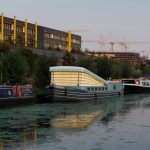
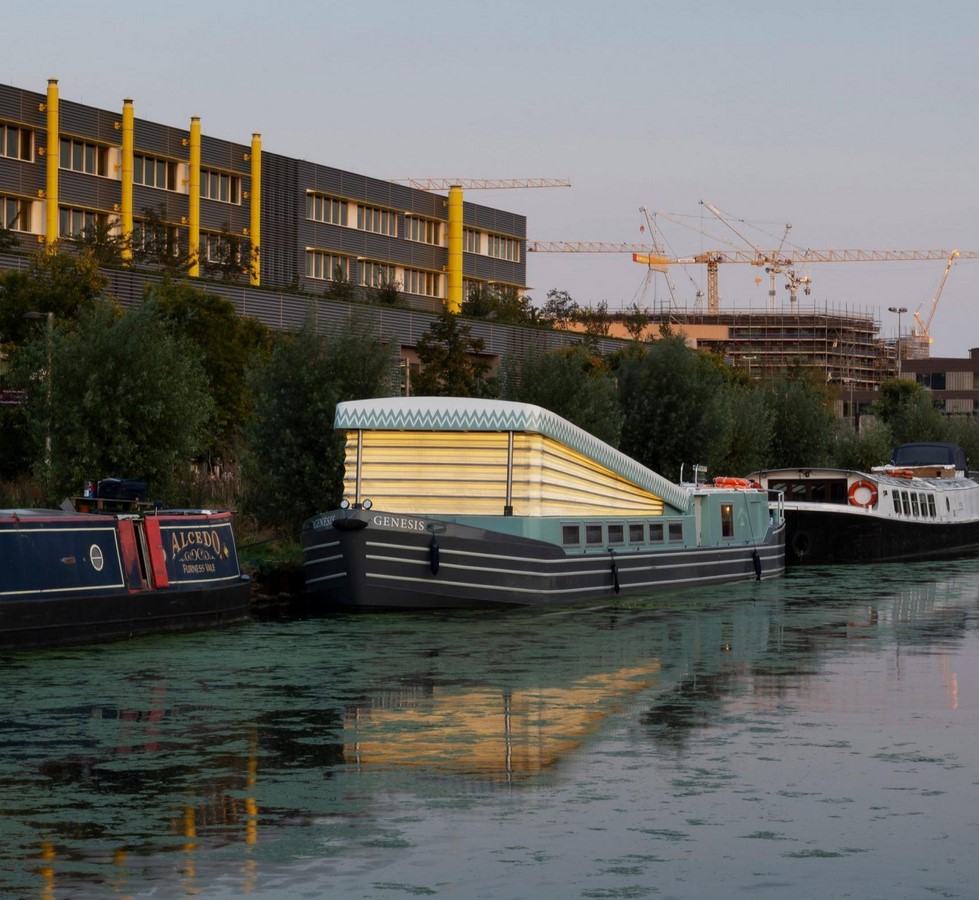
Designed by Denizen Works in collaboration with Turks Shipyard and naval architect Tony Tucker, Genesis is a floating church commissioned by the Diocese of London that navigates the city’s canals. It is constructed in a wide-beam barge which moors in emerging communities across London’s brownfield regeneration zones. More than just a place of worship, Genesis also offers a community space for hosting yoga classes, art exhibitions, and supper clubs. Its most distinct feature is the kinetic roof inspired by the bellows of a church organ. It was also shortlisted for the Dezeen Award in 2021, being a one-of-a-kind church that moves between communities rather than waiting for people to arrive (Crook, 2020).
7. Jellyfish Barge in Tuscany, Italy
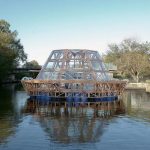
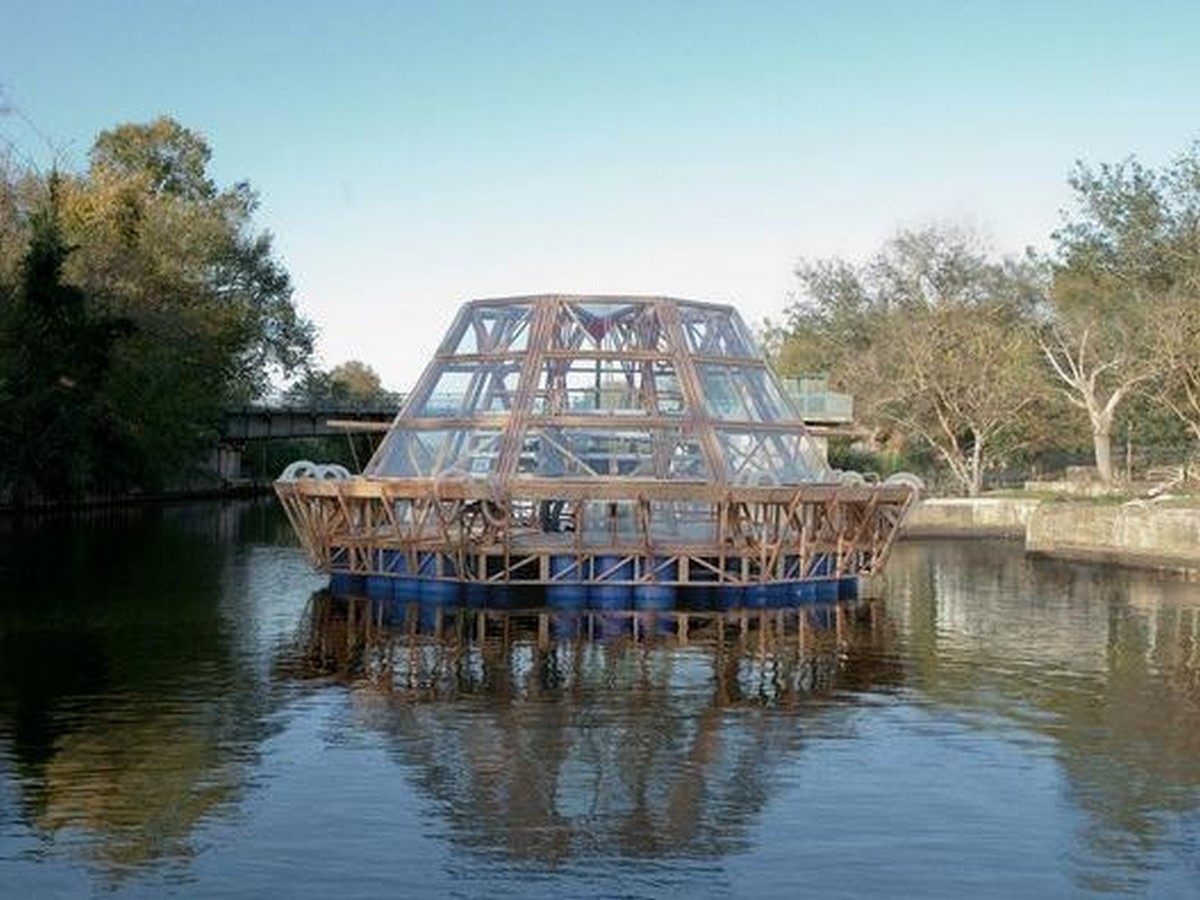
An example of sustainable floating architecture, the Jellyfish Barge by Studiomobile has redefined self-sufficiency in waterborne living. It is an octagonal wooden greenhouse that operates independently from land-based infrastructure. It can produce its own fresh water through solar-powered desalination and grow food hydroponically without soil, pesticides, or connection to the electrical grid. A single barge can produce up to 70 litres of fresh water per day and cultivate enough vegetables to feed four to six people year-round. Thus, the Jellyfish Barge is a direct response to water scarcity and food insecurity. It can be easily reproduced as its structure is low-cost, modular, and constructed with widely available materials (Walker, 2014).
8. Waterstudio Floating Villas in the Netherlands
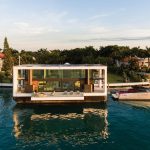
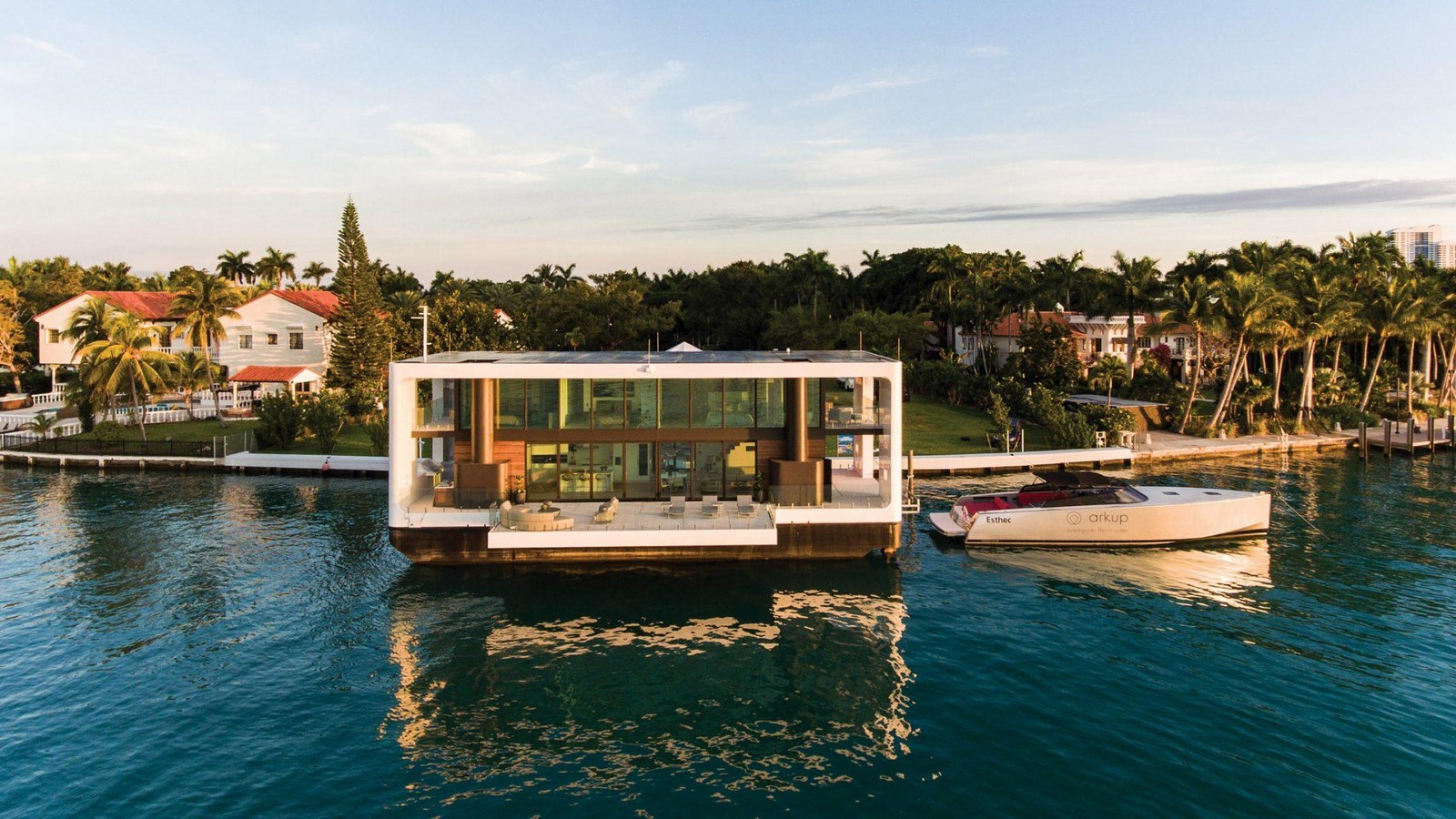
Founded by Dutch architect Koen Olthuis, Waterstudio.NL has been working for years to normalise water-based living in the Netherlands and globally as well. Their main design philosophy is “to live with water rather than fight it.” This firm has designed over 300 floating projects across more than 40 countries, which include floating villas, urban houseboats, floating schools and mosques, and prefabricated floating home systems. These floating villas celebrate water and treat it as a site condition rather than a challenge. Large glazed facades, private jetties, and roof terraces give a distinct character to these villas and blend the interior with the aquatic landscape (Carlson, 2020).
9. Floating Office Rotterdam in the Netherlands
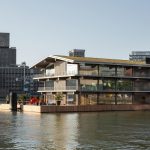
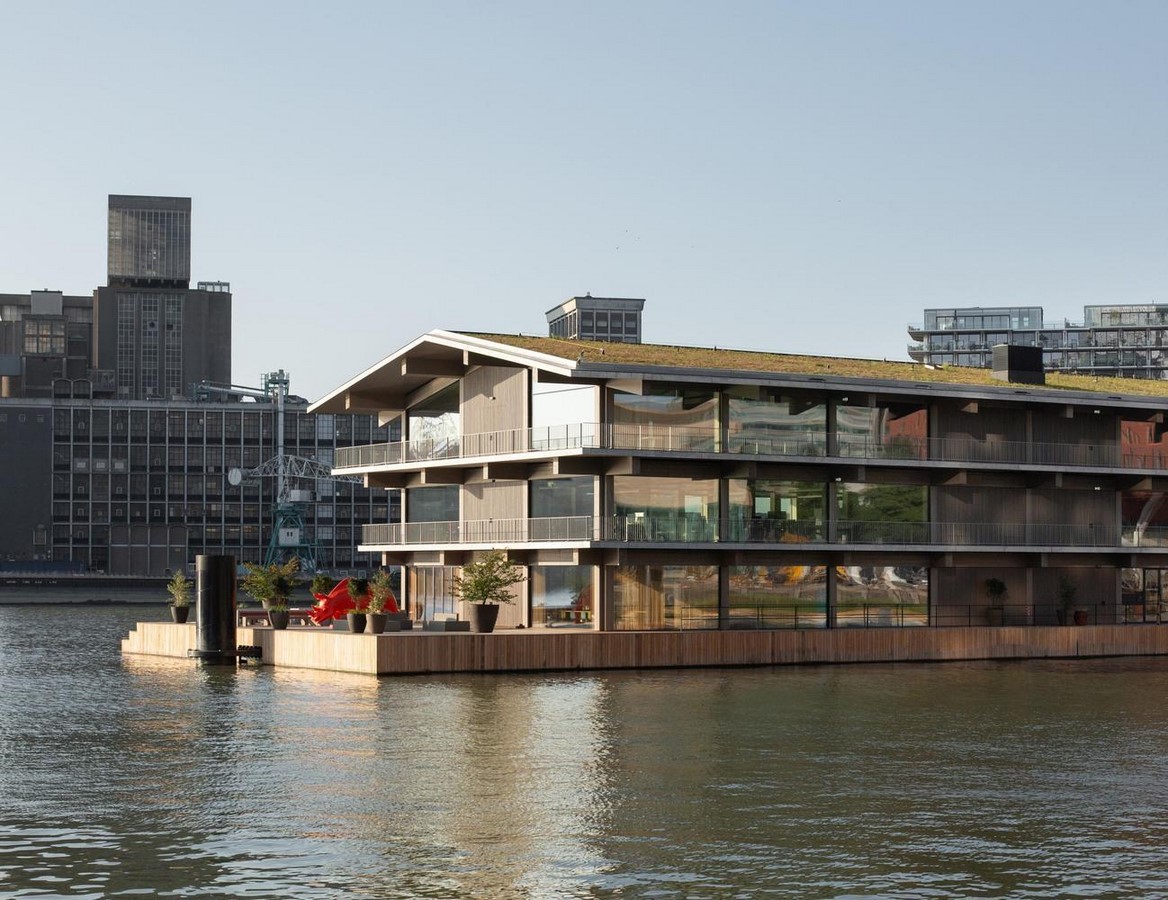
Inaugurated on the Rijnhaven harbour in 2021, the Floating Office Rotterdam became Europe’s largest floating office building. It was designed by the Powerhouse Company and built entirely from cross-laminated timber, sitting on a concrete pontoon that rises and falls with tidal movements. This 3000 square-meter project demonstrated that commercial floating architecture can be robust, dignified, and high-performing enough for everyday use. As for sustainable initiatives, the building is fully off-grid and generates its own energy through a system of solar panels and uses the thermal properties of the harbour water for heating and cooling (Koshta, 2026).
10. Antiroom II Pavilion in Malta
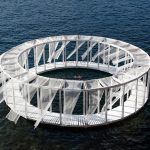
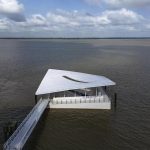
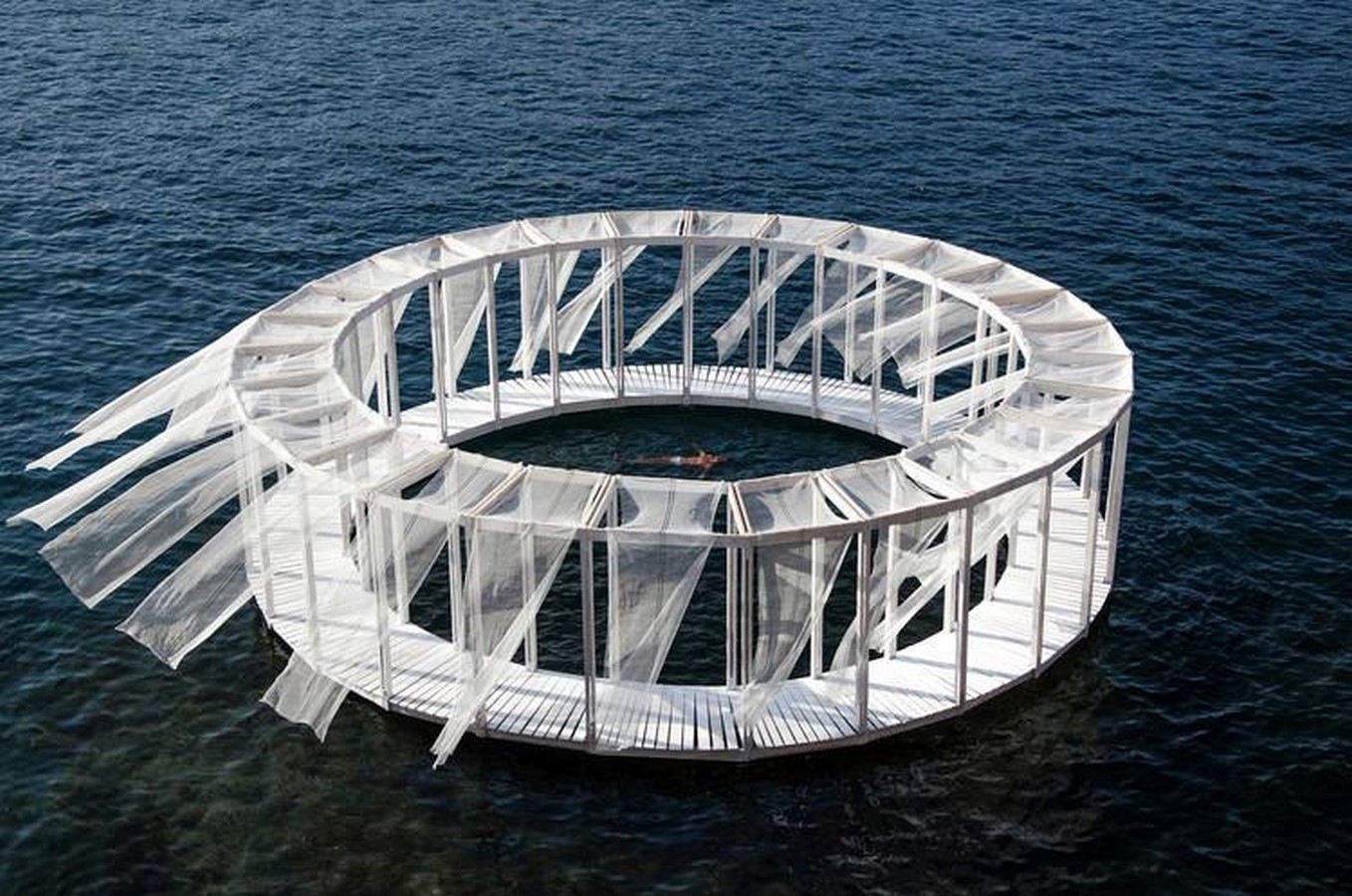
Not all floating architecture is concerned with utility. Antiroom II, designed by architects Elena Chiavi, Ahmad El Mad, and Matteo Goldoni and installed off the coast of Malta in 2016. It is a deliberately unreachable floating platform, which can be accessed only by swimming or by boat. This platform has a minimal design, featuring a lightweight timber deck with a simple shelter. However, its concept is highly interesting. By designing a space that cannot be casually entered, the architects presented the experience of water itself: its resistance, its temperature, and the physical sensation of arriving somewhere by swimming rather than walking. Antiroom II belongs to a lineage of experimental floating architecture that treats water as a medium through which architecture is experienced, rather than just a construction site (Vada, 2021).
11. Oceanix City in Busan, South Korea
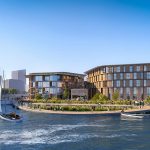
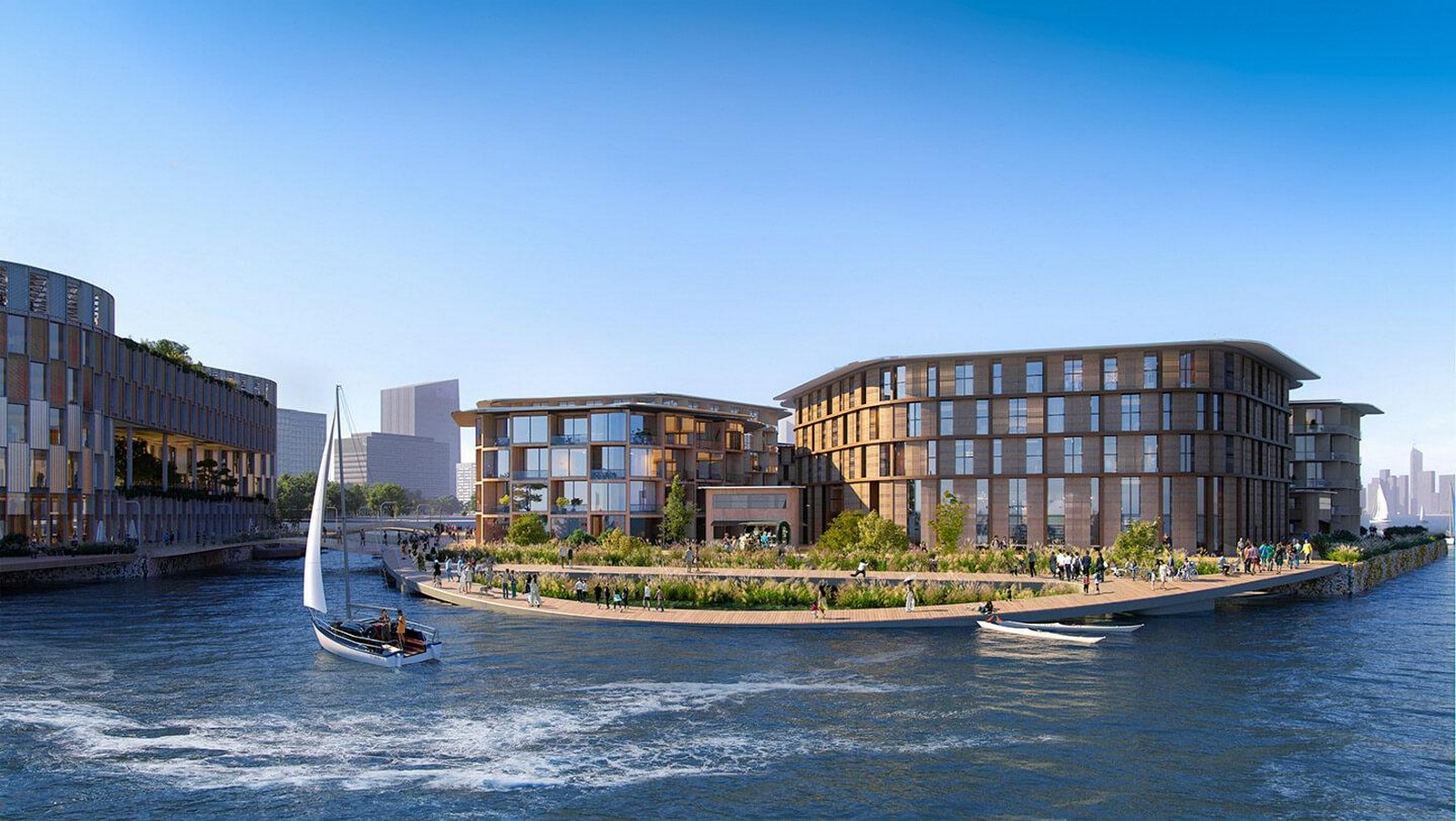
The projects featured above are on a much smaller scale compared to Oceanix City in Busan, South Korea. In 2022, Bjarke Ingels Group, in partnership with UN-Habitat, gave the first prototype for a sustainable floating city. Oceanix City Busan is designed as a modular network of hexagonal platforms, each capable of housing up to 300 residents. These platforms can be clustered and reconfigured as the community grows. The prototype covers 6.3 hectares and is designed to be fully self-sufficient in energy, water, and food production. Considering the UN’s projection that by 2100, rising sea levels could displace up to one billion people from coastal cities, cities such as Oceanix are the future of urban design (Oceanix, n.d.).
12. Floating Pavilion in Rotterdam, Netherlands
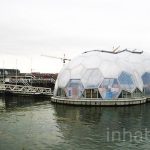
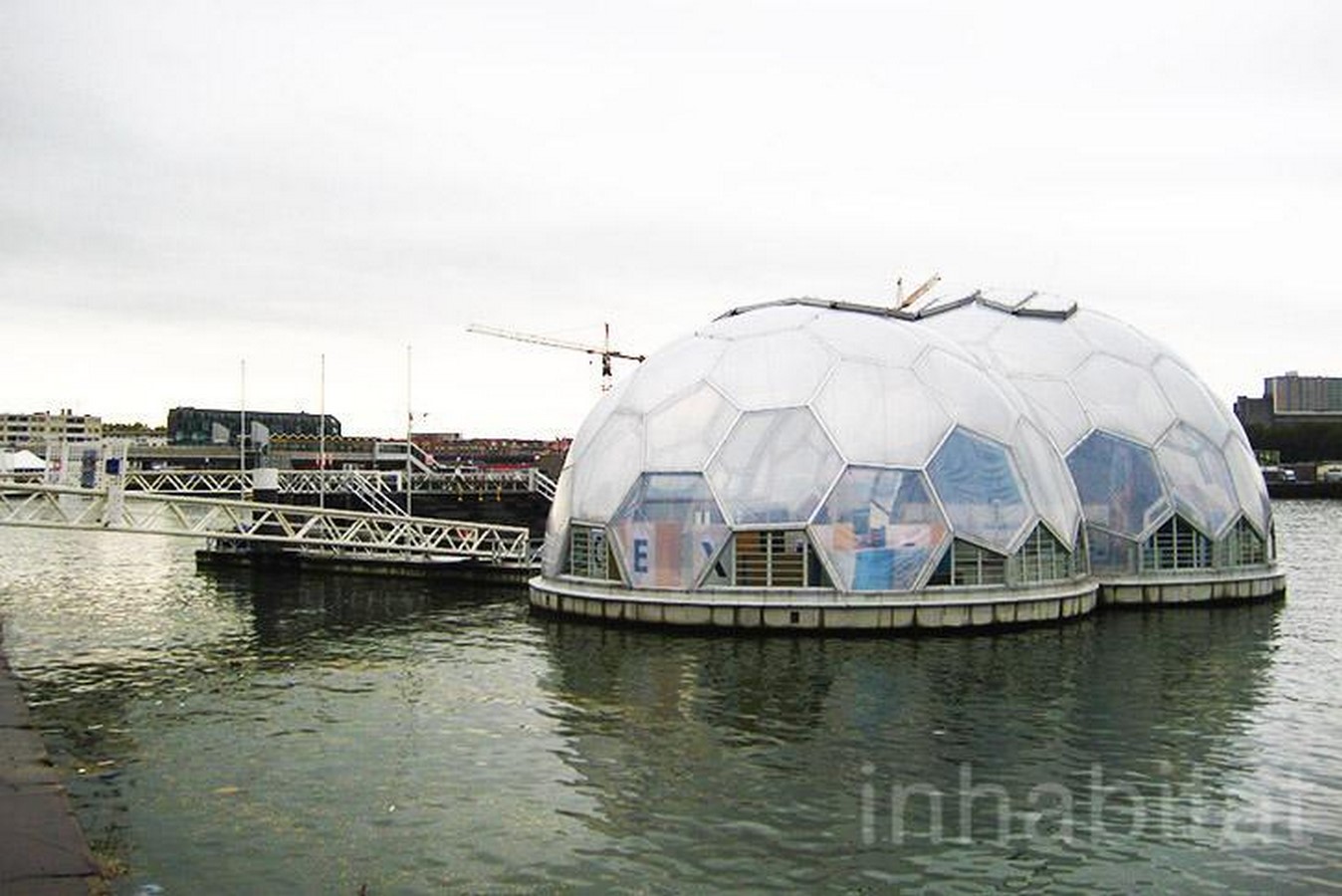
A significant example of contemporary floating architecture in Europe, Rotterdam’s Floating Pavilion was completed in 2010, designed by DeltaSync in collaboration with Buro Happold. Its structure consists of three interconnected transparent hemispheres – the largest spanning 24 metres in diameter – resting on a buoyant concrete pontoon. It was one of the first buildings in Europe to be certified as climate-proof, as it integrates passive climate systems, solar energy, and a direct connection to the thermal properties of the surrounding water (Lettow Studios, n.d.).
13. Lilypad, a Conceptual Floating City
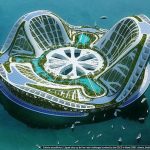
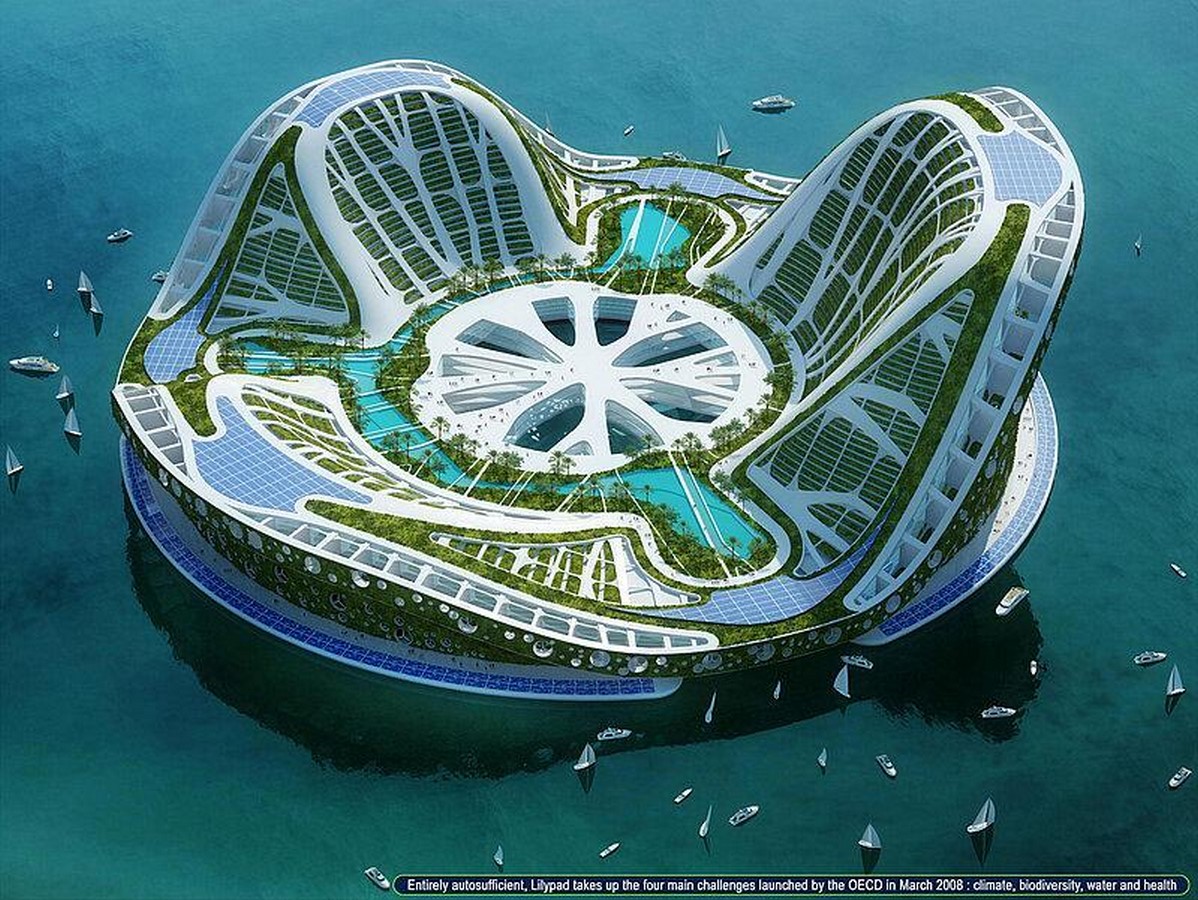
A concept given by architect Vincent Callebaut in 2008, the Lilypad is a proposal for a fully self-sufficient floating ecopolis designed to house 50,000 climate refugees displaced by rising sea levels. It features urban development in water in the shape of an enormous aquatic lily pad. It was presented as a mixed-use programme of residences, offices, and commercial spaces with a central lagoon that would collect and filter rainwater. The entire structure would be clad in titanium dioxide-coated polyester capable of absorbing atmospheric pollution. Even though this concept never reached execution, it is an interesting study in urban-scale floating architecture and influenced projects like Oceanix and Maldives Floating City (Studio de, 2023).
14. AquaPraça Floating Plaza on the Amazon River, Brazil
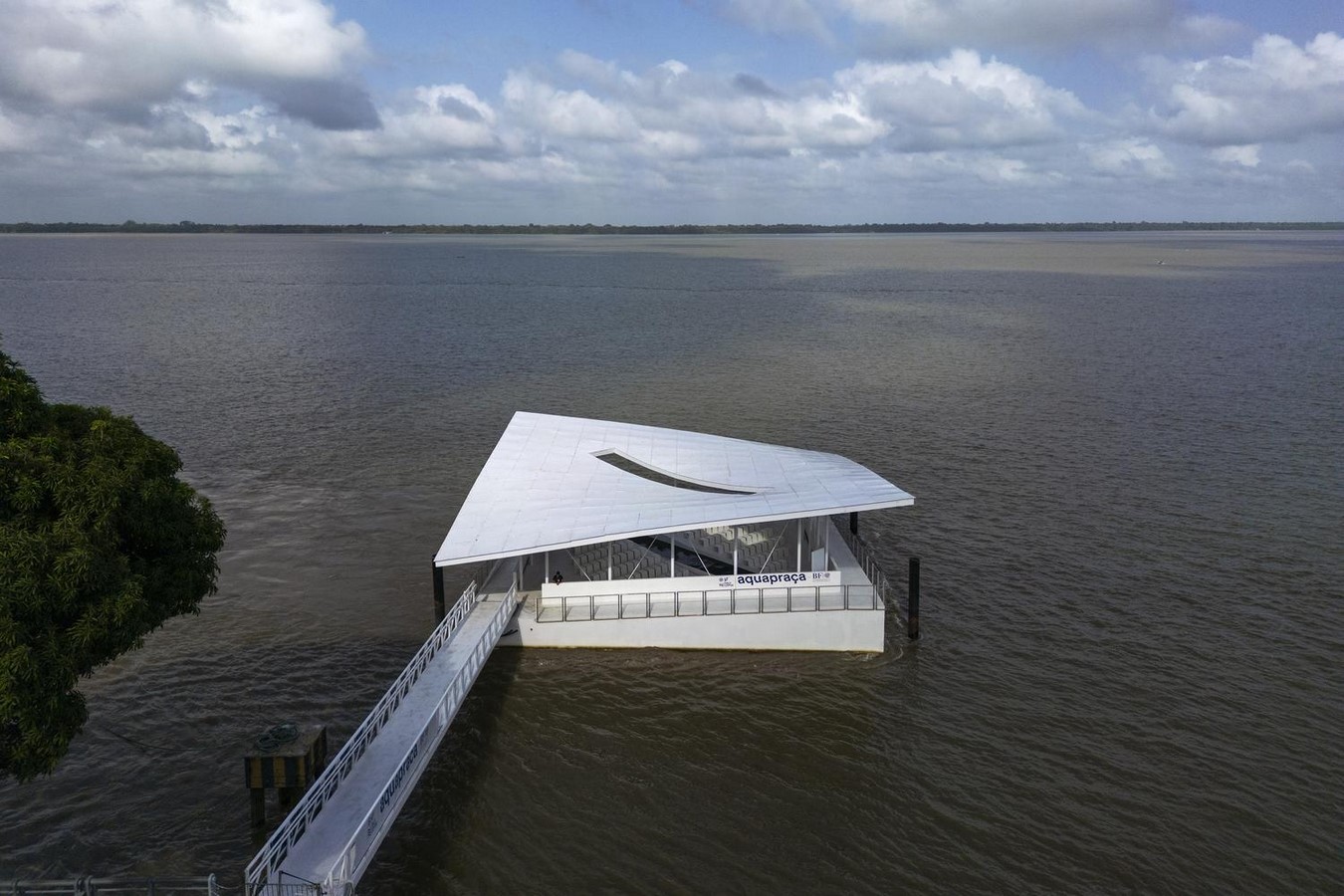
A recent entry in this list, AquaPraça Floating Plaza, debuted at the 2025 Venice Architecture Biennale before relocating permanently to Belém, Brazil, on the Amazon River. It was designed by Carlo Ratti Associati in collaboration with Höweler + Yoon Architecture as a floating public plaza that functions as a civic gathering space, inviting residents and visitors to sit, congregate, and view the river. It has a deliberately inclusive design, free of steps, shaded by a lightweight canopy, and furnished with seating arranged to encourage social interaction. AquaPraça is an example of floating architecture as democratic infrastructure – a public square for a city built on water (Koshta, 2025).
15. Maldives Floating City
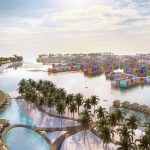
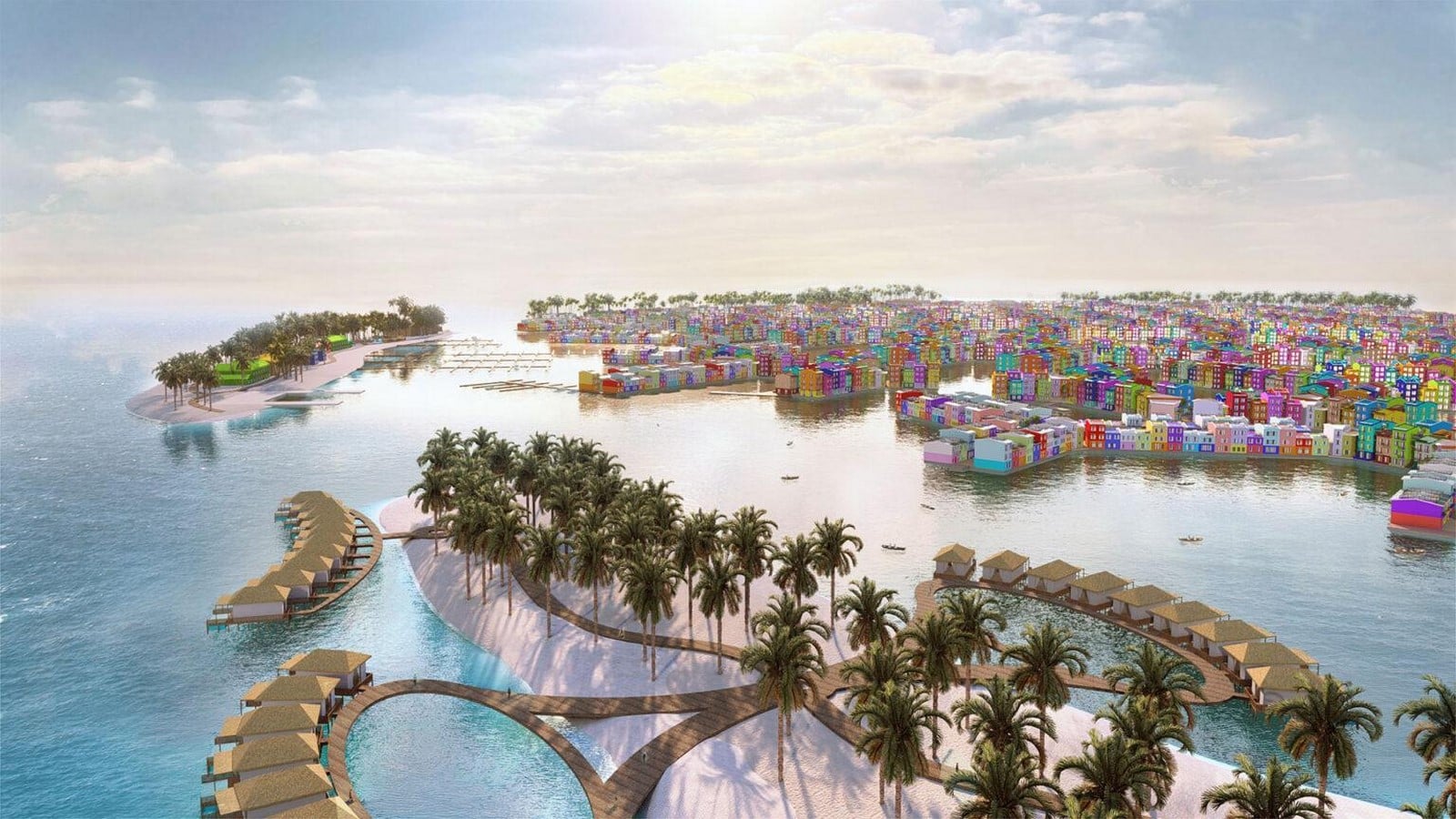
No project on this list carries the same political and existential weight as the Maldives Floating City. Being a cluster of 1,200 islands in the Indian Ocean, the Maldives is one of the countries most acutely threatened by climate change due to rising sea levels and global warming. The Floating City, designed by Dutch Docklands in collaboration with the Maldivian government, is an answer to the pressing climatic challenges the Maldives is currently facing. The masterplan covers 200 hectares of a sheltered lagoon near the capital Malé and will accommodate up to 20,000 residents. It is a network of floating platforms organised around a branching canal system inspired by the geometry of brain coral. Construction for this ambitious project began in 2022, with the first residents expected to move in during the latter half of this decade (Maldives Floating City, 2021).
Floating Architecture is no longer a futuristic concept but has become a potential solution for rising sea levels, growing populations, and designing on water. For the next generation of architects, designing on water will be a necessity rather than an optional specialisation. Understanding buoyancy, tidal movement, marine ecosystems, and the social dynamics of waterfront communities will be as important as knowing how to read a site plan or detail a junction. The projects on this list are blueprints for a time when humanity finally learns to live on water instead of seeing it as a climatic challenge.
References:
Abdel, H. (2023). Floating Bamboo House / H&P Architects. [online] ArchDaily. Available at: https://www.archdaily.com/1001723/floating-bamboo-house-h-and-p-architects.
Carlson, C. (2020). Waterstudio.NL designs yacht villa that can be raised out of the water. [online] Dezeen. Available at: https://www.dezeen.com/2020/08/18/arkup-75-yacht-villa-waterstudio-nl-electric/.
Crook, L. (2020). Floating Genesis church crowned by luminous pop-up roof. [online] Dezeen. Available at: https://www.dezeen.com/2020/10/30/genesis-floating-church-canal-boat-denizen-works-london/.
Editors at Agritecture (n.d.). Building The World’s First Floating Farm In The Netherlands. [online] AGRITECTURE. Available at: https://www.agritecture.com/blog/2021/8/24/building-the-worlds-first-floating-farm-in-the-netherlands.
Frearson, A. (2014). NLE’s floating school casts anchor in Lagos Lagoon. [online] Dezeen. Available at: https://www.dezeen.com/2014/03/25/makoko-floating-school-nigeria-nle/.
Ikiz, S.U. (2022). Salmon Eye, a spectacular floating pavilion on Hardangerfjord. [online] Parametric Architecture. Available at: https://parametric-architecture.com/salmon-eye-a-spectacular-floating-pavilion-on-hardangerfjord/.
Koshta, H.A. (2025). AquaPraça Floating Plaza / Carlo Ratti Associati + Höweler + Yoon Architecture. [online] ArchDaily. Available at: https://www.archdaily.com/1036829/aquapraca-floating-plaza-carlo-ratti-associati-plus-howeler-plus-yoon-architecture [Accessed 12 Apr. 2026].
Koshta, H.A. (2026). Floating Office Rotterdam / Powerhouse Company. [online] ArchDaily. Available at: https://www.archdaily.com/1038576/floating-office-rotterdam-powerhouse-company [Accessed 11 Apr. 2026].
Lettow Studios (n.d.). Rotterdam Floating Pavilion. [online] INSIDEflows. Available at: https://www.insideflows.org/project/rotterdam-floating-pavilion/.
Maldives Floating City (2021). Maldives Floating City – World’s First True Floating Island City. [online] Maldives Floating City. Available at: https://maldivesfloatingcity.com/.
MVRDV (n.d.). MVRDV – Silodam. [online] www.mvrdv.com. Available at: https://www.mvrdv.com/projects/163/silodam.
NLE (2011). MFS I – MAKOKO FLOATING SCHOOL – NLÉ. [online] nleworks.com. Available at: https://nleworks.com/case/makoko-floating-school/.
Oceanix (n.d.). Busan. [online] Oceanix. Available at: https://oceanix.com/busan/.
Studio de (2023). Lilypad. [online] Jacques Rougerie Database. Available at: https://www.jacquesrougeriedatabase.com/project/lilypad [Accessed 11 Apr. 2026].
Vada, P. (2021). AntiRoom II Pavilion / Elena Chiavi + Ahmad El Mad + Matteo Goldoni. [online] ArchDaily. Available at: https://www.archdaily.com/780001/antiroom-ii-elena-chiavi-plus-ahmad-el-mad-plus-matteo-goldoni.
Walker, C. (2014). ‘Jellyfish Barge’ Provides Sustainable Source of Food and Water. [online] ArchDaily. Available at: https://www.archdaily.com/569709/jellyfish-barge-provides-sustainable-source-of-food-and-water.