“Loneliness does not come from having no people around, but from being unable to communicate the things that seem important.”
-Carl Jung
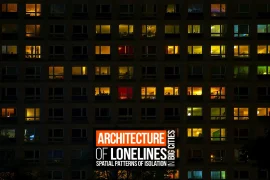
Cities are often imagined as places of public interaction, connection with dense networks of people , movement and activities. Yet paradoxically this is the major place while loneliness thrives in the most. In a modern age where millions of people live side by side doing their own activities many happen to experience a profound sense of isolation. This raises a question “is loneliness merely a social condition, or is it something that can be designed? Architecture which is often celebrated for bridging people together might silently act in an opposite way. From high rise buildings to public centres like malls, the built environment plays a major role in shaping the way how we relate or fail to relate to one another.
The Rise of Urban Loneliness
Loneliness is no longer to be considered only as an emotional state, it is increasingly recognized as a public health concern. Many large – scale housing developments demonstrate how a high density population can coexist with minimal interaction.
Modern cities like Tokyo and London report high levels of social isolation despite high population density. While digital life plays a significantly equal blame, spatial conditions also tend to play an equally critical role.
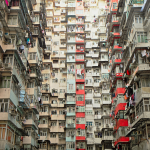
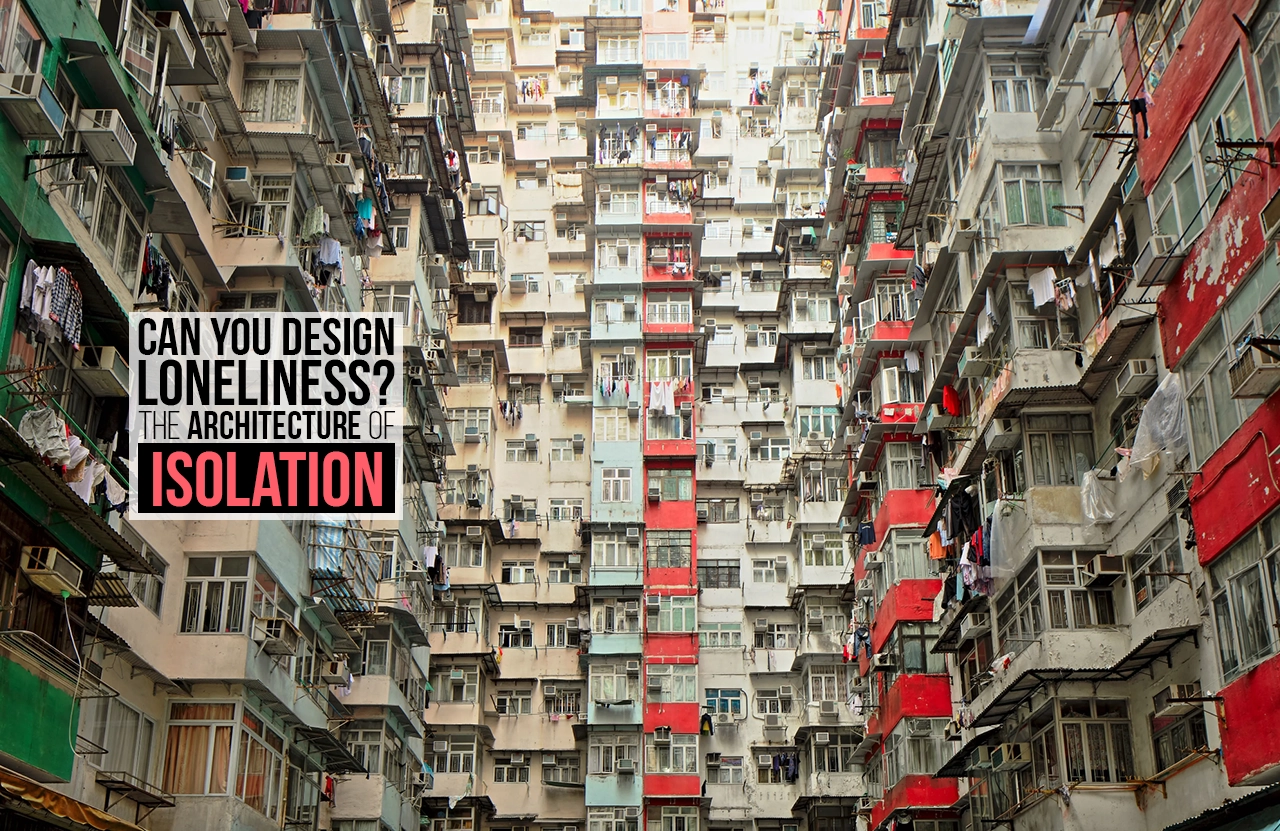
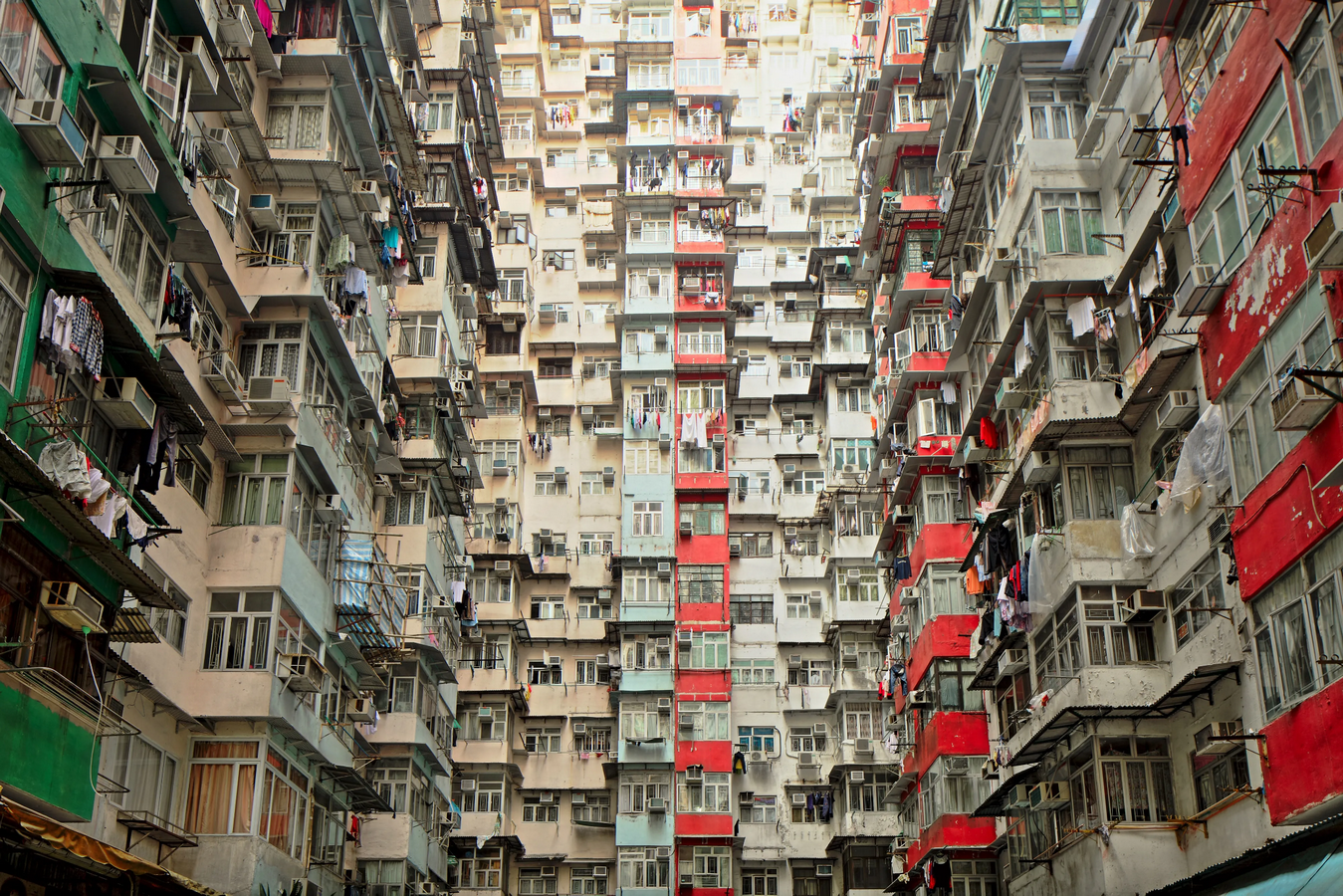
For instance, a compact apartment living in Hong Kong demonstrates a live example of how physical proximity does not ensure social interaction. Residents tend to live in extreme close quarters yet there are no opportunities for a meaningful engagement , limited due to lack of shared spatial arrangements. Density exists without connection, revealing how architecture can intensify isolation rather than reduce it.
Architecture of Separation: Designing Distance
Modern housing in many major cities of the world, often prioritize efficiency, security, and maximized built area, but these conditions act in creating environments that discourage interactions leading to urban isolation. The classic example of the demolished Pruitt-Igoe Housing illustrates how repetitive high-rise blocks with poorly designed common spaces led to social detachment and eventual abandonment.
Similarly, contemporary gated developments in Gurgaon, Hyderabad create physically secure but socially disconnected environments. Residents move between isolated vertical units, elevators, and parking spaces with minimal chance for encounters. In such settings, architecture does not just house people, it acts as a barrier that separates them, reinforcing distance even within shared environments.
The Loss of the ‘In-Between’ Spaces
One of the most significant contributors to urban isolation is the disappearance of informal , transitional spaces that once supported everyday interactions. Traditional urban environments, such as the streets of Jaipur, are layered with thresholds, courtyards, verandas, and active edges that encourage social life.
In contrast, modern apartment layouts often reduce circulation spaces to narrow corridors devoid of character or purpose. Even older typologies like the chawls of Mumbai demonstrate how shared corridors acted as social platforms where neighbors interacted on a daily basis. Their absence in contemporary design reflects a shift toward isolated living, where architecture eliminates the spaces that once fostered connection.
Designing for Connection: Can Architecture Reverse Isolation?
If architecture can create isolation, it also holds the potential to reverse it. Projects such as 8 House by Bjarke Ingels demonstrate how spatial design can encourage interaction. Its continuous pathways transform the circulation areas in spaces of interaction, allowing the residents to encounter one another naturally, reducing urban loneliness.
Similarly another classical example of Kalkbreite Housing in Switzerland fosters shared kitchens, terraces, and communal areas, encouraging interaction without compromising privacy. These projects highlight a crucial principle: connection is not accidental but designed. By layering private, semi-private, and public spaces, architecture can create a gradient of interaction, allowing relationships to emerge organically.
The Psychological Dimension of Space
Architecture not only focuses on reducing urban isolation but it also influences emotional experience. Monotonous, enclosed, or poorly lit environments can heighten feelings of isolation, while thoughtfully designed spaces can foster comfort and belonging.
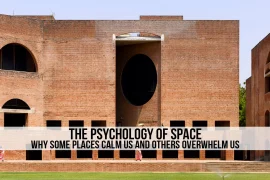
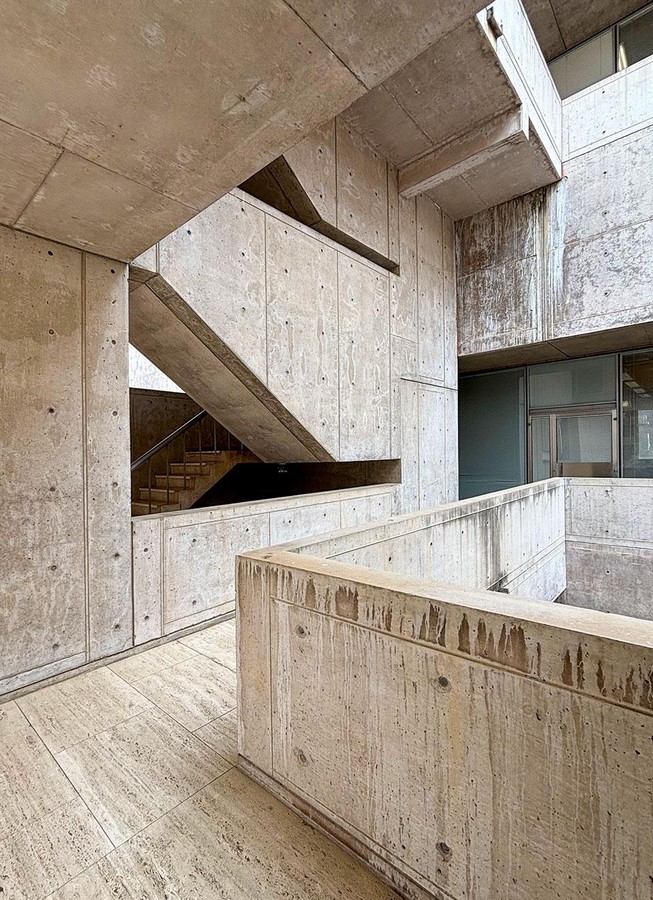
The Salk Institute by Louis Kahn uses light, proportion, and openness to create spaces that feel contemplative yet connected. Similarly, Therme Vals by Peter Zumthor demonstrates how materiality and sensory experience shape emotional engagement. These projects highlight that architecture operates not only physically but psychologically, influencing how individuals perceive and relate to their surroundings.
A Growing Crisis in Contemporary Cities
As cities continue to densify, urban isolation is rapidly increasing. Rapid development in major cities like Tokyo, Mumbai often prioritizes quantity over quality, producing dense housing with limited social infrastructure.
Clusters of high-rise apartments with minimal communal spaces reflect a model of growth that overlooks human interaction. Without intentional design strategies, these environments risk becoming vertical isolators, spaces where individuals live in close proximity yet remain socially distant. The growing scale of such developments suggests that loneliness is not just increasing, it is being built into the city itself.
Architecture has the power to shape not only physical environments but social realities. The contrast between isolating developments like Pruitt-Igoe Housing and socially engaging projects like 8 House reveals how design decisions directly influence human connection.
Dense yet poorly articulated spaces can intensify urban isolation, while carefully designed environments with layered social spaces can foster community even within high-density contexts. As cities grow taller and more compact, the challenge is no longer just accommodating people, but connecting them.
If architecture shapes the way we live together, are we consciously designing for connection—or unknowingly constructing isolation into the lives of our cities?
REFERENCES:
- Jan Gehl. Life Between Buildings: Using Public Space. Island Press, 2011.
- 8 House by Bjarke Ingels. Available at: https://big.dk/projects/8-house-2021
- Pruitt-Igoe Housing,the troubled high-rise that came to define urban America. Available at: https://www.theguardian.com/cities/2015/apr/22/pruitt-igoe-high-rise-urban-america-history-cities
- Kalkbreite Housing / Müller Sigrist Architekten, Archdaily by María Francisca González. Available at: https://www.archdaily.com/902295/kalkbreite-complex-muller-sigrist-architekten