Urban design used to be influenced by visible aspects. The urban imaginary is dominated by plans, sections, skylines and street grids that dominate the assessment and imagining of cities. But every day, the city consists equally of sound experience. The street is usually identified by its sound before it is identified by its buildings. The bang of a shutter at six in the morning, the constant buzz of the traffic, the abrupt silence following an outage of power. These scenes are indications that cities are not only visual space but sound space and always changing and stratified.
Sound is something that is normally talked about in the cities when it is problematic. Noise complaints, motorway lanes, construction areas. In various cities, sound-based instruments are starting to transform the understanding of cities and its measurement and formation.
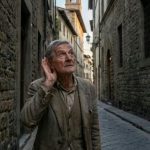
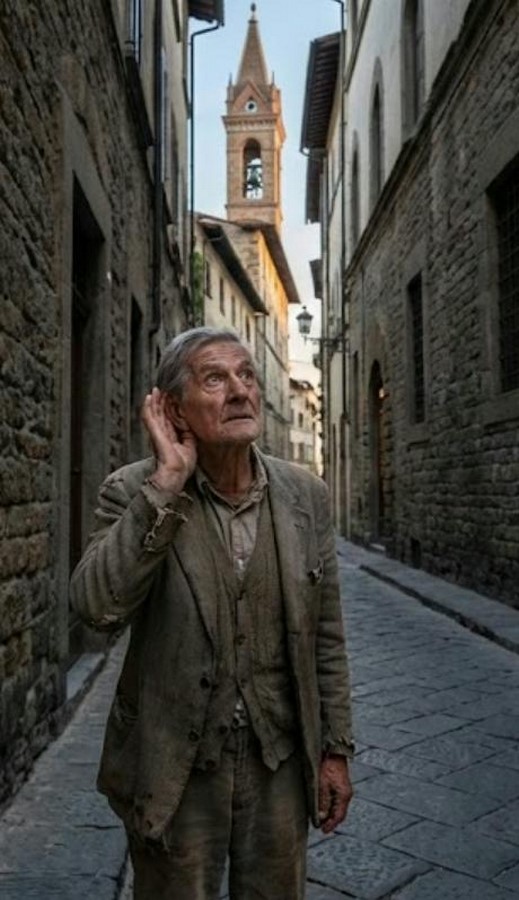
An early hint may be received by a walk about the older part of Florence. The day is still marked by church bells striking the place. Every bell echoes to a certain distance and it fades into the evening fog of the city. Streets quit being narrow and sounded and changed when the street became squares. Footsteps are sharply reflected on stone walls, but smoothed in courtyards. These sound differences were never marked on maps but they assisted in the definition of neighborhoods even before the zoning codes were there. The city displays the fact that the sound used to structure the city life and not to break it.
What does it denote that most modern cities are no longer to be read in this manner?
Sound mapping belongs to the number of tools that assist urban design in restoring this layer that is lost. In comparison to older methods of noise mapping which bring sound down to the levels of decibels, new methods consider sound as a combination of sources, rhythms, and meanings. Researchers have recorded and classified sounds of the city over time in Barcelona in several cities to capture soundscapes. Homans, traffic, water, birds, machines. Once these layers are overlaid a more truthful picture of the city comes into view. It is bustling in the middle of the day, strained at rush hour, nearly intimate at night, a public square. Sound will be documentation of social action instead of being merely environmental stress.
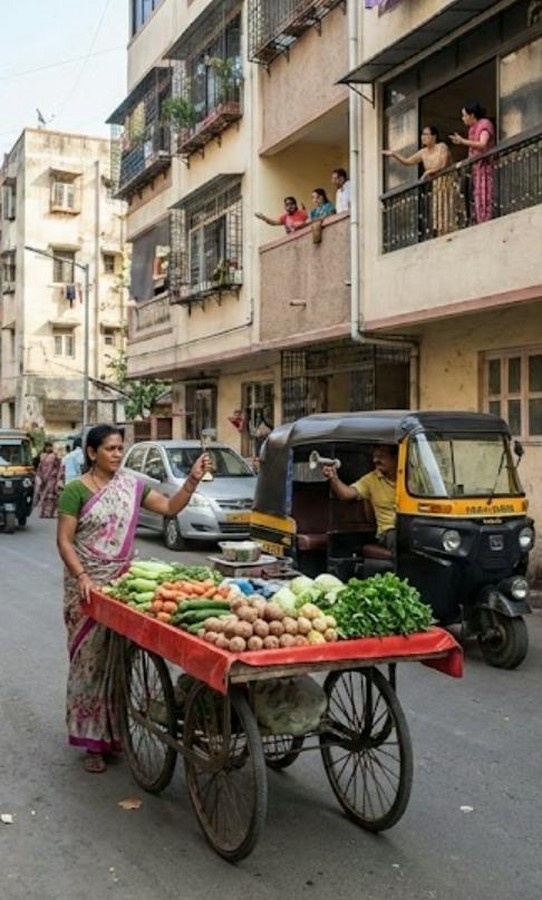
Sound narrates one more complicated story in a Mumbai residential set of streets. Throughout the day, peddlers demand to be advertised, buses toothed to halt, and people talked out of balconies. The street becomes quiet at night, although not entirely silent. With trains, clattering in the distance, utensils clink in windows, stray dogs bark here and there. The sounds promise continuity and security to the inhabitants. When some suggestion was put forward to increase the width of the road to reduce traffic congestion, some concerns soon arose. It was not only something visual which was disrupted, but something familiar in terms of sonic. Sound mapping assisted in aiding in presenting this attachment in a manner that planning documents do not give much chance to do.
What number of the redevelopment projects overlook what the residents are actually listening to?
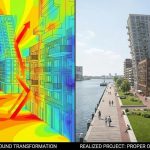
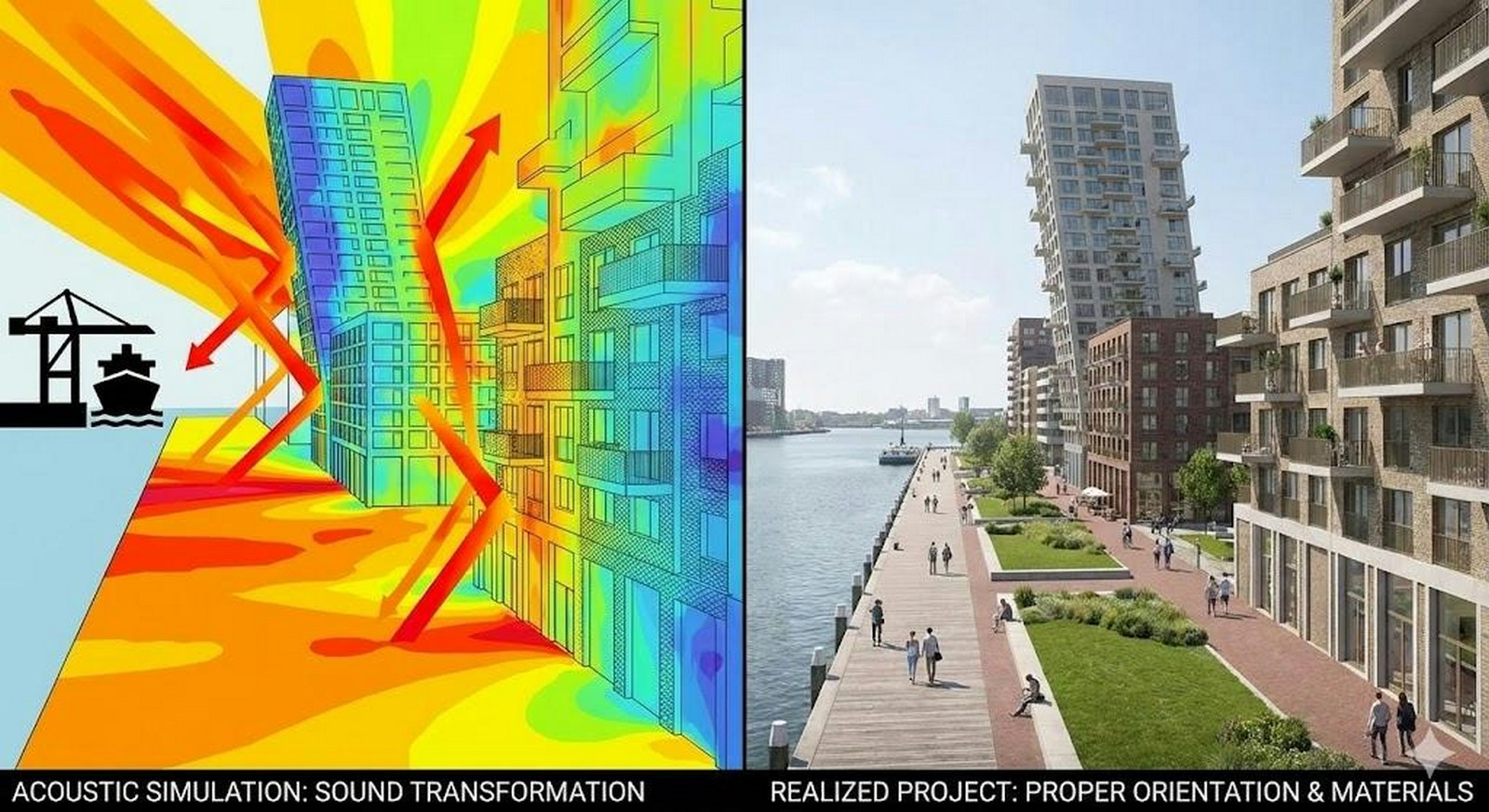
This listening is propelled into the future by acoustic simulation. Designers can now model the way sound may act once one of the projects has been constructed instead of recording the current conditions. This technique was applied in Rotterdam when a waterfront housing quarter was to be planned around an operational port. It was discovered that heating low-frequency industrial noise existed in recent building designs, where the towers entrap it. The project did not generate oppressive living conditions through the proper orientation of buildings and building materials early in the design process of the building. This method did not exclude sound, but transformed it.
Is it time that future buildings be not judged by their appearance on the skyline, but also by the way they make their sound on the ground level?
These questions would be more acute in a sensitive setting. Schools, hospitals, elderly houses and parks all use a certain acoustic condition to work effectively. At one of the Copenhagen parks designed to cater to children, the designers realized that noise in traffic was the predominant factor even though there was play equipment in the area. They did not help isolate the park with the help of barriers; instead, they remodeled the terrain. Relaxing mounds, trees and wooden buildings reflected and reflected and reflected sound. Laughter was still evident, as the engine sound faded into the distance. The design provided a significant difference between the noise that was unwanted and the important sounding.
This change has started to be considered in policy albeit gradually. In some cities, the operation by fixed noise limits is being replaced by the soundscape-based guidelines. Sound charters in France In France, sound charters give a sense of the acoustic character sought of particular places, whether historic centre or river. These policies acknowledge that sound helps create memory to culture. As much as materials and facades are maintained, some sonic qualities are recognised as part of place.
But can sound be heritage so what should cities choose to preserve and what to alter?
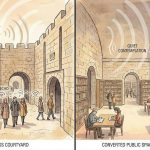
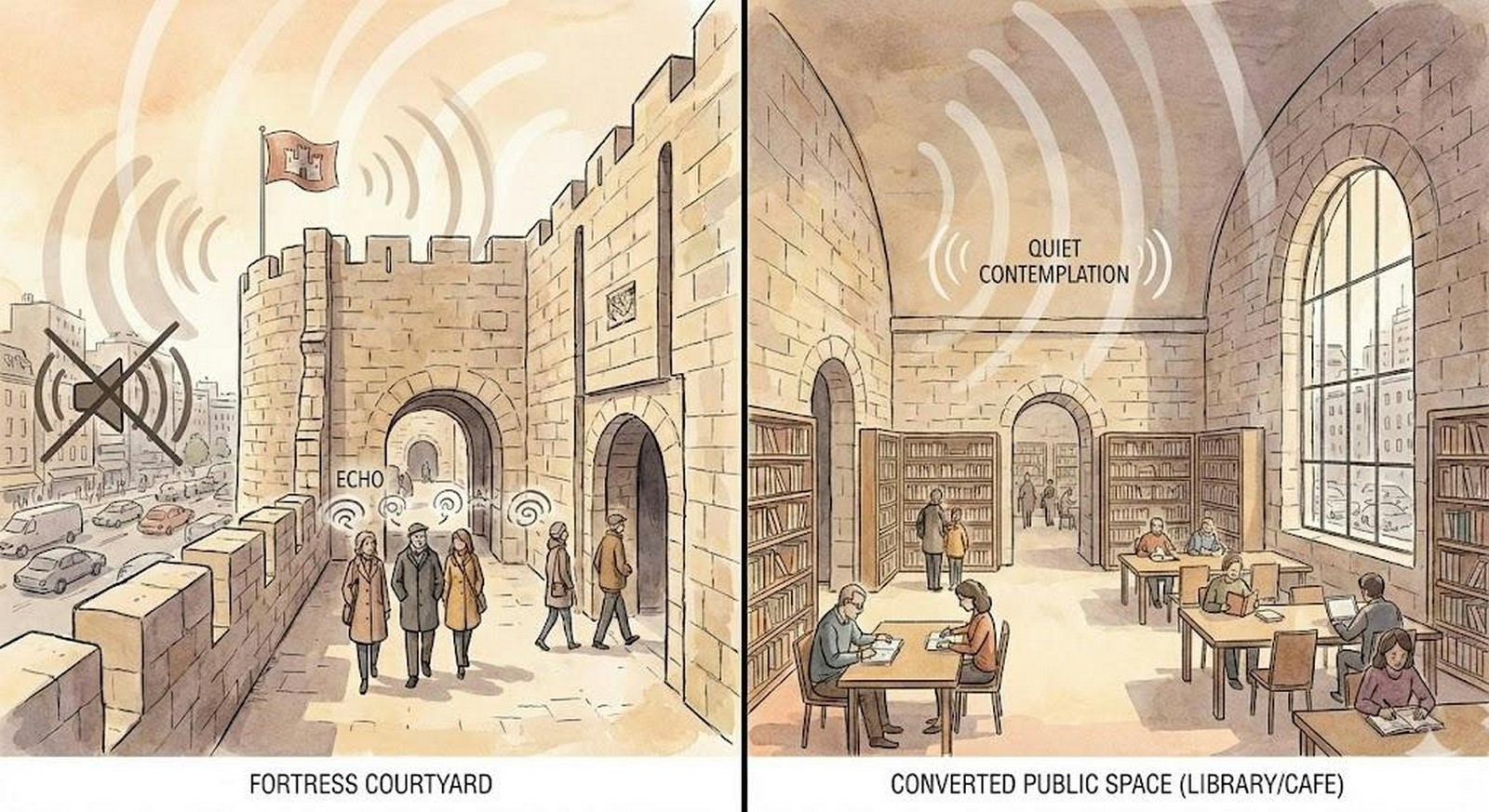
The last lesson is in the town of a European town where there is a fortress. Stone walls also dull the external world. There are inside sounds which have echo, voices are lowered, and wind can be heard. The building influences conduct with no indications and guidelines. Tourists lower their pace automatically. The space is educated by sound. When these architectural structures are converted to serve the general population, they still retain their acoustic nature, which affects the occupational behaviors of the populace.
The data perspective on sound promotes a more deliberate approach to the designing of cities. It exposes the disparities in the neighborhoods, outlines unfamiliarized social trends, and criticizes solely visual scales of prosperity. Above all, it demands designers to be capable of listening then taking action.
New cities are becoming increasingly noisy and populated, and the answer to whether sound can be controlled or not is not whether the sound can be controlled or not, but whether it can be known.
So what would city formations be like if listening was considered as a civic skill?
What sounds are characteristic of belonging and which of exclusion?
And what will be sounded in the cities of the future?
Audio instruments introduce an even more silent type of confidence to the urban design. They change the focus on fast methods of solutions to attentiveness and regulation to interpretation. Treating sound as data enables cities to show the patterns that can never be reflected in drawings: everyday routine, social margins, rhythms of thusness, stress level spots. These understandings do not require silence, but moderation. They demand spaces where the need to be on the one hand is accompanied by comfort and where good sound cannot be excluded as it is the asset of all life.
Responsibility is another aspect that is transformed in the act of listening to cities. The designers, planners, and policymakers are made aware that any material selection, building shape, and street pattern has acoustic implications. Sound mapping, simulation and sound conscious policy provide means through which these effects could be predicted before being solidified into permanent states.
A listening city will not be a city where noise has been removed, but a city where there is a responsive listening with care. By recognizing sound as a necessary stratum of place, city planning can come nearer to places that are experienced as opposed to enacted. By doing so, cities get better defined with the understanding that what is visible is actually only part of the story as these cities are shaped by what is audible as well as what one recalls as part of the experience over the years.