The moment of arrival in Bangkok is not about a skyline; it is about the sound. It is a dense, multi-layered acoustic environment that hits the ear before the humidity hits the skin. It’s the constant, high-pitched whine of passing motorbikes, the intermittent clatter of a food vendor’s spatula against a steel wok, the sharp, percussive blast of a BTS Skytrain horn overhead, and underneath it all, a deep, pervasive hum of human density. Stepping onto the sidewalk, you instantly recognize that this city is built upon a profound, almost spiritual, acceptance of noise, complexity, and kinetic energy.
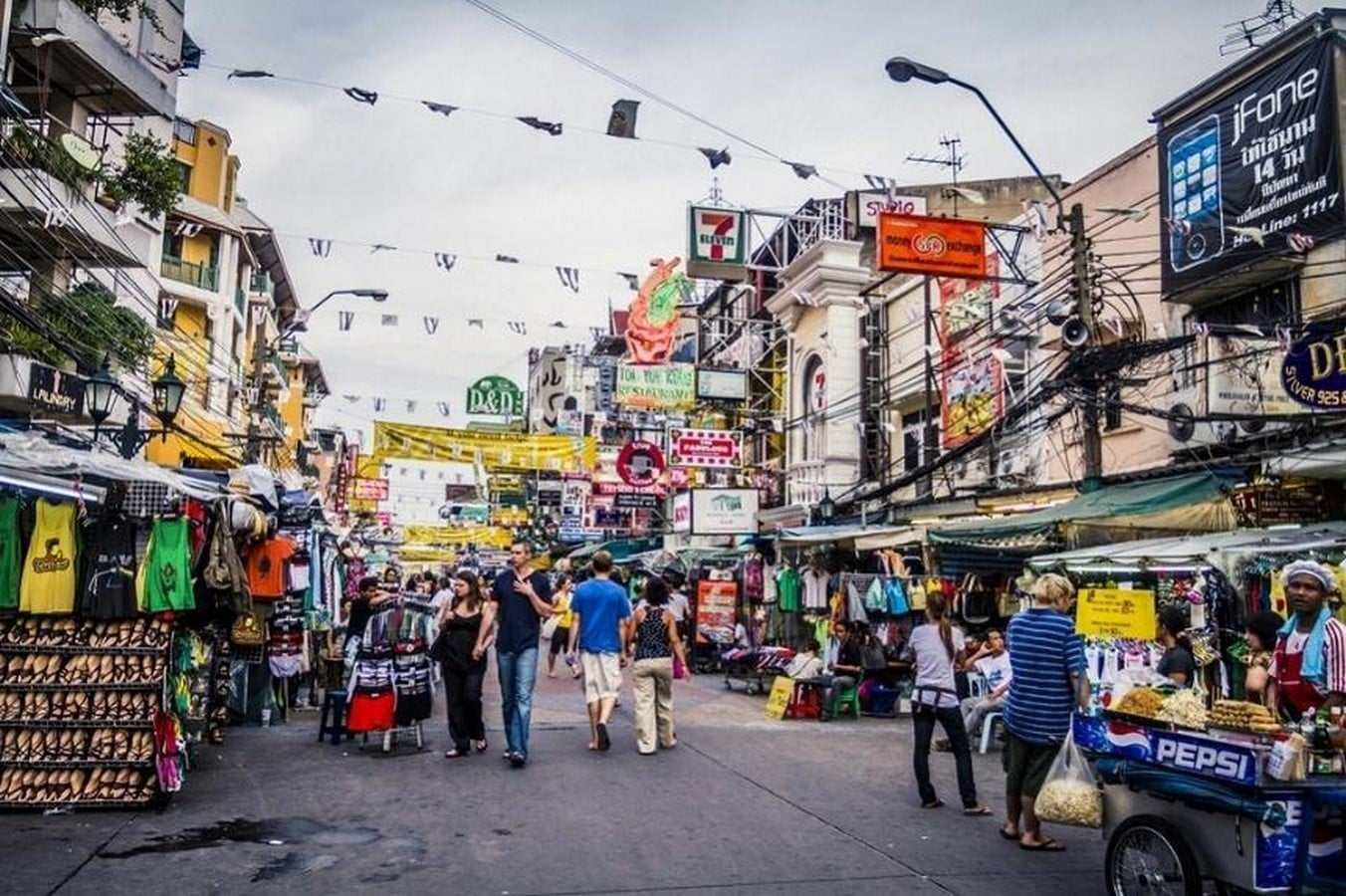
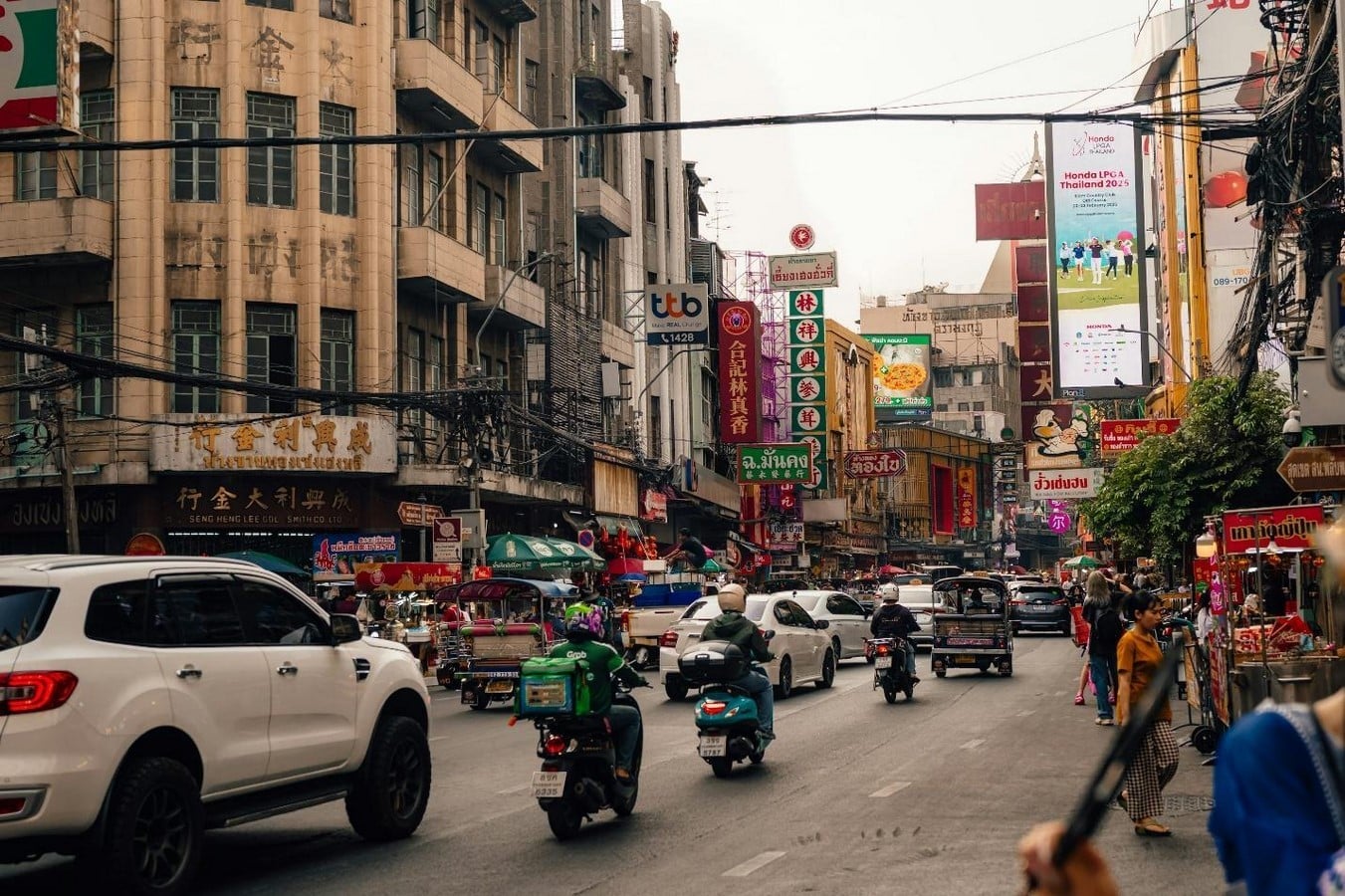
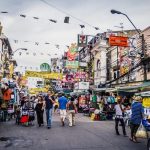
To walk through Bangkok is to engage in an ongoing, unplanned negotiation of space. Unlike the carefully demarcated, rigidly zoned cities of the West, the sidewalks here are not merely pedestrian conduits; they are the primary operational theater of urban life. They are kitchens, waiting rooms, workshops, and temporary living spaces. This inherent fluidity is the city’s most compelling and challenging urban design feature. It is this ground-level dynamic, this vernacular architecture of movement and transaction, that offers compelling lessons for anyone rethinking the future of urban design. The real city exists not in the air-conditioned towers above but in the gritty, improvisational intelligence of the two-meter-wide path below.
The Ground Plane: A Layered Ecology
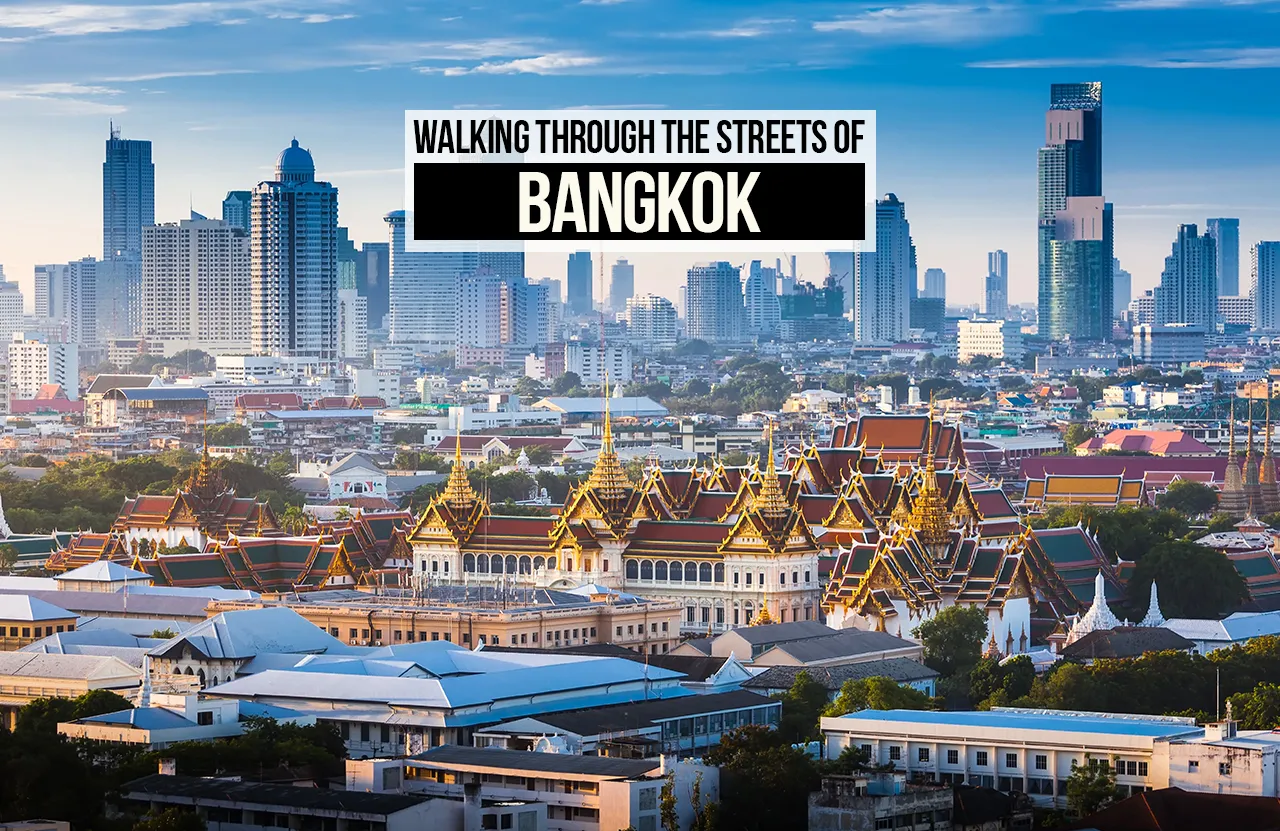
The first major architectural observation is the fundamental contrast between the city’s aspirational, vertical axis and its messy, horizontal substrate. Look up, and Bangkok is a gleaming collage of modernist glass and steel, crisscrossed by the elevated transit lines of the Skytrain and MRT. This stratum represents the planned future: efficient, climate-controlled, and spatially ordered. But look down, and the reality is a glorious, organized chaos.
The pavement itself is a complex ecological layer. Here, fixed infrastructure is secondary to spontaneous deployment. The official public right-of-way is colonized by a rotating cast of micro-businesses. A single stretch of cracked pavement may contain a vendor selling sliced mango on ice, an elderly woman folding lottery tickets beneath a frayed umbrella, a motorbike repair shop using the curb as a workbench, and a cluster of brightly colored plastic stools forming an impromptu restaurant. This is not simply clutter; it is spontaneous zoning. Each vendor, though lacking a formal deed, operates within an understood micro-territory, optimizing for foot traffic, shade, and proximity to infrastructure like water and electricity (often tapped precariously from the infamous overhead cables).
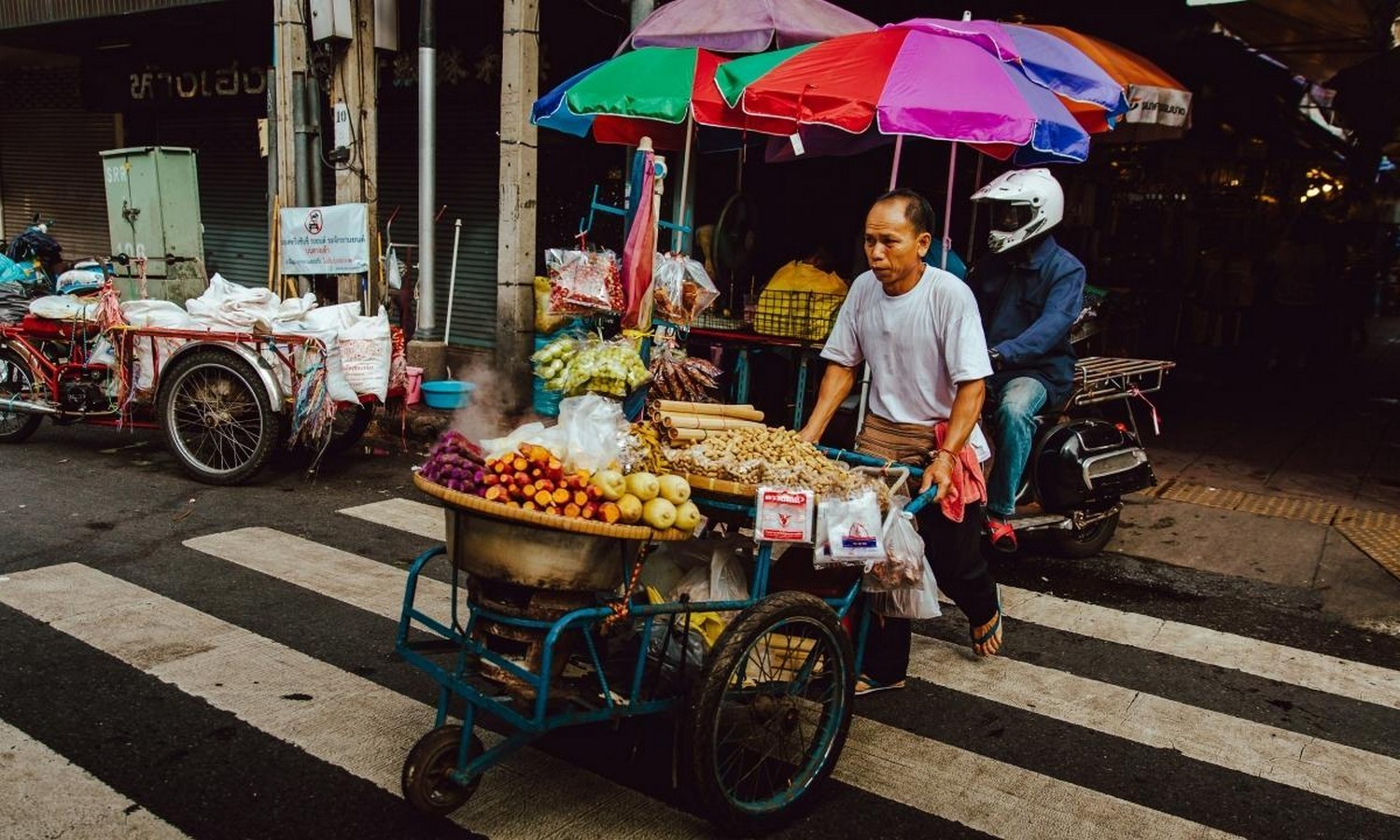
The critical urban design lesson here is that of porous boundaries. The buildings, even the old shophouses, are not static enclosures. Their fronts dissolve into the street. Storefronts are pulled back, ground floors are open-air, and the threshold between the private domain (inside the shop) and the public domain (the sidewalk) is constantly shifting based on time of day, weather, and necessity. This porosity facilitates interaction and resilience, making the city’s economy feel deeply rooted in human connection rather than merely digital transactions.
The Deep City: Infrastructure as Adhocism
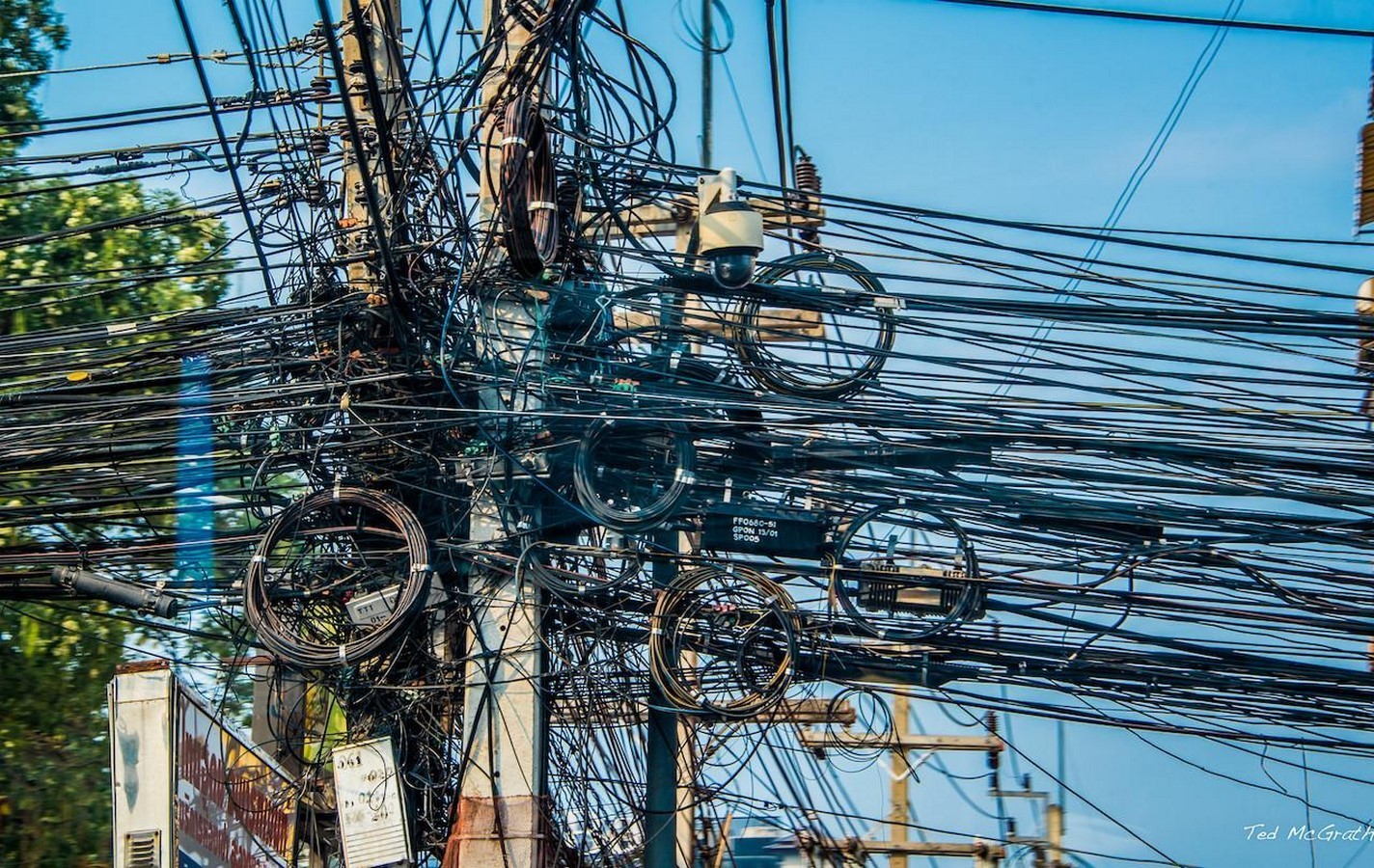
To truly appreciate Bangkok’s design philosophy, one must look past the immediate scene to the infrastructure that sustains it. This is where the principle of adhocism of solving problems with whatever materials are immediately available is most visible. The utility poles are perhaps the city’s most distinctive, if unintentionally iconic, element. They are not merely vertical support; they are living sculptures of continuous, low-cost adaptation. The legendary snarl of wires, power, phone, cable, and internet forms a dense, inescapable canopy. While often cited as an image of disorder, this tangle is, in fact, a record of the city’s relentless, incremental growth, a visual representation of distributed, non-monolithic infrastructure.
When a new connection is needed, a new line is run. There is no central, expensive, aesthetic overhaul; there is simply pragmatic addition. For urban planners, this reveals a choice between two futures: the high-cost, high-risk, tabula rasa approach of underground utilities, or the low-cost, continuous, visible maintenance of the ad-hoc system. Bangkok chose the latter, and its streets hum with the constant, visible process of functional adaptation.
Below the surface of the sidewalk, the story of adaptation continues. Drainage systems are perpetually challenged by monsoon rains and the organic, greasy runoff of millions of street meals. The walkways are a tapestry of mismatched concrete patches and raised sections designed to clear small canals or conceal access points. One quickly learns the Bangkok shuffle: a micro-dance of avoidance, stepping over low walls, skirting past parked motorbikes, and navigating around deep pits disguised by planks of wood. This forced kinetic awareness makes the pedestrian hyper-present; one cannot zone out here. The sidewalk forces the eye down, rewarding the attentive walker with the genuine texture of the urban substrate.
The Geometry of the Soi
The true spatial genius of Bangkok, however, is revealed in the transition from the deafening main arteries (Thanon) to the quiet side streets, or Sois. The soi network is the cellular tissue of the metropolis, structuring the immense scale of the city into manageable, human-scale communities. Walking into a soi is like entering a pressure release valve. The sound drops, the pace slows, and the architecture becomes more intimate.
The soi serves a crucial thermal and psychological function. The dense, irregular arrangement of shophouses and low-rise apartments creates long narrow corridors that are perpetually shaded. This manipulation of urban geometry is a vital passive cooling strategy. The cool shadow cast by buildings packed close together provides essential relief from the tropical sun, making pedestrian life possible in a way that wide, exposed avenues do not.
Within the soi, the shophouse, the city’s vernacular architectural icon, comes to the fore. These buildings are defined by their hybridity: commerce or workshop downstairs, residence upstairs. Their structure embodies the live-work paradigm that Western urbanists often champion but rarely achieve on this scale. The ground floor is often open, deep, and dark, providing both a naturally cooler environment and a flexible space that can be instantly reconfigured from a living room to a dining hall to a distribution center. This is architecture designed for operational flexibility and community integration, where life spills out and activity spills in.
The Materiality of Memory
Finally, a meditation on Bangkok’s surfaces yields insight into its perception of time. The city avoids the sterile perfection of globalized aesthetics. Its beauty lies in the evidence of use and the aesthetic of weathering. Look at a simple cement wall: it is a complex canvas of tropical patina, streaks of black algae, efflorescence from dampness, flaking paint revealing layers of vibrant, forgotten colors underneath. This is the material reality of a city that prioritizes function and continuous, low-cost repair over pristine presentation.
The worn concrete, the chipped terrazzo floors of the temples, the rusted corrugated metal that shields construction sites, these textures speak of a city that accumulates its history rather than erasing it. It is an architecture of palimpsest, where every layer of dirt, repair, and graffiti adds to the record. This contrasts sharply with the smooth, self-referential surfaces of the new luxury high-rises, which seem to deny the chaotic, organic history of the ground upon which they stand.
For the contemporary designer, Bangkok offers a powerful corrective to the notion of perfect design. It argues that the most successful urban spaces are those that are incomplete, that demand human intervention and adaptation, and that prioritize function and social exchange over aesthetic uniformity. The city’s true architectural brilliance is not found in a single landmark structure but in the collective, decentralized intelligence of its inhabitants, who have perfected the art of making the most of very little space and adapting quickly to relentless change.
To finish a walk through Bangkok is to emerge, sweating and slightly disoriented, with a profoundly adjusted perspective. It is an education in urbanity. The streets testify that the future of successful city-making lies not in dictatorial masterplans, but in acknowledging and nurturing the vibrant, adaptable substrate of vernacular life. The enduring genius of Bangkok is its capacity to simultaneously house a hyper-modern global economy while remaining fiercely, intimately, and functionally human at street level.