Walk through almost any global city today, from Dubai to Delhi, from Nairobi to New York, and you’ll notice a strange déjà vu. The glass gleams the same way, the grids align with familiar precision, the lobbies hum with the same beige luxury. The skyline has become a language without accent, fluent, but eerily neutral. This is globalization’s architecture: cosmopolitan, efficient, and placeless.
Yet beneath this gloss lies a quiet rebellion. The world’s architects are increasingly confronting the uneasy question globalization poses: What happens to culture when everything begins to look the same?
The Homogenized Skyline
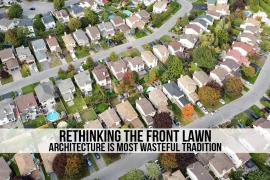
Globalization promised connection, and it delivered. But it also delivered replication. The forces that globalized economies have, in parallel, globalized aesthetics. The result? The skyline of the 21st century has begun to resemble a corporate PowerPoint presentation, streamlined, predictable, and, more often than not, interchangeable.
What was once a dialogue between culture and context has become a franchise of glass boxes. Architectural language today, in many cases, has become a matter of export. It is as if the idea of “progress” has been trademarked, sold as curtain walls, imported HVAC systems, and “sustainable” façades that look the same in every latitude.
Globalization, in this sense, has been less about exchange and more about translation; in translation, nuance often gets lost.
Culture in Transit
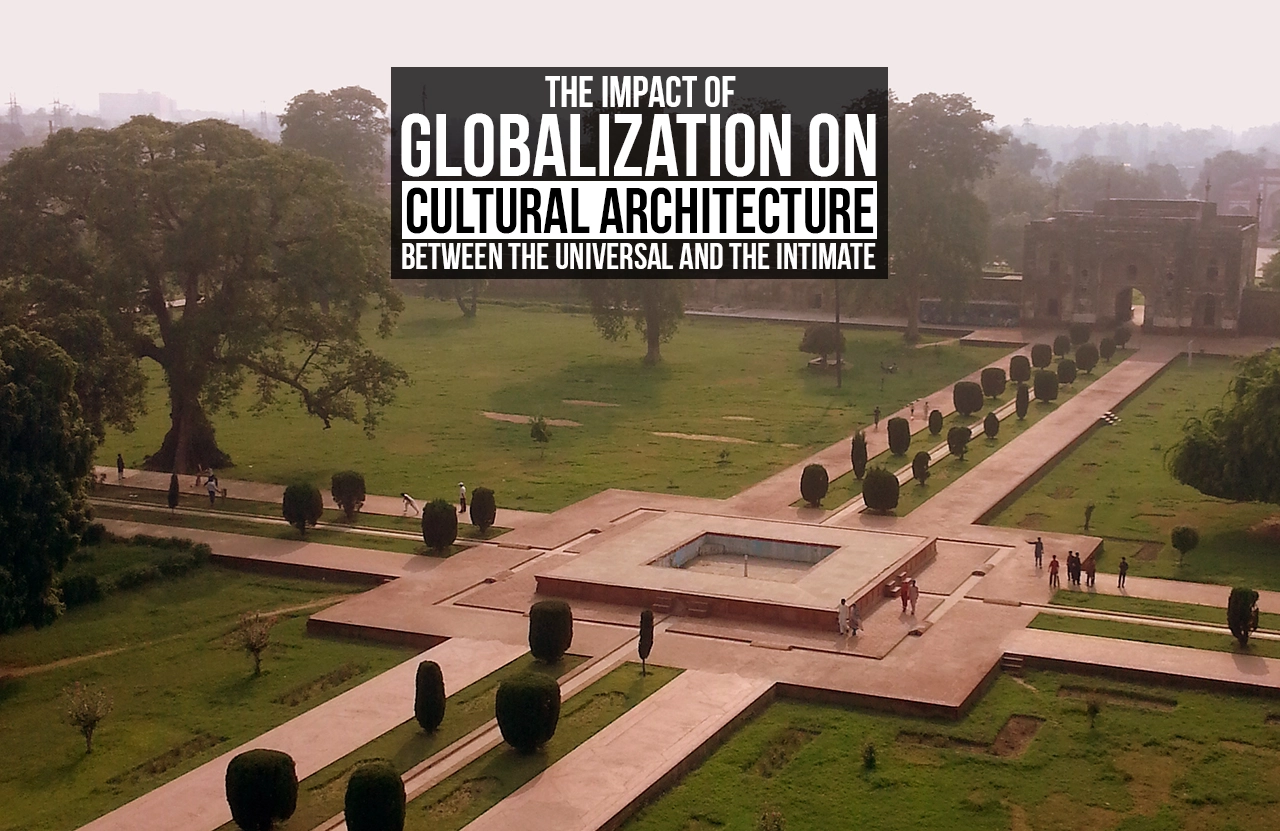
But architecture has always been porous. It absorbs influences, shifts, adapts. The Silk Road carried not only goods but also forms, domes, courtyards, and columns. The Mughal Charbagh was Persian in idea, Indian in spirit. In other words, architecture has always been global; what’s different now is the speed and asymmetry of this exchange.
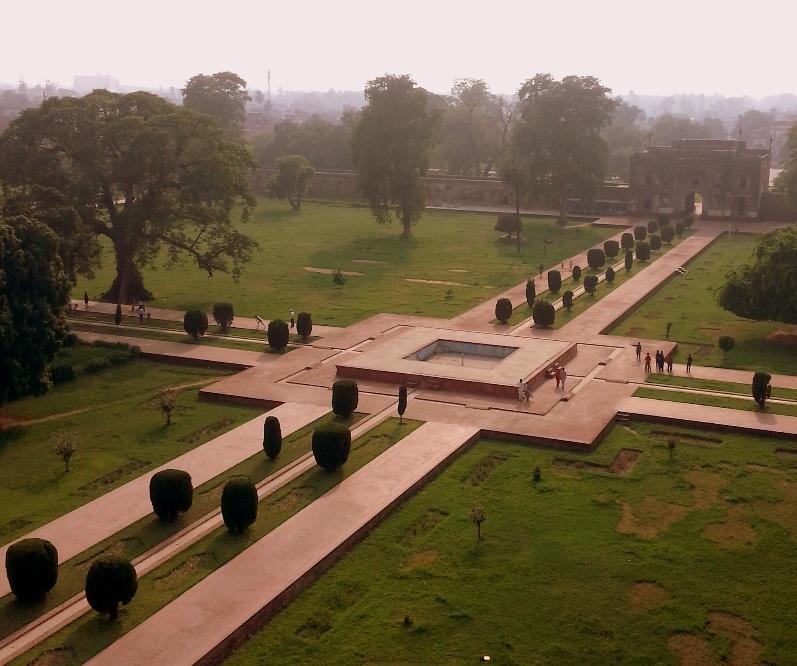
Instead of cultures meeting halfway, the flow today is largely one-directional, from the West outward. The result is that “modern” often reads as “Western,” and local identity becomes a decorative afterthought. A building in Lagos or Lahore might feature a few vernacular motifs, but the bones are corporate.
What globalization has done is shift architecture’s center of gravity from place to image. And in doing so, it has changed not just what we build, but what we aspire to build.
The Myth of Universality
The modernist dream of universality, “a house is a machine for living in,” was reborn under globalization as a marketable truth. The belief that good design should transcend culture now fuels a vast global economy of sameness. But in reality, no space is neutral. A building, even when stripped of ornament, is still shaped by climate, material, labour, and memory.
In the race for global relevance, we have confused universality with uniformity.
Universality, at its best, connects us through shared human needs, shelter, light, air, and belonging. Uniformity, on the other hand, erases differences in the name of efficiency. When we mistake one for the other, we trade depth for surface.
The Rise of the Hybrid
Yet, amid this sameness, a new kind of cultural architecture is emerging, one that doesn’t reject globalization but hacks it. The architects leading this movement aren’t nostalgic for the past; they’re negotiating with the present.
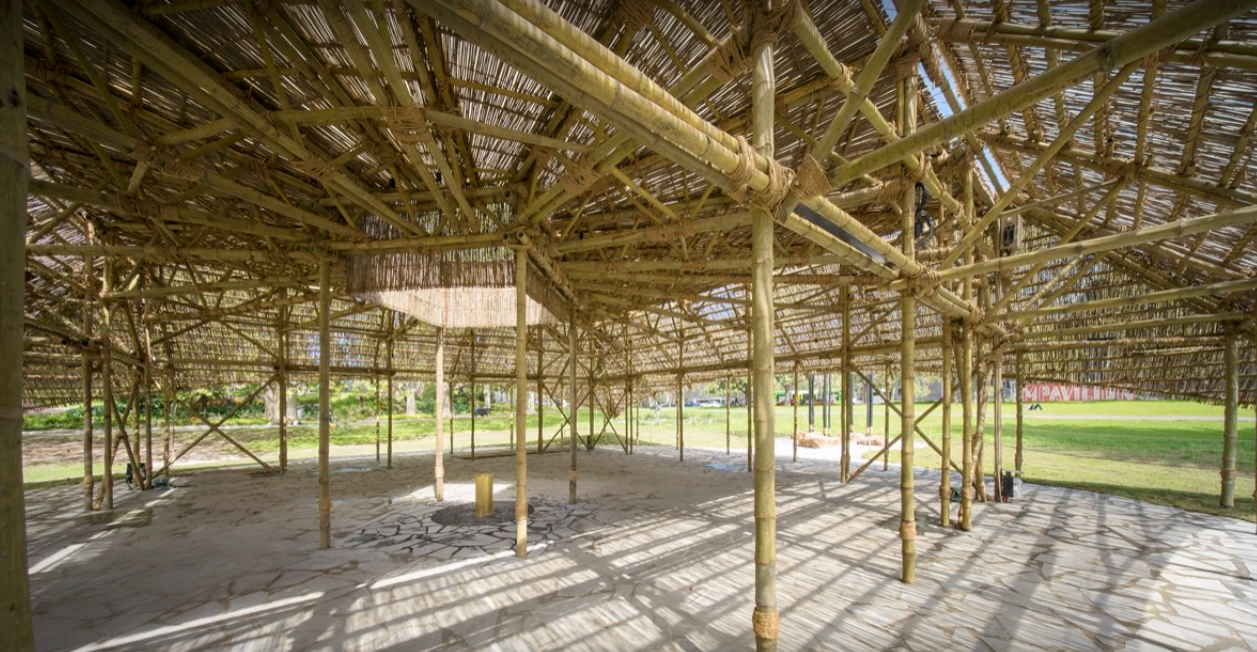
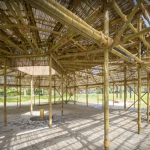
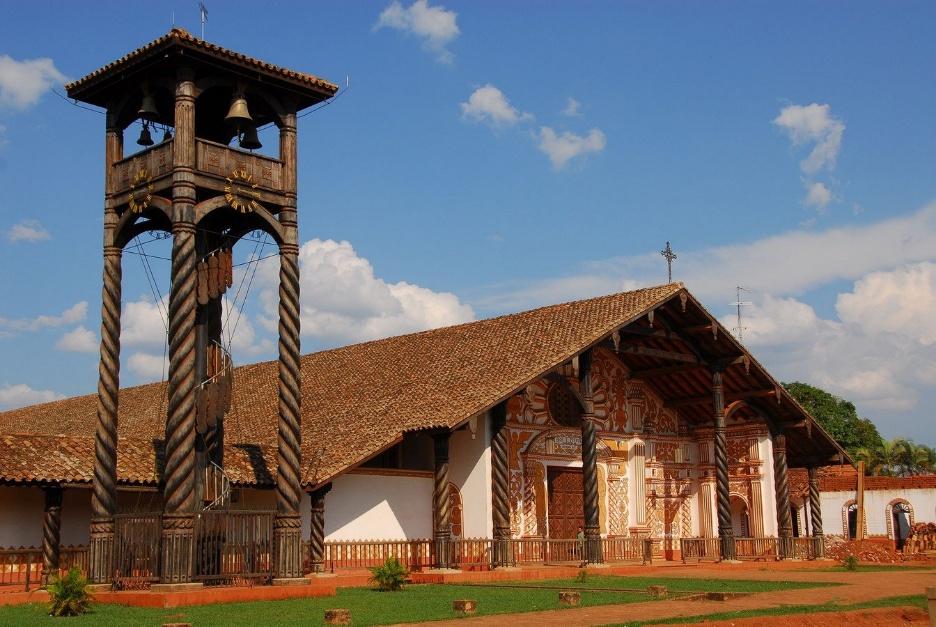
Take firms like Vo Trong Nghia in Vietnam or Studio Mumbai in India, their work speaks a hybrid language. It borrows global techniques but translates them into local dialects. Brick, bamboo, laterite, and lime are being reintroduced not as quaint relics but as instruments of contemporary sustainability.
This hybrid architecture accepts that globalization isn’t reversible, but it also refuses to be swallowed by it. It treats culture not as an artifact to be preserved under glass, but as a living system that evolves through contact.
The Intimacy of Place
In an age obsessed with global visibility, there’s something quietly radical about designing for intimacy, for the specific, the local, the untranslatable. Architecture that responds to its microclimate, its craftspeople, its neighbourhood rhythms, this is where culture reasserts itself.
Globalization may have flattened the skyline, but the ground plane, the street, the courtyard, the threshold, remains stubbornly local. A courtyard in Ahmedabad breathes differently from one in Marrakech, even if both answer to the same sun. The intimacy of place survives in how we inhabit space, not just how we construct it.
This is the paradox globalization has inadvertently created: The more our buildings begin to look alike, the more we crave difference. And so, architects are now turning inward, rediscovering what it means to design from somewhere.
Cultural Architecture in the Age of Algorithms
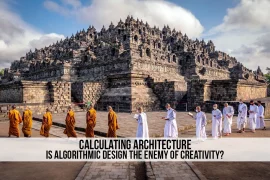
Today, algorithms predict what cities should look like before they’re even built. Design has become data-driven, optimized, standardized, and yet, more than ever, people long for meaning.
Cultural architecture in the era of globalization, therefore, isn’t about resisting change. It’s about curating it. It’s about creating spaces that hold memory while embracing the future. The task now is not to romanticize the local, but to understand it as the foundation of authenticity.
To design culturally in a global world means designing consciously, being aware of what we import, what we imitate, and what we invent.
Beyond Borders: Towards a New Vocabulary
Perhaps the next chapter of cultural architecture isn’t about isolation or assimilation, but about negotiation. A building today must speak more than one language, but it must still sound like itself.
Globalization has given us unprecedented access to materials, ideas, and technologies. But architecture’s challenge is to filter this abundance through context. To ask: What belongs here? What feels honest? What can only exist in this place and nowhere else?
This is not nostalgia. It is resistance, not against the world, but against weightless design. Against architecture that forgets it has roots.
Because in the end, culture isn’t a style. It’s a way of seeing. And if globalization has taught us anything, it’s that sameness may connect us, but difference gives us meaning.
The Future is Specific
The future of cultural architecture, then, is not global; it’s glocal: aware of the world, but grounded in place.
Architecture must stop treating culture as a costume it wears for aesthetic appeal. Instead, it must recognize it as the soil from which meaning grows.
Globalization may have blurred the borders, but the task of architecture is to redraw them, not with walls, but with understanding. The goal is no longer to build for the world, but to build with it.
Because ultimately, the architecture that lasts, that moves us, anchors us, is not the one that tries to belong everywhere, but the one that could only have been born here.
References:
Awan, N., Schneider, T., & Till, J. (2011). Spatial agency: Other ways of doing architecture. Routledge.
Curtis, W. J. R. (1996). Modern architecture since 1900. Phaidon Press.
Canizaro, V. B. (Ed.). (2007). Architectural regionalism: Collected writings on place, identity, modernity, and tradition. Princeton Architectural Press.
Beaumont, E. (2019). The Architectural Review | Online and print magazine about international design. Architectural-Review.com. https://www.architectural-review.com/
ArchDaily. (2024). ArchDaily | Broadcasting Architecture Worldwide. ArchDaily. https://www.archdaily.com/