Hayao Miyazaki’s architecture of nature
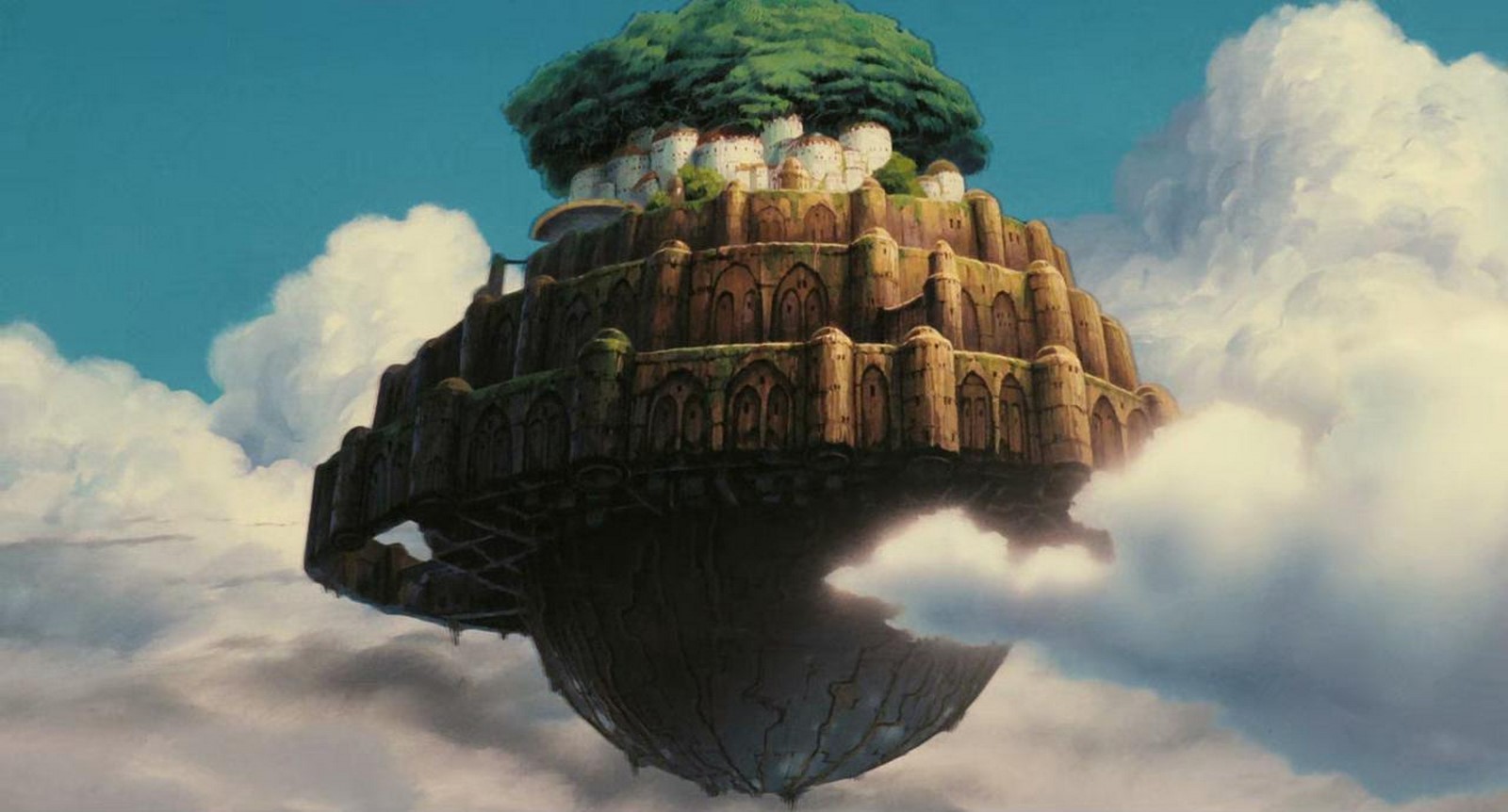
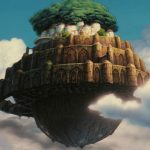
A celebrated and acclaimed Japanese animator and director is renowned for his enchanting stories that celebrate nature, spirituality and their coexistence. The storytelling world of Hayao Miyazaki has always captivated the audience through their immersive architecture where nature takes the centre stage and acts as an active force.
The creative landscapes consist of sentient environments, enchanted towns and rich forest. Miyazaki’s architecture of nature seamlessly blends the built environment and nature. His work was influenced by traditional Japanese aesthetics and Shinto beliefs. His work promotes harmony, fluidity and sustainability. Miyazaki’s emphasis on curved lines, tactile texture and open spaces brings a sense of calmness and connects to nature. His vision transcends function creating an emotional and spiritual reflection.
Understanding Post-Anthropocentrism
The Post-Anthropocentrism era challenges the human centric world as a dominant entity. The concept is that the non-human beings such as plants, animals and Indigenous knowledge systems hold an intrinsic value, the Humans play a part of a larger ecological web. It urges us to rethink ethics, politics, and design beyond human need. It promotes an inclusive system and respects all forms of living and coexistence. It is responsible, humble, fluid and mutual coexistence.
This perspective challenges the traditional architecture and design hierarchies. The ideas proposed should adapt and respect their environment, instead of changing the landscape as per the human convenience. This idea brings a poetic embodiment in Hayao Miyazaki’s animated worlds.
In Architecture and design perspective to build as per the need of the ecosystem as well. A structure that assists in environmental healing, promotes biodiversity and supports nature cycles apart from accommodating just human needs. This rethinking and rebuilding space finds an expressive manifestation in Hayao Miyazaki’s cinematic universe.
Nature as a character in Miyazaki’s universe
In Miyazaki’s universe the architecture is influenced by the Shinto beliefs which are mirrored in post anthropocentric ideals. The philosophy is the belief that nature possesses spirit and has its own will. Unlike in coriver,ional cinema where nature is just a background landscape, in Miyazaki’s cinematic universe the nature, the river and the skies have a personality. The architecture in it does not exist in opposition to this idea, it adapts and blends into it.
One such example can be seen in his work “Princess Mononoke” where the Iron town is built on the edge of a sacred forest, encroaching on it and the animal spirits. Iron town represents human ambition and intention but also the ignorance of ecological balance. Later in the story, the forest retaliates with deities and spirits to fight back. It is not just metaphorically but also reacting physically. This represents the built environment as a tool of destruction and disconnection from nature. It reveals the cost of anthropocentrism and the need for mutual respect.
In another story such as “My Neighbour Totoro” and the acclaimed movie “Spirited Away” where nature welcomes the spirit, the house grows out of the earth in aged wood. The architecture is not imposed on the land but is an invitation for coexistence. Thus, blurring the line between a home and a habitat. This idea reflects the post-anthropocentric ethics where the architecture is responsible and respectful to its surroundings.
Co-existence of the nature and the built environment
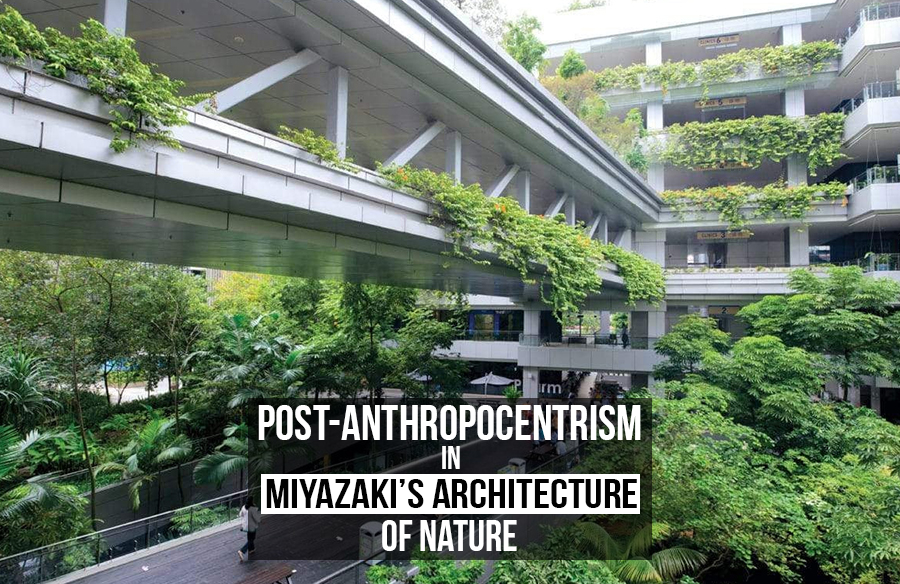
The core idea of post-anthropocentric is to blur the boundaries of the human made and the naturally available resources. The built structures in Miyazaki’s films are rarely sterile and pristine. They are mossy, crooked, textured and constantly interacting with its surroundings, sings of life and not decay. It represents the structure that breathes. It is living, adapting, ageing and reflecting on the rhythm of the natural world. Challenging the idea of static architecture.
In the movie “Nausicaa of the valley of the wind” the crumbling structure is overtaken by the forest but not in a negative form but nature reclaiming it and healing. Asserting its presence without judgment.
Such concepts resonate with the traditional Japanese aesthetic principle “wabi-sabi”, which is to find values in decay, imperfection, and adaptation. This sensibility aligns with the core tenets of post-anthropocentric philosophy. It encourages the designers to work with time and nature, not against it.
Empathy through space and spirit
The central idea of post-anthropocentric is to develop empathy not just for humans but also for the world around it. Miyazaki’s characters develop this humility and wisdom from spirits, animals, and nature. The idea in an architectural environment is to design a setting for dialogue over dominance.
In his cinematic universe the characters and spirits develop and create spaces which serve both human and non-human characters, they have a shared experience and co-exists. In Miyazaki’s environment, the architecture becomes a space for reconciliation, reflection and renewal.
They challenge and inspire the designers to consider the nature, birds, trees, water, wind and insects in their design instead of for them to be with them in a broader context.
Impact and reflection on real world design
In Miyazaki’s animated fantasy world, the philosophies have a deeper meaning and implications in today’s architecture and built environment. It holds a tangible relevance where climate change and ecological imbalance have created an urgency to reflect and design with the environment rather than against it. Miyazaki shows the world would be magical if lived in coexistence. It’s not just a mere blueprint but sets principles for a sustainable and compassionate design.
In the real world the movements such as regenerative, adaptive, biophilic and indigenous land-based practices align with the principles of post-anthropocentric. These practices are a shift from extraction to collective and its use in human spaces which are vividly portrayed in Miyazaki’s universe.
A humble architecture in a shared environment
Hayao Miyazaki’s architecture of nature embodies the post-anthropocentrism philosophies. Offering a counter to a modern human centric built environment. His work teaches us that nature is not in the background or a passive resource but an active participant in the journey of life. His work provides a shift in thinking from dominance to dialogue, exploitation to empathy.
By integrating the post anthropocentric philosophies into architectural design, we can create a better space that not only serves humans but also nature which can harmonize, heal and honor the surroundings. In the time of climate crisis and disconnection through industrialization, Miyazaki’s vision seems more than just fantasy. It is to rethink how we build, live, and belong.
Reference:
- Takai, S. (no date) スタジオジブリ|Studio Ghibli, スタジオジブリ ホーム. Available at: https://www.ghibli.jp/ (Accessed: 27 July 2025).
- (No date) Anthropocentrism and post‐humanism – kopnina. Available at: https://onlinelibrary.wiley.com/doi/10.1002/9781118924396.wbiea2387 (Accessed: 27 July 2025).
- Post-anthropocentrism → term (2025) Climate. Available at: https://climate.sustainability-directory.com/term/post-anthropocentrism/ (Accessed: 27 July 2025).
- (No date a) Miyazaki Hayao’s animism and the Anthropocene – Shoko Yoneyama, 2021. Available at: https://journals.sagepub.com/doi/full/10.1177/02632764211030550 (Accessed: 27 July 2025).
- User, G. (2021) The role of architecture and places in Hayao Miyazaki ’s worlds, sabukaru. Available at: https://sabukaru.online/articles/the-role-of-architecture-and-places-in-hayao-miyazaki-s-worlds (Accessed: 27 July 2025).