As an architecture student or professional, it’s often advised to sketch more often to improve your design skills but rarely someone walks you through the learning process. Well, this book by Paul Laseau aims to guide graphical thinking. As in the book title, he has used the term ‘Graphic Thinking’ which means thinking through sketching (Laseau, 2001). The article presents an overview, highlighting key takeaways from this book.
He begins by pointing out that the joy of creativity and craftsmen’s way of working with the material is now being replaced by computer-driven designs (Laseau, 2001). This has resulted in prioritizing software over sketching, which motivated him to write this book. He expresses his concern that sketches are being replaced by renders and models, which perhaps is robbing the design of its fun.
Overview of the Book
In this book, he essentially focuses on how to develop graphic thinking and communicate effectively. It is divided into three parts – Basic skills, Applied Skills and Communication. In the first section (Laseau, 2001), Paul Laseau emphasizes the importance of sketching in the design process and a method to develop this skill. In the next section, he uses multiple examples to illustrate how to apply graphical thinking at different design stages. He ends with the section that addresses the communication that is required within the design team, with the clients and constant dialogue in the design process. It seems like a book that was necessary in architecture school where one has to learn these basics themselves.
Key Takeaways
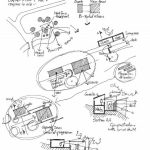
Paul Laseau shares essential tips that would help sketch-averse individuals learn sketching, highlighting how to sketch what you are thinking. More importantly, he gives a step-by-step guide to becoming more observational through drawing. The book offers numerous examples of process and conceptual sketches from famous architects, making it easier to apply.
Sketching is often judged on aesthetics rather than the information it is supposed to give. As an architect or designer that’s the most important thing in a drawing. He explains in detail how to layer information in simple diagrams and communicate exactly that information. He also reveals the power of sketches in the architecture profession as he explains what factors in a drawing create impressions and set the tone of the project. Sketches also need to express a mood to give a character to the space, the most common thing that is told but no one tells you knows how to do it. It offers you the toolkit of how to draw at different stages of drawing to aid problem-solving, communication and design itself.
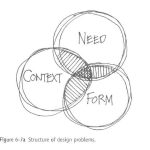
Paul Laseau highlighted the importance of clarity of process sketches even if it is only for your understanding. He explains in detail the type of sketches from abstract to final. While discussing the sketching part, he also discusses how to manage information about the needs, context and design (3 key components of any project) (Laseau, 2001), instead of relying on your memory. This aids in back and forth between the components and how effectively they respond to each other. The book graphically explains through several case studies, multiple ways to apply the given information in any project.

While talking about different design stages, he ensures that he doesn’t imply any particular sequence and demonstrates how you can apply graphic thinking to your process. Major setbacks in the process are confusion or creative block; he provides easily applicable tips to overcome through different design exercises such as imagining a contrasting program to the program you are supposed to design in the same space (Laseau, 2001).

The key revelation was the realization that creativity is a learnable skill. Paul Laseau believes that there are trainable skills for creative development through sketching (Laseau, 2001). Open-ended sketches allow multiple interpretations and different ways to transform your idea into multiple explorations. He has explained several ways to sketch out multiple iterations of ornamentation, typologies and the complete opposite of the idea.

Why Does This Book Matters ?
Graphic Thinking for Architects and Designers is a must-read book for any design student or professional who is looking to improve their graphical representations. As outlined in the overview, Paul Laseau has packed this book with incredible tips and valuable references which makes it very easy to understand this guide. This book fills the gap on how to draw as a designer and not as an artist. Most importantly would help designers develop their language of sketching and expressing themselves, eventually making them better at graphic thinking. After referring to this book, designers would regain their confidence in their presentation drawings and a clearer understanding of their concept.
References:
Laseau, P. (2001). Graphic thinking for architects & designers. New York, Ny Wiley.