Introduction
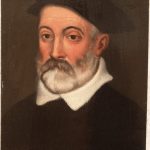
Andrea di Pietro della Gondola, famously known as Andrea Palladio, was born in the Republic of Venice in 1508 and is recognized as a highly influential personality in Western architecture. His approach to classical architecture, which drew heavily on Roman imperial architecture, has garnered global recognition.
Palladio began his architectural career in the 1540s, designing several villas and palaces in the countryside of Venice. With a focus on symmetry, proportion, and aesthetics, his designs included classical components like domes, pediments, and columns. Palladio’s designs were characterized by their balance and symmetry, imbuing them with the ideals of classical antiquity.
The Palladian style, which gained popularity during the Renaissance and Neoclassical eras, was greatly influenced by Palladio’s designs. Many architects, including those of the Georgian and Federal architectural styles in England and America, respectively, were influenced by his work. Villa Barbaro, Basilica Palladiana, Villa Rotonda, the church of Redentore and Teatro Olimpico are a few of his well-known creations. Palladio’s designs and guiding principles are still used today to inspire architects and influence the built environment, making his legacy as an architect enduring beyond the creation of his structures.
Villa Barbaro: A Visual Symphony
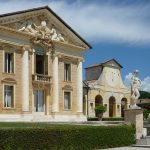
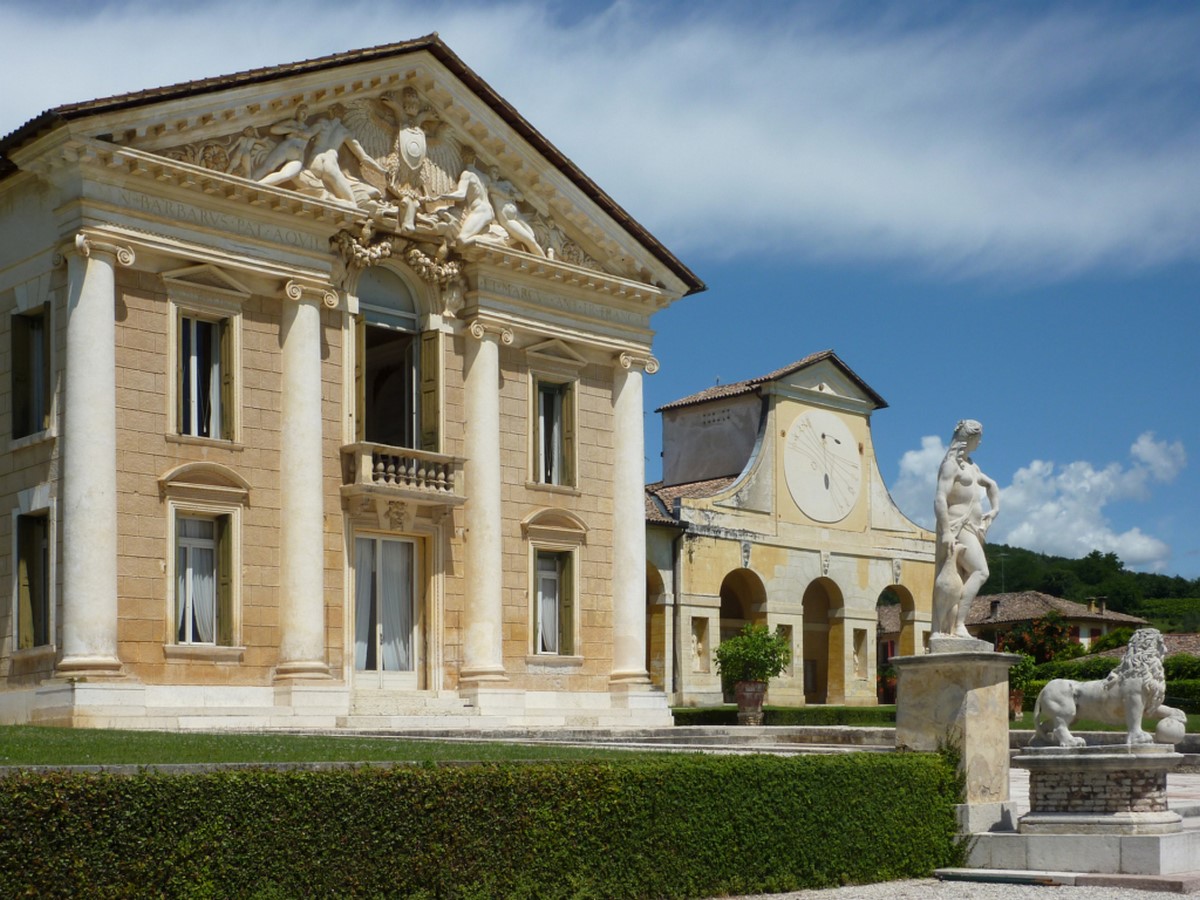
Villa Barbaro in Maser, Italy is an architectural marvel that showcases the exceptional collaboration between the renowned architect, Palladio, and the legendary artist, Paolo Veronese. Impressive frescoes that perfectly complement Palladio’s architectural vision can be found throughout the villa. As soon as we enter, the breathtaking beauty of the frescoes that seem to come to life and carry us to another era and location greets us.
The beautiful villa is a prime illustration of how two brilliant people can collaborate to produce something exceptional. It is truly amazing how seamlessly painting and architecture are incorporated, and it is difficult to imagine that such a stunning structure was constructed more than three hundred years ago. The villa is meticulously designed, it is clear that Palladio and Veronese put their minds and lives into it. The villa’s serene gardens and the flawless integration of its exterior and interior serve as a testament to Palladio’s remarkable ability to unify various artistic disciplines with ease.
Palazzo Chiericati: Palladio’s palatial gem
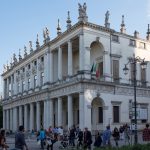
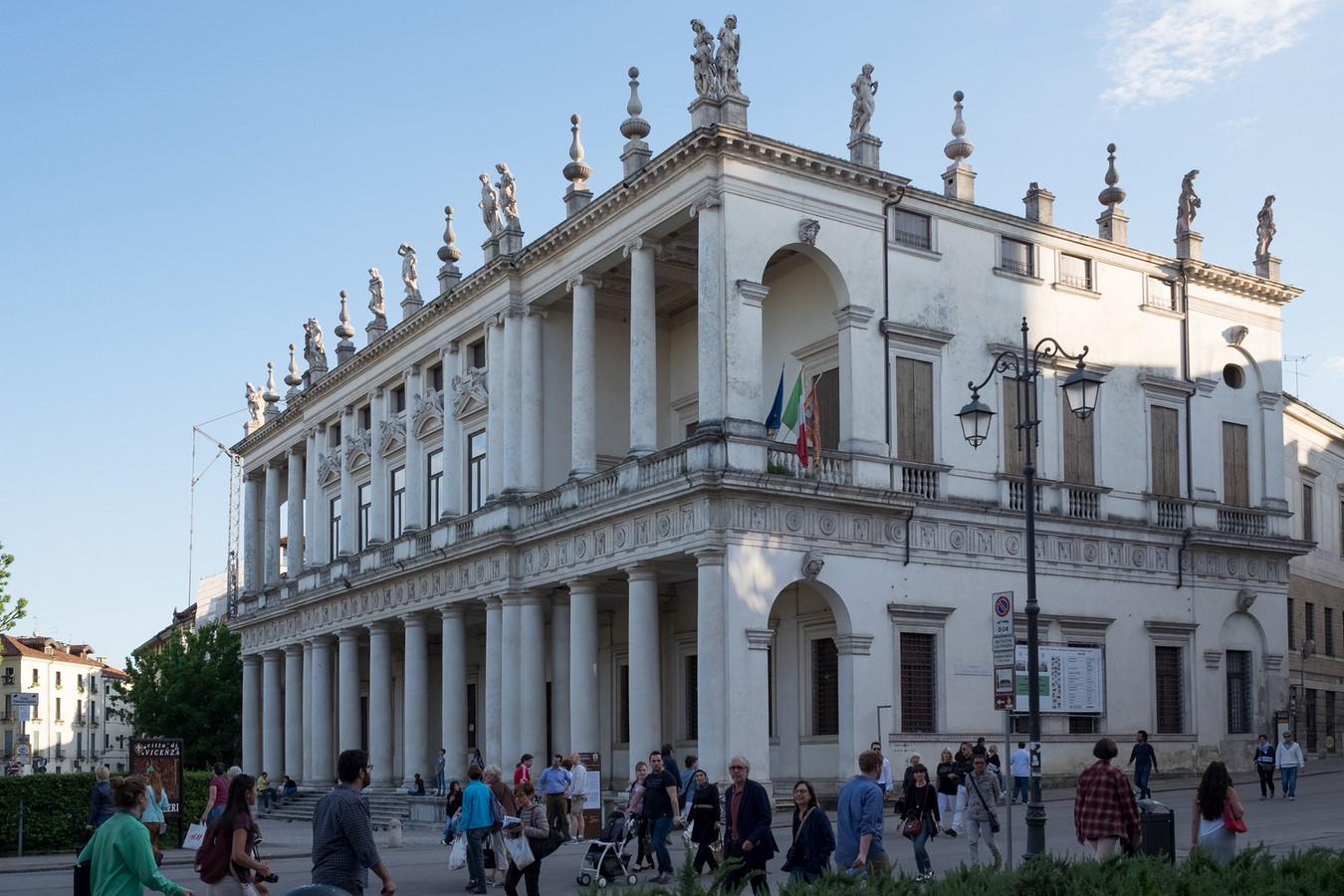
The Palazzo Chiericati, situated in Vicenza, Italy, is a fine example of Palladio’s classical aesthetic and meticulous attention to detail. This magnificent house, which was built between 1550 and 1557, is still held strong as a living example of the great architect’s lasting influence. We are immediately struck by the imposing presence of the columns, pediments, and arches that dominate the exterior as we approach the palatial facade of the Palazzo Chiericati. The impressive architecture of this magnificent structure leaves us in awe, with its intricate details and graceful lines requiring immense skill and ingenuity to construct.
We are welcomed by a collection of lavishly decorated halls and galleries that acknowledge Palladio’s design as pretty shortly as we enter the palazzo. The building’s interior is equally impressive as its exterior, with each room showcasing a distinctive feature of Palladio’s signature classical design. Every element of the Palazzo Chiericati has been intricately planned to create a beautiful and harmonious whole, from the intricate ceiling frescoes to the exquisitely crafted sculptures and paintings.
The Palazzo Chiericati has been converted into an art museum today, demonstrating the lasting influence of Palladio’s creations. With the completion of this splendid structure, individuals from all corners of the globe can admire its elegance and magnificence and witness the remarkable heritage of one of the most brilliant architects in history.
Villa Rotonda: A perfect blend of Harmony
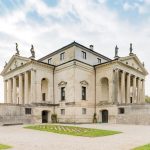
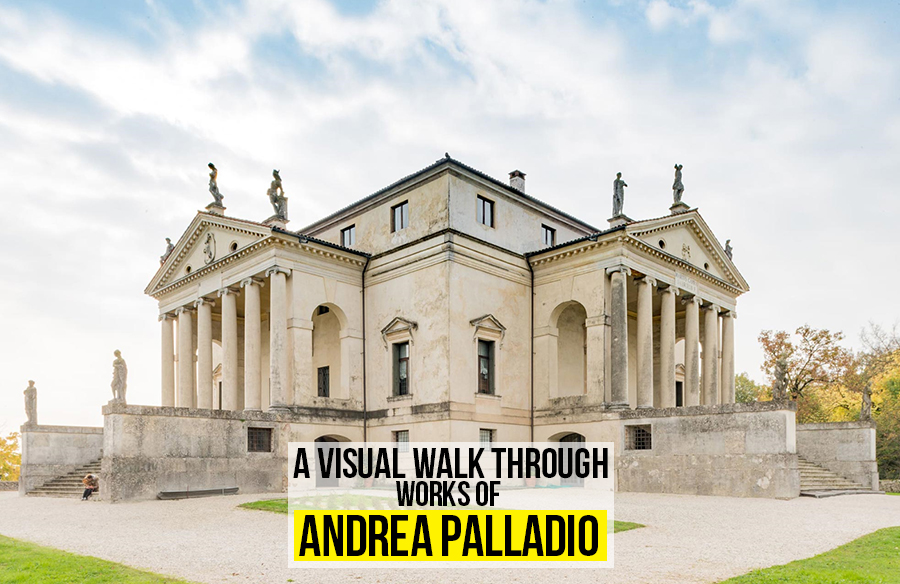
Let’s start our visual tour with the stunning Villa Rotonda, also called Villa Almerico-Capra, situated on a hill near Vicenza, Italy. This architectural masterpiece showcases Palladio’s pursuit of harmony and integration with the surrounding landscape. As we get closer, the villa’s neoclassical facade comes into view, featuring graceful columns, pediments, and a central circular hall topped with a magnificent dome. The four loggias provide awe-inspiring panoramic views, making it a true gem of design.

Basilica Palladiana: Palladio’s Civic Masterpiece
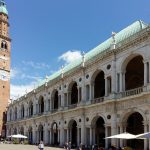
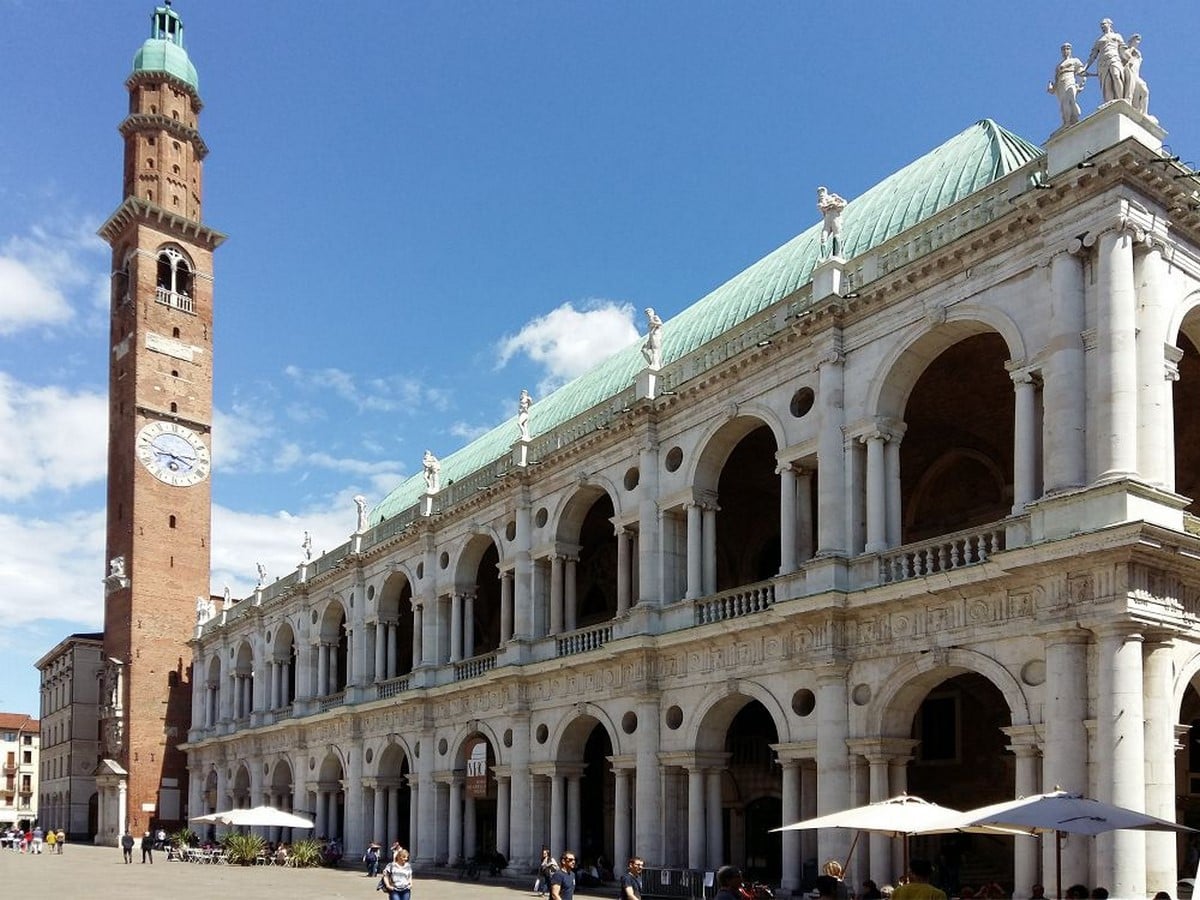
Palladio’s next creation takes us to the Basilica Palladiana, a significant civic building located in Vicenza, Italy. Originally constructed in the 1500s, Palladio’s renovations in the 1540s turned this building into a stunning work of architecture. We can’t help but be in awe of the basilica‘s remarkable loggia with graceful arches as we get closer to it. However, the real showstopper is the unique copper-clad roof that gracefully weathers over time, lending an exquisite air to the structure. The Basilica Palladiana stands as a testament to Palladio’s exceptional ability to blend tradition with innovation.
The Church of the Redentore
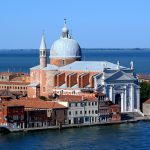
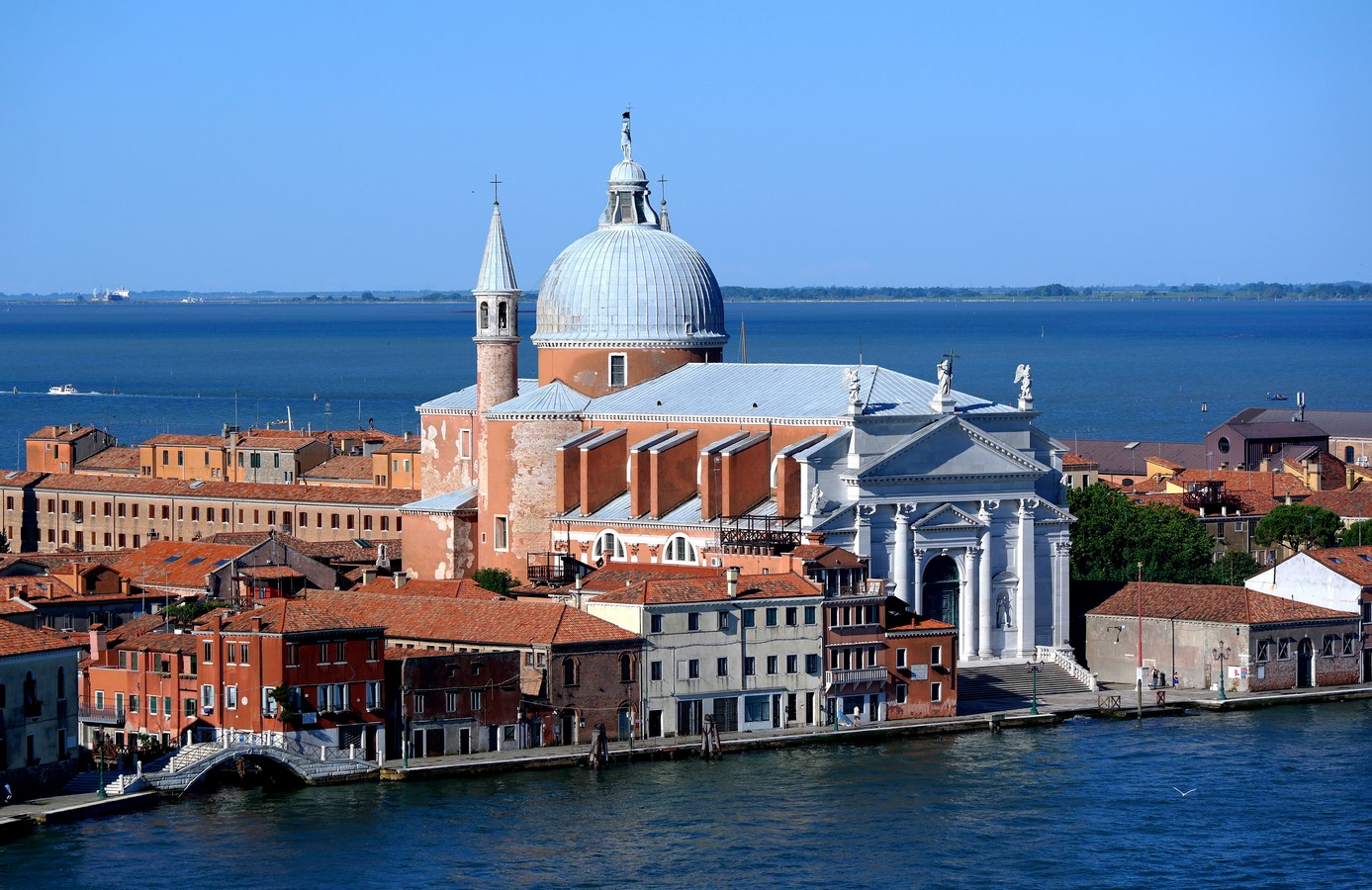
The Church of the Redentore, which is located on the tranquil island of Giudecca in Venice, is evidence of Andrea Palladio’s genius for creating imposing religious structures. It was originally constructed as a votive church to commemorate the city’s liberation from the plague. It stands as one of Venice‘s most iconic landmarks today. The church’s imposing façade and majestic dome draw our attention as we get closer. Palladio’s signature classical style is evident on the exterior in the harmonious proportions, elegant columns, and meticulous detailing. The strategic location of the church, which provides breathtaking views of the Venetian lagoon and the shimmering waters that surround it, adds to its grandeur.
The Church has a special meaning for Venetians beyond its architectural value. It serves as a landmark of the city’s resilience in the face of hardship and serves as a representation of hope, bravery, and gratitude. As we stand in and evoke a sense of this enormous masterpiece, we are reminded of Palladio’s exceptional power to create classic institutions that not only sense but also touch the very core of our beings. The Church of the Redentore is still revered as a representation of Venice’s unbreakable spirit, architectural brilliance, and religious conviction.
Teatro Olimpico: A Theatrical Spectacle
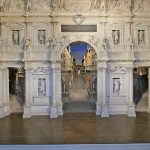
In Vicenza, Italy, there is a Renaissance theatre called the Teatro Olimpico, a magnificent architectural masterpiece that is still standing today. One ever to have been the earliest theatres that are still in use was constructed by Palladio back in 1580. Visitors are welcomed by an impressive stage set that depicts the ancient Roman theatres as soon as they enter the theatre. The meticulous perspective backdrop painted on the walls gives off a realistic depth illusion, immersing us in a world of theatrical grandeur. The Teatro Olimpico exemplifies Palladio’s skill in blending traditional architectural principles with contemporary designs.

The Pioneer of Western Architecture
Andrea Palladio’s masterpieces of architecture have left a deep impression on admirers all over the world. The artistic fusion of Villa Barbaro,the palatial beauty of Palazzo Chiericati, enchanting Villa Rotonda, the civic marvel of Basilica Palladiana, the magnificent Redentore Church and the theatrical splendour of Teatro Olimpico have all been seen by us. The world of architecture will never forget Palladio’s meticulous attention to harmony, proportion, and environmental integration. Future generations will be inspired by his works, which will serve as a testament to his brilliance.
References:
Andrea Palladio (no date a) Architectuul. Available at: https://architectuul.com/architect/andrea-palladio (Accessed: 14 June 2023).
Andrea Palladio (no date b) Encyclopædia Britannica. Available at: https://www.britannica.com/biography/Andrea-Palladio (Accessed: 14 June 2023).
Andrea Palladio architect: Biography, buildings, projects and facts (2015) Famous Architects. Available at: https://www.famous-architects.org/andrea-palladio/ (Accessed: 14 June 2023).
I creatori dell’egitto eterno. Scribi, artigiani e operai al servizio del faraone (no date) Mostre in Basilica Palladiana Vicenza. Available at: https://www.mostreinbasilica.it/en/ritratto-di-donna/the-basilica (Accessed: 14 June 2023).
Simmonds, J. (2022) Venice and the redentore, The Educated Traveller. Available at: https://educated-traveller.com/2020/04/08/venice-death-quarantine-redentore/ (Accessed: 14 June 2023).
Villa Barbaro, Maser, Italy (no date) SpottingHistory.com. Available at: https://www.spottinghistory.com/view/7268/villa-barbaro/ (Accessed: 14 June 2023).