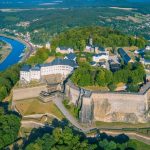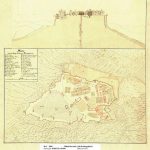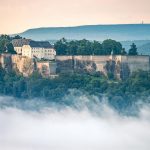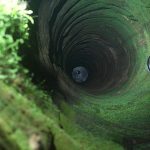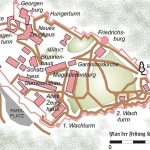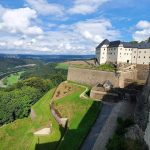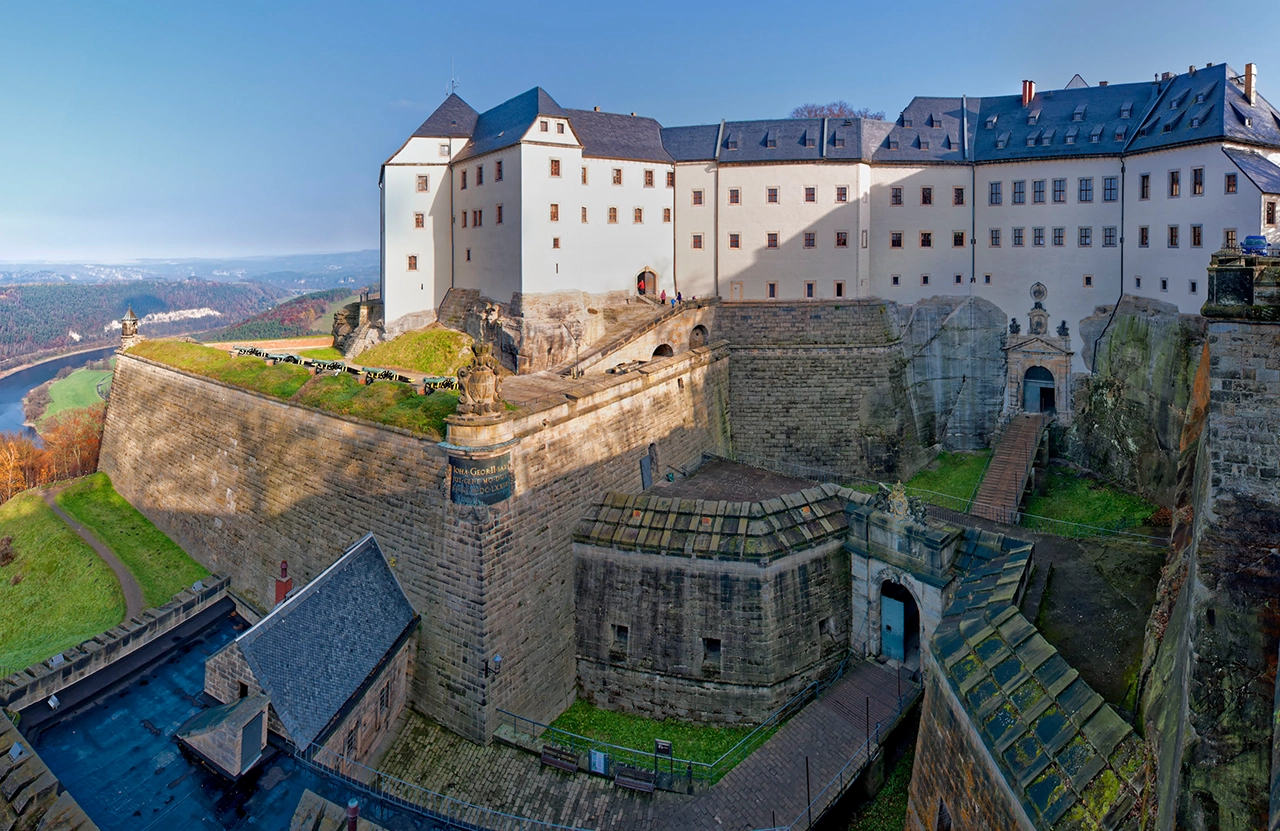
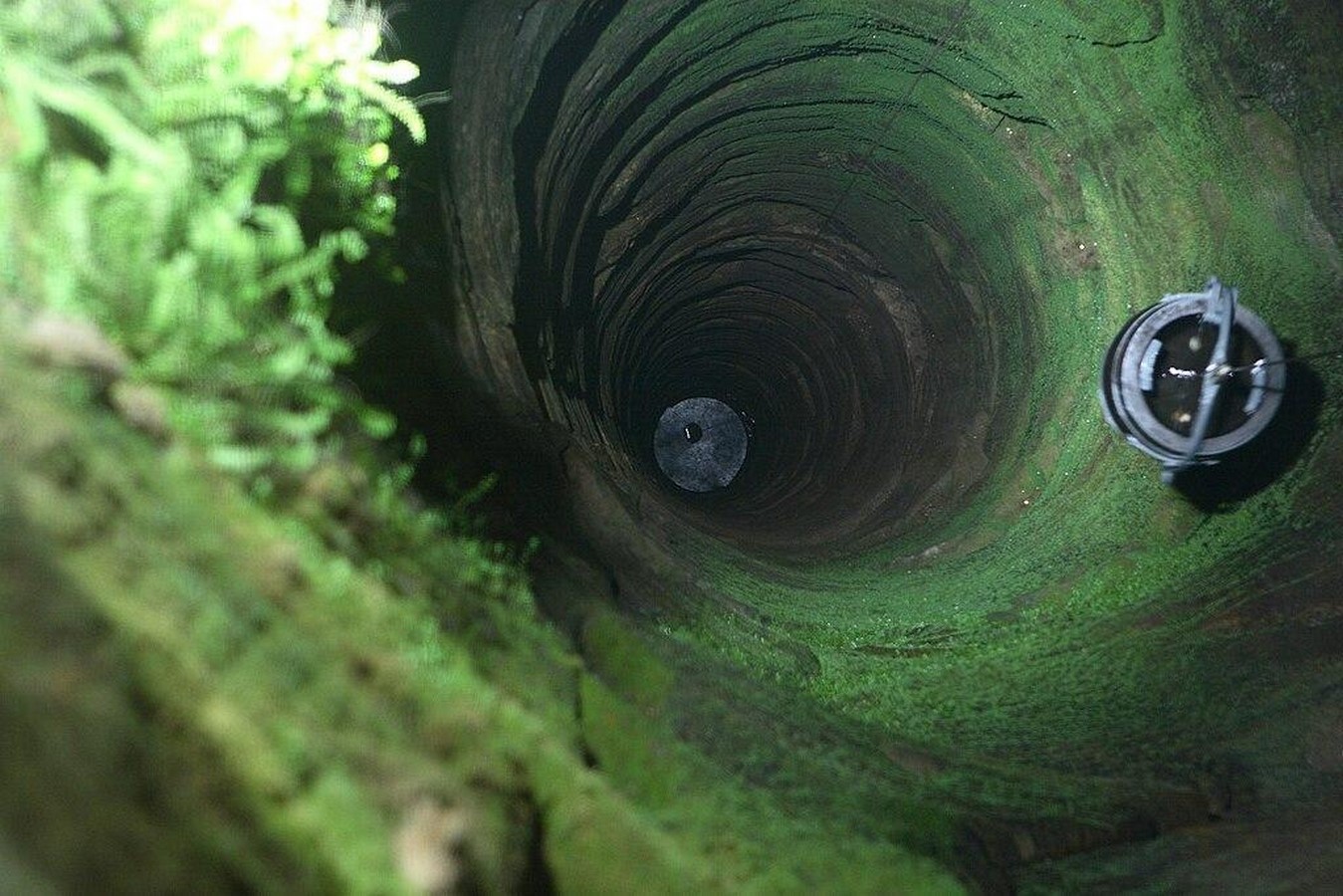
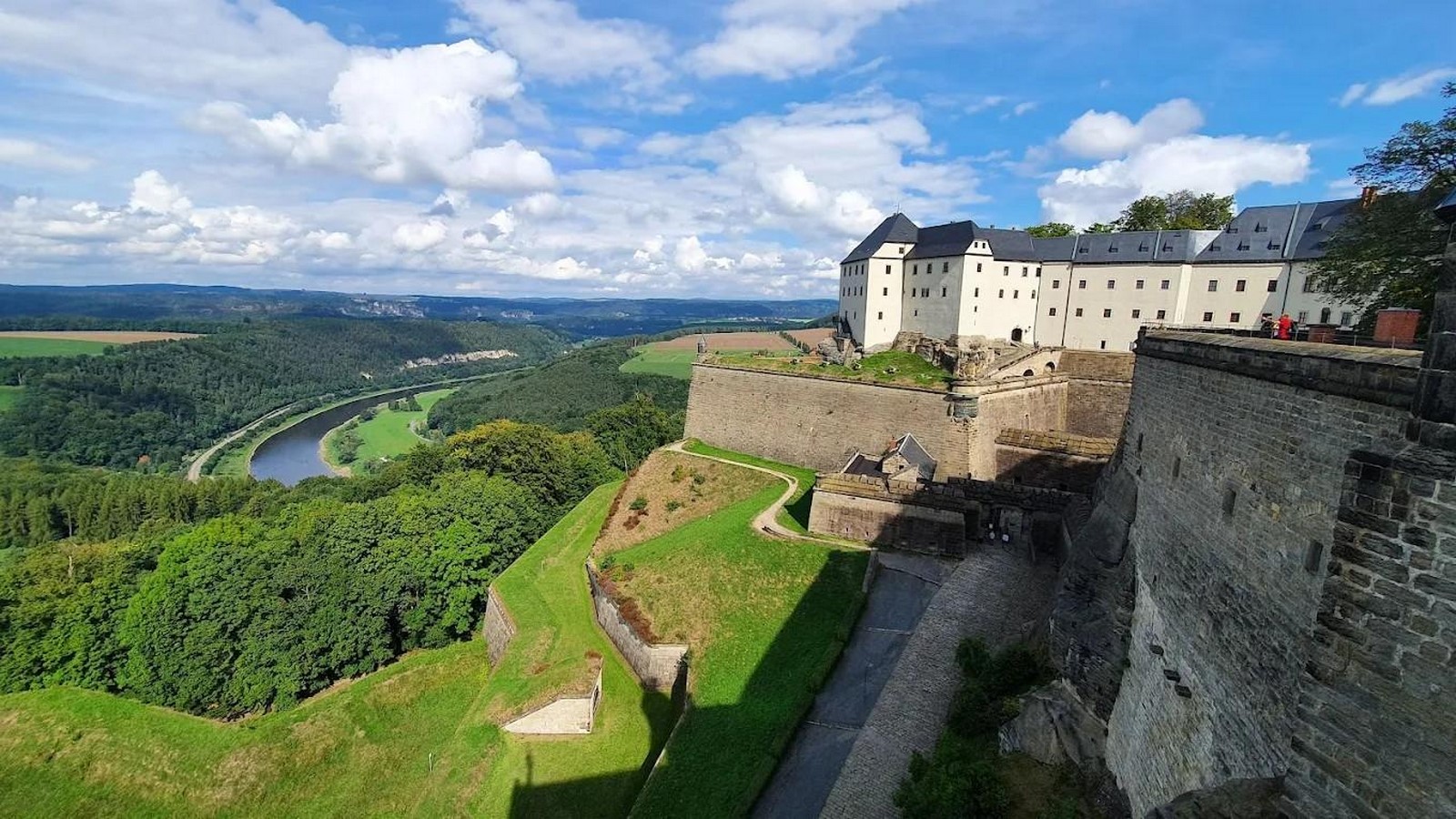
Königstein Fortress (in German, Festung Königstein), also called “the Saxon Bastille” is a monumental hilltop fortification on a 9.5-hectare plateau above the town of Königstein on the left bank of the Elbe in Saxon Switzerland, Germany, near Dresden. It contains more than 50 buildings, enormous ramparts (about 5,900 feet long) and tall walls, reaching up to 138 feet high, giving an imposing image of paused time and image. Königstein Fortress is one of the largest fortifications of its kind and has many features that only add to its mystery. It has one of Europe’s deepest fortress wells, and today functions as an open-air military-history museum and major regional tourist attraction with around 700,000 people per year.
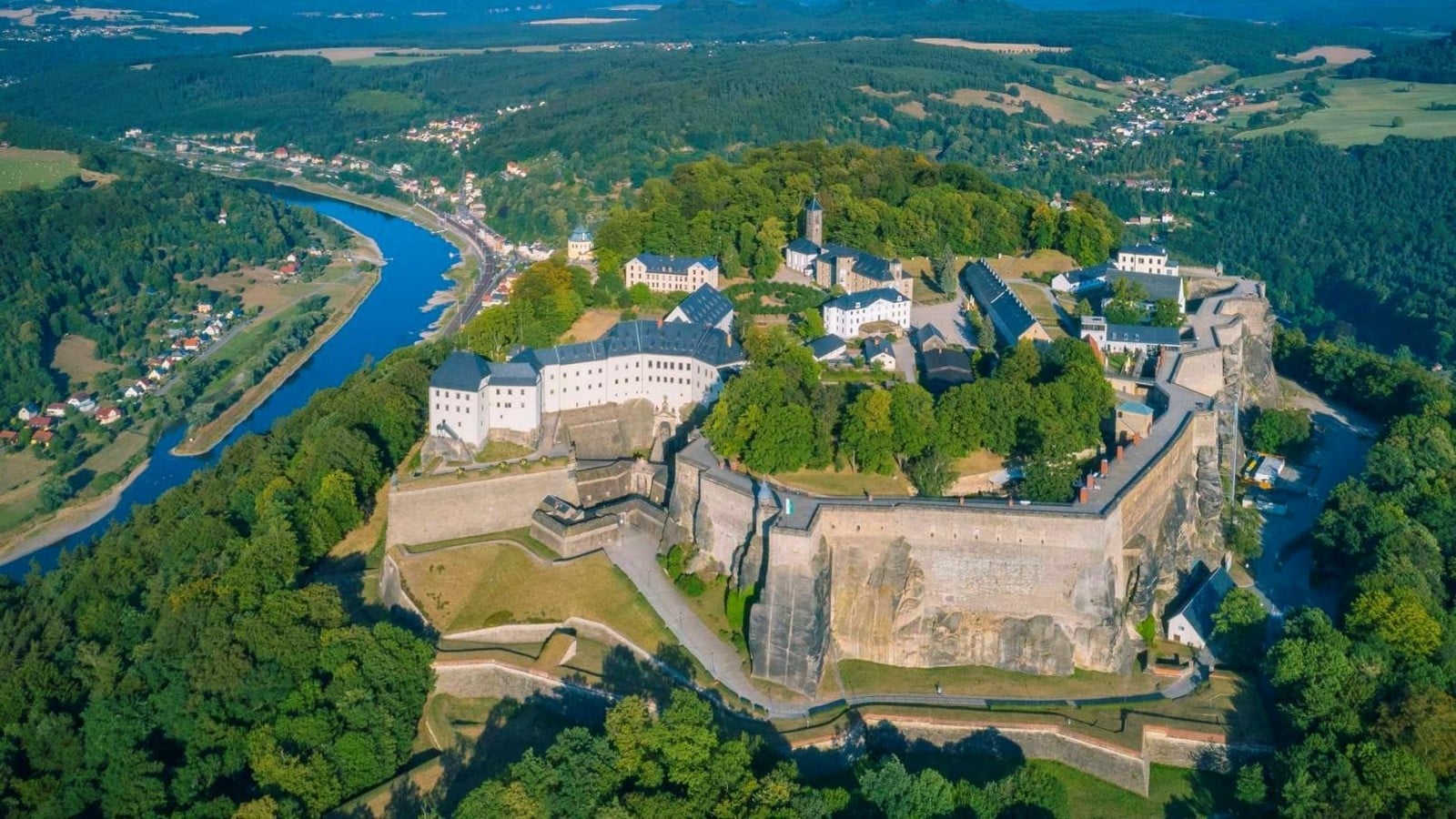
Earliest records show Königstein Fortress to be older than a 1000 years. To look at its history in more detail:
Medieval Origins
The first documented reference to Königstein Fortress dates to the early 1200s, a 1233 document and a 1241 charter mentioning “in lapide regis”, “on the stone of the King”). The early castle belonged to Bohemian rulers and controlled the Elbe trade route and regional borders. It was called “Kaiserburg”, “Emperor’s Castle” after the stay of Emperor Charles IV. Later, in 1459, it permanently became part of Saxony.
Early modern expansion (16th–18th centuries)
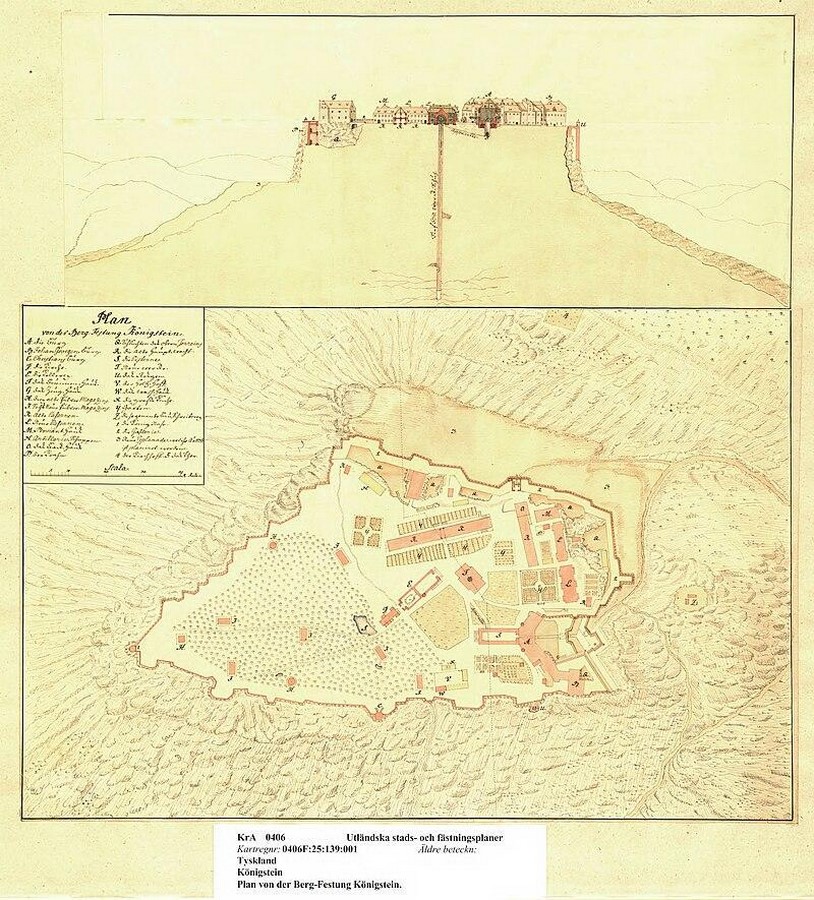
In 1563, the idea of converting the castle into a fortress had begun and for that, historically, the second deepest well of Europe was made. From the 1500’s onward, the site was repeatedly enlarged and modernised. Königstein Fortress received its first state prisoner in 1588 and from this moment on, it became Saxony’s most important state prison. The first major expansion was done from 1589-1594 when 5 new buildings were constructed. Significant building campaigns then took place in the 17th century (1619–1681) and then again in the late 17th and early 18th centuries (c.1694–1756). Under rulers such as John George II and later August the Strong the fortress was enhanced as a refuge, entertainment reserve, and representative princely residence.
18th–19th centuries: heavy Impregnable fortification
In the 18th and 19th centuries, works such as new military barracks, bomb-proof well-house, bastions, battery ramparts and provisions magazines transformed Königstein into a modern bastioned fortress capable of resisting contemporary artillery. Major 19th-century works (1870–1895) completed the last large-scale defensive upgrades associated with the German Empire.
From the Two Worlds Wars to Present:
Königstein Fortress acted as a camp for Prisoners of War for both World Wars. After 1945 Soviet forces and later East German authorities used the site for military-administrative purposes and youth re-education and juvenile centres. Since 1955 the fortress has been operated as an open-air military-history museum; significant renovation and visitor-infrastructure investments (including lifts and large-scale conservation work) were carried out from the 1990s into the 2010s.
Site Significance
The Königstein Fortress sits on a sandstone table rising 790 feet above the Elbe; the plateau’s natural steep sides form a nearly impregnable base, reducing approaches to the steep rock faces and forcing defensive works to operate across a relatively compact plateau. This natural topographic feature had made the Königstein Fortress a daunting foe across different eras in time. This feature is also the primary reason why the fortress was repeatedly adapted rather than rebuilt according to the contemporary military might.
The fortress houses many dramatic engineering features, one of them being the aforementioned fortress well, 500 feet and 4 inches deep. More are mentioned below:
Architectural and Defensive Systems & Components
Königstein Fortress is a palimpsest where medieval keeps and halls coexist with the Baroque-time palatial additions and 19th-century artillery revisions and improvements. One might see the ruins of the Fortress today, but there is no doubt that the fortress is a memory stone that has carved the events of time on itself.
The fortress complex contains around 50 buildings around which a continuous rampart runs about 5,900 feet long with massive sandstone-faced scarp walls about 138 feet high that create sheer drops. As the site was adapted to warfare in the previous few centuries, related architectural interventions can also be observed. 17th to19th century bastions, for instance, the Johann-Georgen-Bastion, and later batteries from 1870 to 1895 adapted the site to artillery warfare, creating firing platforms and flanking fields of fire.
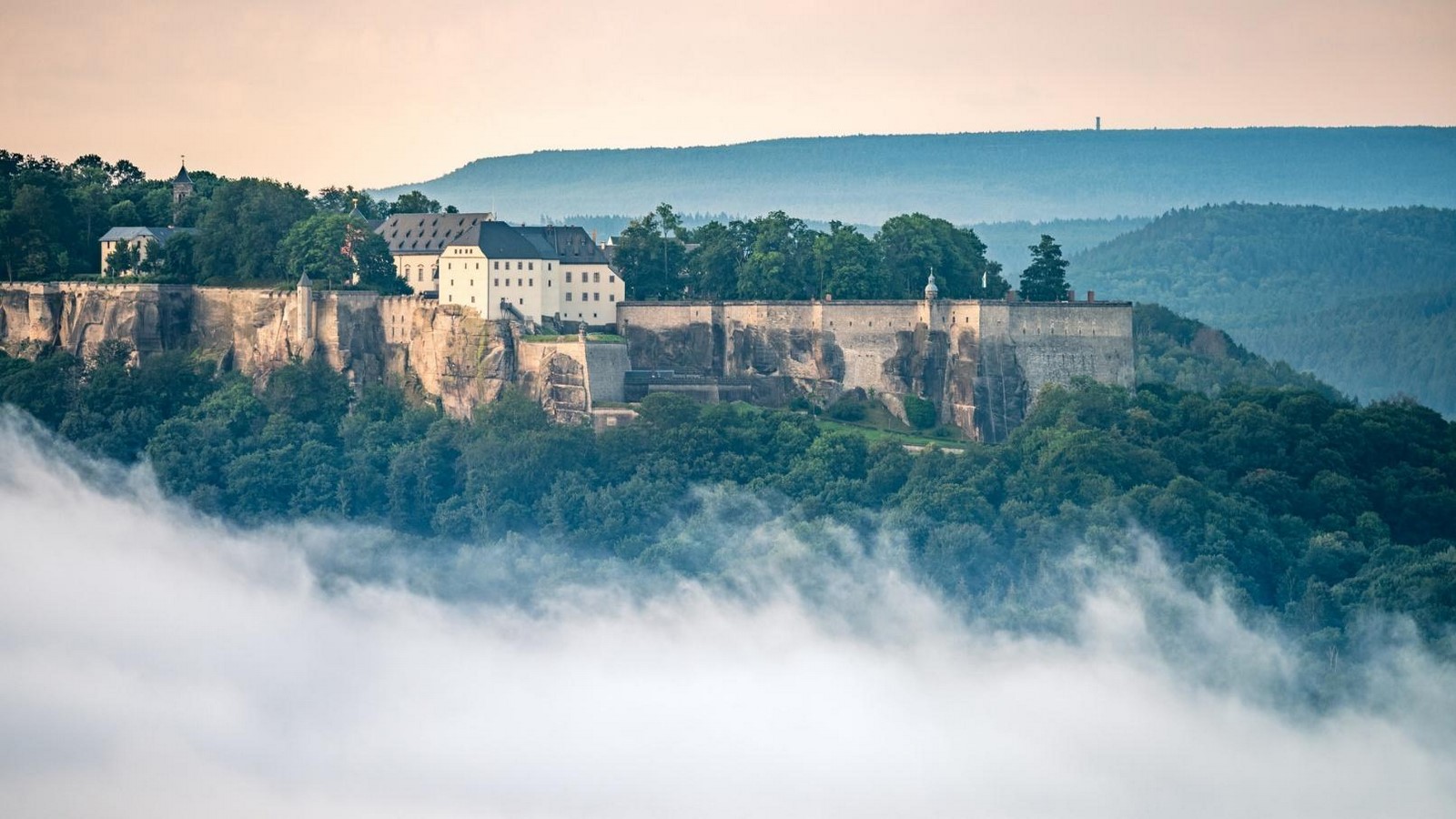
Medieval and early-modern palatial structures such as Magdalenenburg, the New Armoury, garrison church and extensive barracks/provisions buildings were adapted into magazines, officers’ quarters, state prison and administrative spaces over centuries. The fortress was meant to provide a refuge for the people and such can be seen in its spaces as well, as the logistics particularly correspond to long-term provisions, for example, the well and so on. What’s most fascinating is the way the building technology for the fortress evolved as well. Builders utilized local sandstone for scarp faces and cut rock to form stepped terraces and casemates; however later masonry and earth-covered batteries reflect the shift from vertical stone faces to mixed masonry, earthworks suitable for absorbing artillery impact.
Military Refuge Rather Than Action
Königstein Fortress, although now known as an impregnable fortress that saw multiple eras of violence is not a focus of military skirmishes. It was always a last refuge where the people retreated or it served as a prison, it was never itself a key member of military action. Its might is in its psychological effect on the people.
Social and Cultural Significance
Dynastic Representation
As a repository for state treasuries, art and archives during crises, Königstein functioned as an instrument of dynastic security and because of its location and natural protection, Königstein Fortress has housed many valuable treasures.
Prison and Memory
Its use as a state prison and later as a Prisoner of War camp embeds the site in narratives of incarceration, military custody, rule and state control, giving it an identity of simultaneously being a refuge and a prison.
Economic, Cultural & Tourisitic Reuse
Since becoming a museum after WWII in 1955, the fortress has become a major regional attraction, activating the site for education, tourism, and conservation. Large conservation investments and interpretive programming (museums, exhibitions on fortress construction and military history) have recast the fortress as a cultural landscape rather than an active military facility. Also, its association with medieval and early-modern European crafts such as porcelain has given it another layer in the form of craft and culture.
Its current status as an open-air museum further strengthens its own developing narrative as a watcher and eye-keeper for the region.
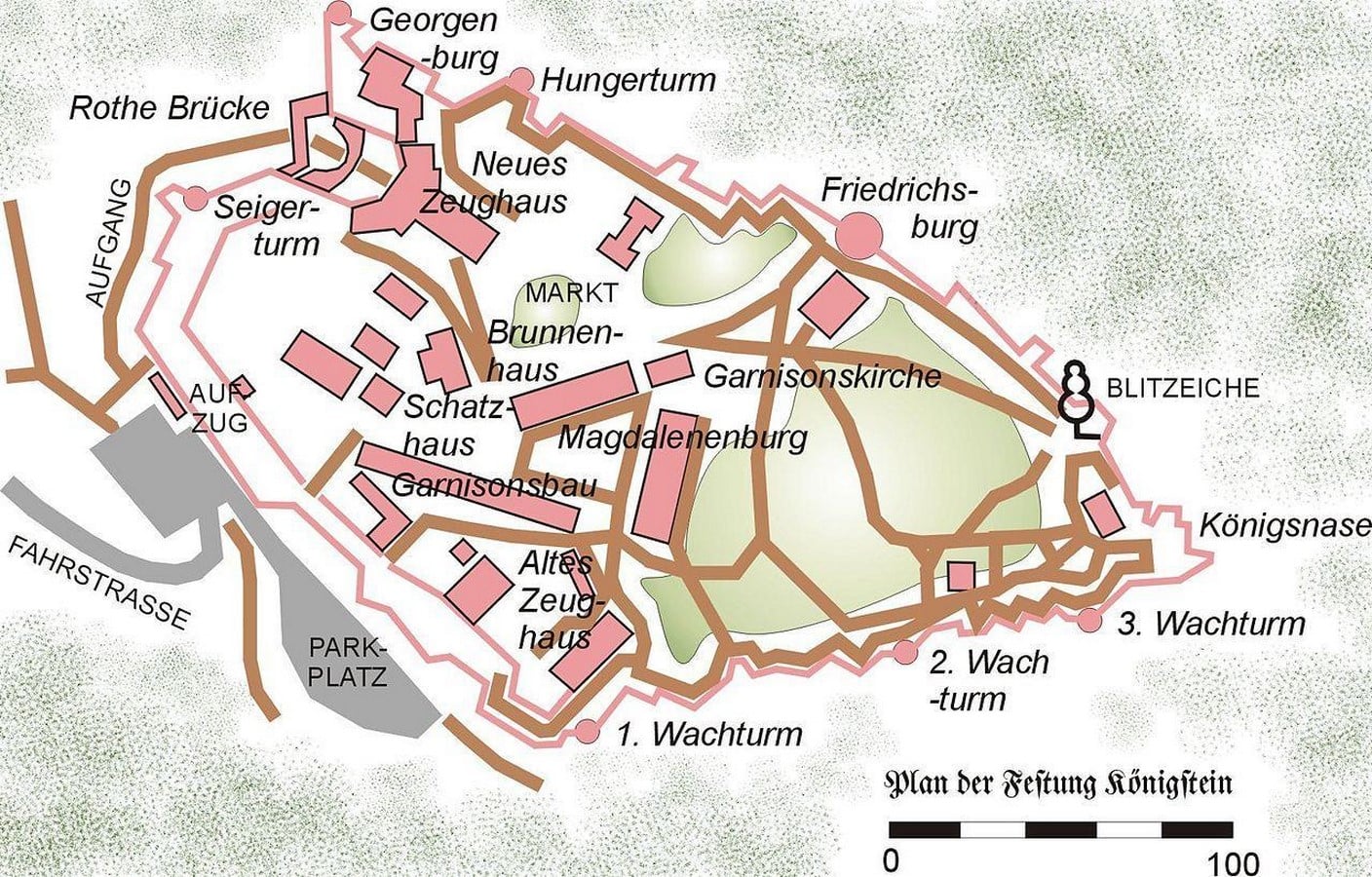
From the early 1990’s the Free State of Saxony invested heavily in restoring, stabilising and upgrading the site for visitors. Modern interventions were made that include two lifts, one of which gives a panoramic view of the area, extensive masonry consolidation and adaptive reuse of internal buildings as exhibitions and visitor facilities. These interventions illustrate balancing high-value conservation with access and experiential design while also bringing in larger amounts of visitors.
In conclusion, Königstein Fortress is a palimpsest of history that still stands tall as an evidence of the dynamic and diverse atmosphere of the region while being an impressive feat of architecture and engineering that has set itself as one of the most remarkable fortresses of Europe.
Reference List:
Koenigstein Fortress (2025) Schloesserland Sachsen – Castles, Palaces and Gardens in Saxony. Available at: https://www.schloesserland-sachsen.de/en/palaces-castles-and-gardens/koenigstein-fortress/
Chronicle of Königstein Fortress – Discover 800 Years of Königstein Castle and Fortress – The Fortress Königstein. Available at: https://www.festung-koenigstein.de/en/history.html
Fortress plan – The Fortress Königstein. Available at: https://www.festung-koenigstein.de/en/tour.html
Königstein Fortress (no date) Holidays in Saxony, Germany. Available at: https://visitsaxony.com/poi/koenigstein-fortress-koenigstein
Königstein Castle Ruins – Visit Wiesbaden. Available at: https://www.wiesbaden.de/en/microsite/tourismus/region/burgruine-koenigstein
History – Festung Königstein. Available at: https://web.archive.org/web/20090721081047/http://www.festung-koenigstein.de/museum/en/history/index.php?navid=22
The National Gallery, L. Saved for the nation, Saved for the nation – Bellotto’s ‘The Fortress of Königstein from the North’ acquired by the National Gallery. Available at: https://www.nationalgallery.org.uk/about-us/press-and-media/press-releases/saved-for-the-nation-bellotto
(2025) Königstein Fortress. Available at: https://www.elbelabe.eu/en/poi/b/koenigstein-fortress/
Königstein Fortress • Famous building/monument ” outdooractive.com. Available at: https://www.outdooractive.com/en/poi/saxon-switzerland/koenigstein-fortress/1701505/