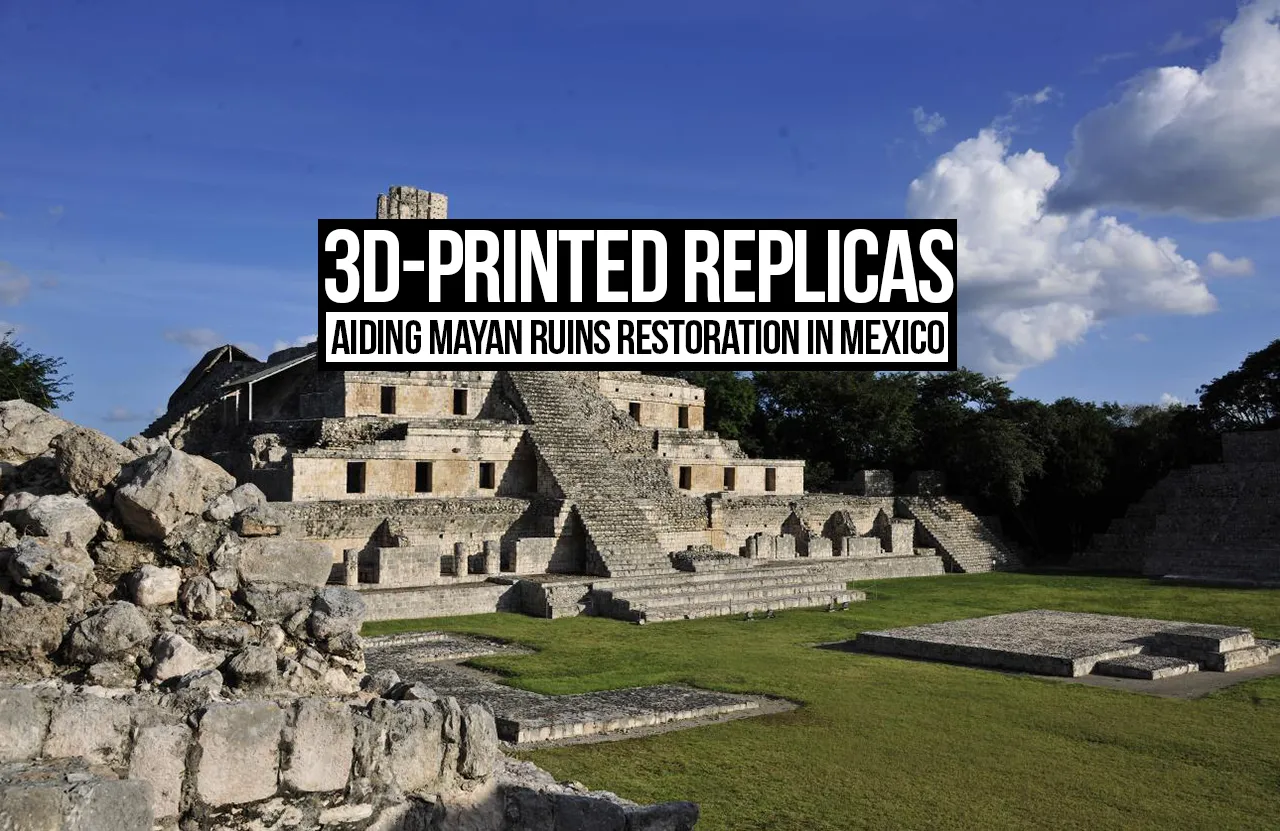
Architecture carries the history of civilisations through the buildings, monuments, and settlements they leave behind. Preserving these structures allows future generations to understand the cultures, knowledge, and construction practices of earlier societies. However, environmental exposure, structural deterioration, and the passage of time make the conservation of ancient buildings increasingly challenging. In response, researchers and conservation specialists are exploring new technologies to document, study, and protect architectural heritage.
Three-dimensional modelling and printing have created new possibilities in this field. By converting physical structures into digital models and tangible replicas, these technologies offer additional ways to record architectural details, examine damaged elements, and communicate historical information. In Mexico, research at the Maya archaeological site of Edzná demonstrates how digital documentation can support conservation planning while creating opportunities for public education. Other archaeological projects have explored how physical replicas can help researchers investigate the original arrangement of damaged monuments.
These developments raise an important question: how can modern technology contribute to preserving ancient architecture without compromising its historical authenticity?
Edzná: An Architectural Legacy Worth Preserving
Edzná is more than a collection of impressive ruins. Its temples, platforms, stairways, and water-management systems reveal how Maya architecture responded to social, religious, and environmental needs. The settlement developed over many centuries, leaving layers of construction that researchers must interpret carefully.
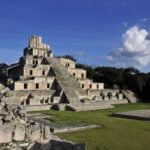
The Building of the Five Storeys rises above a broad base within the Great Acropolis. Its platforms, rooms, and temple spaces illustrate the complexity of Maya monumental design. Other buildings and carved stelae provide evidence of political life and religious practice, while the water infrastructure shows how engineering and settlement planning worked together.
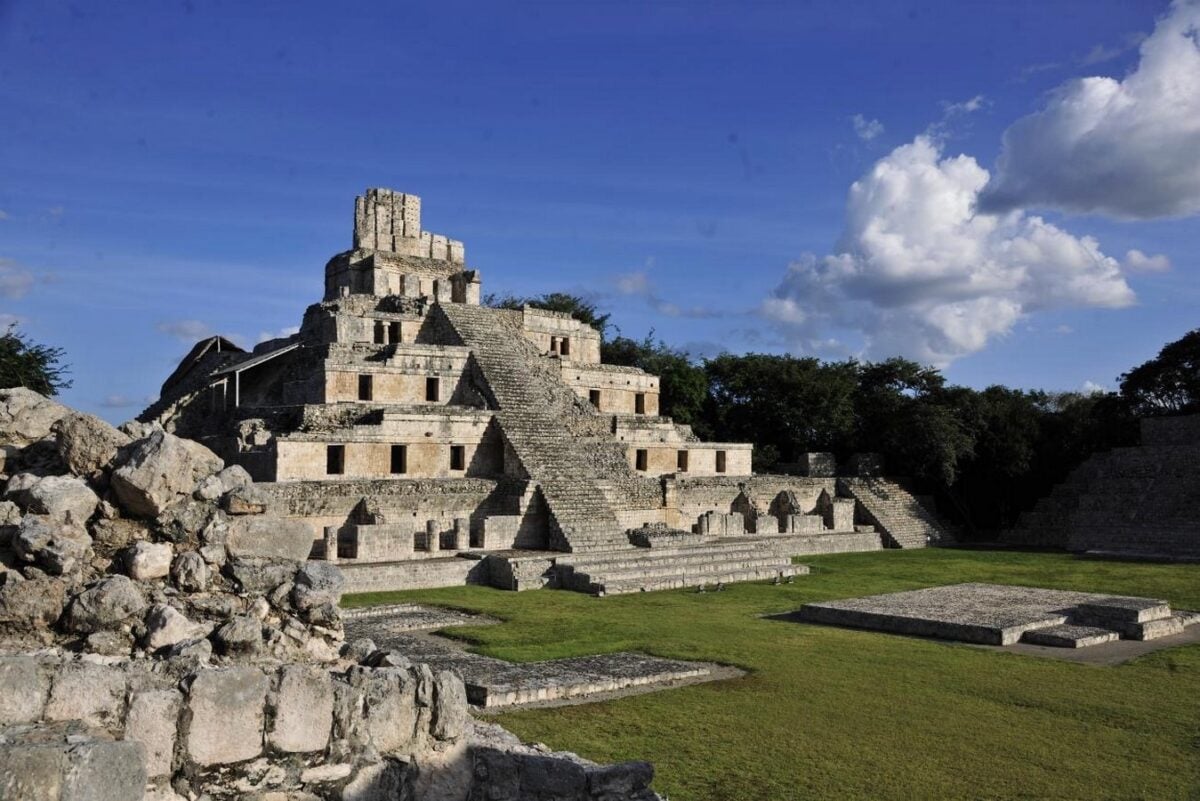
Today, exposed remains face seasonal rain, vegetation growth, and gradual ground movement. In Mexico, as at archaeological sites elsewhere, conservation teams need reliable records to distinguish long-term change from recent damage. The complexity of Edzná makes this difficult through drawings or photographs alone. A survey must preserve not just a building’s outline, but details that may matter during later conservation.
Recording Ancient Architecture in Three Dimensions
A conventional survey records measurements, drawings, and photographs, but irregular stone surfaces and complex building forms can be difficult to represent fully on a flat page. Three-dimensional documentation adds a model that can be measured and examined from different viewpoints.
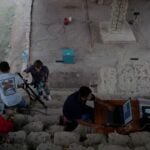
In November 2013, researchers from Ghent University documented Edzná using ground photography, aerial images, topographic measurements, and satellite positioning. A motorised hexacopter captured views from above, while overlapping photographs supplied data for digital modelling. The Ghent University Edzná project describes this work.
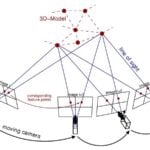
The team used photogrammetry, which identifies common points in overlapping photographs and calculates their spatial relationships. Techniques such as Structure from Motion and Multi-View Stereo use these relationships to create three-dimensional representations.
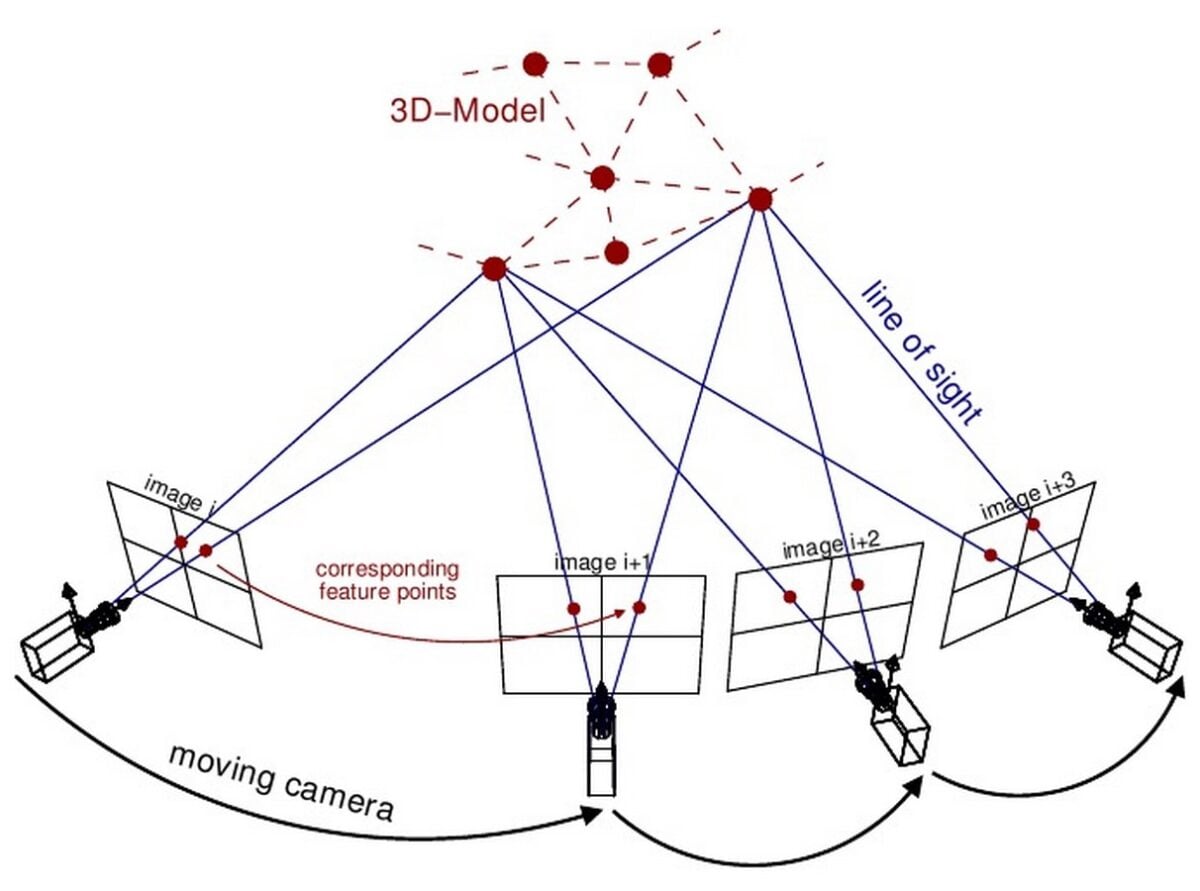
For archaeological work in Mexico, such models preserve a record of a monument’s condition at a particular time. They cannot explain every cause of deterioration, but they give researchers a baseline against which change can be assessed. Their value therefore lies not only in recording the past, but in informing the next stage of care.
From Digital Models to Restoration Planning
At Edzná, digital models helped heritage staff continue research and restoration preparation when fieldwork was restricted during the COVID-19 pandemic. Staff could examine measurements remotely and plan vegetation clearance. A 2022 research chapter reports that comparisons between models identified small amounts of ground subsidence. Heavy rain in 2020 was followed by a collapse affecting part of a major building, underlining the need for continued monitoring.
Repeated surveys help conservators identify areas needing inspection and document structures before and after intervention. For site managers in Mexico, this creates a clearer record of why an intervention was considered and what changed afterward. Still, models cannot diagnose every cause of damage; moisture and material decay require professional assessment on site.
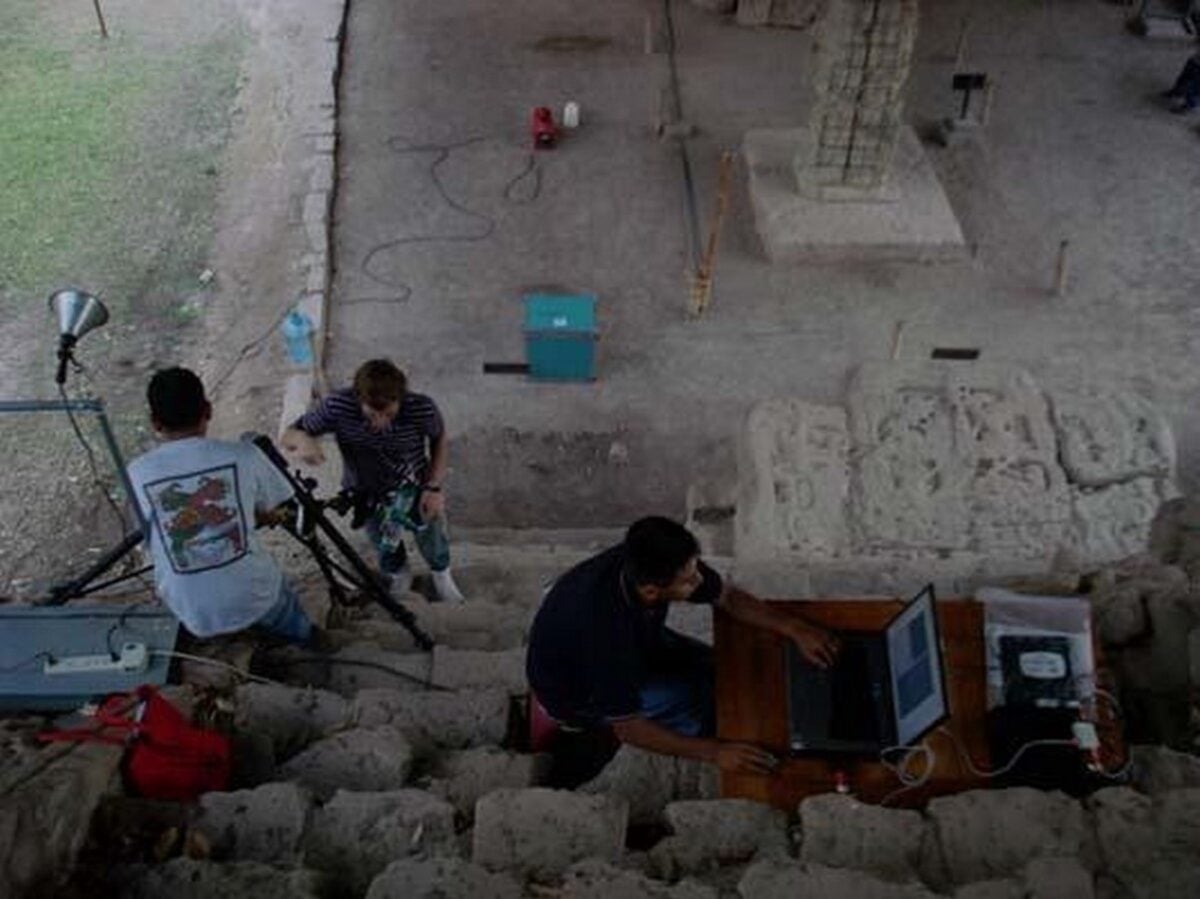
Digital records can also be shared, used for interpretation, or converted into physical objects. This makes it important to distinguish replicas made for study from components intended for restoration.
Creating Physical Replicas: From Digital Models to Reconstruction
A 3D printer builds an object layer by layer from a digital file. The result may be a scaled model for research or display, or a prototype for testing a restoration approach.
For Edzná, a 2022 publication reported that a larger replica of the digital model was being printed for educational display at a museum in Campeche. It described a project in progress, not a confirmed installation. This is evidence of planned interpretation, not proof that printing was used to rebuild the ruins.
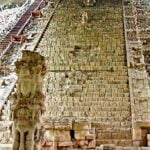
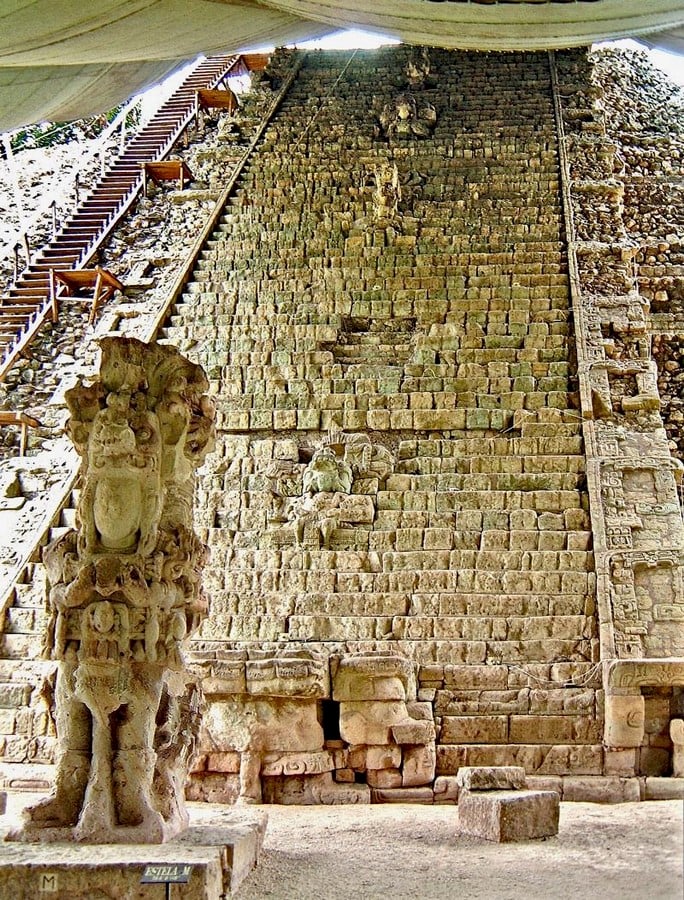
At Copán in Honduras, Harvard’s Peabody Museum Maya Corpus project scanned monuments including the Hieroglyphic Stairway, which contains more than 1,100 carved glyph blocks, many displaced from their original positions. Scaled prints help researchers examine the blocks and investigate their possible arrangement. They are research aids, not replacement stonework.
Research on a Hispano-Roman ornament at Cástulo, Spain, also used photogrammetry and 3D printing to study missing material and possible reintegration. These examples do not mean the same approach suits every Maya monument in Mexico. Decisions depend on evidence, materials, and conservation needs.
Architectural Conservation and the Limits of Digital Reconstruction
The ability to reproduce a missing detail raises a difficult question: should every gap be filled? Weathering, old repairs, and construction traces may reveal information that a polished replica could conceal.
In Mexico, reconstruction must distinguish evidence from inference. Surviving masonry, excavation records, photographs, and comparisons with related buildings can support an interpretation, but incomplete evidence should not be presented as certainty. A replica can make a hypothesis easier to study; it cannot make that hypothesis historical fact.
The International Council on Monuments and Sites (ICOMOS) provides principles for conserving and interpreting heritage. Its charters stress the importance of original material and honest interpretation, supporting interventions grounded in evidence and distinguishable from historic fabric.
Material choice matters. A plastic print suitable for a museum may not withstand outdoor conditions or be compatible with ancient stone. Any component proposed for reintegration needs assessment for durability and its effect on the original structure. Digital records also require secure storage and accessible file formats. Technology is most responsible when it helps conservators understand a site without encouraging unnecessary reconstruction.
Making Archaeological Heritage Accessible
Replicas can also protect heritage while deepening public understanding. Museums use tactile models to let visitors explore details too fragile to handle in their original form, while digital models reveal viewpoints that may be difficult to access on site.
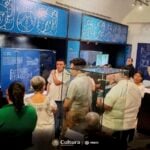
In September 2026, Mexico’s Ministry of Culture announced El Juego Eterno at the Museum of Maya Architecture in Campeche. It includes 3D-printed reproductions of archaeological objects, including stelae 2 and 6 from Edzná. The tactile pieces support access for children and visitors who are blind or have visual impairments; Braille panels provide further information.
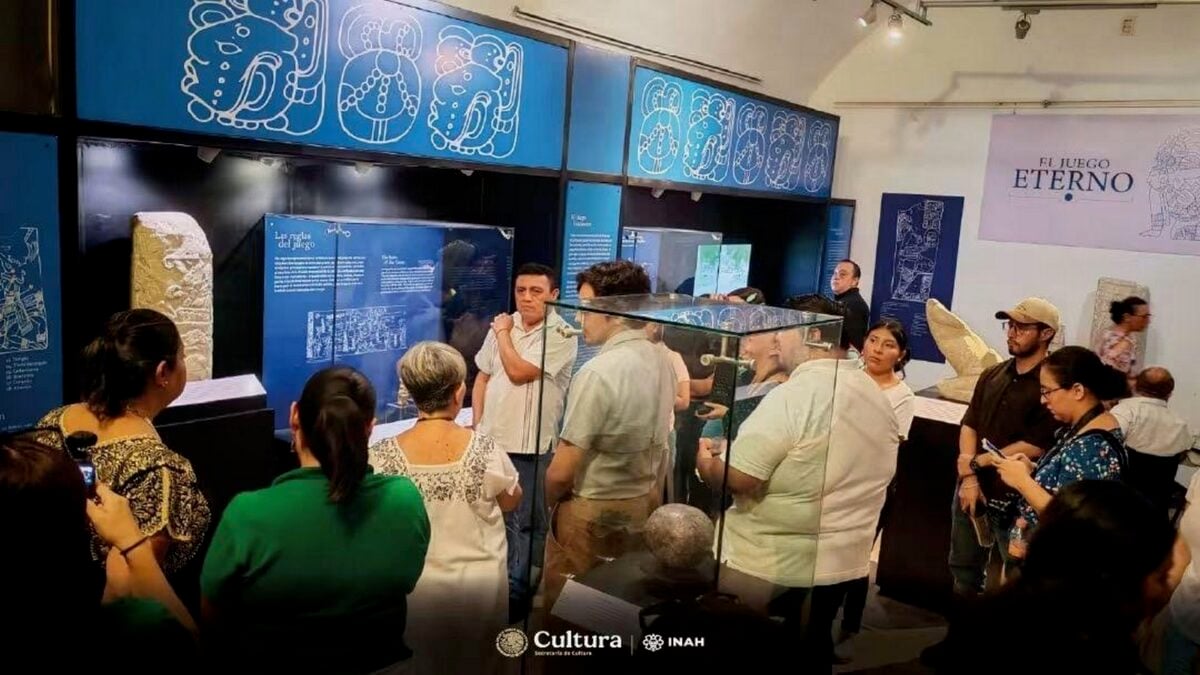
The replicas make forms and surfaces available through touch while the originals remain protected. This is interpretation rather than structural restoration, but it is an important part of conservation. Clear labels should explain what has been reproduced and how the original object was used. Accessibility should help more people participate in understanding the past.
Technology as a Partner in Heritage Conservation
Edzná shows how three-dimensional documentation can support measurement, monitoring, and restoration preparation. Research at Copán demonstrates how scaled prints help specialists investigate displaced fragments, while museum examples show how replicas can make fragile heritage more accessible. Each application serves a different purpose, and those distinctions matter.
For Mexico, these tools can improve research, record vulnerable Maya architecture, and broaden public access. Their value depends on accuracy, clear interpretation, and respect for original material. A digital model cannot replace on-site expertise, and a printed replica should not be mistaken for an original or a substitute for evidence.
Used carefully, 3D technologies can help conservation teams make better-informed decisions. Their greatest contribution is not making ancient buildings appear new, but helping preserve their evidence and meaning for future generations. That balance between innovation and restraint should guide every project.
Harvard Peabody Museum of Archaeology & Ethnology (n.d.) Maya Corpus research: 3D scanning. Available at: https://peabody.harvard.edu/maya-corpusresearch-3d-scanning
Hernández, M., De Maeyer, P., Zwartjes, L. and Benavides Castillo, A. (2022) ‘Geoheritage to support heritage authorities: Research case studies on Maya archaeological sites’. In: 50 Years World Heritage Convention: Shared Responsibility – Conflict & Reconciliation. Springer. Available at: https://doi.org/10.1007/978-3-031-05660-4_27
Higueras, M., Calero, A.I. and Collado-Montero, F.J. (2021) ‘Digital 3D modelling using photogrammetry and 3D printing applied to the restoration of a Hispano-Roman architectural ornament’, Digital Applications in Archaeology and Cultural Heritage. Available at: https://www.sciencedirect.com/science/article/pii/S2212054821000084
ICOMOS (2008) The ICOMOS Charter for the Interpretation and Presentation of Cultural Heritage Sites. Available at: https://www.icomos.org/charters-and-doctrinal-texts/
Instituto Nacional de Antropología e Historia (INAH) (n.d.) Edzná. Available at: https://lugares.inah.gob.mx/en/node/4339
Lonneville, B. et al. (2014) ‘Accurate and cost-efficient 3D modelling using motorized hexacopter, helium balloons and photo modelling: A case study’. Available at: https://biblio.ugent.be/publication/5769184
Ghent University (n.d.) Edzná 3D project. Available at: https://cartogis.ugent.be/edzna/about.html