The building that exists before It Is Built
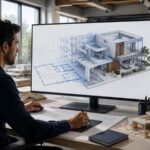
Prior to the construction of an actual building, one might find an image of what one hopes the architecture will look like. Perhaps a sun-drenched living room, a precisely landscaped courtyard, and a facade that catches the onlooker’s eye in the evening light. Architects rely upon Architectural Visualisation as their tool to convey the ideas they have.
And these images do more than communicate architectural intentions. They create expectations that one could hold onto.
One might be able to understand, from a render, the way in which the building is conceived. This does not, however, ensure an understanding of what the building will be like. Photorealistic renders can give one the impression that the proposal will turn out exactly as one sees fit, even if not all of the details are fully communicated.
One could argue that architectural images are not inherently misleading, but has the profession become so engrossed with its rendering abilities that it ignores the actual conditions that will define one’s experience?

The Illusion of Perfection
In addition to being misleading, architectural images are designed in such a way that they convey specific ideas. Sunlight is positioned favourably while trees, flowers, and grass thrive on one’s behalf. Materials and textiles are pristine, and people flow as desired within the space’s confines. There isn’t a single detail out of place.
A building, meanwhile, is exposed to forces which shape and alter it. Surfaces degrade while vegetation is unpredictable. One can’t expect a new housewarming to happen quite the same as seen in an image.
The same applies to materials and climate. A building can be beautiful in a render, but it doesn’t speak to whether it will be comfortable to live in, accessible or provide an appropriately utilitarian experience.
Architectural Visualisation should facilitate an understanding of the intended design, but should not allow somebody to believe that what they see represents reality.
What the Frame Excludes
There is always a frame around an image, and by doing so the photographer highlights a specific sight. As such, one must consider the effect that the framing, illumination, landscaping, and arrangement of objects or people have on the overall perception.
This approach does not necessarily represent any sort of deception on the architect’s behalf.
For as long as design visualisation has been carried out, architects have been selective with their depictions. After all, no design is perfect, and the image exists to portray the intended outcome despite any potential setbacks. However, the more one moves towards an end goal of realism, the more one can misrepresent what one does not show than what one does display.
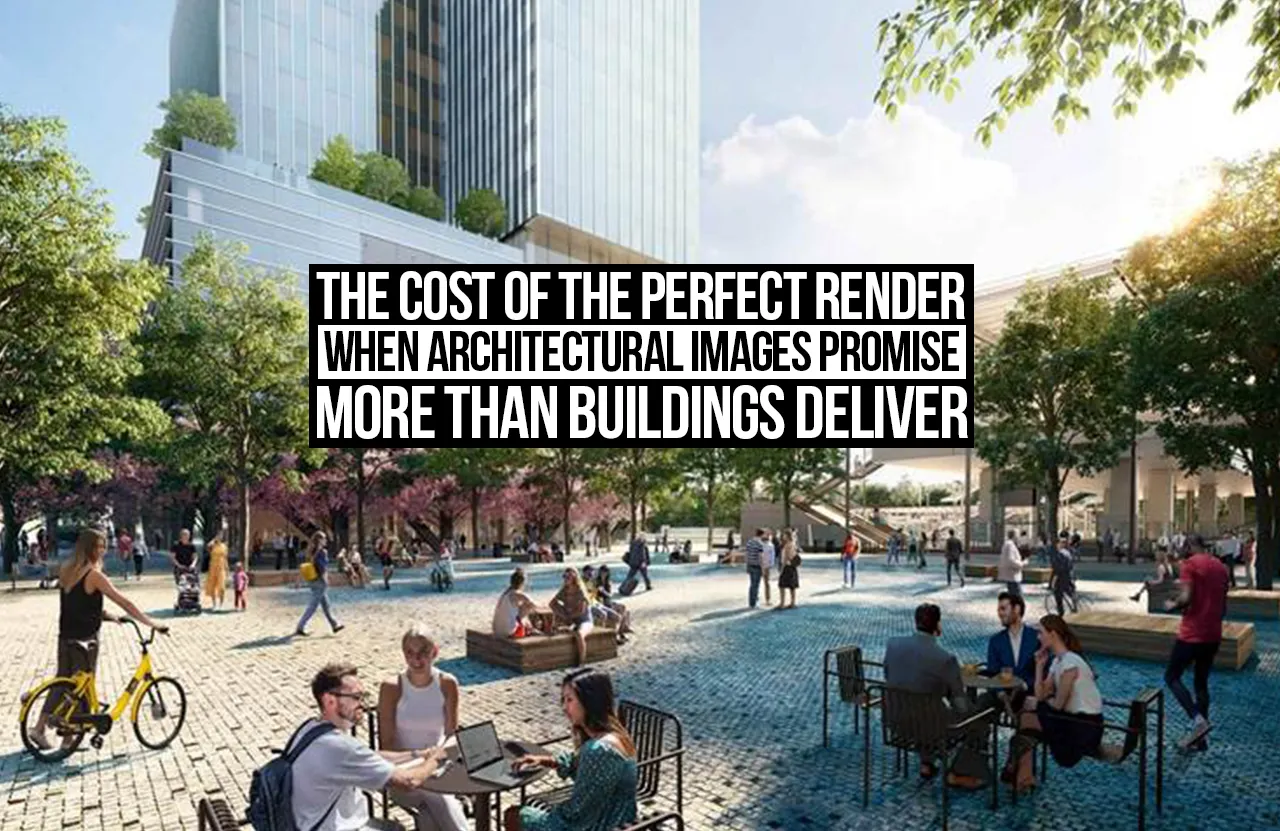
A public plaza, for example, can be captured and framed in such a way that its aesthetics overshadow its intended use, ignoring fundamental questions in terms of accessibility and comfort.
A photograph can represent the grandeur of an entrance, but a building needs to be assessed with regard to the surrounding environment, the practicalities involved in accessing or inhabiting it, and the conditions to which it will be subjected.
One should be able to see one angle and ask questions about all the others.
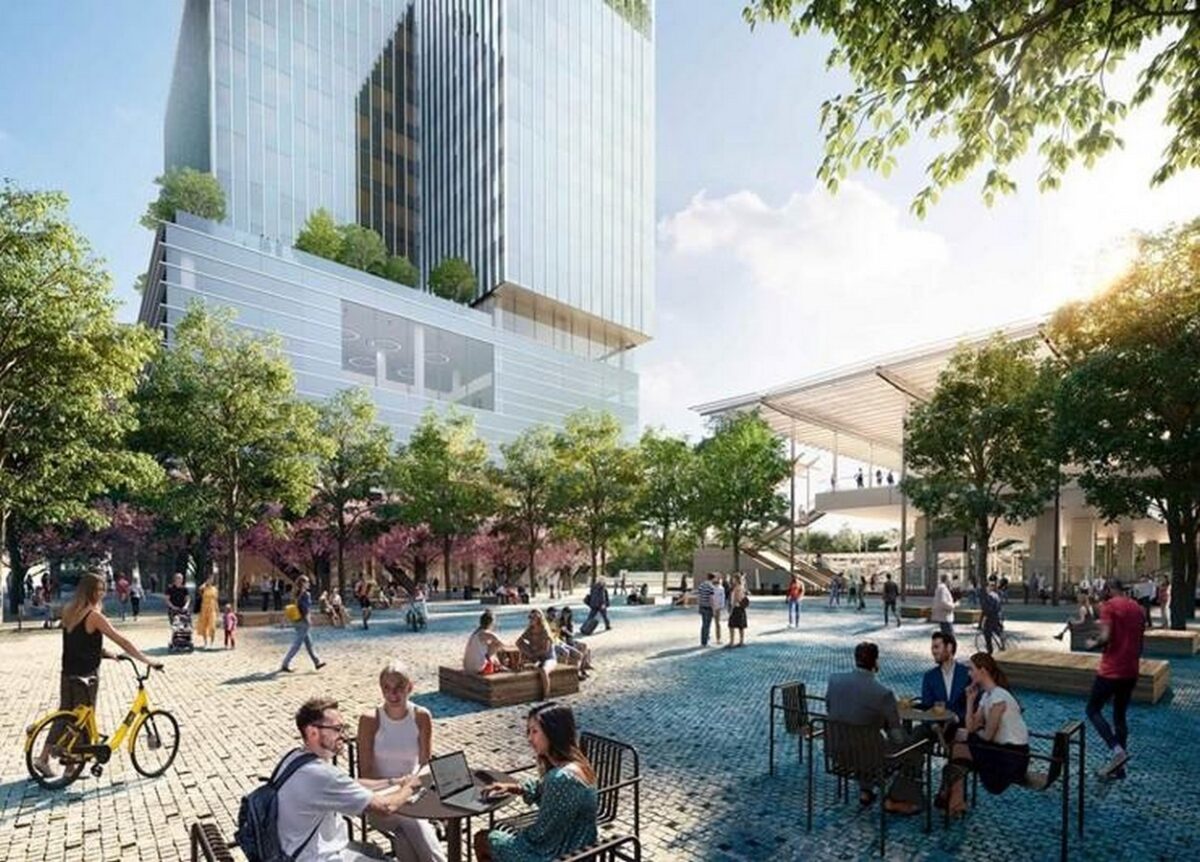
Designing for the Image or the Experience?
The increased reliance on image-based design communication poses an ethical dilemma for the profession. Are architects designing a building or a render, for the experience or the visual?
An impressive, grand, unusual building may lend itself better to images, but one should bear in mind that all such design decisions are considered with regard to practicality, cost, construction, and usage.
This doesn’t imply that spectacular design should never happen. Architecture has always been about imagination and invention. It is, however, when the image becomes more important than the building, that concerns arise.
In the field of students and young architects, this is perhaps the most precarious situation for the image-based designer,
As compelling as images are, one cannot consider an architectural project successfully designed simply because it is attractive. Students, in particular, must be able to separate presentation from process, understanding that an image can help sell a design – while having an actual appreciation as to how one goes about formulating said design is what actually determines success.
When Reality Doesn’t Match the Render
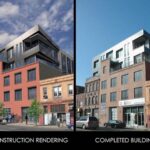
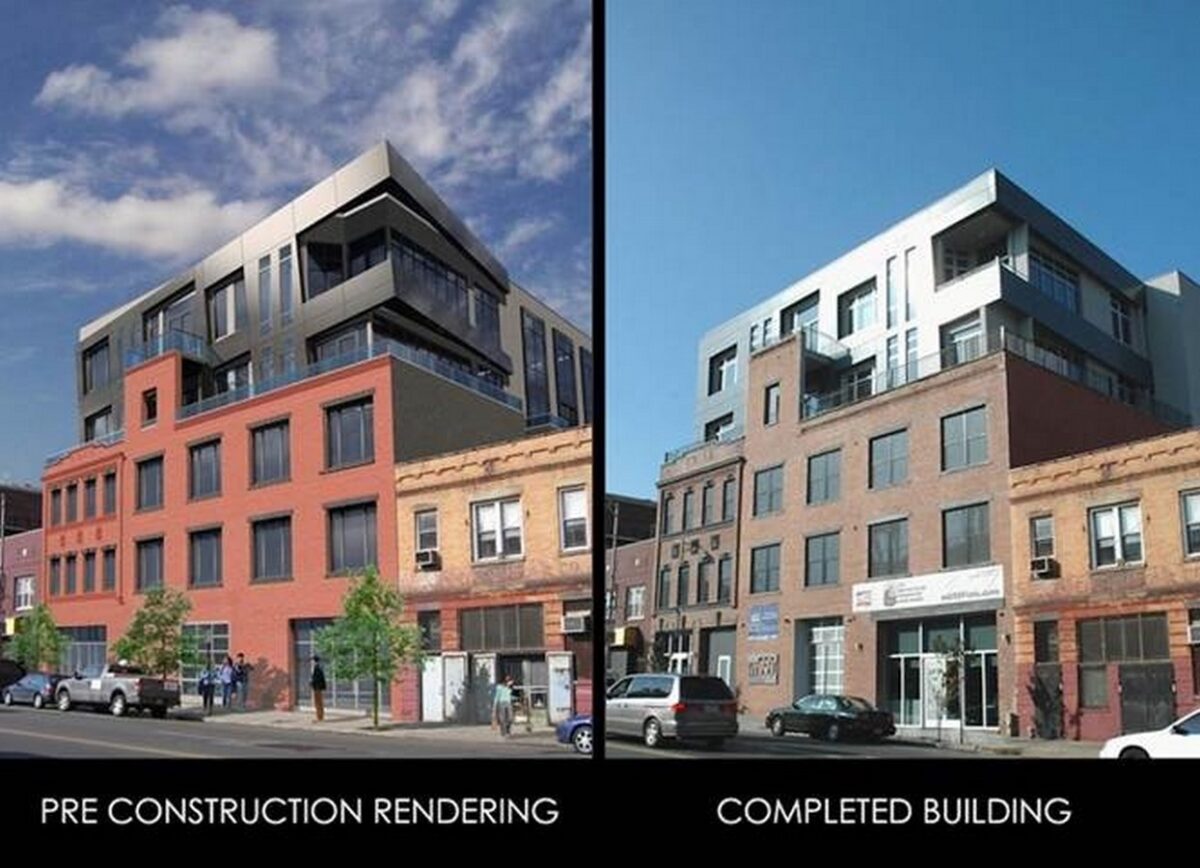
Perhaps nowhere else is the difference between architectural images and built realities felt more keenly than when the two are juxtaposed. By comparing what a building was intended to represent and how it ended up built or presented, one can easily identify the ways in which each failed the other.
By taking account of the reasons that an image differs from its built counterpart, one can not only learn lessons on what to communicate or not, but how realistic that communication actually was.
This is also an opportunity to improve criticism of completed works, to move beyond image-based comparisons and assess whether a completed project fulfilled its goals or not. The former is useful; it can’t be the sole determinant of architectural quality.
With regard to a criticism of an architectural image, likewise, one shouldn’t simply comment on whether or not the building looks similar to the proposal one sees. Reviewers must acknowledge the ways in which what is seen is actually experienced – as one would any other piece of built work, without the preconceptions that one often applies to images.
It is a matter for the built work itself to defend its qualities.
Towards More Honest Architectural Visualization
There is no need, in fact no option, but to continue using beautiful images to illustrate architectural design. What one does need to do is present them honestly, to acknowledge what one does not know, and understand the implications that choices have upon the architectural proposal as a whole.
Architects can communicate alternate lighting or the changing seasons, what the materials look and feel like, the environmental conditions that will affect the building, and how its placement, surroundings, or other buildings affect it too.
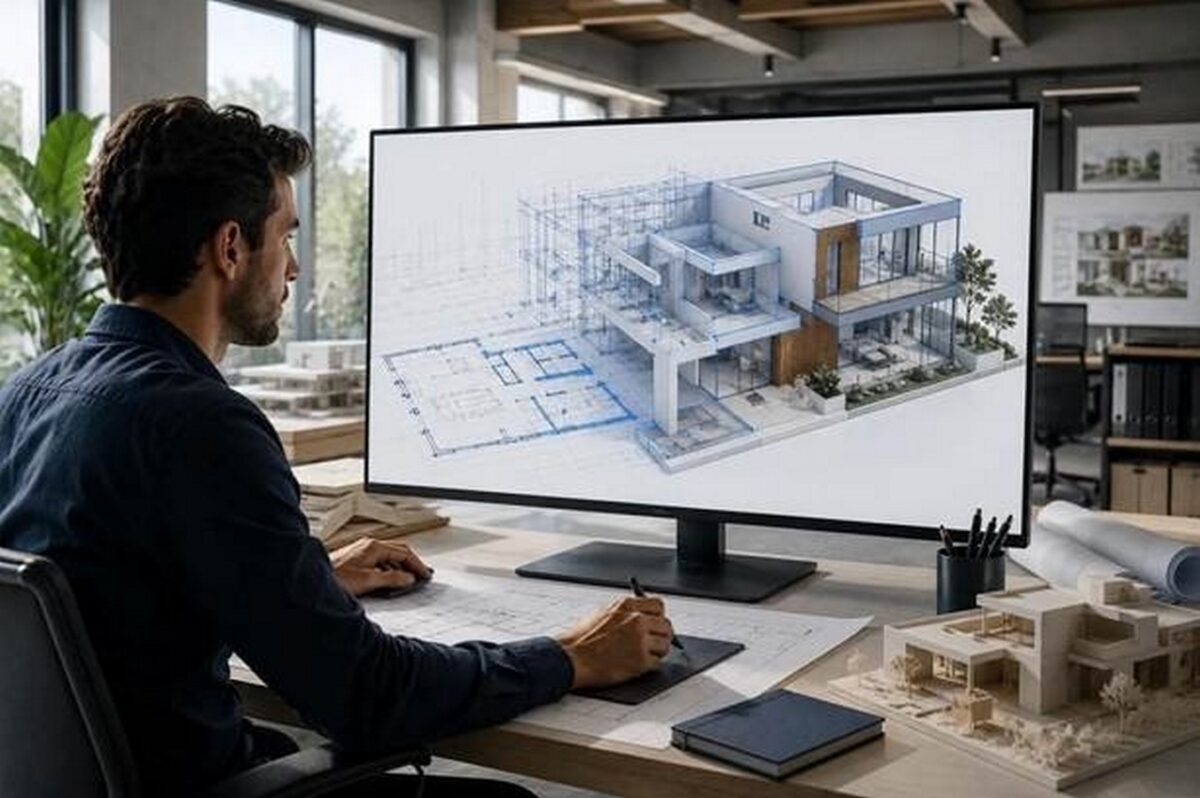
One can make the distinction between certain choices being illustrative rather than definite – and include a section of plans, diagrams or studies, which will help to explain aspects that images cannot.
In the same regard, architects can present alternate angles of view to help understand the scale of the design. This might include an angled image for an overall impression, while one from street level or a ground view represents how the building can be approached and utilised.
These are useful and valid considerations which will enrich the discussion around architectural design communication without detracting from the value of image-based communication to the wider industry.
Beyond the Perfect Image
Architectural images are powerful – they are able to convey ideas of unfamiliar, inaccessible places in ways that everyday experience cannot offer. They are, in that sense, vital to the architectural design process. They must not, however, be taken as confirmation of one’s beliefs.
A building is experienced, rather than seen, walked into and lived in rather than observed as a piece of still art. The success of a building lies in what it provides, day in, day out. Whether it functions as envisioned is where the true test of one’s design begins. And by placing too great an emphasis on the image, one fails to properly communicate that which is most critical.
It is a responsibility of the architectural community to recognise image-based design communication as a tool which, when used responsibly, enhances the appreciation for design, but cannot replace honest critique or understanding.
Because, ultimately, architecture’s greatest goal is not to make images of beautiful buildings. It is to make beautiful buildings that will last.
And that doesn’t happen by presenting perfectly rendered images of those ideas. Neither does it happen when one fails to fully utilise alternative techniques of communication in order to fully explore those ideas themselves.
References:
Pallasmaa, J. (2005) The Eyes of the Skin: Architecture and the Senses. 3 rd edn. Chichester: Wiley-Academy.
Pérez-Gómez, A. and Pelletier, L. (1997) Architectural Representation and the Perspective Hinge. Cambridge, MA: MIT Press.