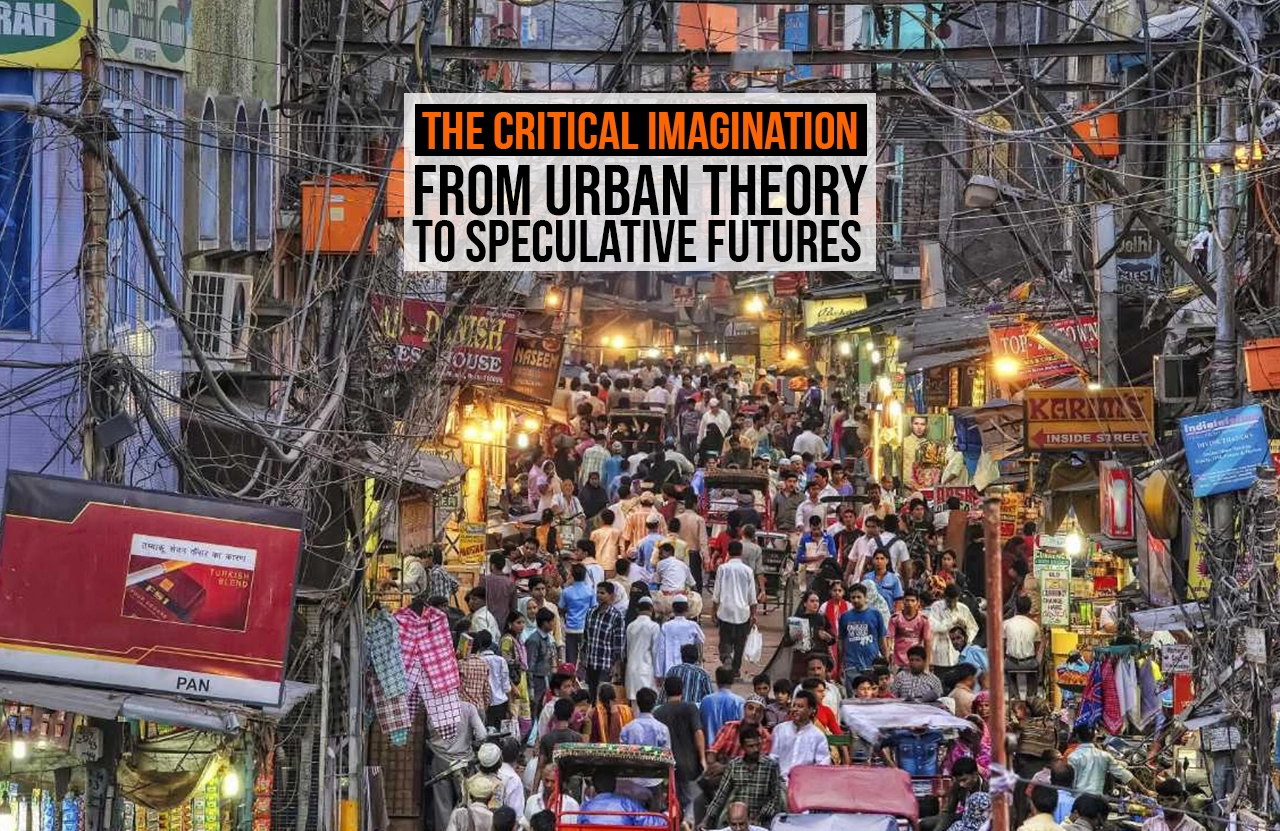
Urban Theory often arrives in abstraction, diagrams of flows, arrows of capital, and density compressed in numbers. Cities are not systems; they are lived stories. Critical imagination is a practice of crossing these registers between ensuring that our attention is attentive to a specific theory and permitting a place to speak. Urban Theory behaves less like mastery and more like listening when we do not treat streets, buildings, ruins, etc., in the background, but as persons.
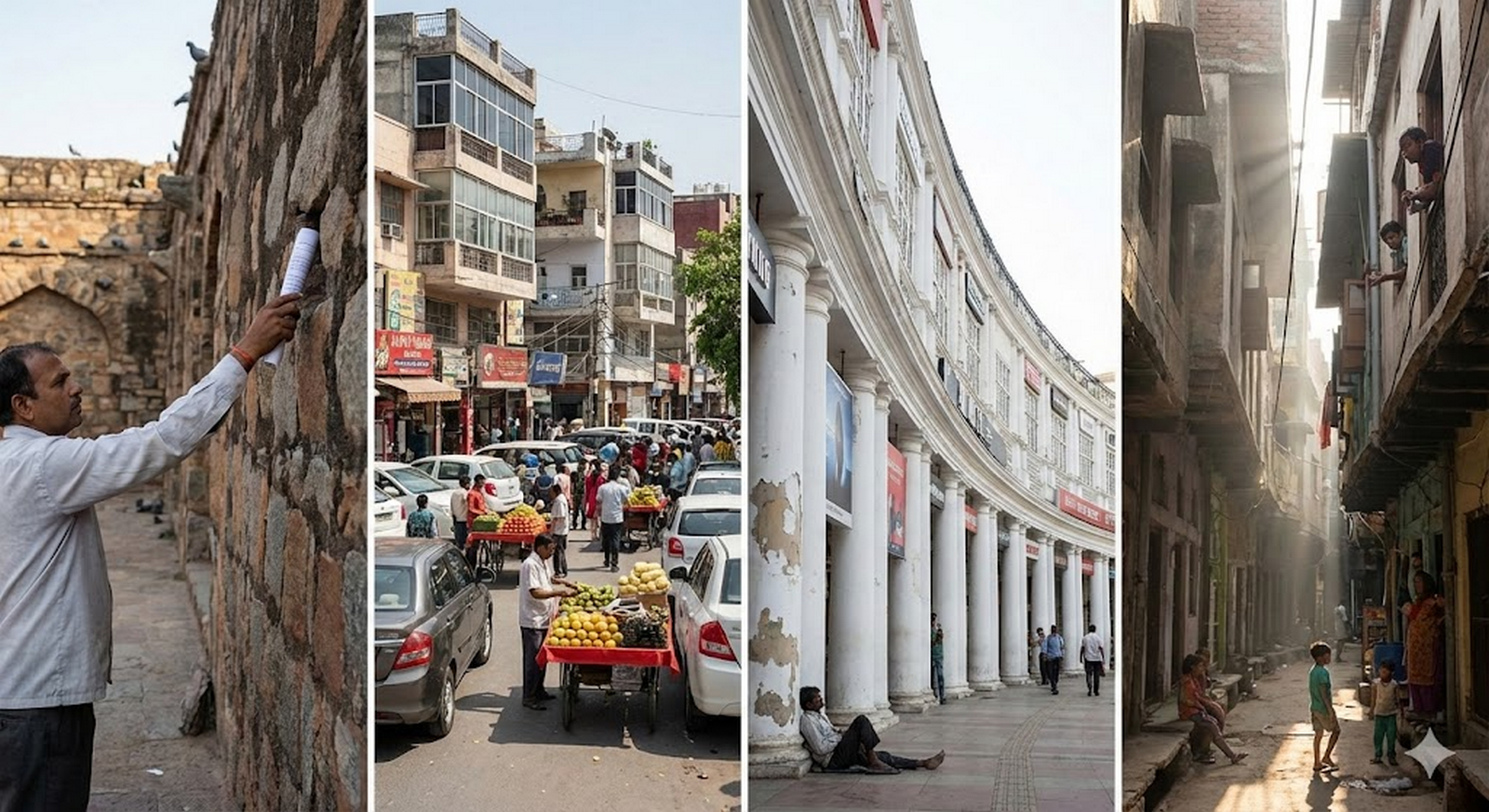
Starting with slow mornings, within the confines of Firoz Shah Kotla in Delhi. It is an official ruin of the fort, fenced and half forgotten by planning laws which designate it as heritage. But dawning early, it rises ahead of the town. Men come barefoot with handwritten petitions. They insert them very tenderly into the crevices in the stone walls, believing that jinns still exist here, yet. The first thing that can be noticed was the silence: there were no cars, just pigeons and low prayers. Second, the texture, the smooth stone of the fort shaped by centuries of monsoon and caress. Third, the doing of it: paper meeting stone, hope meeting history.
Such an example would be the subject of Urban Theory of the layers of time, the existence of pre-modern systems of belief alongside modern governance. That’s true, but insufficient. The fort shows us something more personal, the process of people customizing the urban space to the emotional and spiritual requirements that modern cities fail to provide. Here, decay is not failure. It is an invitation. The ruin stands as an active participant in contemporary life, taking in the fears and desires in the same manner in which it took in the imperial power.
And abandoning the city, the fort becomes sharp. As you approach Lajpat Nagar, an area that was formed by the Partition Refugees, and then through the liberalization process, and currently under the strain of real-estate speculation. The first things that struck me were the balconies: divided into open and green ones, and others covered by glass. Then the street men, the fruit peddlers with the carts stuck in between the parked vehicles. Last but not least, the soundscape: horns superimposed over dialogue, prayer calls, and building.
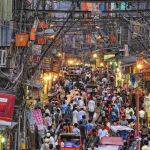
The concept of Urban Theory tends to see neighborhoods in terms of informality and density. Relationships are made more obvious step by step. The streets and people deal with one another all the time. A sidewalk is not a mere pedestrian area: it is a communal environment: walking, selling, waiting, resting. Traffic expels children holding corners to play. The trees are used as informal shelters, and their shade adds several degrees of useful space in hot seasons.
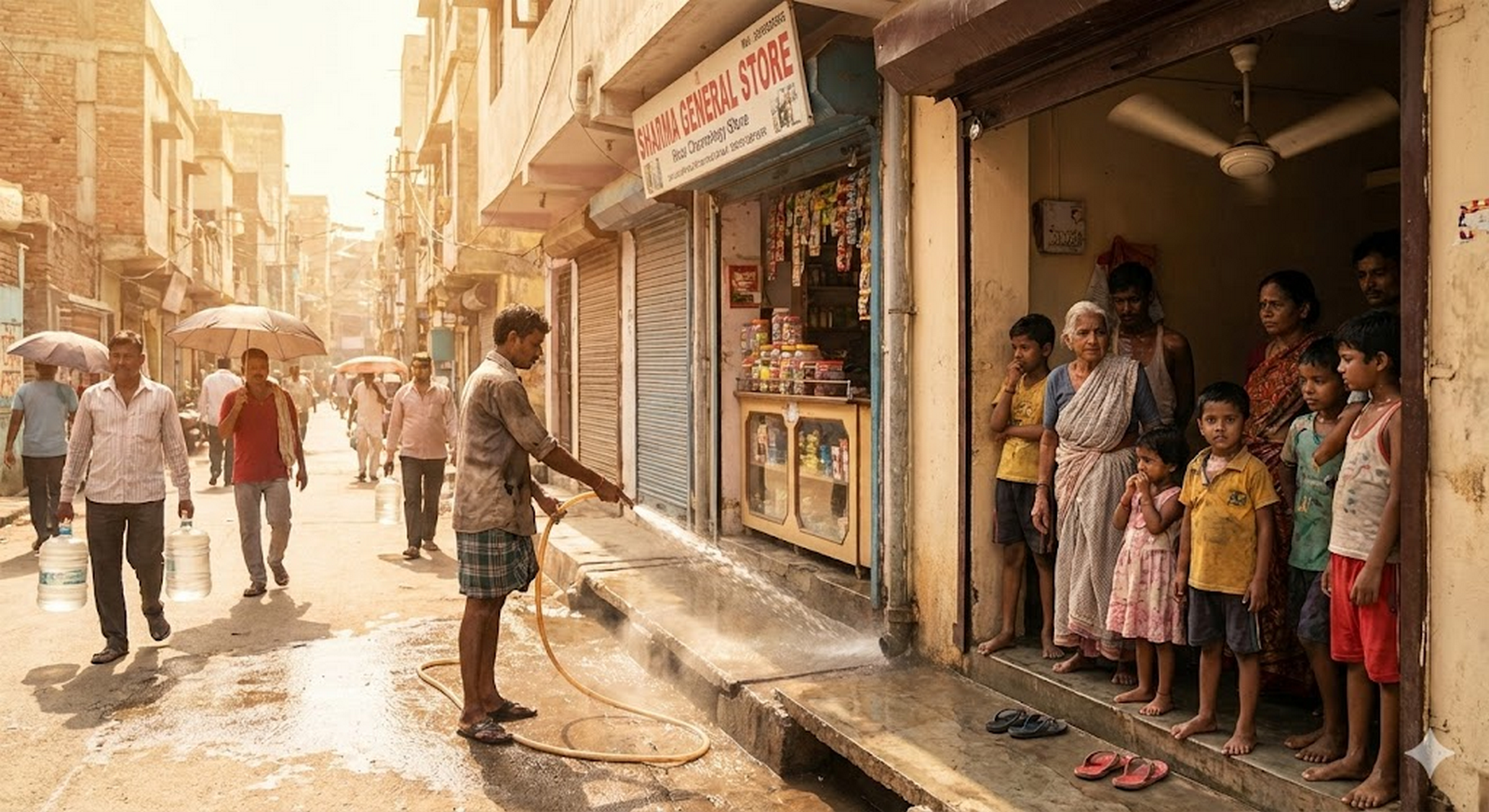
Climate reveals itself here, but it is not an abstract crisis but an everyday accommodation. During May, the heat becomes incredibly tangled to the extent that it becomes difficult to move. Shutters stay half‑closed. The city teaches the citizens survival tactics: walk in the shade, stand under flyovers, and carry water. Urban Theory discusses resilience, yet, on this street, resilience appears as a man hosing the sidewalk to cool it off, or even neighbors inside one single ceiling fan during a Power outage.
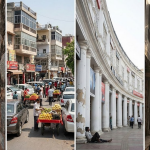
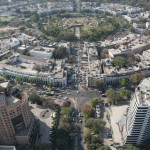
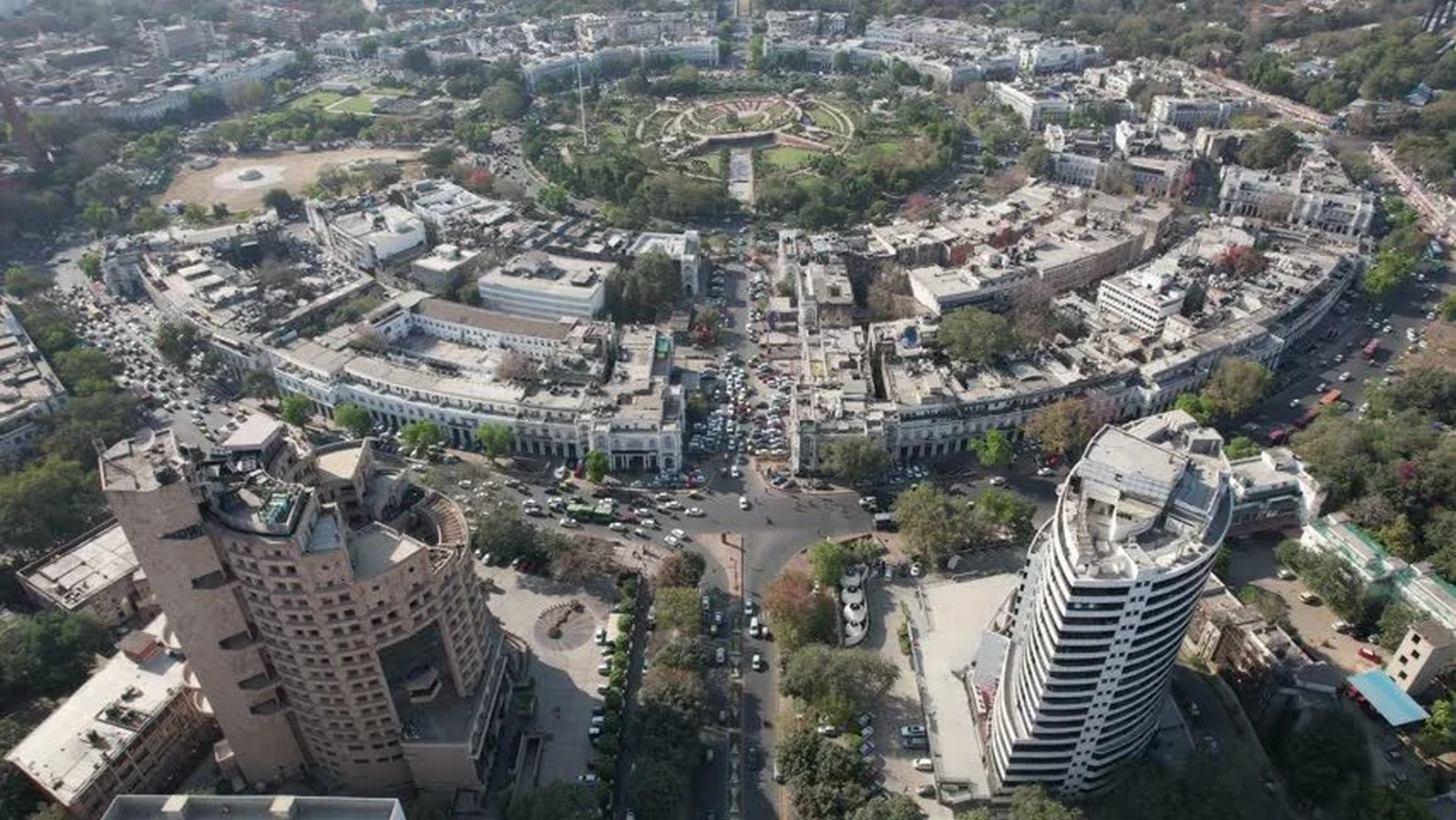
Out of the neighborhood, head to Connaught Place, which is the colonial center of the city. Its colonnades were white and of imperial arrangement and visual clarity. The first thing one can perceive is symmetry itself, whatever the circle was, the repetition. Second, the texture that comes with the disintegration of the symmetry: the posters layered over columns, the wires weaving across the facades. Third, the crowds flow in curves and not in straight lines.
The imaginative power of Connaught Place serves another purpose in the city. It performs power and consumption, but a contradiction is uncovered. Multi-national brands are adjacent to closed shops. Workers who are migrants slumber in the dark corners of the banks. This can be explained by Urban Theory as uneven development, yet there in the middle of it, theatricality seems to be the more notable lesson. The space challenges individuals to enact modernity, despite their lived reality continuing to go against the script.
This is the point of entry into the discussion of speculative futures. Speculation is normally confused with fantasy, but in Urban Theory, it is a technique, what might be, on the basis of what already is. There are two futures alluded to at Connaught Place. One of them is more privatization, more surveillance, fewer informal bodies. One more option leads to hybridity, where the messiness is embraced in the life of the cities. The buildings it dwells in appear to be in battle, with both possibilities in their peeling paint.
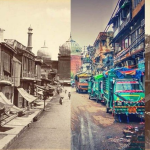
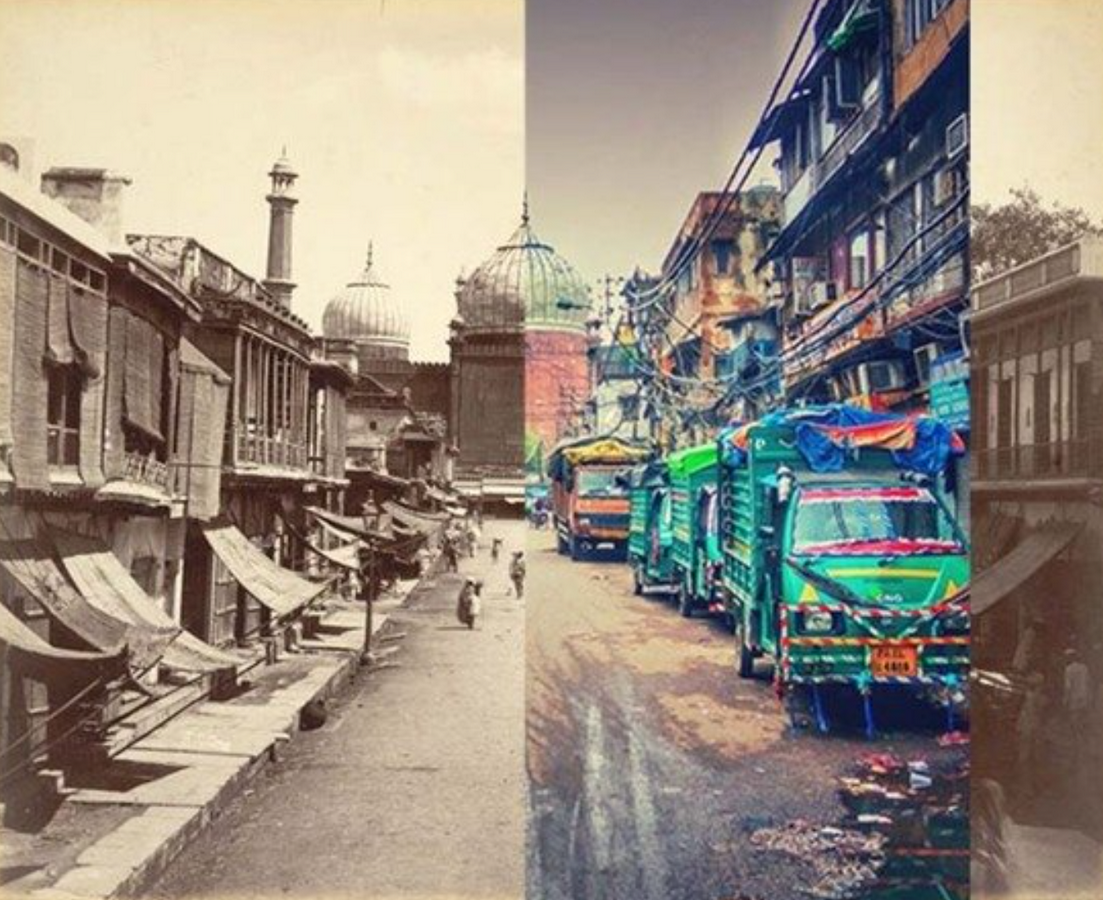
Evidence is not always monumental. It can be an individual pathway in Shahjahanabad, where the houses lean against each other. The smell of first-fried snacks and stony dampness. Then the light, streaming through in narrow lines. And, last of all, the intimacy: individuals addressing one another through the windows, children going out on their own.
Urban Theory is usually stumped with such spaces since they cannot be scaled. They can easily be broadened, streamlined, and diluted without being stripped of their significance. But they also teach us how close the proximity is, how architecture forms social trust. The lane recalls a period when cars were in control of the city. It implies a possible future in which slowness and proximity may be treasured once more, but not, perhaps, by choice, but by necessity.
In these locations, an emerging tendency is traced. Cities do not represent the chronological development from the old to the new. These are the inspections between memory and lust, domination and improvisation. This is legible with the aid of visual thinking. That which we examine initially, ruin, crowd, heat, and shadow, brings theory to sense. What we see next is the relationships given to us through rituals, adaptations, and conflicts. It is only after this that larger ideas come into being.
Critical imagination makes us not hurry about it. To avoid confronting the temptation to generalize about a city. It is best that Urban Theory is porous, when it lets places change our belief systems. A fort which serves as a prayer-garden, a bazaar which is also a playground, a plaza which is colonial yet may not completely master its inhabitants- these are not exceptions. They are the metropolis with thinking.
The moral is straightforward but challenging: to have more just, more sustainable, and more meaningful cities, we need to learn to read cities closely. Not so much by plans and policies, but by footsteps, glances, and pauses. Urban Theory provides us with language and place with evidence. In between the two is the work of imagination, which is critical, grounded, and receptive to what the city is attempting to say to us already.