With upcoming technologies and research, computational design is gradually becoming a part of the design process. Computational design tools have made it possible to explore extensively building, materials, design, and construction processes.
The tools use data as input for the Parameters that govern the design and generate multiple outputs. Being able to translate the factors into data has fastened the process of trial and error. This has resulted in designs being more optimised for structure and material consumption while also considering the climate, making it a more sustainable approach.
The computational design tools include data-driven processes like generative, algorithmic, etc, which are used to explore different aspects of building. Here are a few examples of architects and their work, who are constantly pushing the boundaries of innovation and design.
Achim Menges
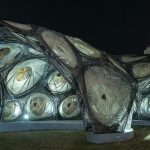
Achim Menges is a professor at Stuttgart University and the founding director of ICD (Institute of Computational Design). He is part of a series of Research pavilions at ICD, where students from different disciplines, such as technology, materials, architecture, biology, and construction, make prototypes.
His research and work focus on pushing the boundaries of existing or new building materials. These pavilions focus on innovating ways of fabricating, comparatively more sustainable materials in such a way that they are structural. Some of his projects are derived from natural intelligence either in terms of structure or modifying material.
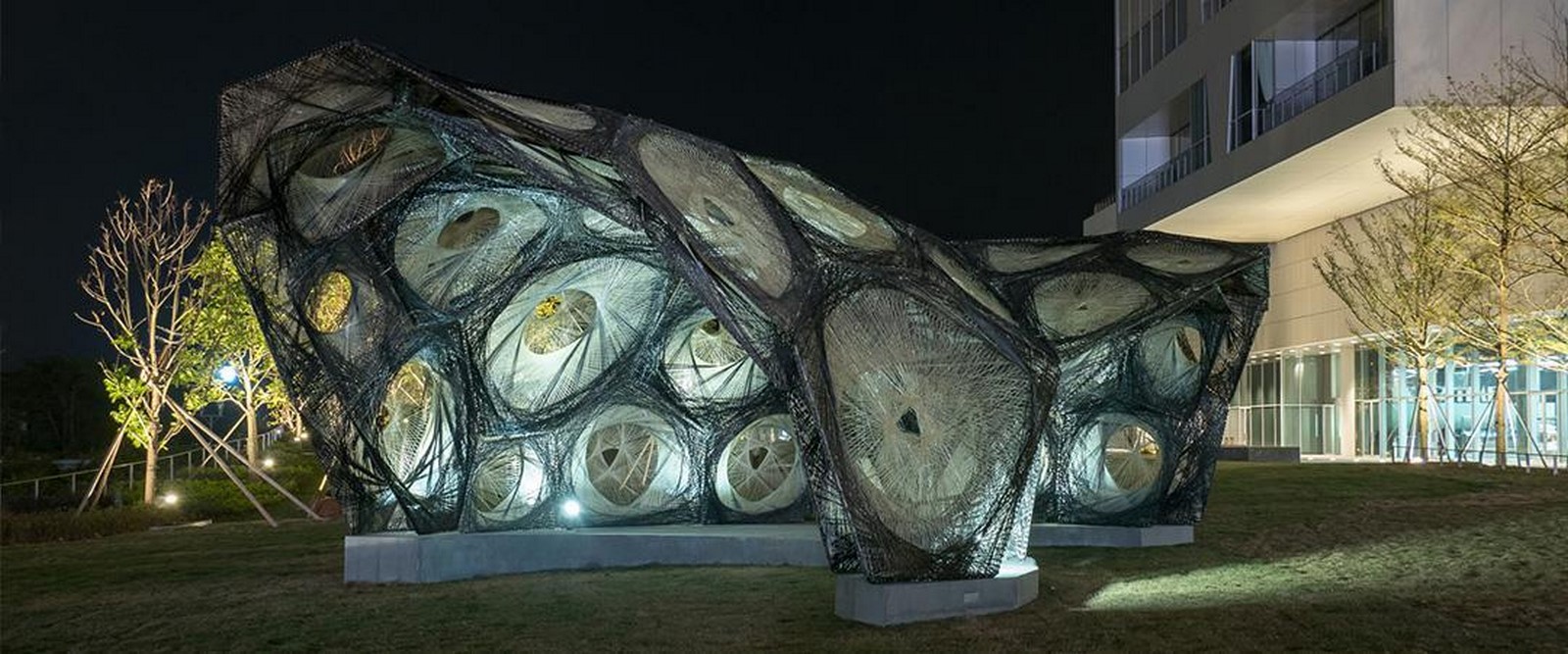
One of the pavilions from this series explores natural fibre-based reinforced polymers and a robotic fabrication system of winding to make modules with minimal formwork (Achimmenges.net, 2017). This method resulted in making lightweight structures with significant load-bearing capacity (Achimmenges.net, 2017).
Gramazio Kohler Research
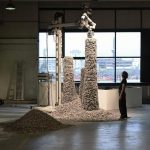
Fabio Gramazio and Matthias Kohler have founded the Gramazio Kohler Research at ETH Zurich. The research is focused on filling the gap in the building manufacturing industry through robotic fabrication technologies. They utilize computational design tools in their robotic lab to integrate data, robotics, and technology to create more sustainable methods without losing on architectural expression (gramaziokohler.arch.ethz.ch, n.d.).
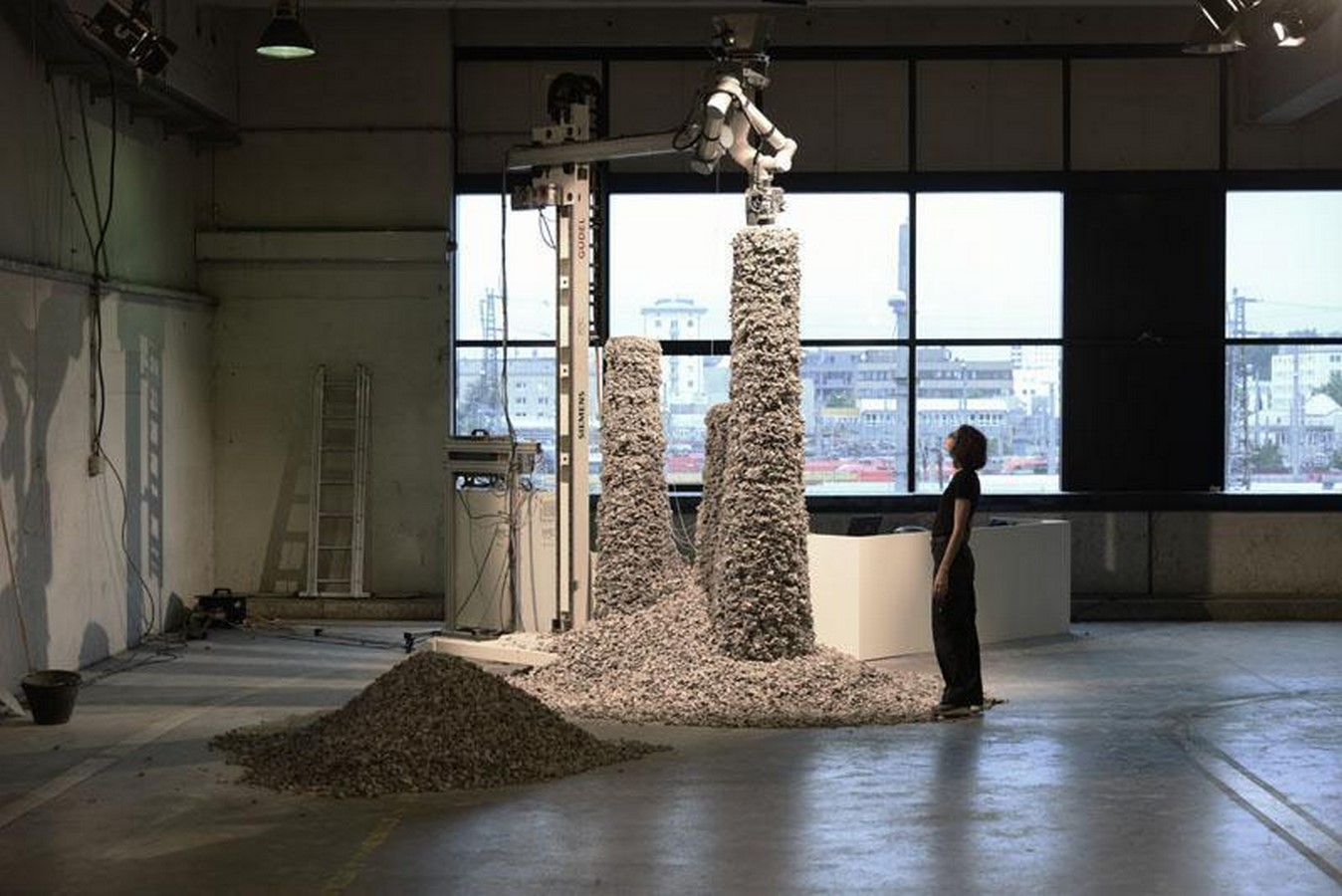
In one of their many fascinating kinds of research, they built structural columns by just jamming pebbles with steel wires (Ethz.ch, 2024). This was a completely dry construction which can be disintegrated at any time, resulting in no construction waste. This method would have geometric freedom and can be articulated in any way needed (Ethz.ch, 2024).
Mark Burry
Mark Burry is a Founding Director at Swinburne University of Technology’s Smart Cities Research Institute (SCRI) (Swinburne.edu.au, 2016). He is known for being the senior architect on the project completion of Antoni Gaudi’s La Sagrada Familia. He has closely studied the works of Gaudi and the models he left while he was working on this project which has had a deep impact on his work (Swinburne.edu.au, 2016).
He is also dedicated towards building cities which could fulfil the needs of the future citizens. One of the research projects under him was The Gormenghast Project. This project aims to build more advanced computational tools to help translate the qualitative aspects of a city along with the quantitative aspects (MARK BURRY, 2017). This would help in making more practical and human-oriented design strategies, particularly in combating the climate changes in Australian cities (MARK BURRY, 2017).
Ronald Snooks
He was a Professor at RMIT school of architecture and urban design. He is also a co-founder of an experimental architectural practice called Kokkugia (Rmit.edu.au, 2024). At Kokkugia, they have specifically worked with designing additive manufacturing processes.
Under this practice, there are ensign studios where experimental prototypes are made, exploring using computational tools like algorithmic designs, swarm intelligence, agent bodies and material behaviour to create stable formation.
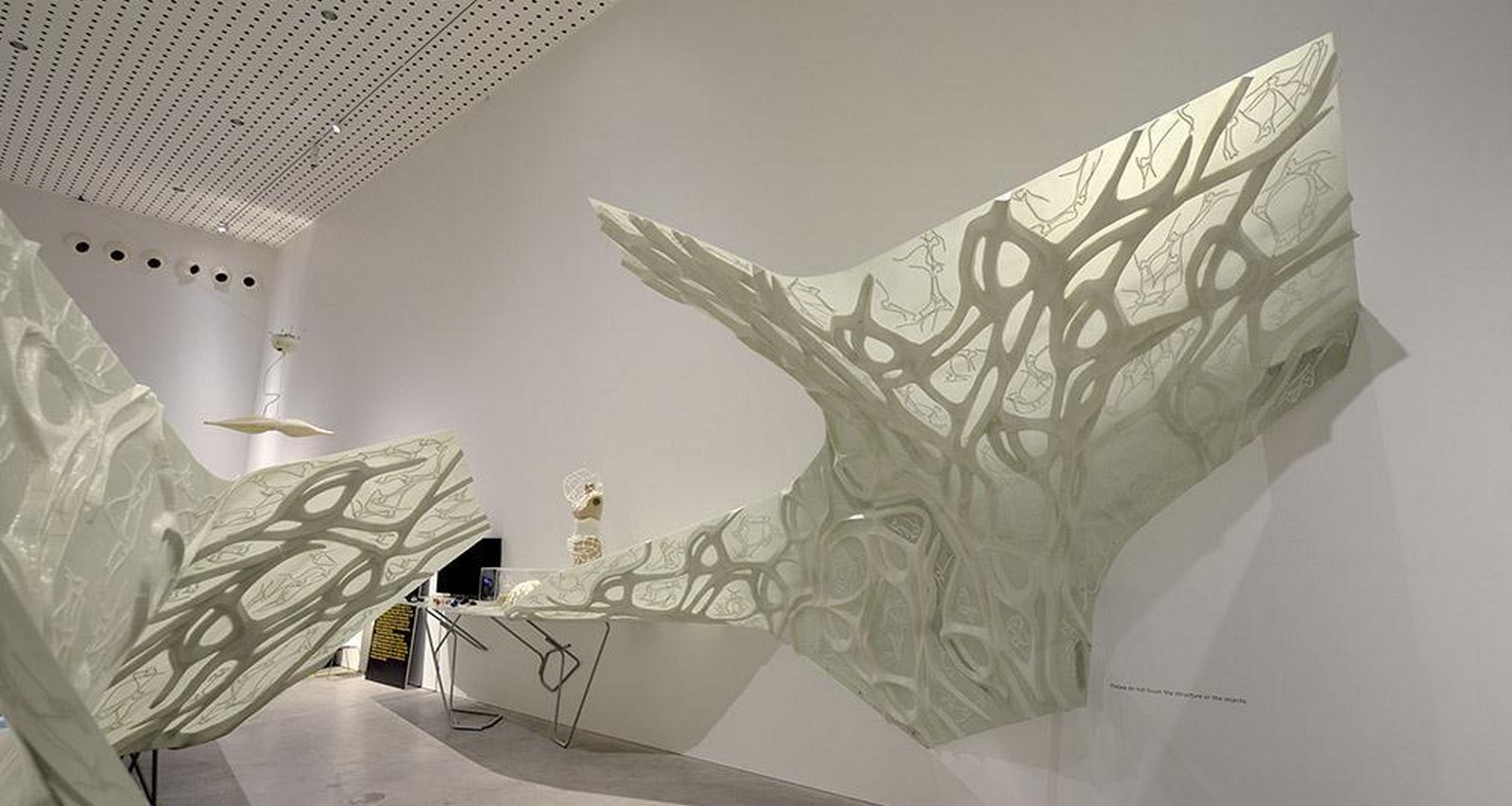
One of the such projects is a huge organic wall at RMIT, which is just a few inches thick. The surface gains strength by fibrous deposition of material which acts like structural beams (SNOOKS, 2020). The computational design tools help calculate where the materials need to be added to provide strength. This type of robotic fabrication has merged the surface, structure and expression into a thin sheet (SNOOKS, 2020).
Nuru Karim
Nuru Karim is one of the few Indian architects extensively using computational design tools in his projects. He is a Founder and principal architect of Nudes. His work can be described as an intersection of art, architecture and computational design (Mgsarchitecture.in, 2025).
He believes that architecture has the power to fulfil the humanitarian goals of India as it is severely lacking in housing and infrastructure (Mgsarchitecture.in, 2025). His work is not limited to architecture but also art, furniture, landscape as well urban scale.
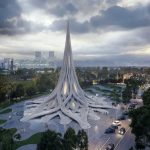
One of his many innovative approaches, his proposal for a tower in San Jose was a ‘Rainwater Catcher’, The algorithm is derived based on fluidity, making intricate patterns, intertwining with the site, and creating sensorial experiences (Sreedharan, 2021). The surface is made of cells through which rainwater reaches the harvesting pool while exhibiting an iconic form to celebrate it (Sreedharan, 2021).

These projects are just a glimpse of the potential that computational tools offer and can help us achieve. They cannot replace conventional methods but need to be integrated with the design process to make it as efficient as possible.
References:
Achimmenges.net. (2017). ICD/ITKE Research Pavilion 2013/14, Design Society | achimmenges.net. [online] Available at: http://www.achimmenges.net/?p=20800 [Accessed 14 Feb. 2025].
Achimmenges.net. (2015). Achim Menges | achimmenges.net. [online] Available at: http://www.achimmenges.net/?p=4866 [Accessed 14 Feb. 2025].
gramaziokohler.arch.ethz.ch. (n.d.). Gramazio Kohler Research. [online] Available at: https://gramaziokohler.arch.ethz.ch/web/e/about/index.html.
Ethz.ch. (2024). Gramazio Kohler Research. [online] Available at: https://gramaziokohler.arch.ethz.ch/web/e/forschung/275.html [Accessed 14 Feb. 2025].
MARK BURRY. (2017). The Gormenghast Project: extended project overview. [online] Available at: https://mcburry.net/the-gormenghast-project-extended-project-overview/ [Accessed 14 Feb. 2025].
Swinburne.edu.au. (2016). Researcher Profile | Swinburne University of Technology | Melbourne. [online] Available at: https://www.swinburne.edu.au/research/our-research/access-our-research/find-a-researcher-or-supervisor/researcher-profile/?id=mburry&ref=universitiesmatter.edu.au [Accessed 14 Feb. 2025].
Rmit.edu.au. (2024). Roland Snooks. [online] Available at: https://www.rmit.edu.au/profiles/s/roland-snooks [Accessed 14 Feb. 2025].
SNOOKS, R. (2020). ROLAND SNOOKS. [online] ROLAND SNOOKS. Available at: https://www.rolandsnooks.com/#/compositewing/ [Accessed 14 Feb. 2025].
Mgsarchitecture.in. (2025). Ar. Nuru Karim, NU.DE Architecture – MGS Architecture. [online] Available at: https://www.mgsarchitecture.in/architecture-design/architects-interior-designers/471-ar-nuru-karim-nu-de-architecture.html [Accessed 14 Feb. 2025].
Sreedharan, S. (2021). Nuru Karim: Designing for the Future. [online] Architecture + Design. Available at: https://www.architectureplusdesign.in/ad-exclusives/nuru-karim-designing-for-the-future/ [Accessed 14 Feb. 2025].