Open any architecture press kit today, and the same handful of words keep turning up: sustainable, eco-conscious, net-zero, biophilic, regenerative. The language of environmental responsibility has become so common in project descriptions that it’s starting to lose its meaning altogether. But how much of it reflects real performance, and how much is just marketing dressed up in green? For anyone writing or critiquing buildings, that’s not an idle question. It’s the difference between coverage that holds developers accountable and coverage that quietly does their PR work for them. This is where greenwashing detectors come in: the habits and questions that help separate genuine sustainability from language borrowed to sell a project.
What Greenwashing Looks Like in Architecture
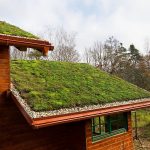
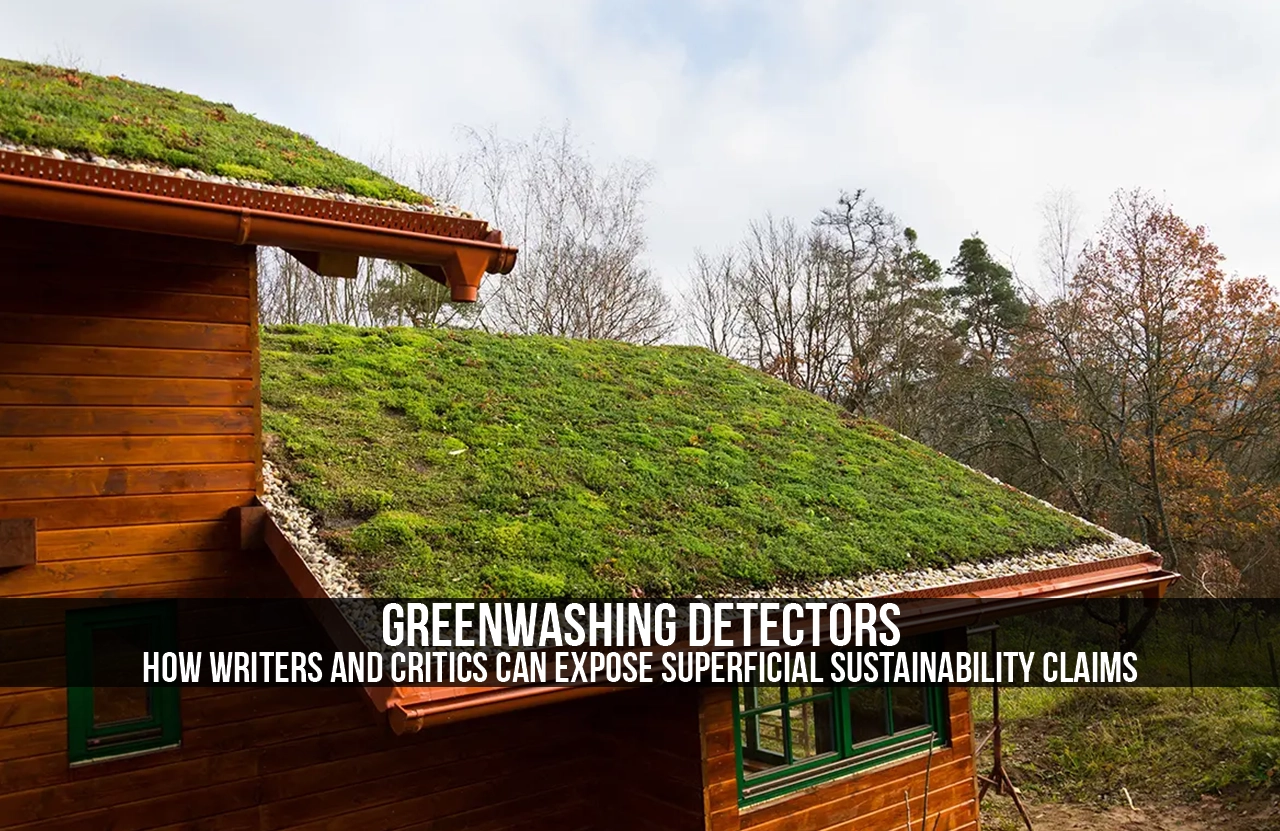
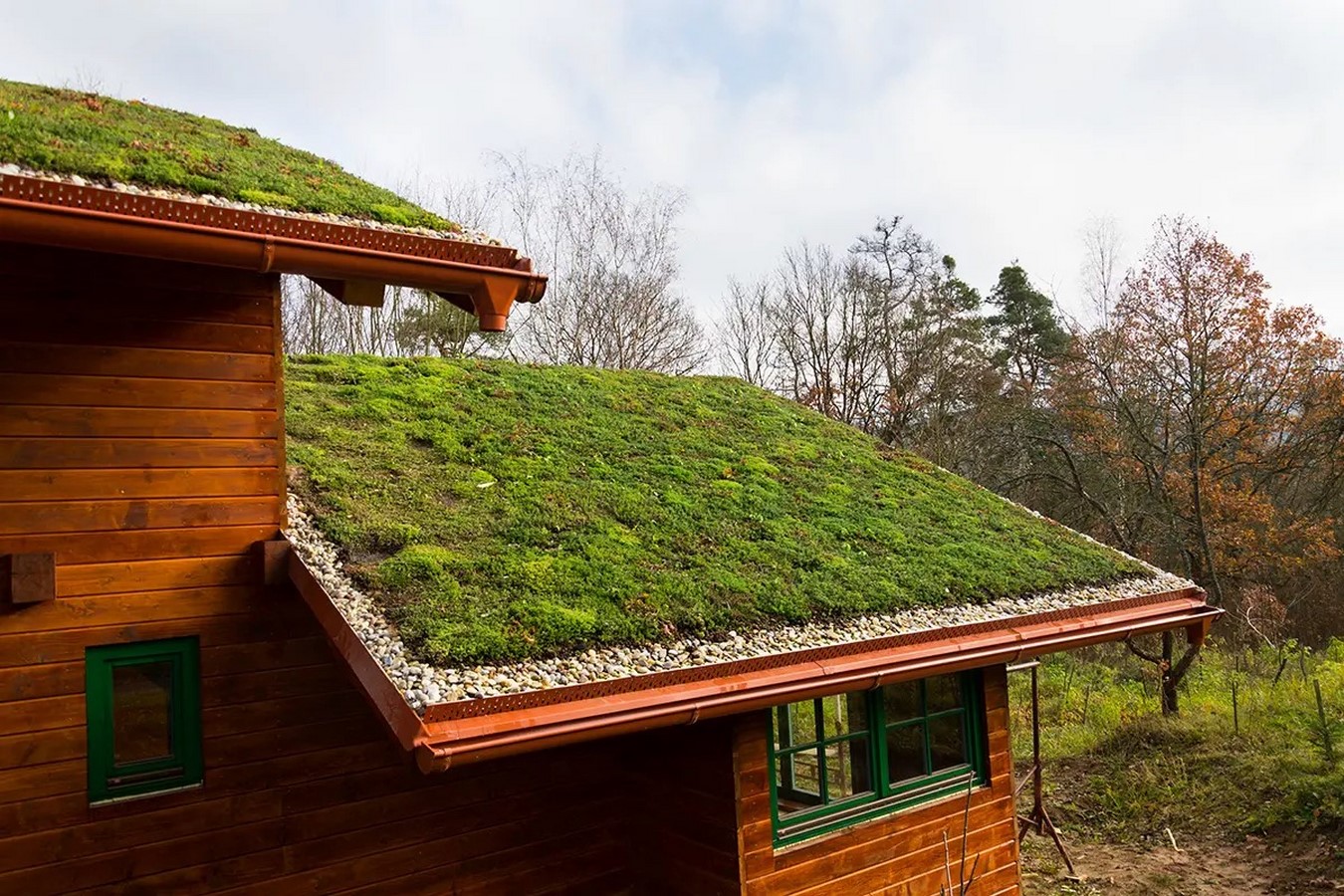
Greenwashing in the built environment rarely looks like outright dishonesty. It usually turns up dressed as good news: a green roof, a bank of solar panels, a living wall, something visible enough to photograph and put on the cover of a brochure. These features are genuinely useful on their own, but they’re often used to stand in for the sustainability of an entire project, while less photogenic questions, such as embodied carbon, material sourcing, operational energy use, and what happens to the building at the end of its life, go unanswered. Commentators writing on the subject have pointed out that green roofs and solar arrays do offer real benefits, particularly in dense urban settings, but they don’t on their own guarantee that a project meets any meaningful sustainability standard, especially when energy efficiency and harmful material choices are left out of the conversation. The gap between one green gesture and a genuinely low-impact building is exactly where greenwashing takes root.
A Framework Built for Buildings
One of the most useful tools for spotting greenwashing didn’t come from architecture at all. In 2007, the marketing firm TerraChoice looked at more than a thousand retail products carrying environmental claims and named the recurring tactics the “Six (later Seven) Sins of Greenwashing”. It’s a marketing framework, but it maps onto buildings surprisingly well, and it gives writers something more useful than a vague feeling of doubt when reading a press release.
Take the sin of the hidden trade-off: a scheme gets marketed as green on the strength of one feature, say a living wall, while the concrete substructure or imported stone cladding underneath it goes unmentioned. Or the sin of no proof, where “sustainably sourced timber” or “low-carbon concrete” appears in a press release with no certification or supporting data attached. Vagueness is its own category too: phrases like “eco-friendly design” or “in harmony with nature” that sound reassuring without specifying what was actually measured, or against what benchmark. And then there’s the sin of worshipping false labels, self-designed badges or plaques that look like certifications but were never issued by any accredited body. None of this requires technical expertise to spot. It just requires asking what, exactly, is being claimed, and by whom.
Reading Past the Render
Much of architectural greenwashing happens before a single brick is laid. Renders showing towers wrapped in cascading greenery, courtyards thick with mature trees that won’t exist for another twenty years, have become a genre of their own, one that critics have started calling digital greenwashing. These images set expectations that the finished building rarely lives up to: irrigation systems too small for the plantings they’re meant to support, or vegetation drawn at a maturity the building won’t reach for decades, if ever. A useful question to ask here is simple. What percentage of the greenery in that render is actually contracted and maintained? And has anyone asked for a photograph of the completed building, rather than relying on the marketing image alone?
Certification Is Not the Finish Line
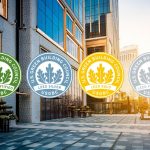
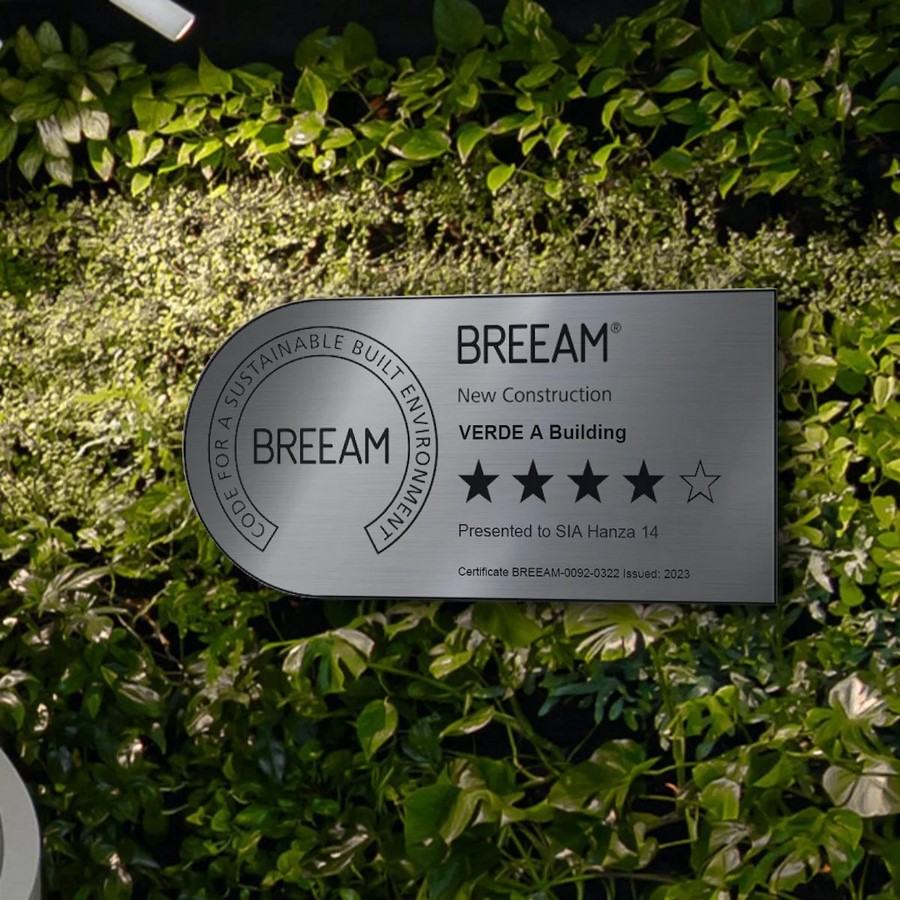
Green building certifications such as LEED and BREEAM are often treated in the press as proof of sustainability in themselves, full stop. But certification works on a points system, and points can be racked up in ways that satisfy a checklist without necessarily adding up to sound design for a given climate or community. Because these schemes rely on broad, generalised criteria rather than the specific context of each project, a building can appear ecologically conscious by ticking simple boxes without ever achieving meaningful long-term performance. Recent scholarship has pushed this further, questioning whether eco-labelling in architecture genuinely represents sustainability or primarily serves as a branding tool, and arguing that developers can point to a certification or a green technology while remaining silent about a building’s broader lifecycle impact. A certification badge, for a critic, should be the start of a question, not the end of one: which credits did this project actually pursue, and which ones did it skip?
The Questions That Matter
There’s no single test for greenwashing, but a handful of questions tend to do most of the work. Does the claim describe the whole building, or just one feature of it? Is there verifiable evidence behind it, or only a press release? Could the same phrase be slapped onto almost any building without anyone noticing, or is it specific enough to actually check? It’s also worth asking whether post-occupancy data exists at all, or whether the claim rests entirely on design intent and renders that were never tested against reality, and what’s conspicuously missing from the press materials: embodied carbon, material sourcing, demolition waste, and ongoing maintenance. Finally, any certification is worth tracing back to who issued it and what, specifically, it was awarded for. None of this takes specialist training. It just takes treating a sustainability claim the way you’d treat a claim about cost or heritage significance: something that needs sourcing, not something that gets to speak for itself.
Regulation Is Starting to Catch Up
Writers working today aren’t operating in a vacuum, either. The EU’s Green Claims Directive, still moving through the legislative process, would require environmental claims to be backed by proper assessment or verified by public authorities before they can be published at all, effectively ruling out self-certified sustainability labels that carry no independent verification behind them. Whatever shape the directive takes, the direction is clear enough: regulators are starting to ask for the same standard of evidence that careful critics have been asking for informally for years. Writers who are now building these questions into their own process are just getting ahead of scrutiny that’s becoming standard everywhere else.
The Critic as Detector
Architecture writers occupy an odd position. They stand somewhere between a project’s design intent and how the public actually receives it, and their words often become the only record of what a building was supposed to achieve in the first place. Holding sustainability claims to the same standard as structural or historical claims doesn’t make coverage adversarial. It makes it worth trusting. A genuinely sustainable building has nothing to fear from that kind of scrutiny; one that only sounds sustainable has everything to lose from it. As environmental language becomes more central to how buildings are sold, being able to tell when that language is doing real work and when it’s just marketing might be one of the more useful skills a critic can bring to the page.
References
- Re-Thinking the Future (2024) Greenwashing in Architecture. Available at: https://www.re-thinkingthefuture.com/architectural-community/a13442-greenwashing-in-architecture/ [Accessed 23 August 2026].
- Re-Thinking the Future (2025) The Ethics of Greenwashing: A Critical Lens on Eco-Labels in Architecture. Available at: https://www.re-thinkingthefuture.com/architectural-community/a14436-the-ethics-of-greenwashing-a-critical-lens-on-eco-labels-in-architecture/ [Accessed 23 August 2026].
- Architects’ Journal (2020) Greenwash and how to spot it. Available at: https://www.architectsjournal.co.uk/archive/greenwash-and-how-to-spot-it [Accessed 23 August 2026].
- NPR (2009) The Six Sins of Greenwashing. Available at: https://www.npr.org/16755401 [Accessed 23 August 2026].
- Zero Carbon Analytics (2025) How to spot greenwashing in a sustainability report: A guide to spotting false environmental claims. Available at: https://zerocarbon-analytics.org/policy/how-to-spot-greenwashing-in-a-sustainability-report-a-guide-to-spotting-false-environmental-claims/ [Accessed 23 August 2026].
- University of the Built Environment (2025) What is greenwashing (and how can you spot it)?. Available at: https://www.ube.ac.uk/whats-happening/articles/greenwashing/ [Accessed 23 August 2026].
- Green Lab, NOVA School of Law (n.d.) Unveiling the Green Curtain: European Parliament Takes Firm Action to Combat Greenwashing and Safeguard Consumers. Available at: https://greenlab.novalaw.unl.pt/unveiling-the-green-curtain-european-parliament-takes-firm-action-to-combat-greenwashing-and-safeguard-consumers [Accessed 23 August 2026].