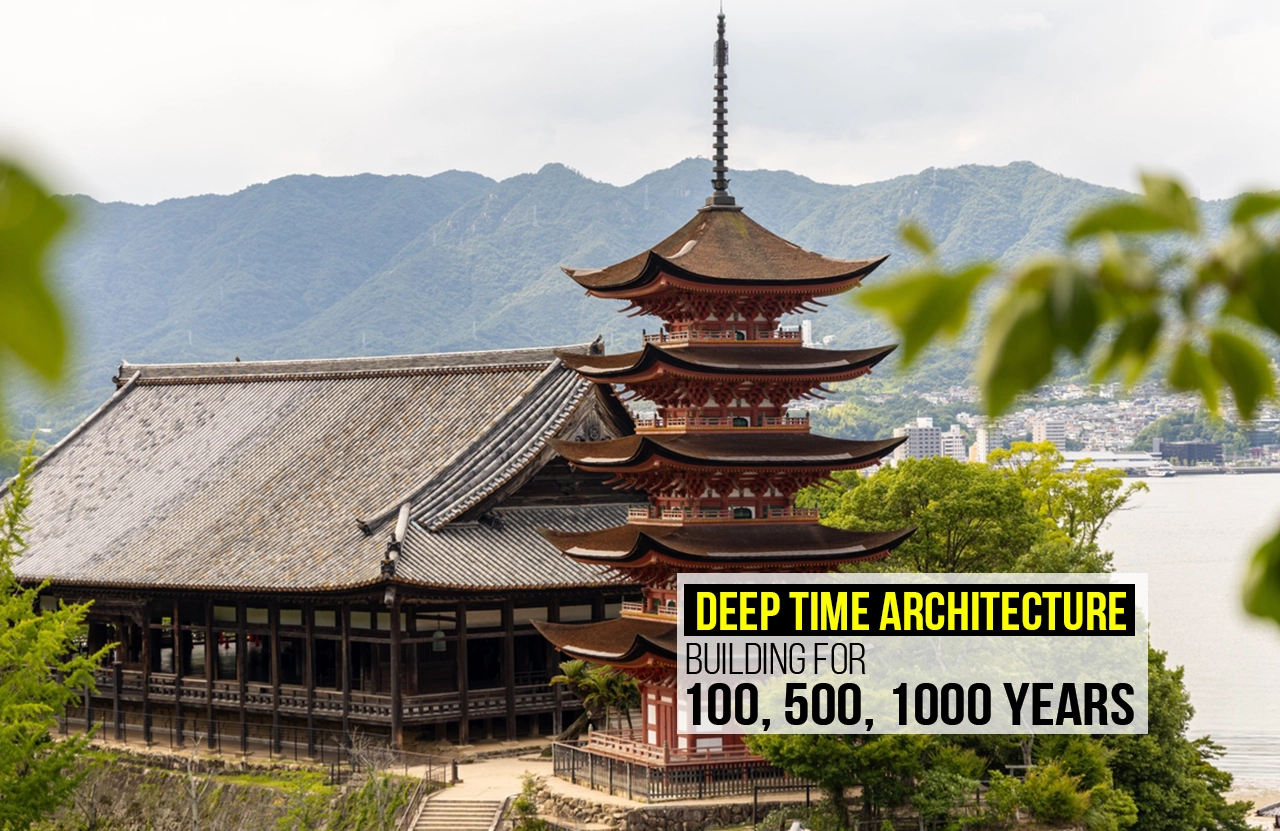
Imagine standing inside a building that was completed before your country existed in its present form. The walls have witnessed generations being born, working, worshipping, leaving and returning. The floor beneath your feet has been walked upon for hundreds of years, yet the building still feels strangely alive. Now ask a more uncomfortable question: could we design a building today that people will still use 1000 years from now? Not merely preserve as a monument, but inhabit, repair, alter and reinterpret?
This question pushes architecture and design beyond the familiar concerns of budgets, building codes and project timelines. Most contemporary buildings are designed around relatively short life cycles, while deep time asks architects to think in centuries. It forces us to consider materials that age gracefully, structures that can be repaired, spaces that can accommodate unfamiliar futures and buildings that can survive changes in technology, climate and culture. Designing for 100, 500 or 1000 years is therefore not simply about making stronger walls. It is about designing a relationship between a building and generations of people who have not yet arrived.
What Does It Actually Mean to Last?
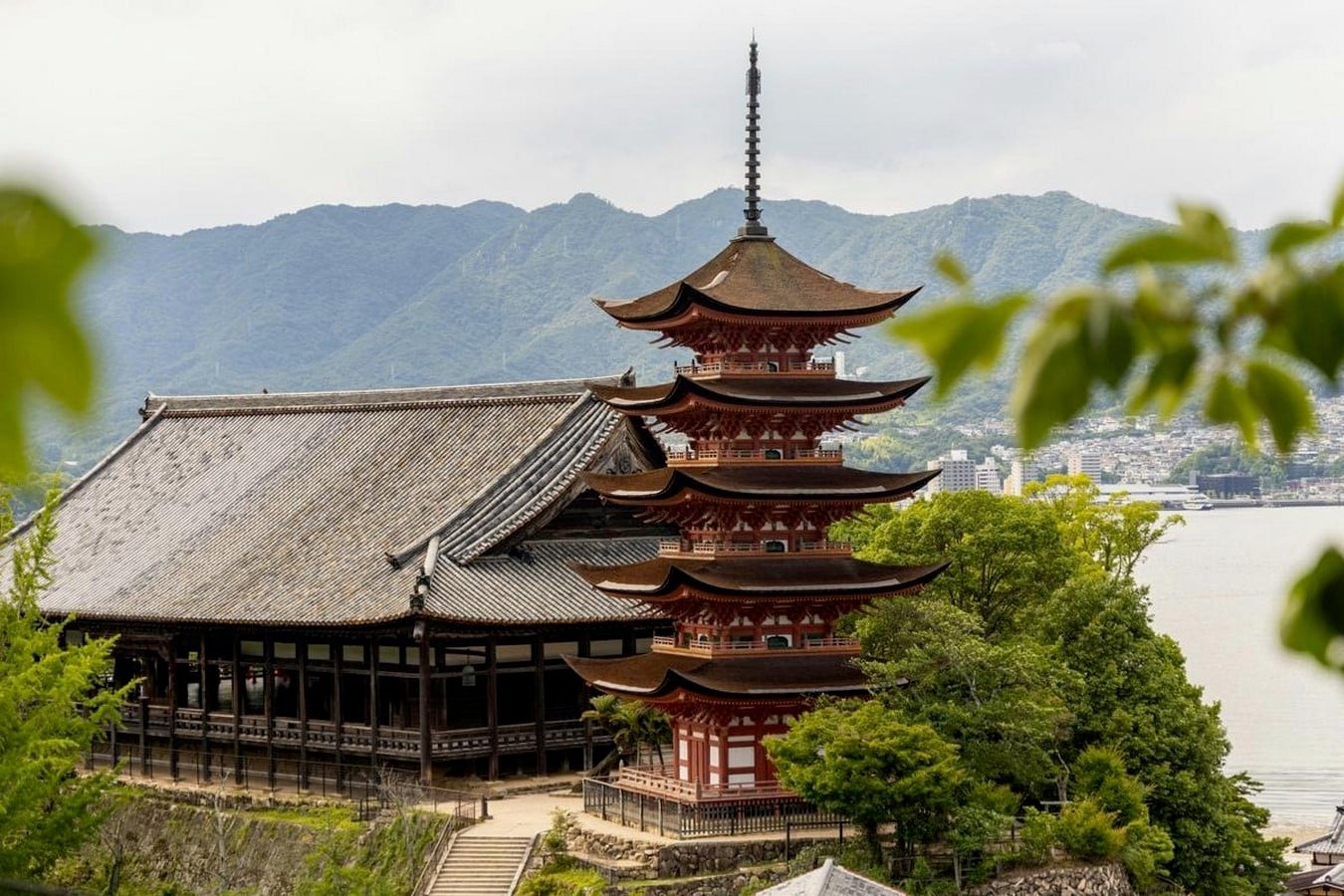
The first surprise is that longevity does not necessarily mean keeping every brick exactly where it was placed on day one. Horyu-ji in Japan offers a fascinating counterexample. Several buildings within the temple complex date to the late seventh and early eighth centuries and are among the oldest surviving wooden buildings in the world. Yet their survival has depended on continuous care, conservation and the replacement of damaged members using traditional techniques. UNESCO notes that damaged wooden elements are replaced when necessary while traditional tools and techniques remain part of the conservation process.
This changes the definition of permanence in architecture and design. A 1300-year old building is not necessarily a frozen object; it can be a continuously maintained system. Its longevity comes from the ability to repair rather than simply resist damage. The distinction matters enormously. A building that demands complete replacement once one component fails may be technically durable, yet surprisingly fragile over centuries. A building designed with accessible connections, replaceable components and understandable construction logic can potentially outlive several generations of technology.
The Pantheon Did Not Survive by Staying the Same
The Pantheon in Rome presents another lesson. Its present form was constructed under Emperor Hadrian between approximately 118 and 128 CE, and the building has remained an extraordinary survivor for almost two millennia. But its longevity is not the story of an untouched artifact. It has been repaired, altered, reused and adapted across radically different historical periods. It eventually became a Christian church, ensuring its continued use and helping to protect it from the fate of many abandoned ancient structures.
That makes the Pantheon particularly relevant to contemporary architecture and design. The building endured partly because people repeatedly found reasons to keep it useful. Its meaning changed without destroying its architectural identity. This suggests that perhaps the most important component of a long-life building is not concrete, stone or timber, but relevance. A building that can accept new users and new meanings has a greater chance of surviving than one designed for a single, rigid purpose.
Should We Design for Permanence, or Change?
Here lies the central paradox of deep time architecture. If architects try to predict the future too precisely, the building may become obsolete. If they design only for today’s needs, future generations may find the building restrictive. The better strategy may be to design the framework rather than the final answer.
A 500-year building might therefore contain a robust structural skeleton, generous floor-to-floor heights, accessible service zones, adaptable partitions and spaces capable of changing function. A hall designed today as a library could become a classroom, community centre, workplace or something we cannot yet name. The structure remains while its programme evolves. In this sense, architecture and design become less about predicting what the future will need and more about giving future users enough freedom to decide for themselves.
The Building Envelope Has to Think in Centuries
Materials become critical when the design horizon stretches from decades to centuries. Yet “durable” should not simply mean “hard”. Some of the most successful long-lived buildings use materials that can be repaired locally and replaced in small increments. Timber, stone, brick, lime-based materials and metals each have different ageing behaviours, but their usefulness depends heavily on detailing, exposure and maintenance.
The lesson for architecture and design is that material selection cannot be separated from the environment in which a material will exist. Water management, drainage, ventilation, shading, thermal movement and freeze-thaw cycles can determine whether a material lasts decades or centuries. Even the Long Now Foundation’s proposed 1000-Year Clock treats environmental conditions as fundamental to longevity: the underground clock is located in a dry, relatively stable environment because moisture and temperature variation are major threats to long-term survival.
Design for the Person Who Repairs It
There is another uncomfortable reality: maintenance is architecture’s hidden timeline.
A building may be structurally capable of surviving 500 years, but what happens when a roof leaks in year 137? What happens when a mechanical system fails at 83? What if the manufacturer disappeared 200 years earlier? What if the original drawings were lost?
Deep time therefore demands buildings that can explain themselves. Components should ideally be accessible, understandable and replaceable. Connections should not depend entirely on proprietary systems that may become impossible to source. Materials should be identifiable. Maintenance routes should be considered during the initial design rather than added after construction.
The Long Now Foundation’s principles for its 10,000-Year Clock include maintainability, transparency and evolvability alongside longevity. The thinking is remarkably applicable to buildings: future users should be able to understand how something works, repair it with available knowledge and modify it when circumstances change.
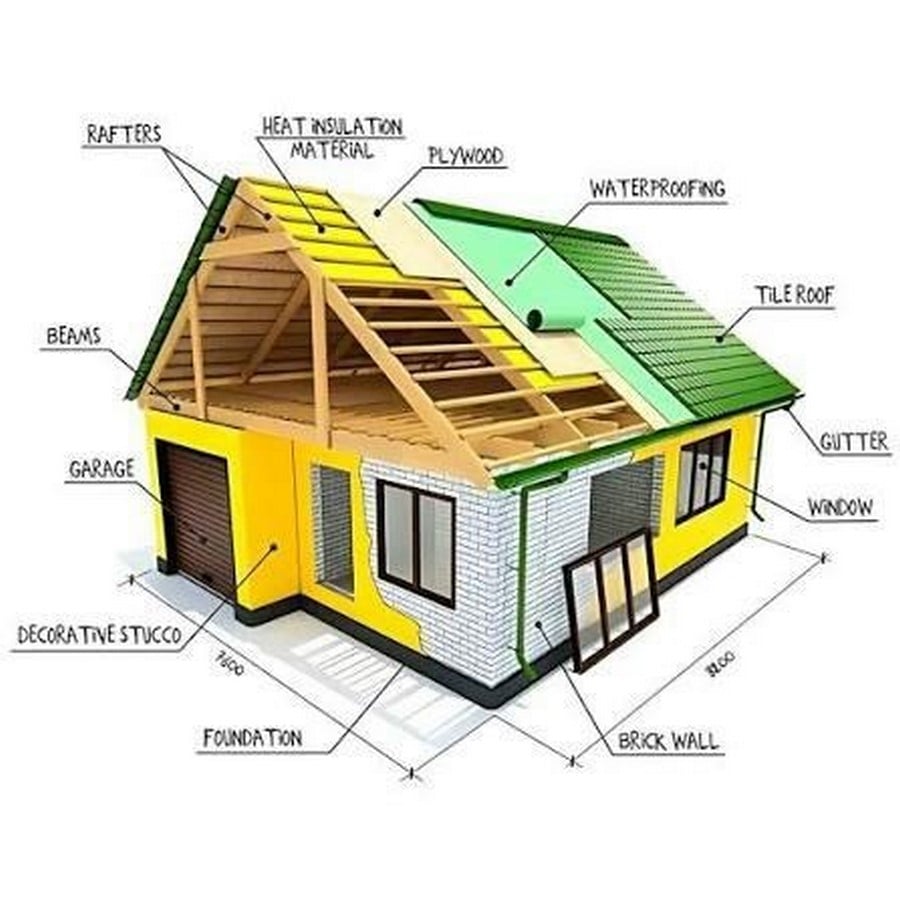
Ise Shrine Offers a Completely Different Answer
But perhaps permanence itself is the wrong goal. At Japan‘s Ise Jingu, the most sacred structures are rebuilt every twenty years as part of the Shikinen Sengu tradition. The shrine’s official documentation describes the periodic rebuilding of the divine palace and the Ujibashi Bridge, while architectural scholarship has documented this reconstruction tradition across roughly 1,300 years. Physically, the individual building does not last for 1,300 years. The architectural knowledge does.
This is a radically different understanding of longevity. Instead of preserving the object, Ise preserves the process: the proportions, rituals, craftsmanship, material knowledge, construction techniques and cultural meaning are transmitted from one generation to another. In this model of architecture and design, a building can disappear while its architecture survives. That may be one of the most powerful ideas for architects working today. Perhaps the longest-lasting architecture is not necessarily architecture made to resist change, but architecture designed so that its knowledge can be continually renewed.
Designing for an Unknown Climate
The next 100, 500 or 1000 years will also challenge one assumption that historic buildings benefited from: environmental predictability. Future buildings will face changing temperatures, rainfall patterns, extreme weather, resource scarcity and potentially different patterns of occupation. A design that performs perfectly under today’s climate conditions may struggle several decades from now. Deep time architecture therefore needs resilience rather than a single definition of efficiency.
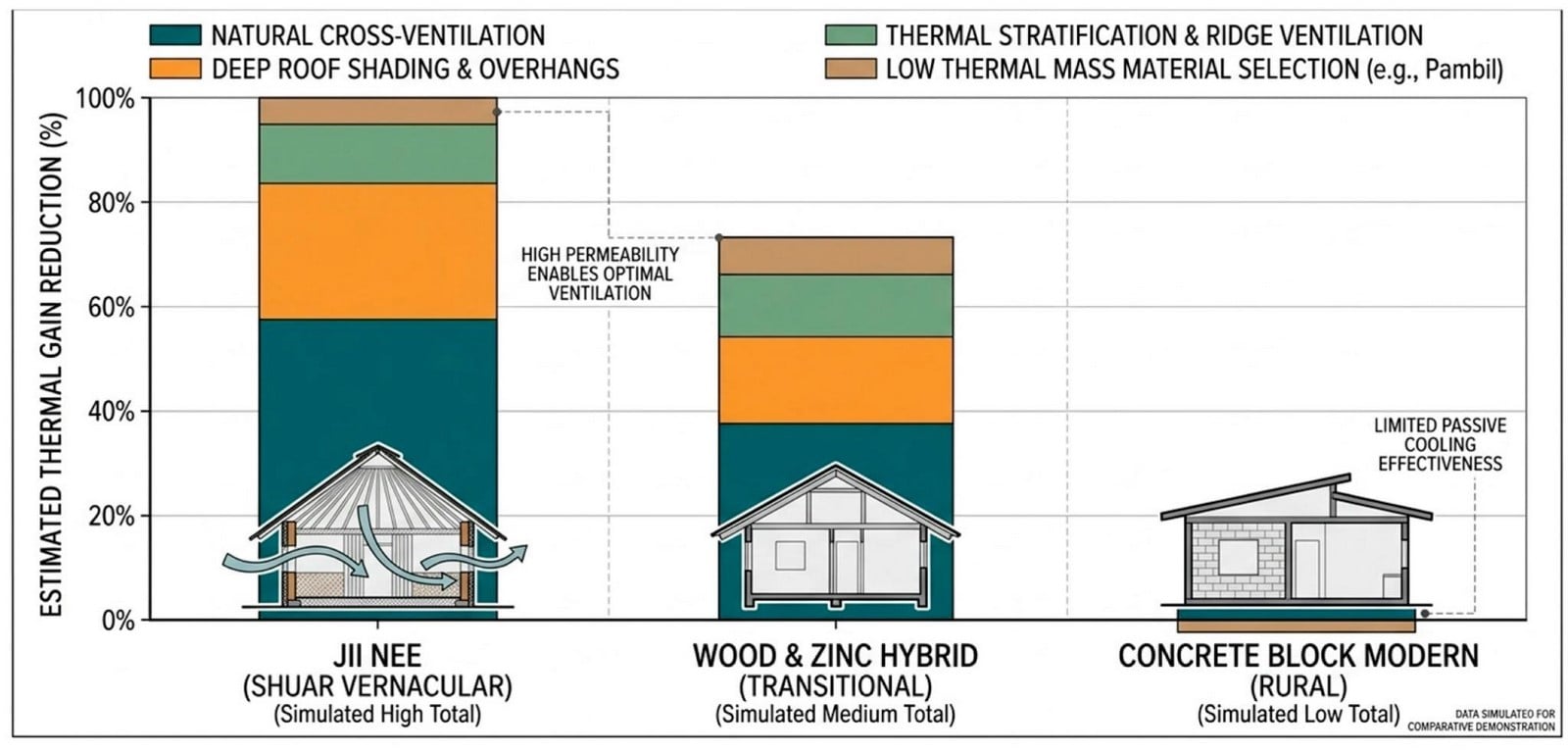
Passive strategies become particularly interesting here. Orientation, thermal mass, natural ventilation, shading, daylight and water management can continue functioning even when mechanical systems become obsolete. A building with multiple environmental strategies has a better chance of remaining useful when one system fails. This is where architecture and design can learn from vernacular buildings. Many traditional structures evolved through repeated adjustment to local climate rather than through one-time optimisation. Their intelligence often lies in simple relationships between mass, shade, air, water and material, not in technological complexity.
The Problem With Designing for 1000 Years
There is, however, a danger in romanticising permanence. Designing a building to last 1,000 years can consume enormous amounts of material and energy today. A massive structure built with excessive quantities of stone or concrete is not automatically more sustainable simply because it will remain standing. If its function becomes obsolete after 80 years, its physical longevity may actually become a liability.
This is where recent research on adaptive reuse becomes important. A 2026 study comparing adaptive reuse with replacement found that, in its case study, reuse reduced embodied emissions by 46% and lifecycle emissions by 19%, while also reducing initial and lifecycle costs. The implication is significant: sometimes the most sustainable 100-year building is not the one we design from scratch to last 100 years. It is the one we make adaptable enough to avoid demolition. Longevity, therefore, should not be measured only in structural years. It should also be measured in useful years.
The Future Building May Be a Framework
Imagine a building designed with a structural system expected to survive centuries, but with interiors intended to change every few decades. The facade can be repaired piece by piece. Services can be replaced without dismantling the building. Walls can move. Rooms can merge. Technology can disappear and be replaced. The landscape can mature around the structure rather than being treated as decoration.
That building would not attempt to predict the year 3026. It would simply create enough possibilities for people in 3026 to make their own decisions. This may be the most convincing direction for architecture and design in the age of deep time: durable structure, adaptable systems and temporary layers. The bones last. The skin can change. The technology evolves. The programme transforms. The meaning is renegotiated by each generation.
What Should Architects Actually Design to Last?
Perhaps the answer is not the building itself. Architects can design for longevity by designing relationships: between structure and repair, material and climate, building and user, memory and change. They can create buildings whose important components are visible enough to understand and accessible enough to maintain. They can avoid making every system dependent on a technology that may not exist in another century.
The Long Now Foundation’s 10000-Year Clock makes this philosophy explicit. Its designers acknowledge that the difficult part of extreme longevity is not simply engineering a mechanism that survives; it is ensuring that people continue to care about it. The foundation argues that if something becomes irrelevant, it may be dismantled, while something meaningful can survive because people choose to protect it. That observation may be even more important for buildings. A structure can survive corrosion, earthquakes and weather and still be demolished in a single afternoon because nobody sees a reason to keep it.
Architecture as a Message to the Future
A 1000-year building is therefore more than an engineering challenge. It is a message. When architects choose to build beyond their own lifetime, they are deciding on behalf of people they will never meet. They are saying that this place might deserve to exist after us. But the responsible version of that gesture is not to dictate exactly what future generations should do with it. It is to leave them something capable of being understood, repaired and changed.
Horyu-ji suggests that maintenance can become a tradition. The Pantheon demonstrates that reuse can preserve relevance. Ise Jingu shows that rebuilding can preserve knowledge even when the physical object disappears. And the Long Now Clock asks perhaps the largest question of all: are we designing as good ancestors? Maybe the greatest achievement of deep time Architecture and Design will not be creating a building that looks the same in 3026. It will be creating one that still gives someone in 3026 the freedom to make it their own. And perhaps that is what permanence should mean: not refusing to change, but surviving because change was always part of the design.