Traffic is often treated as a surface-level problem. More vehicles on roads, longer waiting times at signals, and crowded junctions are usually answered with flyovers, road widening, or new lanes. Yet congestion keeps returning. What is rarely questioned is how urban design itself shapes everyday movement. Cities are not only containers of roads and buildings, they quietly organise how people live, travel, and interact.
In many growing urban areas, homes, offices, markets, and public spaces are separated into distant zones. This forces daily travel across long stretches of the city, creating constant pressure on street networks. Development happens faster than infrastructure, and movement patterns emerge without spatial coordination. Over time, traffic becomes less about vehicles and more about how land use and layout guide behaviour. Studies show that urban form, density, and spatial planning directly influence mobility patterns and congestion levels (MDPI, 2022).
Traffic also affects daily life in subtle ways. Longer commutes reduce personal time, unsafe streets discourage walking, and public spaces slowly disappear under parking and road expansions. Development and underdevelopment often exist side by side, revealing how uneven planning shapes everyday experiences (ResearchGate, 2023). Understanding traffic through urban design shifts focus from engineering fixes to spatial thinking, reminding that congestion is not accidental, it is designed into the city.
Is This Really How City Life Is Supposed To Feel?
Why do people travel so much every day? Why does a simple trip to work or school feel long and tiring? Much of this begins with how cities are planned. Homes, offices, markets, and public spaces are often placed far apart. What once looked organised on planning maps slowly becomes exhausting in real life. Living happens in one zone, working in another, and shopping somewhere else. Movement becomes compulsory, not optional. Over time, streets start carrying more people than they were ever designed for.
As cities grow, informal developments fill the spaces between planned areas, but without proper street networks or supporting infrastructure. Instead of compact neighbourhoods where daily needs sit close together, cities stretch outward. Research shows that separated land use increases vehicle dependency and longer travel distances (ScienceDirect, n.d.). People begin to rely on two-wheelers and cars even for short trips. Sidewalks disappear, crossings feel unsafe, and waiting at signals becomes routine. These patterns quietly shape everyday life. Traffic does not appear suddenly. It builds slowly, through years of spatial decisions. The city teaches its residents how to move, and when distances keep increasing, congestion becomes part of daily living.
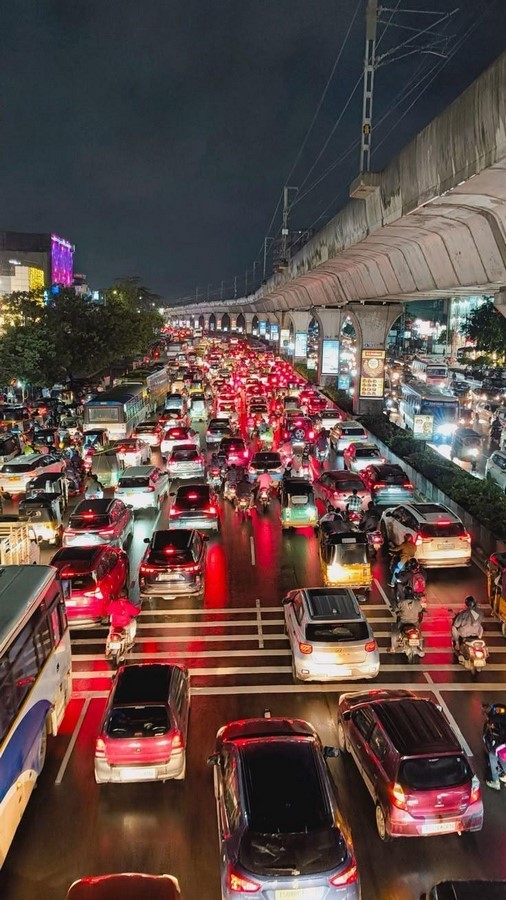
Why Road Widening and Flyovers Don’t Solve Congestion
Have wider roads ever truly fixed traffic? Every time congestion increases, cities respond by adding lanes or constructing flyovers. For a short while, movement feels smoother. Then vehicles multiply, junctions clog again, and the same problem returns. Why does this keep happening? Because traffic is treated as an engineering issue instead of a design outcome. Roads are expanded without asking why people are travelling so far every day, or why activities are scattered across the city.
Urban form quietly controls movement. When neighbourhoods are disconnected from workplaces and services, people have no option but to commute. Studies show that increasing road capacity often attracts more vehicles, a pattern linked to induced demand (MDPI, 2022). Meanwhile, pavements shrink, trees disappear, and public spaces are sacrificed for asphalt. Streets lose their human scale. Walking becomes uncomfortable. Cycling feels risky. Traffic begins to affect daily routines, mental well being, and social life. Instead of only asking how to move vehicles faster, cities need to ask a deeper question: how can spaces be designed so people do not need to travel so much in the first place?
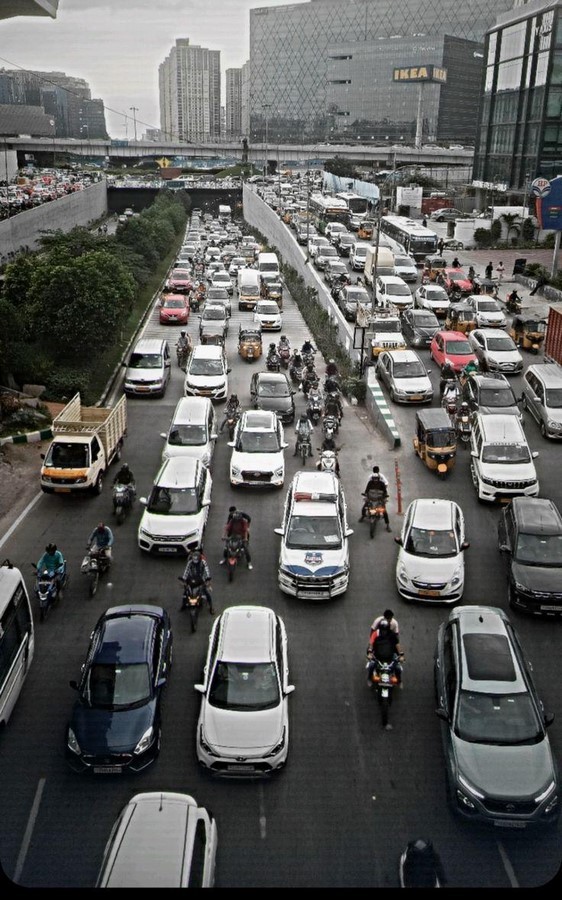
Two Cities Within One
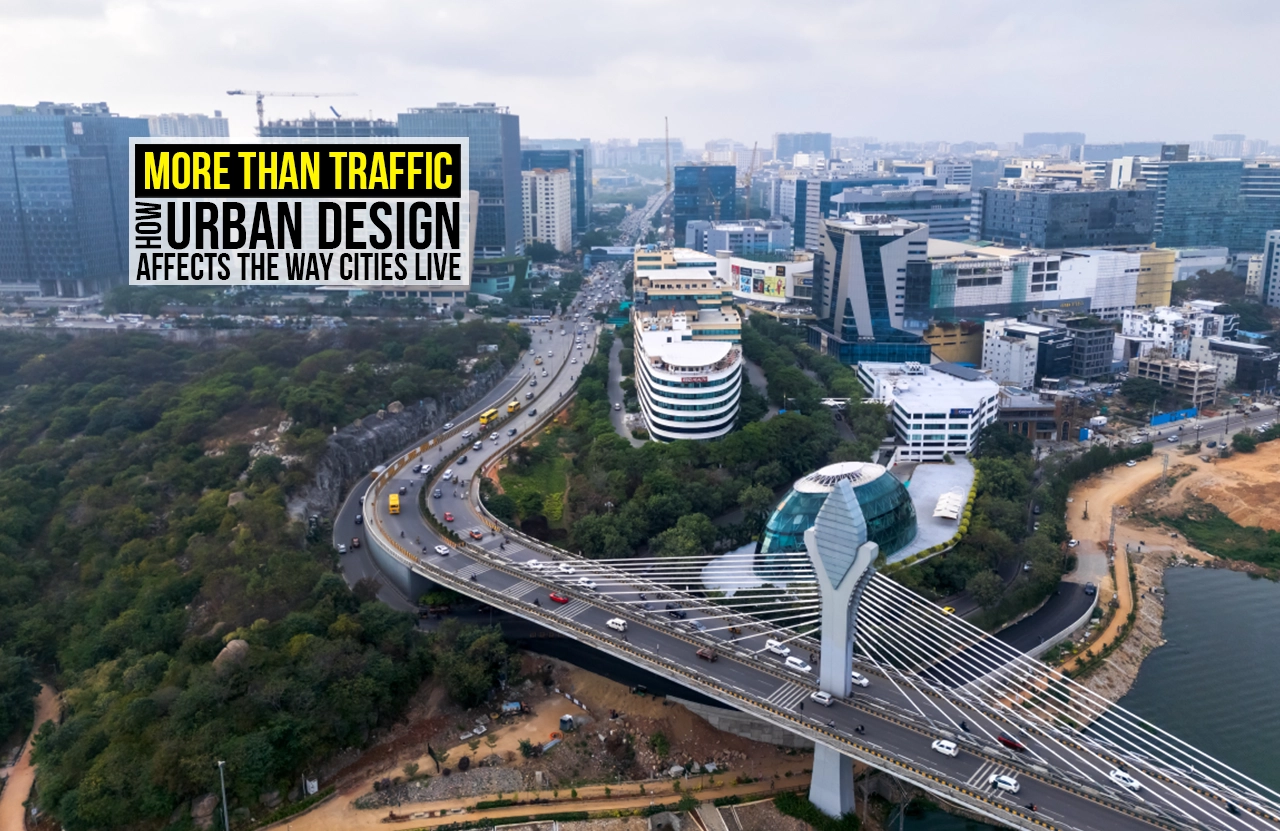
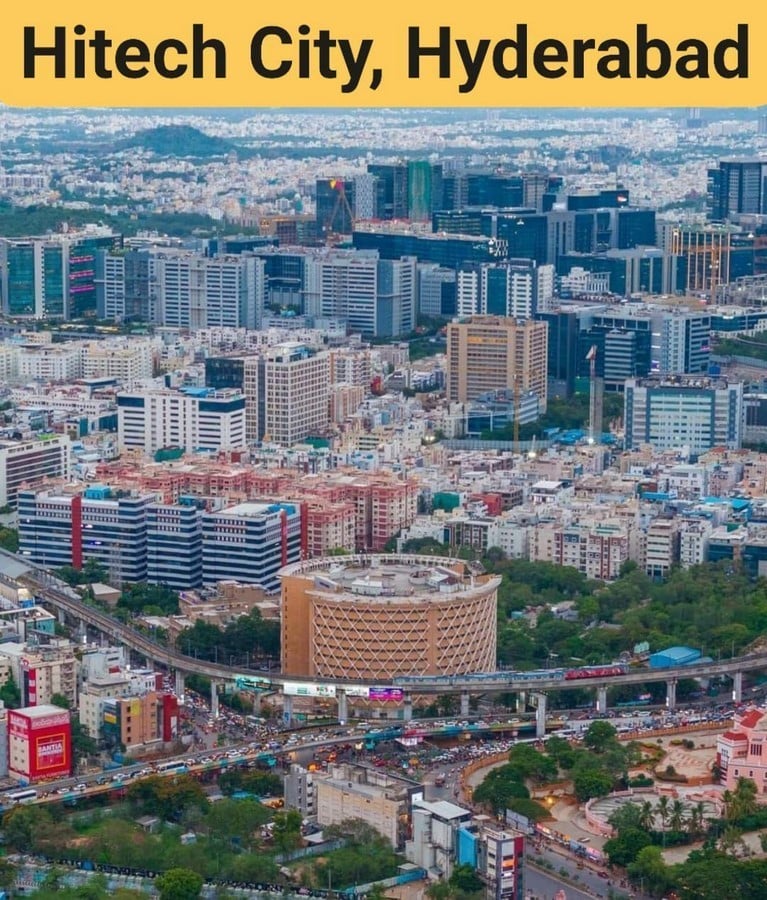
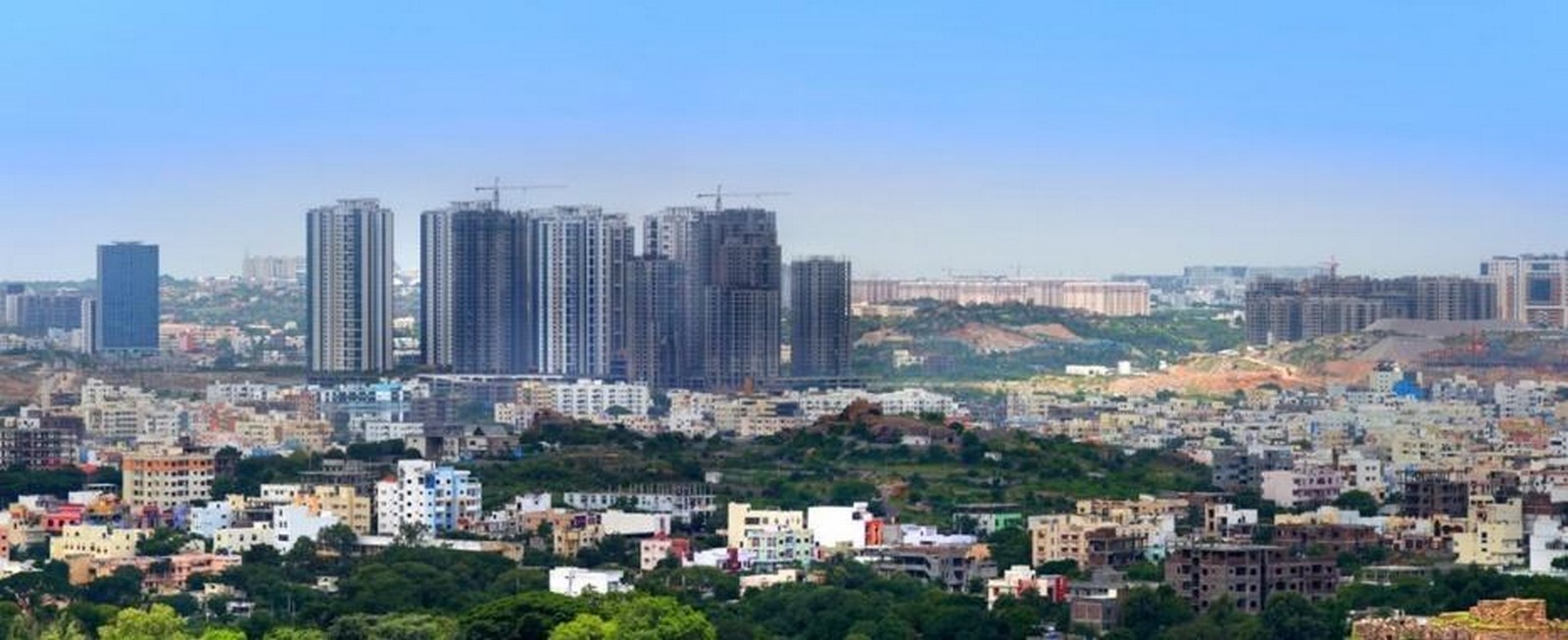
Why does one part of a city feel planned and calm, while another feels crowded and tired? In many Indian cities, development does not happen evenly. Some zones receive wide roads, offices, and new infrastructure, while older neighbourhoods continue to adjust without support. This creates the feeling of two cities existing side by side. In places like Hyderabad and Bengaluru, modern corridors grow rapidly, attracting jobs and investment, while surrounding residential areas absorb the pressure quietly. People travel across these unequal zones every day, carrying congestion with them.
This uneven growth shapes daily life in subtle ways. Streets in older areas become shortcuts. Local roads turn into parking strips. Pavements disappear under vendors and vehicles. Development and underdevelopment begin to exist together, each feeding the other (ResearchGate, 2023). Traffic here is not just about cars, it is about imbalance. When opportunity is concentrated in a few pockets, movement increases toward them. Families spend more time commuting, children cross unsafe roads, and public spaces slowly shrink. These are not isolated problems. They are outcomes of selective planning. Cities start reflecting inequality through their layouts, showing how spatial decisions quietly influence who moves, where they go, and how much time they lose along the way.
Traffic is often blamed on population growth or rising vehicle numbers, but its roots lie much deeper in how cities are shaped. Roads alone cannot fix congestion when daily life is stretched across distant zones. Flyovers may ease movement temporarily, yet they do not change the reason people travel so much. What cities truly need is spatial thinking. They need neighbourhoods where living, working, and social life exist closer together. They need streets designed for people, not only vehicles.
Urban design holds quiet power. It influences how long a commute feels, whether walking feels safe, and how much time families spend together at the end of the day. When development happens without balance, cities begin to fragment. Some areas grow rapidly while others struggle to keep up. Traffic then becomes a reflection of this imbalance, shaping stress, routines, and everyday experience.
Instead of reacting to congestion with more concrete, architects and planners must learn to read movement patterns, understand land use relationships, and design for proximity rather than distance. Cities are living systems, not traffic machines. When urban spaces are planned with care, movement becomes natural instead of forced. Only then can streets regain their human scale, and cities begin to support life rather than exhaust it.
Bibliography:
MDPI (2022) Urban development, transport demand, and spatial planning. Sustainability, 14(11), 6468. Available at: https://www.mdpi.com/2071-1050/14/11/6468 (Accessed: 15 February 2026).
ScienceDirect (n.d.) Urban transport and land-use relationships. Available at: https://www.sciencedirect.com/science/chapter/referencework/abs/pii/B9780080449104002418 (Accessed: 15 February 2026).
ResearchGate (2024) Development and underdevelopment are two sides of the same coin. Available at: https://www.researchgate.net/publication/380289642_Development_and_Underdevelopment_are_two_sides_of_the_same_coin (Accessed: 15 February 2026).