What Unites Cities?
The simplest answer to this question is people, and it is architecture that brings cities together. Architecture forms the foundation of city development, encompassing functionality, aesthetics, a sense of belonging, and sustainability. Generally speaking, urban development primarily focuses on societal engagement, and architecture plays a vital role in fostering this engagement to cultivate a sense of belonging. It is not merely about constructing solid structures from various materials; it is about conceptualizing an urban area with its unique identity, aesthetic, accessibility, and cultural significance. Significantly, every city has its own journey of design, yet thoughtful design of spaces can foster interaction, inclusivity, community cohesion, and the social fabric of urban environments.
In what ways does architecture enhance the development of better cities?
Undeniably, architecture plays an unparalleled role in urban planning, enhancing the value of a city. Interestingly, there are several ways to design cities that improve their economy, infrastructure, standard of living, and sustainability. Unique architecture adds exceptional value to cities, such as improved urban life, urban design, and public space.
Let’s delve into each aspect that contributes to shaping better cities:
Urban Planning and Design
One of the most indispensable aspects of architecture is laying out the city’s layout according to land-use plans following laws and strategies where architectural professionals are involved through the design process. These strategies and laws are essential to lay out residential, commercial, public, and industrial areas strategically. A meticulous zoning process can minimize conflicts between land uses, ensuring that the city functions harmoniously.
Well-designed public transportation infrastructure by architectural professionals can lessen traffic congestion and make commuting effortless. For instance, London has opted for a no-parking scheme, which fosters the use of public transportation, and walkability, and maximizes the use of cycling schemes. This improves overall urban mobility and enhances the quality of life for residents.
Sustainable Development
Sustainable architecture focuses on the environment. How does it contribute to the city and its surroundings?
New developments in cities foster smart, green, and sustainable living spaces, enhancing the experience for communities and creating a healthy built environment. Designs that abide by sustainable strategies are likely to improve the social, economic, and environmental conditions of a city for current and future users.
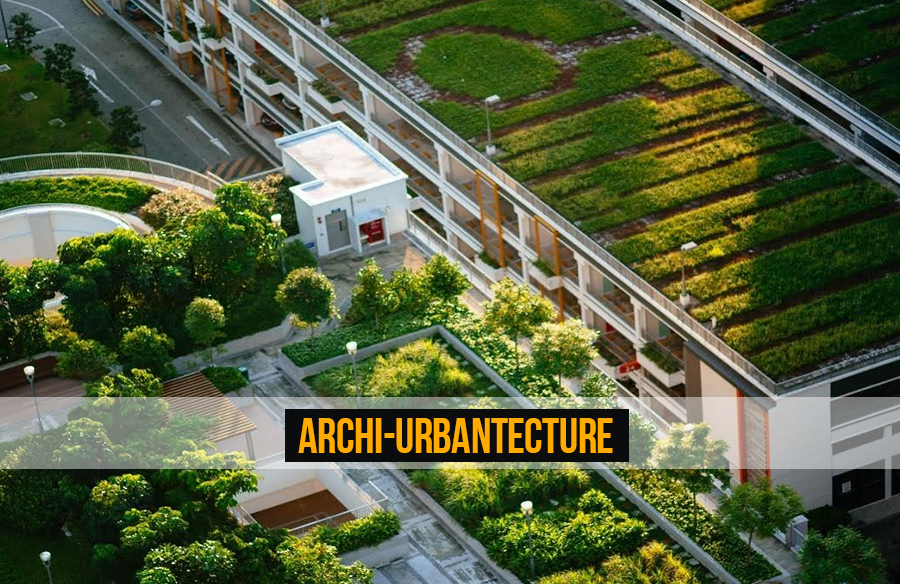
Urban growth has a significant impact on the city, leading to the loss of parks, agricultural land, and green fields. To mitigate these challenges, governments and environmental professionals have implemented urban sustainability initiatives. For example, the green roof initiative in Basel, implemented in 2002, has visibly changed the city’s sustainable approach, minimizing the effects of heat waves and significantly improving biodiversity.
The Swiss government requires that every new blueprint and refurbished construction with a flat roof must have a green roof. Green roofs reduce air pollution, greenhouse gases, and flooding, and make the city more livable.

Purposely, the government of Switzerland formed a construction law that every new blueprint and refurbished construction must require a flat roof to have a green roof because green roofs reduce air pollution, greenhouse gasses, and flooding and make the city more livable.
Community and Social interaction
Architecture bridges the gap between communities and cities by serving the purpose of community and social engagement, which is a prominent part of the city planning journey. Social infrastructure does not always require physical structures; it is an amalgamation of spaces that encourage social inclusiveness and nurture community interaction, such as public squares, social events, pedestrian-friendly walkways, and a distinctive sense of belonging that emphasizes the local history, culture, and identity of a city.
Several distinguishable physical structures engage society, including recreational spaces, entertainment facilities, cultural hubs, and sacred spaces. For instance, a leisure center can animate and encourage engagement in urban life, as seen in Woolwich. After World War II, Woolwich suffered from deprivation but attracted a diverse population of immigrants. This diversity contributes to Woolwich’s identity. The area is undergoing revitalization, boosted by the construction of the Cross Rail station. The site currently occupied by Woolwich Waterfront Leisure Center is to be moved to the center of Woolwich and replaced with a housing scheme.

Woolwich faces many issues, such as a lack of green public spaces, places for people to engage in cultural activities, and a lifeless waterfront. The wider strategy is to activate the Woolwich waterfront, create a twin park to the one in North Woolwich, and provide a place for people to engage in urban life. This is to be achieved by creating a cultural center along with a public square, park, and hotel. The proposal includes a landscaped park atop the cultural center, which is considered suitable to withstand the proposed landscaping due to its durability.
References:
- Arch2o (n.d.) Instilling a Sense of Ownership in Public Places. Available at: https://www.arch2o.com/instilling-sense-ownership-public-places/.
- Boundless Sociology (n.d.) Social Interaction in Urban Areas. In: Introduction to Sociology. Available at: https://socialsci.libretexts.org/Bookshelves/Sociology/Introduction_to_Sociology/Sociology_(Boundless)/17%3A_Population_and_Urbanization/17.04%3A_Urban_Life/17.4B%3A_Social_Interaction_in_Urban_Areas
- Sempergreen (n.d.) 10 of the Best Sustainable City Plans in the World. Available at: https://www.sempergreen.com/en/about-us/news/10-of-the-best-sustainable-city-plans-in-the-world
- Mayors of Europe (n.d.) Architecture Defines Cities of the Future. Available at: https://mayorsofeurope.eu/top-stories/innovation/architecture-defines-cities-of-the-future/
- Kasperkent (n.d.) Why Architecture is So Important for Cities. Available at: https://www.kasperkent.be/en/blog-item/why-architecture-so-important-cities