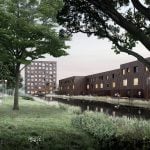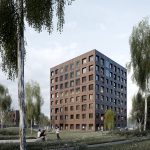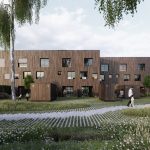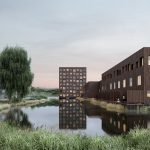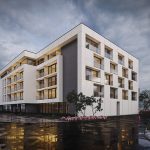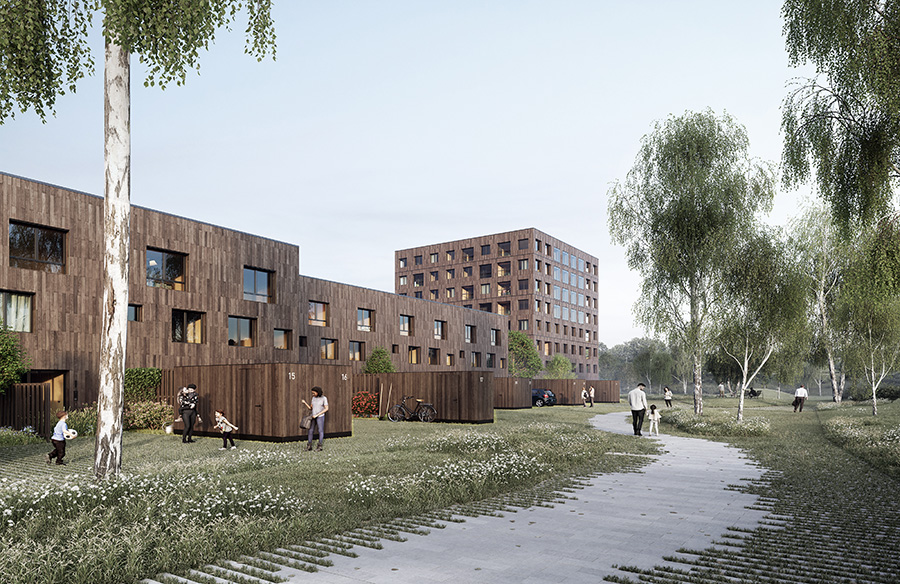
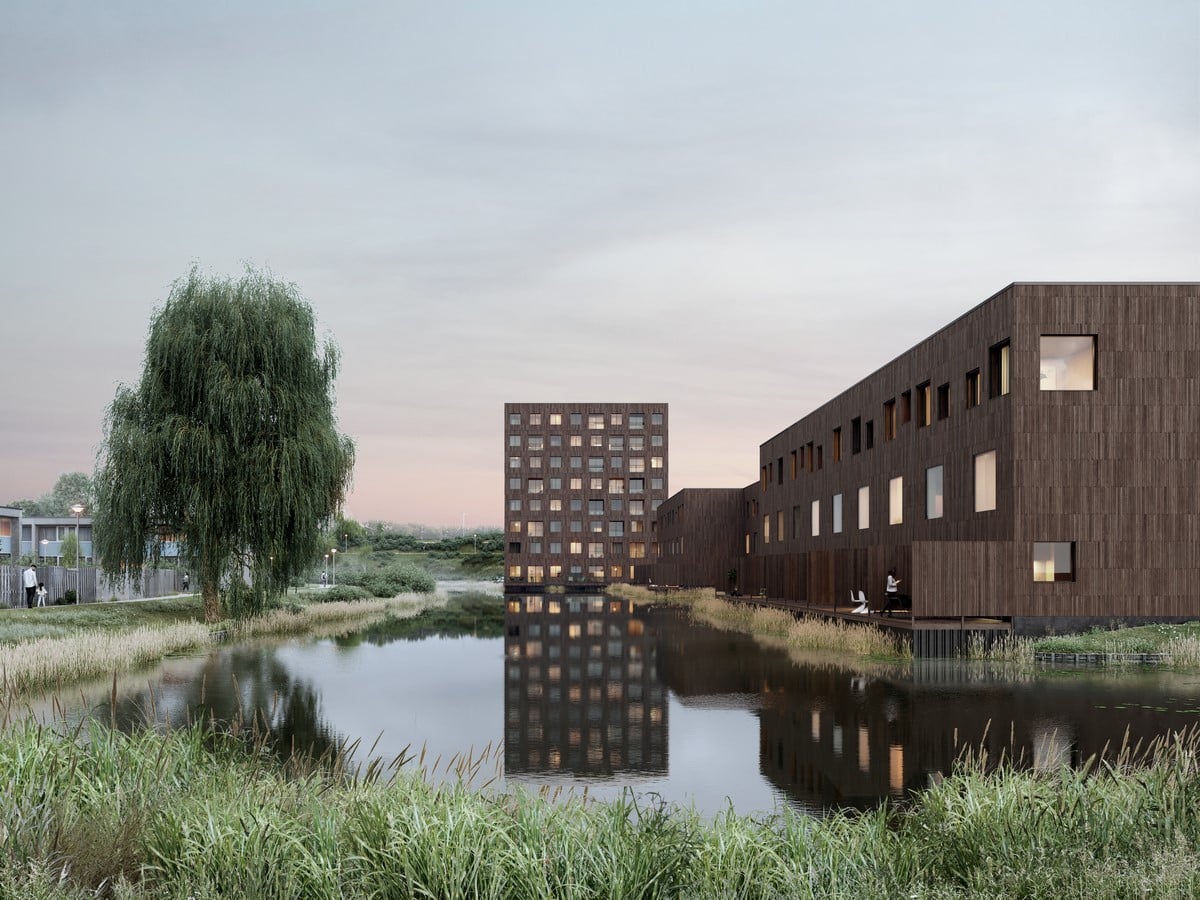
Improving by densifying: HOH Architecten is expanding the Kelbergen residential area in Amsterdam South-East with a wooden residential tower, a strip of low-rise buildings, integrated into a natural and green environment: a contemporary and sustainable interpretation of the original.
Project Name: KELBERGEN 2.0
Studio Name: HOH Architecten
Design Team: Freyke Hartemink, Carsten Hilgendorf, Jarrik Ouburg, Frederique van Erven, Csenge Kiraly, Athina Pappa
Area: 12.100 m2
Year: 2018
Status: Under construction
Location: Amsterdam South-East
Consultants: Adviesbureau Geuijen (construction), Nieman Raadgevende ingenieurs (fire and building physics)
Contractor: Verhaegh Bouw
Public space and urban planning: Municipality of Amsterdam / HOH Architecten
Photography Credits: HOH Architecten
An area in transformation
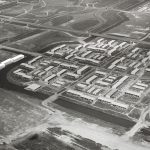
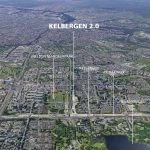
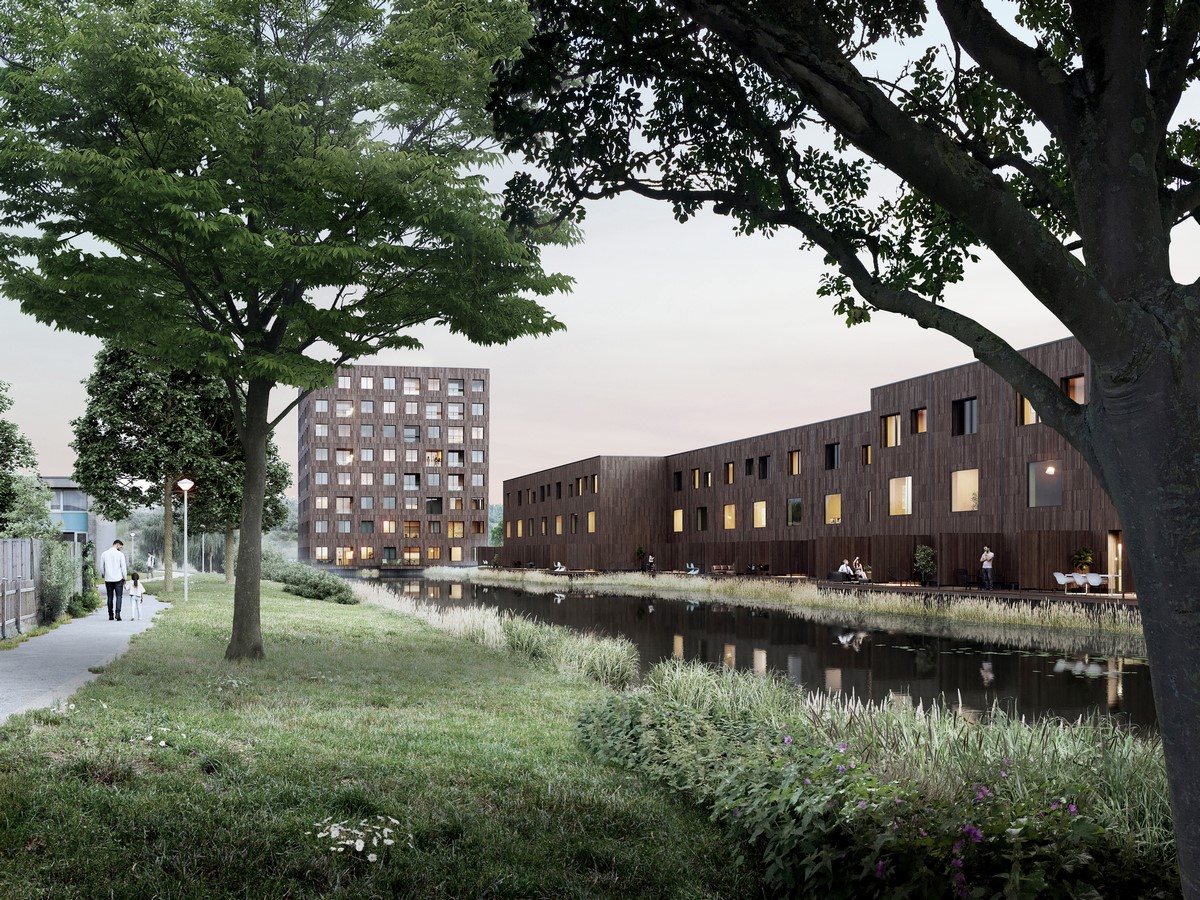
While large parts of the Bijlmer district have been renovated beyond recognition since the beginning of this century, the Kelbergen neighborhood still retains its original structure. The low-rise residential area dating from 1973, designed by architect Jan Sterenberg, consists of a mix of owner-occupied and social rental homes. The immediate vicinity of the district, on the other hand, is currently undergoing a major transformation: whereas until recently the location was dominated by the busy A9 highway, the Gaasperdammertunnel has hidden most car traffic from sight and hearing. The park that will be constructed on the roof of the tunnel will determine the area’s new identity and will form a green connection between Nelson Mandela Park and Gaasperpark. The Kelbergen 2.0 plan that HOH Architecten has designed for BPD Area Development, in close collaboration with the Municipality of Amsterdam, is a catalyst in this transformation.
Urban infill, natural expansion
Water surrounded the neighborhood in the original plan, but it also separated it from its immediate surroundings. The new ensemble will be built on a strip of land on the other side of the water, making the water an integral part of the neighbourhood. Since the plan is part of the green connection between two parks, the design of the public space focuses on more greenery, more spatial quality and more quality of life for humans and animals.
The layout of the public space is designed to be water-permeable as a standard. The pavement is denser where it is necessary, for example on walkways or roads for the car. The public space between the embankment along the Gooiseweg and the building blocks will be designed as a park-like landscape, with a diversity of plants providing space for birds, bats and insects. The reed collar in the water accompanies the building blocks and provides space for bird breeding grounds. The is a combination of sustainable architecture, social urban design and a green approach to public space.
Tabula Scripta: to build upon what is already there
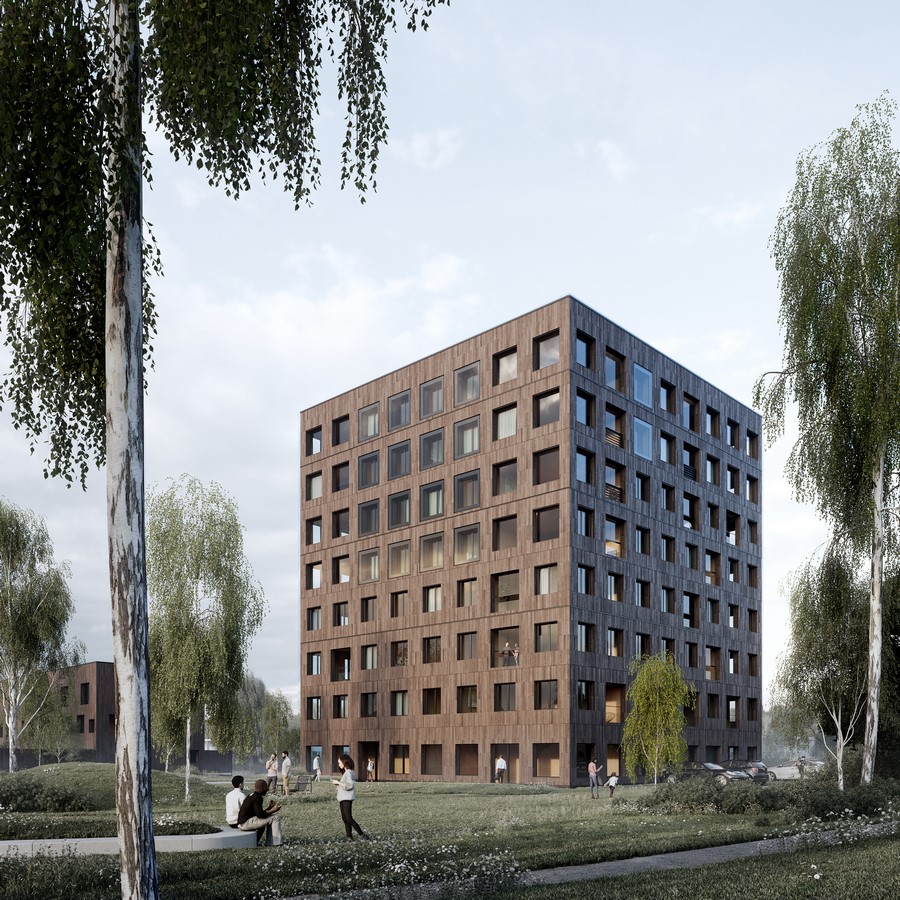
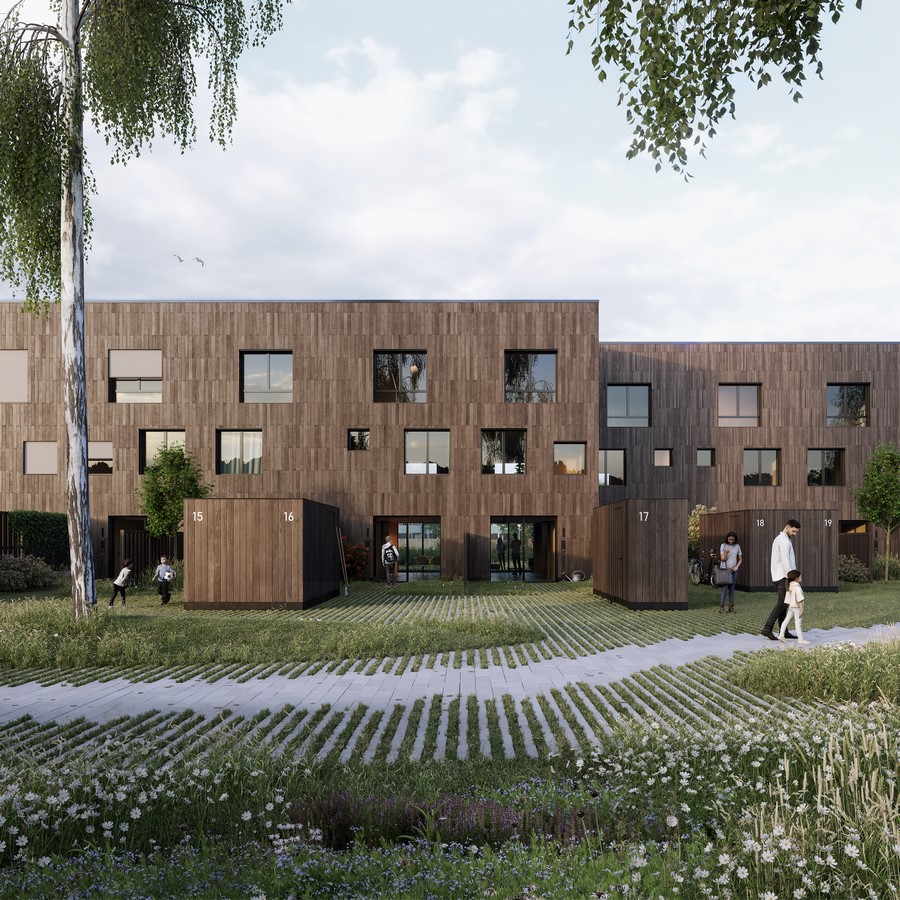
The new ensemble builds on the spatial qualities of the original neighborhood. The low-rise buildings, consisting of 24 houses with three floors, directly adopts the typology of staggered strip construction. This parcelisation makes a large plan small and creates a balance between a collective image and individual identity. In addition, an interesting and respectful urban planning dialogue is created between the old and new homes, between the original and the 2.0 version. The residential tower, which consists of 45 apartments, forms the final piece of the existing Kelbergen district, on a beautiful location on the water, while forming a pivot point in the new urban context created by the park on the Gaasperdammertunnel. It will be a small but important landmark that will connect the two neighborhoods on either side of the park not only physically, but also visually. The barrier, which was the A9 highway, will be lifted even more and the urban fabric of the city healed even more.
Architecture and construction
With regard to construction, materials and architecture, the new building follows the principle of modernism from 1970: building in the spirit of the times. The facades, walls and floors of both the tower and the low-rise buildings, in total 80% of all building material, are made of wood. The entire construction of the tower (load-bearing walls, floors and the core) is made of solid cross-layered wood (CLT) and can therefore even be considered unique. The construction of the facade is made with the German Steico system, a technical further development of a traditional timber frame system. The facade cladding itself is made of the fast-growing giant bamboo variety “MOSO”. Due to its fast-growing property, this species absorbs a lot of CO2 and therefore produces a lot of oxygen. In addition to the equal facade materialization, architectural unity is also created between the low-rise buildings and the tower by means of a pattern of square window openings and loggias. A pattern that plays with the idea of ‘the rule and the exception’. Since the omnidirectionally designed tower stands at the intersection of a park and a road, this principle makes it easy to respond to the different noise and ventilation requirements that are set for the outdoor space of the various homes.
Social continuity
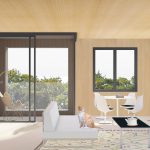
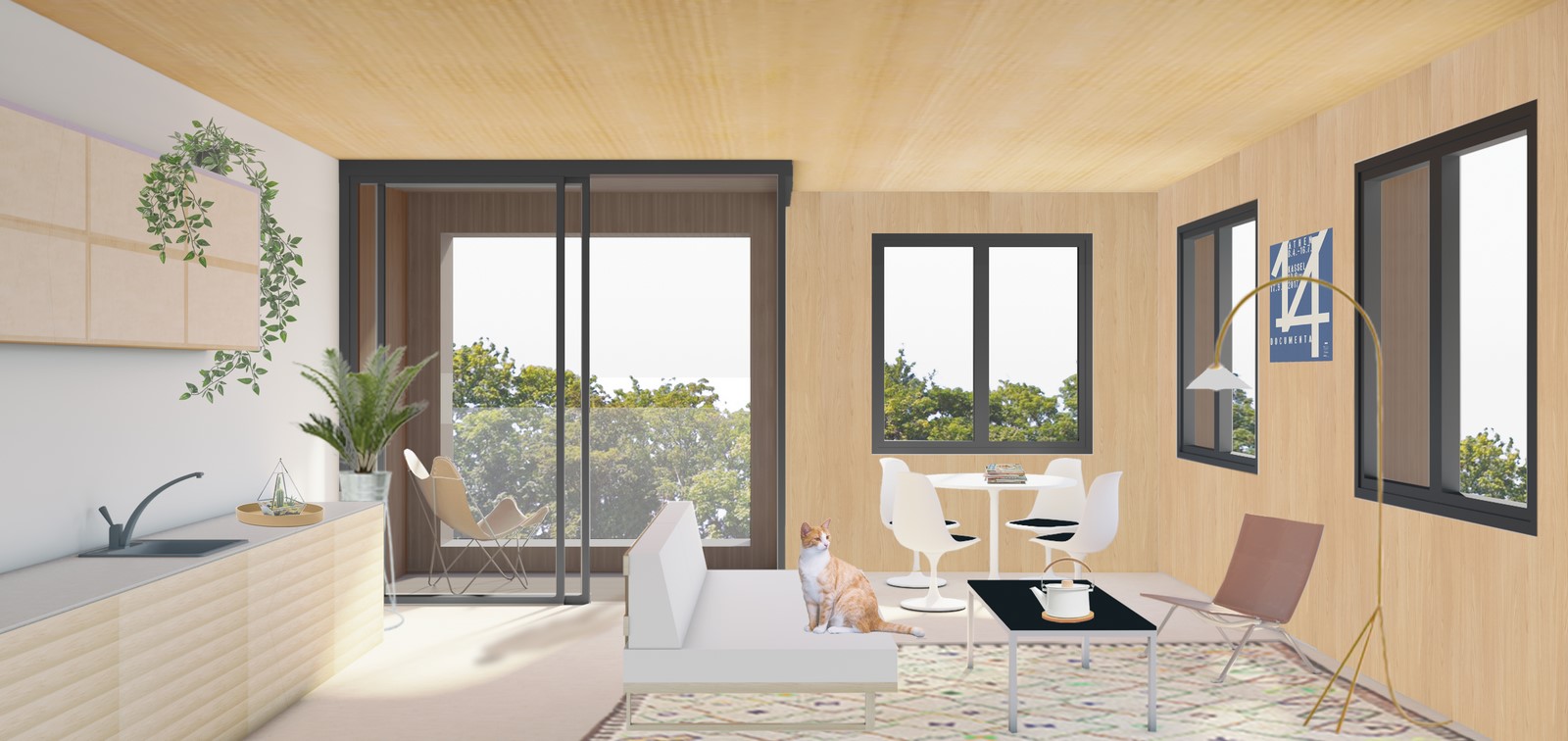
Kelbergen 2.0 is not only a physical extension of the existing neighborhood, but also a social extension. Existing local residents are given priority over owner-occupied homes where a fixed sales price is used, which is determined by the Municipality of Amsterdam. Old residents will live in the new building, freeing up space in the old neighborhood for new residents. In addition, both the low-rise and the high-rise have a very clear and robust floor plan that allows for a wide variety of uses and layouts. Because the wishes of the buyers of the low-rise homes are included in the final realization, there will be a family home with 5 full bedrooms next to a house for a couple who has taken in a mother to provide informal care. All specific adjustments to the generic plan are always reversible, so that a future resident can also adjust the house to his or her own wishes.
 HOH ARCHITECTEN
Hartemink Ouburg Hilgendorf Architecten (HOH) is an architectural design firm based in Amsterdam. HOH designs and produces on all scales of the built environment ranging from curtains and furniture to public buildings and master plans in the Netherlands and abroad. To work with what exists, with who are there and with the resources that are available is key in any project, regardless of the scale.
Every design process is seen as a chance to discover the collective creativity and intelligence of all the people involved in order to reveal the unique qualities of each project. Every project is seen as an integration of seemingly conflicting interests, ambitions and requirements into a design that has autonomous spatial qualities and at the same time exceeds the initial question or brief.
HOH is actively involved in academic teaching, research and publication. The academic world is seen as parallel reality to the practice, a testing ground for new ideas, techniques, insights and talent. Practice and theory, reality and dream, are seen as indivisible parts of each other.