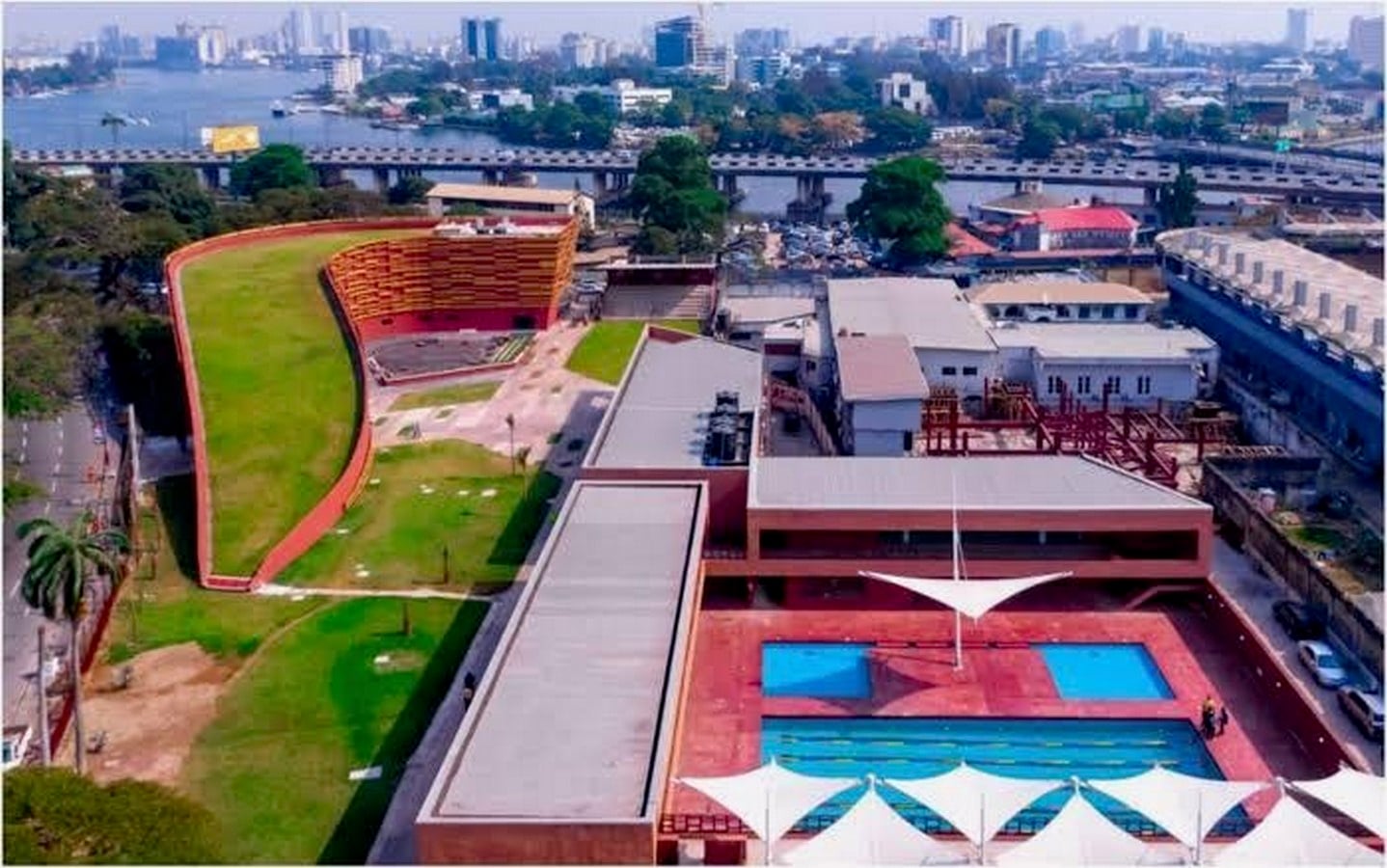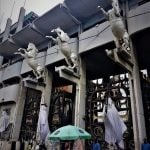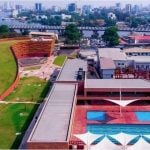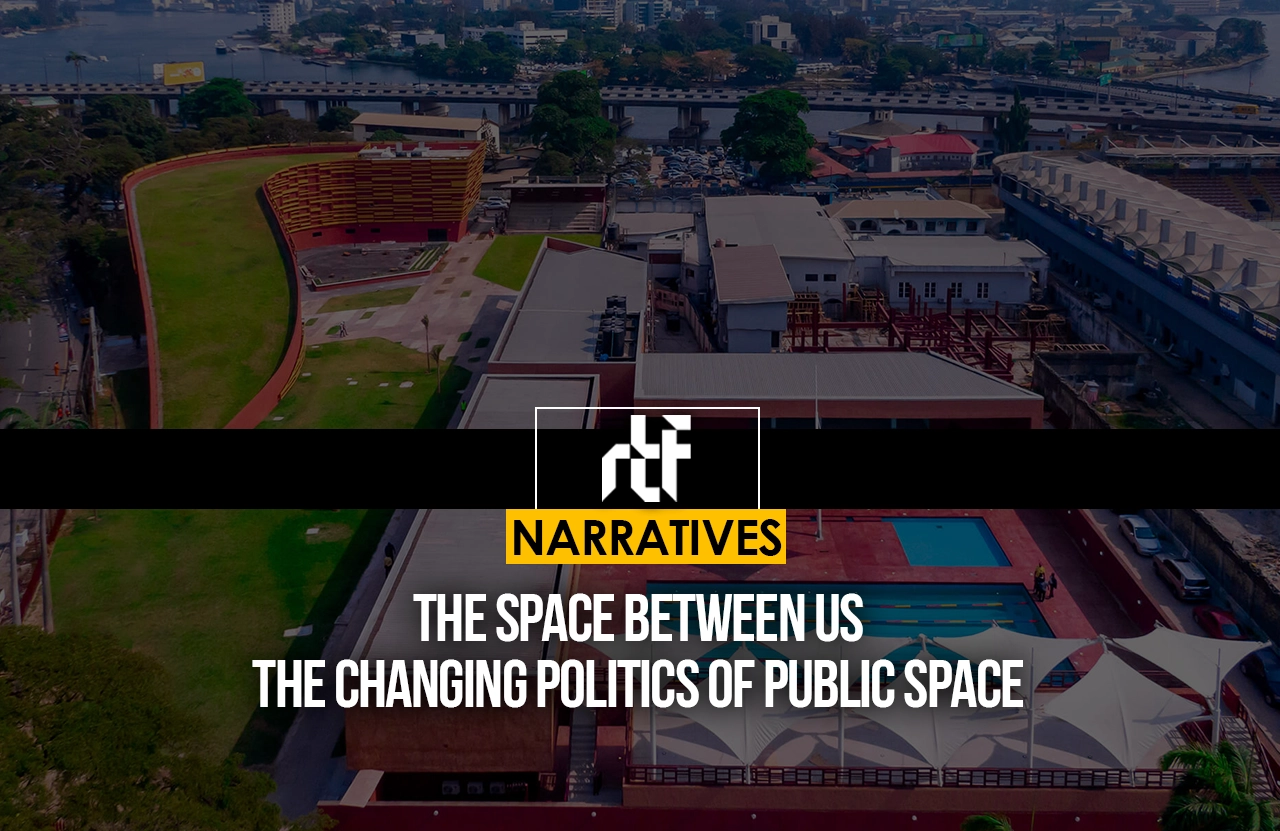
Along parliament road in Ibadan is the Agodi garden, a public recreational park that stretches as a verdant expanse, creating the serene and restful atmosphere often attributed to that road and its adjoining areas. This green and tranquility has since been cut short by the new estate development springing up on the 46.3 hectares of the Agodi forest reserve: an extension of the recreational park and an expansive forest reserve.
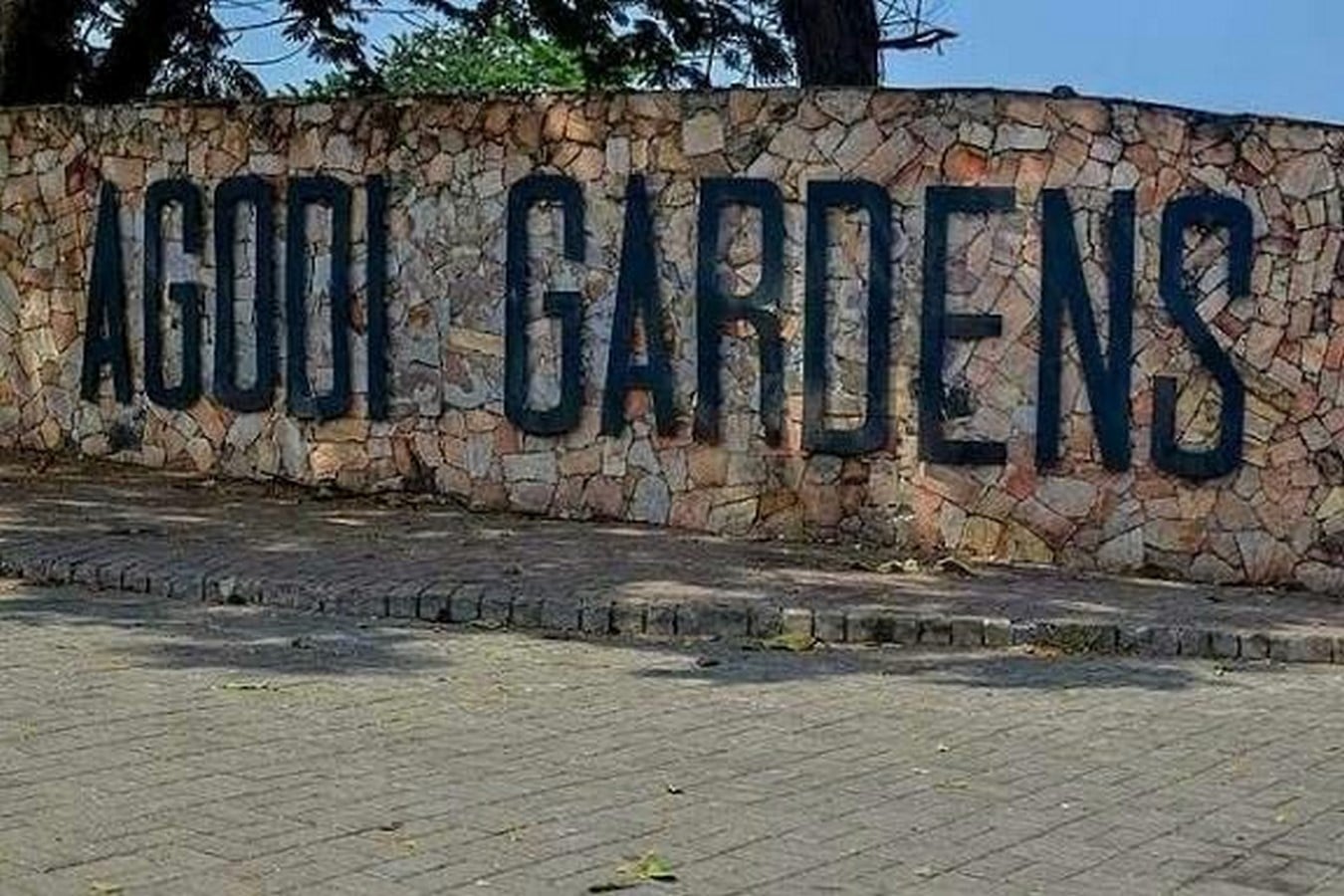
The area now bustles with activities, reflective vests and heavy machinery. Green turned bleached red, the plain looks unspeckled, even and naked.
In recent years, the existence of third spaces: the informal spaces outside the home and workplace where people gather and interact, have been disappearing across cities. These spaces, parks, Zoos, Gardens, beach, lake and reservation areas, are being reduced or privatized by the government, while the general public are being pushed out and excluded.
While the use of these spaces are restricted, the character, people and activities happening in these spaces are affected by these changes. Sometimes these changes are as critical as the clearing of a whole park, other times it is as subtle and gradual as the removal of the benches at bus stops stations, or locking up of public gardens.
The impact of these losses varies, especially with the scale of the alteration, regardless people are still affected. It then begs the question of how public are public spaces. How did these public spaces come to be in terms of creation, design, ownership and control.
Public Space Is Never Neutral
Politics is an inevitable part of the human experience. As with a lot of things involving people, and the resulting socialisation, interaction and coexistence required within a shared space, politics in whatever shape, size or form, is inevitable. Public spaces are not exempted.
Who controls and regulates the spaces we inhabit? What does the architectural design, and the existence or non-existence of these spaces imply? What does it say about who matters and who doesn’t, to who is excluded and who is included? These questions betray how political public spaces can be. Neutrality almost doesn’t exist as these spaces do not exist in isolation and are often subjected to changes and influence. Someone determines their architecture: where they are located, how they are shaped, who can enter them, their utility and accessibility.
In today’s capitalistic world, public spaces are beginning to seem less like a space for the public and more like a space that belongs to some privileged few —to do whatever with.
Long before now, communities had always found ways of organizing shared space, but the methods have always differed. The control and design of these spaces as well as the consequent effect have changed over time. To understand how public spaces are designed and negotiated in current times. It is important to first access its history, especially in a place with a complicated and interesting history as Africa.
Public Space in the Pre-colonial Era
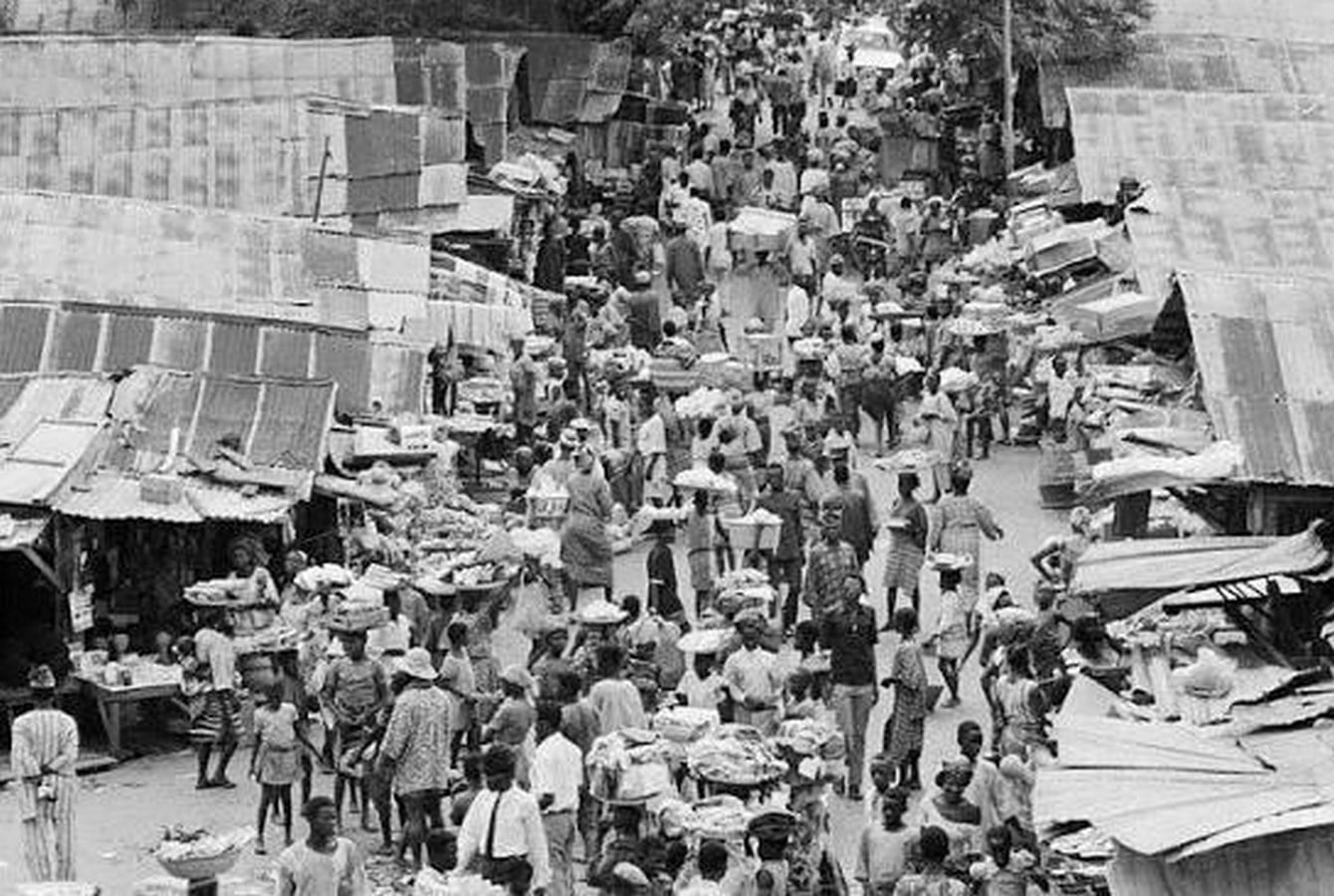
In their natural form, informal spaces have always existed on the African continent. Even though these spaces were not subjected to the formal architectural design constraints we see in today’s public spaces, they have always been communal spaces outside the home where people gather and interact: the markets, the ritual grounds, and the village squares. To look at the design of public spaces in the pre-colonial era is to encounter a different idea of what makes a space public.
These spaces existed without physical boundaries, at most the boundaries as a result of nonverbal and informal agreements and can always fluctuate and change. Market Squares are usually just large areas of people gathered to sell their wares, no gate, no fence.
The lack of physical constraint, and also the way these spaces were woven into the social and political life of the city, can give the impression that public spaces then were truly free for all and that it lacked any form of political touch. The answer is more nuanced.
In this time, public spaces were mostly open to every member of the community. But openness does not mean everyone is equal therein. A person could be in the same market or ceremonial ground and not have the same authority as the next person. Status, age, gender, lineage, occupation and social position could dictate how one moves around in these spaces, the level of participation, and the influence exercised within it. Here, politics existed beyond the question of access, but also the question of hierarchy. The politics of therefore was embedded in the social organization of the space itself.
So, in this case, physical exclusion wasn’t so common. Perhaps, then, the history of public space design is not simply a history of control, It is also a history of hierarchy, what is allowed and by who, once inside the space. It is about whose presence carries authority and whose presence remains peripheral
Public Space in the Colonial Era
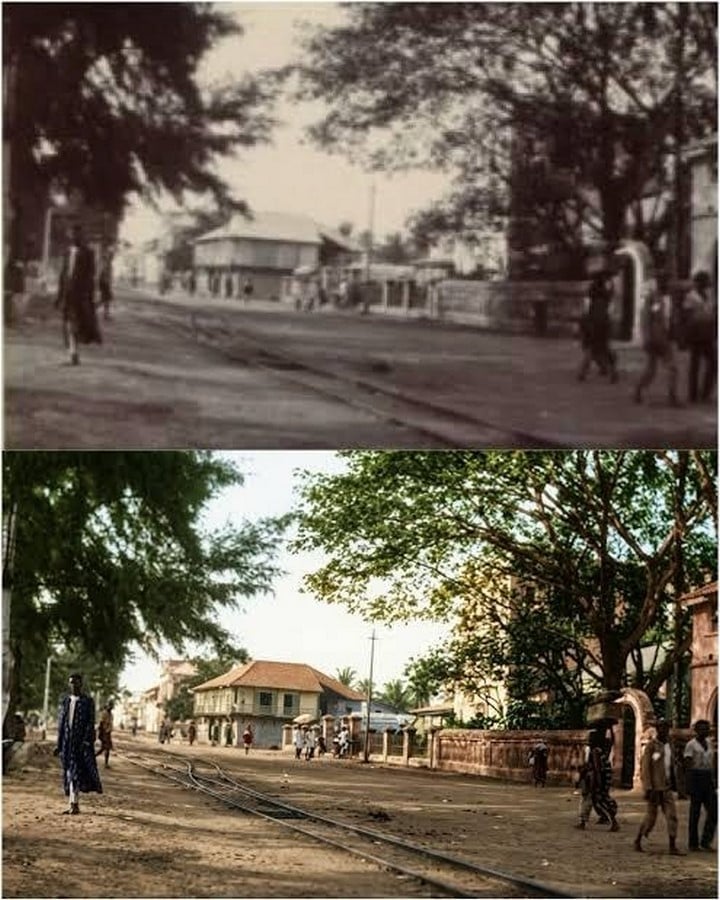
With colonialism came the physical exclusion in/of public space. If the design of public spaces in the pre-colonial era were organised around social hierarchy, the colonial era was designed around racial segregation. Political influence was beginning to have a physical representation. Embedding itself into the city’s architectural design: in roads, zoning, reservations, administrative districts, sanitation schemes. In this case, there was a deliberate separation of people and activities, colonial masters from the natives. Public spaces were gradually being cut off and reorganized around the needs of colonial administration. Parks and gardens were reserved exclusively for the colonial administrators.
The architectural design Public space therefore became tied to race, class, property and colonial authority.
The questions of who controls and regulates these spaces, the implications, who matters and otherwise, is answered strictly through the lens of race and segregation.
The city’s map began to participate in the hierarchy and in politics. While this did not simply replace one spatial order with another; it layered a new system of authority over an existing city. Markets remained markets; streets remained places of encounter; communities continued to produce their own forms of public life. A person’s position in society could still determine how they participated in communal life, but now the built environment could make that hierarchy physically harder to cross. At this point, it is important to ask how much of this system is still reflected in our use of modern urban spaces?
The Politics of Modern Public Space
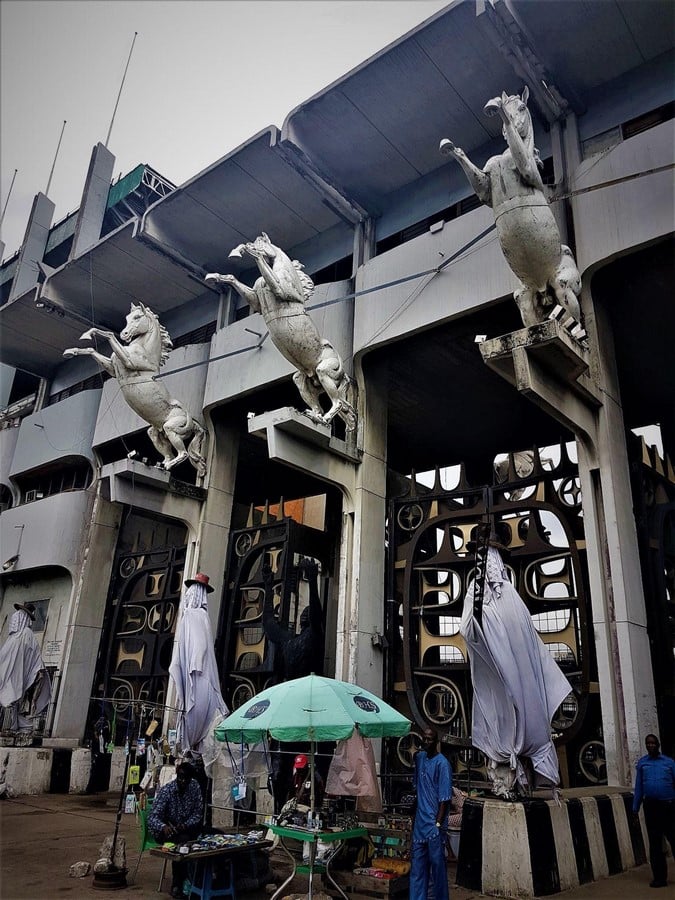
Politics of public space as it exists today can be understood through both its hierarchical element and colonial history. In the pre-colonial era, hierarchy could be embedded in custom, social status and the organisation of communal life. Under colonialism, it became more explicitly inscribed through planning, segregation and administration. Today, it can appear in less obvious forms: through private ownership, security, maintenance, landscaping, surveillance, commercialisation and the quiet replacement of shared space with uses deemed more valuable.
This is why the politics of public space cannot be left to the question of who designed it.
Perhaps this is what the clearing of the land beside Agodi Gardens makes visible. The transformation of a forest reserve into an estate is not simply a change in land use. It is a decision about what the city considers worth preserving, what it considers expendable and whose needs deserve to occupy its limited space.