When someone is asked to think about a public space, they would generally imagine a park or a plaza that is mostly an open space, often green, shaded with trees and with places to sit; a place people could gather, a place that is accessible because it is public, though design and architecture influence more than the appearance of such space. The definition of a public space may not vary drastically everywhere, but the experience is what varies.
The image
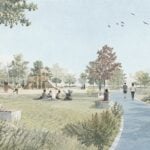
Consider a park – one of the most commonly used spaces for people to hang out – there will be trees, green grass, a sandy play area with slides and swings, a walking track, a bit of local wildlife– maybe a squirrel on a tree, or a bird flying above. And of course people. Children playing around, older people sitting in groups, parents watching over their kids, friends chatting while strolling, people exercising or speed walking, etc.
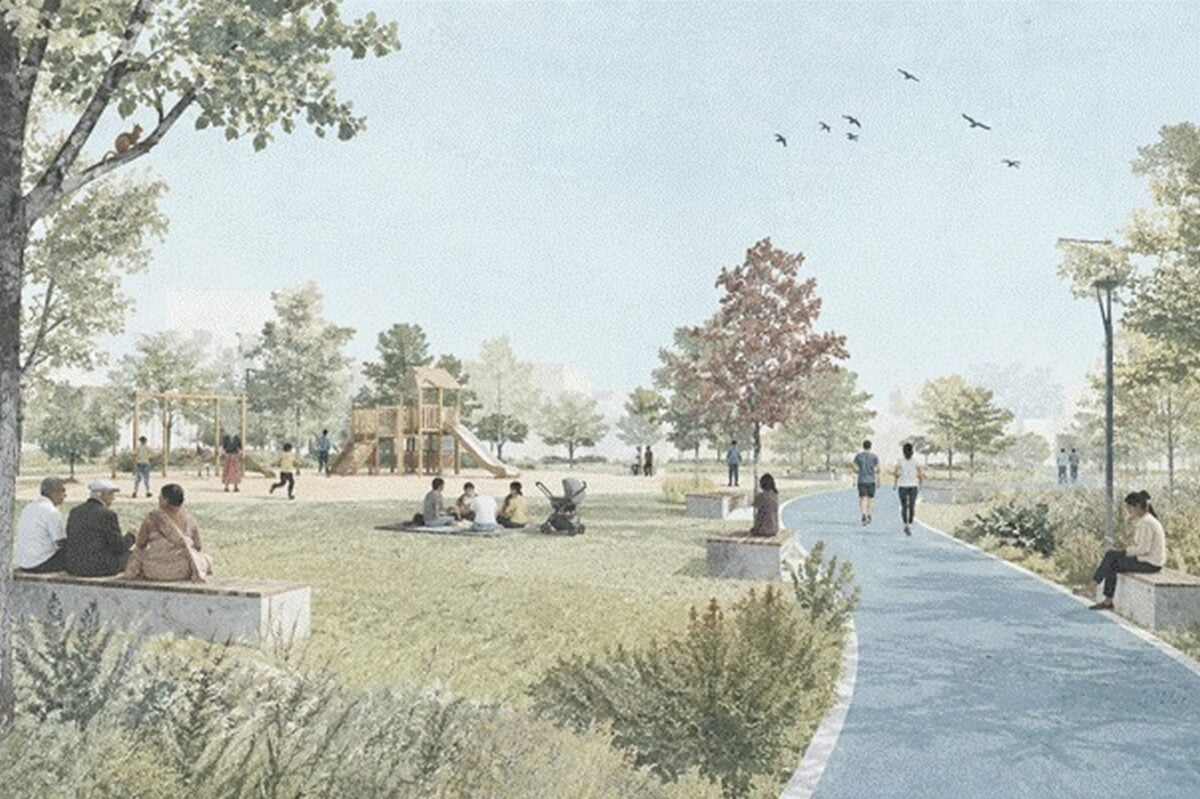
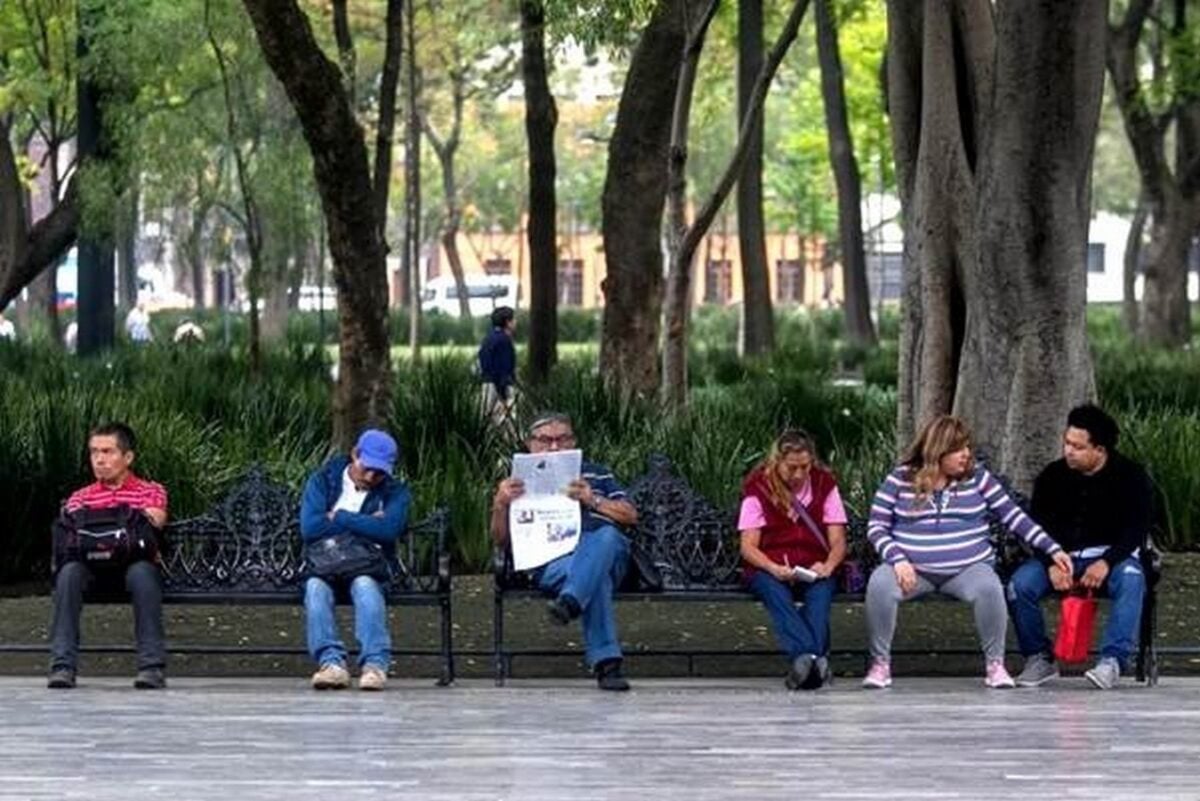
This might seem like a typical picture of a local park, but if one looks closer, something might seem amiss, leading to wonder: Who is visible in this picture of ‘public ’, and who is on the sideline?
The change in the image
People visible in the picture don’t necessarily include everyone who lives around it.
Consider the same park; technically, it feels like it is designed to be open and welcoming, a space of rest or a green in-between in a densely populated locality. But how does a deeper look at the image of a simple park look when experience is added to it?
If observed, one might notice why people still do this. Older people might sit and talk because they enjoy the open air more than being confined to a room; children might play if they have good company and find the play area interesting; people might still be walking because it is their only place to exercise. But do they all feel comfortable using the space, or do they do it only because they have no other option but to accept what is provided? Some may not find a seat; others may find it uncomfortable; few may feel uncomfortable exercising with people around; while few may not have a problem, some may stay for hours; others may come and go, feeling like they might not belong.
The image of the park did not change. What changed is the way one sees the experience of the people using the space, and that accessibility doesn’t directly mean being comfortable or belonging.
The image of a simple park turns to a bigger question: Who designs public spaces and for whom, and who feels welcomed?
The idea behind the design
Every element in a public space will be a decision taken – from the location of seating spaces, the pathways in between, the lighting distribution, the choice of providing toilets – to the number of people occupying the space. Every part of it is decided and designed with various considerations in mind, and all these aspects influence how people use the space.
This is why the designers should pay attention to how people actually use or move around a public space.
Danish Architect and Urbanist Jan Gehl is one such example of a designer. His work and research on public spaces emphasises observing what people actually do in them and then using it as a key to turn ‘public spaces into the driver for urban design development’. Through his design, one can understand that the presence and absence of various things should have a reason and thorough research backing it. His idea is to understand how people are using the space before designing the space with what we think they are using it for.
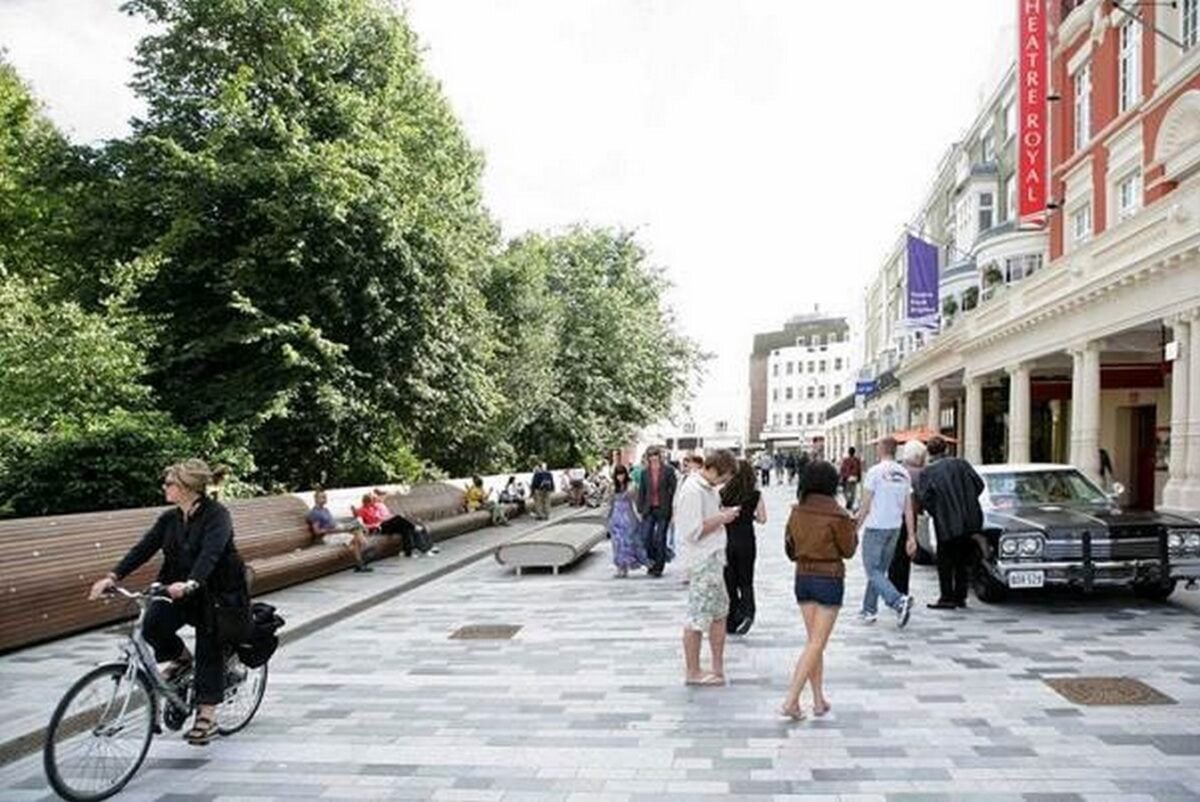
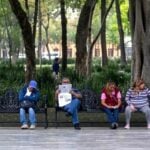
A bench is not just a place to sit; it is also used for resting, talking, waiting and so on. So when a bench is designed or located, not only the aesthetic but also the user behavioural understanding should be reflected.
The absence
Same goes for the absence of elements. If the seating options provided are fewer – might be due to various reasons, such as space constraints, budget constraints, aesthetic limitations – the person using the space does not know the reason behind the decision; they only see the result that they might not find a place to sit, and this leads to the experience of the space becoming unwelcoming. They may still use the space, as it doesn’t explicitly state that they shouldn’t, but they might not be comfortable or satisfied.
This can be interpreted as an exclusion through design, as limited seating options, poorly connected pathways, plants with no shade, etc can have the impact of making the space less used or used only because no other choice is available.
UN-Habitat also identifies that poorly designed and poorly maintained spaces can cause exclusion, as emphasis on accessibility to the space and safety of the space can decide how inclusive a public space can be.
What decides
Design and maintenance are not the only reasons that can decide who can use a space.
Public space is not something that stands independently in the locality it is situated in. People using the space are a part of the society or the surrounding locality, and with them come the usual societal norms such as habits, expectations, and assumptions about who should be using the space or, rather, who has the right to use it.
Caste, creed, gender, age, net worth, etc., can have an unspoken influence on not just how a space is used but also on who feels comfortable using it.
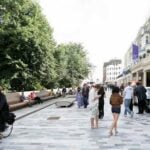
A group of elderly people gathering might be looked at as contracting compared to a group of young men idling. A street vendor selling at the gate, a house help resting on the bench, teenagers chatting on the lawn- all these people are using the same space designed supposedly for everyone, but they might not all feel like they belong or are welcomed, as not only the design and architecture of the space but the underlying hierarchy also plays a part in it.
A study on a few parks in Hyderabad, done in 2021, supports the fact that society has a great influence on who gets to be comfortable in the space meant for everyone. According to the research, at a few places, an entry fee is also used as a decision-maker on who gets to use the space.
So not only design but also societal norms and maintenance & governance of the space have a direct impact on who uses it. Being allowed into a space and being allowed to feel like belonging in the space is not the same thing
The layer between public
This is how the politics of a public space show itself, in the details that usually slip by, as they might seem too common because it happens everywhere
The physical aspect of the park does not change, but the experience is what changes. The number of people using the place does not directly mean the space is well planned and maintained. But considering the rules, the cultural norms, the societal hierarchy, etc gives the full picture of it
People being there does not tell us everything. One might still go to the public space rather than keep away because it might be the only public space they have.
The final picture
This is where architects and urbanists take responsibility, not in predicting the behaviour of people who might use it, but in designing by understanding the people who might use it and paying attention to the other things surrounding it. Perhaps their role is not just adding benches and creating an aesthetic or attractive place that looks public, but something that also feels public.
Imagine the same park again but in this new light – At a glance, the park did not change, but what changed is the way it is seen, and sometimes seeing might be the first step to noticing and changing the way to understand it. And that makes all the difference.
References:
Constanza Martínez Gaete (2016). Jan Gehl’s 5 Rules for Designing Great Cities. [online] ArchDaily. Available at: https://www.archdaily.com/801431/jan-gehl-5-rules-for-designing-great-cities [Accessed 25 Sept. 2026].
Souza, E. (2022). Multi-use public spaces and urban design: Copenhagen and social integration. [online] ArchDaily. Available at: https://www.archdaily.com/992621/multi-use-public-spaces-and-urban-design-copenhagen-and-social-integration [Accessed 26 Sept. 2026].
Gehl. (2025). Redesigning UK’s first pedestrian-friendly shared street. [online] Available at: https://www.gehlpeople.com/projects/new-road-streetscape-design/?utm_source=chatgpt.com [Accessed 26 Sept. 2026].
Gehl. (2024). Social spatial Research – Gehl. [online] Available at: https://www.gehlpeople.com/services/social-spatial-research/ [Accessed 26 Sept. 2026].
Unhabitat.org. (2016). 11.7 Public space | UN-Habitat. [online] Available at: https://unhabitat.org/11-7-public-space?utm_source=chatgpt.com [Accessed 27 Sept. 2026].
Basu, S. and Nagendra, H. (2021). Perceptions of park visitors on access to urban parks and benefits of green spaces. Urban Forestry & Urban Greening, 57, p.126959. doi:10.1016/j.ufug.2020.126959.